

Coffee and Conversation
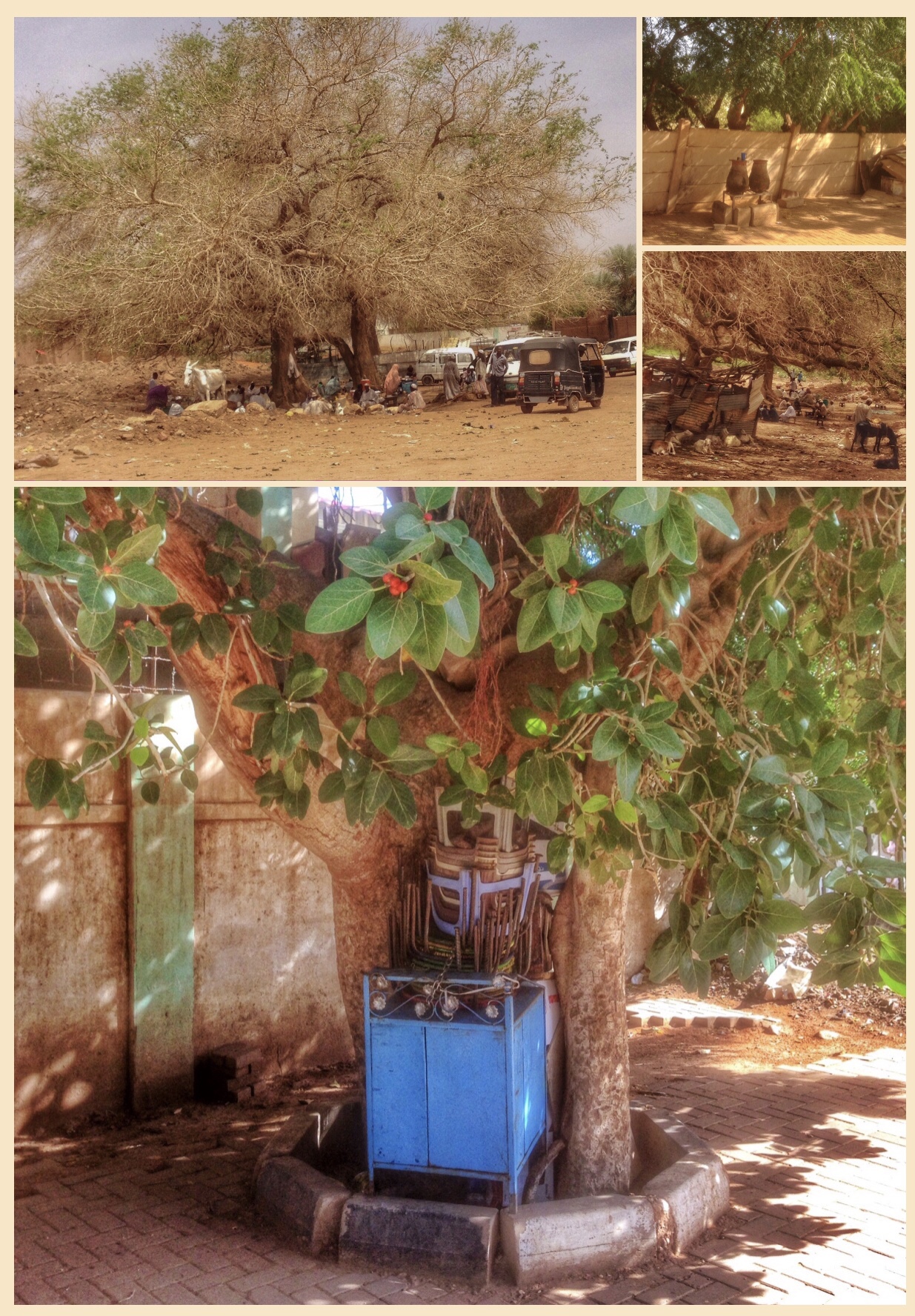
Title Illustration and above, tea and coffee under the shade at Tuuti Island, Khartoum, a tea seller’s blue metal tea stand and chairs neatly stored away for the Friday holiday, and, top right, public drinking water pots or ziir.
This article was first published in 2018. For a recent overview of our work in wartime, please see Hope Through Action

Salma, Tea Lady and Alchemist – The Poetry of Coffee – Coffee and Literacy

“There she is, sitting proudly at the centre of the circle of hope, surrounded by all her bottles of ingredients such as Ganzabel (ginger), Habaha (cardamon), Nana (mint), Gerfa (cinnamon), cloves, tea, coffee and sugar followed by a unity of small shiny tea cups and shimmering teaspoons all forming her facade and to her side a Kanuun (handmade grill) filled with burning charcoal on top of which is placed a golden yellow pot, boiling with water, ready to be united with the rest of the ingredients.”
Tea Lady (Sit AlShay) by Islam Elamin in I Know Two Sudans, p51

Above, detail from a series of murals as part of Khartoum University’s young people’s street art project, Atina Square, Khartoum, depicting a funjan (small coffee cup) of steaming, aromatic coffee. “Not to be sipped, it’s a slug, a jolt: one mouthful, then gone, of comforting tarry harshness which you carry now as a pledge at the tongue’s dead centre, and the palate’s, blessed by both the swallowed moment and its ghost, its stain”
Espresso by Christopher Reid in Nonsense

Interested in supporting our work?
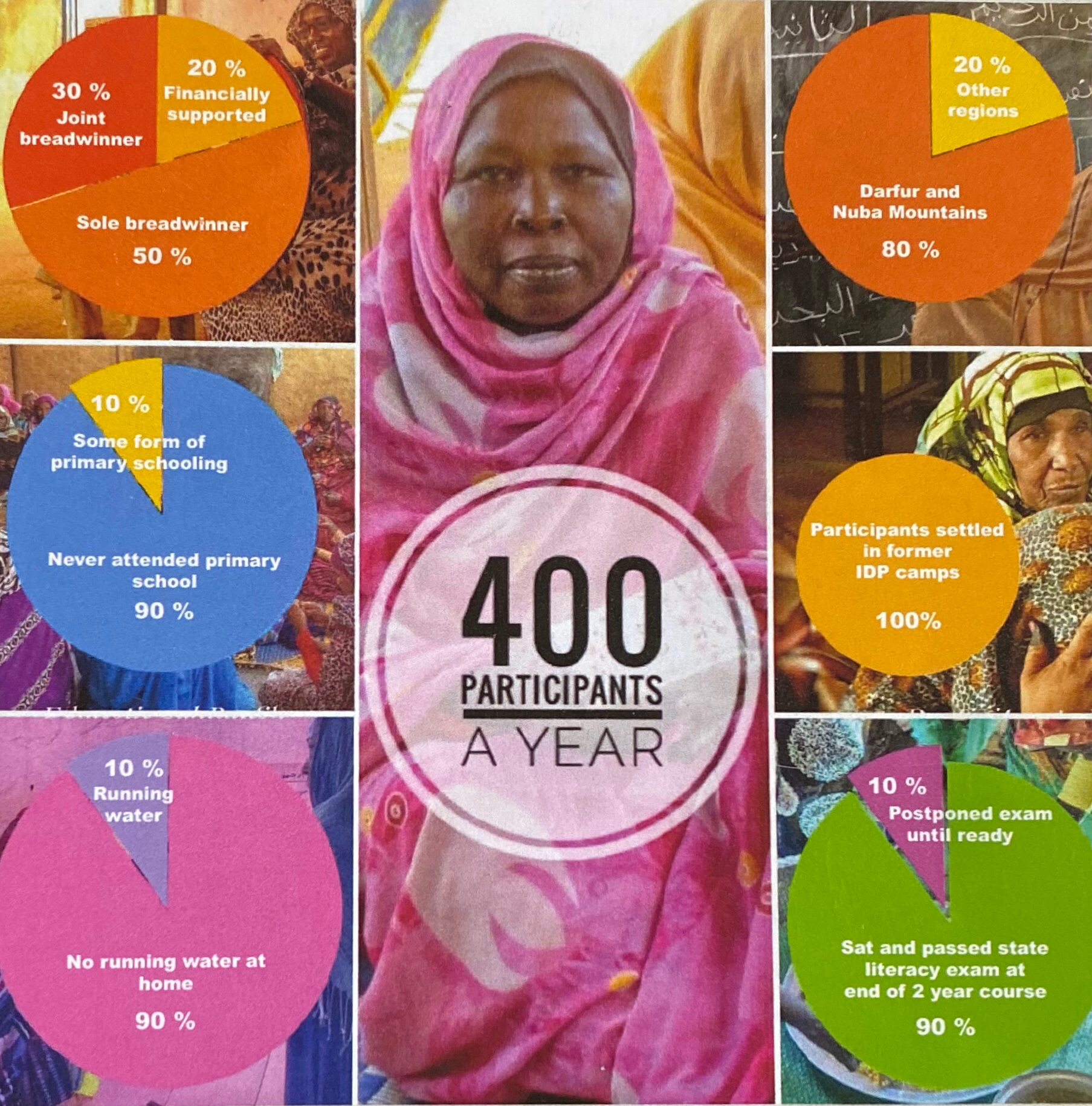
Visit Women’s Education Partnership. See At a Glance to learn about our scale and reach.
Salma, Tea Lady and Alchemist, The Poetry of Coffee, Coffee and Literacy

Salma – Tea Lady and Alchemist
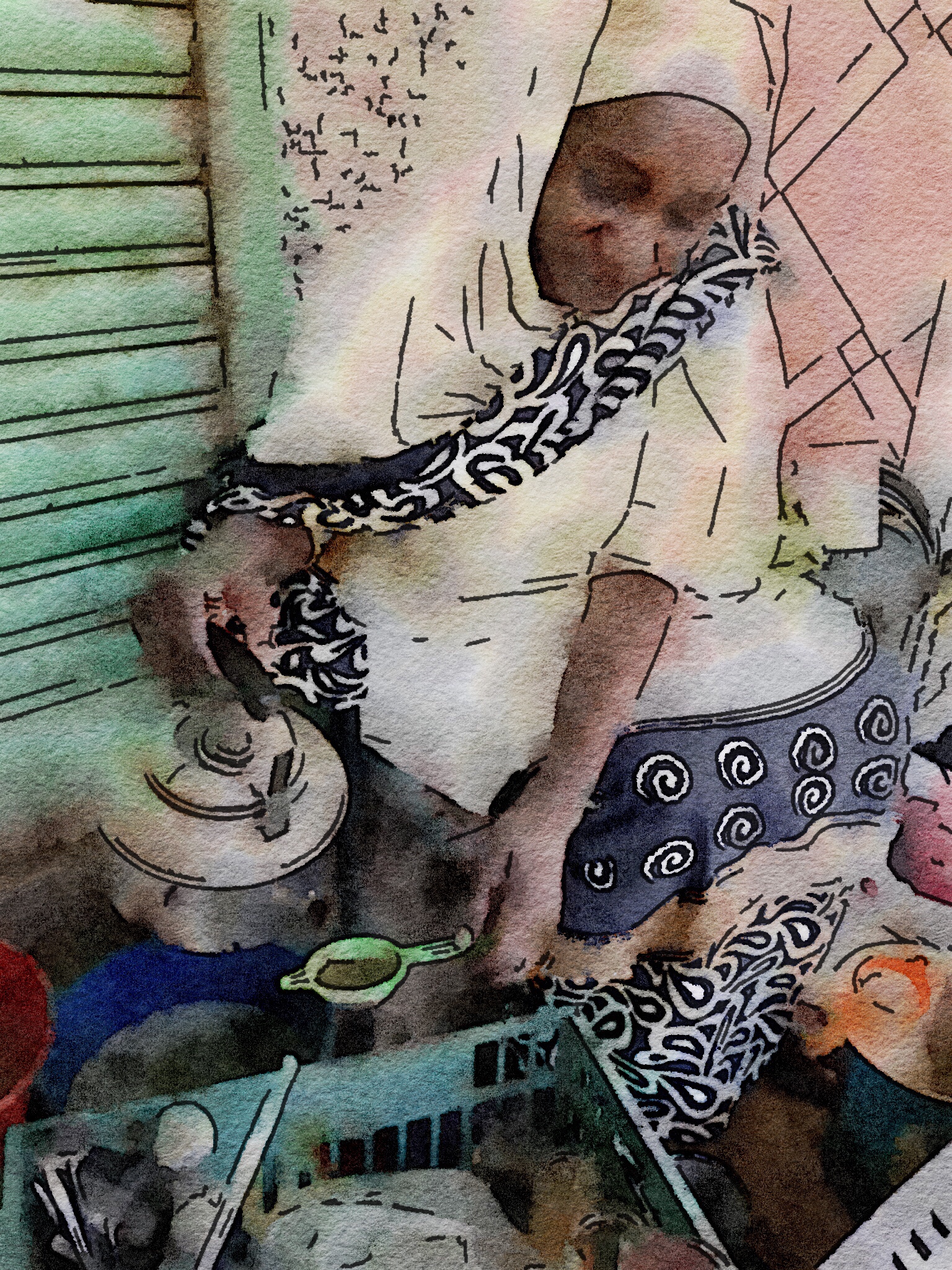
I watch as Salma – I’ll call her Salma – works her quiet morning alchemy. The inch-high silt-drift of sugar in the bottom of my glass coalesces as she pours over the coffee. For an instant the sticky sediment is as dense and aromatic as molten tar, before dissolving upwards in dark clouds as I stir. There is a warm tang of ginger in today’s brew – “It’s good for the stomach and wakes up the brain”, Salma explains, throwing me a knowing smile.
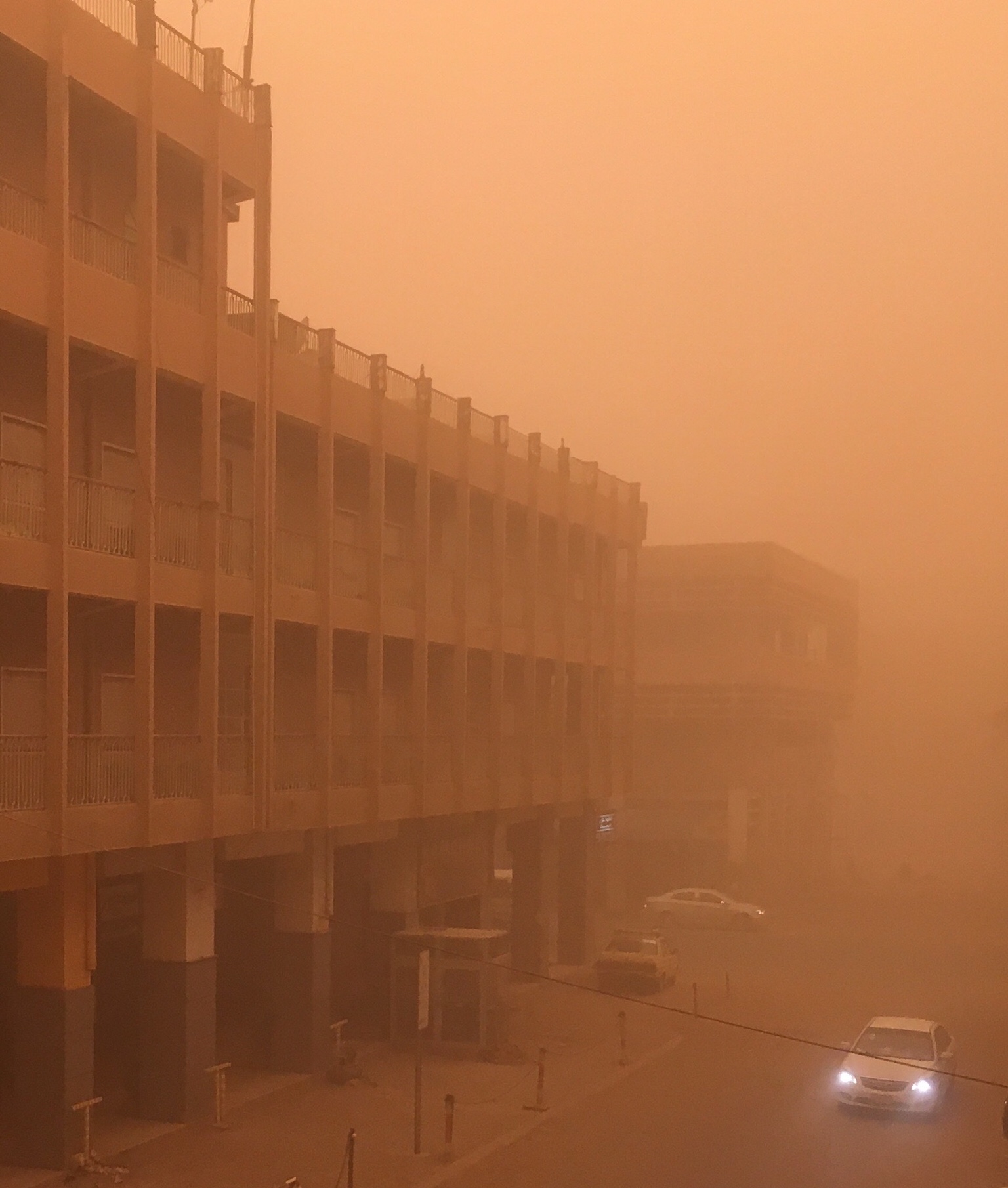
It’s been more than a week since I last saw Salma perched on her nylon stool fanning the coals of her charcoal stove as she prepares tea and coffee for the office workers and taxi drivers of the neighborhood. And even now, a week after one of the fiercest sandstorms or habuub in recent years tore its way down through Egypt to burn itself out in Khartoum, a pall of dust still hangs over the city. Paralyzing local transport, grounding planes and closing schools in its wake, its particles were still noiselessly settling on the city this morning, clogging eyes and nostrils with fine grit and catching at the back of the throat. Like so many others, Salma had lost a week’s earnings during the sandstorm.
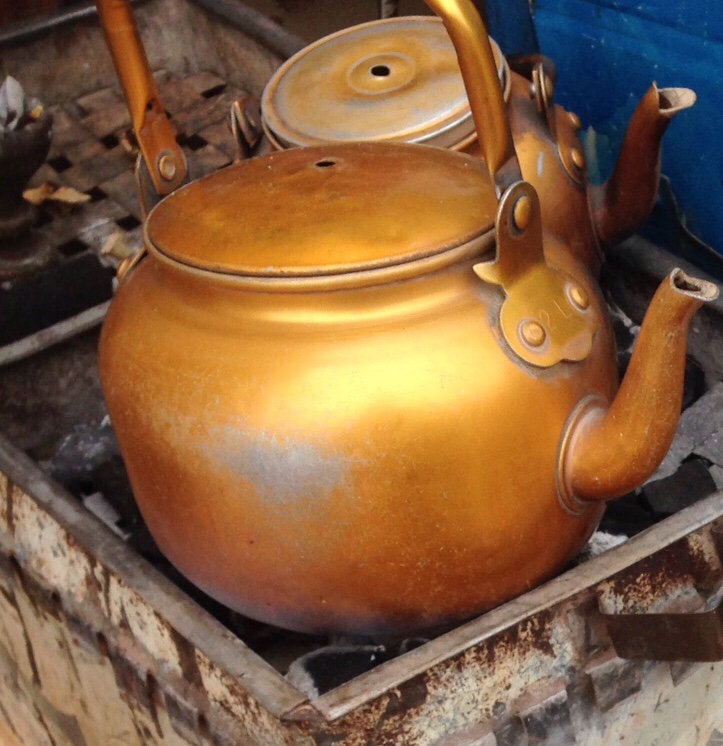
Salma is one of thousands of tea ladies in Khartoum who trek into the city at dawn to set up their makeshift tea and coffee stalls under office awnings, colonnades, railway sidings – anywhere, in fact, that affords a scrap of shade. Her stall is flanked on the left by a young southerner selling individual cigarettes and lighters piled on cardboard boxes. The long plastic rosary around his neck sways as he nods to me. I nod back. He was born mute, Salma explains as she fills his incense burner with smoking charcoal from her stove. To her right, steam sputters from under a tin lid of a pot-bellied vat of ful beans. The lid is weighted down with a brick but still clatters away as the beans bubble and steam. Once, as the kitchen hand lifted the lid to stir the beans, the contents erupted, disgorging a scalding lava of boiling beans and water over his young hands and forearms. Salma rushed to wrap tea towels soaked in cold water from her rinsing bucket around his burning limbs.
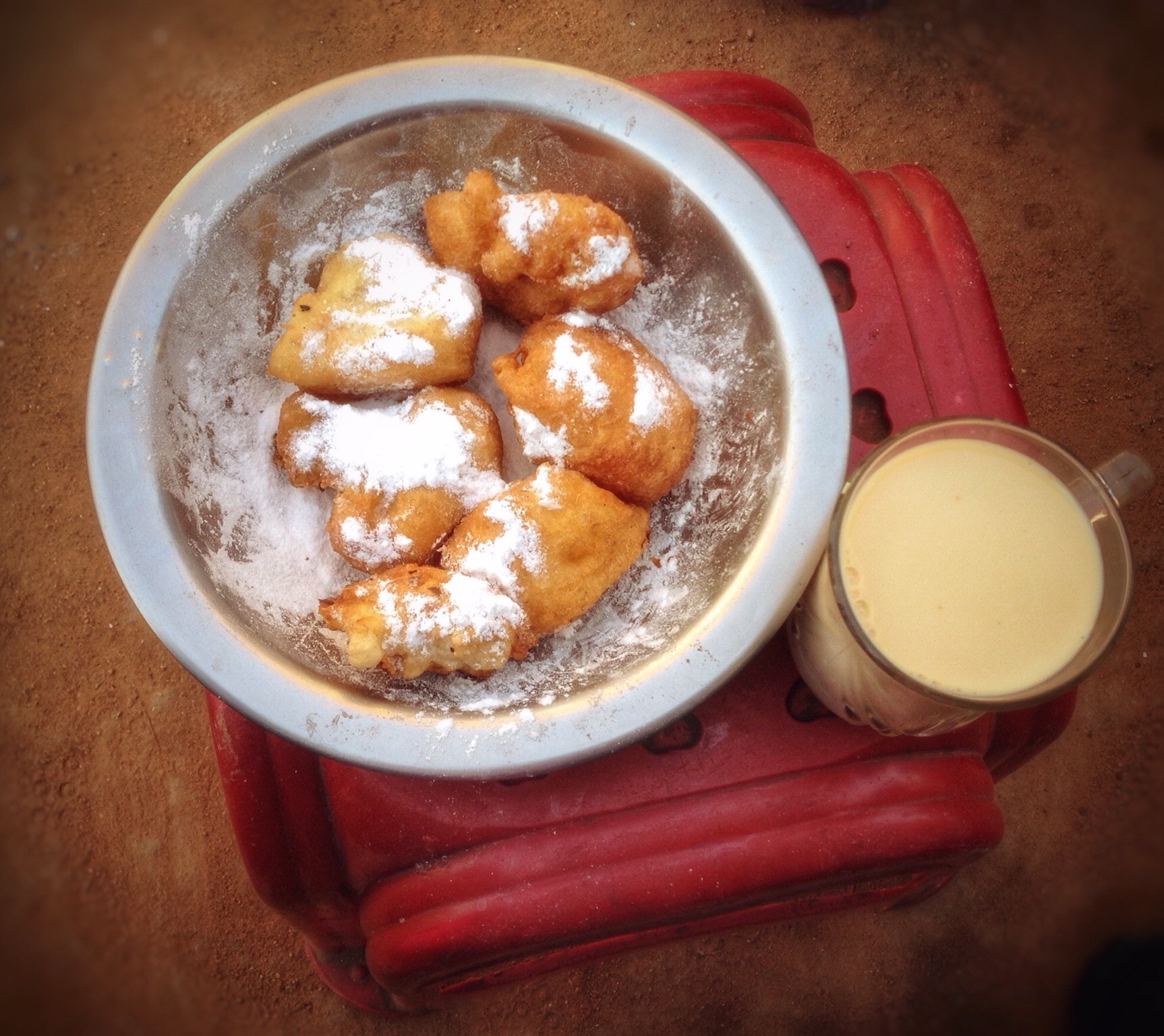
Today she will serve dozens of commuters, office workers and passers-by, though not as many as before. “The offices are closing here and the workers don’t come downstairs to the street any more for their morning coffee,” she says. “Al dunyah shagaawa wa bass”, she sighs. To live is to suffer. And throughout her long day, she will serve the customers she has with courtesy and warmth; chatting and sharing in their jokes and daily grumbles, dispensing advice and wisdom. After carefully sweeping up and packing away her stall in the late afternoon heat, she will journey home to her three children. Like so many of the tea ladies of Khartoum, Salma is a widow and has been the sole provider for her family for as long as she can remember. Years ago she had brought her family to Khartoum seeking both safety and a livelihood away from upheavals and violence of her homeland in Darfur. Her son will soon graduate and become a police officer, she tells me with quiet pride. One of many day-in, day-out alchemies Salma has worked over the years.
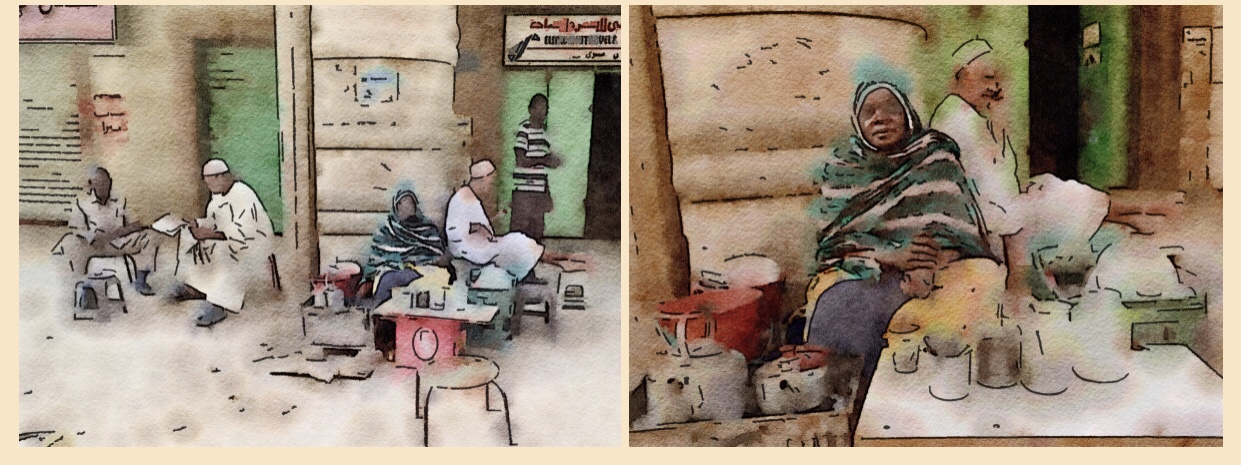
Illustrations above: coffee and tea sellers near Zubeir Pasha Street, central Khartoum, Sudanese drop donuts and spiced, sweet evening tea; below, a seller of nuts and seeds at Omdurman market.
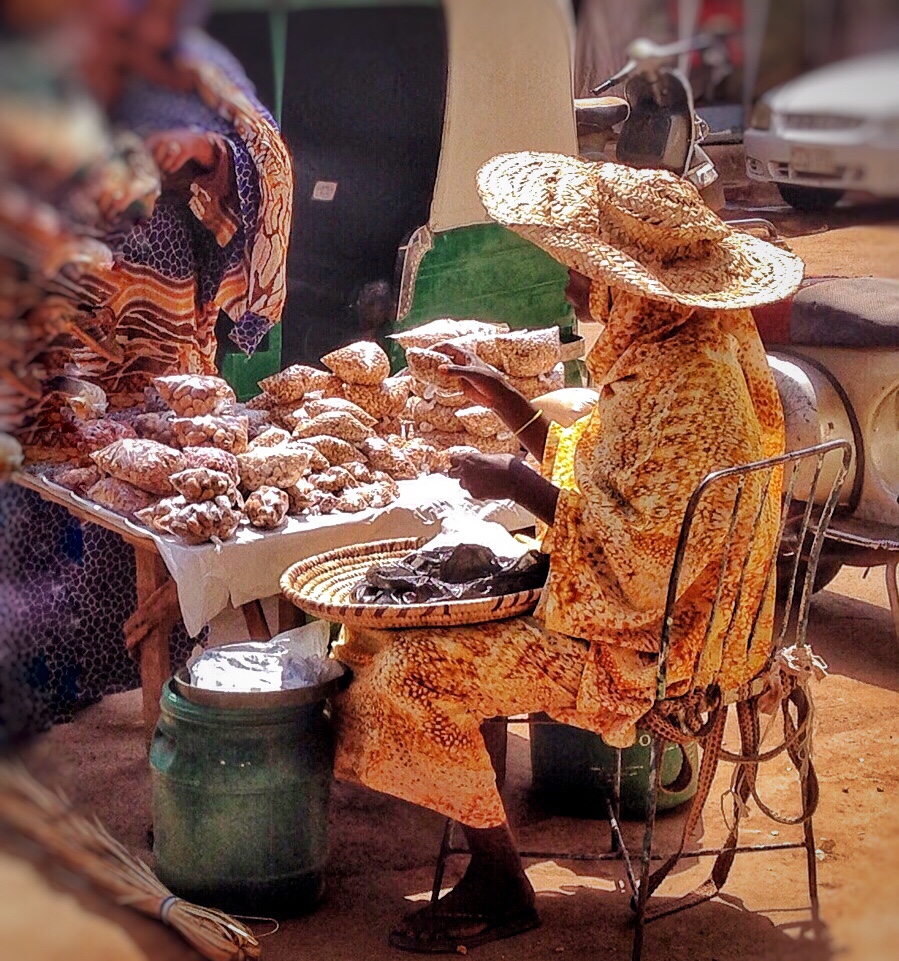
Salma’s story echoes not only that of many other tea sellers but also that of many of our literacy participants who strive for a better future for their children and seek out ways to support their families by running their own businesses. Often these involve selling refreshments and snacks such as roasted seeds, peanuts, biscuits, small cakes; lemonade and kerkedee (flowering hibiscus) tea in their local markets.
See Training the Trainer to learn how literacy trainers designed a role-play to help their participants set up a biscuit making cooperative to help their families and local community. More on Coffee and Literacy below.
Learn more about Community Literacy and REFLECT and Literacy Circles in Action
Below, Zubeir Pasha Street during the sandstorm of April, 2018
Read Zvezdana Rashkovich’s beautifully crafted and poignant short story The Tea Maker here:
The Tea Maker – Zvezdana Rashkovich

http://www.duendeliterary.org/zvezdana-rashkovich/
The Poetry of Coffee – Another Alchemy
“I place myself on a bamber beside Haboba, watching her as she grinds more coffee beans for the jabanah. I don’t need to ask her, I know she is making it just the way I like it – fresh, strong and so sweet I feel an instant run of energy to my system, jolted by the richness of the beans and the company of my beloved grandmother. it’s less than five minutes before my special jabanah is complete and she hands me my small funjan brimming with sweet steaming coffee.”
A Funjan Full of Sudan – Amal Osman, I know Two Sudans p114

There is both grace and ritual in the offering and serving of Sudanese tea and coffee, embodying as it does the Sudanese values of hospitality to the stranger and generosity to the friend. It provides an aromatic backdrop to family reminiscences while friendships are reforged, differences are laughed off and the world is put to rights. And as Amal Osman treasures the moments she shares with her grandmother over coffee, she reminds us that the ritual of preparing and sharing coffee not only draws generations together –
“I laughingly tell her she must have put some of her soul into this cup because it is so good and rich, just as she is in spirit. Her hearty laugh fills the sweet air as she tells me it is only as good as the one drinking it.” A Funjan Full of Sudan, p114

But can even lead to the alchemy of love –
“She tells me she will teach me how to make the best pot of jabanah there is, so I can catch the best husband – a handsome engineer, or better yet, a doctor.” A Funjan Full of Sudan, p114
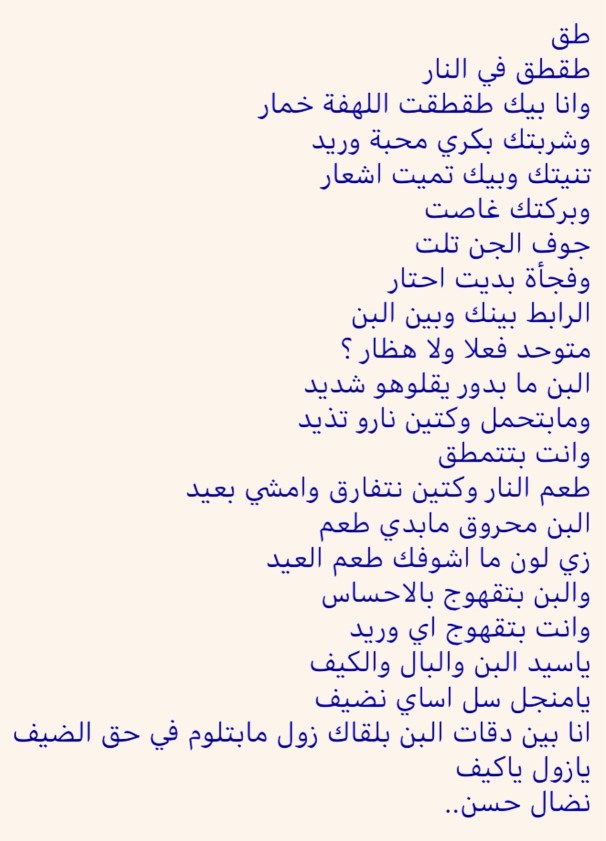
Nadal Hasan al-Hajj’s beautifully onomatopoeic poem, El Bunn TaqTaq, The Crackle and Pop of the Coffee Beans, captures the rhythmic ebb and flow of thoughts and feelings as she savors her morning coffee. You don’t need to understand Arabic to enjoy this melodic :
Al-bunn TaqTaq, TaqTaq fi-n-nar – A poem by award-winning young Sudanese poet, Nadaal Hasan al-Hajj.
Coffee and Literacy
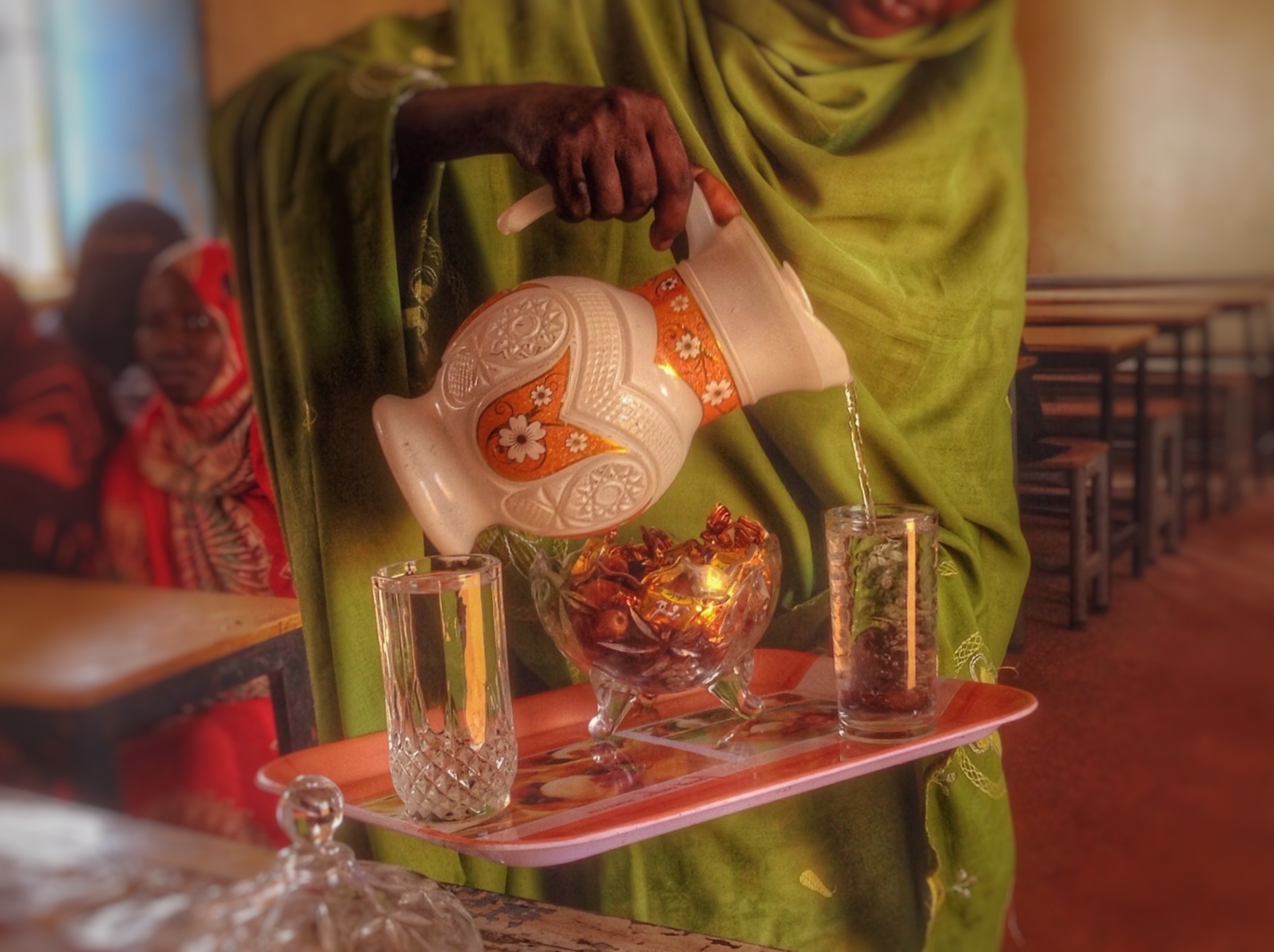
Offering hospitality to literacy project visitors

Coffee mornings to raise support for literacy projects are popular everywhere and being able to provide settings where young and old can get together over a coffee to read, write and discuss literature is seen as ever more central to inspiring literacy and creativity. But the REFLECT literacy and development approach takes this a little further. Talking about making and serving tea and coffee to family and guests can be the starting point for real development work as it provides a vehicle for literacy workers to initiate discussion on broader issues such as the daily routines of food preparation, gender role divisions in food growing, shopping and preserving; seasonal variations in food supply, choices surrounding family meals, their nutritional values; hygiene and health risks in food choices. And of course all the elements held to be relevant and important by the participants are the starting points for acquiring both literacy and numeracy as their spellings and quantities are debated, dictated and practised.
Above, participants of Jabarona Literacy Circle roleplaying dialogues around the coffee pot on social issues

Above, REFLECT manual sample chart for assessing foods on cost, ease of preparation and health grounds and a literacy circle participant discussing seasonal fruit and vegetables
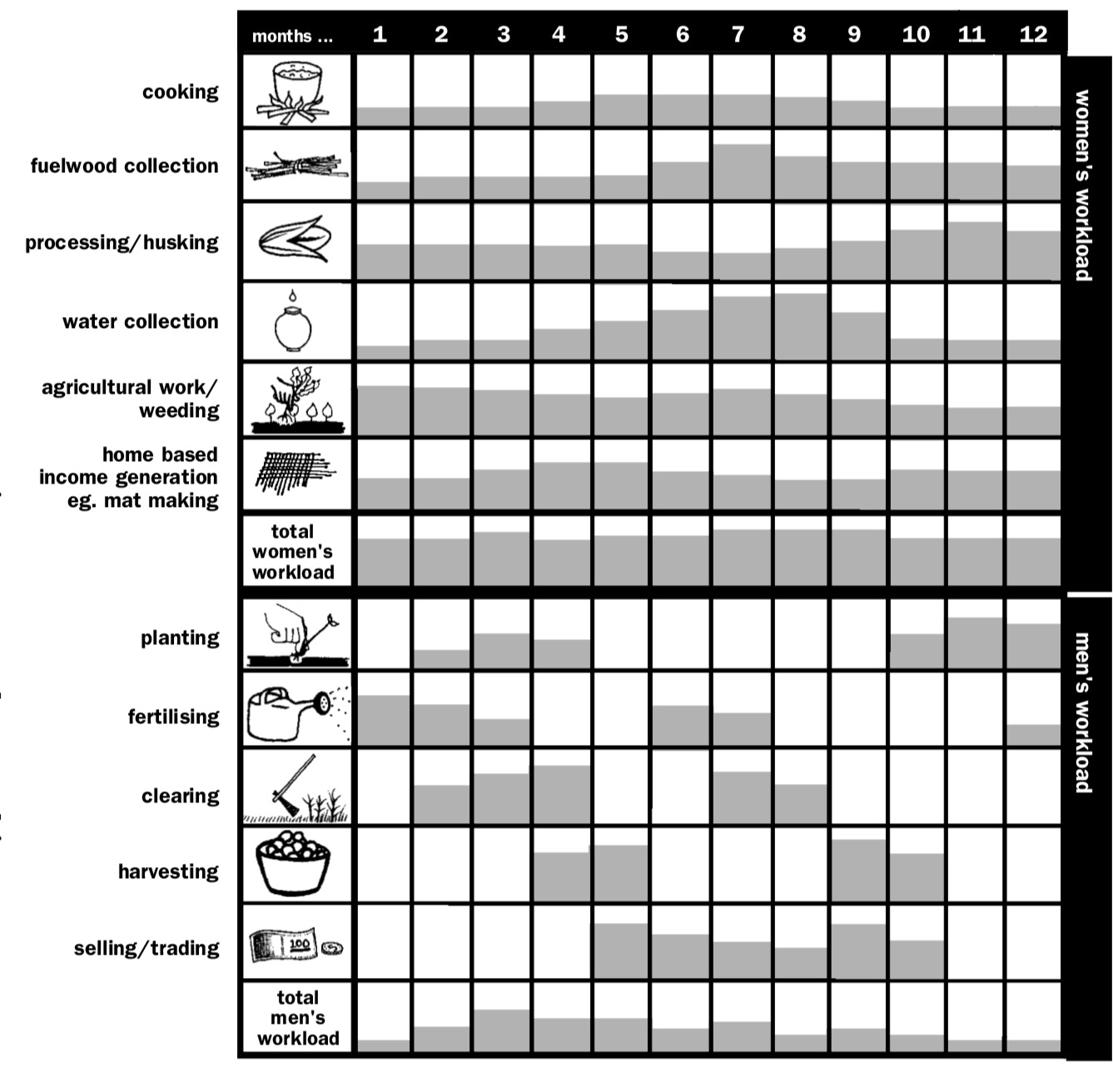
REFLECT training materials – gender workload grids
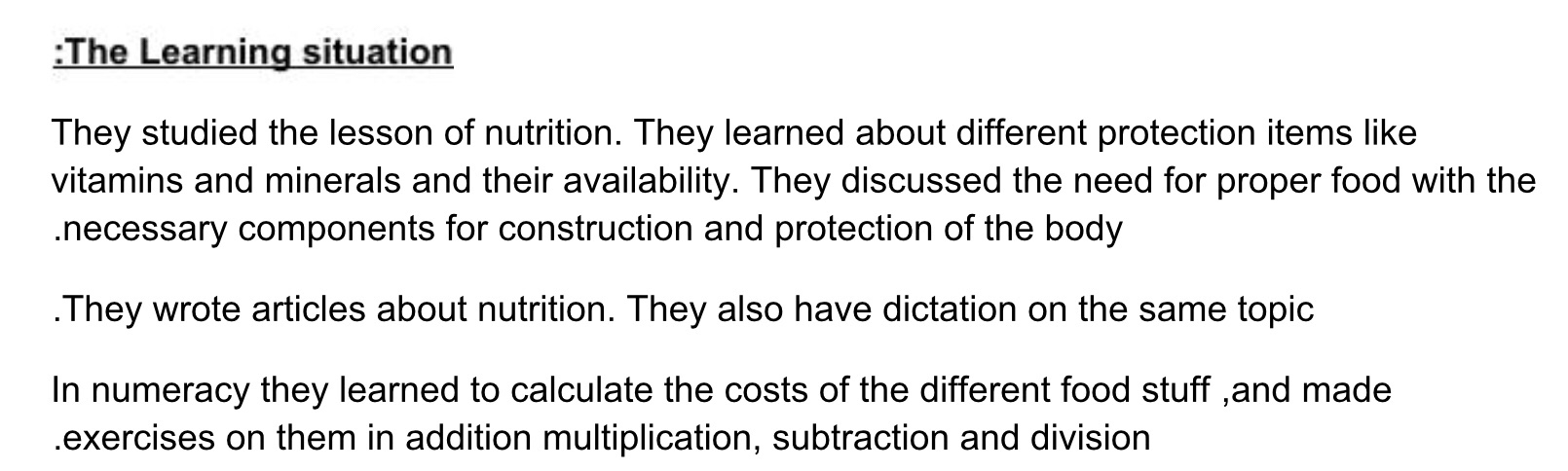
As the extract from monthly report below shows, serious practical work can come out of these discussions:

And here:
Sometimes our participants request formal training in food preparation and processing and this can lead on to employment by both local and national companies:

More on our participants’ experiences of food processing traineeships in future posts.
As Amal Osman lyrically recalls above, sitting down to a funjan of coffee can break down generational barriers and open the door to a renewed sense of mutual understanding and sympathy as life stories are exchanged and bonds are forged. It also allows for sensitive and thorny issues to be touched upon and explored. And this is particularly relevant for the REFLECT literacy worker who recognize that “conflict is a reality in people’s lives and should be addressed constructively, within the REFLECT process, not suppressed or avoided” (The REFLECT approach to literacy and social change: A gender perspective, Cottingham, Metcalf and Phnuyal, 1998).
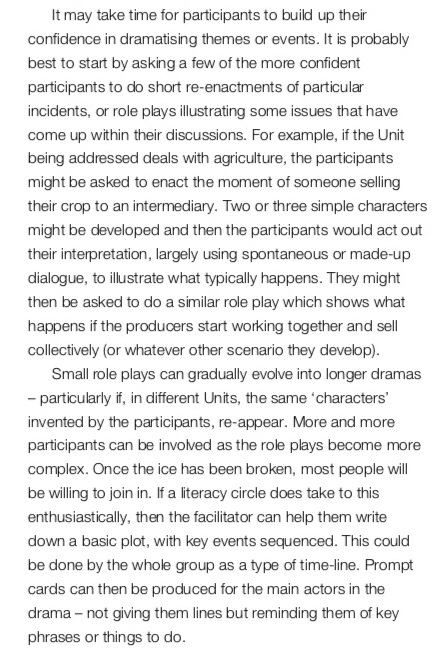
Developing role plays that work is a complex art with takes time and skill to nurture, as REFLECT training materials emphasize:
REFLECT Mother Manual, Applications, p174
In Jabarona literacy circle, amid singing and clapping, a group of participants role played situations reflecting social issues as the coffee flowed.

Our audio file of the role-play coffee-roleplay.m4a
If you would like access to a video clip of this role play, please get in touch.
There is a long road ahead and much more work to be done in this area but the last word should, perhaps, go to our participant who told us –

Coffee in Khartoum
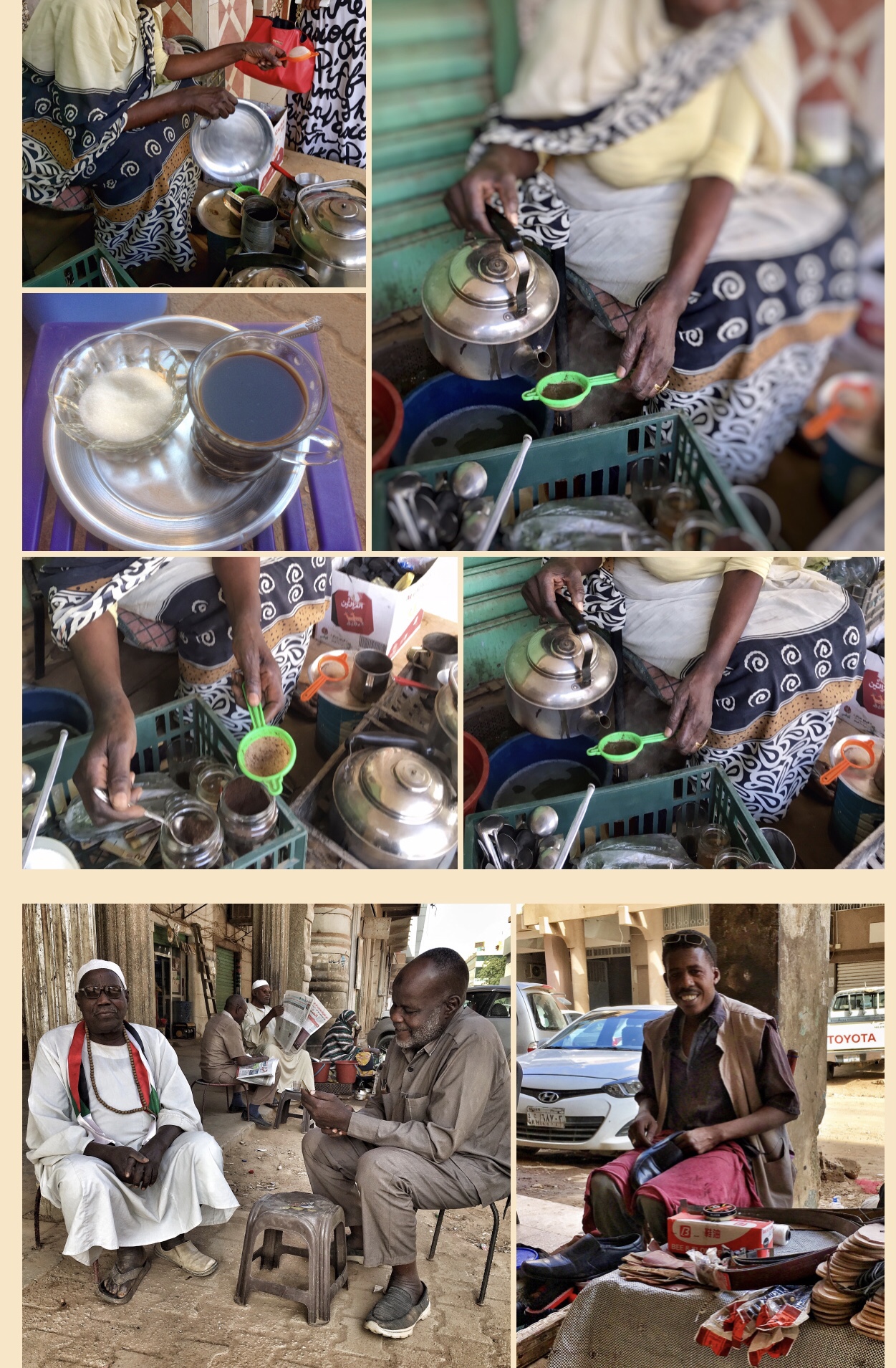
Chatting while the shoe-shine finishes his work; a tea stall on Qasr al-Nil Street, early Friday morning.
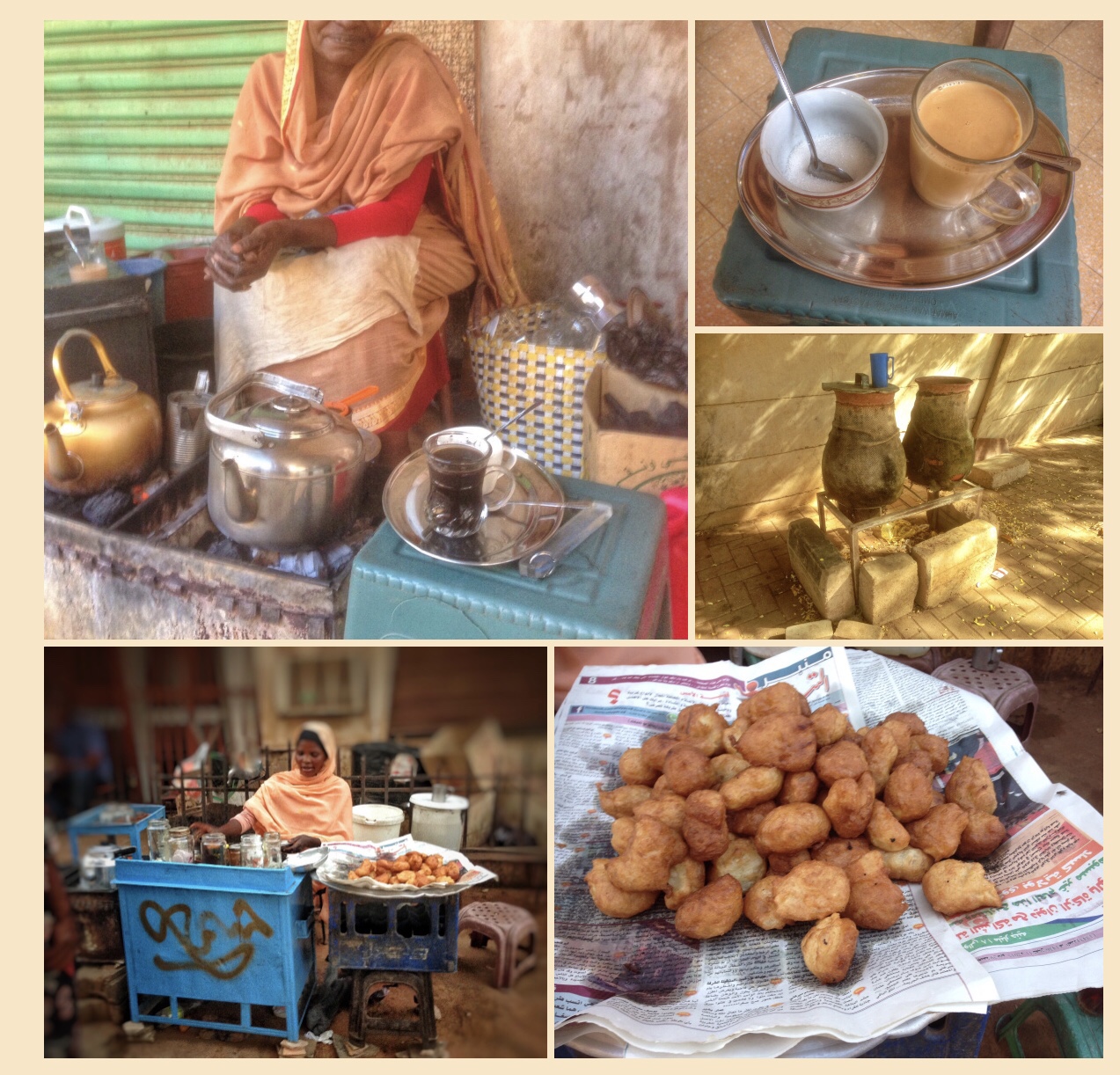

From personal collection – coffee and conversation.
 Women's literacy in Sudan