

Coffee and Hibiscus Flowers 2
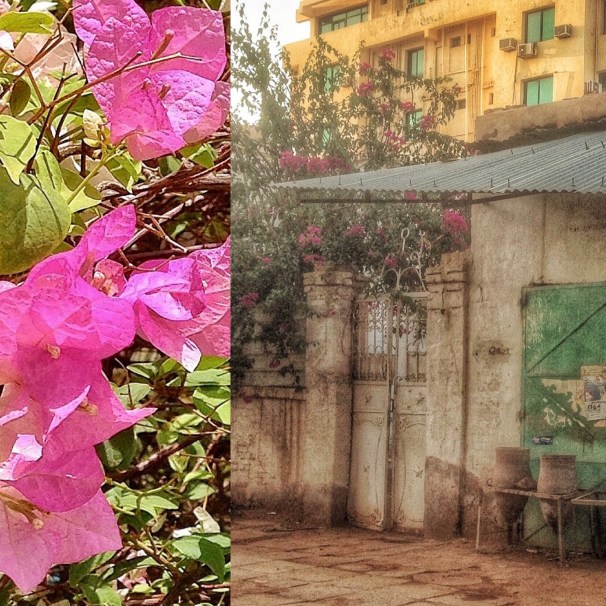
Title photo, still from Mutaz’s Aljazeera video, showing the vivid red silhouette of a robed form painted with hibiscus or kardadee juice, made from the flowers pictured below.
The use of natural tints and dyes is central to Mutaz’s artistic vision.
In Conversation with Mutaz Mohammad Al-Fateh
Setting the Scene

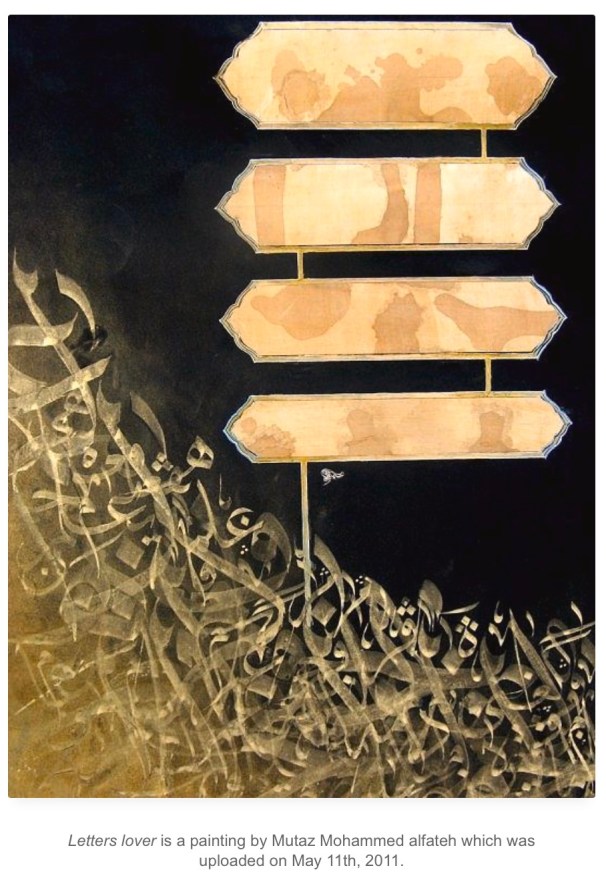
Above, the fluid forms of Arabic calligraphy emerging from monochrome liquid base.
Mutaz Mohammed AlFateh Profiles
Mutaz was kind enough to talk to me this week about his life and work in a quick-fire, ten-question interview that encapsulates moments of his artistic journey up to now. Please see last week’s post below for background on this remarkable young artist:

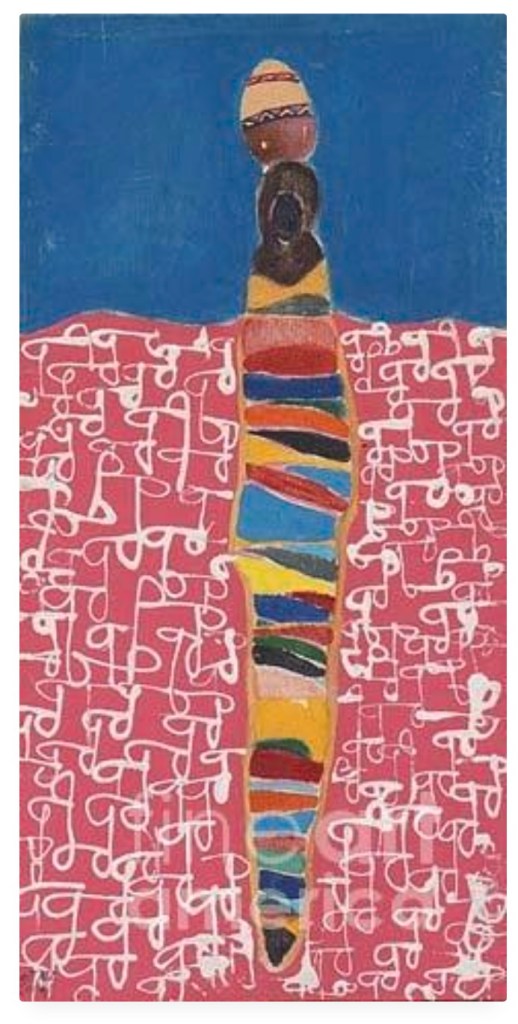
Above, detail from one of the works Mutaz discusses below. Traditional Nubian motifs marry masked African and ancient Egyptian forms, embedding the recurring gaze of the protective eye and his signature headdresses, homage to Nubian iconography and cultural power.
Below, collage of some of Mutaz’s works, (source; Mutaz’s Gallery, Facebook). Top left, painting with kardadee juice; top centre, the hard outer rind of the doum fruit, soaked for its earth tints, top right, examples of prints made using doum and nabag fruits.
See more of his work in Mutazartist

Below, dried hibiscus flowers and nabag fruits in Mutaz’s studio. The nabag,(Ziziphus spina-christi/ sidr), fruit of a variety of jujube tree, is found in western and central Sudan and is eaten fresh or dried. It is also used to treat respiratory diseases, hair and scalp conditions and as a laxative.

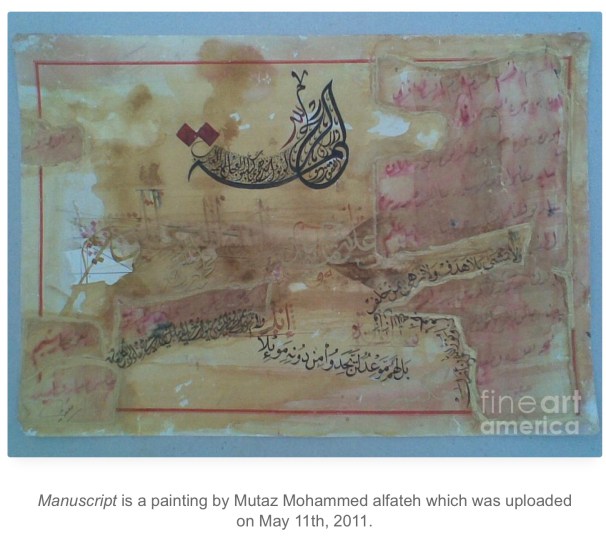
Below, Mutaz’s most recent work; vibrant with natural dyes from roses, trees and blossoms, uniting northern and southern Sudanese esthetic forms. This piece is entitled “We have become three”.

This is a cultural post for

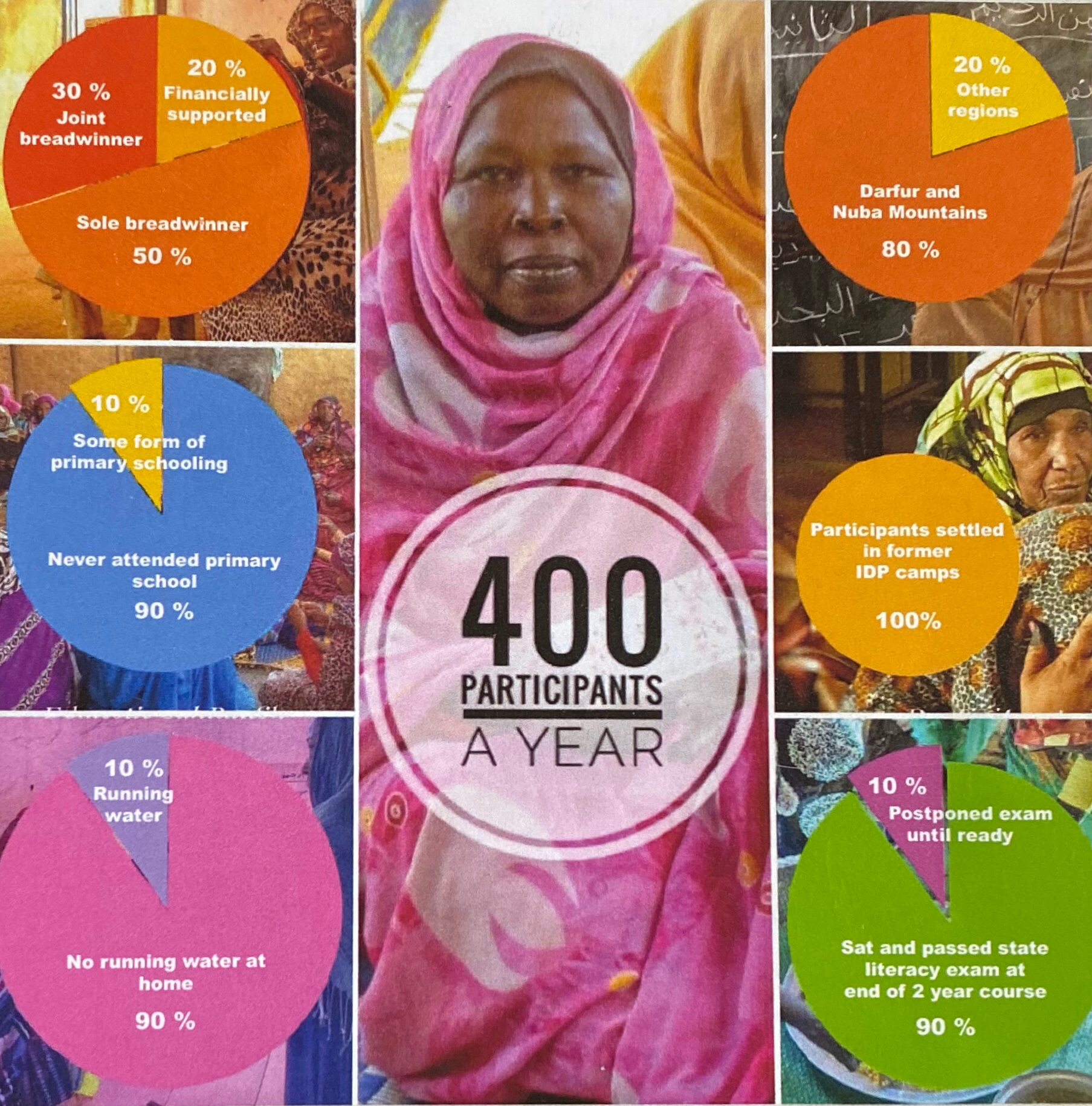
Help us to provide educational opportunity for women and girls in deprived communities.
See Latest News and At a Glance for more about our work.
See Coffee and Hibiscus Flowers for an English commentary of the Sky News report with Mutaz below, where he explains the natural sources of the tints and dyes so central to his work.
Below, details of some of Mutaz’s coffee paintings (personal collection).

In a Nutshell; Ten Questions for Mutaz Mohammed Al-Fateh

1) Imogen Thurbon (Imogen): Mutaz, thank you so much for your kindness in giving me your time today. Could I begin by asking which contemporary Sudanese artist or artists have inspired or influenced you the most?

Mutaz Mohammad Al-Fateh (Mutaz): I stand in awe of many contemporary artists but I don’t feel I have been particularly influenced or inspired by them in my own work.
2) Imogen: How do you see your artistic style developing?
Mutaz: It’s evolving as I strive for continuity through innovation, at the same time, giving weight to what flows from all my various forms of artistic experimentation – and being bold in that experimentation.
Mutaz Mohammed AlFateh Profiles
3) Imogen: How has Nubian art and culture influenced your work?
Mutaz: Nubian culture stands out as distinct and different. But I have to say I rebel against it (Mutaz uses the word for mutineer in his reply) – I am looking to express something new, individual, make my own mark in everything I do.
4) Imogen: Could you say a little about about what you’re currently working on and how you would define your artistic message?
Mutaz: The most important thing for me now is returning to nature in my work, applying my own vision to it; its raw materials, forms and concepts play a key role in connecting with others.
5) Imogen: Where do you see yourself ten years from now?
Mutaz: I would like to be able to share my artistic vision – what’s embodied in my work – with anyone and everyone.
Mutaz Mohammed AlFateh Profiles
6) Imogen: How would you describe the Sudanese artistic scene?
Mutaz: An interweaving of diversity and cultural richness.
7) Imogen: What challenges do young Sudanese artists face?
Mutaz: So many flee from facing up to their own particular artistic and personal challenges, or lack the confidence they need in themselves.
Mutaz Mohammed AlFateh Profiles
8) Imogen: Tell us about your childhood.
Mutaz: I come from a big family that cared about science and culture. Art shaped me as a child, making me free, adventurous, daring – always seeking out what was different.
9) Imogen: Do you come from an artistic family?
Mutaz: Yes! I have to say my family are pioneers in science, culture and art. And I’m an extension of that.
10) Imogen: Can you tell us a little about the inspiration for this work?
Mutaz: Every era has its own unique, inspiring figures and those in this work channel the qualities of their forefathers.

Thank you so much, Mutaz, for generously offering your time today and answering so many questions! We look forward to seeing more of your remarkable work soon and I know many will be following your career with great interest.
 Women's literacy in Sudan