


Above, a collage of Hajja Awadia and her flagship fish restaurant in Omdurman. Scroll down to the end of this post to view an evocative 12-minute video on her life, subtitled in English.
This week’s brief post is a tribute to the groundbreaking work of a remarkable pioneer for the rights of Sudanese with disabilities. Hajja Awadia (Awadiya) Rajab, is affectionately known by millions of Sudanese as “Awadia Samak”, after her legendary fish (samak in Arabic) restaurant in Omdurman.
A source of inspiration for those with disabilities throughout the world, Awadia has been honoured both at home and internationally, and late in life, now enjoys near celebrity status.

Above, one of Awadia’s much loved fish dishes. Learn more about her restaurant and read an Arabic transcription with explanatory notes of a short video report in Awadia and her Fish Restaurant.
The post draws on reports published by Aljazeera Arabic and other Arabic language news outlets, outlining her fascinating life and achievements. Title photo, collage of press photos featuring Awadia. Below, stills from one of many recent Youtube interviews with Awadia, picturing her at home with her family.
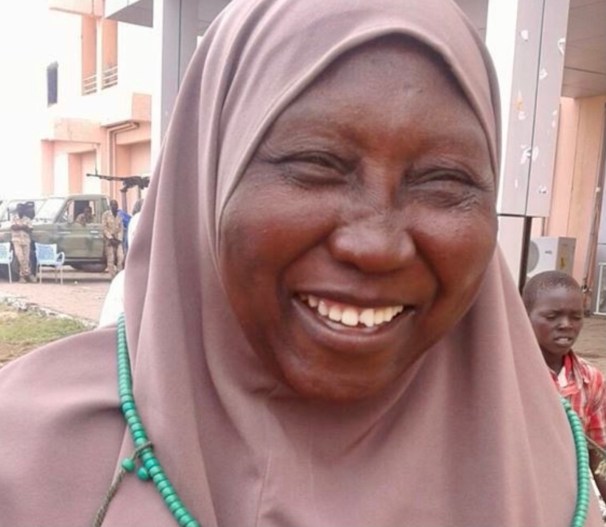
“Awadia Samak”
Early Years
Championing Sudanese with Disabilities
“Awadia Samak” – Early Years

Awadia, of South Kordofani heritage, was born in Khartoum in 1951. Childhood memories of the poverty suffered by those around her were to inform her life-long commitment to empowering those battling at the bottom of society, especially those living with disabilities. Having missed out on school and the chance of learning to read and write after polio left her severely physically disabled as a toddler, Awadia married “a simple man who owned nothing but a cart to support his family”. Compelled to leave her three-month old at home – now a graduate, Awadia proudly notes – while she sought out work to feed her children, Awadia became acutely aware of the challenges facing women only looking for the dignity of “an honourable means of employment”.

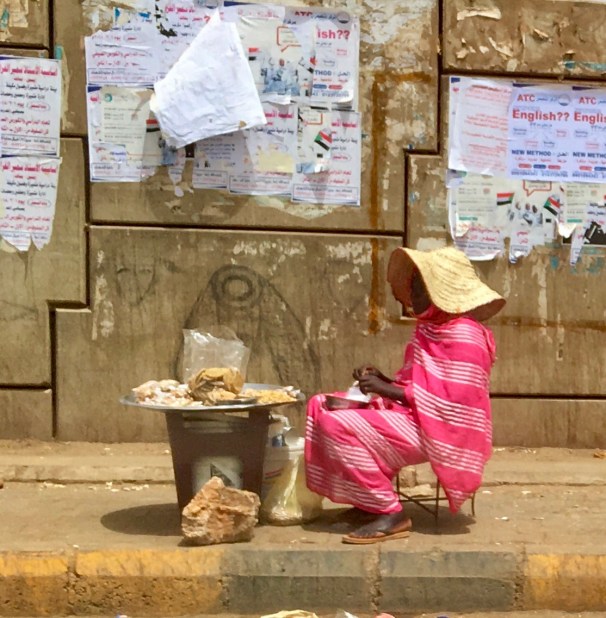
After spells selling seeds and sugar cane snacks, (left), a friend persuaded her to join her on the banks of the Nile, making tea and donuts for the fishermen there. She was to endure several years of cat-and-mouse police harassment as. unlike her able-bodied companions, she was unable to flee the police raids on foot, facing repeated confiscation of her cooking equipment. When fishermen returning with their catch took to asking Awadia to cook their fish “in exchange for fresh fish to sell on her own account”, a modest business started to flourish. After being evicted and moved on several times by the authorities, Awadia eventually acquired the small shop which was to become one of the most successful restaurants in Sudan, believed at one time to enjoy takings of over 10,000 pounds a day.
Frequented by workers, businessmen and families alike, Awadia Fishes went from strength to strength, even rising phoenix-like from the ashes of the fire which gutted the premises in 2014. Awadia ensured that those who worked for her would enjoy decent conditions, employing mostly local women, those with disabilities and students needing to save for their studies. As the business flourished, Awadia increasingly turned her compassionate gaze to developing foundations, most notably The Al-Rawdah Charitable Association, and workshops that would provide life and income-generating skills for Sudanese with disabilities and others in need.
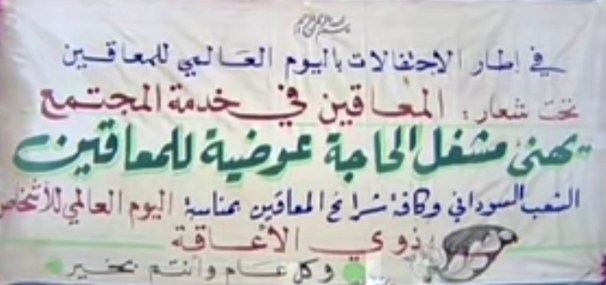
Below, sign for Hajja Awadia’s Workshop for people with disabilities.
This is a literacy and orphans post for

See Community Literacy, Latest News and At a Glance for more about our work. We are committed to extending our work serving our beneficiaries with disabilities. It is estimated that women make up 47.85% of Sudanese with disabilities, most living in rural areas. Sudanese with disabilities are highly dependent on non-governmental and foreign-funded support. Sudan – In Search of Confluence
Below, one of our literacy participants who later underwent successful cataract surgery under our eye care programme.

See more in Restoring Vision – Our Eye Care Programme
Sudanese culture is overwhelmingly one that is tolerant, kind and caring. However, as in all societies there are failings, as expressed by a research interviewee below, recounting the lived experience of so many Sudanese with disabilities:
“……Many people with disabilities are not educated. Those who want to go to school do not have money to pay for school fees. The reason disabled people are under-educated is because they are always hidden at homes. Second, many people can’t afford the bus fare, you cannot find information about jobs. Third, persons with disabilities are not given information about availability of resources….” Southern Sudanese Displaced interviewee living in Khartoum. Understanding Disability in Sudan
For an in-depth review of our commitment to the Sudanese communities with disabilities we serve, see

“Awadia Samak” – Pioneering Campaigner for Sudanese with Disabilities

Awadia’s enduring mission to support all in need led her to establish a series of workshops to train women with disabilities in sewing, embroidery, henna tattooing and handicrafts, enabling them to work “without obstacles or fear” for their communities. This was followed by more workshops, dedicated to the training needs of young men and women. “I have been taking care of them constantly, providing them with material and moral support, encouraging them to strive, work and be self-reliant”, Awadia told Aljazeera.
Awadia is also involved in micro-finance projects for poor families, providing sewing machines, brick-making and pasta-making equipment and organizing courses in first aid and breast cancer awareness. Kordofan remains close to her heart and she told Al-Arabi Al-jadeed her dream remains to reunite families separated by cruel circumstance there.
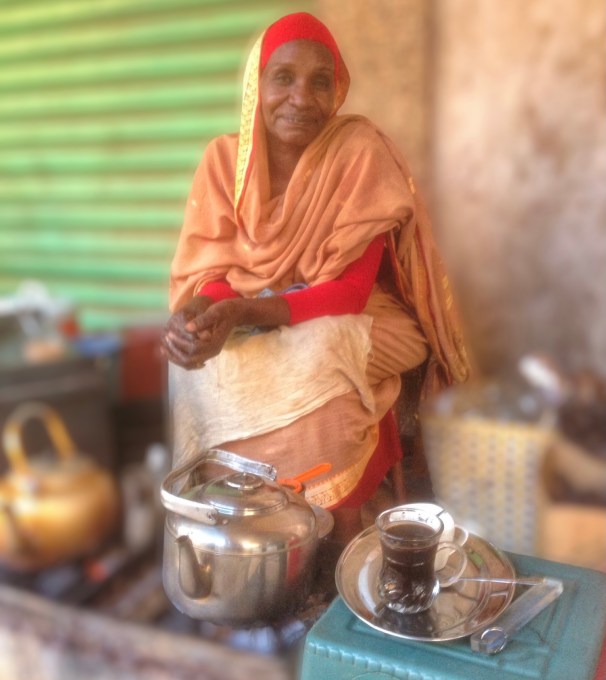
The memory of the relentless police raids she was subject to while selling tea as a young woman has led Awadia to also champion the rights of tea sellers – a cause also close to her heart – urging local authorities to issue vending licences and campaigning against police raids and harrassment.
Right, tea and coffee seller in Khartoum.
“Yasser Sayed Ahmed – a person with mobility disability who is cared for by Hajja Awadiya Rajab – says with a smile; Awadiya, our mother, has been unstinting with us, always generously supporting us and anyone in need.” Aljazeera
Learn more about Awadia’s remarkable life in the short video below which captures something of Hajja Awadia’s spirit and determination:
 Women's literacy in Sudan