

The Vulnerable Soul
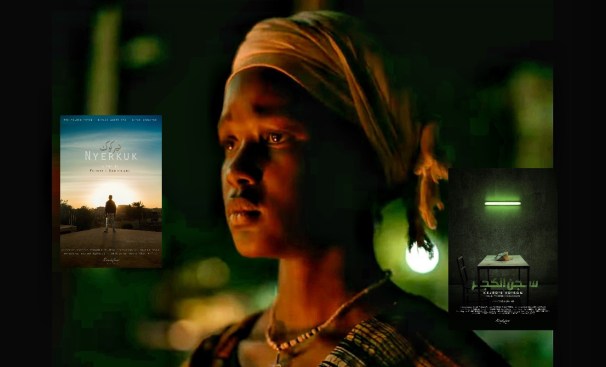
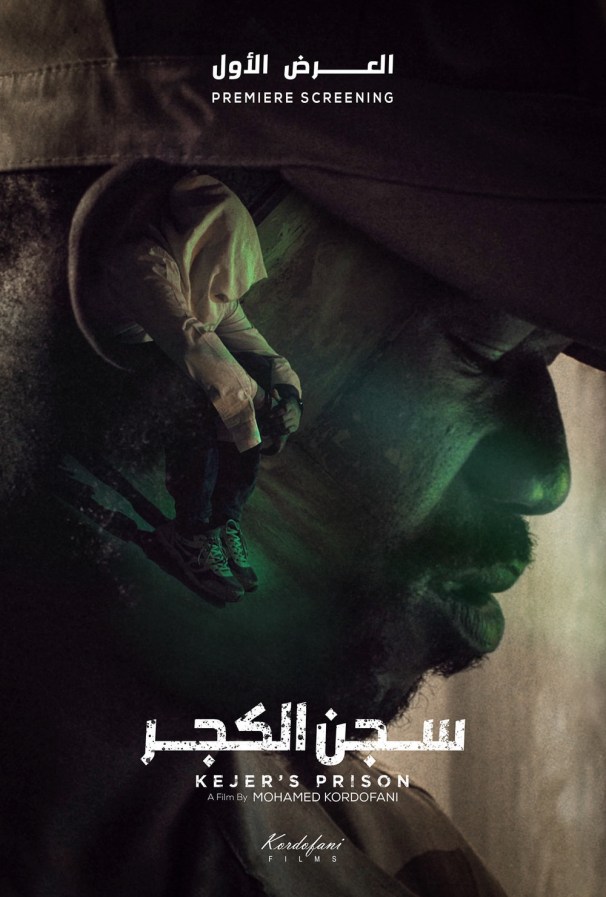
Above, posters for Mo Kordofani’s short films, Kejer’s Prison and Nyerkuk flank that of his recent award-winning feature film, Goodbye Julia, the first Sudanese film to be honoured at Cannes and winner of the film festival’s prestigious Un Certain Regard, 2023.
There will be a detailed review of Goodbye Julia next month. The trailer for the film appears below. Mo Kordofani’s exquisite, short promotional tribute to Sudan commissioned by the post-revolution transitional government, This is Us, is also embedded below.

The Bahrain-based aircraft engineer turned accomplished Sudanese director made his mark early on with another award-winning film, Nyerkuk, in 2016. This lyrically filmed plea for compassion for the poorest in Sudan opens with an overhead shot of a glistening lake of black ink cradled in a gourd bowl. In the early morning light of a village thronging with birdsong, a young boy is scratching out letters on his wooden lawH, used for practising and memorizing verses of the Holy Quran, while his father watches the sky above warily. Just audible against the birdsong is the faint drone of a warplane. In the opening scene of Kejer’s Prison (2019), under harsh neon strip lighting, a young officer in uniform observes himself in a locker door mirror as he conceals his face with a scarf. Over a crackly radio, orders for his unit to mobilize and subdue demonstrators are being issued.
Above and title photo, still from Kordofani Films and Klozium Studios Nyerkuk. Nyerkuk is an affectionate term for a young boy, used by many southern Sudanese.See too The Making of Nyerkuk and Nyerkuk: The Latest by Kordofani FIlms Ola Diab
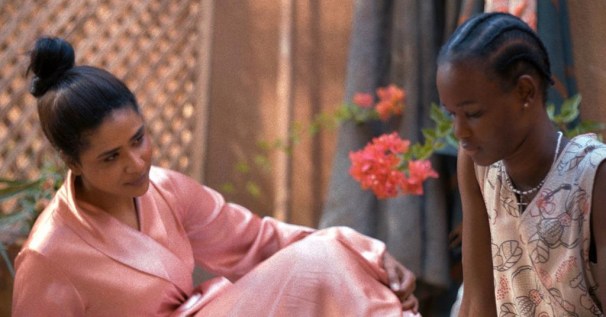
Violence or the threat of violence permeates the worlds inhabited by Mo Kordofani’s protagonists. And with it, a Dickensian understanding of how character darkens or is illuminated in its hold. With tragic irony, much of Goodbye Julia was shot, the director recalls in his Cannes interview with The Upcoming, within earshot of mass demonstrations and amidst clouds of teargas. (See too I walk red carpet as people flee bullets)
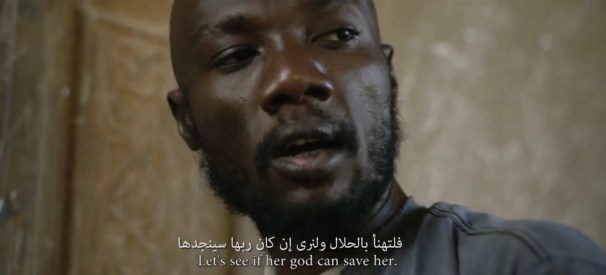
The eponymous hero of Nyerkuk ends up in the clutches of the leader of a gang of child thieves living on the streets of Khartoum. When he is forced into betraying his young friend by confessing to the gang leader that she had indeed claimed that stealing was forbidden by God, the leader brutally seizes the girl and taunts Nyerkuk: “Let’s see if her god can save her. Or am I wrong, Nyerkuk? What’s more haram (forbidden) than what happened to you? Bombs and planes killed your father and sent you here barefooted. Trust me, I’m like a father to you..”
Below left, still from Nyerkuk, and above right, Goodbye Julia, Kordofani Films.
The child first seen writing sacred verses is asked to reassess the very essence of sin through the words of a cynical thug. And Mo Kordofani’s audience must do the same in a journey the director hopes will lead to a process of compassionate self-examination where loss of certainty is embraced and humility sparks empathy. It is a journey demanding unflinching personal honesty and one the director tells us he himself strives to undertake as he tracks the changes in his world view over the decades and explores how they have informed his work.
Unflinching honesty is at the heart of both his need to expose, layer by layer, the sediments of segregation he sees as deforming Sudanese society and of his questioning of certain religious understandings of conflict, identity and how we should treat one another. When young hero of Nyerkuk finds himself thwarted in his attempts to burgle a home, he escapes into the stillness of empty streets whose silence is broken by the dawn call to prayer. The antihero of Kejer’s Prison is fervent in his belief that anti-religious forces are at work to sow chaos in the country he so loves. Reviewers note that in Goodbye Julia a Muslim woman sings in a church. The courage of Kordofani in broaching these issues cannot be overestimated, nor the compassion of his gaze.
“By God’s grace I have a roof over my head and I live a comfortable life. Do you want to send me back to poverty and misery? And for what?” Fears of poverty, lawlessness and chaos haunt the protagonist of Kejer’s Prison. Below, still from Kejer’s Prison.
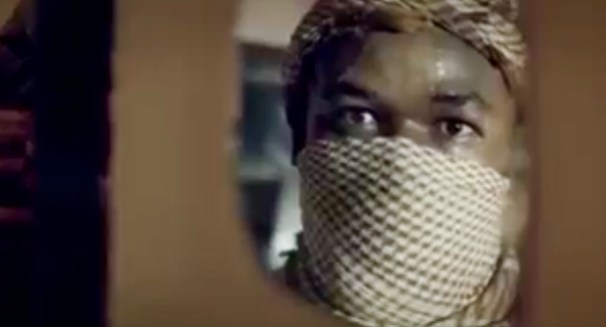
The officer delivering blows to a mute captive in Kejer’s Prison is steeped in brutality and yet his profound self-doubt, his vulnerability and sense of entrapment move us; “I didn’t know it would be like this back when I applied. I thought I’d be an officer and people in my neighbourhood would call me”Sir”, treat me with the utmost respect and prestige – even you would be proud. But it turned out to be to nothing but violence and humiliation and let’s not mention all the beating up of women. It’s so shameless but there’s no going back for us now….”
At a time when Sudan is once again tragically engulfed in war, Mo Kordofani’s two short films, Nyerkuk and Kejer’s Prison seem disturbingly prescient. Inspired by a visit to Khartoum’s Maygoma orphanage – at one time the only orphanage in Sudan, Nyerkuk urges us to consider how we might have survived had our worlds been interchanged and how easily violence, both physical and structural, begets violence. Only two weeks ago, news agencies reported the tragic deaths of dozens of the babies in the orphanage in the wake of fighting in the capital and BBC Arabic recently recounted the agonizing personal dilemmas of two brothers who find themselves fighting on opposite sides in the present conflict, dilemmas distilled to their cruel essence in Kejer’s Prison.
Above, film poster for Kejer’s Prison. MENA Prison Forum
The film won several awards, including the Black Elephant Award for Best Sudanese Film and NAAS Award for Best Arab Film at the Carthage Film Festival. His documentary, A Tour in Love Republic was “the first pro-revolutionary film to be broadcast on Sudan’s national TV.” Mohamed Kordofani’s “Goodbye Julia” Debuts Trailer Ahead of Cannes Premiere
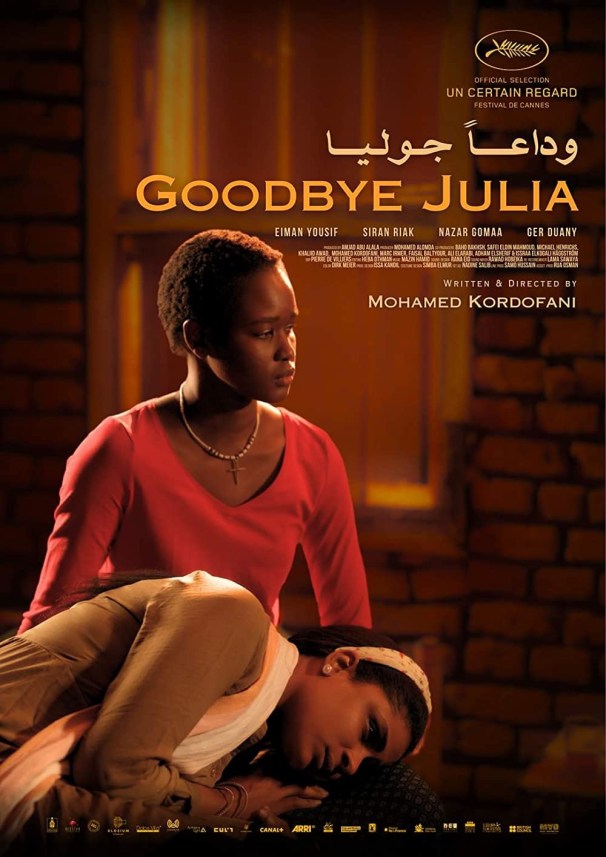
Above, poster for Goodbye Julia, 2023, featuring theatre actor and singer, Eiman Yousif as Mona and model Siran Riak as Julia. You can see more scenes from the film and production details in Mad Distribution
“Threats of violence hang over every interaction in Mohamed Kordofani’s operatic Sudanese drama Goodbye Julia. The Khartoum on display is soundtracked by the din of gun shots, the screams of bodies burned alive and the clanking of makeshift homes being seized. So it’s a shock, but not necessarily a surprise, when the distracted woman hits the child with her car. The moment happens quickly: The child falls to the ground; a father finds the body and cries; the woman retreats; a chase ensues.” Variety
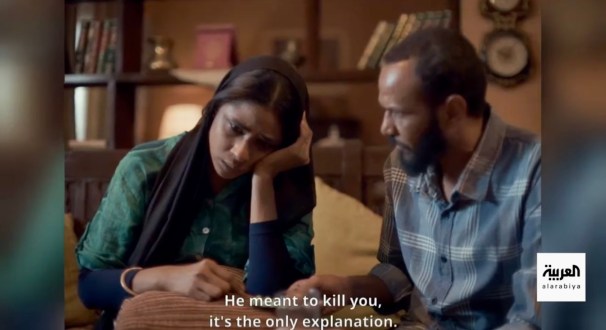
While we see the reworking of many of the central themes of Kordofani’s earlier films, Goodbye Julia deftly expands our vision of Sudan, urging us to step into a complex world where race, religion, class and the failures of history interact and where friendship can heal and forge reconciliation.
Below; trailer for Goodbye Julia
Below, This is Us
 Women's literacy in Sudan