

Heroic Bodies
Debut Documentary by Sudanese film maker, researcher and activist, Sara Suliman

Above, poster for the 95-minute documentary film, subtitled in English, Heroic Bodies Instagram
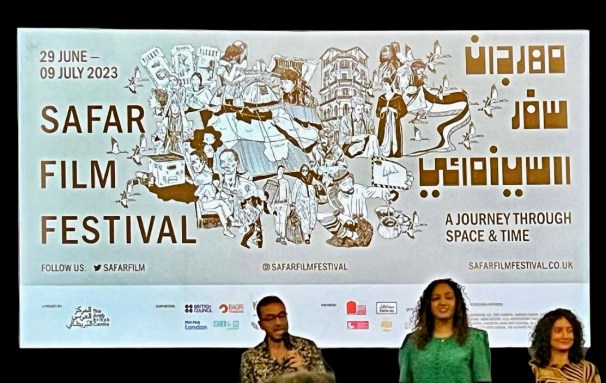
Scroll down to view the trailer to this bold tribute to the agency of Sudanese women over the centuries. The award-winning, Fenti Productions film was recently screened as part of The Safar Film Festival at ICA in London.
Below, Sara Suliman, centre, at the London screening.
Title photo, a still from Heroic Bodies, showing a northern Sudanese woman bearing tribal facial scars and wearing the traditional gama boba earrings that were to take on powerful symbolism in the 2019 revolution. She is seated on a Sudanese wood and rope angareeb and holds a delicate metal kohl dispenser, ready to apply kohl to her eyes. She exemplifies the canons of elegance and beauty prevalent in northern Sudan for many decades, canons explored in the documentary.
Learn more about facial scarring in Ash-Shuluukh

Above, “Emancipation. Three of the eight Sudanese women who had the educational requirements which gave them a vote in the graduate constituencies”. Photographic plate from Where God Laughed, a colonial publication of 1954.
Heroic Bodies; Resolute Voices
There is a confidence, a blunt defiance even, that informs every frame of Heroic Bodies. A defiant need too, to call a spade a spade. This unique document explores how women’s lives, bodies and spaces have been confined and prescribed in Sudan and lovingly plots the often quiet, sometimes noisy, but always persistent challenging of those constraints by Sudanese women themselves. Made in the heady days of the 2019 revolution in which women played a major role, there is a special poignancy to many of the scenes and testimonies as we view them now, at a time when Sudan is being brutally dismembered by war and its cultural heritage plundered.
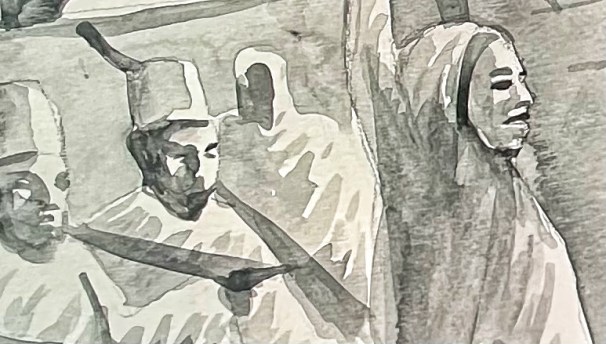
Above left, the film opens with Al-Azza Muhammed Abdullah’s heroic 1924 public stand against the British colonial regime. Unbowed by intimidation and torture, she led demonstrations against the British.

Professor Balghis Badri speaks movingly on the practice of re-infibulation in the documentary.
Reviewers have criticized the film’s conventional “talking heads” documentary approach and commented on the need for judicious editing. Indeed, the arc it traces is daunting; spanning the 18th century courtesans of the sultans of Sennar, the pioneering cycling midwives offering safer birthing practices under colonial guidance, the empowering impact of university education and the achievements, against all the odds, of the first woman member of parliament and founding member of the Sudanese Women’s Union, Fatima Ahmed Ibrahim.

For anyone interested in the Sudanese women’s movement, Sudanese social history, customs or education, though, the documentary is a feast of unique archival footage and photographs, from a century and a half of profound social change. Attitudes to wedding rituals, both the jertig and the later Egyptian import of the zafaf, the existence of parties where Sudanese women danced and wore western dress; the reclaiming of women’s space and power in the female domain of zar healing ceremonies, the multiple symbols of virginity and their cultural heft, such as the cutting of the young girl’s rahat leather skirt upon marriage; all these and much more are explored through the critical lens of how they have impacted women.
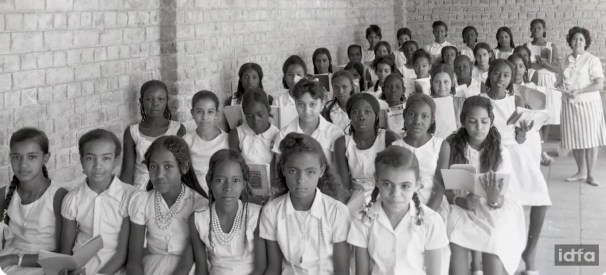
Above right, the film explores the unease of many Sudanese men in the early 1900s upon the advent of girls’ education, fearing as they did the loss of their daughters’ moral virtue, and highlights the work of educational pioneer Babekir Badri in allaying those fears. Above left, Batool Mohammed Iesa, first Sudanese Head of Midwifery, also featured in the documentary.
See too The Sudanese Women: challenges and success over hundreds years’ journey
The film offers the rare chance to hear the views of some of the most prominent and thought-provoking contemporary Sudanese women academics, activists and cultural figures such as Hadia Talsam, pictured below. See the trailer below for the other leading women experts consulted.

“I hated being a girl.” Hadia Talsam explains how she chafed against the constraints of life as a girl.

From the policing and constraining of women’s bodies through their clothes, hair, the imposition of facial scarring and the agonies of FGM, to the impact of girls’ education and the emergence of women leaders who challenged both colonial and post-colonial forms of oppression, Heroic Bodies pulls no punches, homing in on both religious and cultural origins of gender-based injustice. The draconian codes of conduct imposed on women under Mahdist rule rub shoulders with Numeiri’s heavy-handed attempts to silence women dissenters to his regime in a continuum of the exercise of male control. Common to all the stories the documentary tells is women’s sheer determination, ingenuity and sense of wry humour in the face of intransigence – whether by organizing strikes for the right to graduate from medical school, plotting the birth of The Sudanese Women’s Union in secret, or illegally attending political rallies by donning wigs and make-up in disguise to then openly challenge such figures as Numeiri, the latter clearly intimidated by their strength of resolve.
Above, right, Sudan’s first woman doctor, Khalida Zahir, whose story the documentary recounts (photo, Wikicommons). Below, costume designer Saadia Al-Salahi, featured in the documentary.
Saadia Al-Salahi sadly died last year. You can read more about her remarkable life and work in:

Heroic Bodies opens with one Sudanese woman standing against colonial oppression a century ago. Coming full circle, the film closes with footage of the 2019 revolution to the exquisite backdrop of Nancy Agag’s A Million Greetings and the certainty that the voices we have heard will not be silenced and cannot be ignored. It is a film I will be watching again and again.
Below, trailer for Heroic Bodies
 Women's literacy in Sudan