

Sudanese Fermented Foods Part 1
Remembering the Late Professor Hamid Dirar

Setting the Scene
The Late Professor Hamid Dirar and A Taste of His Work
Feseekh / Fessiekh
Setting the Scene
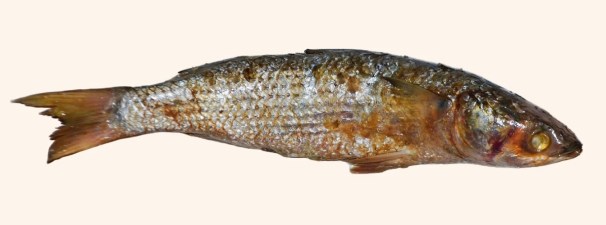

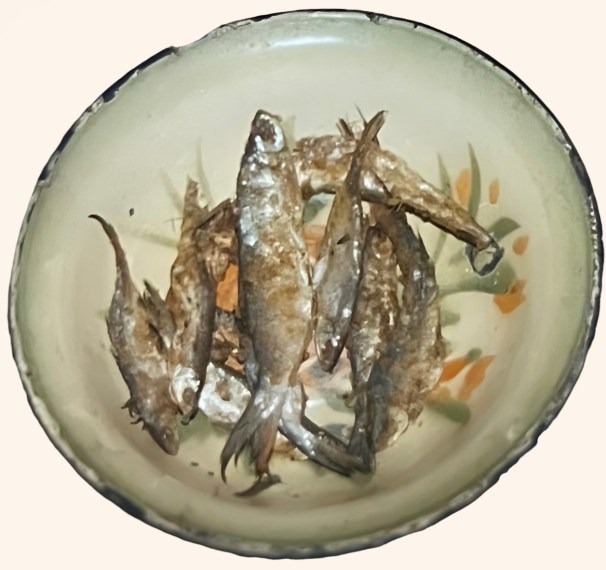
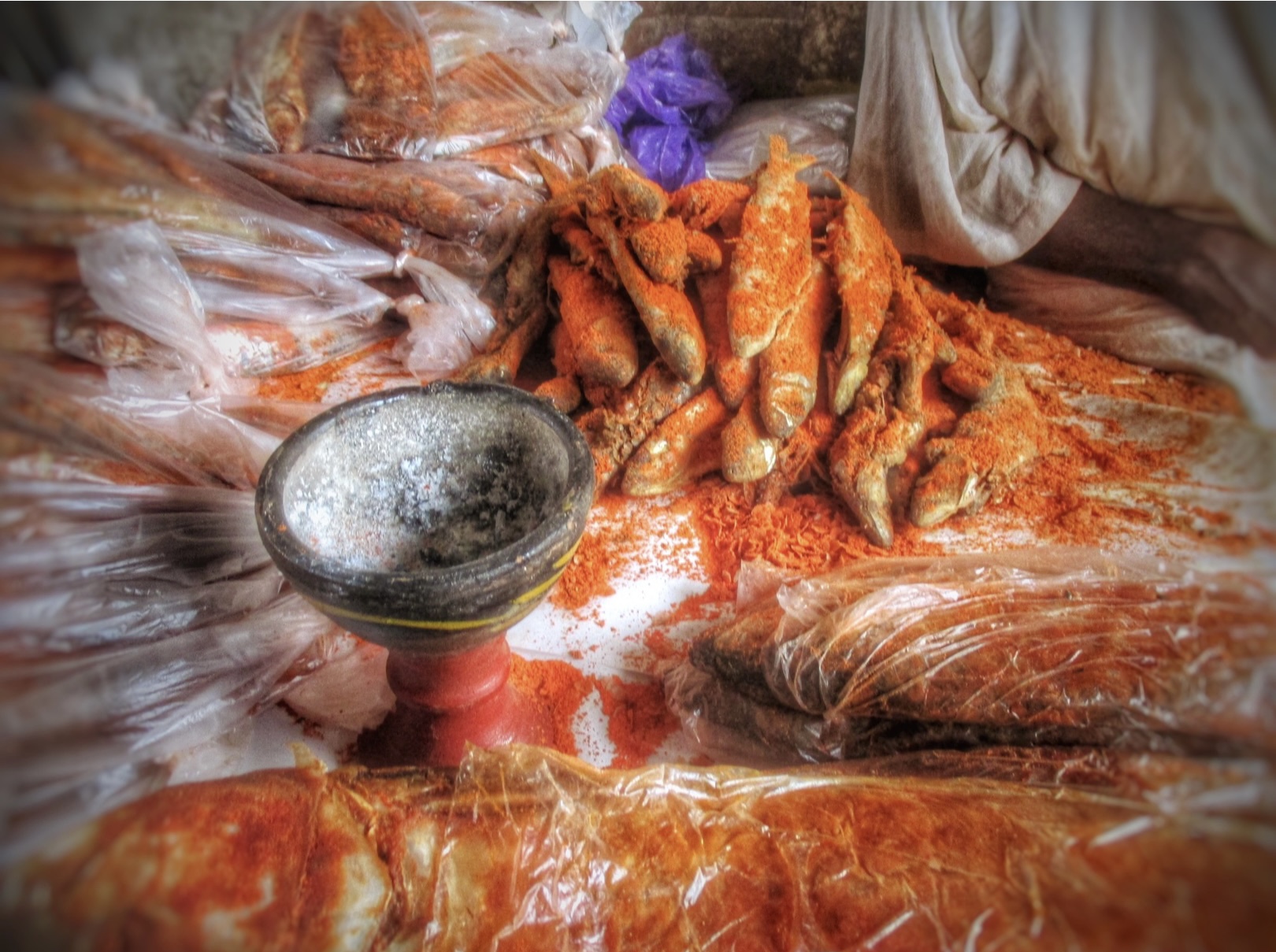
“From feseekh God makes sherbet – from the unpromising and meagre God works wonders”, Sudanese proverb. Above and title photograph, fermented fish, known as feseekh/ fessiekh, both a staple and a seasonal delicacy in Sudan and Egypt. Feseekh is just one of many Sudanese fermented foods made in processes often ingeniously sustained and innovated by Sudanese women drawing on an ancient heritage of African nutritional knowledge and practice.
African fermented foods are invaluable sources of key nutrients in times of famine and drought and scientific research is increasingly centred on their potential probiotic and medicinal potential. This rich academic field was opened up by a remarkable Sudanese biochemist, the late Professor Hamid Dirar.
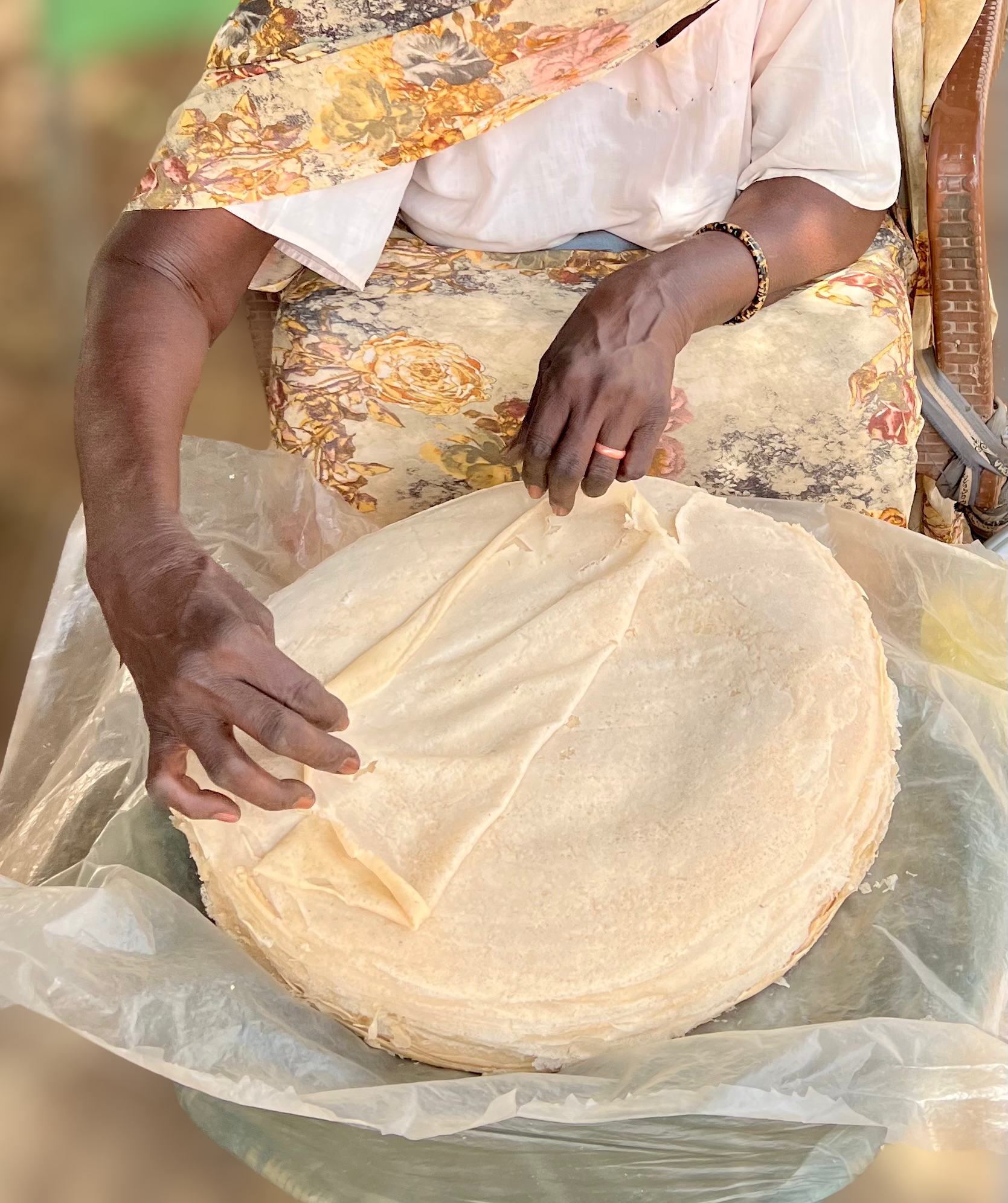
Above, a Khartoum woman delicately folds wafer-thin sheets of kisra, Sudanese flatbread made from fermented sorghum, Qasr El-Nil Street, 2022.
The Late Professor Hamid Dirar 1940-2023
In late April this year, Sudan saw the loss of her leading expert and world authority on fermented foods, Hamid Dirar. “Hamid Dirar was the most celebrated Sudanese scientist of his generation, a gifted writer who illuminated the lives of ordinary Sudanese – and his own remarkable upbringing – with profound knowledge, shrewd judgment and a lively wit. He died in April, after a long illness, at his home in Bahri – Khartoum North – just days after the current conflagration in Sudan began.“
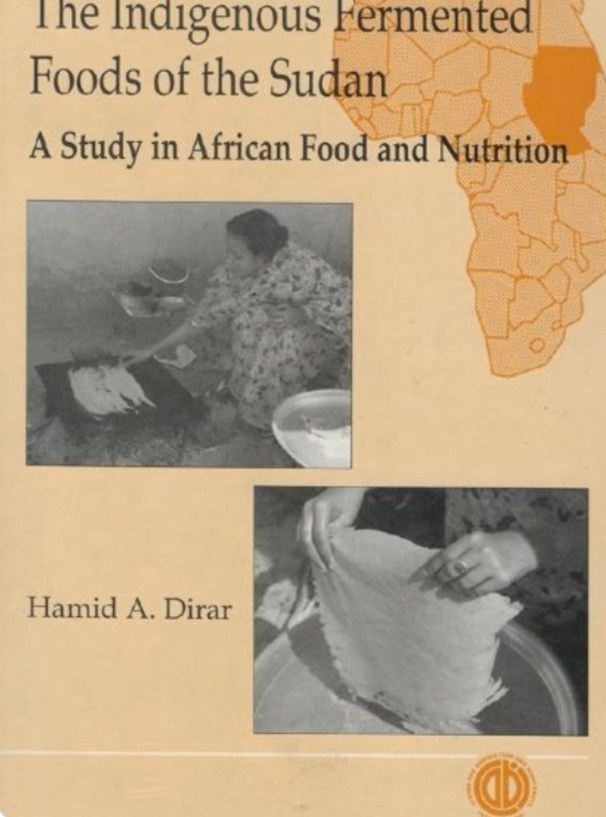
Above, Dirar’s groundbreaking research, The Indigenous Fermented Foods of the Sudan, 1993.
“Dirar dedicated his masterwork ‘To all rural women of Africa and attentively described their food secrets, joys, burdens, aspirations, and the flavour, longevity and wisdom of fermentation'” (Dr Edward Thomas).
Writing a year before the book’s publication, Dirar explained the rationale behind his work; “I set out six years ago to collect, confirm, reconfirm, sift, and classify information on all fermented foods in the country. The major source of information was the elderly rural women of Sudan.”



Above, just some of Sudan’s numerous fermented foods; top left, kawal (commentary by Hamid Dirar in The New Scientist, 1985), top right, feseekh/fessiekh, and below, a Sudanese woman making kisra, a flatbread made from fermented sprouted sorghum, photo, CC, Mohamed ElFatih Hamadien, Wikipedia. Read more about kisra in The Kisra Lady; Sitt al-kisra and A Bitter-Sweet Ramadan 2021 and Two Ramadan Dishes
For a fascinating review of Sudan’s culinary history, see SudaneseKitchenHistory

During his fieldwork, Dirar found that about 80 percent of Sudanese fermented foods, “particularly the marginal ones using bones, intestines, fat, etc., are found in western Sudan in the Kordofan and Darfur regions, the traditional famine areas. Second, most of the foods are preserved by both fermentation and drying, which means that they are intended for long storage and that food shortages or even famine are anticipated. In other words, the inventors of such foods have the experience of repeated famines.”
He goes on; “The strong link between many fermented foods and food shortages is also revealed by the fact that if a family became rich it would drop a number of fermented foods from its menu, not because of social pressure but because there was no longer any need for them now that ample supplies of meat, milk, poultry, etc., were available. Poor people who ferment bones, hides, locusts, etc., do so not because they relish these foods but because it is part of the coping strategy they follow to deal with the vagaries of a capricious environment.”
Sudan’s Fermented Food Heritage
Below, sprouting sorghum grains used to make hilu murr and the Sudanese flatbread, kisra, still, Sudania 24 TV.
A Taste of Hamid Dirar’s Work
Dirar placed Sudanese women firmly at the centre of Sudan’s rich fermentation culture; “The first victims of any famine are the children, among whom death exacts a great toll. Babies and children die in the laps of women more than they do in the laps of men. Maternal compassion must be the greatest impetus behind the rural woman’s desperate attempts to save her child that propel her to look for an insect, a piece of hide, a frog, or a bone as savior.”
“Many fermented foods are thus famine foods, and rural women must be credited with their invention. These women must have saved thousands of children from certain death during famines. Their vital role must be recognized and hailed.”
Sudan’s Fermented Food Heritage
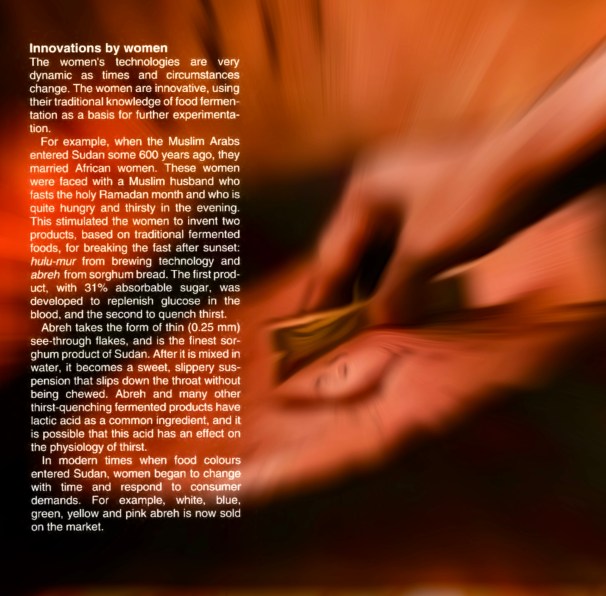
Below, Dirar’s fascinating account of African women’s role in the creation of hilu-murr and its sister Ramadan drink, abre.
Dirar was quick to see the nutritional potential of fermentation, explaining “Many of these organisms have the enzyme complement to produce vitamins and amino acids in fermented foods. This potential can be improved through the technique of recombinant DNA technology to produce strains that are capable of producing and releasing the required amino acid or vitamin into the food.“
“To avoid food losses due to spoilage-causing organisms and to avoid possible development of food-poisoning microbes, it is possible to genetically engineer a strain required for a process as a pure culture. Such a strain may bring about all the changes required in the food and grow at a convenient temperature.”
His vision was far reaching:
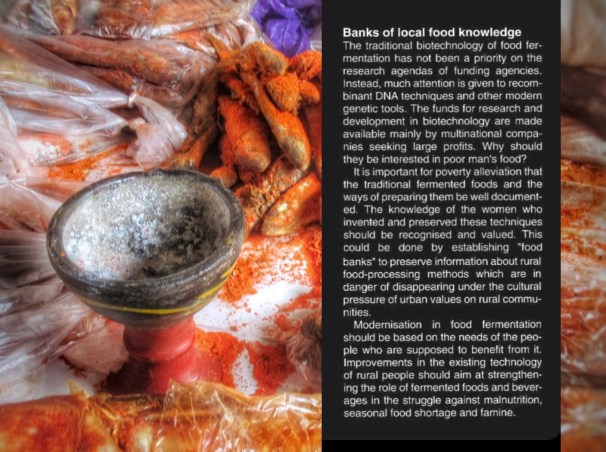
and embraced the marriage of traditional indigenous knowledge and applications of modern biotechnology to eliminate bacterial and heavy metal contamination:
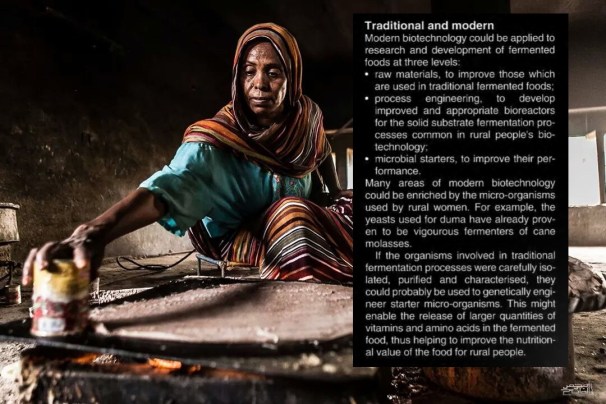
The extracts above are taken from Hamid Dirar’s 1993 article in ILEIA’s Rural People’s Biotechnology, The Indigenous Fermented Foods and Beverages of Sudan
Next month, I will reviewing Dirar’s spellbinding account of his youth as a nomad, The Amulet.
Feseekh/ Fessiekh
The morning I left Sudan thirty-odd years ago – the eve in fact of the 1989 coup that would bring Omar El-Bashir to power – my dear Mahas friend with whom I had lived while working as a wet-behind-the-ears secondary school teacher in Northern Province, wordlessly handed me a jar wrapped in newspaper. I already knew what it was; my favourite Sudanese dish; a deliciously pungent fishy concoction known as feseekh. Knowing I couldn’t take it on the plane, I opened up my friend’s gift in the crowded and very hot airport. The tangy earthy whiff of warm feseekh invaded the boarding gate. And I ate it with defiant relish – amid salty tears, sensing the closing of a door behind me and an uncertain future for Sudan.
Although feseekh is eaten throughout Sudan and “cooked by both rich and poor”, it is particularly popular in Northern Province, along with its sister sauce dish, terkin, also known as maloha (see next month’s article, Fermented Foods Part 2), beloved by Dongolawis. Fessiekh can be made into a sauce, paste or stew, as pictured below.

Fessiekh: A Sudanese Fermented Fish Product (Chapter 24, Traditional Sudanese Foods, Sources, Preparation, and Nutritional and Therapeutic Aspects, edited by Abdalbasit Mariod), Samia Ali Mohamed Ahmed and Suzy Munir Salama.
The fish varieties used, predominantly Nile kawara and kass, tiger fish, Nile perch and tilapia (occasionally too the Red Sea al-arabi), are chosen for their leanness, favoured by both Egyptian and Sudanese consumers. The fish may be prepared by a combination of salting and drying, sun-drying alone, or salting alone. Sun-drying is prevalent in the Blue Nile and Sennar regions and is a low cost alternative for poorer, rural communities. Fessiekh production can provide much needed local income and the product is also exported to Egypt and UAE.
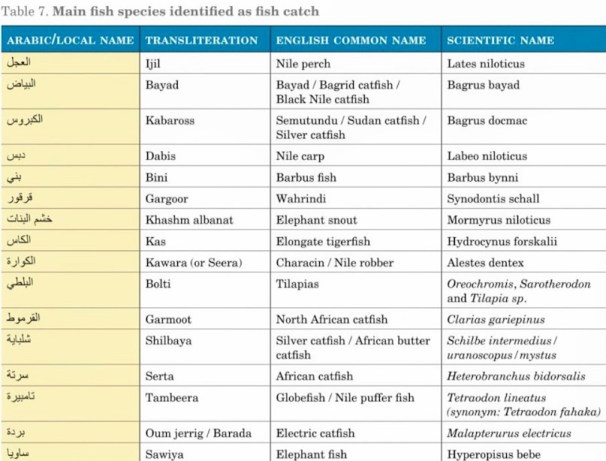
Small Scale Fishers Livelihoods along the Nile River in Sudan
Quoting Dirar, Samia Ahmed and Suzy Salama note that feseekh was introduced during Turko-Egyptian imperial rule (1821-1885), though many believe the dish was eaten in Meroitic times and for Egyptians it is intimately associated with ancient pharaonic rites of spring. In the 19th century, Dirar relates, the freshly caught fish was salted immediately and stacked in layers on the river bank to cure. Although more salt was added in the summer, the ratio of salt to fish was generally 1:4. The salted fish was then stored in old oil containers for a week or more, depending on temperature. Preparation methods have changed over the years but its popularity echoes the seasonal fishing period of October to June, with its peak in February / March (Dirar, quoted in Traditional Sudanese Foods). Fessiekh can be left to ferment for up to sixty days before its nutritional benefits are compromised. In Egypt, fessiekh consumption has been linked with occasional fatal cases of botulism.
Below, possible parallels between the fermented fish dish of imperial Rome, garum and fessiekh:

The dish is made by repeatedly rinsing the fish carefully with diluted vinegar or lemon juice to reduce salt levels and pungency. The flesh is removed from the bones and then fried in vegetable oil with chopped onions, tomatoes, sweet peppers, peanut butter paste and spices (Traditional Sudanese Foods). Paprika and chili pepper, often added to the mix, have been found to reduce the microbial load generated by fermentation, as well as improving the overall quality of the fessiekh (Effect of Antimicrobial Characteristics of Pepper Fruits on Some Spoilage Organisms of Fessiekh Production, Afra Abdelaziz Abdalla Ahmed).
Below, a Sudanese-American take on fessiekh (English)
Feseekh is a rich source of protein and energy, minerals, amino and fatty acids. Spermidine present in feseekh has anti-aging, cardioprotective and homonal balancing properties.
More Sources of Possible Interest
Large scale fessiekh production in Sudan.
“The fish is wet salted in temporary sheds to keep it cool and fresh. The fish is washed, covered in salt and arranged in alternate layers with salt either on matting or perforated drums for 3-7 days. The liquid is drained off and the fish is then transferred to larger fermentation tanks where more salt and new batches of fish are added. The tanks are covered with jut sacks or polythene and weights are added to press the fish. It is fermented for another 10-15 days at temperatures of 18 to 20C.”
Major fermented fish products from Africa
See too Traditional Dried and Salted Nile Fish Products in Sudan: A Review, Wadah Elsheikh and Fatty acids composition of traditional salted fermented and fresh tiger fish in Sudan.
Women often play key roles in net making and mending, the cleaning and sometimes also the selling of fish. Widowed women are also active in fish processing in Wadi Halfa. See Small Scale Fishers Livelihoods along the Nile River in Sudan
You might be interested in the eventful life story of the founder of one of Khartoum’s most emblematic fish restaurants;

Above, fessiekh ready to be cooked, Dongola, early 1980s.
 Women's literacy in Sudan