

Habooba’s Storeroom
The Visual Poetry of Maab Adil
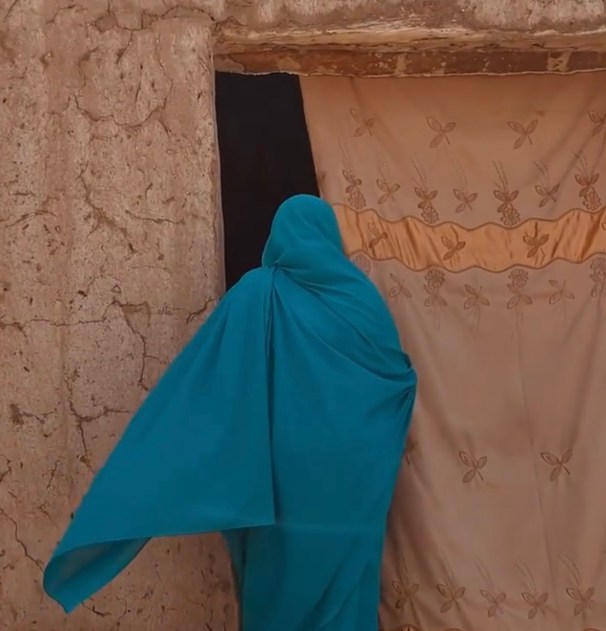
Above, still from Habooba’s* Storeroom by the gifted videographer and photographer, Maab Adil. This magical two-minute vignette is a tribute to Sudanese grandmothers and the continuity they bring to the heart of Sudanese culture. Watch the video by opening the link below:
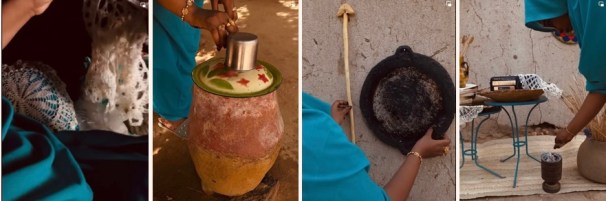
* Habooba is the affectionate Sudanese term for “grandmother”.
The lyrics to the vignette above, roughly translated, run: “Grandmothers of our lullabies, our cradlings, our folktales, who tell you “the great big lion is coming” in their booming voice, and tell you the tale of “Fatima the Beautiful” (a fairytale similar to Cinderella), oh wonderful grandmothers, who rise well before the heavy midday heat (to prepare everything for the family), homes filled with love and joy and goodness and safety; beautiful homes…
For more on the pivotal role of grandmothers in Sudan, see Grandmother’s School.
All images in this article are copyright Maab Adil and are reproduced here with her kind permission.

Maab Adil, See more of her work in Maab Adil Instagram.
Maab’s homeland is facing destruction on a scale never seen before. Initially confined to the capital, the conflict has now engulfed Kordofan and Darfur. In these heartbreaking times, the work of artists, writers, photographers and film makers such as Maab is ever more vital. When Maab left Khartoum for the safety of Northern Province, she saw the beauty and tranquility of life there with fresh eyes and was moved to document it.
Below, treasuring life’s gentler moments.
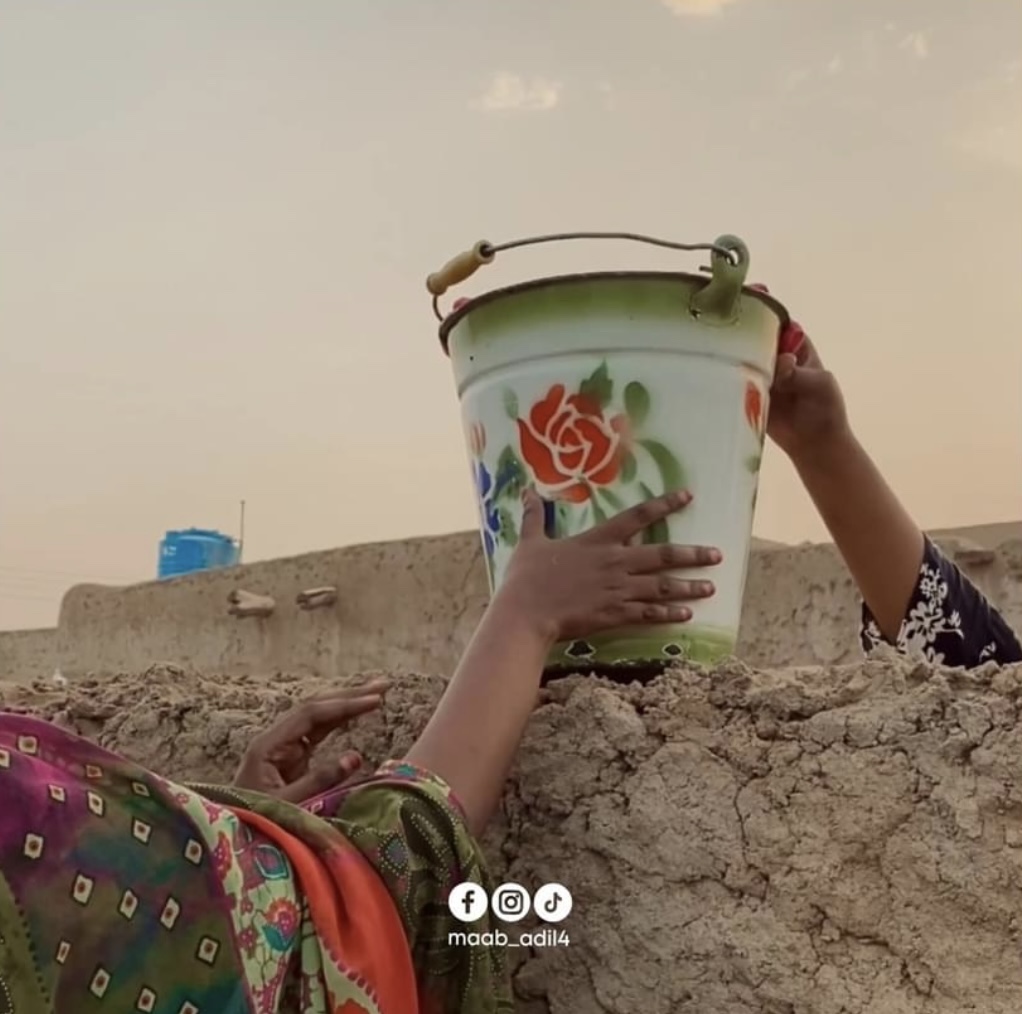
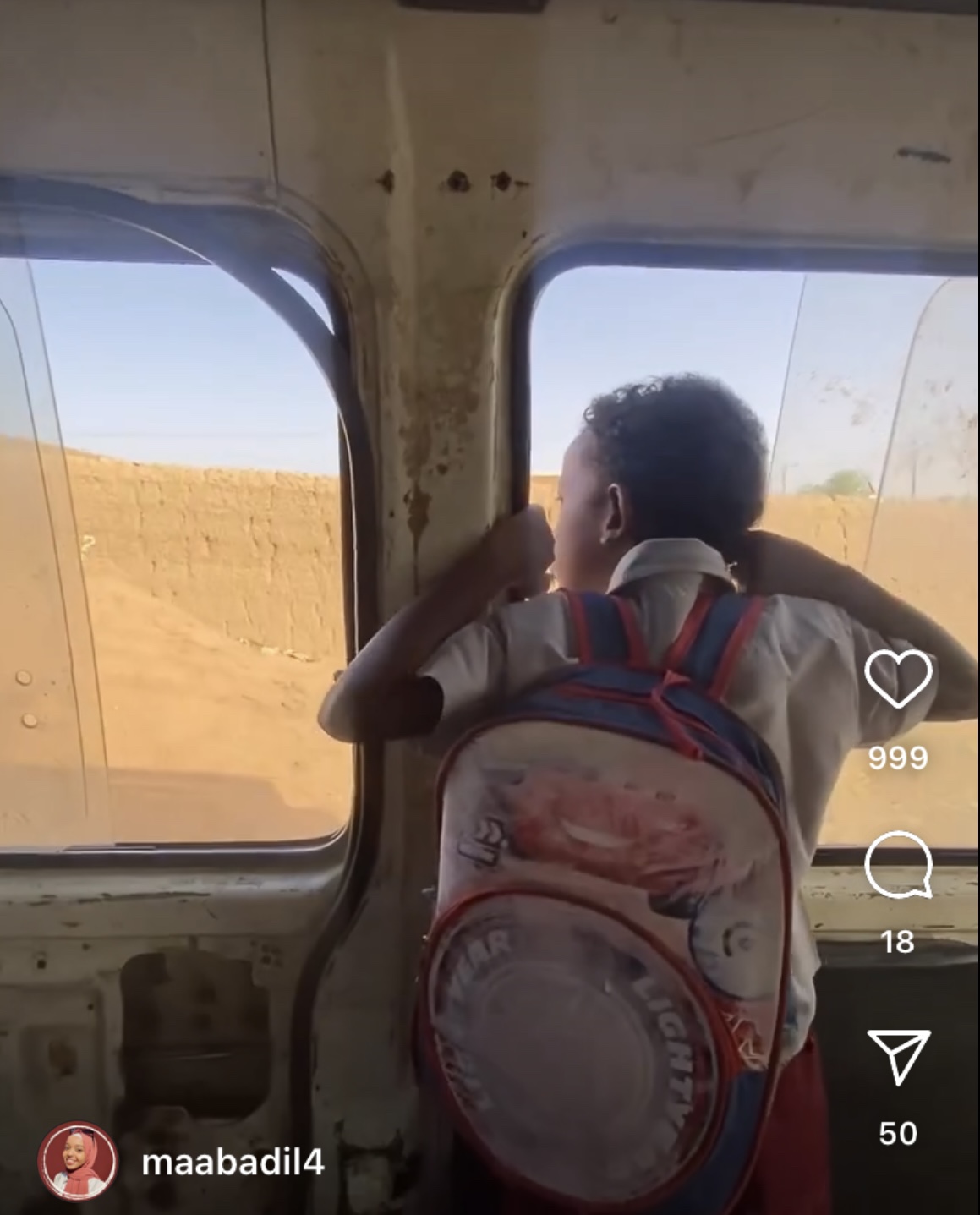
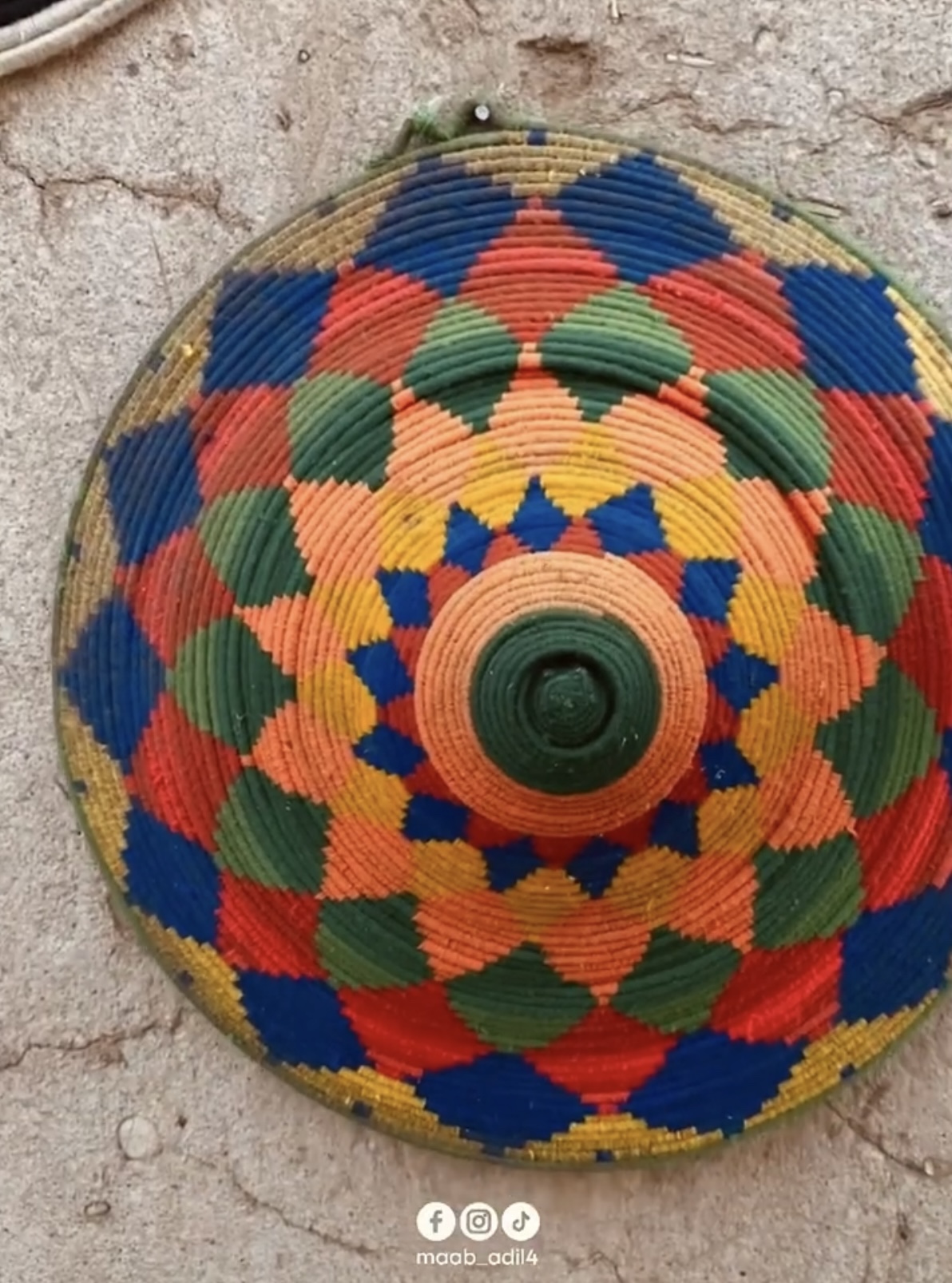
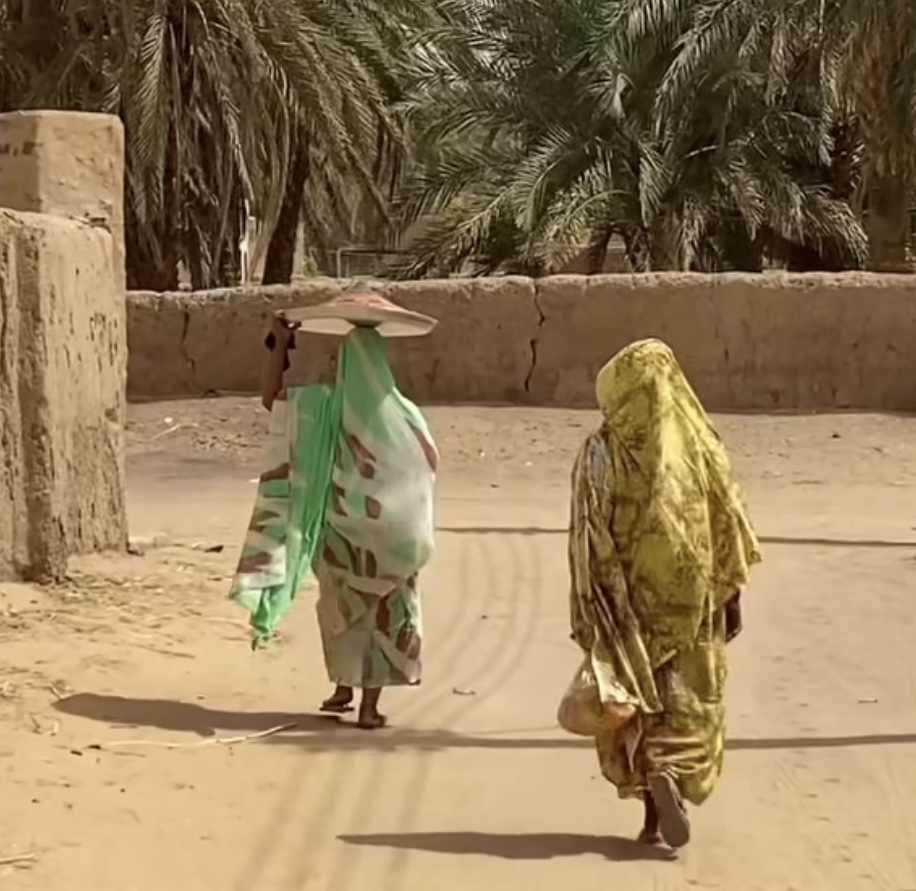

I came across Maab’s work by chance and was instantly entranced by her calm and sometimes wistful evocations of Sudanese life captured in northern villages as yet not consumed by the conflict. The lyrical scenes she depicts are a hymn to the Sudanese spirit of kindness, generosity and resilience. Maab was kind enough to talk with me about her work.
In Conversation with Maab Adil
Imogen: Maab, I wonder if you could tell us a little about how the war has affected you and your family, and how you are coping. How has the war affected your professional creative life? What message would you like to give to all the non Sudanese who are following with great sadness the events in Sudan?
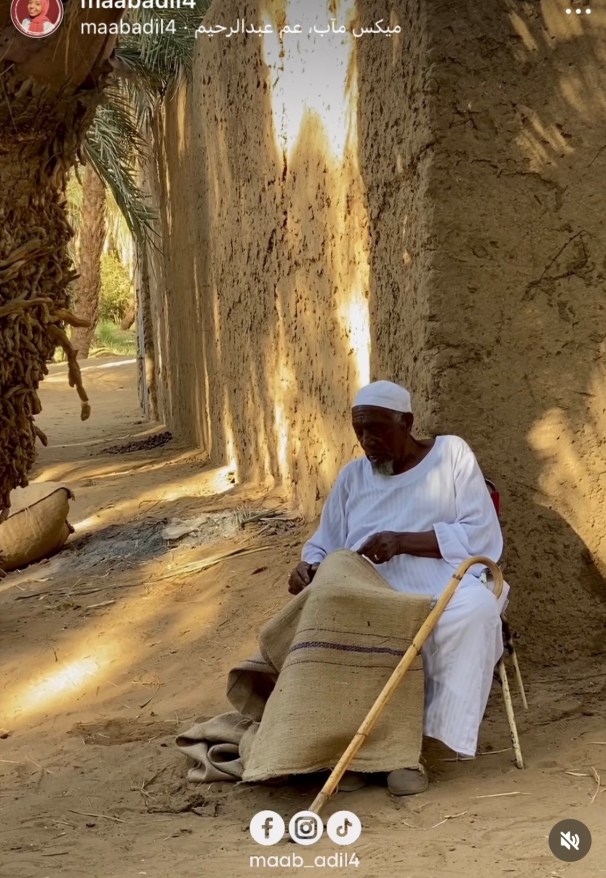
Maab: The war came to us so suddenly, in just a day we had to start a new life and go through new, different experiences. It made us aware of other, varied rhythms of life. For someone like me, the war meant losing my old life centred on work and education and for someone who lived with a routine full of things to do and projects it was a shock suddenly to find your daily routine empty. But people are able to change the way they look at what is happening to them and we had to shift our perception of loss to one of finding ways to adapt, compensate and recover from what has happened, and to trust in God. In terms of my professional life, the war actually had a positive effect. That’s because of the nature of my work, something which embodies my Sudanese identity; I made cultural videos on Sudan. I had been working for a tourist company dedicated to raising awareness among Sudanese and non Sudanese of the beauty and importance of tourism in Sudan and although I had to stop working at my official job, I have kept on doing what I love in another way.
I would ask the world to support us by calling for the victory and rebuilding of our country so it can stand with the other countries of the world. And I would ask them to offer opportunities to those Sudanese outside Sudan because they deserve this through the quality of their work and qualifications.
Imogen: I worked in Northern Province in the mid-1980s and was so struck by the beauty of your video evocations of northern Sudanese life. Could you speak about your relationship with northern Sudan and what is it about life there that draws you to make films about it?

Maab: Northern Province is home to my grandparents and my parents’ families but I hadn’t had the chance of spending any length of time there until recently, when I really became aware of the beauty of northern Sudanese life and its cultures and its sense of peace and tranquility. Everything has its beauty, from the earliest morning light and the opening of doors as people go about their livelihoods. As my grandfather would say, “Open your doors at daybreak because sustenance comes calling on its way elsewhere and if it finds your door closed to it, it will leave you and go away.” You notice that all the precious details of the northern day are to be found early in the morning and then early in the evening too, with late afternoon visits and conversations at sunset with the family gathered and early supper of pastries with milk. Everything about the environment here is inspiring, with its peace and natural beauty and that’s one of main reasons I started creating videos. It’s that every scene here is has a cinematic quality that deserves to be filmed and seen to the full.

Imogen: Tell us about your career and how you would like to see it develop. What projects are you working on at the moment? What are the challenges that you now face, as a result of the ongoing conflict?
Maab: I’m really striving to develop and practice new techniques in my video making as part of my professional development. I would like to produce quality videos reflecting ideas of weight. Ultimately I’d like to become a documentary film maker for the sort of cinema that makes a difference in the world. At the moment I’m working on a series of videos documenting more of the culture of the northern Sudanese and their daily customs. When I first started making these videos the reaction was often one of astonishment or shock seeing a woman doing the filming. But it’s totally different now and people support and encourage me to make more videos that show their beautiful way of life reflected through my lens.
Imogen: Which scenes you have filmed or photographed are you most proud of? Which do you feel are particularly close to your heart and why?
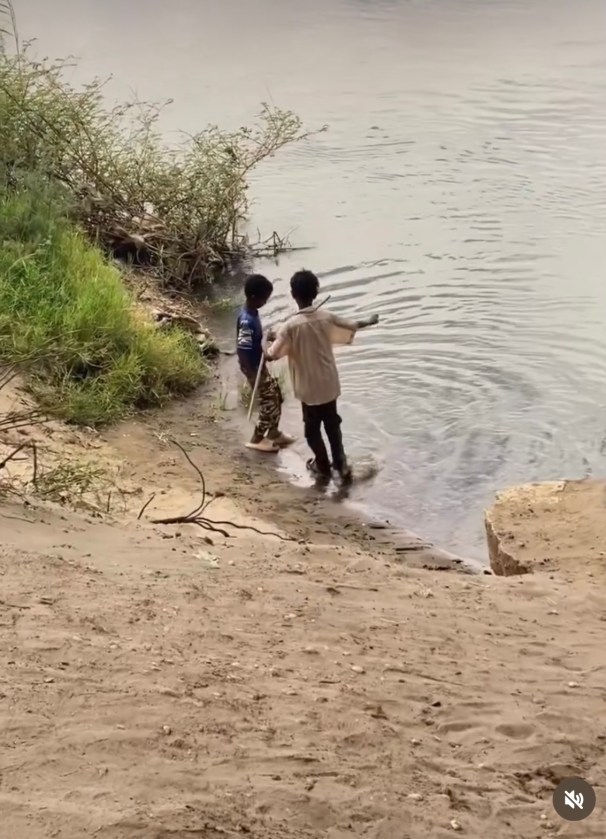
Maab: Every video I do has a story attached to it for me. I love all the videos I make because they are the product not just of one person but everyone in my circle of friends and family. They all share in the filming; my mum and dad and sisters and all my folks and children as well. For all of us in the area the videoing is an event with its own program that we can enjoy and produce something together in. They inspire me with what is actually happening and I don’t do anything more than document this and reflect it back to everyone. Saying that, the videos closest to my heart has to be Habooba’s Storeroom and The Date Harvest season. Habooba’s Storeroom reminds me of the unique quality of the passing of time and that the heart yearns for moments of the past. My mother helped me a lot with this.

We are usually in Khartoum during the date harvest season so we just see the sacks of dates that arrive. The video The Date Harvest is special to me as it was the first time I had actually been there and seen the whole harvest for myself. I got to see every step of the harvesting. I remember the special feeling I had the first time I went into the date palm groves and the scene there: everyone working together, groups of women and men and children. it was like when everyone comes together to prepare for the first day of Eid; feelings of joy and everyone working together in solidarity.
Imogen: Maab, thank you so much for your kindness in speaking with me today. I know everyone reading this will wish you every success in the future. We hope and pray that the beautiful scenes you document will once again be commonplace throughout Sudanese villages and towns.
Below, images copyright Maab Adil.

 Women's literacy in Sudan