

The Amulet by Hamid Dirar; My childhood and youth as a nomad in Sudan
An Illustrated Review with Excerpts
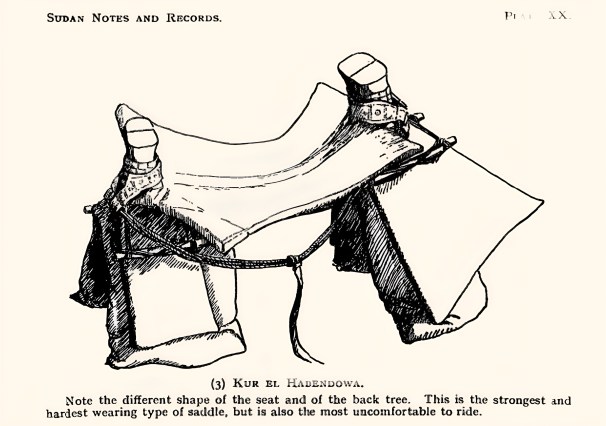
Above, a Hadendowa camel saddle, Sudan Open Archive, Sudan Notes and Records, 1932.
Hamid Dirar’s adventure-packed childhood was spent in the company of many tribes. Unsurprising, perhaps, given the rich and complex ancestry of his family and their many, restless peregrinations, encompassing Nubia, Butana, Kassala and Port Sudan. The descendant of carpenters, waterwheel makers, shepherds and holy men, the young Dirar absorbed the languages and skills of all he came into contact with. From the Hadendowa, he acquired prowess as an expert camel rider.

Above, from left to right, BIsharin of Port Sudan, Hadendowa, Shukriya and Jaa`li tribesmen, photos personal collection or CC. Dirar lived out his youth with these peoples at a time of profound social and political change.
See too Historical Sketches – People and Places
Setting the Scene – A Nomad’s World 1940-1964
Part 1
The Terrain The Darker Side
A Childhood Like No Other The Role of Women
Origins
“A scar on my left cheek-bone, close to the eye, is all that is visible of the cuts and cudgel wounds I gained in my youth. Under my suit and tie and my laboratory overalls, however, that early life in distant nomad encampments is inscribed on every part of my body. There is the mark of a childhood fire burn on my left shoulder; the imprint of a dog’s bite on my arm; a long scar left by the slash of a cutlass on my left leg; and all over my body scores of tiny, therapeutic cuts and burns, intended to cure the illnesses of childhood.” The Amulet, p15
The Terrain
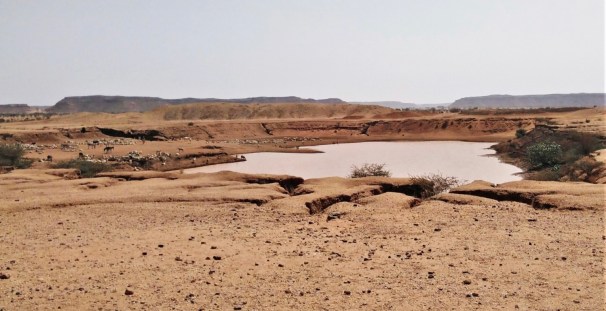
Above, The Great Hafir at Musawwarat es-Sufra in west Butana (Wikipedia).
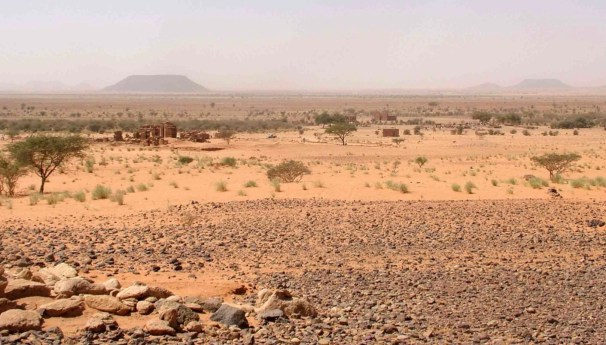
The Butana, or “The Island of Meroë,” pictured above and left, lies between the Atbara and the Nile and is home to the powerful Shukriya clan, overlords of the territory through their ruling Abu Sin lineage since the 17th century, and whose exploits are celebrated in poetry and folklore (Wikipedia).
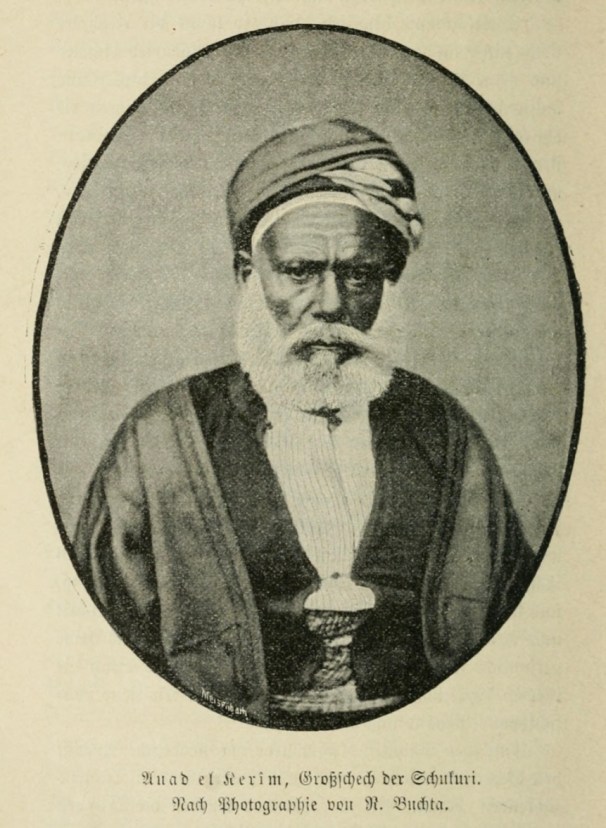
This scorching, bleak terrain and the tribes who inhabit it form the dramatic backdrop to Hamid Dirar’s The Amulet, a poignant elegy to a lost world and compelling tale of a child’s quest for knowledge. Right, Awad al-Karim Pasha abu Sin, died 1886, notable of the Shukriya Arabs and governor of Khartoum in 1884, Wikipedia.
The Amulet celebrates the knowledge of the natural world that informs nomad culture, bringing to life with vivid intensity an idyllic and dangerous world. A world of wild animals, deadly tribal rivalries, astute peacemakers, delicate balances of co-existence parlayed and resources preserved and for the young Dirar, serendipitous encounters and unexpected kindnesses that were to shape his future and even save his life.
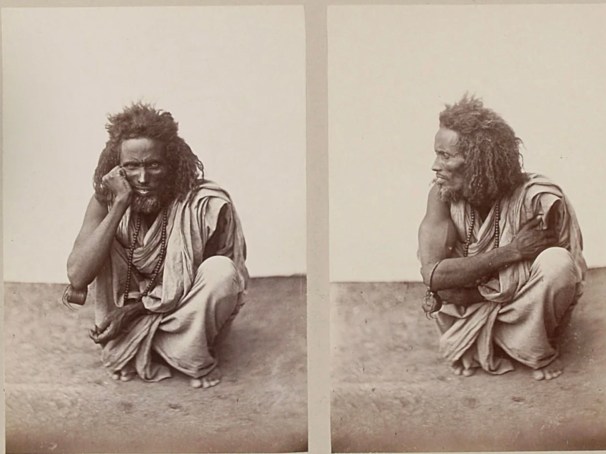
Above, a Shukriya tribesman, 1878-1880, CC. The Shukriya people’s history, exploits and worldview permeate The Amulet.
The Darker Side
Starkly present too is the darker side of nomad life in the eastern Sudan of the 1940s -1960s. With unflinching clarity and compassion, the author relives what he saw and experienced as a child of the racism – when the death of slaves went “unrecorded and unmourned”, sexual cruelty, and violence of his era. Dirar writes of a time when expeditions to capture escaped slaves were still commonplace and goats slaughtered to mark the arrival of a free, rather than a slave child, in the birth ritual of hurrara. The back of former slave and friend, Abu Saeed, who fled his masters in pursuit of his “freedom papers”, Dirar tells us, “was criss-crossed with scars from whippings”; a slave whose wife, Dirar goes on to explain, had forcibly borne the children of their owners.
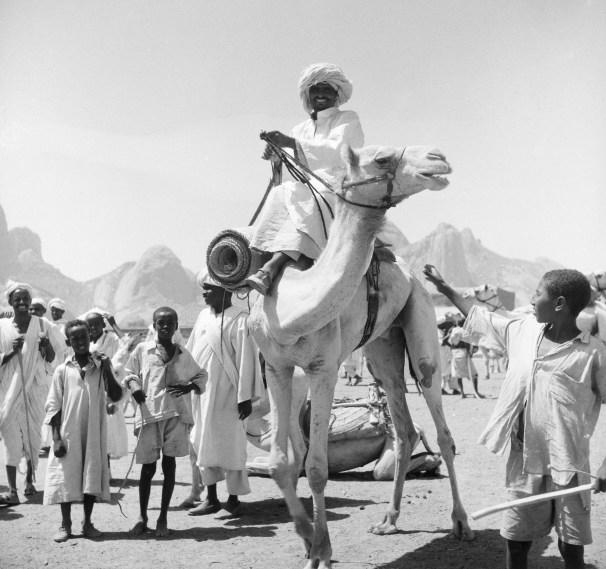
Above, one of the Shukriya’s many rivals, (photo, Zebeida camel herders at Kassala, 1958, copyright, Alamy). Dirar recalls in his evocations of childhood rivalries:
“The Zibeidiya were pure Arabs…..we were black and our hair wooly or kinky. And our women were not veiled. For the Zibeidiya these were all signs of inferiority. Just as we looked at the darker and more negroid peoples to the south as inferior and enslaveable, the Zibeidiya looked as us as halfway to the same state. Everyone had to be somebody’s slave in order to prove their opponent’s worth and self-importance.” (The Amulet, p 191).
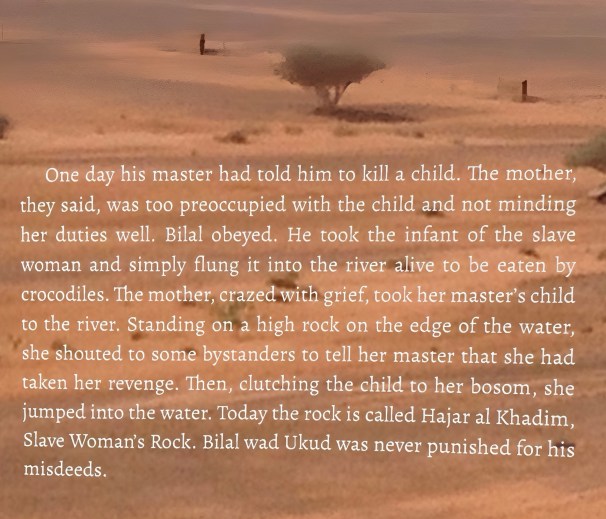
Above, one of many chilling anecdotes Dirar recalls in The Amulet. Here, the tragic tale of Bilal wad Ukud, commanded to kill a fellow slave.
A Childhood Like No Other
Hamid Dirar’s childhood is stalked by hunger, drought and alien colonial rule. It unfolds against a backdrop of the haunting riverside songs of girls, deathbed marriages doomed to endure, snake bitten suitors and the incantations of holy men less holy than they should be. Unhappy brides drown themselves on the eve of their weddings and beloved sisters are killed in fits of paternal rage. Dirar’s career as a schoolboy is nail-bitingly precarious; with a father who can find money for a third marriage but not for his son’s schooling, relatives ready to kidnap him from class at herding time and teachers mistrustful of his nomad ways.
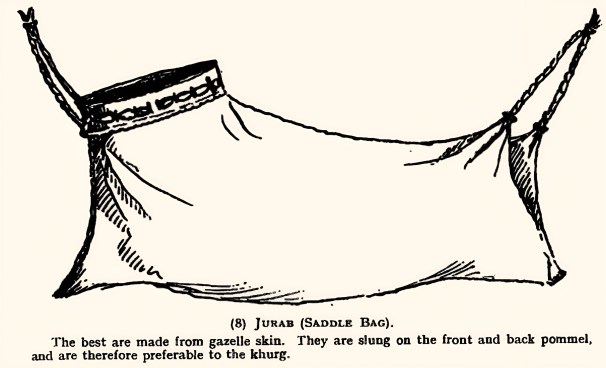
Above left, illustration from Sudan Open Archive, Sudan Notes and Records of a jurab or saddlebag, 1932.

Above, the romance of nomad life captured by Dirar; Sudanese nomads gather around a desert campfire, copyright, Alamy.
The Role of Women
“She was standing up with me, Hamid, in her arms. She took two steps towards the seated sheikhs and flung me to the ground in front of them, in a cloud of dust and dirt. Then she turned away and walked in the direction of the Blue Bridge. The cries of the child behind her did not cause her to turn, or cry out, or slow her pace.” Dirar, remembering his mother’s divorce and loss of custody of his infant self.
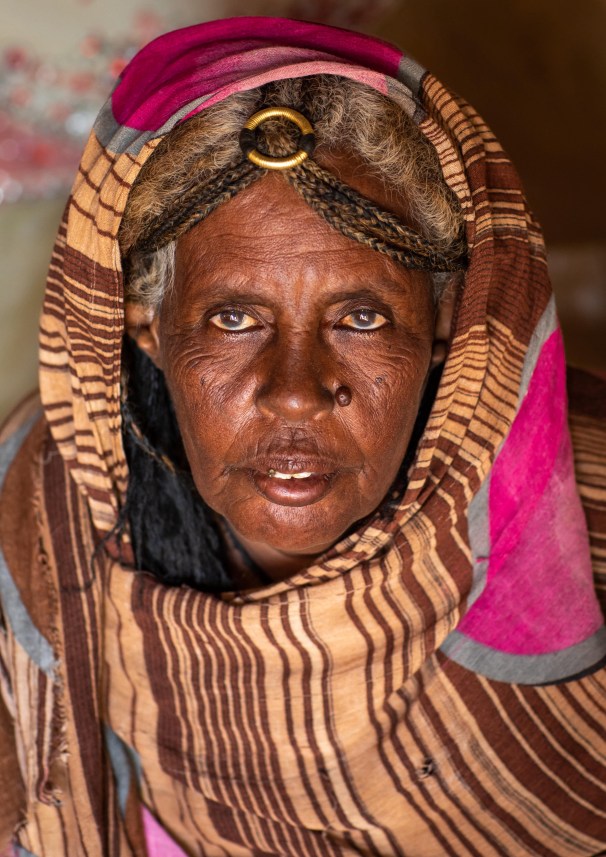
The son of “both a living man and a ghost”, heralded by portents, Dirar is the living amulet vouchsafed to his mother in a dream. The story of his struggle to survive is both gripping and unsettling. While still an infant, he faces poisonous snakes, rabid dogs and hyenas but also suffers with a child’s sad incomprehension the pangs of maternal absence and the whims of a mercurial and fickle father. Dirar’s troubled and ambivalent reckoning with his father’s memory haunts the narrative.
The Amulet is shot through with the subtle agency and life-saving kindness of Sudanese women and Dirar acknowledges his debt to them with a profound compassion tinged with sadness. Dirar’s descriptions of women’s wedding rituals, processions and attire, their perfumes, songs, vital camp-keeping skills – and their vulnerability, are a unique document of a vanishing culture. Right, a Beja woman, copyright Alamy.
“When the pall-bearers brought the angareib bier back from the cemetery, her husband, the widower, threw his body down on the ground and held firmly to its leg. That gesture was well known in nomadic culture to mean that the man demanded to be compensated by being given the deceased wife’s sister as wife – or else he should be buried himself too.”
“I learnt that when sugar entered a nomad’s tent it wasn’t always meant for tea.” Dirar, reflecting on the use of powdered sugar applied to the wounds inflicted during female circumcision.
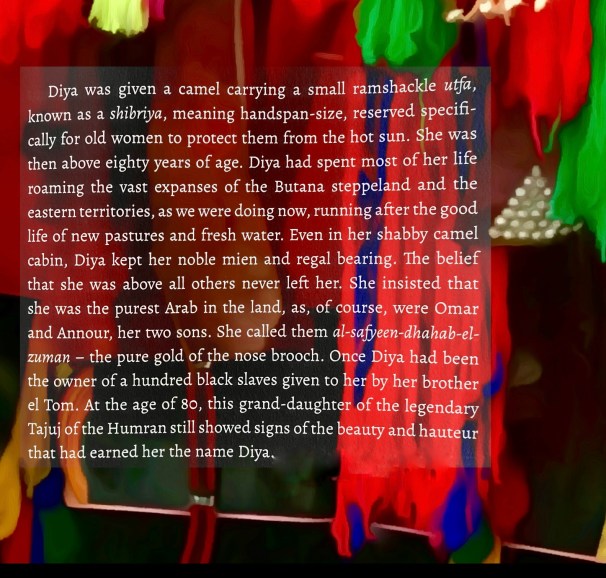
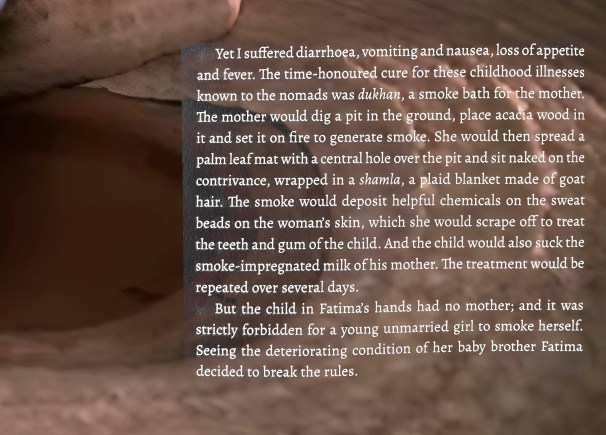
Above, Dirar’s formidable and endlessly meddling maternal grandmother, Diya, lofty and aloft on her camel. Below, the author’s tribute to the courage of the sister who nursed him as a mother when he was close to death:
Origins
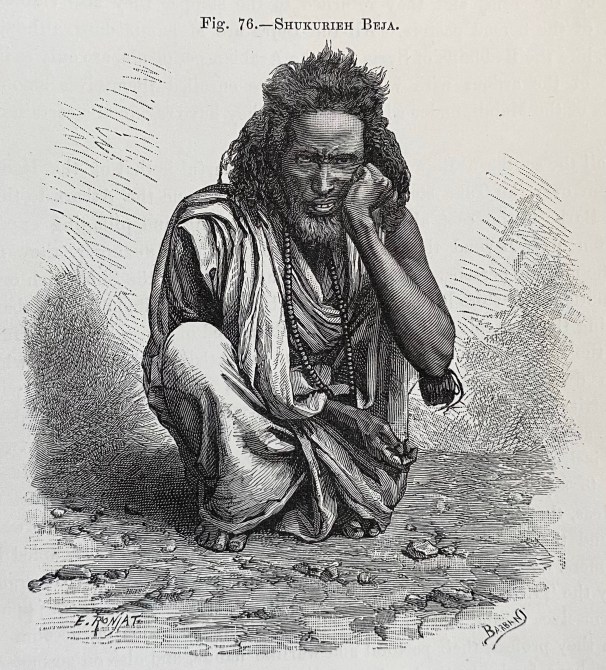
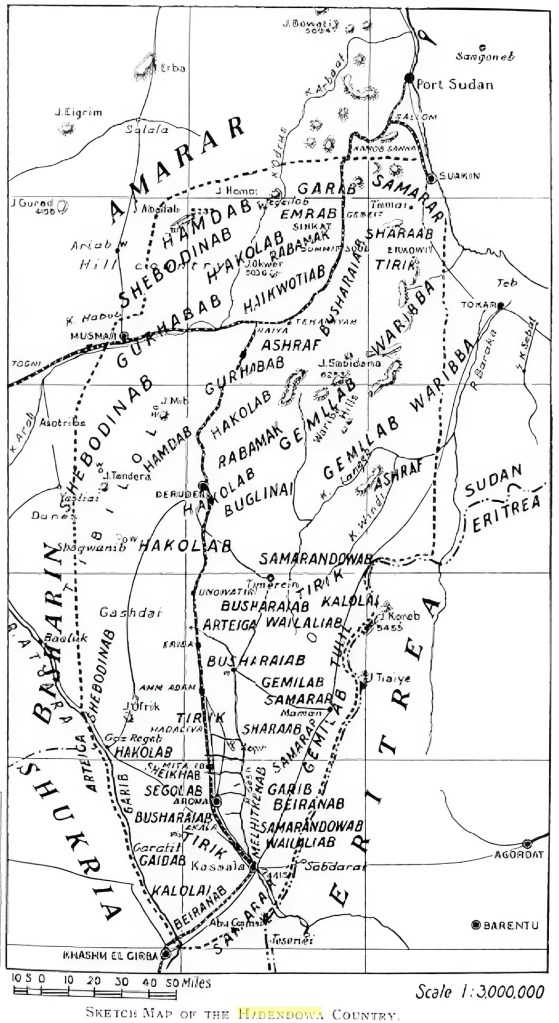
As Dirar lovingly plots his family’s complex genealogy, he provides gripping accounts of the exploits of his ancestors, in particular those of the Shukriya tribe. He retells the epic story of Mek Nimr’s defiance of Ismail Pasha and other heroism of the Jaaliyin. There is no trace in the narrative of affection for the Mahdist cause; his people were Khatmiya and fled the Mahdist military advance.
Writing of the sacking of Metamma, Dirar recalls “The Mahdist soldiers had wiped out the defending Jaaliyin. They ravaged the town and its inhabitants. Rather than submit to them, it was said, Jaaliyin women locked their arms together and threw themselves into the Nile.” As a child, Dirar would play with beads found in the earth of what remained of ransacked Mahdist camp ruins.
It was Ali Dirar, “an ardent follower of Sayed Ahmed el Mirghani”, and Hamid Dirar’s forebear, who came to settle in a Khatmiya village in the foothills of Jebel Kassala. “Here Ali worked, as his grandfather had done, as a muezzin and maker of waterwheels”, finding favour with Sayed el Mirghani. And yet “the wandering spirit of the descendants of Dirar meant that for Ali even Kassala turned out to be a temporary resting place.”
Above, left sketch of a Shukriya tribesman, personal collection. Above right, mapping of tribal territories in eastern Sudan, in particular, the Hadendowa, Sudan Open Archive, Sudan Notes and Records, Volume 20, 1937.
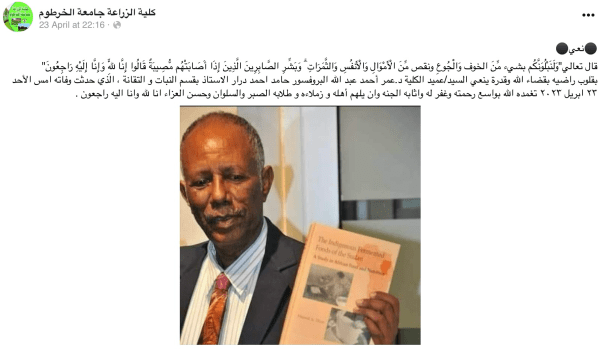
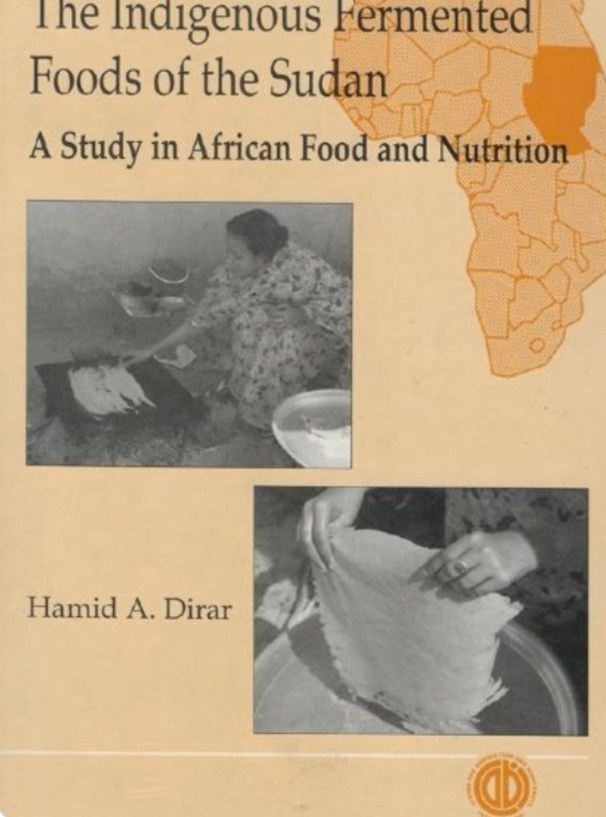
Below, the late professor Dirar, who died shortly after the outbreak of war in April this year, holding his groundbreaking publication, The Indigenous Fermented Foods of Sudan, remembered by the School of Agriculture, Khartoum University.
Part 2
The Amulet; Change, Loss and Tragic Prescience
Food Preservation in Times of Famine and Changing Agricultural Practices
Social and Political Change
Tragic Prescience
Food Preservation in Times of Famine and Changing Agricultural Practices
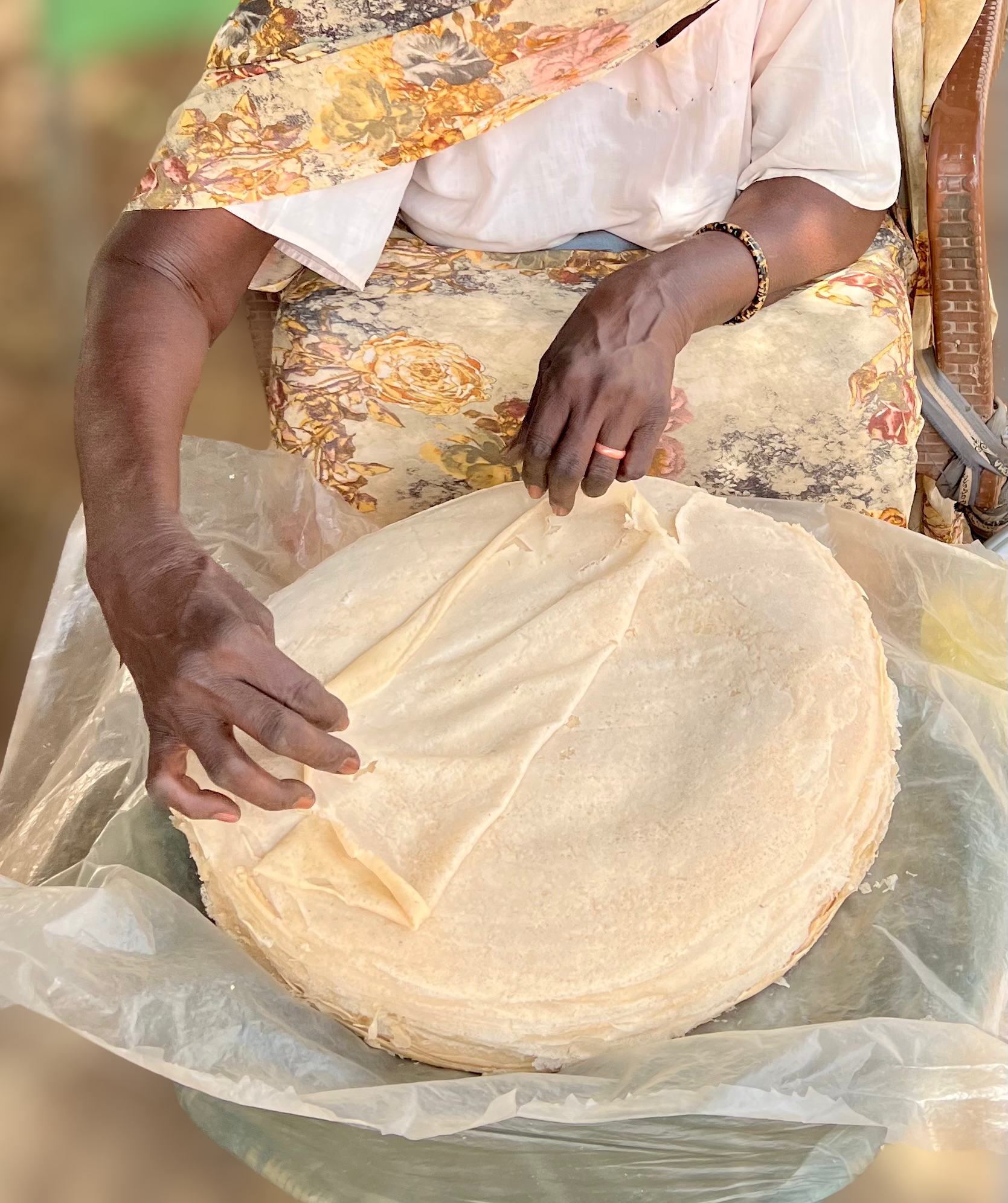
Hamid Dirar has bequeathed an invaluable scientific legacy in biochemistry and fermentation and The Amulet offers tantalizing glimpses of a young man’s emerging fascination with accessible, locally sourced and preserved foods. This fascination would come to shape an academic career which championed Sudanese women’s life-sustaining role in famine survival.
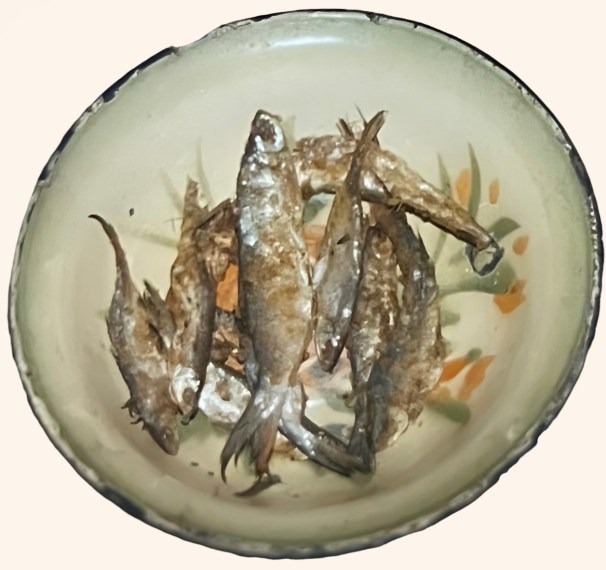
The Amulet is a rich historical resource for anyone interested in traditional Sudanese nutrition, with Dirar’s detailed descriptions of ingeniously crafted vessels used to preserve foods in nomad camps, and his delicate inventories of the native plants of the savannah, river banks and woods, the grasses, thorn bushes, herbs, and fruits of his childhood rovings, all lovingly recorded so they might not be lost for ever. The work celebrates childhood memories of foraged foods such as the doum fruit, “their fist-sized fruits our coconuts; when green, we split them, drank the sweet water of the core”. As climate change bites across sub-Saharan Africa, there is renewed interest in Dirar’s academic legacy and its implications for food security.
See too: City of Words, Hamid Dirar 1940-2023. John Rile , Sudanese Fermented Foods Part 1 Feseekh/Fessiekh and Sudanese Fermented Foods Part 2 Kisra.
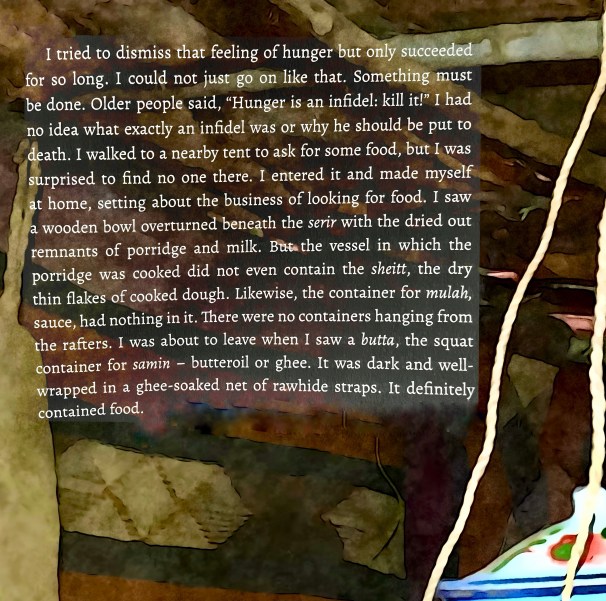
Dirar experienced frequent episodes of desperate, numbing hunger both as a child and young teenager. Below, a memory of searching for food as a small child; a search that would leave him sticky, stinging and in need of rescue.
Each evening as a child, Dirar recalls, he carried the “omra”, the round milking pail to the flock, where his father would milk a sheep for him. Below, his description of the omra:
The palm leaf has a thin woody part in the centre that runs the length of the leaf. On either side of this runs a softer part. The woody streak is called the hangoog and the soft part the saaf. An omra is woven by wrapping bundles of the hangoog with the saaf to build the container in the same way one builds a clay pot, layer by layer. Then a small seat is built in the same manner and attached to the bottom of the container, so the omra looks like a large wine glass, lacking a stem. To make it leak-proof, the inner surface is rubbed with milk and then inverted over a smoke pit for an hour or so. The process is repeated several times the chemicals in the smoke and the heated milk proteins react to give a dark plastic layer that covers the whole interior of the container, making it impervious.
In 1960 Dirar was admitted to the Faculty of Science at the University of Khartoum, where he studied agriculture and went on to work on the new agriculture scheme of his childhood home, Khashm el Girba. This region so lovingly described by Dirar became the home of Halfawiyin displaced upon the building of the Aswan Dam. Dirar witnessed the growing tensions between the indigenous Shukriya and their new neighbours, bottles of Coca Cola proffered in welcome hurled back at hosts, resentment at the loss of land on both sides palpable and a “once serene settlement” with its nomad ways swiftly diluted and then lost; its woods felled and its warthogs slaughtered, as alcohol, the abuses of “near naked” Italian colonialists, and crimes previously unheard of became commonplace.
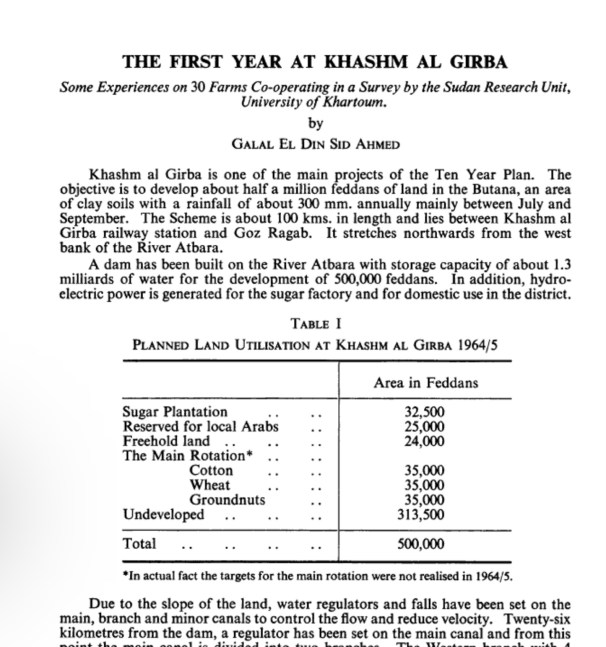
Sudan Notes and Records, JSTOR
Social and Political Change
The young Dirar lived at a time when railways were still a source of fascination, and brought in their wake new wealth, the mixing of tribes and ethnicities, as well as unfamiliar tensions and crime as the new settlements and markets the railway system connected and fed drew disparate communities to them. It was also a time of widespread and often indiscriminate use of DDT, in campaigns Dirar himself participated as a hard-up student, accompanied by the clearing of woods and loss of grasslands. In the midst of the irrevocable change Dirar keenly records, the natural world of his youth sings out as he evokes the vanishing habitats of the sparrows, linnets, black storks, red-billed hornbills, owls, warthogs, gazelles, snakes, jackals and leopards that were so much a part of his daylight journeyings and night-time hunting expeditions with his beloved dogs.
“The sounds of cooing doves, cawing crows, the cheeping sparrows, the chirping insects all mingled there. Nobody killed the hoopoe: it was King Soloman’s messenger to the Queen of Sheba. Nor the umajjanna, the linnet, because it came from Paradise.”

Near Meroë, Sudan.
Although The Amulet is a tale of a young man’s quest for conventional education and the doors it opened, it is also a tribute to the less formal but essential schooling he received as a nomad and the immense reservoir of knowledge and skills needed to survive and flourish in an unforgiving land. At a young age, Dirar had mastered key aspects of geography, astronomy, navigation, animal husbandry, meteorology, and migration systems. He could craft implements, pots and weapons, work leather and track game and people. He was at home with Hadendowa boomerangs and shields and innumerable forms of daggers, spears and traps. He felt keenly the disapproval and misconceptions of nomad life by those he encountered in towns and cities and schools and in many ways, perhaps, The Amulet is a hymn to the craftsmanship of a culture now gravely endangered.

Above, leather ibrig or ablutions vessel and right, a fine Hadendowa leather shield, personal collection and CC.
Tragic Prescience
“The British rulers of Sudan were excoriated in these songs. As girls worked at pounding the stones of the mahaleb cherry to make almond-scented perfume they would denounce the colonialists with their green eyes, yellow teeth and alien language, interlopers who came into their land and milked it of it riches.”
Dirar, recalling the songs of Shukriya girls in The Amulet.
Dirar’s memoir closes with the tragic events surrounding the overthrow of general Abboud, in November 1964. Wearing his smartest clothes, the young Khartoum University student recalls – white twill trousers and new shoes which were a gift, he finds himself ”staring directly into the machine gun snouts of government troops”. He realizes with growing horror that the troops have fired on the demonstrators from behind. “My limbs were stained with the blood of those I would never know.” He goes on to ask; “Morally speaking, what was the difference between General Abboud and a colonizer like Kitchener? There was none.”
Dirar ends with a heartfelt plea for democratic self-determination. “I know then, more certainly than ever, that it would only be when the men and women of my country were able to choose for themselves who should rule them that we would achieve true independence. Only then would the Sudanese really be free.” Never, perhaps, have these sentiments been so keenly shared by so many as Sudan’s present tragedy continues to unfold.
 Women's literacy in Sudan
Very nice
LikeLike