

“All Visible Rays of Light” – The White Toub
“White garments exist in resistance, in our history, in nostalgic memories, in our recent Sudanese Revolution, and yet it is also a color of peace”; the words of doctor, women’s health and refugee advocate, fashion designer and UN migration Young Diaspora Leader for Sustainable Development Goals, Mayada Adil El Sayed. In her video tribute to Sudanese dress, embedded below, Mayada talks of the special symbolism of white, distilling as it does “all visible rays of light”.
Setting the Scene
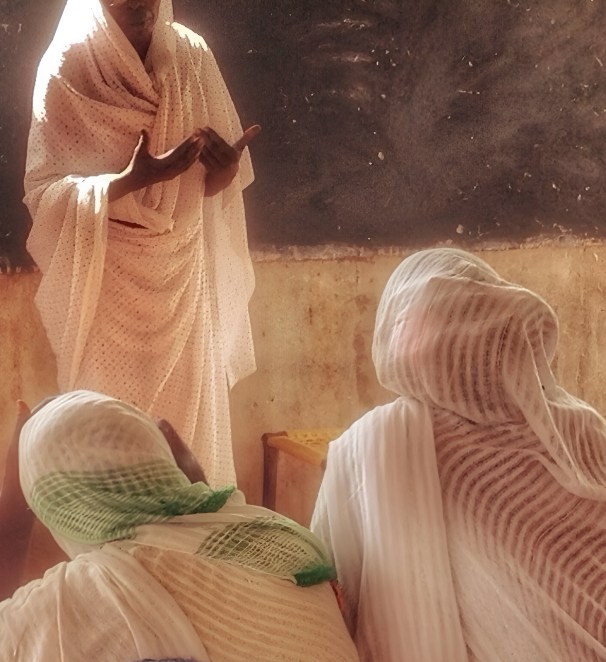
Above, graceful modern variants of the traditional white toub. Traditionally associated with nursing, midwifery and academia, the white toub still symbolizes education and professionalism. It evokes wisdom and dignity when worn by older women and remains the customary attire for funerals. The white toub has been creatively re-interpreted over the decades, with white-on-white embroidery, patterning, transparencies and banding added (Griselda El Tayib).
Below, Lecturer in Maths Department, University of Khartoum, early 1980s, from Under the Sun, The story of Sudanese Women, Marjorie Hall and Bakhita Amin Ismail

The white toub is still favoured by leading Sudanese television presenters, such as Iman Barkia, pictured below and until recently was the official attire of office and public sector workers.

This week’s brief article is by way of introduction to the fascinating story behind the political and cultural role of the Sudanese white toub; a story that will be explored in greater depth in coming posts. Today I offer the exquisite video tribute, embedded below, to the role of white in Sudanese attire by fashion designer Mayada Adil.
Madaya draws her inspiration as designer from the women she served in South Sudan refugee camps, their creative capacity to support their families, and the striking colours and traditional textile crafts of her homeland. You can see stunning examples of her recent collections and learn more about her life in Sudanese Designer Mayada Adil uses fashion to empower refugees. You can also view her work in the UNESCO video embedded at the end of this post.
This post is one of a series of articles on the Sudanese toub.
See The Enduring Appeal of the Sudanese Toub and “Migrating Bird”
If you are interested in Sudanese dress, you might enjoy Hair Braiding in Northern Sudan The Rahat
Historical Highlights; The White Toub as Cultural and Political Armour
“All Visible Rays of Light”; Mayada Adil El Sayed’s Tribute
Historical Highlights; The White Toub as Cultural and Political Armour
As late as the 1950s it was unthinkable for a pure Sudanese woman to be seen in public without being enveloped in the customary white muslin tobe, with only her eyes visible to the outside world.” Rather than a dramatic and symbolic gesture of unveiling, women began to be seen in the streets with their tobes cast back from the face with only the head covered.”
Sisters Under the Sun, The story of Sudanese Women, Marjorie Hall and Bakhita Amin Ismail
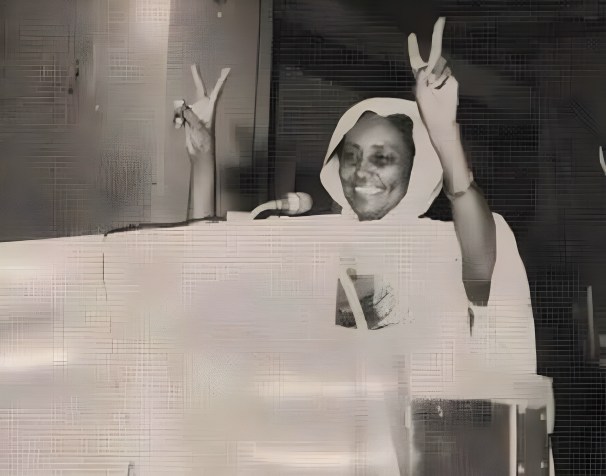
Above, Fatima Ahmed Ibrahim, Sudan’s first woman parliamentarian, founder and leader of the Sudanese Women’s Union, photograph, Wikicommons. Fatima Ibrahim wore her white toub with pride during parliamentary debates.
At a national conference in 1969 Fatima Ahmed Ibrahim famously argued and to stunning effect that:
“women’s rights were in keeping with Sudanese traditions. As evidence of this, Ibrahim asked the audience to compare her tobe with the western business suit of then-President Gaafar Numeiri, who stood next to her. With this comparison, Ibrahim suggested that it was Numeiri who was out of touch with Sudanese values and systems. Numeiri well understood the bite of Ibrahim’s comments; three years later Fatima Ahmed Ibrahim was arrested and forced into exile.” Marie Grace Brown History Stands alongside the Woman in the White Tobe
In the same article, historian and expert on the semiotics of Sudanese dress, Grace Brown looks back over the past century of political life in Sudan, drawing parallels between past and contemporary conflicts and the ever present, ever malleable symbolism of the white toub:

“Then as now, the tobe’s ability to carry multiple messages has made it a vital instrument in women’s activism. The tobe’s loose folds satisfied past and present standards of modesty. This, in turn, allowed women and girls to attend school, work, and eventually enter the political arena. In 1953, in one of the country’s first nationalist demonstration, hundreds of women defied the social conventions of seclusion and marched from Omdurman to Khartoum shouting, “Long live Sudan!” All were wearing white tobes. For the next two decades, women activists from across the political spectrum concisely styled themselves in modest, unassuming clothing so that they might be radical and outspoken in their demands.” History Stands alongside the Woman in the White Tobe
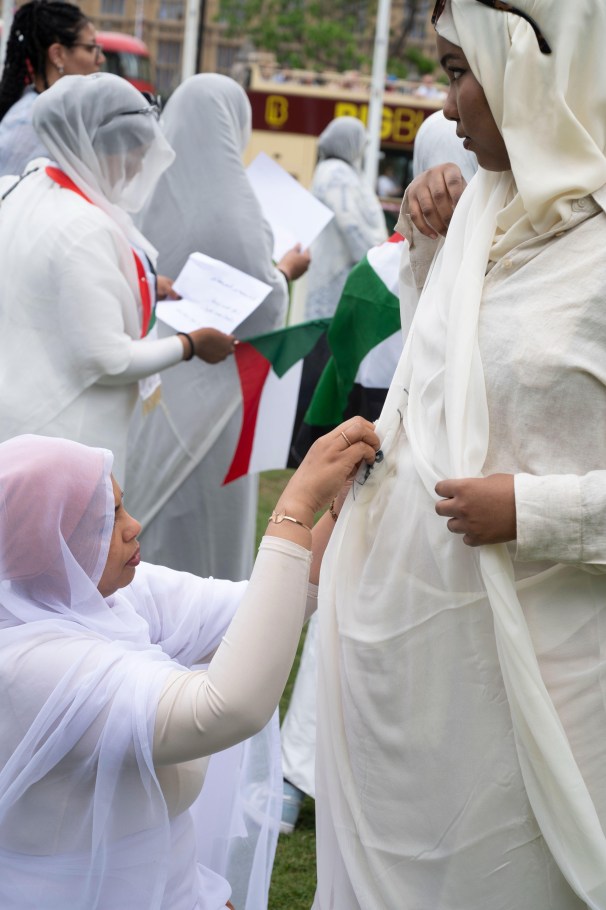
Above, left; Parliament Square, London, June, 2023. Sudanese women prepare to protest against the war in their homeland, wearing their white toub (image, under licence, Alamy). Above right, Miss Thoraya Ambabi, Miss Amna Ibrahim Malek and Miss Malthum Omar; Omdurman teachers and three of only eight Sudanese women qualified to vote under the graduates’ constituency provisions of 1953 (image under licence, Alamy).
Below, the iconic image of the revolution; Alaa Salah leading crowds of demonstrators in chants during the Sudanese anti-government protests of 2018 – 2019. The photograph was taken by Lana Haroun, Wikicommons. In the past five years, the white toub has taken on not only the symbolism of female autonomy rooted in dignity and respectability but also acts as a statement of a Sudanese identity seeking to be inclusive; forged and re-negotiated by women themselves.

See too 500 Words’ Ahfad Student Sit-in Inspires ‘White Toub’ Trend.
“Salah uses her tobe to similar effect. In videos of her protest, Salah’s gestures and exhortations to the crowd cause the fabric covering her head to slip. Gracefully, without missing a beat, she positions her tobe back in place. She too, combines modesty and radical action as she upholds the standards of propriety while chanting “Revolution.”
History Stands alongside the Woman in the White Tobe
“All Visible Rays of Light”
Colour Hunting, A Project by Mayada Adil El Sayed, Design Indaba and Google Arts & Culture
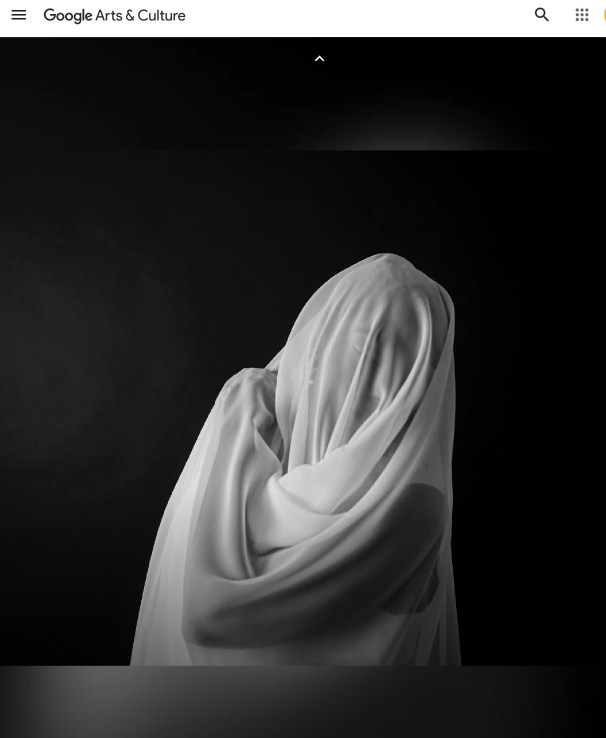
White is the Spirit of Sudan El Blanco es el espíritu de Sudán
As Mayada says ”Sudan is made up of 570 tribes. The color white is often used in ceremonial clothing – from east to west, north to south – our traditional Sudanese costumes the Toub and Jalabya are often white to complement our complexions.” Mayada goes on to say ”white reflects the warm hearts of the Sudanese people, who are known for their kind hearts and generosity. White color is present everywhere, you see it daily on the streets of Sudan, in all the ceremonies, joyful occasions and sorrowful ones.” For Mayada, it represents universality and movement.
You can watch a 2020 France 24 interview with Mayada Adil El Sayed here: Sudanese designer Mayada Adil on why the time is now for African fashion
Below, Mayada Adil’s collection at the Africa Fashion reception, Paris 2018
 Women's literacy in Sudan