

Sudan’s Cultural Treasures Looted, Part 1
The Sudan Ethnographic Museum Remembered

Above, the shady portico of The Sudan Ethnographic Museum, Khartoum, with views onto its leafy gardens and courtyards. The museum occupies a wedge of land at the junction of the capital’s iconic arteries, Al-Gamaa Avenue and Mek Nimr. Stepping into the museum grounds after the ceaseless clamour and fumes of neighbouring traffic, as I did in the summer of 2022, you enter an oasis of calm.
Below and title photo, bridal head ornament made by Misiriya silversmiths.
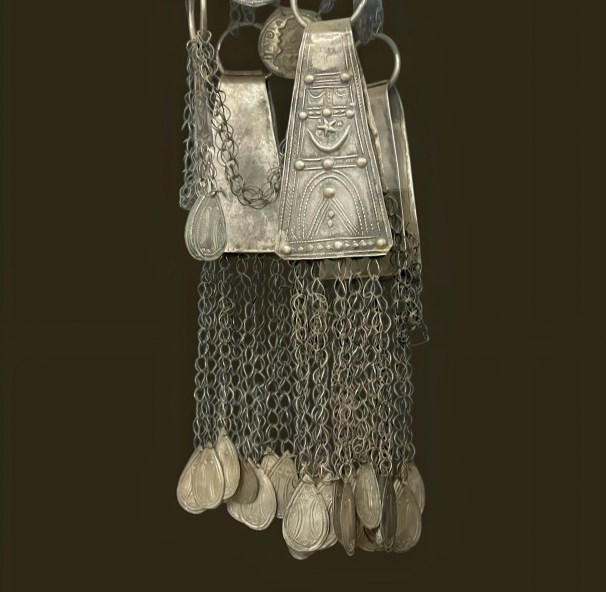
All photographs of artefacts appearing in this article were taken by the author, with permission from the museum authorities. Artifact descriptions are taken from museum texts.

Above, Gordon Ramparts post, Ethnographic Museum courtyard, Khartoum.
Setting the Scene Coming Full Circle A Litany of Destruction
The Sudan Ethnographic Museum Remembered

Setting the Scene
“The threat to culture appears to have reached an unprecedented level, with reports of looting of museums, heritage and archaeological sites and private collections”, UNESCO statement, Sudan Museum’s Artefacts Looted In War, Offered For Sale Online

The Sudan Ethnographic Museum in Khartoum, like so many others in Sudan, has suffered extensive damage and looting since the outbreak of war last year. The capital’s Sudan National Museum, (see Tens of thousands of artefacts looted from Sudan museum), The National History Museum, The Khalifa’s House, (see Sudan’s Cultural Treasures Looted 2) and the Republican Palace Museum have also sustained severe damage.
Sudan’s National Corporation of Antiquities and Museums (NCAM) bears sole responsibility for the country’s antiquities and archaeological sites, administering fifteen museums, including three in Khartoum, three in Darfur and one each in North Kordofan and Gezira. In collaboration with international agencies such as Heritage for Peace and The Sudan Heritage Protection Initiative, the NCAM is endeavoring to document, trace and recover Sudan’s antiquities and ethnographic treasures during the on-going conflict. Their efforts are hampered by lack of monitoring capacity, insufficient funding and limited enforcement powers.
Although the outlook for Sudan’s heritage conservation is profoundly disheartening, “Sudanese communities have mobilized on social media, creating numerous groups to raise awareness locally and globally about the urgent necessity of safeguarding cultural heritage. There is also a push to engage the warring parties to secure safe passage for teams to assess damage and implement reconstruction efforts.” War in Sudan is ravaging its rich history
Theirs is an uphill battle. Middle East Eye recently reported on the transporting of stolen artefacts in “four truckloads” to western Sudan, stating the account provided by the Sudanese intelligence has been corroborated by international organizations and supported by satellite data. The report goes on to note; “A Sudanese archaeologist, speaking anonymously for security reasons, told AFP that pottery, gold objects and paintings listed for sale appeared to have come from the National Museum in Khartoum…” War in Sudan is ravaging its rich history. UNESCO has called on “the public and the art market in the region and worldwide to refrain” from trading in Sudanese items. See too Sudan Museum Artefacts looted in war, offered for sale online
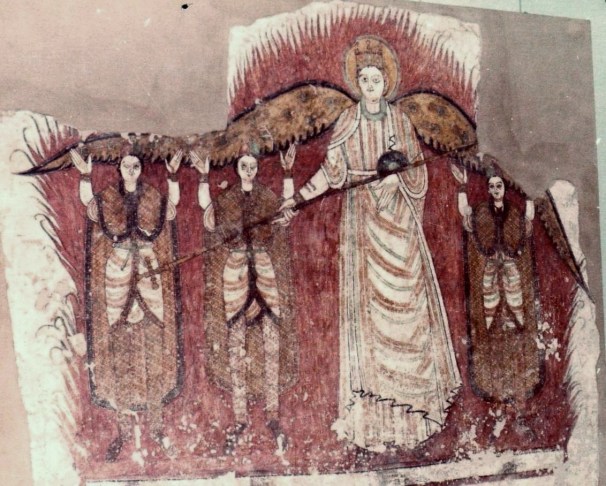
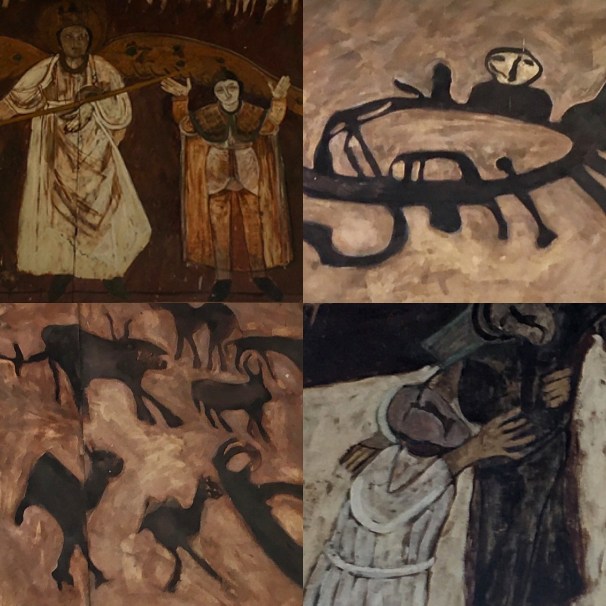
Above upper left, wall friezes from Temple of Buhen, and right, The Hebrews in thr Fiery Furnace, Faras Cathedral (Wiki CC) both Sudan National Museum collection, details provided at the end of this article. Above left, details of murals by groundbreaking Sudanese artist Kamala Ishag commissioned for the entrance hall of the museum. See more in Kamala Ishaq at Sudan National Museum
Protecting Sudan’s cultural heritage amidst war
Coming Full Circle

The unfolding of Sudan’s current heritage crisis is not without historical parallel. Anglo-Egyptian era plundering, trophy hunting and the complex ethical issue of repatriation of precious Sudanese artefacts from the Mahdist era have long vexed both Sudanese and British museum conservators. Referring to Mahdist human remains seized by the British from the Battle of Omdurman, Dr. Eglal El-Malik, director of conservation at the National Corporation for Antiquities and Museums, said: “We have to have a big campaign. These people are our brothers, our heroes. They unified and defended our country. It is a very special story of resistance to imperialism. Their descendants should see this all here.” Sudan seeks return of treasures looted by British. See too Sudanese museums demand return of artefacts
Speaking in 2022, Dr El-Malik went on to say, “There are lots of Sudanese (people) who want these items back now (but) they need to be aware of the legal issues. The reality is we have so many difficulties (in Sudan). It would be great if we had all these things back now but (they are) in a good situation where it is and so many people see it. So, we have to be reasonable,” His words have taken on ironic and tragic prescience in recent months. Sudanese academics fear the destruction of their country’s heritage is far from random and not solely motivated by greed. For many cultural commentators it embodies idealogical ambitions to reshape Sudanese identity by the brutal extirpation of all those cultural and ethnic elements anathema to the warring factions’ worldview.
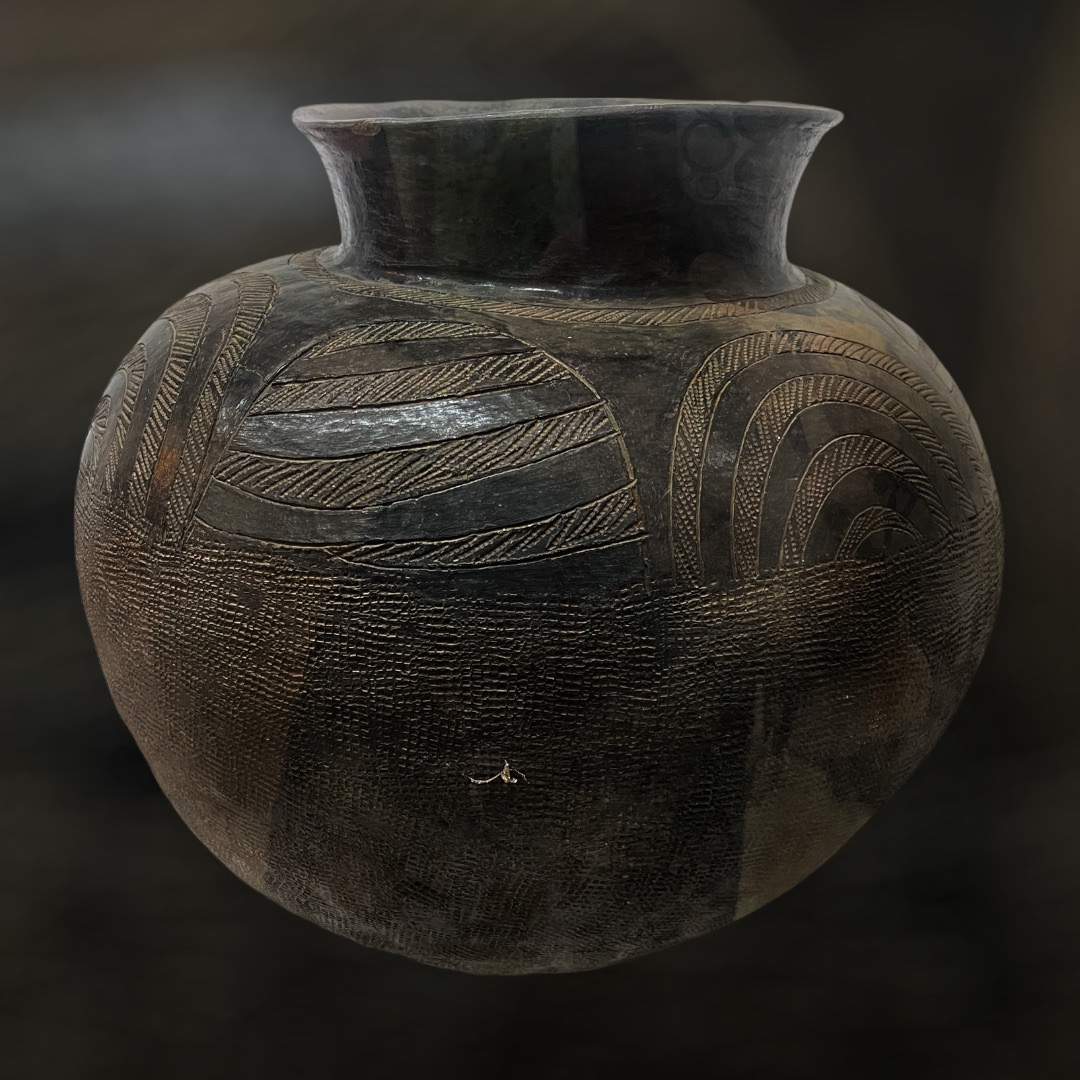
Above left, view onto the Mahdi’s tomb from the Khalifa’s House, Omdurman. Above right, fine earthenware from the Nuba Mountains, Sudan Ethnographic Museum.

Above, man’s bead collar of Venetian beads – Malwal Dinka Tribe, Bahr al Ghazal, Sudan Ethnographic Museum, Khartoum.
You can see many more examples of the museum’s unique collection in Ethnographic Museum Khartoum. For several years the museum had been closed for renovation. I was blessed to visit the museum for the first – and I now fear the last time, shortly after its re-opening, in 2022. Photo, Imogen Thurbon.
See pre-war scenes of Khartoum in Khartoum Collage

Above, Baggara bull trappings, Sudan Ethnographic Museum, photo, Imogen Thurbon. See more in Ethnographic Museum Khartoum and Cowries in Sudan
A Litany of Destruction
We are witnessing a systematic destruction of cultural heritage that deprives Sudanese communities of their history and identity. It threatens the Sudanese people’s connection to their past, present stability, and dreams for the future of their children and coming generations, Protecting Sudan’s cultural heritage amidst war

Recent years have seen promising domestic and international research initiatives for the preservation of Sudan’s unique cultural artifacts and archeological sites. These welcome moves follow decades of complex challenges to the field, among them lack of resources for digital documentation of artifacts and site conservation, growing environmental threats to site integrity and longterm neglect borne out of ideological positions on the cultural value of non Arab-Islamic sites.

Within only two weeks of the outbreak of war last April, it was clear that Sudan’s museums, libraries and archeological research centres, in addition to constituting strategic military objectives, were desperately vulnerable to shelling, occupation, vandalism and looting. Heritage For Peace (HFP), documenting the current state of heritage in Sudan, for example, has reported the presence of snipers on museum roofs. Early on in the war, the Sudan National Museum found itself at the epicentre of the conflict with harrowing accounts emerging of civilians trapped and wounded within its walls. Among them was Moataz al-Fateh Ismail, a Sudanese artist, who survived for fifteen days off water, the organic materials he uses in his paintings and lemons from a nearby tree (Middle East Eye). See Moataz’s work in Coffee and Hibiscus Flowers.

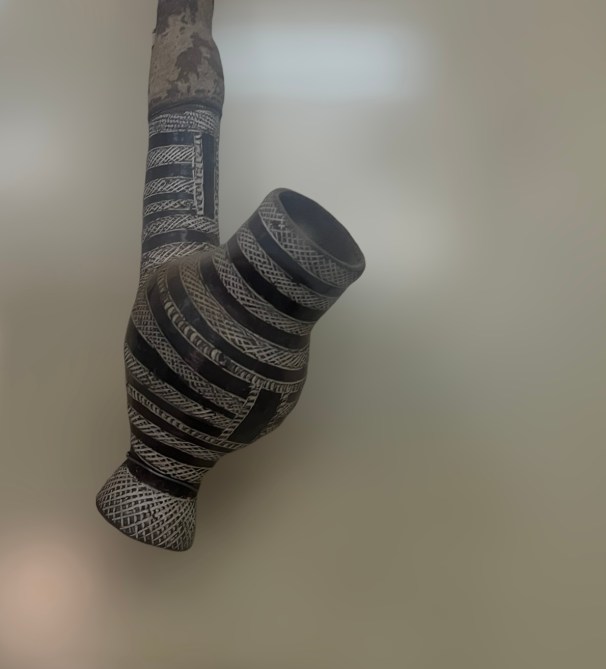
Above, right, Khartoum’s House of Heritage, in 2022. It has suffered extensive damage in the war. Left, Saint Ann, fresco, Cathedral of Faras, Sudan National Museum, details provided below. Right, ancient funerary beadwork, Sudan National Museum. Below left, Shilluk gourd bowl pipe, Sudan Ethnographic Museum.
The two incidences below speak volumes on the level of cultural barbarism the war has unleashed.
In June last year RSF forces raided Khartoum’s M Bolheim bio-archeology laboratory, founded by the NCAM and The British Museum, where they now famously mistook ancient Nubian and Kushite human remains for victims of the Bashir regime in self-shot footage which later went viral, Sudan’s RSF raids museum and declares ancient skeletons murder victims The paramilitaries are heard demanding the “victims” be buried in a bid “to bury fear itself”, provoking wry comments from Sudanese observers that for once the skeletal remains found could not be attributable to misdeeds of former regimes.
In the same month reports emerged of the senseless destruction of the Professor Mohammed Omar Bashir Centre for Sudanese Studies Library at Omdurman Ahlia University. In addition to holding irreplaceable original volumes on the political, social, and cultural heritage of Sudan, the library “also housed many rare books, research documents, and manuscripts handwritten by the professor himself that are impossible to find elsewhere.” Former Secretary General of The Sudanese Writers Union, Osman Shinger explained “The library represented a vital conservation institution for Sudanese heritage, and it served students and researchers from Sudan and other countries”, Ayin Network. The attack on Sudan’s heritage, the destruction of an invaluable library

The attack on Sudan’s heritage, the destruction of an invaluable library
The Sudan Ethnographic Museum Remembered
Below, the entrance into the main exhibition hall of the museum, with the Sultan of Yambio’s imposing wooden war drum centre stage. This piece was looted by the British during a punitive expedition (Zoe Troy).
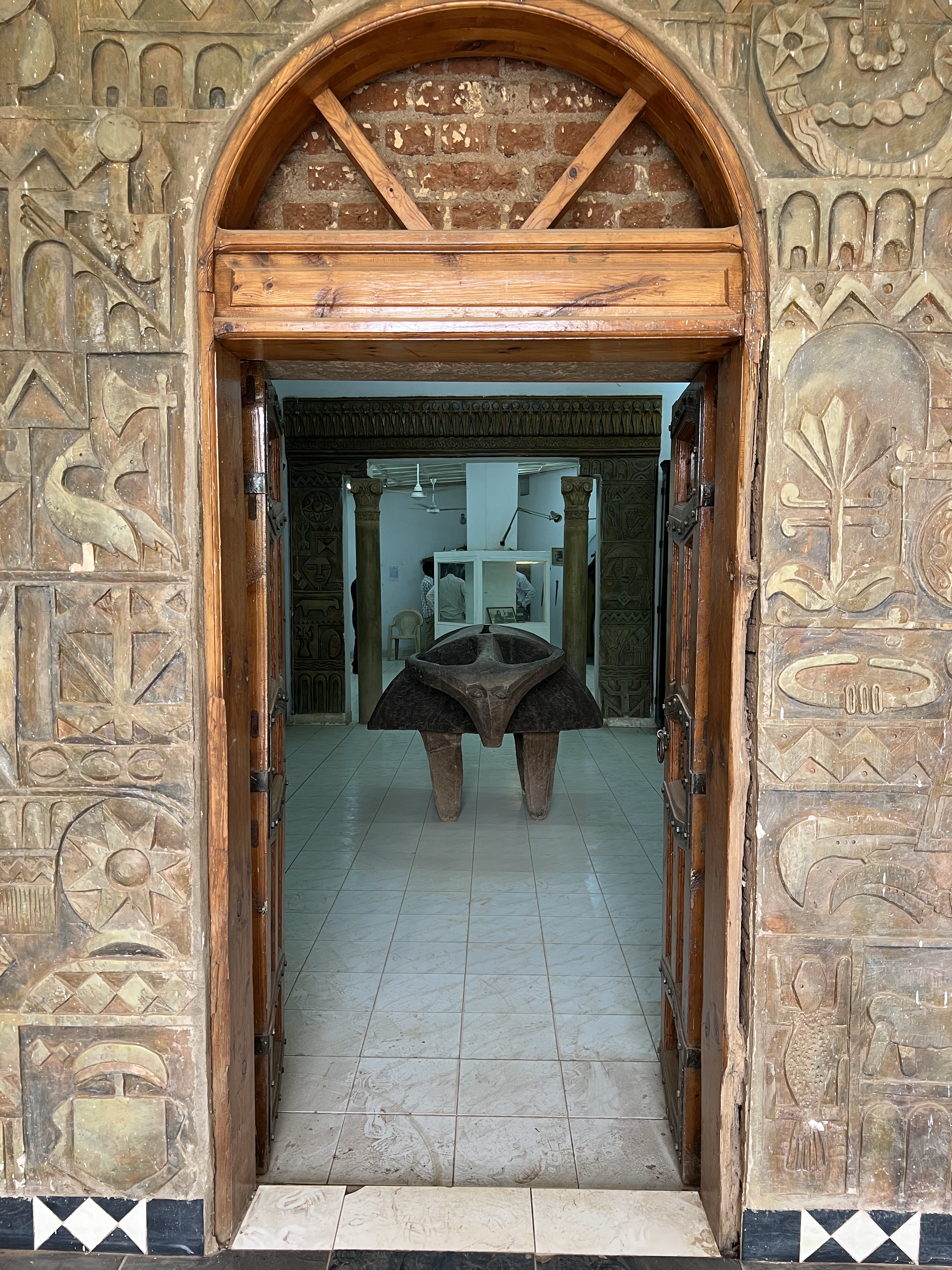
Hear the drum being played in Museum’s Facebook Page.
Before the outbreak of war last April, The Sudan Ethnographic Museum was home to a dazzling array of artefacts. Among its treasures were Zande lyres, copper war drums, shilluk pipes, Rashaida silver and Nuba beaded jewelry, exquisitely worked leather bull and camel trappings of eastern and western Sudanese nomadic communities, delicate kohl dispensers, finely carved southern Sudanese funerary and decorative figurines, western Sudanese earthenware, porcelain, basketry, traditional rope beds, embroidered wedding cloths and wedding objects, fishing traps and weaving tools, prayer boards, Quranic calligraphy, and 19th century embroidered shoes. Below, northern Sudanese jirtig wedding objects and angareeb with wedding mat.

Below just some of these wonderful objects.
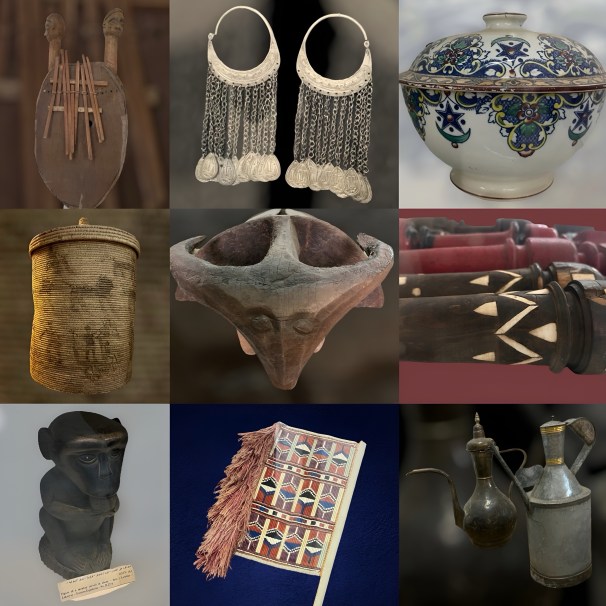
Above top left, Zande lyre adorned with carvings of human heads, next to silver earrings, Misiriya, Al-Geneina Arab. Centre row, basketry and inlaid wooden angareeb bed legs flank the Sultan of Yambio’s war drum. Bottom left, ebony figure of a monkey, Western Equatoria; centre, hand fan or habaaba, right, ablution ewers. See more in Ethnographic Museum Khartoum.


Moving away from the traditional, regionally-based display structure favoured pre-2019, post revolution, the museum embraced a thematic layout for its collection, with skilful dioramas capturing nomadic life, food preparation and traditional skills. Musical instruments, earthenware, china and coffee utensils, articles associated with religious education, fishing and Nile boats, dress and wedding customs were all given their own sections within the museum.
Above left, diorama of Baggara nomad camp with pack bull and tent; right, silver necklace, Masalit of Al-Geneina, below right, Nile boats display.

In November 2022 British Council announced funding of nearly 2 million pounds for a complete renovation of the museum through its Cultural Protection Fund (CPF), as part of its Safeguarding Sudan’s Living Heritage from Conflict and Climate Change (SSLH) project. As well as modernizing the former exhibition and incorporating cultural objects from pastoralists in Darfur and Kordofan into the collection, the project sought to improve digital and physical accessibility, enhance facilities, mitigate increased flooding risk and provide a new “landmark” domed roof for the museum, Wikipedia and British Council, Safeguarding Sudan’s Cultural Heritage.
The project also aimed to enable local communities to record accounts of their own living heritage for inclusion in the Ethnographic Museum, see an example below, and provide an online platform for cultural documentation. The project has been frozen since the start of the conflict.
Below, personal highlights of the collection

Above, leather western Sudanese camel litter, or Al-Hawdaj, adorned with cowries.
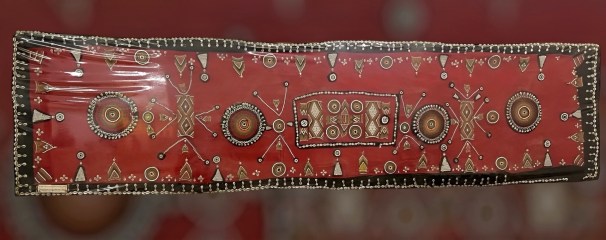
Below, Bridal Mat of the Beni Amer of Tokar with its rich geometric beading and cowrie-edged motifs. Such mats were often handed down from generation to generation by the women of the family, Sudan Ethnographic Museum, Khartoum, Cowries in Sudan
Above, bird-shaped jabbana or coffee pot, Kadugli area.
Below, elaborate silver Rashaida wedding jewelry.

Below, three-necked pot, Nuba people, Kordofan.

Below, examples of activities to be recorded for display in the museum.
Below, information on Saint Ann, Christian frescos of the Cathedral of Faras and The Hebrews in the Fiery Furnace, SFDAS guide.

 Women's literacy in Sudan