

Sudan’s Cultural Heritage Looted Part 2
The Khalifa House Museum Remembered; A Photographic Tribute

Above, scenes from The Khalifa House Museum in 2015, before the museum’s extensive renovation and subsequent re-opening in 2023.
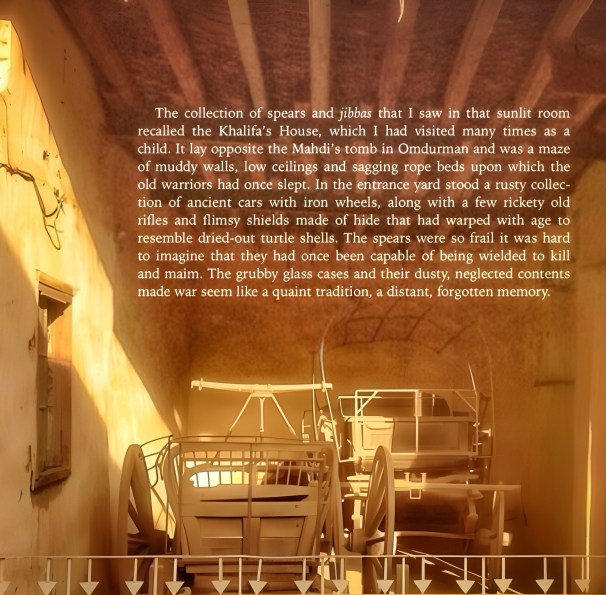
Above, carriages in the museum entrance courtyard, 2015, with Jamal Mahjoub’s memories of the museum, from A Line in the River.

The Khalifa House Museum Remembered; A Photographic Tribute
Setting the Scene
The Collection Renovation and Re-Opening
The Collection Decimated
Setting the Scene

The Khalifa’s House, home to the ethnographic collection now housed there, is considered the first presidential palace in Sudan and was the nerve centre of the economic, diplomatic and ideological administration of the short-lived Mahdist state (1881-1898). During the Mahdiyya it hosted meetings of the Shura Council, empowered to determine state policy, minted currency and printed government communications. For many Sudanese, the site is synonymous with the heroism of those who overthrew Turkish and Anglo-Egyptian imperialist rule and embodies the forging of a distinct, Sudanese national identity. For a more nuanced perspective, see The Legacy and Perception of Mahdism in Sudan. The museum conserves a unique collection of Mahdist, Ottoman Turkish and Anglo-Egyptian colonial artefacts.

The museum lies close to the Khalifa Abdullahi Mosque and looks onto the Mahdi’s Tomb. Nearby are the Mahdiyya’s government offices, treasury, arsenals, the quarters of the Mahdi’s lieutenants (al-mulazimeen), the Abdel Qayyum Gateway, and the Al-Sayir prison, which once held the likes of Charles Neufeld, and which still operates as a prison today.
Left, colonial era photograph of the Khalifa’s House, upper right, the caretaker of the Khalifa’s House, dressed in Mahdist robes, 1936 (Wikicommons). Scroll down to the end of this post for more colonial era photographs and illustrations of Mahdist Omdurman. See too Postcards from Khartoum and Omdurman
Below, remains of the Mahdi’s tomb, c.1910.

Below, a brief history of the museum, text: Sudan Memory The Khalifa’s House

See too Sudanow The Khalifa’s House opens to visitors for details of the building’s evolution into a museum.
The Khalifa House Museum Collection

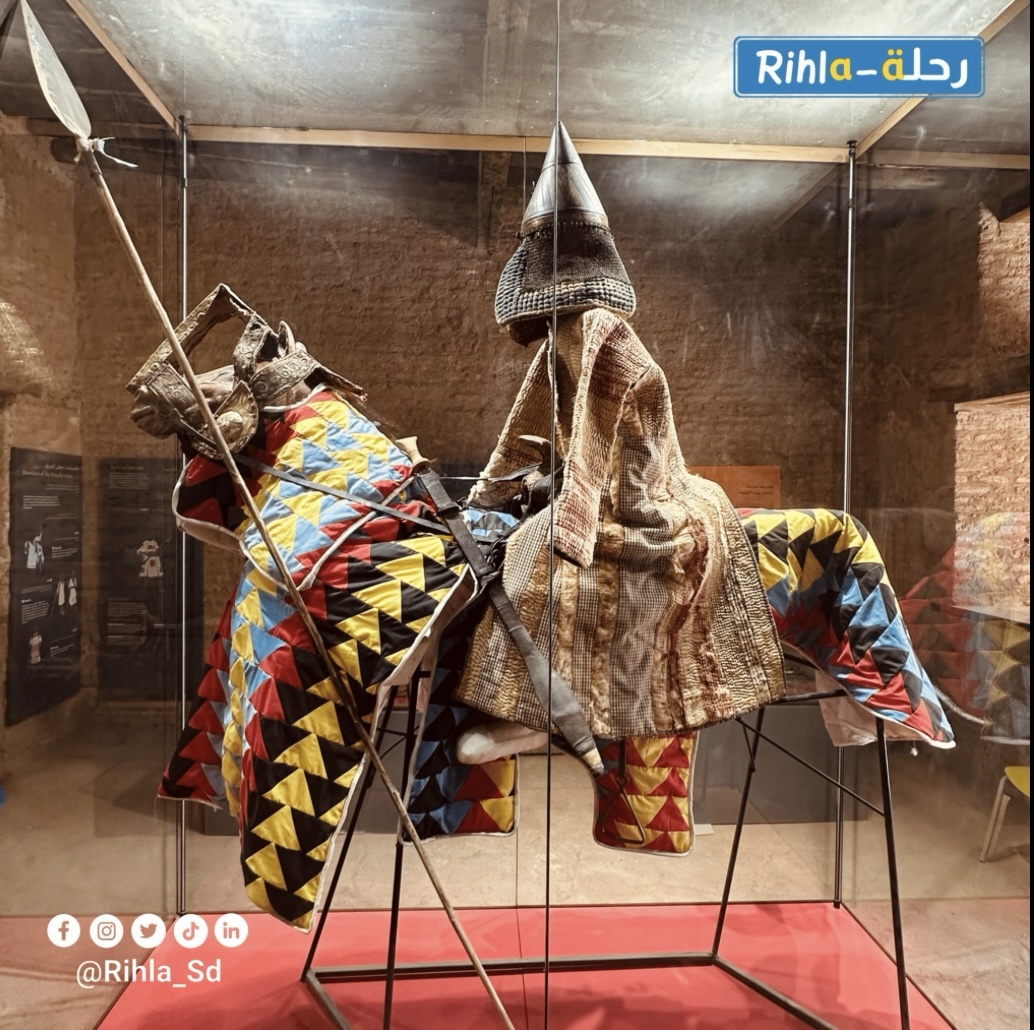
Above, top left, the second storey of the house, constructed by Hamad Al-Noor during the House’s second phase of building, under the supervision of Italian engineer, Pietro, undertaken in 1891. Upper right, the original cupola of the Mahdi’s tomb. Below it, the rebuilt tomb itself. Bottom left, Mahdist attire (according to some captions, described as robes worn by Gordon) with the elegantly ornate tagiya um garnen of a Mahdist emir, headwear also worn by Funj cavalrymen, centre, the Khalifa’s bathroom and right, a giant angareeb, gifted by former president, Gafar Numieri from Eltura, Sheikh Mohammad Hassan Nour Buga, Mosque, Dongola region. The bed was used by children of the khalwa for sleeping and as a shelf for their wooden Quranic calligraphy boards.
See too Memories of Omdurman
The Khalifa House Museum Collection
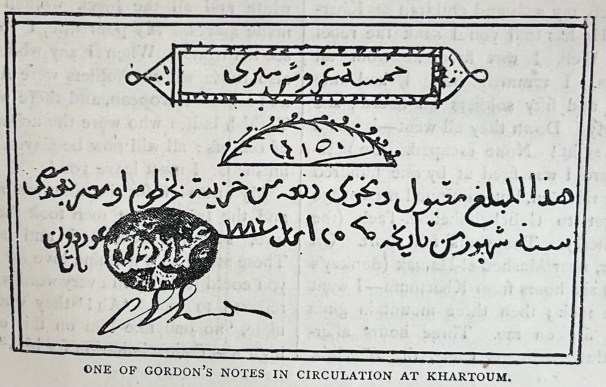
Left, a Gordon note in circulation in Khartoum, Gordon – incidents of the siege of Khartoum, Pictorial Records, The English in Egypt with Life of General Gordon, 1898. Below right, The Flag of the Khaleefa Shereef, rival to Abdullahi ibn Muhammad, from A Prisoner of the Khaleefa, Charles Neufeld, 1899.

The museum housed a remarkable collection of more than two thousand artefacts in a unique architectural setting before the outbreak of war last April. As well as period photographs, correspondence and personal belongings of the Khalifa, the collection included Mahdist coins, Gordon banknotes, such as the one above, suits of mail and Mahdist military dress, banners, swords, canons, spears, and other weaponry from The Battle of Omdurman, including a Maxim automatic gun. Among the many highlights of the collection was the first printing press to be used in Sudan, introduced by the invading Turks in 1821 and later adopted by the Mahdist rulers for the printing of key Mahdist diplomat communications to foreign states, including letters to the British sovereign and the Ottoman sultan. The collection also housed an Arrol-Johnston motor tractor, the first car to be used in Sudan, made for Sir Reginald Wingate the Governor General of Sudan, and pictured below. Khalifa House Museum and Aljazeera بعد تعرض مقتنياته للنهب والتدمير.. ماذا بقى من متحف بيت الخليفة بمدينة أم درمان؟
See too the research into Mahdist dress and the restoration of costume undertaken at the Khalifa House Museum by Saadia AL-Salahi in Pioneer Costume Designer Saadia Al-Salahi
In addition to Mahdist era artefacts, the museum was home to numerous prehistoric, ancient and medieval stone and pottery exhibits.
The Renovation and Re-Opening
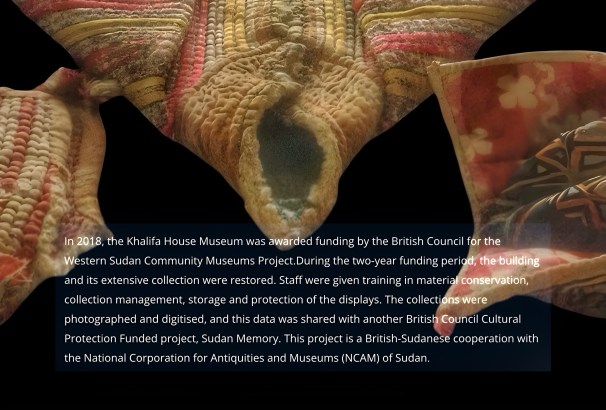
The renovation project, Wikipedia. See too British Council, Community Museums of Western Sudan: Omdurman, El Obeid, Nyala
Below, curator, Iklas Ilyas offers fascinating insights into the restoration process in 2020 (3 minutes in English):
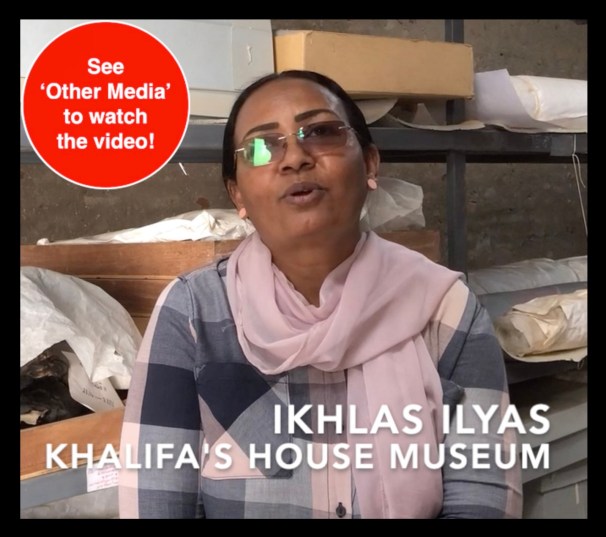
The Making African Connections Digital Archives
Enjoy a glimpse of the beautifully renovated museum pre-war here (Arabic):
Below, the Arrol-Johnson motor tractor on display after the renovation of the museum and lower left, the prayer beads of Osman Digna. These photographs from Rihla Facebook

The Collection Decimated
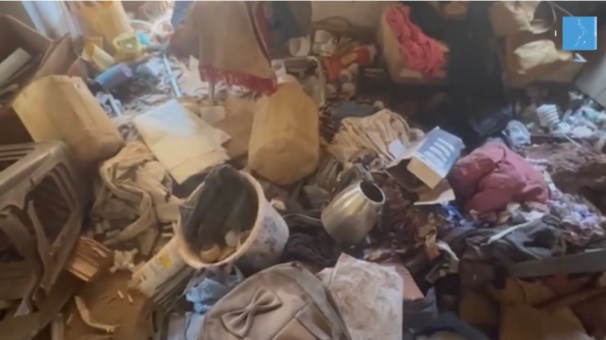
Above, still from Aljazeera coverage of the occupation and looting of the museum and the nearby Mahdi’s tomb by RSF forces over the past year. بعد تعرض مقتنياته للنهب والتدمير.. ماذا بقى من متحف بيت الخليفة بمدينة أم درمان
See too Protecting Sudan’s cultural heritage amidst war

Above, Aljazeera still of the Arrol-Johnson motor tractor after RSF seized the building. Inset, Stalin Pasha guides Teddy Roosevelt around Khartoum, 1910.
In addition to severe damage to the fabric of the building (one wall is close to collapse) from shelling and gunfire, display cases have been smashed, their contents ripped out and either scattered or looted. Aljazeera relates that at least thirty artefacts from the museum have been looted, with many reportedly offered for sale in South Sudan. Efforts are underway to determine the true number of items looted and to recover those hidden and scattered among the debris.
Quoting experts from the Sudanese Antiquities and Museums Authority, Aljazeera goes on to explain that looted items included numerous swords of prominent Mahdist warriors, the sword of the Mahdi himself, the rhinoceros horn drinking cup of the Khalifa and the prayer beads of Osman Digna, pictured above. A saddle belonging to Sultan Ali Dinar, Mahdist robes and all the coins preserved from the era in the mint room have also been stolen.
Read the full text (Arabic) below. The report includes brief video footage of the looted museum, بعد تعرض مقتنياته للنهب والتدمير.. ماذا بقى من متحف بيت الخليفة بمدينة أم درمان؟
Sudanese and international agencies are battling to stem the flow of looted artefacts out of the country and will be offering training to law enforcement and judicial bodies in Cairo at the end of the year.
Below, colonial era photographs of Omdurman.
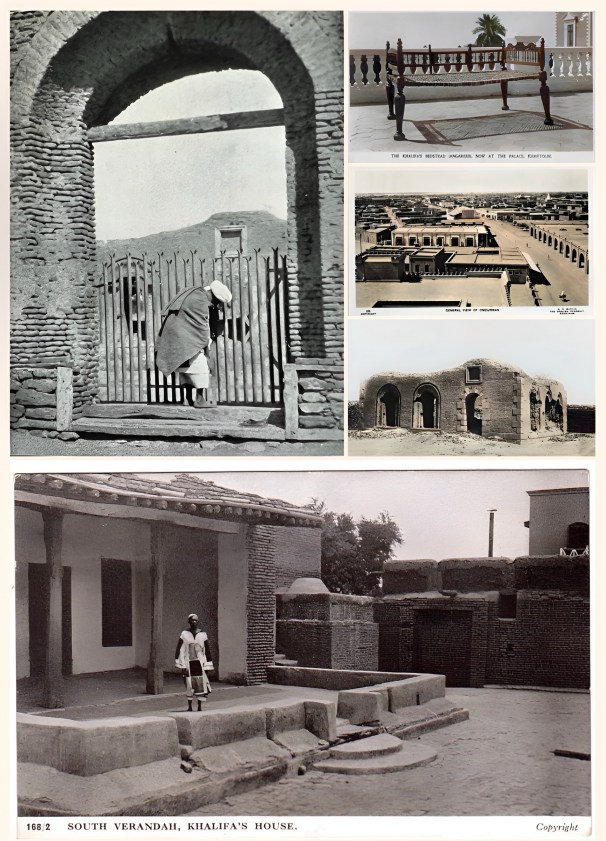
Top left, entrance to the Mahdi’s tomb, from The Vast Sudan, Radclyffe Dugmore, 1924. Upper right, the Khalifa’s angareeb, then housed at the Palace, Khartoum. Below, general view of Omdurman and the ruined structure of the Madhi’s tomb, c 1906, bottom, South Veranda, Khalifa’s House.

Top left, “On the Nile bank, Omdurman”, Morhig postcard, above a photo of trophies taken at Omdurman, from A Prisoner of the Khaleefa, Charles Neufeld, 1899. Below that, “Centre of the Mahdi’s stronghold, Omdurman”, Morhig postcard. Upper right, “A flogging by order of the Khaleefa”, from A Prisoner of the Khaleefa. Below, an etching of Osman Digna, from Pictorial Records, The British in Egypt with The Life of Gordon.
 Women's literacy in Sudan