

Are You under the Tree or in the Basement?
Four Sudanese Expressions Coined during the Conflict
البدروم تحت الشجرة بل بس جغم

The intriguing expressions featured in this brief post have gained currency over the course of the past year. They have been discussed in Sudanese and the wider Arabic media and have been the subject of numerous cartoons and vignettes both by supporters of the military protagonists in the conflict and critics of the ongoing war. The origins and usage of the terms I outline below are taken from Al-Rakoba ‘s مصطلحات وتعبيرات سودانية جديدة ظهرت بعد معارك أبريل ٢
This is the first of a brief series of articles aiming solely to provide linguistic and cultural background on Sudanese colloquial expressions generated from the conflict.
Illustrations unless credited otherwise by Imogen Thurbon.
The Basement البدروم
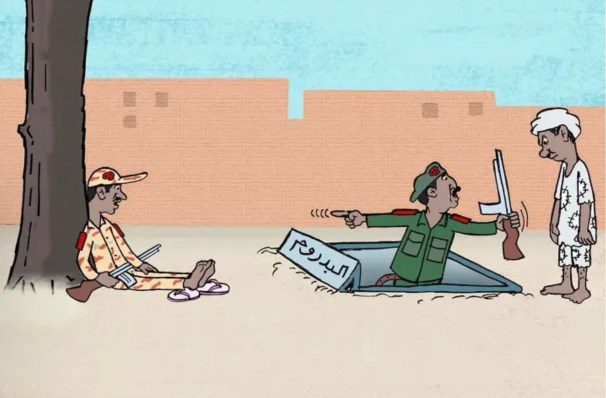
مصطلحات وتعبيرات سودانية جديدة ظهرت بعد معارك أبريل ٢
In the cartoon above, published in Al-Raboka and reproduced widely on social media, General Abdel Fattāh Al-Burhān, Commander-in-Chief of Sudan Armed Forces and de facto ruler of Sudan is depicted emerging from a basement entrance. While proffering a gun to the barefoot civilian in patched robes standing before him, the general gestures behind him at a nonchalant Muhammad Hamdān Daglū, now widely known as Hemedti. The leader of the Rapid Support Force is seen propped against a tree, his bare feet resting on his sandals, a gun on his lap. The cartoon encapsulates two key expressions prevalent in the early days for the war; expressions which came to be referenced ironically or used as stinging ripostes by the protagonists in joint media interviews.
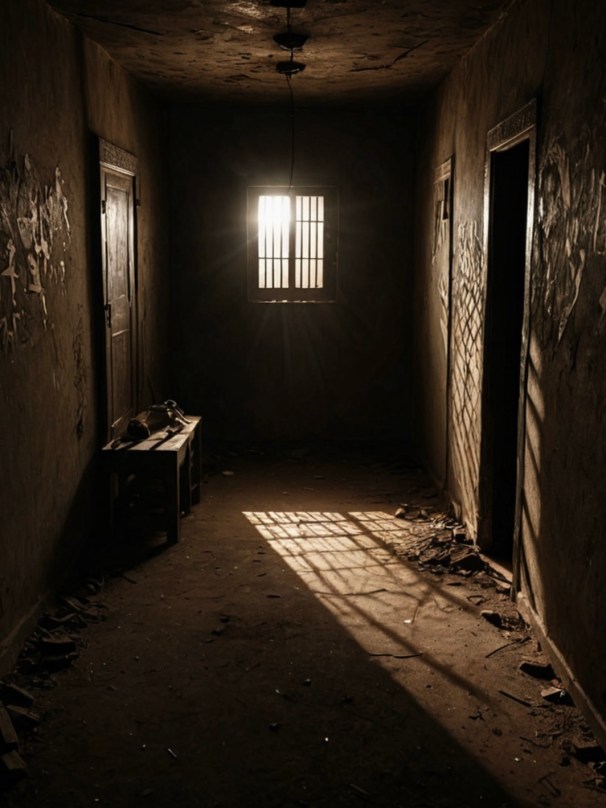
At the immediate outset of the war, press and social media were struck by what they interpreted as the apparent disappearance of General Burhan. He was not to be seen either commanding his forces in the field or addressing news outlets, exciting widespread media speculation as to his whereabouts and motives. It was at this time the term “budruun / budruum” associated with Burhan began to appear on social media. In Sudanese Arabic the term is used to refer to a basement or basement room. It can also refer in standard Arabic to a vault, crypt, underground passage, tunnel or cool cellar used for the storage of perishable foodstuff. While the war raged, those who used the expression approvingly implied, the general was safely ensconced elsewhere.
For the fascinating origin of the word budruum, see Cedrusk Instagram
Under the Tree تحت الشجرة
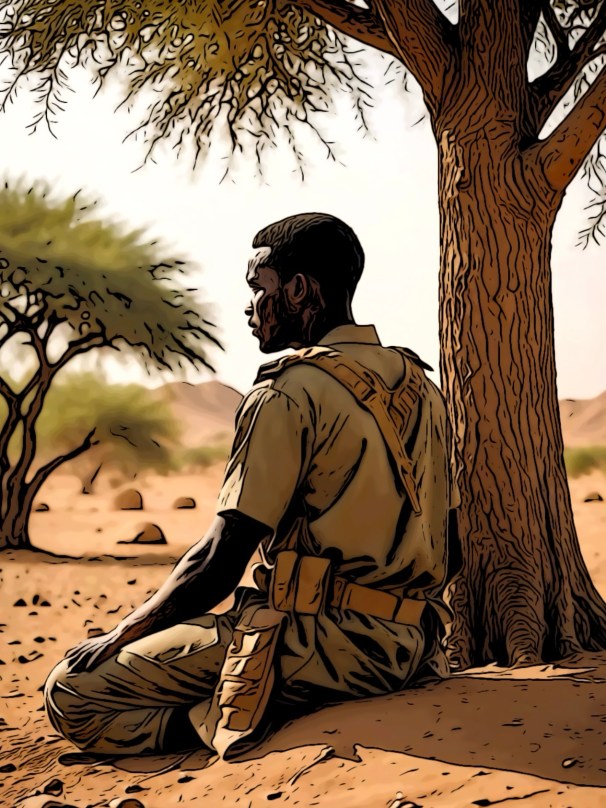
While General Burhan was sheltering in his basement, Hemedti quipped during a TV interview, the leader of the RSF would be directing his military operations from under a tree. The expression “under a / the tree”, tiHta-sh-shajra, appears to have gained traction* after a satellite news channel interview with Hemedti. During the interview the presenter enquired as to the militia leader’s location. He replied he was under a tree somewhere, explaining he wasn’t at liberty to divulge his whereabouts for obvious security reasons. The commander-in-chief of the SAF was later to refer scathingly to Hemedti’s tree and by extension his RSF forces as those of the tree. “People of the Tree” became shorthand for the RSF forces themselves and their supporters. In July last year General Burhan was recorded as commenting sardonically that “those of the tree” sent their regards, while engaging with senior officers in Khartoum.
*according to senior figure of the Sudan Congress Party, interviewed for an Emirati news organ and quoted by Al-Rakoba.
Ball Bass; Just Soak’em! بل بس
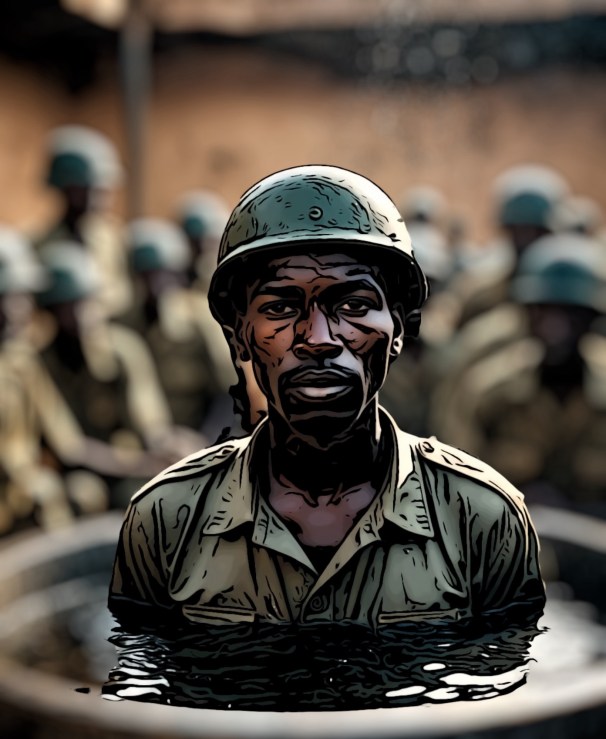
The verbs balla (i) and ballala, adjective mabluul, in Sudanese Arabic mean to wet or soak and are used in many everyday contexts, such as food preparation and laundering. As the conflict deepened, the phrase, meaning something like “don’t stop until we have drowned the enemy” (bal al-khuSuum; soak the enemy / opponents) swept the internet, becoming the watchword of those convinced of the validity of the SAF’s position and the need to continue the war until total victory had been achieved. For many, no quarter could be given to RSF militia forces seen as guilty of mutiny and rebellion. The expression implies that neutrality is not an option and those adopting it were suspect. Those advocating this position came to be known as the balaabisa البلابسة and the slogan can be heard chanted by SAF troops everywhere on Sudanese social media and even in BBC Arabic reports on the war.
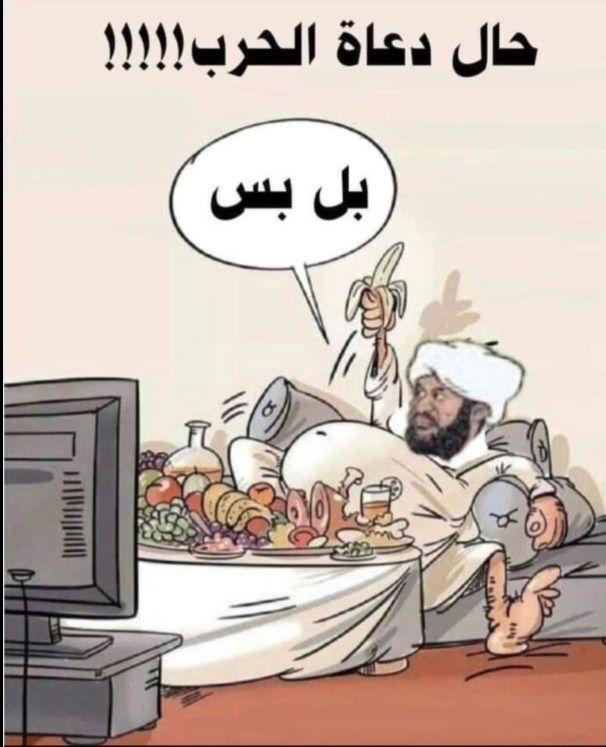
According to Congress Party leader, Asim Omar, referenced in Al-Raboka, the term had actually been re-purposed since its earlier, pre-war usage during confrontations between revolutionary opponents and supporters of the Bashir regime. At that time it was understood as urging zero compromise on revolutionary ambitions and no let-up on the daily protests against the status quo.
The expression has also come to be appropriated by those critical of the war and its supporters, as in the cartoon that has gone viral on social media, right. Of course the idea is many who call for the pursuit of war do so at a safe distance. Hence the emergence of slogans such as “Down with the war” and ” Down with the balaabisa. Another popular cartoon on social media shows a hand fingering prayer beads made of skulls as a voice intones “ball bass, ball bass…” Yet another shows the two military leaders hurling these slogans at each other while a Sudanese man drowns in the flooded river Nile between them.
Eat’em Up! جغم
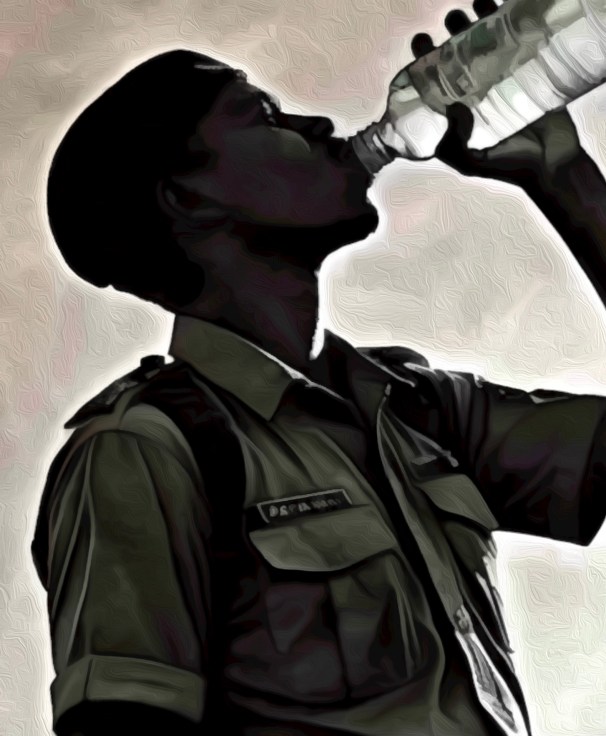
In communal morale-raising, SAF troops often incorporate the exhortation to “Eat’em Up”, from the verb jagham,(u), jughma (n), with repeated chants of “ball ball”. In Sudanese Arabic, the verb is generally used to mean to gulp down or eat. The term jagham is used by both sides in the conflict to boast of the ferociousness of their attacks, and speak of battalions eating up / wiping out their enemies. In other Arabic dialects, the word is used for to “sip or gulp water”.
The slogans and chants outlined above are just a small sample of the plethora of terms spawned during the conflict or which gained new relevance, such as those associated with drone warfare; terms largely unknown before the war. It is interesting to speculate how many will endure in the popular memory and how their connotations might evolve.
 Women's literacy in Sudan