

Childbirth Charms and Customs of 1940s Sudan and Paradoxes of the Colonial Gaze
Childbirth Charms and Customs of the 1940s – As Seen by Elaine Hills-Young
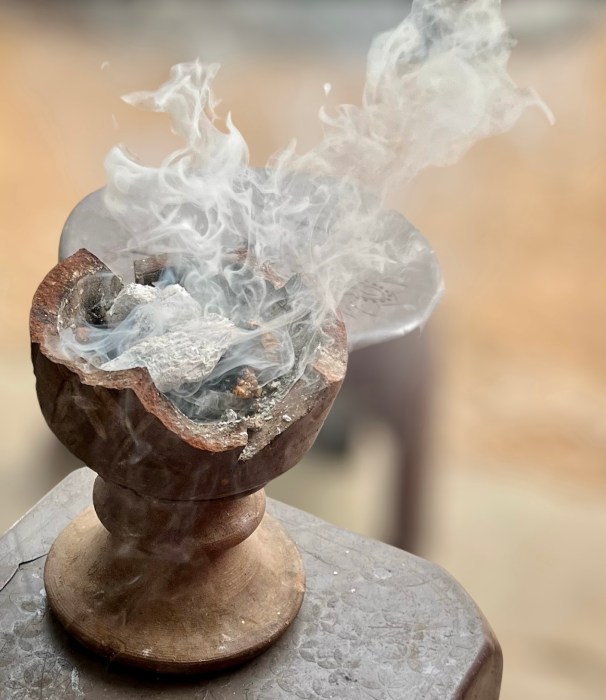
Above, incense burning in a Khartoum street. Sudanese life is rounded by incense. Pregnant women bathe in its protective smoke; the newborn and the newly wed are anointed in its sandalwood fumes. See more in Incense (بخور bakhūr) in Sudan.
Elaine Hills-Young’s article is featured as a cultural document of historical interest. Its inclusion should not be understood as approval of colonialism, irrespective of its geopolitical or religious origin.
Elaine Hills-Young – A Brief Profile
Elaine Hills-Young (1895-1983) qualified in nursing and midwifery at the Nightingale School of Nursing, London’s St Thomas’s Hospital in 1920-21. After a stint at Kasr al Aini Hospital in Cairo where she learned to speak Arabic, the young nurse joined the Sudan Medical Service in 1929. She would remain in Sudan for fourteen years. First appointed Matron of Wad Medani, she went on to become Matron of Khartoum Hospital in 1930, a post she occupied until 1937. During her tenure she helped to establish the Sudan Branch of British Red Cross, serving as its Vice President for a decade. As well as lecturing in nursing at the Kitchener School of Medicine, she acted as Principal of the Midwifery Training School (MTS) from 1937-1943, helping to found the first Child Welfare Clinics in Khartoum Province, an initiative that quickly spread across Sudan. Hills-Young left Sudan in 1943 and the following year undertook the escorting of prisoners of war to and from Sweden. She was among the first nurses to go into Belsen concentration camp. As well as setting up post-war British Red Cross mobile teams, Hills-Young contributed to re-habilitating the German Red Cross. Learn more about her eventful life and her later years in Harpenden History
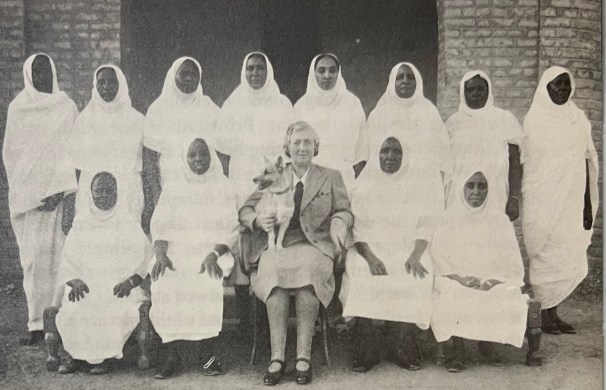
Midwives’ Training School, Omdurman, 1943; the redoubtable Miss Elaine Hills-Young and Staff, Sisters Under the Sun, The Story of Sudanese Women by Marjorie Hall and Bakhita Amin Ismail, Longman 1981.
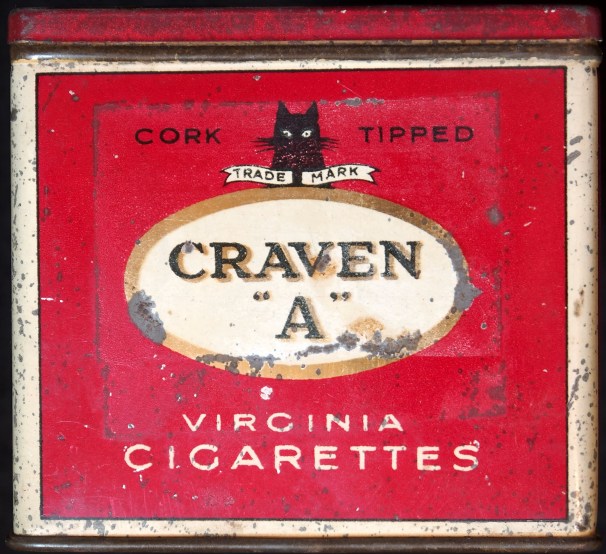
As part of her work inspecting midwives and health visiting in Sudan, Elaine HIlls-Young travelled extensively, trekking vast distances by camel, train and jeep. She was never without her Red Cross medical kit on these expeditions. Kept in an old Virginia Cigarettes tin, the kit included tweezers, a syringe, sewing needles and razor blades. See the kit and learn of the poignant circumstances in which it was used in British Red Cross Museum and Archive. Her article, reproduced below, reflects something of her observations during those long treks and the fascinating diversity in customs she noted in Omdurman.
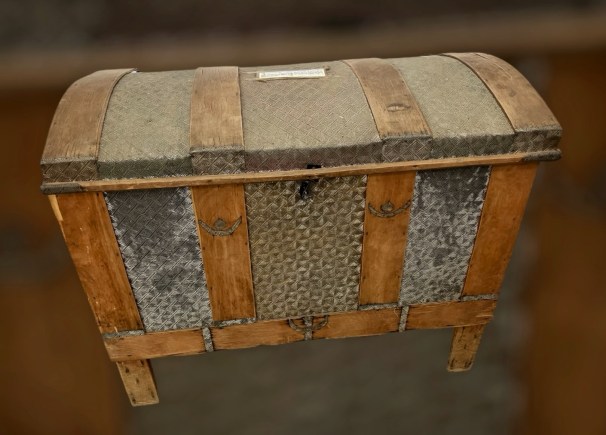
Since the 1980s; the era of Sisters Under the Sun with its fulsome and largely uncritical portrayal of Hills-Young and her work, there has been much needed academic reassessment of the legacy of British colonialism and its protagonists. How that reassessment has informed perceptions of Hills-Young is discussed below. Above right, an example of the Virginia Cigarettes tin used by Elaine HIlls-Young (Wikicommons); left and title photo, a bridal sahara chest, referenced below.
The authors of Sisters Under the Sun document the warm relationships Hills-Young enjoyed with her Sudanese colleagues, such as nursing pioneers Hawa Ali Al-Basir, and Sitt Batul Mohammed ‘Issa; the latter being so inspired by the competence of the MTS graduate midwives she witnessed at the confinement of a friend that she travelled to Omdurman to enter the Midwifery Training School. When Hills-Young was interviewed in her eighties, the authors of Sisters Under the Sun recall, she praised the “innate intelligence and compassion” of “wonderful nurses and unforgettable people” of Sudan. As is often the case, the impact Sudan had on the British colonialists who served there was to be profound and life-long, though for many analysts her relentless activism against FGM would prove counter-productive and flawed.
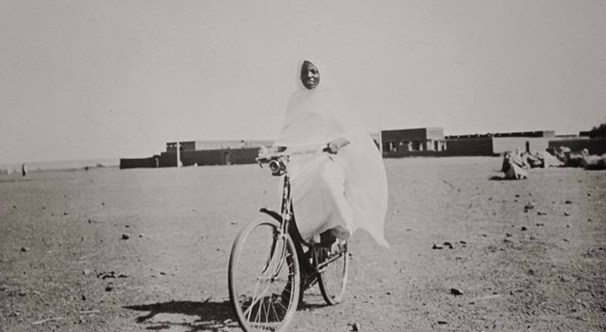
Above right, midwife Sitt Batul rides her bicycle in Omdurman, circa 1925-1935, M.E.and G.L.Wolff Collection, Facebook, Sudan Amateur Cyclists Club. Sitt Batul is credited with being the first Sudanese woman to ride a bicycle. See too Heather Sharkey’s Two Sudanese Midwives and Tarik ElHadd’s Omdurman Midwifery Training School
Charms and Customs Associated with Child-Birth by Elaine Hills-Young, Sudan Notes and Records, Volume 23, 0,1940; from Sudan Open Archive
Charms and Customs Associated with Child-Birth
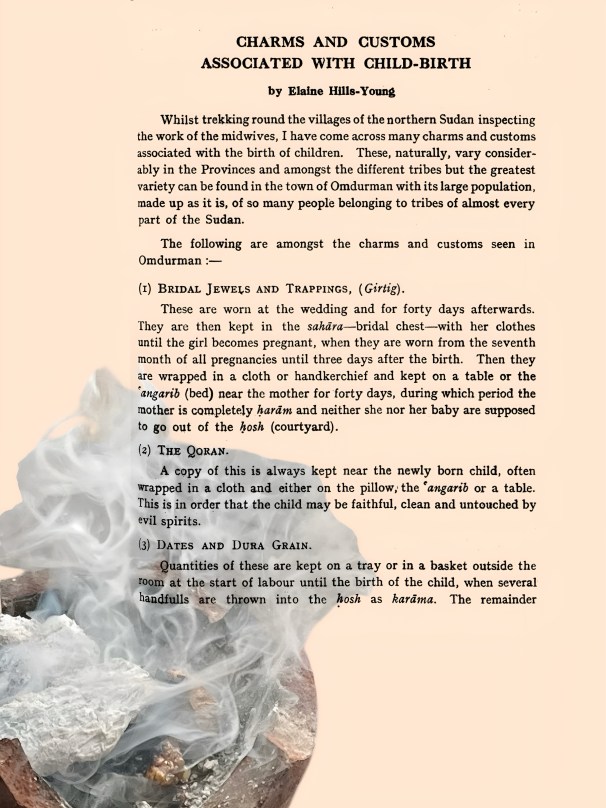
Illustration; Sudanese incense. Sudanese life is rounded by incense. Its soot and ashes enrich perfumes, tattoo inks and kohl and its scent infuses both the skirts of brides and the shrouds of the dead. Incense is burnt to heal the sick and summon and subdue wayward spirits. See Incense (بخور bakhūr) in Sudan
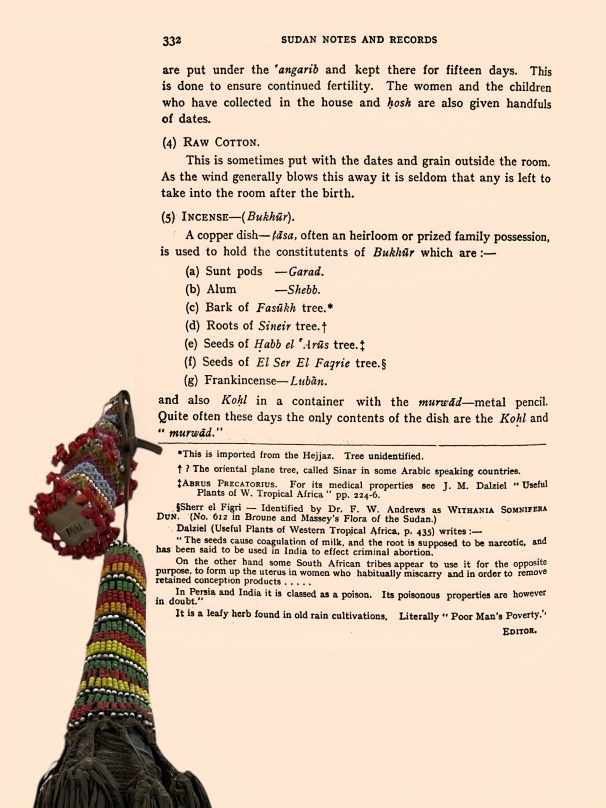
Illustration, Sudanese ornamental kohl container, Sudan Ethnographic Museum, Khartoum.
“My late grandmother held a small bottle in her hand, and poured in black homemade kohl powder. She had prepared the kohl patiently over several days by adding gum into and covering a mabkhar (incense container) with an aluminum plate. She monitored the gum as it burnt and lined the inside of the plate.”
See “Who will trace the kohl for our eyes?”
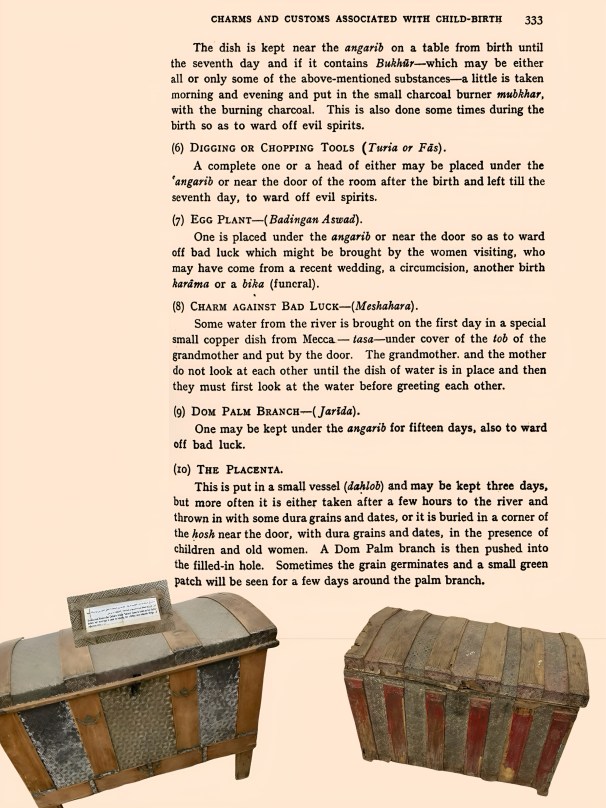
Illustration, examples of sahara chests from the Sudan Ethnographic Museum. Given to the bride by her father before her marriage, the sahara was used to store clothes and other valuable possessions. These examples come from Omdurman. See too Sudan’s Cultural Treasures Looted 1.
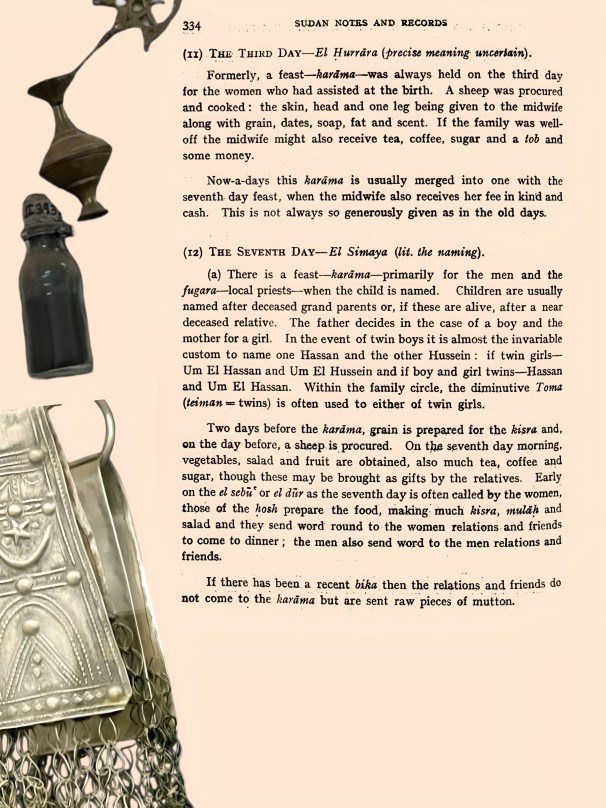
Illustrations; Sudan kohl containers and Rashaida wedding jewellery, Sudan Ethnographic Museum.
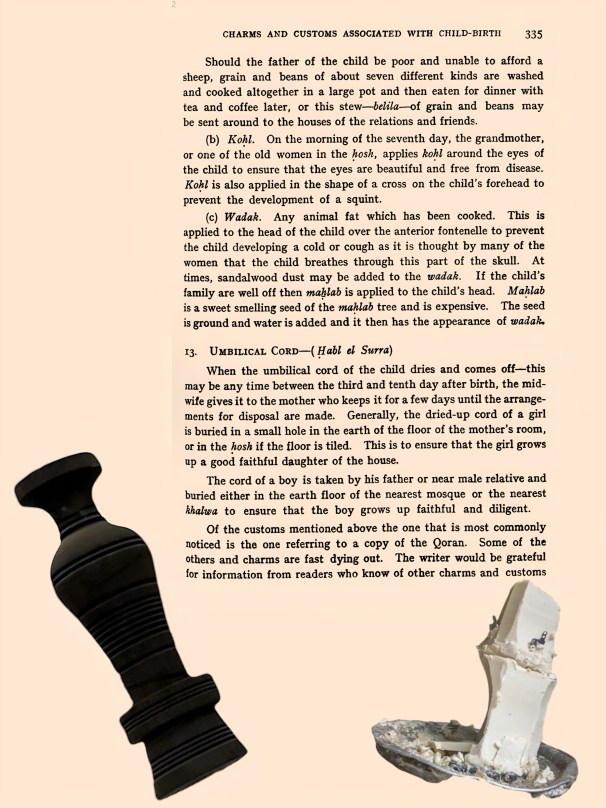
Illustrations; left, wooden kohl container and wadak fat. See too Karkar, Dilka and Dukhan
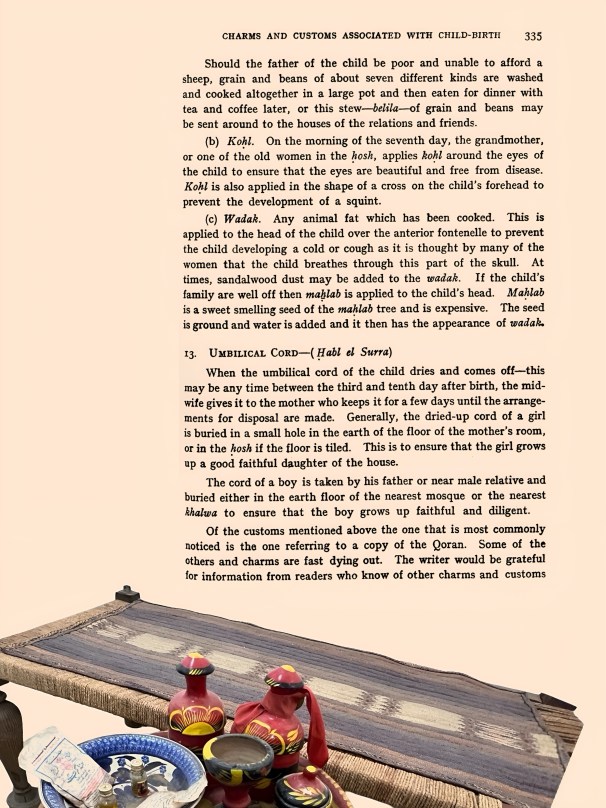
Illustration; a bridal angareeb and ornamental palm frond wedding matting, accompanied by jertig accoutrements. See too Customs of the Women of Omdurman by S. Zenkovsky, Sudan Notes and Records Volume 30, 0 1949, Abdullah El Tayib’s Changing Customs of the Sudan and Traditional Sudanese Medicine Dr Ahmad Al Safi .
Paradoxes of the Colonial Gaze; A Flawed Vision
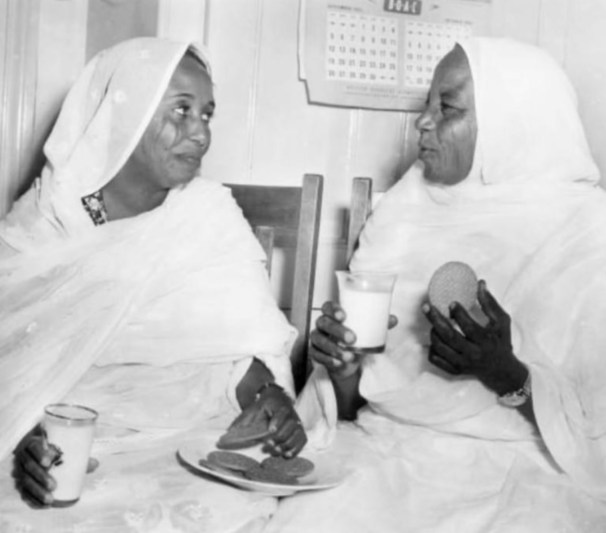
The research findings and cultural insights of academics such as Heather Sharkey, Janice Boddy and Marie Grace Brown has brought about a profound shift in the understanding of the British colonial legacy in Sudan and in particular its impact on and degree of relevance to Sudanese women. While many medical outcomes for women and girls are acknowledged to have improved as a result of Elaine Hills-Young and her fellow colonial officers’ efforts in public health, the cultural prejudices and constraining assumptions they brought with them to Sudan are exposed in all their bluntness, as is their failure to give due account to the autonomy and agency of Sudanese women themselves. Hills-Young was determined to forge a team of midwives imbued with “spirit, sobriety and strong morals”; a policy that favored younger women who conformed to British perceptions of lithe activity and efficiency. Grace Brown documents the consequent intergenerational conflict and the undermining of older traditional midwives or dayas, whose age and experience spoke of safe, non-threatening and respectable contact with “fertility and bodies”(Khartoum at Night, Fashion and Body Politics in Imperial Sudan). Above right, Sudanese midwives enjoying milk and cookies at Bedford College International Conference of Midwives in 1954, Facebook.
Hills-Young’s implacable and life-long commitment to the eradication of all forms of female genital mutilation or cutting in Sudan is now broadly viewed as counter-productive in significant ways. Her blanket ban on MTS graduates performing any form of female circumcision may well have led to the unwitting creation of “a third class of midwives; those who were trained in hygienic and bio-medicine but had no experience caring for circumcised bodies”,(Khartoum at Night) though she did offer training in the treatment of scar tissue (Marie Grace Brown). Her enthusiastic backing of legislation outlawing pharaonic circumcision failed to foresee an inevitable collective rush on performing the most extreme forms of female circumcision before legislation came into force (see Legislating against Culture Efforts to End Pharaonic Circumcision in the Anglo-Egyptian Sudan Janice Boddy). Hills-Young also appeared deaf to the arguments of Sudanese nationalist reformers who, while opposed to pharaonic circumcision, rightly contended that imperial power had no authority to legislate on matters of cultural practice.
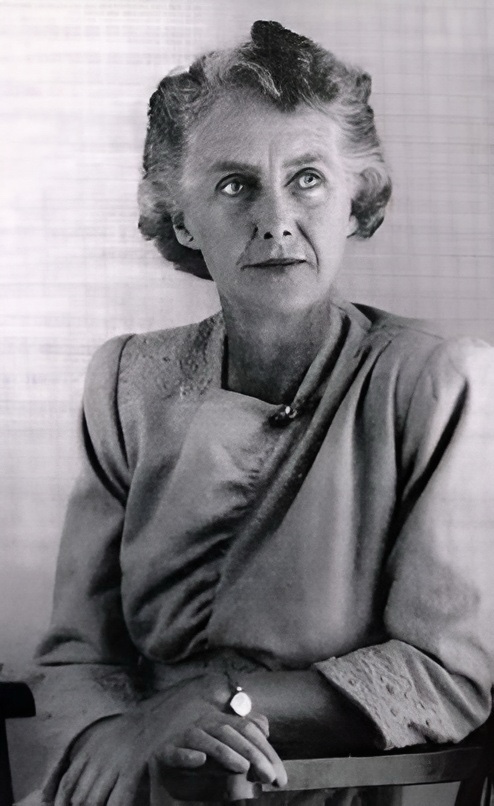
Her policy also represented a dramatic departure from the more pragmatic approach of her predecessors, who viewed her work not without skepticism, and frustrated British politicians and diplomats pursuing more culturally sensitive avenues. For many analysts, Hills-Young was appointed as Principal of the Midwifery Training School precisely because of her uncompromising opposition to FGM and the determination to instill the “western notions of selfhood” favored by her contemporary and fellow anti-FGM “crusader” (her words), Dr Ina Beasley, pictured above left (Wikicommons). In 1944 Hills-Young succeeded in prompting a new Whitehall enquiry on FGM, forcing the Governor General of Sudan to respond. She blamed lack of movement on the issue on “male passivity”, (Civilizing Women, British Crusades in Colonial Sudan, Janice Boddy). Hills-Young remained a vociferous opponent of FMG throughout her life, though many have questioned both the cultural validity of her stance and its effectiveness. See too The Princess, the Witch and the Fairy Godmother: Colonial Legacies in “FGM”.
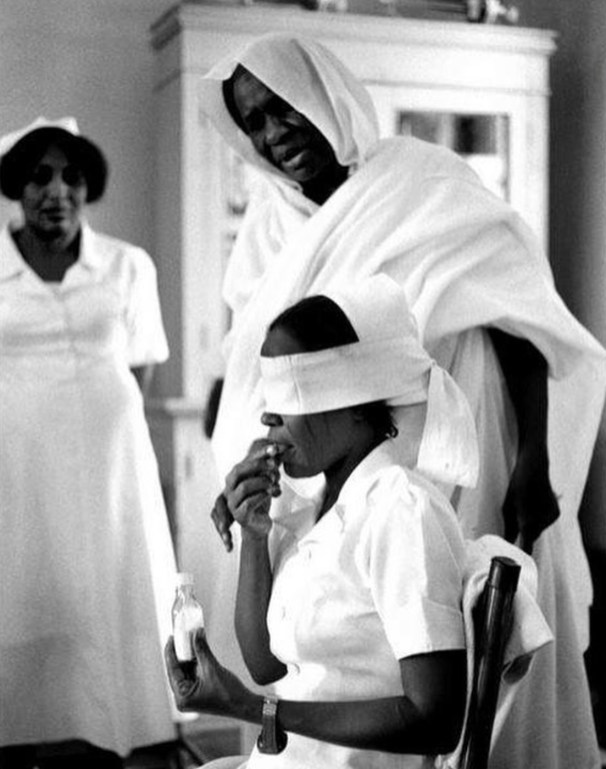
Above right, Nurses and midwives in remote areas of Sudan were trained to identity drugs by taste and smell in case labels were lost or incorrect, Old Sudan Photos, Instagram.
Anthropological research of the past forty years has enabled a more nuanced and culturally sensitive contextualization of FGM, emphasizing theories of enclosure, protection and preparation of the female body for marriage and pregnancy over the role of FGM in ensuring chastity and preventing rape, though many respondents still cite the latter as highly relevant factors. For colonialists of the 1930s such as Hills-Young, assured of their cultural superiority on this issue, the bodily imposition, or “surgical seal” – as she put it – of chastity most fully, even solely defined the rationale behind the practice.
The life and work of colonialists like Hills-Young embody the fascinating contradictions and conflicts inherent to colonial rule.
 Women's literacy in Sudan