

Mohammad Mustafa Bears Witness
On the Ground; Brief Profile of Sudanese Artist, Mohammad Mustafa
When war erupted in the Sudanese capital last year, fine arts undergraduate, Mohammad Mustafa Abu Al-Hassan lost his studio and everything in it. Forced to flee Khartoum, Mohammad, or Mo Mustafa sought the relative safety of Kassala in Eastern Sudan. There, this gifted young artist has taken to experimenting with collage, textiles and natural materials. “I have learnt that art does not require expensive tools or rare materials, rather it requires vision and the ability to transform what is available into an expression of self and the human condition.” Mohammad Mustafa, Instagram
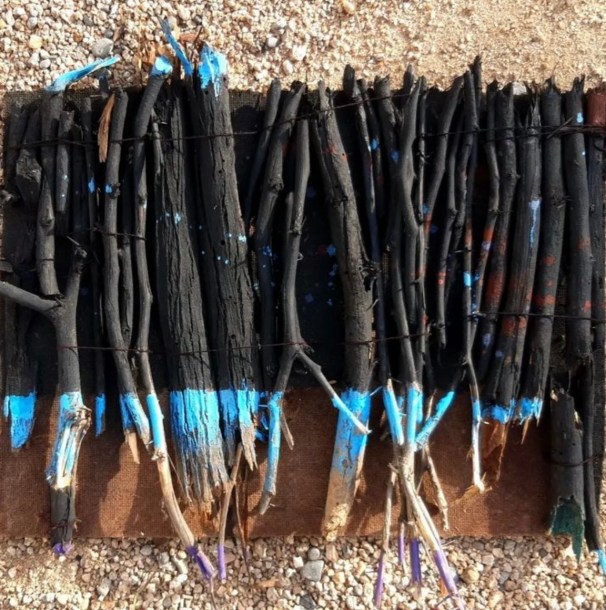
Title photo and above, detail of one of Mohammad’s recent works exploring the relationship between humans and the natural world and “the transformations they undergo”. The careful, ordered assemblage of charred twigs in the piece above speaks of human fragility amidst chaos, our struggles to cope and our resilience. The sky blue hints of “hope and renewal despite ashes and destruction.” Mohammad Mustafa. Learn more about this poignant work in continuity despite chaos
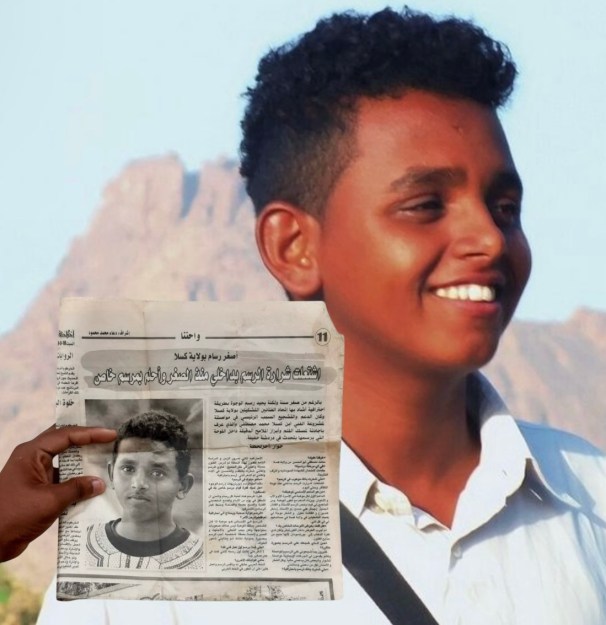
Above, the artist to a backdrop of the Kassala hills. Insert, a newspaper article, entitled The Youngest Artist in Kassala State, tracing Mohammad’s fascination for art from an early age. See self-portraits here and Self-portrait. Mohammad’s irrepressibly positive attitude to life and art – “let’s create joy and peace with our hands” , his delight in floral motifs in unexpected contexts, can be seen too in his playful self-portrait with flowers

Mohammad was studying at the College of Fine Arts, Sudan University of Science and Technology when war broke out in April last year. Since then he has sought to explore new artistic forms while using the power of art to “convey my country’s voice to the world.” Mohammad documents the toll of the conflict on civilians in arresting and moving ways and many of his works have been referenced in Sudanese news sites and social media.
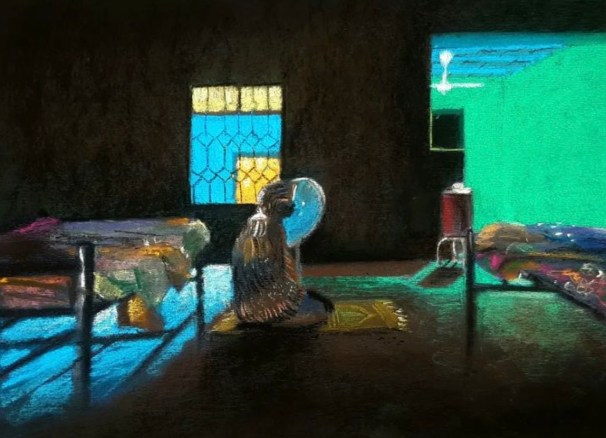
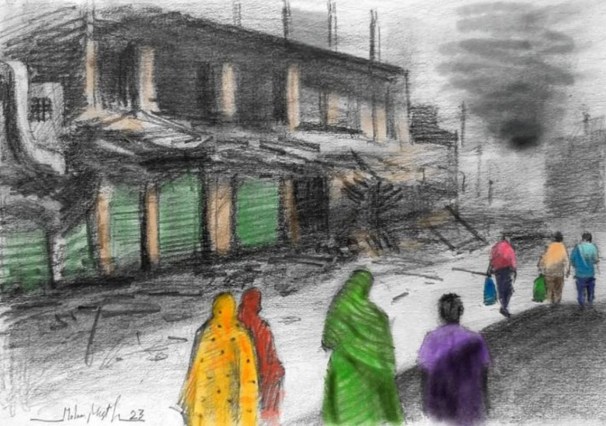
His pen, ink, pencil and watercolor evocations of the realities of war, both stark and intense, serve as an antidote to the numbness that mass exposure to photographs of tragedy can induce. His luminous pastel works of everyday scenes; lamplit doorways into village shops, roads bathed in the night beams of lorries and buses, sun-warmed walls of village homes, tree-shaded gateways and palm fronds illuminated against starry skies; all so evocative of Sudanese life before the war are now tinged with yearning and loss. Right, a figure caught in a moment of prayer in a Sudanese interior.
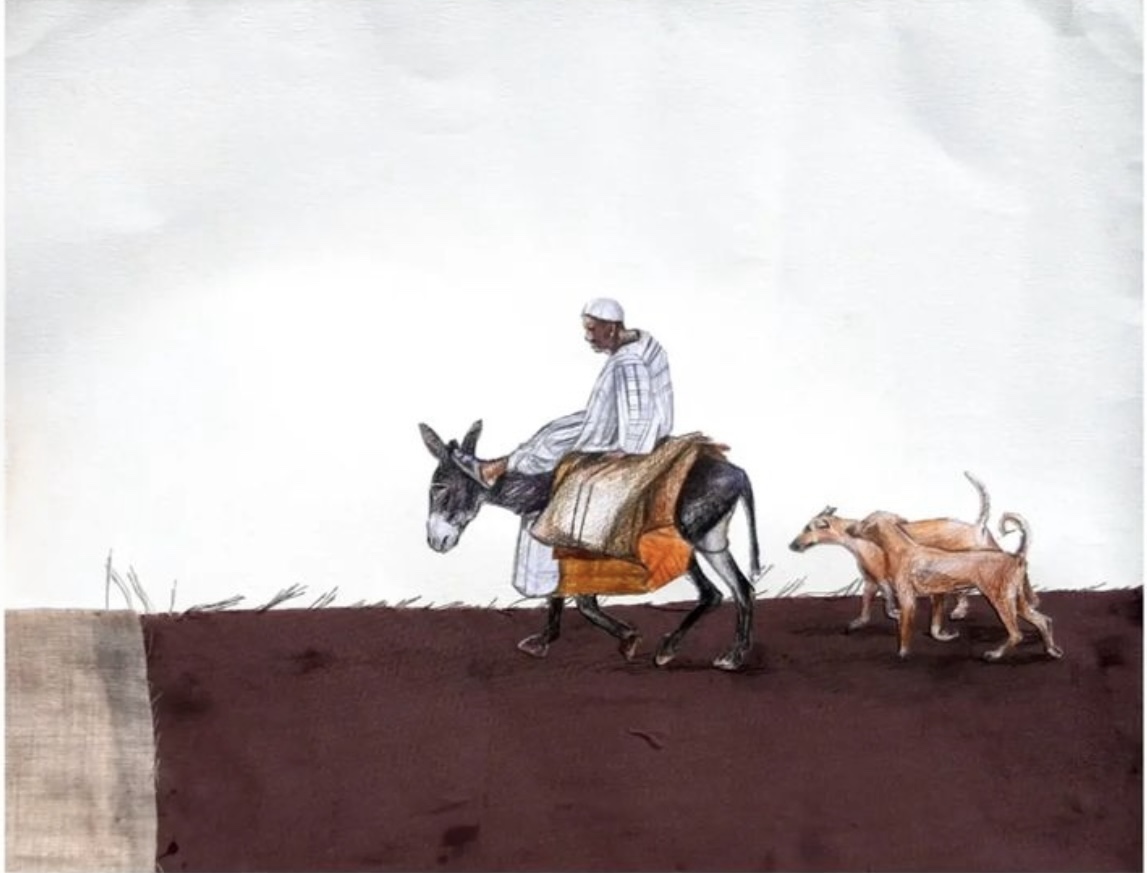
Below, some of my favorite works by Mohammad Mustafa:

Mohammad Mustafa Bears Witness

Above, Mohammad Mustafa’s Massacre in Wad Nura, Al-Jazeera Province. In early June this year at least two hundred people were killed and several hundred wounded in a RSF attack upon villagers there. For details of this tragic event and the photographs that inspired this work, see IGAD condemns “massacre”in Sudan village – Radio Tamazuj This work stopped me in my tracks when I came across it by chance on Sudan social media and led me to seek out its artist.

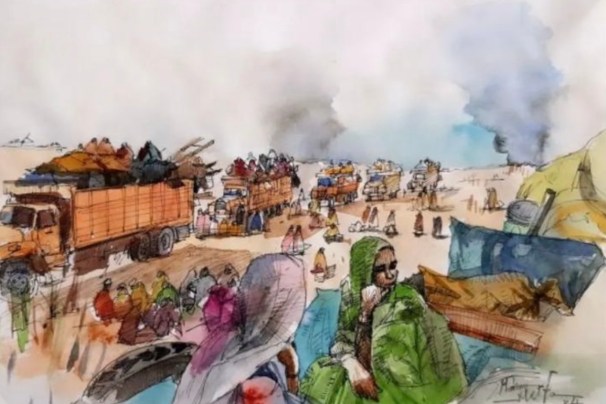
The Massacre of Wad Nura is one of many works Mohammad has felt compelled to paint documenting the appalling devastation of war; a young man carrying his elderly father on his shoulders as they flee bloodshed in Sinja, the destruction of villages and mass displacement in Al-Fashir, right, the spectre of starvation in western Sudan, the plight of Sudanese refugees in Ethiopia and the sheer heartbreaking brutality of I wish I was dead
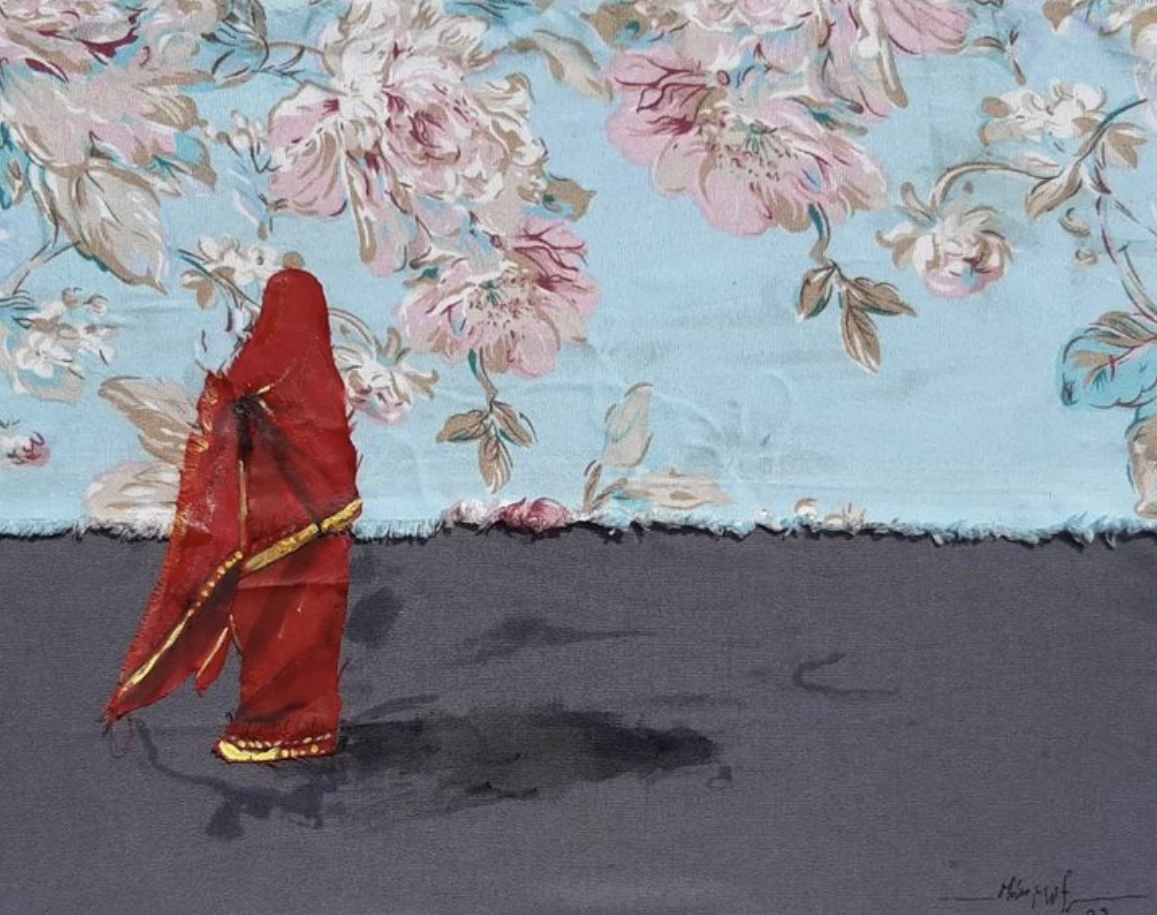
The war has come to inform the artist’s collage work too. Textiles, Mohammad explains, are used to express “contrasts between hope and destruction“, chaotic wood shavings and sawdust lie below dovetailed strata of charred wood, reminding us of the consoling solidity of the natural world and our place in it in the midst of ruin; “persistence and the pursuit of reaching.
Muhammad has also paid homage in his work to the courage of Sudanese and Palestinian journalists; sketching them with delicate flower motifs on their flak jackets; see his tender tribute to Sudanese correspondent Al-Miqdad Hassan and Palestinian journalist, Bisan Owda :“Be strong for tomorrow holds new light within it.” He has also commemorated those who lost their lives in the revolution of 2019, such as Kasha.
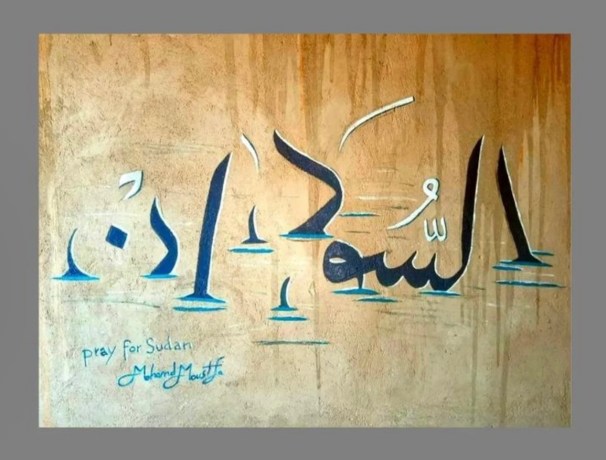
The artist has movingly captured the impact of natural disasters on ordinary Sudanese. Above, bringing the world’s attention to all those who drowned when the Arbat dam supplying drinking water to Port Sudan, burst after torrential rains in August 2024. The Arabic word for Sudan lies half-submerged in flood water. Below, his Floods in Tangasi

It will be fascinating to follow Mohammed’s career as he continues to forge his own unique style as an artist. His commitment to his homeland, his determination to chart its grief and joys in exceptional times and bring a compassionate gaze to the outside world, his sheer positivity, remain an inspiration to so many of us who feel overwhelmed and despairing by news of the tragedy unfolding in Sudan.
You can support his artistic journey here.
 Women's literacy in Sudan