

Hair Braiding in Northern Sudan 2
Braids of Identity: Video by Our Heritage Our Sudan

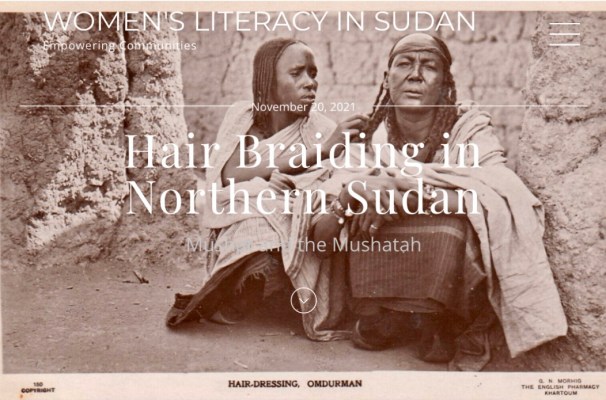
Above, a young woman of Omdurman with her elegant braids, or mushat, (Der Dunkle Erdteil, Berlin 1930, personal collection). Hair braiding, tenderly undertaken by mothers and grandmothers in intimate, unhurried domestic settings brings women of all ages together; the delicate patterns woven on the skull a cipher of continuity, change and cultural identity among the female community.

Read more about the cultural history and social impact of hair braiding in northern Sudan, together with descriptions of Sudanese braiding techniques, wedding coiffeur and changing fashions in hair styling in Hair Braiding in Northern Sudan
Braids of Identity: Video by Our Heritage Our Sudan

Above, a little girl from Omdurman with fine braids framing her face, (Der Dunkle Erdteil, Berlin 1930), personal collection.
Recent years have seen a reclaiming of African hairstyles as expressions of cultural and ethnic identity and a renewed celebration of their beauty. As with all aspects of women’s dress, the way hair is worn can also be profoundly political – both statements of defiance against esthetic norms imposed by others and powerful symbols of kinship with one’s community. And, as with all aspects of women’s dress, the way hair is dressed also reflects a complex interweaving of cultural influences over time, as fashions and concepts of beauty shift and are remade. See The Natural Hair Movement
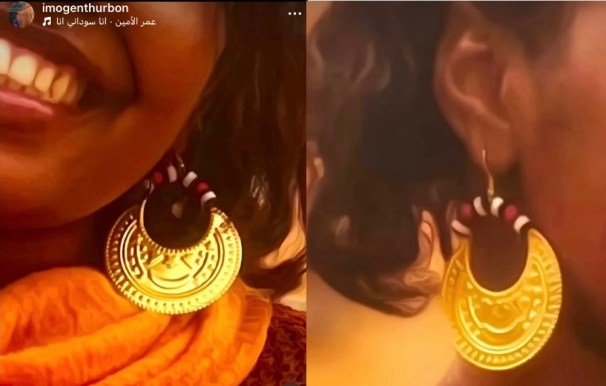
Below, a styling of hair and jewellery which for many Sudanese became associated with the Sudanese revolution of 2018-19. Imogen Thurbon Instagram
Our Heritage Our Sudan recently released an evocative and enlightening short video documentary on the practice of hair braiding in Sudan. The video, subtitled in English, discusses the many different types of braiding and their cultural significance. It includes interviews with Sudanese experts in cultural heritage, folklore, and Sudanese dress, as well as modern day hair braiders who have embraced and are reviving the traditional skills of the mushata. The film also features memories of the novelist, Zainab Haj Belil Al-Zain and the haunting songs of the late folklorist and heritage singer, Asia Musa Abdullah, also known as Asia Madani.
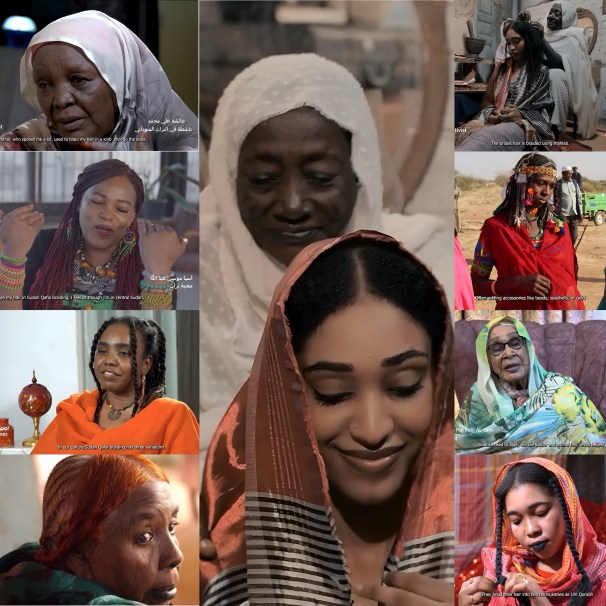
Above, stills from the video, embedded below.
Braids of Identity, Our Heritage Our Sudan
Below, a colonial era Sudanese dancer performing the ancient stomach dance (personal collection), her long braids swaying gracefully to the floor.

 Women's literacy in Sudan