

Al-Rahmataat الرحمتات
A Sudanese Ramadan Tradition

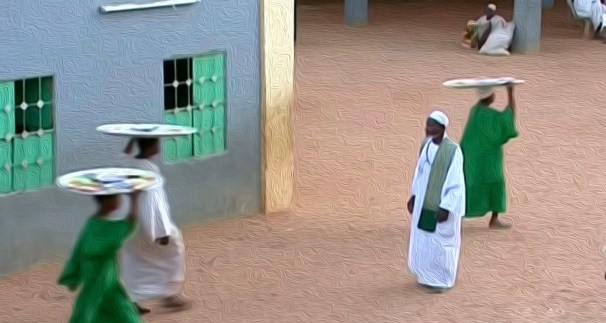
Above, and title illustration, Ramadan ar-raHmataat evening meal trays being carried to those waiting to break their Ramadan fast, sketches based on a scene from رمضان في الريف السوداني.
See too Ramadan in Rural Sudan
Setting the Scene

As dusk falls in this holy month of Ramadan, Sudanese Muslims prepare to break their fast with family and friends. In towns and villages all over Sudan trays laden with IfTar dishes, dates and juices are brought out into the streets and rush mats (birish) are spread out on the earth at roadsides. Drivers are waved down, passers-by stopped in their tracks and all are warmly invited to share in the communal sunset fast breaking.
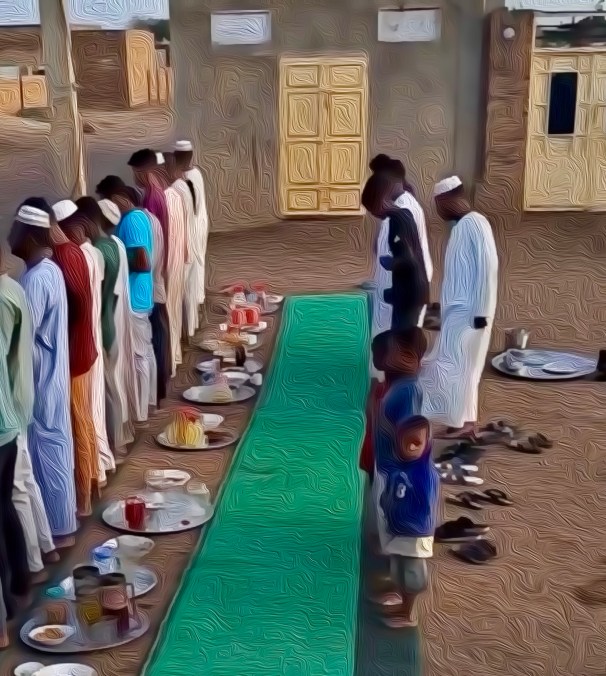
This act of generosity to the community and its guests, known in Ramadan as aD-Daraa* or birish al-faTūr (spreading the breakfast mats), has been admired and even emulated by Sudan’s neighbours, where it is sometimes known as birish as-suudanii. Acts of solidarity like this are deeply woven into the fabric of Sudanese life and reflects cherished values of kinship, generosity and piety.
*aD-Daraa traditionally refers to a village community shelter or nomad encampment where men would gather to eat and be entertained.
This week’s article is a brief celebration of ar-rahmataat and includes video footage. Links to the Arabic sources this article draws on are provided below.

Sadaqah is central to ar-rahmataat and encapsulates what Muslims believe is divine imploration to charity or alms for those less fortunate. Sadaqah jaariyah refers to on-going, long-term acts of charity that will endure after the death of the giver. Often these good deeds are undertaken in memory of a loved one and might include the provision of sabiil; drinking water for passers-by. See Kindness to the Stranger: The Ziir

taat taat…. ar-rahmataat / adduu-naa talaata balaHaat / tiin tiin …. adduu-naa laHm mayytiin
Above, a children’s chant often heard in ar-rahmataat, proclaiming the time for food has arrived so “now please give us three dates and the meat” that is served in memory of the dead as part of the `asha al-mayytiin, the supper of the dead. “taat taat” and “tiin tiin” are children’s nonsense rhymes sung to drive the rhythm of the chant. The offering of dates to children and the drinking of date water or date juice, often cooled in small earthenware jars or qulla, is central to this tradition.
Mercy Has Come
Food and Games of the ar-Rahmataat
Mercy Has Come

Al-Haara maa maragat / sitt ad-dooka maa waga`at / gashaaya gashaaya / sitt ad-dooka nisaaya / kibriita kibriita / sitt ad-dooka `ifriita / limuuna limuuna / sitt ad-dooka majnuuna
Above, a verse of a popular ar-rahmataat children’s song, explained below.

During the last Thursday or Friday of Ramadan, the latter known as Orphan’s Friday; al-juma`al-yatiimah, food is offered in memory of the dead. The custom is known as ar-rahmataat, a term coined from the combination of two words, ar-raHma jaat; mercy has come. The tradition is understood as one of many forms that Sadaqah; charity or alms giving, can take and which draws believers closer to God. The term can also refer to the person offering charity. The tradition centres upon the `asha al-mayytiin; the supper of the dead, which I describe below. It is both solemn and joyful as lost loved ones are remembered and divine mercy and forgiveness are sought for them through the prayers and acts of generosity of the living. So generous and plentiful are the dishes offered that this time is often also referred to as the night of abundance,ليلة التوسعة

This is a tradition where children play a cheeky, raucous role, enjoying special games and songs as they wait to claim their gifts of meat and dates, or their share of the fatteh / al-Haara meal. Some commentators have drawn parallels with the Gulf region custom of gargee`an. Many Sudanese believe the prayers of children to be especially blessed at this time and that departed souls may descend that night, not in punishment, but in the pursuit of mercy. In this sense, ar-rahmataat, it has been claimed, echoes ancient African understandings of the soul’s presence and reflects an interweaving of Afro-Arab traditions surrounding death and the honouring and memorial of the dead.
During ar-rahmataat food is distributed to those in need, as well as to hospitals and Quran schools or khalwas, whose students are asked to recite sacred verses in memory of the dead. Once a central part of Ramadan ritual in villages and old residential neighbourhoods, families would slaughter their own animal for the last Friday of the Ramadan `asha al-mayytiin. In recent years economic pressures have prevented many from celebrating ar-rahmataat as fully as in the past and cultural commentators have questioned whether the tradition will endure and how attached today’s youngsters are to its rites and rituals.

Among the many children’s songs and chants popular at this time is the one above, always noisily sung and accompanied by much banging and clanging of kitchen pots. Youngsters roam their neighbourhood, urging forgetful cooks, the sitt ad-dooka nisaaya, at their stoves, ad-dooka, to hurry up, light the match, kibriita, kindling or straw for the fire and start cooking the special meal, al-Haara, another name for evening fatteh meal, (see below) and called Haara or hot because it should be served well warmed. In this version of the song, the children sing “The lady of the stove hasn’t fallen down!”, a euphemistic variant of much cheekier rhymes sung in the past. She is also referred to as `ifriitah; a naughty or mischievous sprit.
Sitt ad-dooka, the lady / woman of the dooka is pictured left; a fire is lit beneath the dooka, a metal plate or griddle used for cooking, and especially associated with the making of Sudanese flat bread, kisra and the thicker, pancake-like guraaSa. If the cooks persists in tardiness, in trick-or-treat fashion the children will continue their chants with the lighthearted threats I touch on below. Listen to the song above here (Al-Arabiya Sudan Facebook clip) and more, exuberant ar-raHmataat children’s chants in this Aljazeera clip.
Above right, a still from an elegant ar-rahmataat two-minute video tribute.
Get a taste of the atmosphere of ar-rahmataat too with this one-minute Zain video:
Food and Games of Ar-Rahmataat
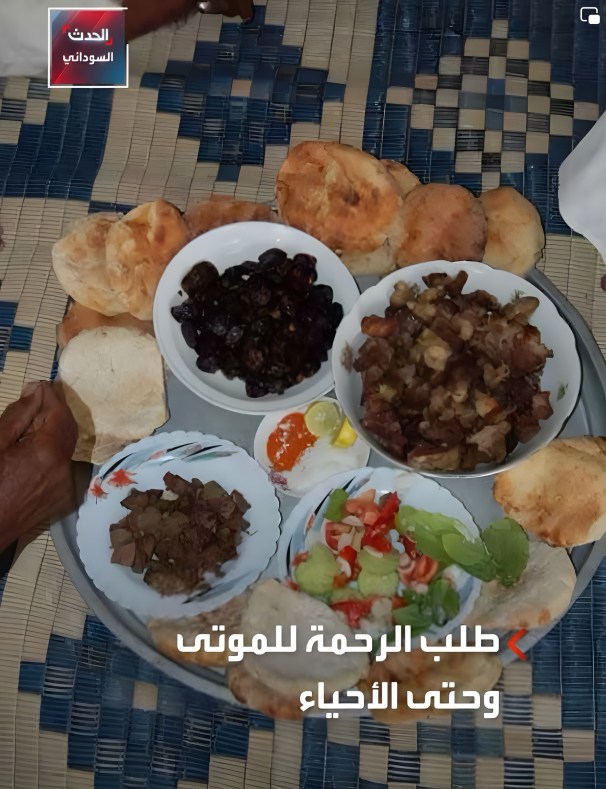
Al-Rakoba tells the story of Ayman, who every year with his wife and sisters, helps prepare the Rahmataat meal on the last Friday of Ramadan. For Ayman, this meal is an offering of charity for the soul of his late mother. The day before, he slaughters a sheep and the centrepiece dish will be the traditional fatteh, a rich layer of roasted meat arranged on a bed of rice, itself resting on a layer of bread soaked in soup and meat juices. Sometimes there is also a layer of tagliya; a sauce of garlic, tomato and coriander. This hearty dish, a meal in itself, is said to have come to Sudan with the Ottomans, and was held to be the dish of choice of Ottoman princes. Now, as one commentator observes, it is a dish to be enjoyed by all in Ramadan.

Fatteh is still widely eaten at ar-rahmataat. In Darfur a special fatteh is served in earthenware bowls decorated with carvings of palm fronds and date water is drunk from traditional clay pots of the region, known as burma. In eastern Sudan, vast pots of baliila, mixed grains, especially sorghum, are cooked over open fires in doorways and as the smoke rises to heaven, it is believed, it draws down blessings to the homes below. Sugar and oil are added to the baliila and offered to children. For more on baliila, see Al-Gadah. Right, sketch based on a photo by Enikō Nagy (Sand in My Eyes); the sharing of a dish of baliila; a mixture of boiled adzuki beans or chickpeas, with seeds, and grains.
See more ar-rahmataat dishes in the video here.(الرحمتات.. عادة سودانية رمضانية عصية على الاندثار)
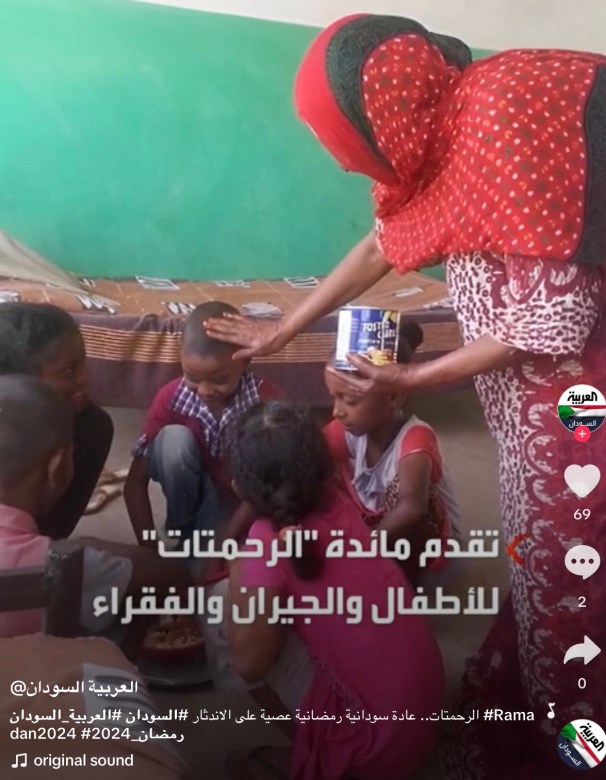
Fatima Saleh Hussein from the Mahas recalls there were two stages to ar-rahmataat; a daytime meal for children in memory of a child who had died, of fatteh and date juice. When the food was almost finished, the mother would say “diori rahmat rimi”, “mercy for the dead” in Mahas, and the children would echo the phrase, their voices growing louder and louder. She would then anoint the children’s heads with karkar oil, much to the annoyance of the boys and the delight of the girls. In the evening there would be the formal supper of the dead, offered to mosques at ifTar with fatteh, thick pancake-like bread or guraasa and meat stew or dama`. While the meal is prepared, the names of all the departed are recited by the elders of the family. Right, still from Al-Arabiya Sudan.
Hajja Asiya Al Amin remembers, Sudanyat tells us, a time when an earthenware pot would be given to the girls of a family where a child had died and an earthenware jug to the boys. The children would demand to know “Are you making damouriya, literally a coarse cotten fabric but here referring to a plain dish of Sudanese flatbread kisra with siliika, a soup or light broth, or dablaan, literally calico, here the tasty fatteh with meat?” The boys and girls would then be divided into teams and compete to eat all the dates in the pot or jug as fast as possible, the winner awarded with the coveted pot or jug.

Al-Haara maa baradat / sitt ad-dooka maa farakat / Sabuuna Sabuuna / sitt ad-dooka majnuuna / adduu-naa al-Haara walaa nafuut walaa naksir al-biyuut
We close with the end of the children’s chant referenced above. The Haara meal still hasn’t come out, the children sing in frustration, and it hasn’t has gone cold, biridat / baradat, sitt ad-dooka hasn’t stirred the pot, farakat, the pot (with the wooden mafraakah), Sabuuna Sabuuna, soap soap, sitt ad-dooka has gone mad, majnuuna majnuuna; give us our supper or we will go off and wreck, naksir, your homes, biyuut! Of course, the children move happily from house to house, sure in the knowledge that they will be indulged; rewarded for their audacity with filling food, dates and copious sweets.
Selected Sources
“عشاء الميتين” في ختام رمضان بالسودان… صدقة بطعم
«الرحمتات» عادة سودانية في آخر خميس من رمضان
لرحمتات.. فرحة الصغار ورحمة الميتين في الجمعة اليتيمة
اتكاءة تراث: (الرحمتات) .. من التراث الثقافي السوداني غير المادي
الرحمتات.. عادة سودانية تسبق “الجمعة اليتيمة” من رمضان
الرحمتات”.. عادة رمضانية في السودان تفقد معظم طقوسها
 Women's literacy in Sudan