

Unsilenced: Sexual Violence in Conflict
Imperial War Museum, London from 23rd May – 2nd November 2025
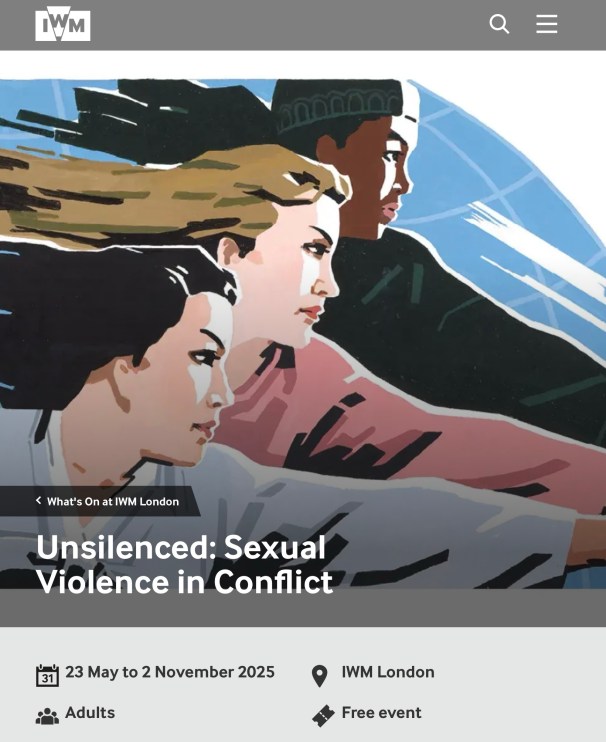
Unsilenced: Sexual Violence in Conflict IWM
The first major exhibition in the UK dedicated to highlighting sexual violence, human trafficking and the abuse of prisoners of war in conflict, Unsilenced is hosted by the Imperial War Museum London. This wide-ranging and thought provoking exhibition explores the power dynamics, propaganda and perceptions of gender that underpin sexual exploitation in wartime. It draws on the sexual slavery of both the Comfort Women’s Corps in the Second World War and that of Yazidi victims of ISIS in 2014. It also features case studies of sexual abuse against WWII evacuees, Red Army violence in wartime Berlin and the abuse of prisoners by American forces in Abu Ghraib.
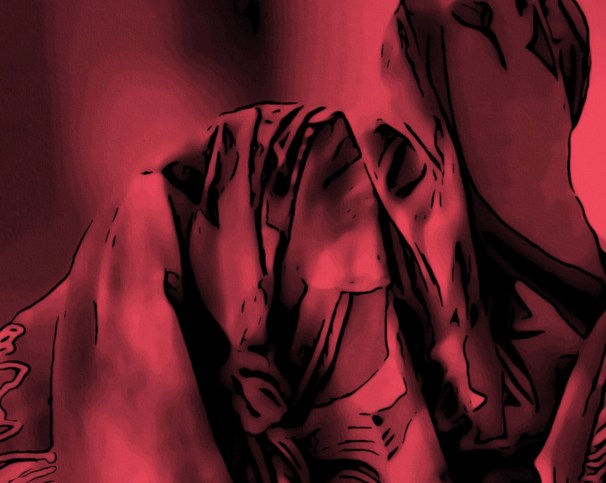
Unsilenced: Sexual Violence in Conflict
Why This Exhibition Matters for Those of Us Who Love Sudan
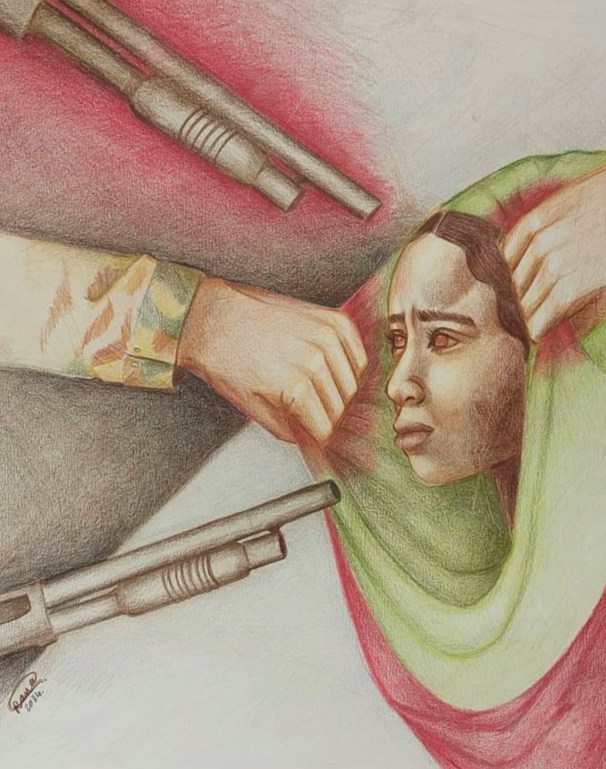
“Sudanese women, no matter their age, deal with a real fear of violence and assault – a fear that’s worse than even the fear of death.” Sudanese artist Rana Altahir speaking on what drove her to make this compelling drawing and title illustration. Thank you so much, Rana, for your kind permission to reproduce and reference your work here.
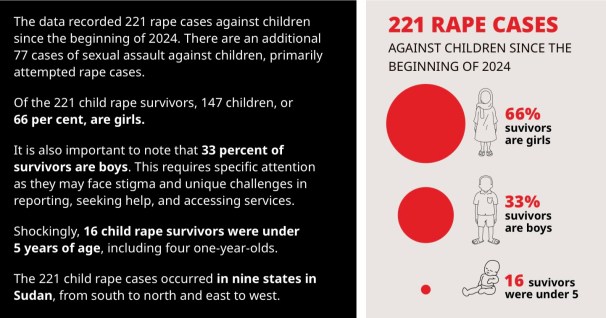
From Unicef’s Sudan’s Child Rape and Sexual Violence Crisi
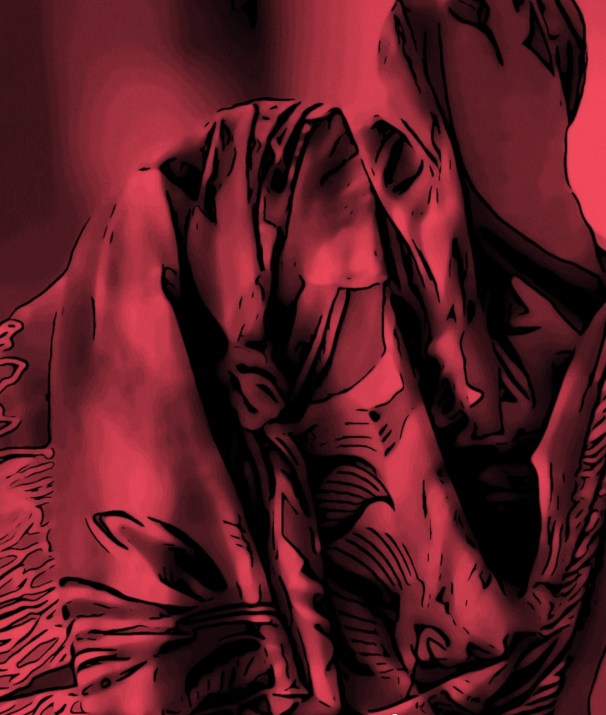
“After nine at night, someone opens the door, carrying a whip, selects one of the girls, and takes her to another room, I could hear the little girl screaming … She was still a young child. They only release these girls at dawn, and they return almost unconscious … I wanted to end my life.” This is the harrowing testimony of a survivor of sexual violence and gang rape in Sudan, as reported by Unicef’s Sudan’s Child Rape and Sexual Violence Crisis.
As Sudan enters its third year of war, ever more shocking testimonies like this are emerging. Those of us outside Sudan may be unaware of the sheer scale and systematic nature of the abuse involved in an honour-based culture reticent to discuss issues of sexual violence.
SIHA‘s regional director, Hala Al-Karib, testifying recently to the All-Party Parliamentary Group on Sudan, spoke of the “abduction of women who have been seen shackled in pickup trucks and driven off to sexual slavery hubs for distribution to RSF commanders.” BBC Arabic, Amnesty International and Human RIghts Watch have also interviewed witnesses of these abductions in towns and villages around the country and their testimonies are chilling. Hala’s research team uncovered evidence for the enslavement of women acting as “a profit centre for the solders”, explaining that while “men who are kidnapped are ransomed, families will not admit their girls and women have been taken because it would imply that they will have been subject to rape. Female doctors and nurses in hospitals have also been targeted for sexual violence.” “We feel abandoned” – Testimony from Sudan Independent Catholic News.
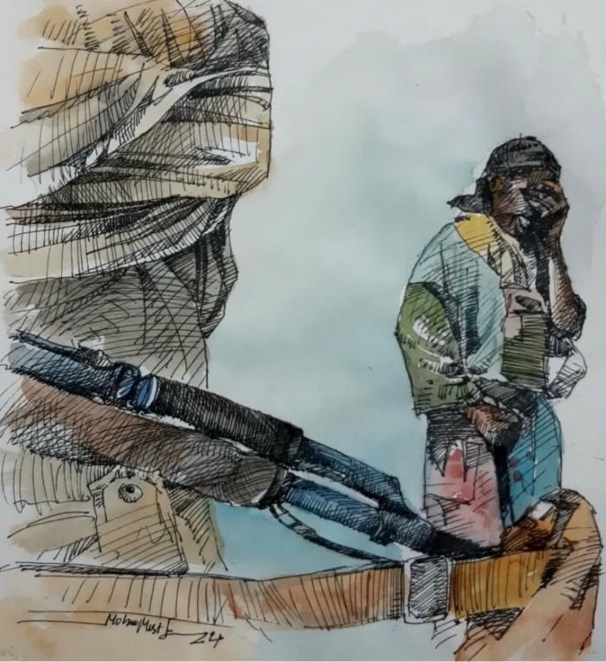
Right, “I wish was dead”, by gifted Sudanese artist Mohammad Mustafa. Scroll down to read the tragic story behind this work.
It takes immense courage for survivors of sexual violence to speak publicly of what they have endured. Naming the perpetrators can lead to witnesses and their families being killed or brutalized in other ways and their own honour and standing in the community may be impugned. The perpetrators flourish in their perceived and all too often real impunity.
For those of us who love Sudan and its peoples, attending this exhibition is an act of bearing witness to the reality of sexual violence meted out to countless Sudanese women, girls and boys. It is a way of entering into dialogue with these brave voices; proving that they are indeed heard and their courage recognized. It is one of the many small steps in the long road to recovery and justice for the survivors of wartime sexual violence. By attending, we acknowledge the agency of survivors of sexual violence in war everywhere.
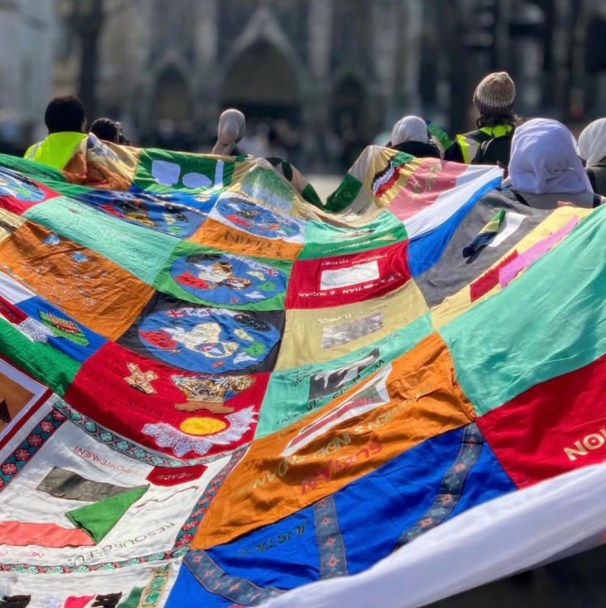
Also featured in the exhibition is the beautiful Peace by Piece toub, testimony to the agency of Sudanese women in peace building. The Peace by Piece toub is an initiative supported by Waging Peace, supporting Sudanese asylum-seekers, refugees, and the wider community to build meaningful lives in the UK. See the remarkable impact of the toub on International Women’s Day last year in Women for Peace in Sudan
“I wish I was dead“ by Mohammad Mustafa
“I wish I was dead”, by gifted Sudanese artist, Mohammad Mustafa, inspired by a mother’s heartbreaking account of the death of her daughters when their home was bombed. “The scene was terrible, as I found my two daughters, Samar and Sahar in pieces in the middle of the yard. Next to them was their father, crying `I wish I was dead instead of them‘. Before she woke from the shock, she heard screaming from the house of her neighbours. `I knew that a fragment of the shell that fell on our house had reached the neighbour’s house and claimed the life of their son, Riyad.'”
Thank you, Mohammad, for allowing us to reproduce this powerful work. See more in In Conversation with Artist Mohammed Mustafa
 Women's literacy in Sudan