

Sudan: A Visual Art Narrative
Highlights of An Exhibition of Pioneer Artists, London, June 6 – July 13, 2025
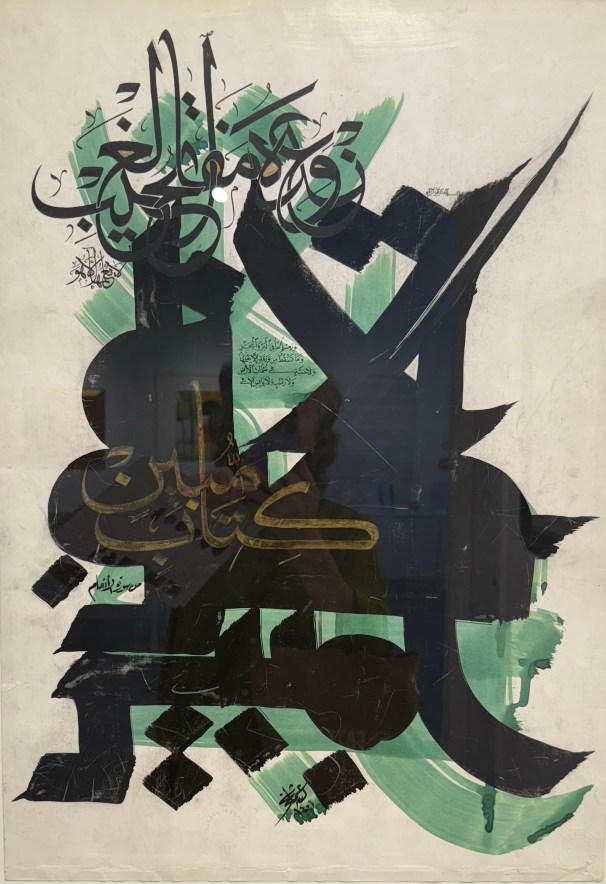
Above, calligrapher, artist and pioneer of the Khartoum School, Osman Waqialla‘s Surat Al-An am, 1980-81, mixed media and inks on paper. Scroll down to see more of his work, including article title illustration.
This week’s post celebrates the recent exhibition of pioneer Sudanese artists, hosted by Almas Art Foundation and curated by Dr. Fathi Osman and Yafil Mubarak. The Almas Art Foundation is a London based charity celebrating the contribution of African and Africa diaspora artists to modern art, aiming to promote and foster international collaboration, educational partnerships and artists’ residences.
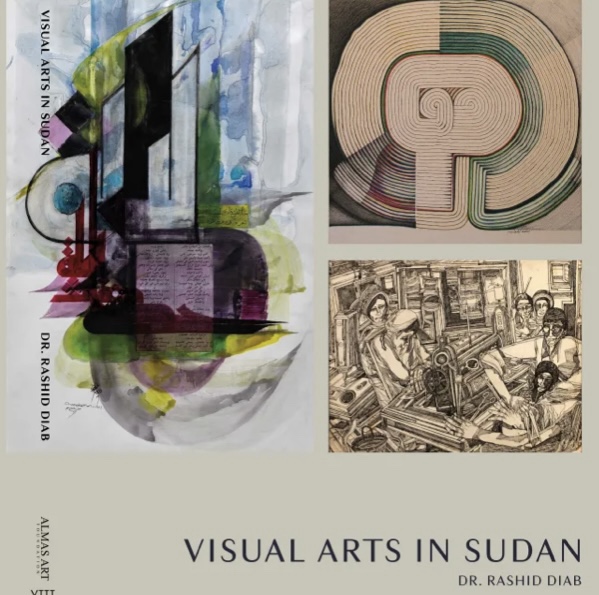
This brief article is intended as a tribute to the exhibition and a window onto the works featured for those who were unable to attend. I draw on Almas Art Foundation exhibition commentary and Dr. Rashid Diab’s Visual Arts in Sudan, recently translated into English and pictured below. All photographs included were taken with permission of the gallery.
I will be exploring the work of the artists featured here in greater depth in coming posts.
See too Almas Art Foundation Instagram
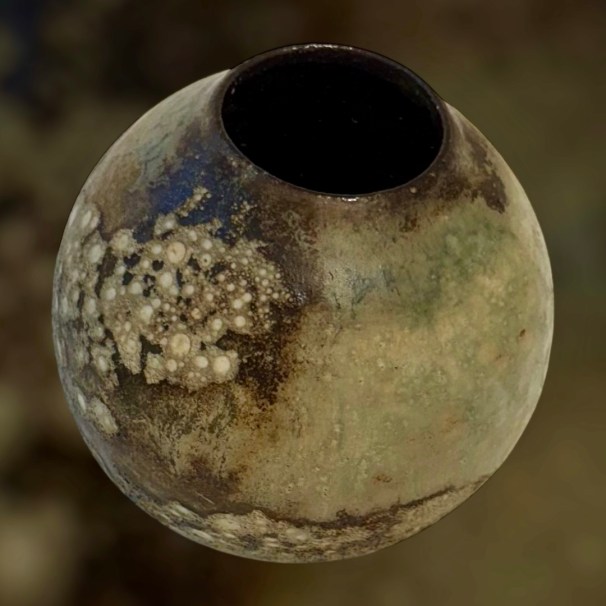
One of several pieces included in the exhibition by late ceramicist Mo Abbaro. Read more on his remarkable life and groundbreaking work in “How Earth Works”
Background to the Exhibition
A celebration of “cultural identity, resistance, and imagination across generations.” Almas Art Foundation
The modern visual arts movement in Sudan emerged with the establishment in 1946 of School of Design at Gordon Memorial College by Scottish-French painter Jean-Pierre Greenlaw. The School fostered the creativity of numerous talented Sudanese artists within the framework of a broadly Eurocentric artistic syllabus distinguishing between “aesthetic artistic value and immediate utility” (Almas Arts Foundation).

Over the following two decades, many Sudanese artists were sent to UK, furthering their studies at The Slade School, The Royal College of Art, The Royal Academy of Arts and the Camberwell Institute. Returning to their homeland in the 1960s and 70s, these artists came to enrich and give impetus to uniquely Sudanese expressions of artistic sensibility. At this time we see the emergence of key artistic and cultural movements such as The Khartoum School, The Forest and the Jungle School and the Crystalists. Among the many aesthetic and cultural issues this generation of artists grappled with were questions of how far, if at all, they were to incorporate western artistic influences, forging and renewing Sudanese artistic traditions in the process. See the fascinating creative and cross-cultural trajectory of Anglo-Sudanese ceramicist Siddig Al Nigoumi for example, in The Scorpion and The Coffee Pot
The exhibition featured work by leading proponents of the Khartoum School such as Osman Waqailla, Ibrahim Al Salahi and Shibrain, as well as that of Kamala Ishag of the Crystalists. it also featured the work of equally influential though less well documented figures in the Sudanese art world of the period, offering a unique opportunity for those outside Sudan to learn of their work. The work of Omer Khairy came as a revelation to me.
At this time of great suffering for the Sudanese, the exhibition is a testimony to Sudanese artistic creativity and resilience. It also reminds us how magical creativity can be born out of cross-cultural interchange.
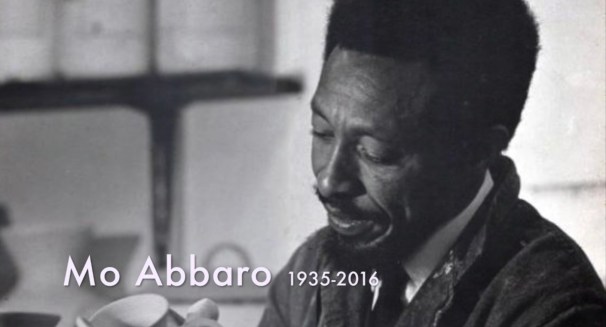
Upper left, Dr. Rashid Diab’s richly illustrated Visual Arts in Sudan, published by Almas Art Foundation, first published in Arabic in 2004. Above left, London-based Anglo-Sudanese ceramicist Mo Abbaro. Right the ceramicist and student of Waqialla, Siddig Al Nigoumi, pictured on the cover of Ceramics Monthly, January, 1989.

Above, photographs of Sudanese life also exhibited at the gallery.
Artists Featured
Ahmad Mohammad Shibrain
“My childhood has travelled with me across vast distances and has always possessed an unshakeable resilience against external provocations.” Ahmad Mohammad Shibrain, speaking of artistic authenticity and external influence, quoted by Rashid Diab.
Ahmad Mohammad Shibrain, (Berber,1931), was brought up in a deeply spiritual and religiously devotional environment. His work would later incorporate Sufi themes and geometric calligraphy. (Rashid Diab, Visual Arts in Sudan). Painter, calligrapher and educator, Shibrain attended Khartoum College of Fine and Applied Art and the Central School of Arts and Crafts in London. As the co-founder of The Khartoum School, he exerted a profound influence on generations of later artists. Speaking of the multiple identities of his homeland, he says “Here you will find the Bedouin spirit, rich in the desert’s traditions, tools and customs. And here, too, is modernity, selectively embraced, never disrupting the wisdom of the elders as they toil under the sun…” (quoted by Rashid Diab)
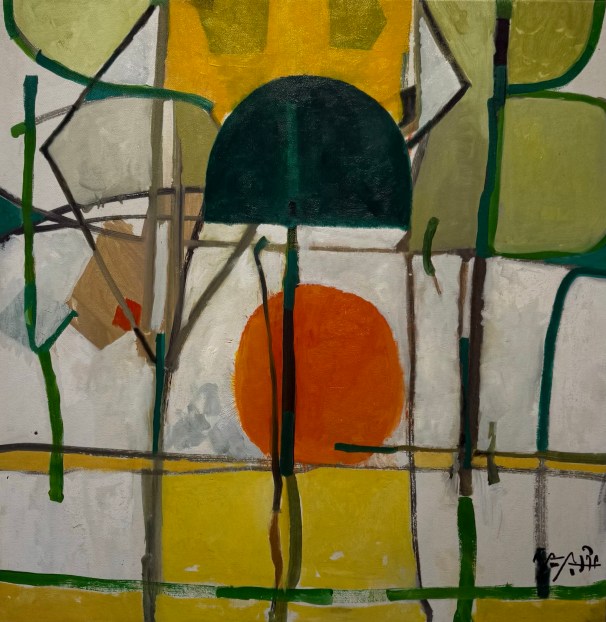
Oil on canvas. Courtesy of Maria Luz Porcella Haggar
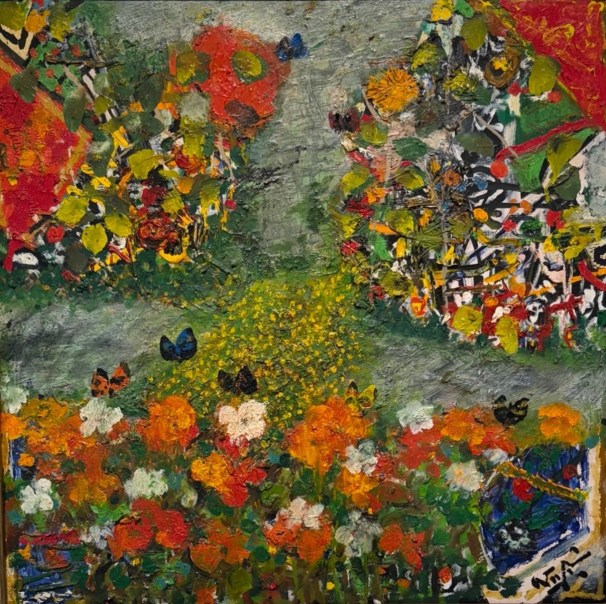
Oil on canvas. Courtesy of Lina Haggar.
Hassan Al-Hadi Mohammad Nour (1930-2001)
“For me, visual art is no longer what it was for centuries, an indulgence, a luxury, or a sentiment reduced to a triviality in content, form, and colour. Rather, it is an intellectual and emotional practice. Since the mind is the source of inspiration, imagination, and dreams – while also being their interpreter, I seek to explore myself within it, uncovering my existential stances through the landscapes of my dreams and hallucinations.” (The artist, quoted by Rashid Diab)
Hassan Al Hadi was a modernist who studied at Khartoum’s College of Fine Art and The Royal College of Art in London, graduating in textile design in 1959. Although less well documented than other artists of the era, he was an influential painter and educator who combined Sudanese cultural motifs with Western modernist techniques, often drawing on his childhood memories or Sudanese mythology. Rashid Diab references the influence of Magritte and Picasso in his work and his recurring fascination for birds – ominous, mystical and poignant in Sudanese culture, as well as the artist’s perceptions of the “realm of dreams as interpretation and intellectual practice.” Al Hadi refused to align himself with any particular artistic movement.
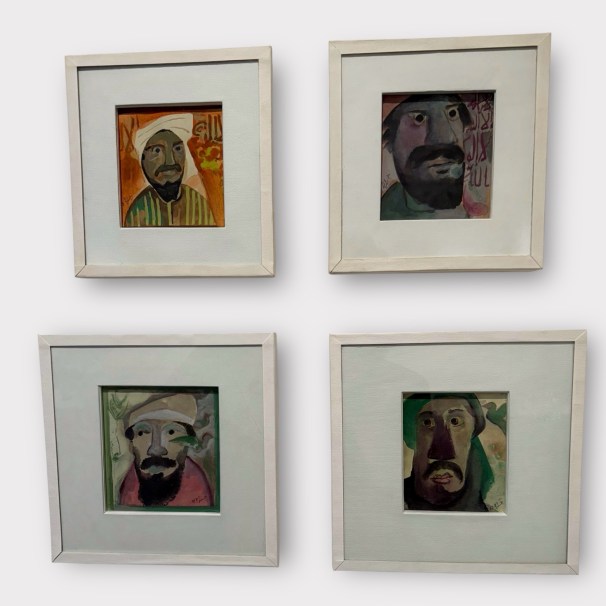
Watercolor on paper. Courtesy of Mercedes Carmona.
Tag Elsir Ahmed 1939 – 2015
Tag Elsir Ahmed, like Al-Hadi, also remained independent and sometimes critical of formal artistic movements of the day, specialized in painting, printmaking and illustration. Among his favourite themes were his city of Khartoum which he painted in detail from memory. The artist experimented with different subjects, materials and techniques in his prolific work spanning five decades, (Almas Art Foundation). His work combines realism, expressionism and abstraction. He has been described as “a lost thread in Sudan’s modernist tapestry.”(Almas Art Foundation)
Tagelsir Ahmed trained at the Faculty of Fine Arts in Khartoum (1953-56) before going to England where he attended architectural courses at Sheffield University (1956/57), interior design courses at Northern Polytechnic (1957/58) and finally School of Graphic Design at Royal College of Art in London (1959-62). He was Associate of the Royal College of Arts. His crowded canvases, in misleading tranquil colours and turbulent movements, address man’s conscience in a language beyond mundane consciousness, source: Jordan National Gallery of Fine Arts. This link also provides more examples of his work.
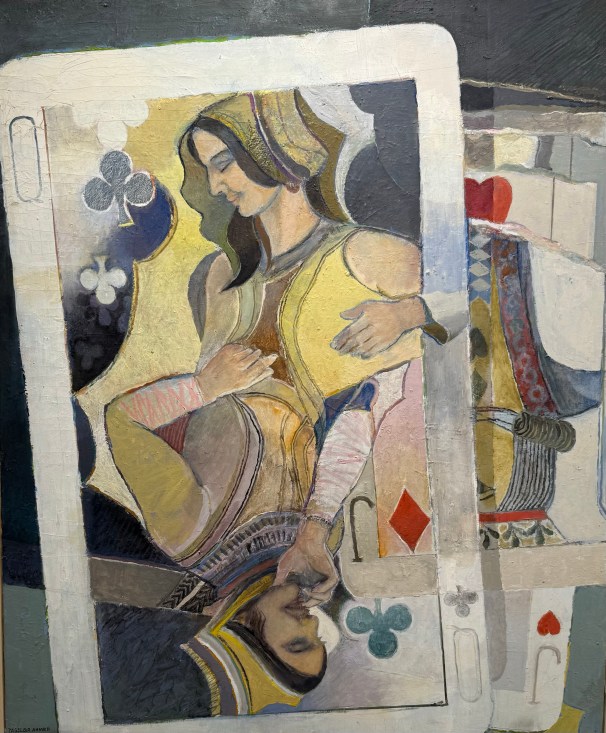
Kotchena 2011 Acrylic on canvas. Courtesy of Ahmed Osman.
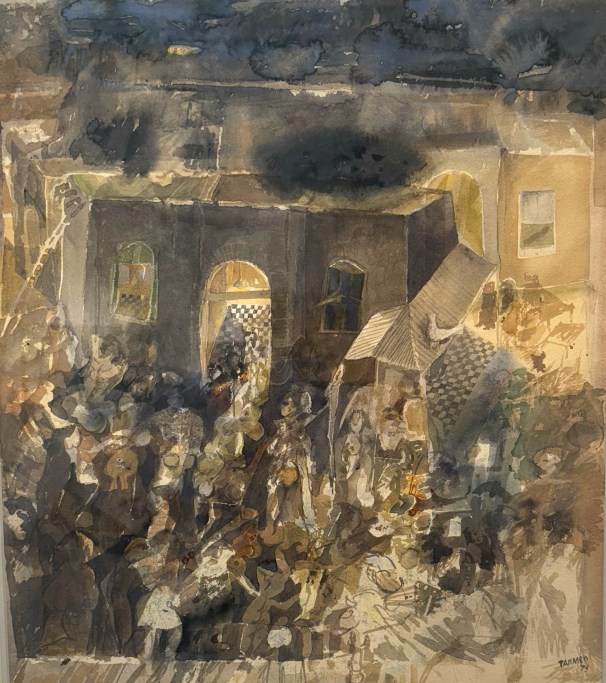
The Courtyard, 1973, watercolor on paper. Courtesy of Lina Haggar.
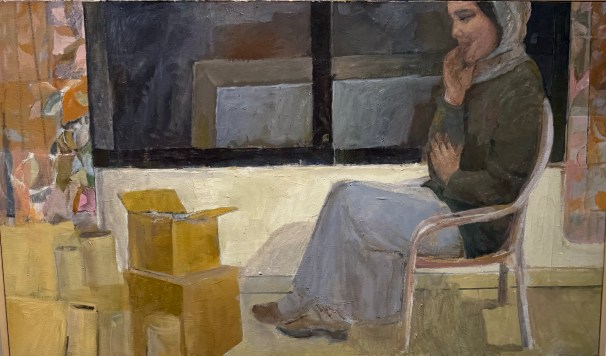
Seated Woman 2000, Acrylic on canvas. Courtesy of Ahmed Osman.
Ibrahim El Salahi, 1930, Omdurman
The work of this titan of modern Sudanese art and co-founder of the Khartoum School, explores “identity, freedom, exile and spirituality” Almas Art Foundation. In 2013, The Tate Modern dedicated a retrospective to an artistic career of profound international relevance spanning six decades. This was the first Tate Modern exhibition dedicated to African Modernism and featured over a hundred of his works.
You can read more about his life, formative influences, and artistic vision in Birds of the Soul.
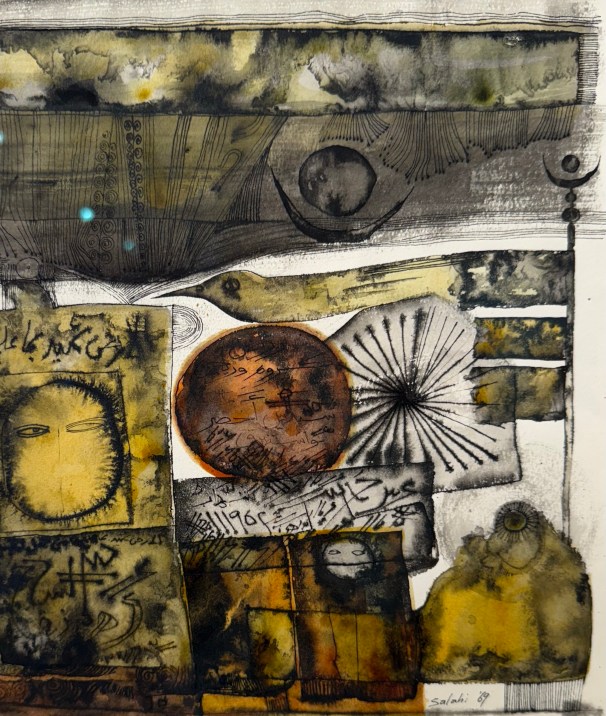
Untitled, 1969, pen, ink and wash on paper, fixed to card. Courtesy of Vigo Gallery.
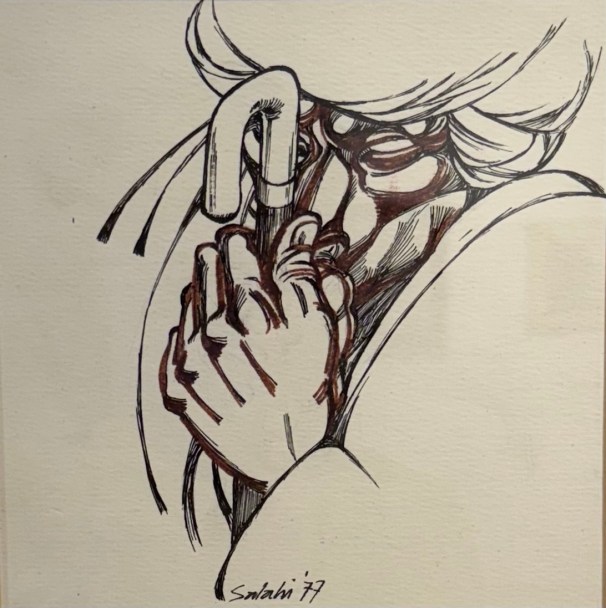
Drawing on paper, 1977. Courtesy of LIna Haggar.
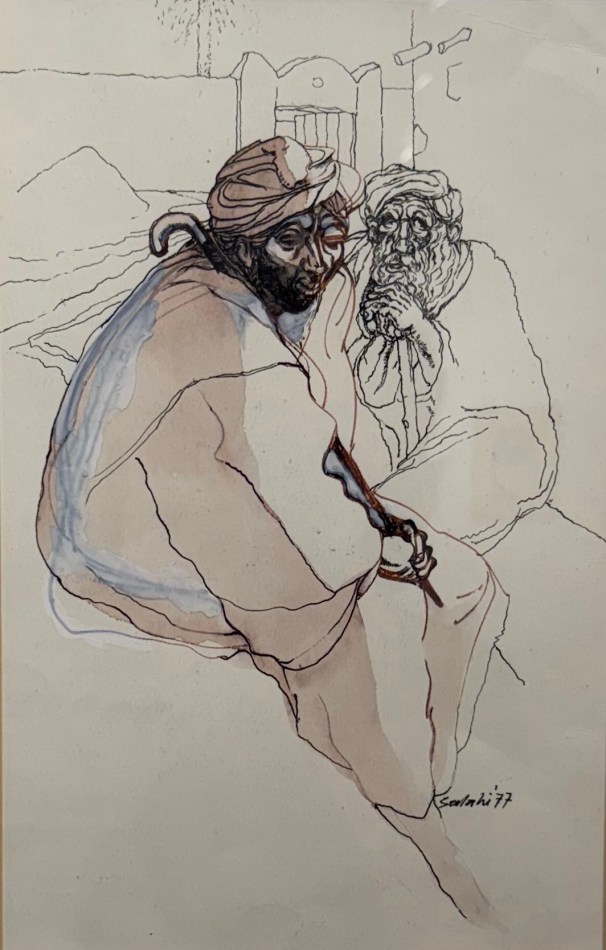
Drawing on paper, 1977. Courtesy of Lina Haggar.
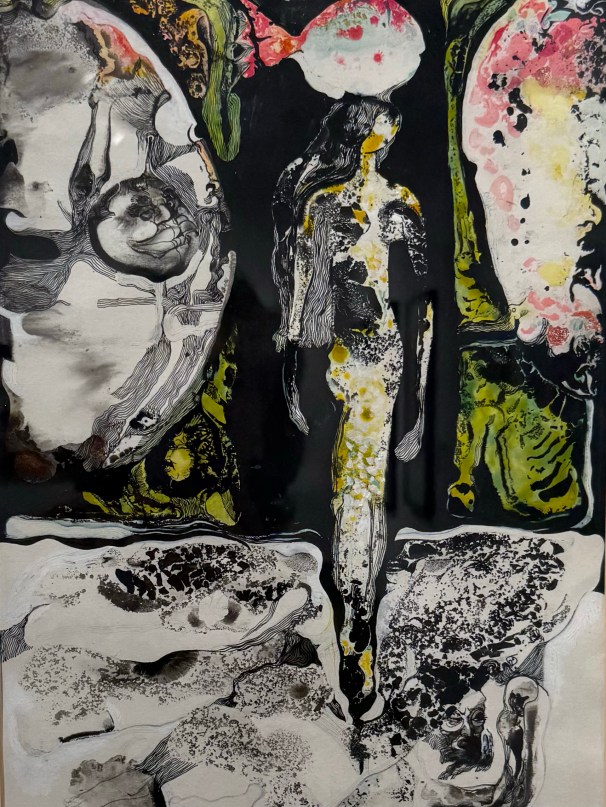
Drawing on paper, 1977. Courtesy of Lina Haggar.
Hussein Shariffe, Omdurman, 1934 / 7 – 2005
Shariffe was a painter, filmmaker, poet and intellectual of the Sudanese avant-garde. A contemporary of Al Salahi and Ahmed Shibrain, the artist focused on abstract expressionism, embracing universal themes. His films and paintings reflect his fascination for colour. After enrolling in architecture at University of Khartoum, Shariffe transferred to fine art at Slade School of Fine Art. The artist explored European modernism while remaining rooted in Sudanese aesthetics and his work touches on the themes of identity, exile and cultural hybridity, (Almas Art Foundation). For Rashid Diab, Shariffe’s work balances the instinctive and the deliberate, bridging the subconscious and tangible world.
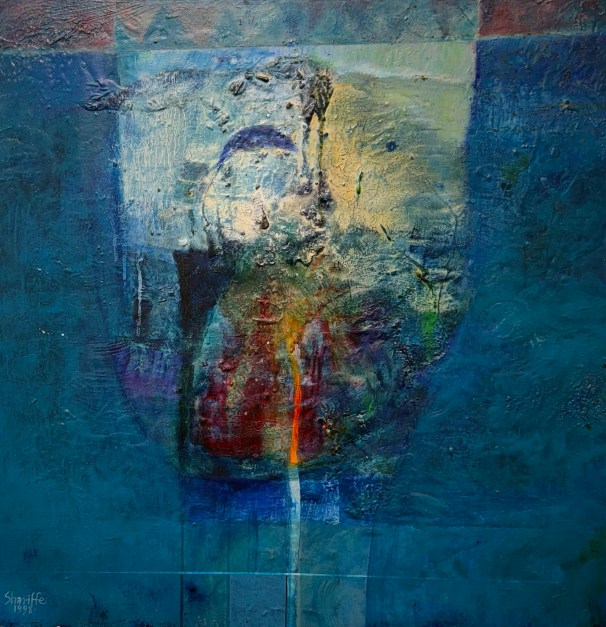
Master of the Blue Sultanate, 1998, oil on board. Courtesy of Eiman Hussein.

Head and Torso, 2002, oil on canvas. Courtesy of Eiman Hussein.
Osman Waqialla, Rufaa, 1925-2007
“reconciling the stillness of the composition of traditional scripts such as Diwani, Kufic, and Naskh with the ripples of watercolour or colored inks while retaining the specificity of each material.” Rashid Diab distilling the style of Osman Waqialla.
Osman Waqialla was a Sudanese modernist, calligrapher, painter and educator. He played a pivotal role in the 1960s Sudanese art scene. His work, which fused Islamic script with modernist abstraction, exerted a profound influence in both Sudan and across the Arab world. Waqialla studied in Khartoum, Cairo and London and was pioneer of the Hurufiyya movement. This reimagined Arabic script as abstract art – letters as fluid expressive forms. He also designed the first post-independence Sudanese coin. (Rashid Diab, Visual Arts in Sudan).
For Rashid Diab, Waqialla’s work work embodies the “treatment of the painting as text read through colour.” The artist is quoted as saying he was “one of the lucky few who took as much from the West as from the East.” (Rashid Diab, VIsual Arts in Sudan)
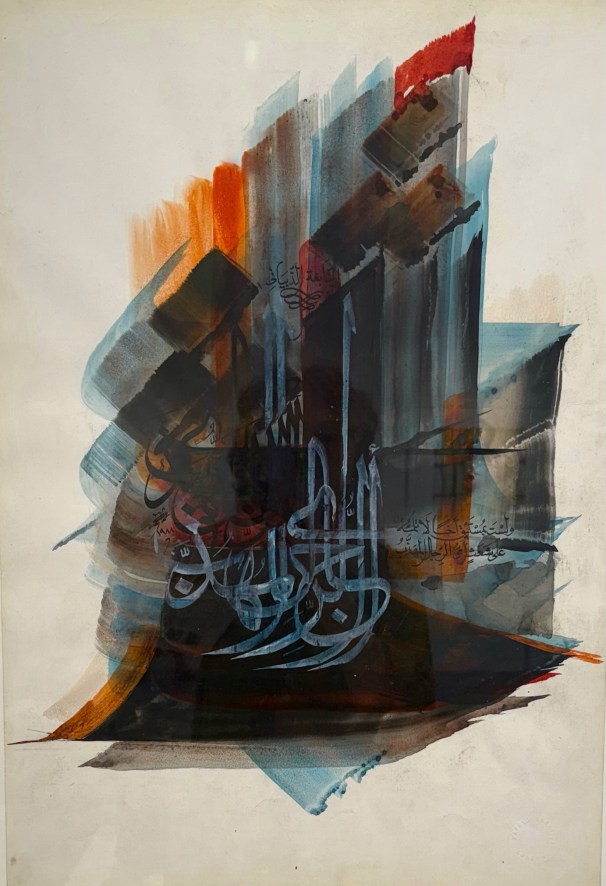
Poetry of Al-Nabagha Al-Zubiani, mixed media and inks on paper. Courtesy of Hanaa Waqialla.
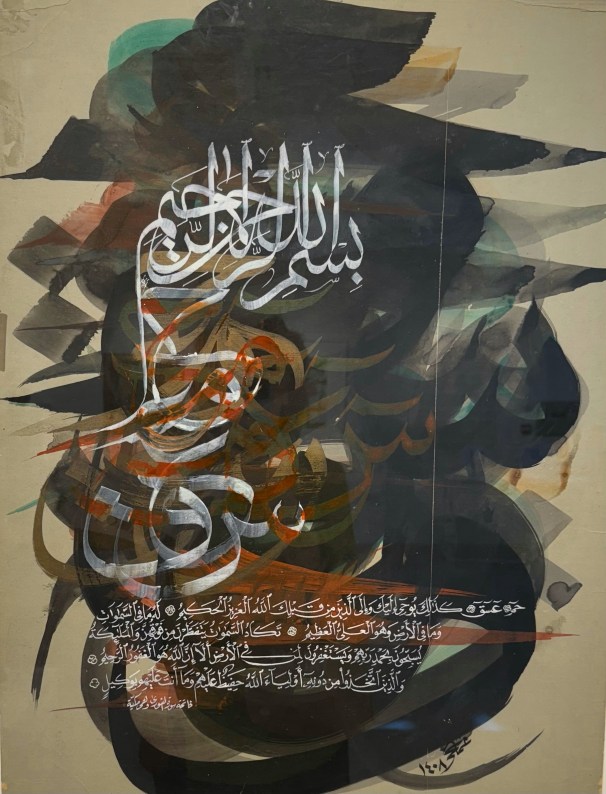
Surat al-Shura, 1987-8, mixed media and ink on paper. Courtesy of HAnaa Waqialla.
internal Surat Al An am, 1980-81, mixed media and inks on paper. Courtesy of Hanaa Waqialla.
Omer Khairy, Omdurman 1939-1999
Khairy’s paintings often depict mysterious and abstract elements, guiding the viewer into unfamiliar realms – cities, places, cosmic figures, and dreamlike atmospheres detached from tangible reality. His work borders on the mythical and metaphysical…” Rashid Diab
Painter, illustrator, graphic designer and poet, Omer Khairy produced complex compositions drawn in linear black ink lines on mostly wooden brown surfaces. HIs works are realistic but imbued with his personal vision of a parallel world, (Almas Art Foundation). The breakdown the artist suffered following the death of his mother was to have a lifelong impact. He was the first Sudanese artist to be awarded a full-time position as artist in the National Council for Arts and Literature, which he joined in 1975. The artist enjoyed more than 35 international solo exhibitions, and received awards from Kuwait and British Council.
Omer Khairy was fluent in French, German, English and Arabic. Although he never went to the UK, Khairy felt an intrinsic connection with Britain, even informally adopting the name George Edward. Rashid Diab sees in his work the “duality of identity” and creativity driven by “existential and humanist enquiry.”

Sewing Machine, black ink on board. Courtesy of Lina Haggar.
Below, details from this work:
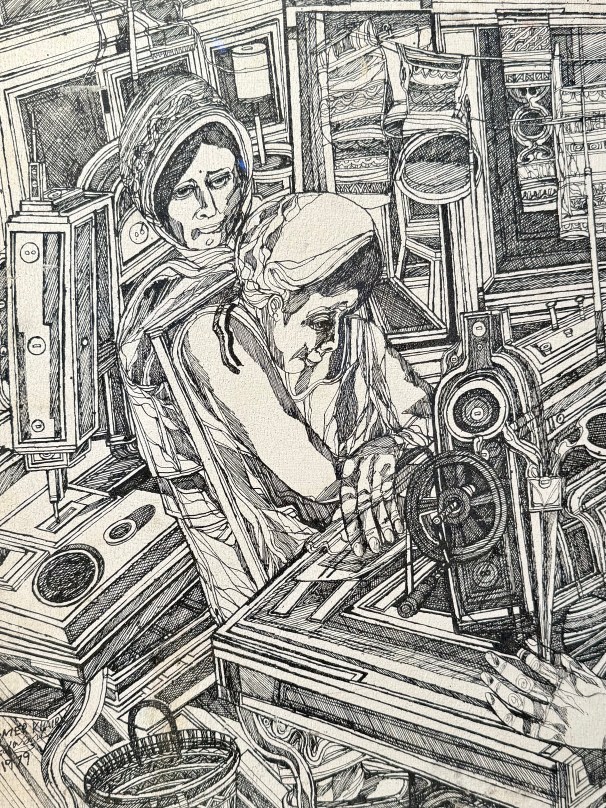


Drawing with marker, 1980, black ink on board. Courtesy of Mercedes Carmona. Below, Mohammad Hassan’s study of Omer Khairy, one of several books published on the artists featured and displayed at the exhibition, which also sought to highlight the need for greater documentation of these artists.

Kamala Ibrahim Ishag, 1939
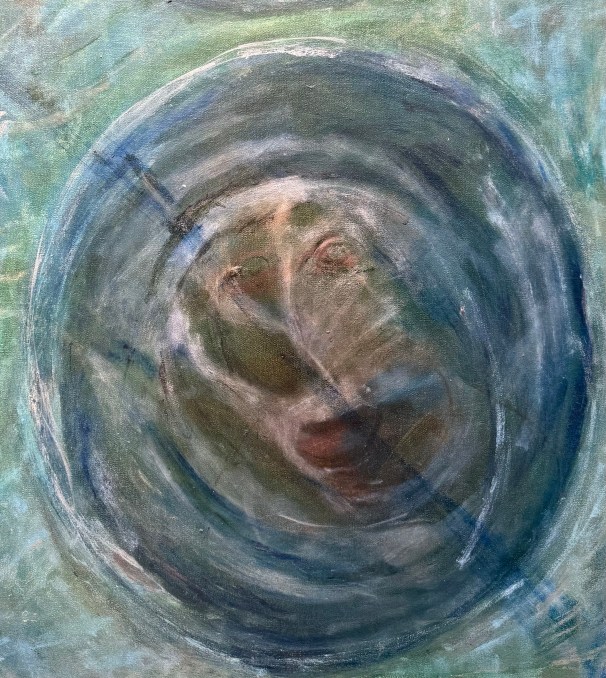
Kamala approaches painting intensely, pouring a wealth of emotions and experiences into each canvas as if it were her last. She builds her compositions by layering and erasing colours, applying new hues, and integrating bold lines that reconnect the composition with a refined sensitivity. The process creates luminous, transparent surfaces where faces and abstract forms emerge, expressing states of deep emotion. The eroded remnants of colour in her paintings evoke ancient murals from Faras, as though they carry echoes of history, lost joys, and deep sorrows. (Rashid Diab, Visual Arts in Sudan)
For more on this groundbreaking artist, educator and mentor, see
Kamala Ishaq at Sudan National Museum
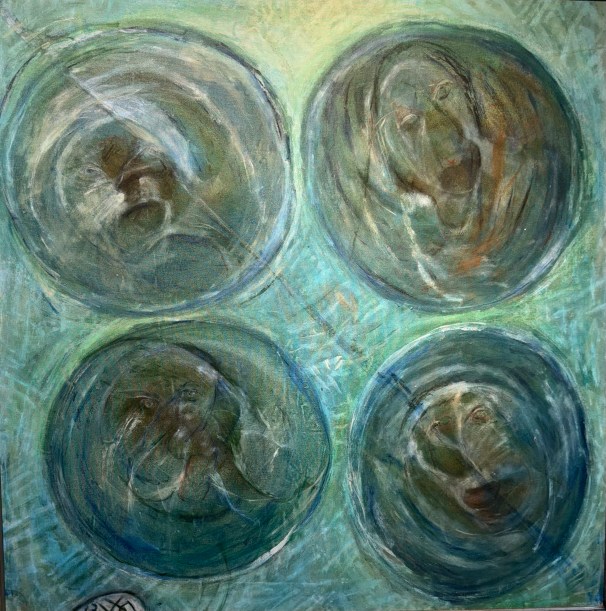
Oil on canvas, courtesy of Lina Haggar.Below, detail from this work
Amir Ibrahim Nour, Shendi, 1939-2022
Nour’s sculptures demonstrate his evolving ability to integrate different technical mediums and forms, reflecting his dual experience as an African artist living in the West. (Rashid Diab)
Amir Nour was an award-winning sculptor and associate professor of art at Truman College, Chicago. He enjoyed numerous international solo exhibitions and was commissioned to create sculptures for various American cities. He is known for fusing African minimalism, Islamic geometry and industrial materials into striking abstract forms.
The artist studied at the College of Fine and Applied Arts, Khartoum, later becoming head of the sculpture department. He went on to study at the Slade School of Fine Art and the Royal College of Art before moving to Yale University’s School of Art and Architecture. The artist worked in bronze, iron, steel, fibreglass, cement and wood. Rashid Diab notes that “To the ordinary viewer, his sculptures may appear highly abstract and non-representational. However, they are constructed from geometric shapes, domes, and triangles – forms drawn from his childhood in Sudan.” In his work Grazing at Shendi, 1969, made of more than 40 pieces of polished steel, Nour reimagined pastoral life through industrial materials. Almas Art Foundation.
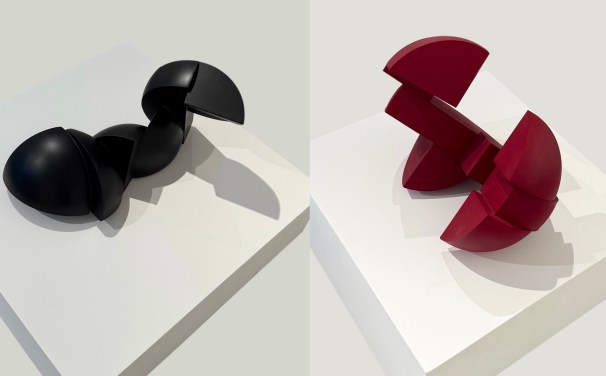
Left, Expansion, 1996, plastic. Courtesy of Amna Nour. Right, untitled, plastic, courtesy of Amna Nour.
Mo Abarro 1935-2016
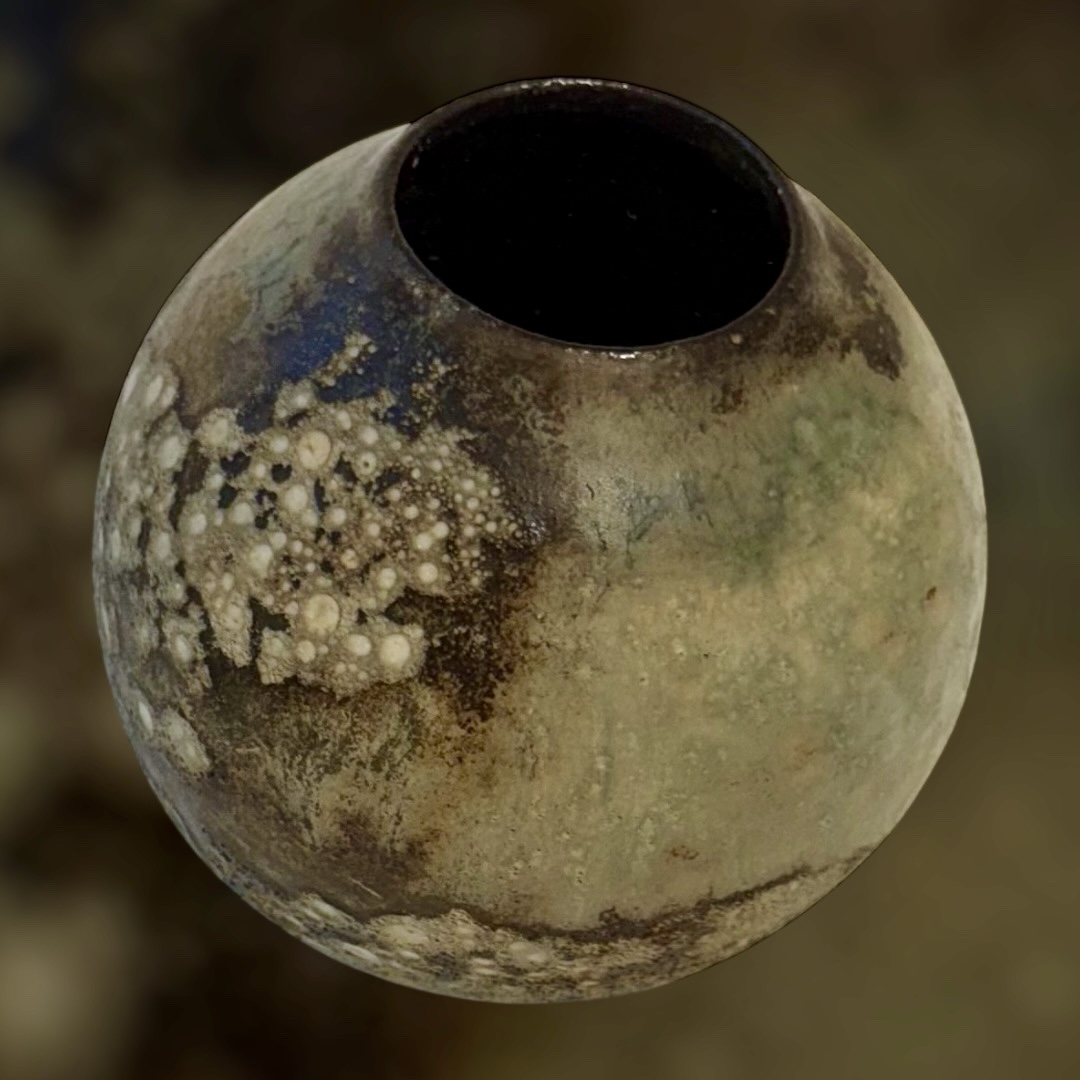
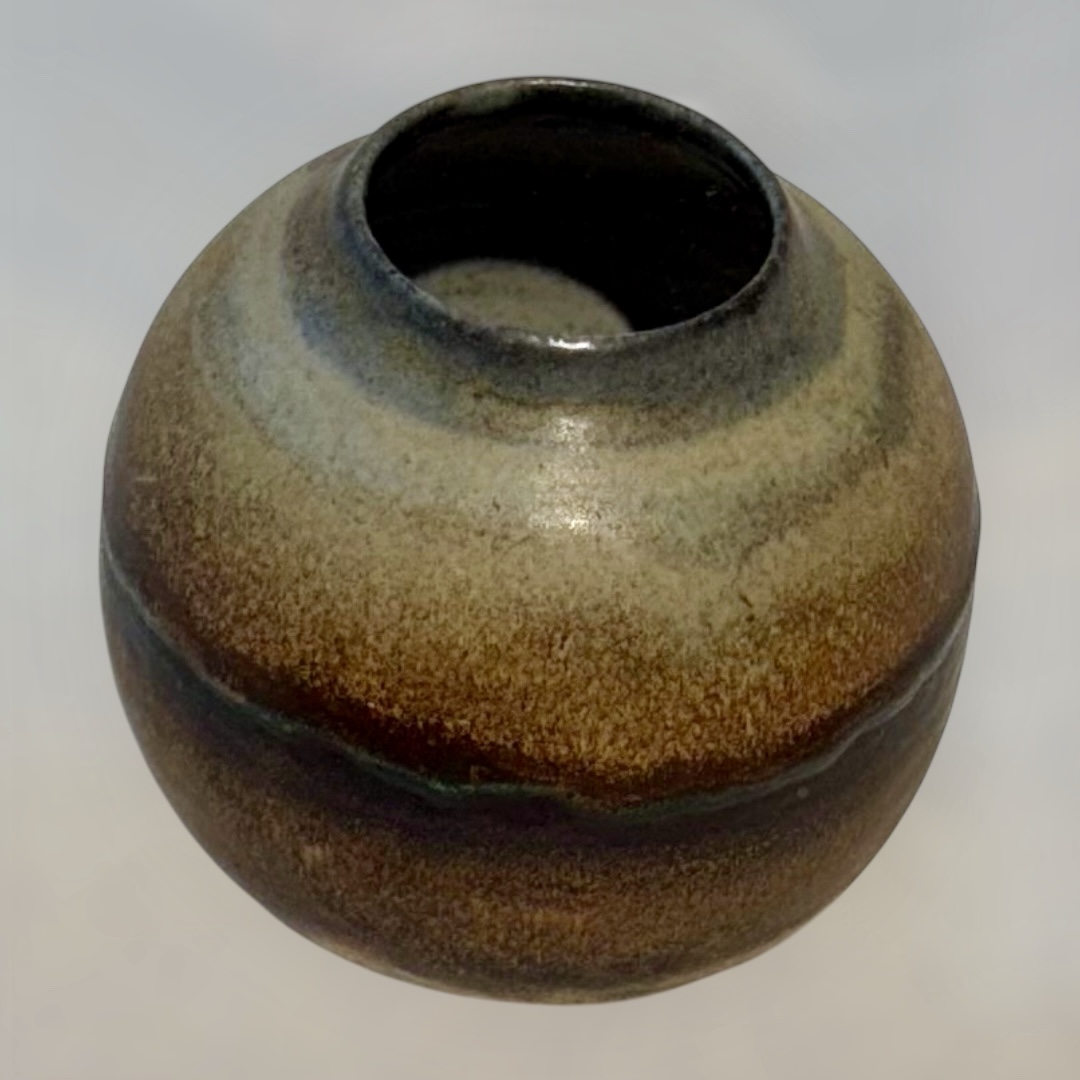
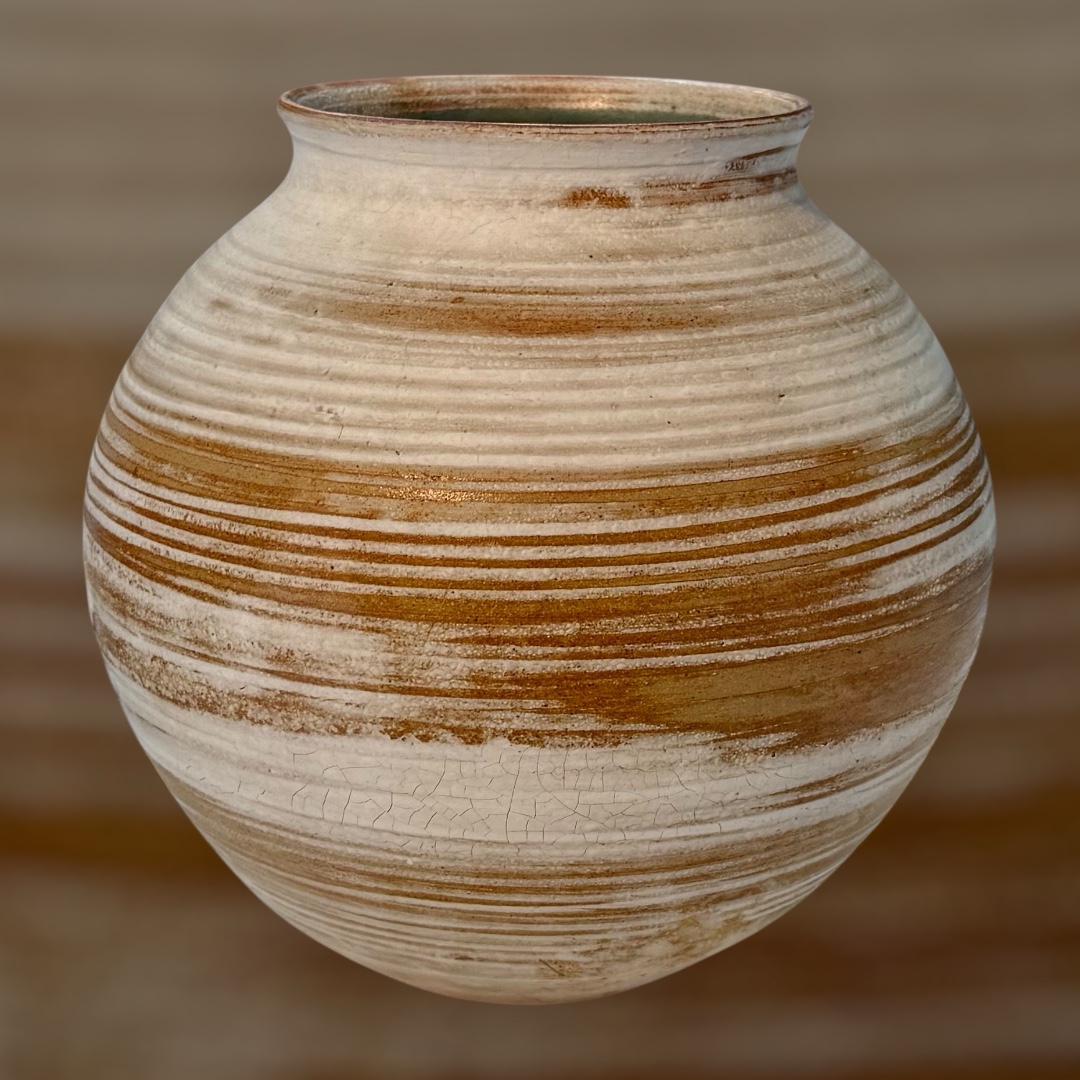
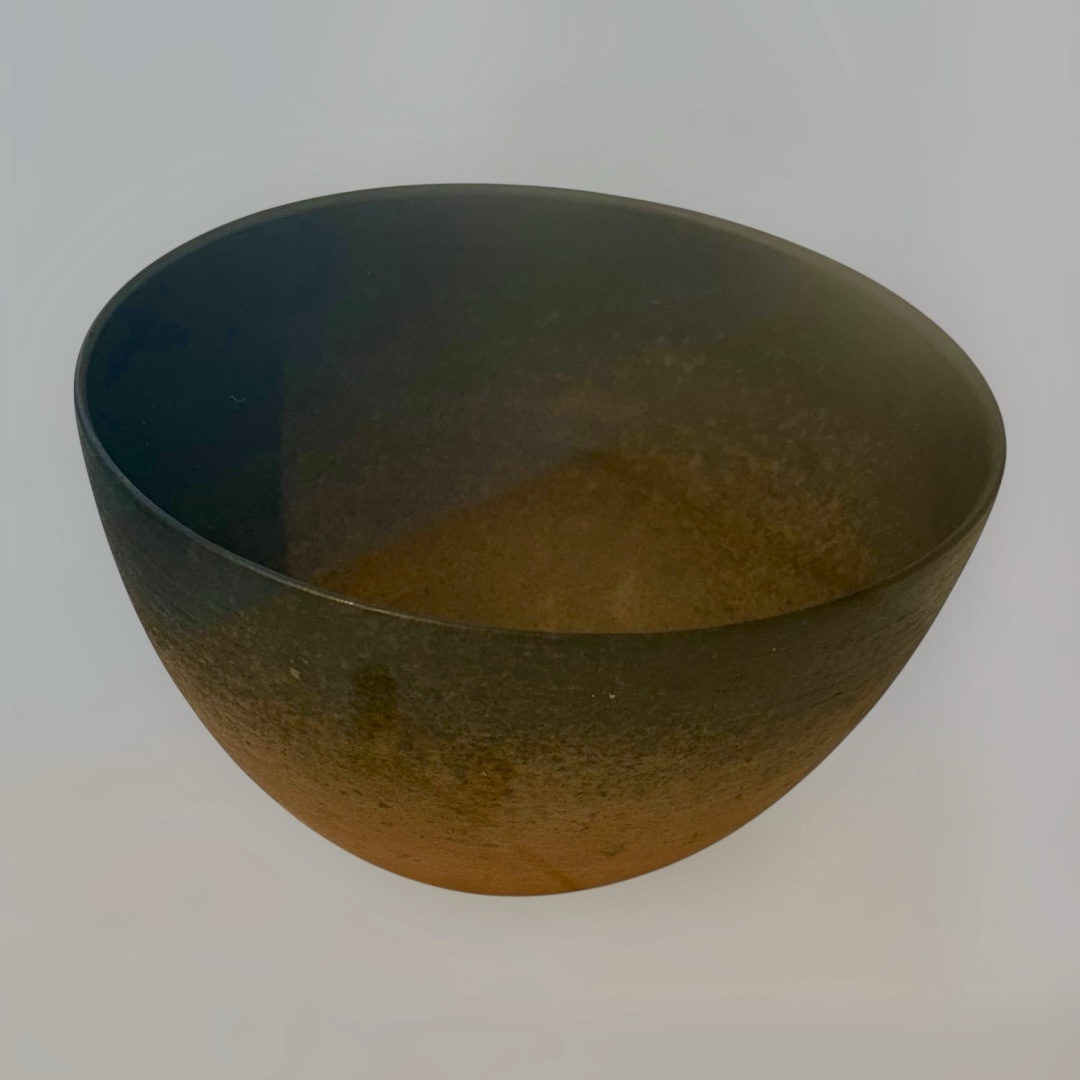
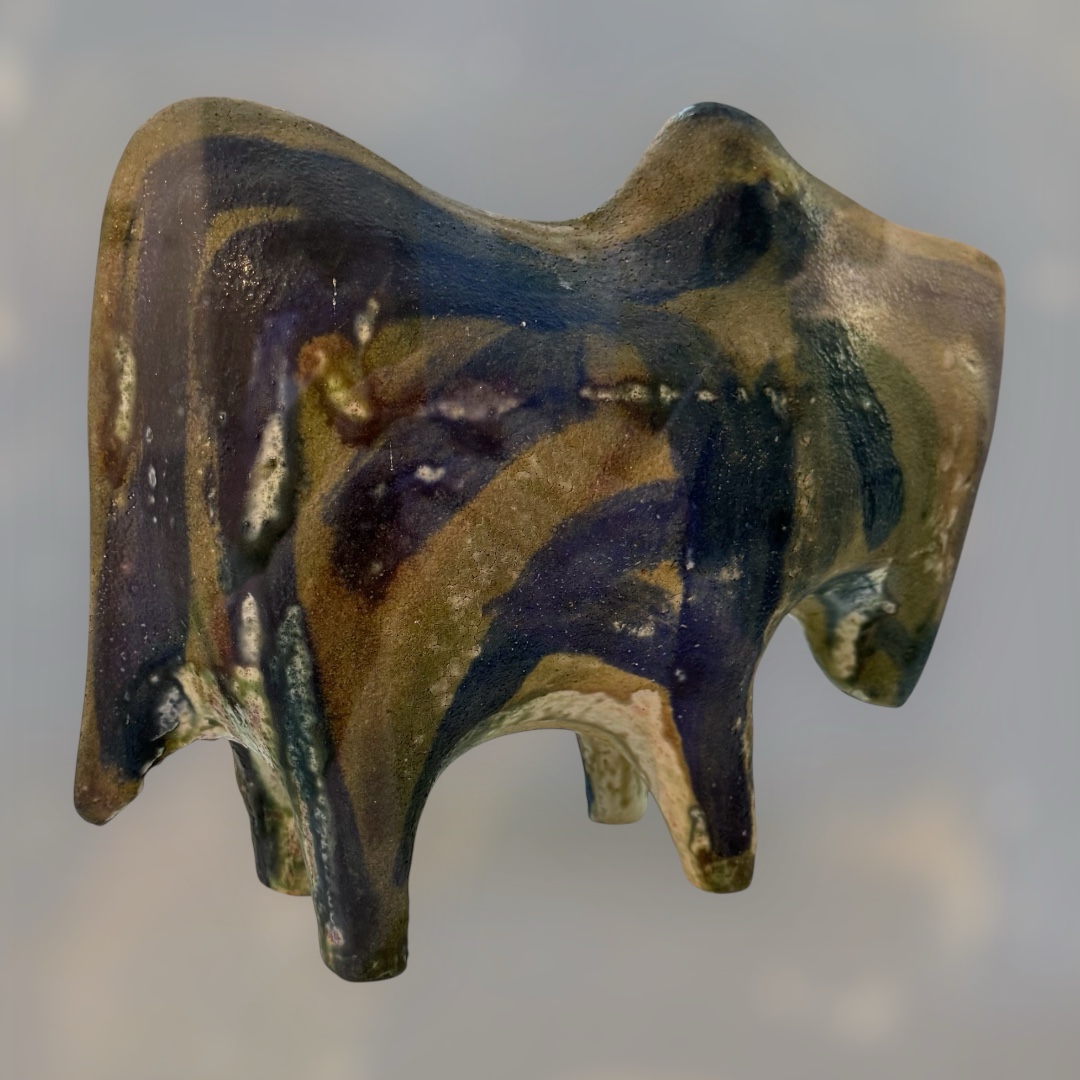
Born in the eastern Nuba Mountains, Mohammad Ahmed Abdalla Abbaro was a ceramicist and visual artist. A graduate of The College of Fine Arts, Khartoum, Abbaro continued his studies at postgraduate level in UK. He drew on ancient Nubian pottery traditions and the organic forms found in nature. With his matte glazes and earth tones, Abarro “elevated pottery to a modern art medium.” (Almas Art Foundation)
Learn more about this remarkable artist and his work in “How Earth Works”
The works below were displayed courtesy of Fathi Osman and Besheer Abbaro.
 Women's literacy in Sudan