

Enduring Witness
Galal Yousif’s Khartoum Murals
A Heavy Heart and The Empty Chair
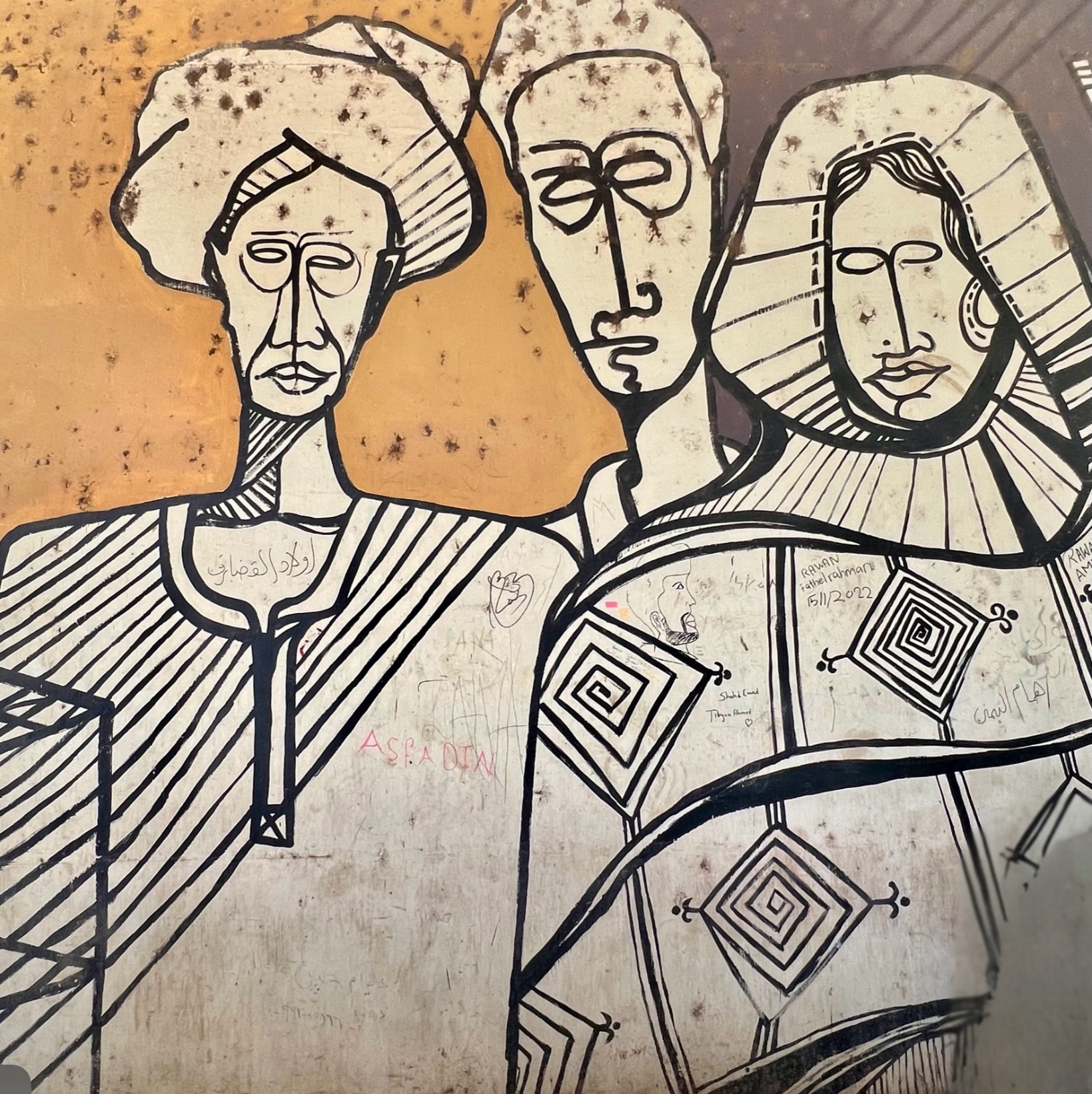

Setting the Scene: For the People, by the People
Galal Yousif‘s mural entitled “For the People, by the People”, 2019, is located in the Mak Nimr Bridge underpass in central Khartoum. Above and title illustration, details of this striking work, photo taken in 2022 by the author. Galal Yousif recently posted that the mural has survived the ongoing war.
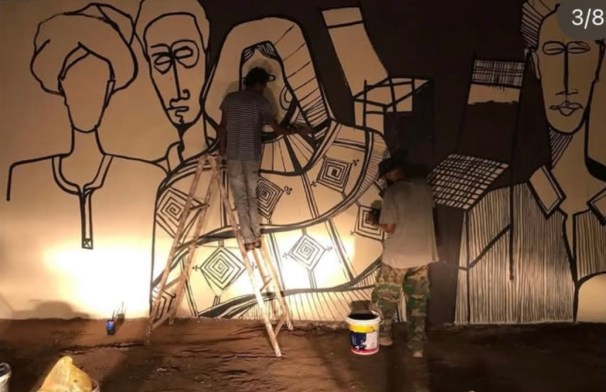
Above, documenting the creation of the mural; the artist at work, photo courtesy of Galal Yousif.
For the People, by the People
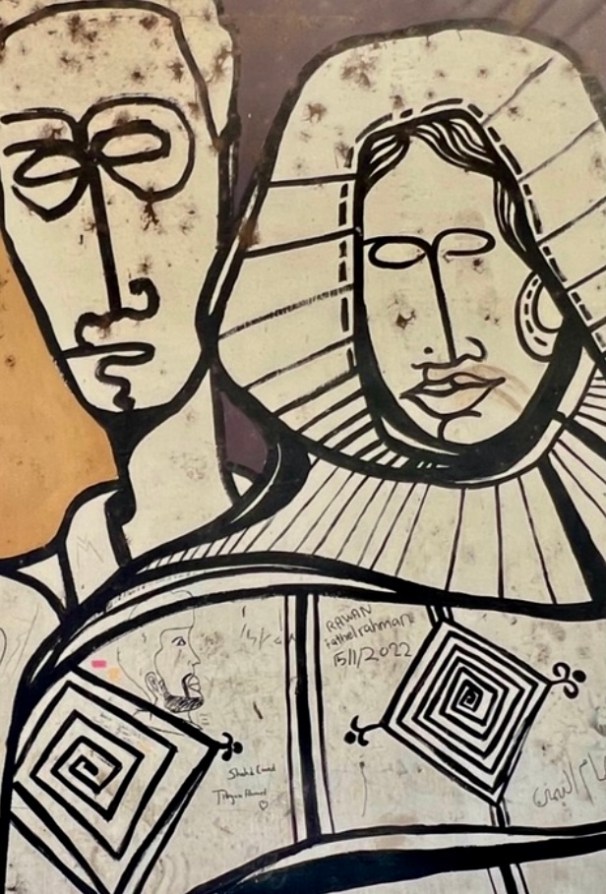
The work marks the signing of the inter-party agreement, reached before the 2021 military coup, for a 39-month transitional period towards democratic rule. Named “For the People, by the People” because its creation was the fruit of communal efforts by a team of volunteers, the mural has defied all the odds, remaining an enduring witness to the resilience of the Sudanese people amidst the widespread destruction of both art and vital infrastructure in the capital. See too Sudan’s Cultural Treasures Looted 1, The Ethnographic Museum, Sudan’s Cultural Treasures Looted 2, The Khalifa’s House, and Sudan’s Christian Heritage Looted, Sudan National Museum.

The mural is one of many powerful visual testimonies to the Sudanese popular uprising created by Galal Yousif, though the artist has been careful to clarify that he does not necessarily see himself as an activist, rather an artist reflecting what is happening in his society. Tragically many other murals celebrating the revolution have been destroyed.
Right, detail from the mural. Chairs are imbued with deeply personal symbolism in Galal’s visual lexicon; depicted solitary and aslant against a blue horizon, as tangled clouds hanging above a lone citizen’s head, a thousand delicate chairs suspended in light beams above wave upon wave of people. More on the symbolism of chairs in his work below.
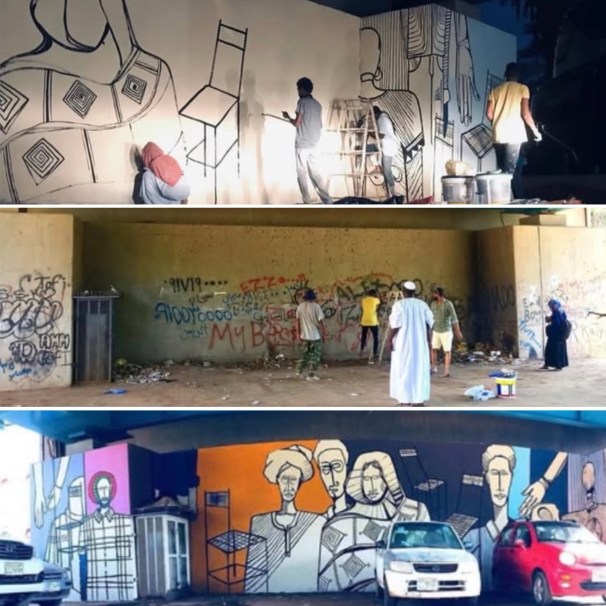
Above, the artist’s visual record of the mural’s creation. (Photos reproduced here with the kind permission of the artist). Below, brief video documenting the making of the mural.
This week’s article is a very brief tribute to Galal Yousif and his work. I remember the unexpected thrill of of coming across the mural while walking through central Khartoum in 2022 and was delighted and astonished to learn the mural is still intact.
This is one of series of upcoming articles on the public art of the Sudanese uprising.
Mak Nimr Mural by Galal Yousif: Video Tribute
A Heavy Heart and The Empty Chair
A Brief Profile of the Artist
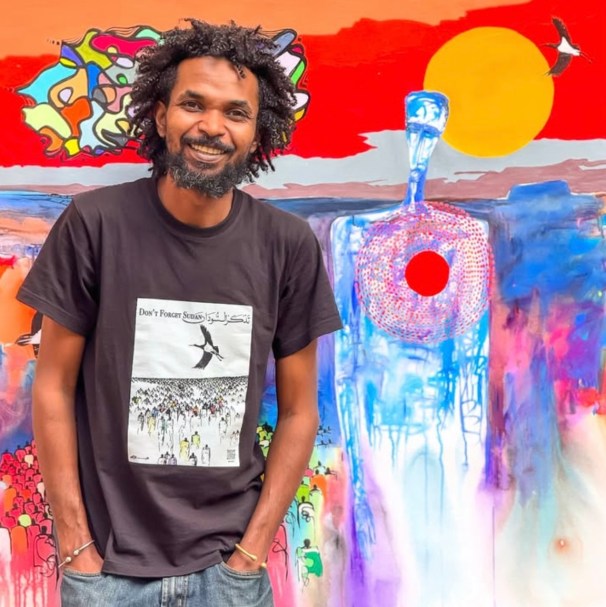
Galal Yousif, Rufaa, 1986, is a Kenya-based Sudanese visual artist and muralist, working in watercolour, ink, acrylic and mixed media. He graduated from Sudan University of Science and Technology, where he specialized in sculpture.

Galal’s work drew international critical acclaim during the Sudanese uprising of 2018-19, when his large scale pieces reflecting Sudanese aspirations for social and political change captured the national imagination with their dignity and force. They remain an embodiment of an era; a heady era of burgeoning artistic creativity and communal public art. See too Sudan’s Street Protests have Inspired another Revolution
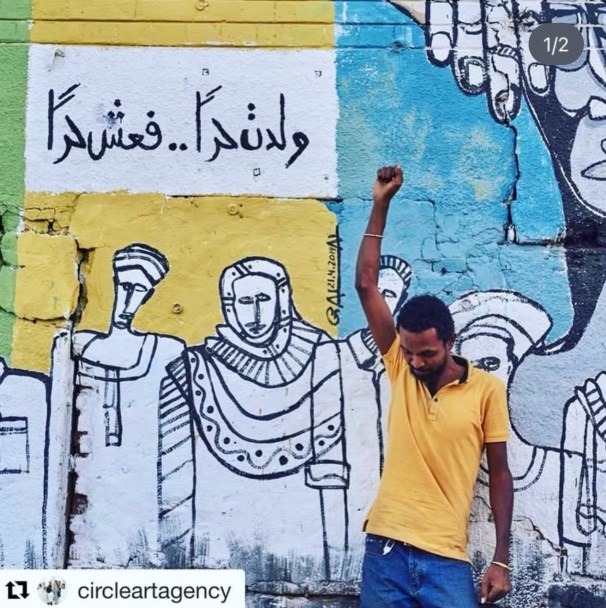
Iconic murals such as “You were born free, so live free”, left, his Don’t Forget Sudan series, an example shown above right, and Talk about Sudan, his many works captioned Stop Killing the People of Sudan, an example shown below right. When his mural The Scream was destroyed, Galal refused to repaint it, saying it would not be recreated until justice for the lives lost was restored.
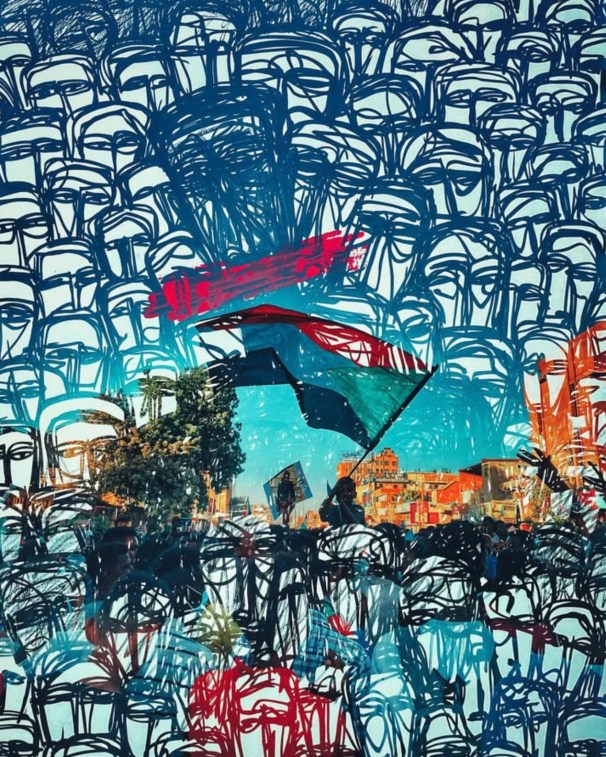
Speaking on his Talk about Sudan series, Galal explains “The purpose of this art is bringing the people together in peace to make this world a better place to live in. It is my duty to talk about my people and use my art as a voice for my people.” (Galal Yousif, Instragram).
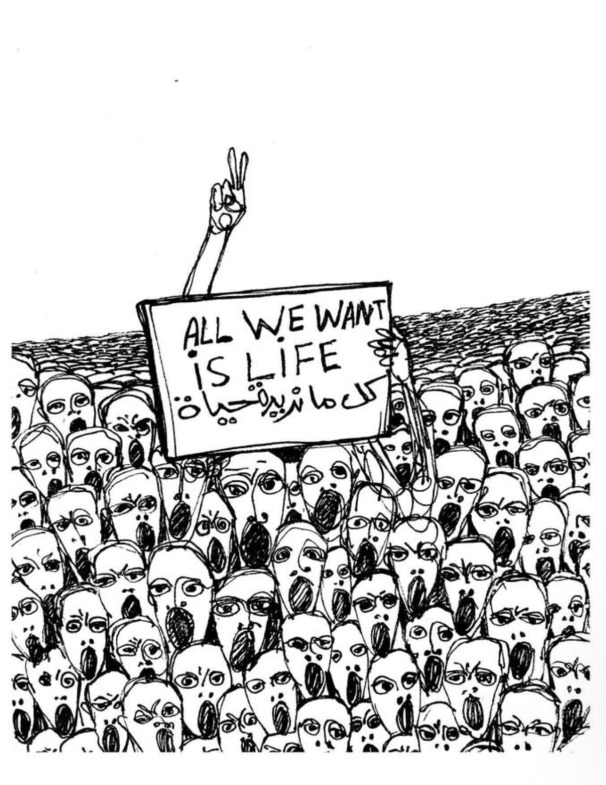
Galal recalls a recent and very telling criticism leveled against him for being “concerned about Sudanese women” at a time when “people in Gaza are dying”. “What kind of world are we living in?”, he responded, “Do we really care about each other? Or only about the things that match our own narrative?” The comment points to just how little many people know about the sheer scale of death and destruction the war in Sudan has wrought. It also speaks volumes on the tragic level of international indifference to and deliberate downplaying of the human cost of this conflict.
Pictures above, reproduced with the kind permission of the artist.
A Heavy Heart

Above, Man with a Heavy Heart, Addis Ababa.
When the present conflict in Sudan erupted, BBC reported, Galal fled the capital with a small backpack of belongings. “The turmoil and bag, in which he had crammed his passport, two pairs of jeans, five shirts and a car key” – the latter packed in the hope of a swift return, is depicted in his painting Man with a Heavy Heart. First painted as a mural in his initial refuge of Addis Ababa (BBC, Sudan War: Heavy Hearts for the Artists Painting the Pain of Conflict), the work was later recreated on canvas in Galal’s new temporary home in Kenya.
We see a hand held to a heart radiating a halo of gunshot wounds, against a backdrop of silver-blue* moonlight. The artist’s backpack lies propped against a tall chair, evoking all “the Sudanese people have lost” in the ongoing conflict. Galal explains that the chair represented his studio; “the only place I felt truly free (BBC as above), just 300 metres from the Presidential Palace and scene of brutal skirmishes at the start of the conflict. Galal lost the haven of his studio, and found himself living in “a city I didn’t recognize.”
*Blue became associated with grief and loss during the uprising.
The Empty Chair
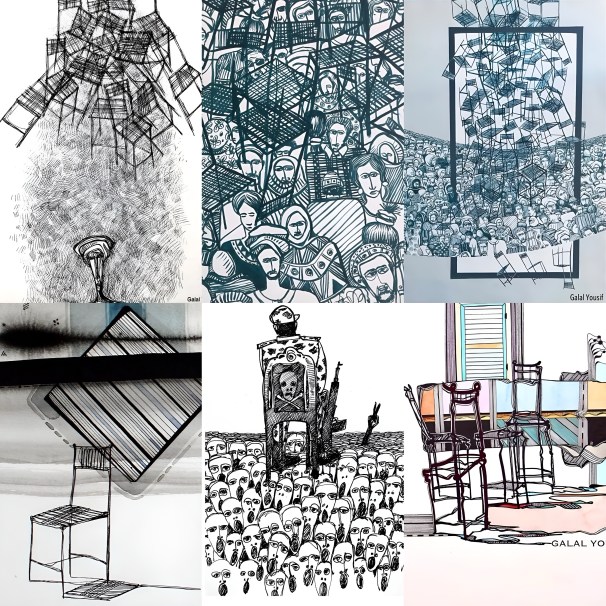
Above, casting fine shadows in linear spaces, hanging swarm-like over the heads of crowds, Galal Yousif’s chairs take on multiple symbolism.
Commenting on his Chair Blues Collection, Galal says “in school a long time ago I was told to bring my own chair because the school couldn’t give everyone a chair, so there were all different chairs in the room.That was a big part of being educated at twelve. I know still there are many students without chairs.” (Galal Yousif, Instagram)
If chairs represent treasured access to learning, the artistic life of the lost studio, they also speak of seats at the table stolen, left empty and un-offered. Places at the table denied while in a war for power, “two leaders fight for the chair of power.” (Galal Yousif, Instagram). Yet raining from the sky in multitudes – as many as the people gathered beneath them, chairs are perhaps also a symbol of optimism, of hope – yes, an evocation of all that is lost but also of the potential that remains. The remote possibility of the voices of the Sudanese people prevailing and normal life returning.
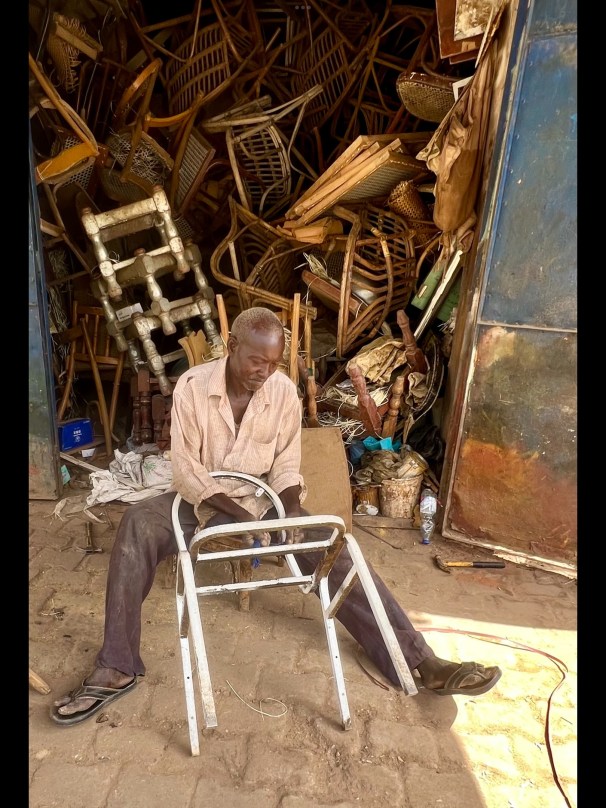
Below my own tribute to the chair makers and repairers of Khartoum.
 Women's literacy in Sudan