

Our Sudan is Still Sudan / All is Still Well in Our Land
Akiid lissa al-balad bi-khayr اكيد لسة البلد بخير
A Poem by Amna Al-Fadl
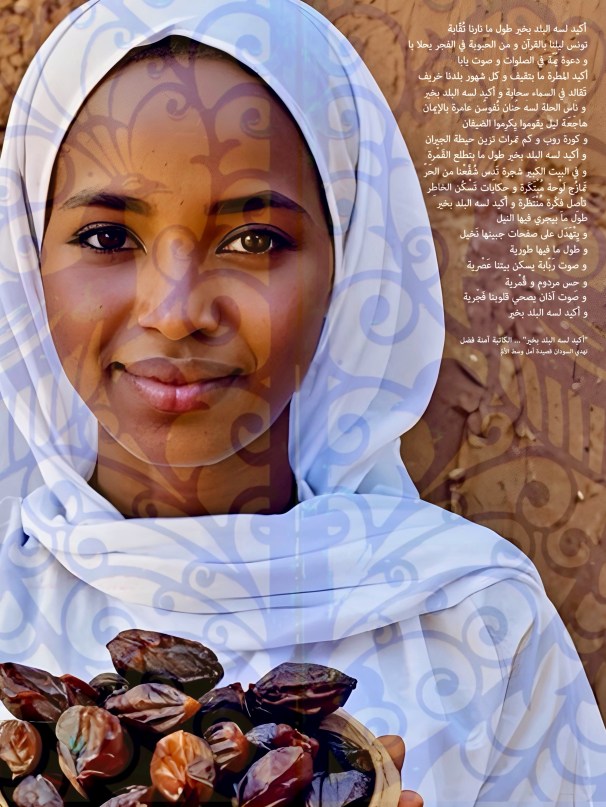
Akiid lissa al-balad bi-khayr, recently recited by writer and poet Amna Al-Fadl in the diwaan al-`iid series, Aljazeera Sudan Facebook. The poem, reproduced above, was transcribed by Muna Zaki, text illustration, Imogen Thurbon. You can listen to the poem recited by the author in the video link below.
The literal translation of the poem’s title is Yes / certainly / indeed / it’s sure that the country is still well / good. In her poem Amna Al-Fadl reminds us that despite everything happening in her homeland, the true essence of Sudanese culture – its generosity and spiritual inner life, like the ever-flowing Nile, endures.

Title illustration and above, the Karima steamer at Dongola, Northern Province, 1980s.
Akiid lissa al-balad bi-khayr اكيد لسة البلد بخير : The Context

This week I provide a loose working translation of a poem that inspires comfort and hope in dark times for Sudan. When interviewed by Aljazeera, the poet and writer Amna Al-Fadl insisted that despite the never-ending litany of heartbreaking news reports on the on-going war, she still clings to hope, that indeed so many Sudanese are living on hope.

Her poem celebrates the enduring values of Sudanese culture; the honouring of guests, a heartfelt spiritual inner life and deep communal ties. In the poem she speaks of dawn prayers, grandmothers’ voices, the music of the Sudanese lyre still heard in the early evening, gifts of food left on the adjoining walls of neighbours’ courtyards – bowls of buttermilk and dates, and the evening campfires of the Quran schools where pupils gather to listen to their sheikh and recite.
You can consult a detailed, literal breakdown of the text with glossary in my sister blog, Akiid lissa al-balad bi-khayr. My gratitude and many thanks to Muna Zaki and her colleagues for all her textual analysis, patient explanations and transcriptions.
Below, Sudanese lyres known as the tambour or rabaaba, the tuggaaba campfire and the making of buttermilk or “roob” in skin vessels. Above left, a grandmother or habooba, Northern Province, 1980s. For more on Sudanese grandmothers and their pivotal role in society, see “Muslim Like My Grandmother” and Grandmother’s School

For more on the exquisite lyre pictured above, recently exhibited in The British Museum, see The Sudanese Tambour. For more background on the tuggaaba, see A Fire the Rain Cannot Put Out
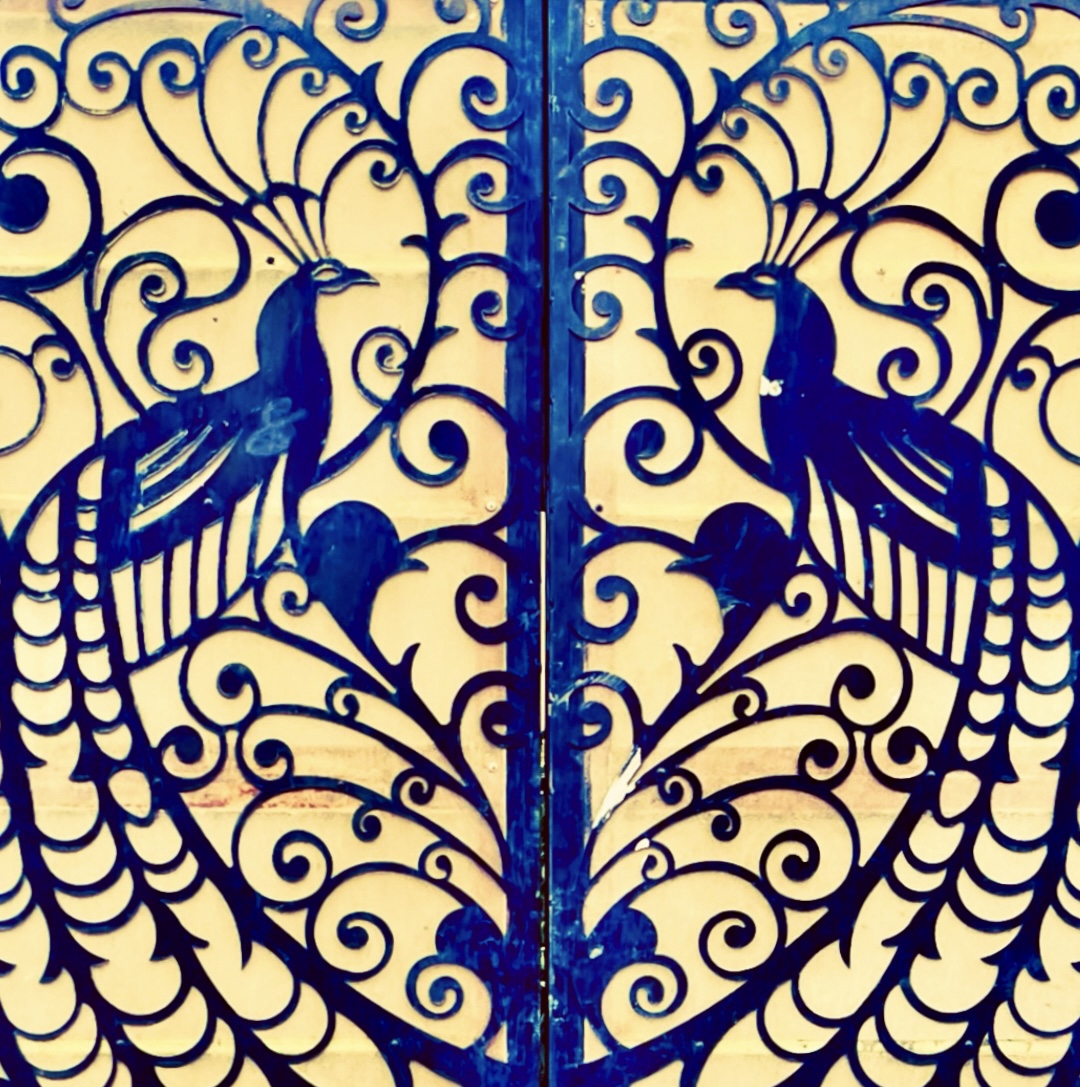
Below, Sudan scenes, pre-war. Folding wafer-thin layers of kisra flatbread at a roadside stall, an elegant house gate in a Khartoum suburb, a sabiil or stand of communal ziirs or drinking water vessels for the passer-by, and fresh mangoes in a Khartoum market.



Listen to Amna Al-Fadl reciting her poem by clicking on the link below:

“أكيد لسة بخير”.. الكاتبة آمنة فضل تهدي السودان قصيدة أمل وسط الألم
A Working Translation
Our Sudan is still Sudan (or all is still well in our land) as long as our fire remains the tuggaaba (the Sufis’ evening campfire) / (providing) pleasing (or entertaining) companionship to our evening amidst recitations of the Quran and grandmother’s words sweeten the early morn / mother’s prayers and supplications and father’s voice / And yes, while the rain still falls and all our months are (fruitful) autumn / (its) clouds enfolding the sky and yes, our Sudan is still Sudan / while villagers are still kind-hearted, souls filled with faith / (who) though sound asleep will rise at night to honour guests / adorning the neighbours’ wall (with a cheerful) bowl of buttermilk (ar-roob) and a handful of dates / And yes, our Sudan is still Sudan (or all is still well in our land) while the moon still rises / and at home the elder of the house is still a tree sheltering children from the heat ( the idea here is the elder also shelters them from the darkness around them) / an intermingling (or blending) of a creative tableau (or canvas) and stories that dwell in the soul (or mind or heart) / engraining (or deep rooting) the long awaited idea (all these aspects of the Sudanese soul that will remain in memory and will endure) and Our Sudan is still Sudan / while the Nile yet flows through it / palm trees swaying over the brows of its banks / while there is still the hoe / and the sound of the lyre, (ar-rabaaba) dwells in our home in early evening (or late afternoon) / and the sound of the marduum dance* (or song) and the cooing of the dove / and the voice of the muezzin awakens our hearts in the early morn / Our Sudan is still Sudan.
* The marduum is a free-form folk dance performed on various occasions, especially on moonlit nights after harvest. It is popular in the Kordofan region. It is both a dance and a song, celebrating virtuous values such as courage, generosity, and chivalry, as well as love.
 Women's literacy in Sudan