

Still Time to See!
Peace by Piece Toub, an Initiative of Waging Peace,
Featured in the Imperial War Museum’s Special Exhibition, Unsilenced: Sexual Violence in Conflict

Above, entrance gallery of the Imperial War Museum, London.
Unsilenced: Sexual Violence in Conflict
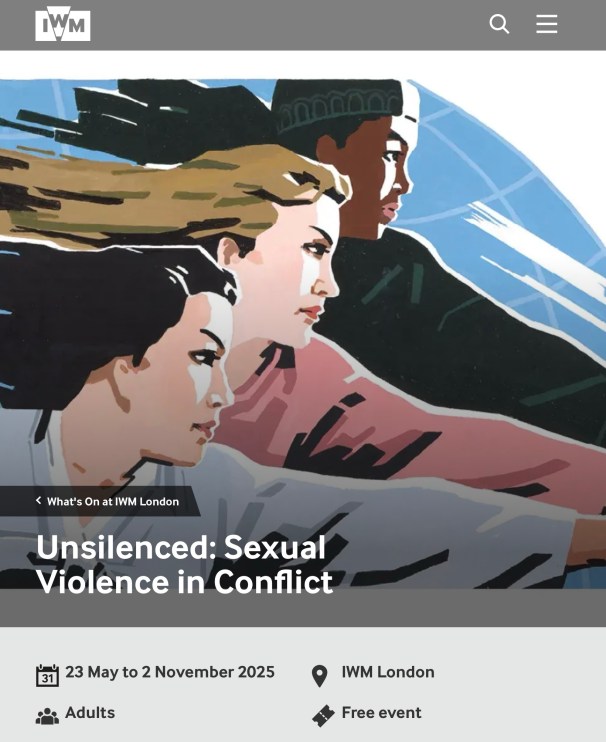
The first major exhibition in the UK dedicated to highlighting sexual violence, human trafficking and the abuse of prisoners of war in conflict, Unsilenced is hosted by the Imperial War Museum London. This wide-ranging and thought-provoking exhibition explores the power dynamics, propaganda and perceptions of gender that underpin sexual exploitation in wartime. It draws on the sexual slavery of both the Comfort Women’s Corps in the Second World War and that of Yazidi victims of ISIS in 2014. It also features case studies of sexual abuse against WWII evacuees, Red Army violence in wartime Berlin and the abuse of prisoners by American forces in Abu Ghraib.

This exhibition has particular relevance for all those who love Sudan and her peoples at this difficult time.
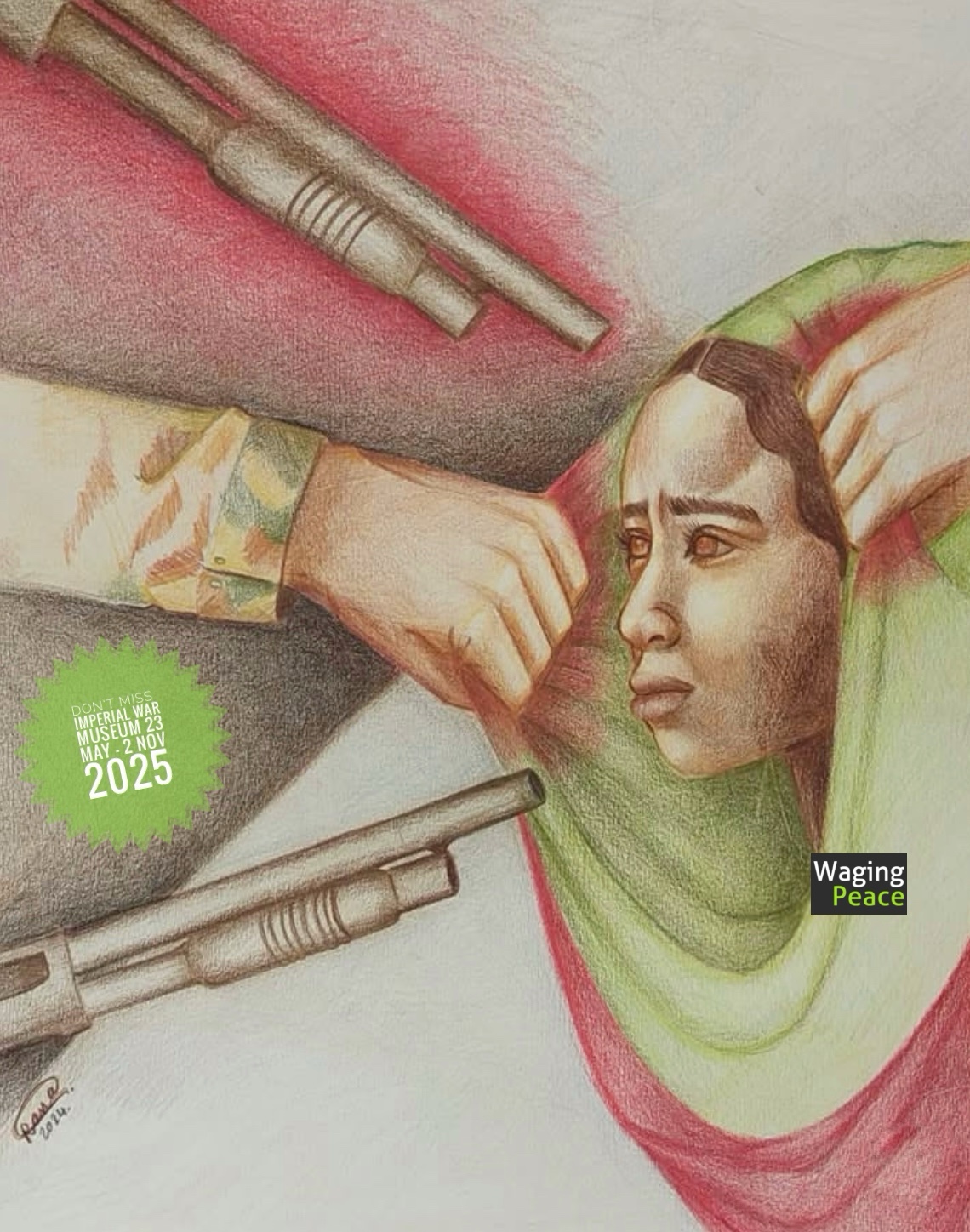
“Sudanese women, no matter their age, deal with a real fear of violence and assault – a fear that’s worse than even the fear of death.” Sudanese artist Rana Altahir speaking on what drove her to make the compelling drawing above left. Right, “I wish I was dead”, by gifted Sudanese artist Mohammad Mustafa, inspired by a tragic survivor’s account of war in Sudan.
See Unsilenced to learn more.
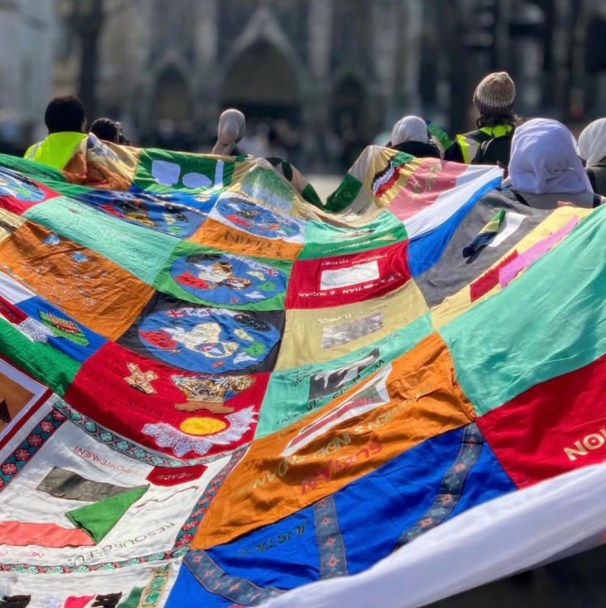
Featured in the exhibition is the beautiful Peace by Piece toub, shown above, testimony to the agency of Sudanese women in peace building. The Peace by Piece toub is an initiative supported by Waging Peace, supporting Sudanese asylum-seekers, refugees, and the wider community to build meaningful lives in the UK. See the remarkable impact of the toub on International Women’s Day last year in Women for Peace in Sudan.
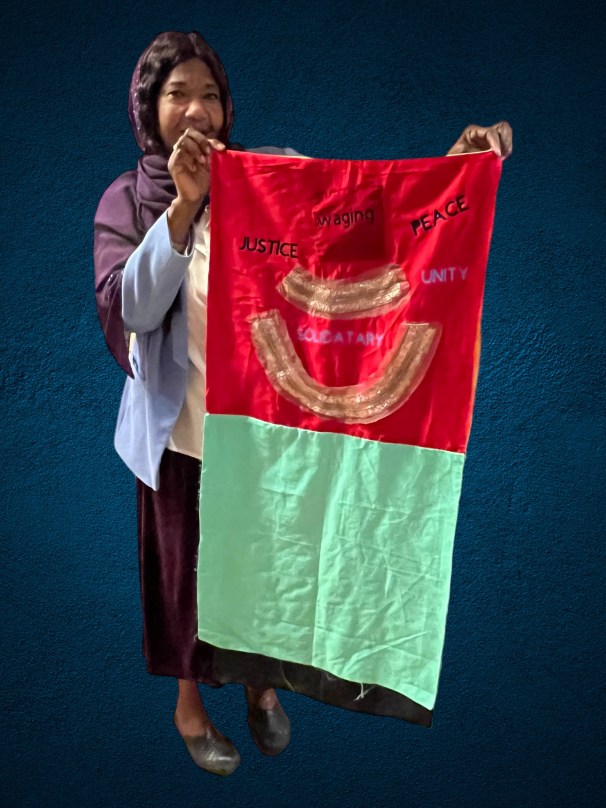
The story behind the Peace Toub is told in Peace by Piece.
Below, details of the Waging Peace / Peace by Piece exhibits at the Imperial War Museum.
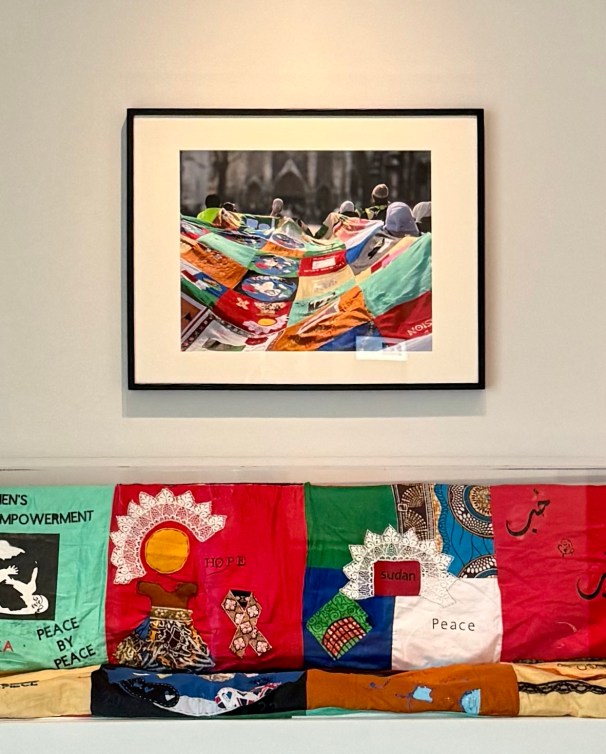
Below, some of the patchwork pieces making up the Peace by Piece toub.

The Imperial War Museum also has a stunning permanent collection of wartime paintings and propaganda, ranging from life in World War I trenches and Stanley Spencer’s depiction of frontline horse-drawn ambulance crews, to the horrors of Abu Ghraib and drone warfare.

 Women's literacy in Sudan