

“As authoritarianism and division rise globally, the 2025 Right Livelihood Laureates are charting a different course: one rooted in collective action, resilience and democracy to create a liveable future for all.” From Right Livelihood, whose annual awards are often referred to as the alternative Nobel. The organization was founded in 1980 following the Nobel Foundation’s rejection of a proposal to create two new prizes to honour individuals committed to advancing social justice and environmental causes, especially highlighting change-makers from the Global South.
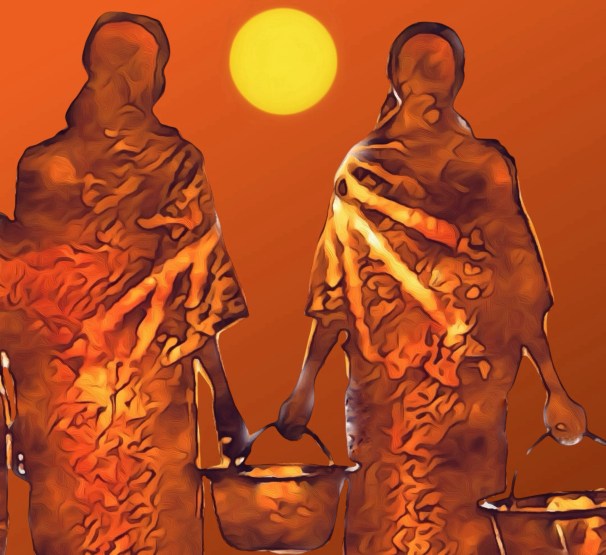
Sudanese Emergency Response Rooms (ERR) are among this month’s Right Livelihood’s 2025 laureates for “building a resilient model of mutual aid amid war and state collapse that sustains millions of people with dignity.” They were also the recipient this September of the Norwegian RAFTO Foundation for Human Rights 2025 RAFTO Prize
Since the outbreak of war in April 2023, ERR have been on the ground; funding, coordinating and participating in local community initiatives to offer food, medical aid, schooling and evacuation routes for countless Sudanese civilians, often at great risk to themselves. Sudan’s Emergency Response Rooms have served Sudanese civil society in a way very few international and established national agencies have been able to in these tragic and perilous times.
The short video below captures something of their vital and inspiring work.
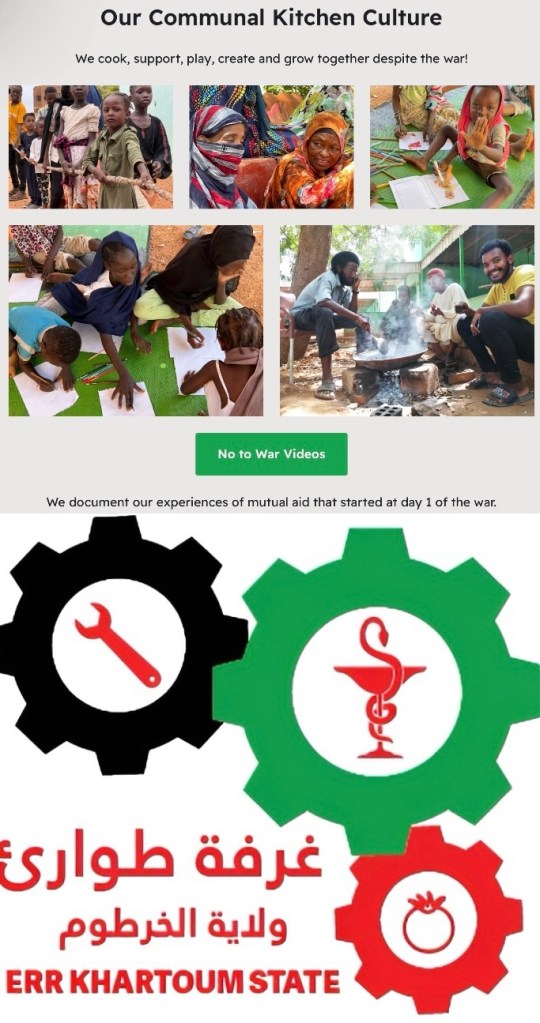
See too Community Kitchens in Action

Below, from Khartoum State Emergency Response Room website.
Below, Right Livelihood’s 2-minute video in English, presented by film maker and activist, Hajooj Kuka on the profound difference the Emergency Response Rooms make.
Background to Sudan’s Emergency Response Rooms
ERRs are an evolution of Resistance Committees (RCs), grassroots neighbourhood networks that began organising civil disobedience in 2013 and played a key role in the 2019 revolution. While RCs were inherently political, the widespread suffering caused by the COVID-19 pandemic and war compelled the movement to embrace a neutral humanitarian approach.
ERRs build on Sudan’s tradition of nafeer — an informal, community-driven mobilisation in which people pool resources, such as cash or labour, to help those in need. Honouring this ethos, ERRs have created a solidarity economy in which communities identify needs, set priorities and act on them together. The movement’s 10,000 volunteers include everyone from farmers and bankers to engineers, teachers and healthcare workers.
Beyond healthcare and education, ERRs have also taken on the enormous challenge of evacuations. In Khartoum in 2023, they evacuated more than 350 families when neighbourhoods turned into frontlines. In 2024 and 2025, they coordinated the evacuation of over 3,000 people from Al Jazeera to a refugee camp, organising journeys by car, bus, animal and boat.
From Right Livelihood.
The work of the Emergency Response Rooms, like that of the Resistance Committees before them, has been subject to obstruction and intimidation; see Targeting volunteers: Lifesavers face cyberwar in Sudan.
.
 Women's literacy in Sudan