

The Sudanese Tabag – A Celebration
A Cultural and Artistic Icon
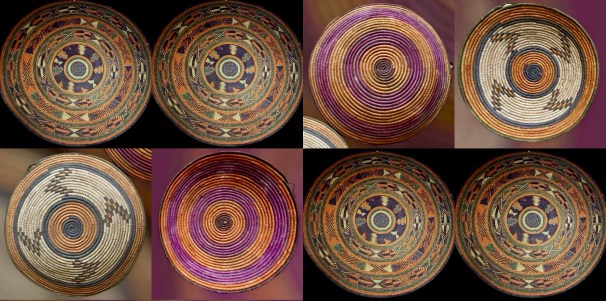
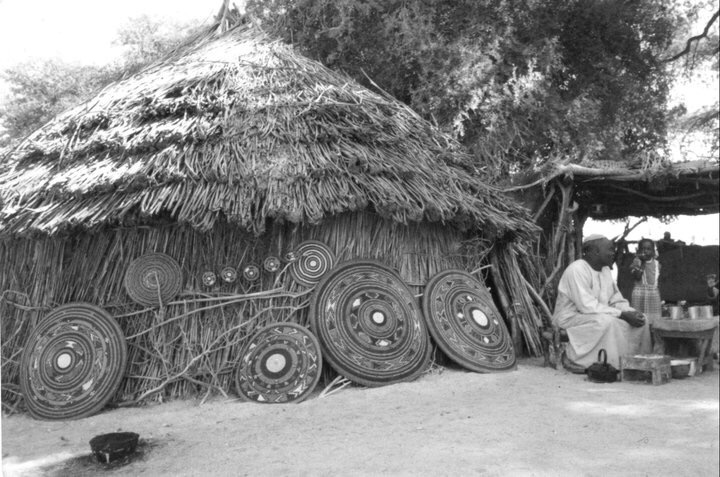
Above, a collage of small, individual woven dish covers or tabags (personal collection) and exquisitely patterned large tabag for covering trays of dishes served at communal events such as weddings, the latter on display at Sudan Ethnographic Museum, Khartoum, pre-war.

Setting the Scene
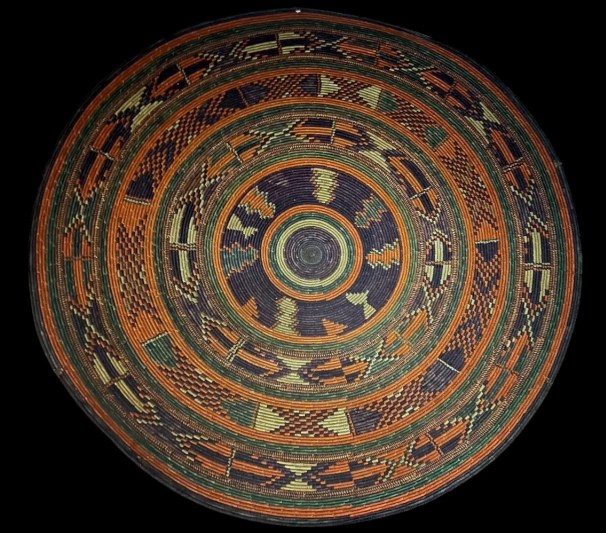
British Museum curator, Dr. Loretta Kilroe, featured below, explains that the highly ornate patterning of tabags like the one above constituted the unique signature of the woman who crafted them – a craft passed down from mother to daughter, enabling the cover to be returned to its rightful owner after the events in which it had been used. The imposing example above may be an example of a 40-day tabag, woven for formal occasions.
This week’s brief post celebrates the rich cultural resonances of the Sudanese tabag. This elegant solution to keeping dishes warm, fresh and free from pests before serving is usually woven from fronds, leaves and fibres of palms such as the doum palm. British colonial observers writing in the late 1940s noted that forms of tabag among the Fur peoples were also used for winnowing grain and collecting flour from the grindstone (Sudan Notes and Records, Volume 29, 0 1948).
The coil-based weaving techniques required demand considerable skill and tabags bearing the finest of vibrant and complex motifs and evenness of weave are often associated with the craftswomen of Darfur; see for example Basket Weaving Darfur and The Art of Tabar: Weaving Tradition in Sudan. The production of tabags constitutes a vital and versatile source of income for women throughout Sudan. See too When Hands Weave the Story of Cities: From Shendi to Darfur, Kordofan and the East

The large tabag is most often associated with joyful communal hospitality such as public Ramadan Iftar gatherings, as in the painting below. Artists, graphic and textile designers, cultural commentators, influencers and young revolutionaries have all tapped into the tabag’s multiple cultural resonances; tabag halos illuminate Sudanese historical and contemporary heroines in profile, tabag sun discs hang over emblematic and ancient landscapes; reassuring touchstones of enduring Sudanese values in times of upheaval.
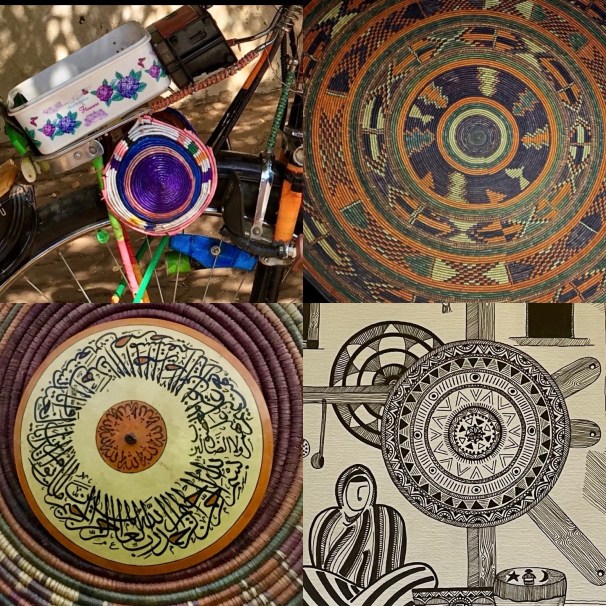
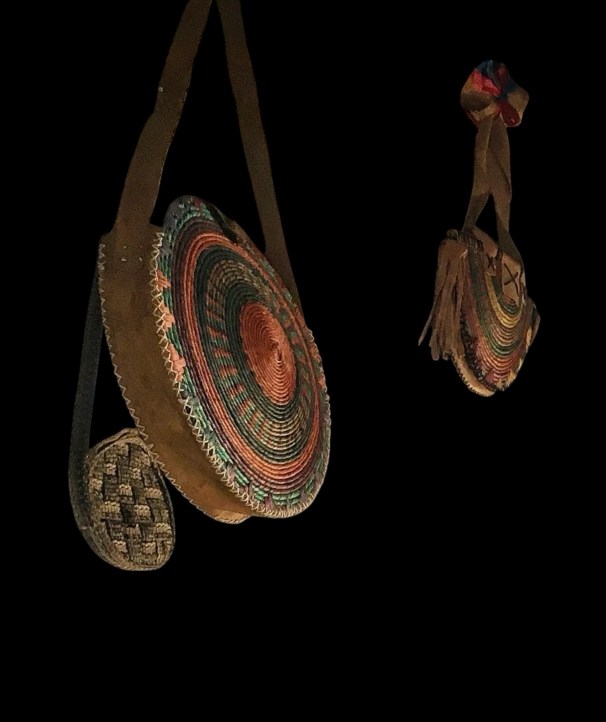
Upper left, finely crafted women’s handbags made from repurposed tabags as part of a women’s literacy income generation project at Women’s Education Literacy, pre-war. Above left, a tabag woven from recycled plastics, again as part of a WEP income generation project. More examples below. See too Training the Trainer- Updated and Towards Economic Empowerment.

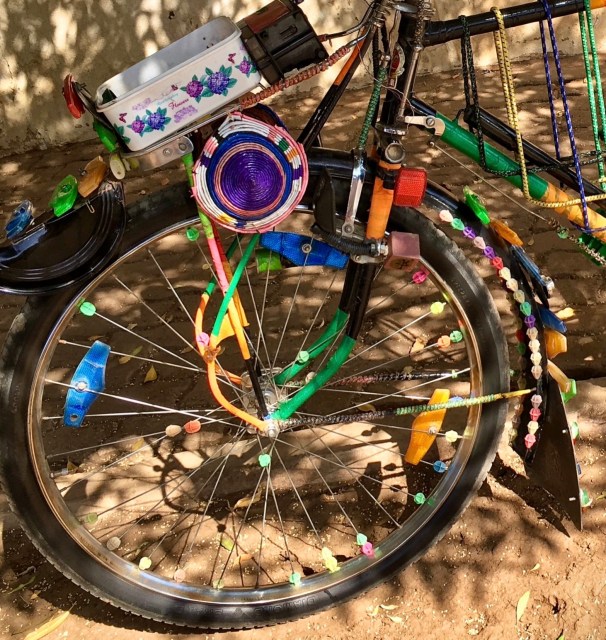
Above right, the tabag motif is celebrated as embellishment in numerous everyday contexts, such as the tuning of this colourful bicycle seen in Khartoum in 2022.
The tabag has a visual language all its own: “Certain geometric shapes and motifs are commonly recognized across Sudan and may carry specific meanings. For instance, diamond patterns symbolize protection, while zigzag designs represent life’s continuity. These patterns serve as a “woven language,” speaking to the cultural, social, and spiritual values of the community.”
The Cultural and Communicative Role of the tabag
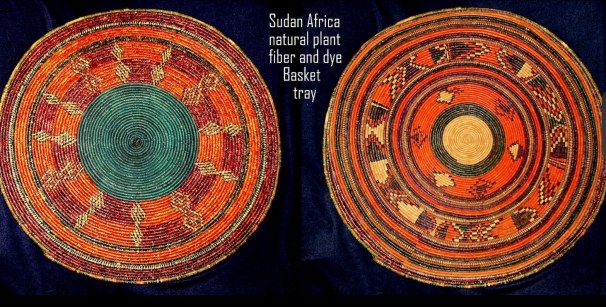
Photo above, Wikicommons, King Muh.
A Glimpse of History – The Tabag and The Sultan Ali Dinar
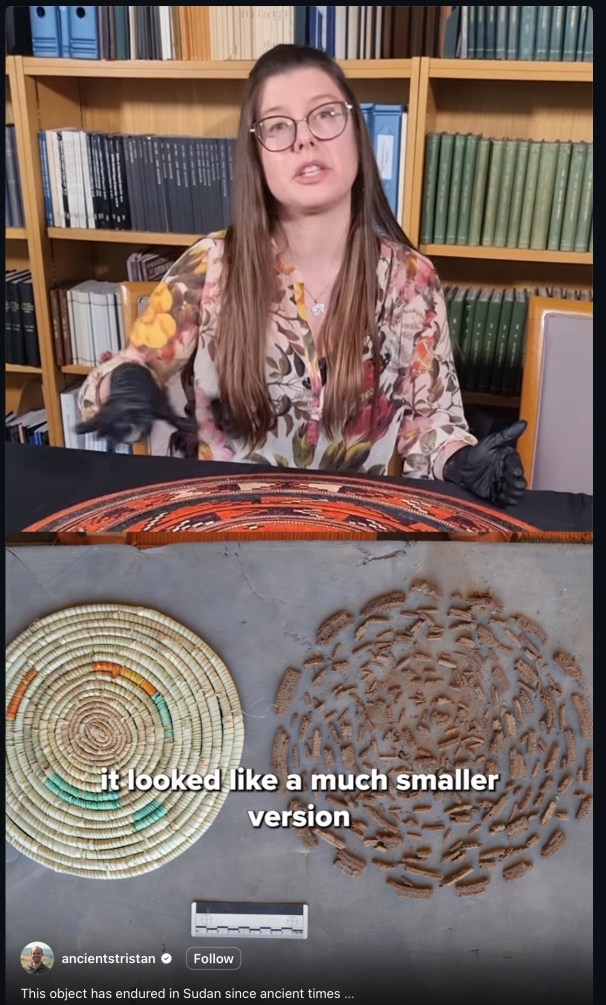
Dr. Loretta Kilroe on Instagram
Curator at the British Museum, Dr. Loretta Kilroe, speaking in the context of the museum’s 2024-5 “Ancient Sudan: enduring heritage” touring exhibition, discusses an exquisite example of a modern Darfuri 40-day tabag in the instagram link above. She also explains that during excavations she found the remains of a smaller version preserved in a jar dating back to the Egyptian New Kingdom, indicating that the tabag as been used in Sudan for at least three thousand years.
Safeguarding Sudan’s Living Heritage offers a fascinating insight into more recent use of the tabag, explaining that it has historically been “used to communicate messages to local leaders, including figures like the Sultan Ali Dinar of Darfur for instance. Artisans would create specific patterns and colour schemes in the tabag to convey messages of respect, loyalty, or requests to the Sultan. For example, certain geometric shapes might be woven to symbolize allegiance to Ali Dinar, while particular colour arrangements might indicate requests for protection or blessings.” This elegant craftsmanship, the article goes on to say underscores “the tabag’s role as both a practical and communication tool in the context of Sudanese society.” The Cultural and Communicative Role of the tabag.
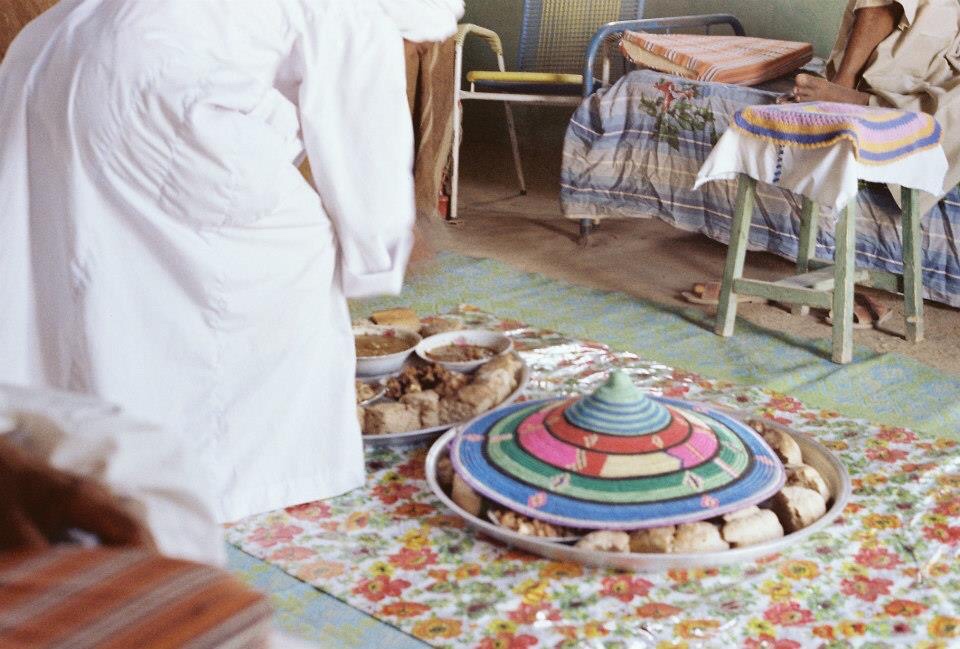
Above, traditional food covers and decorative tabaga seen 1980’s. Photos courtesy of Sudan English Teachers FB Group
The artistic re-interpretations of the tabag in contemporary Sudan by young creatives and idealists may perhaps be read as yet another layer of the tabag’s textuality, bearing new as well as timeless messages.
The Tabag in Art
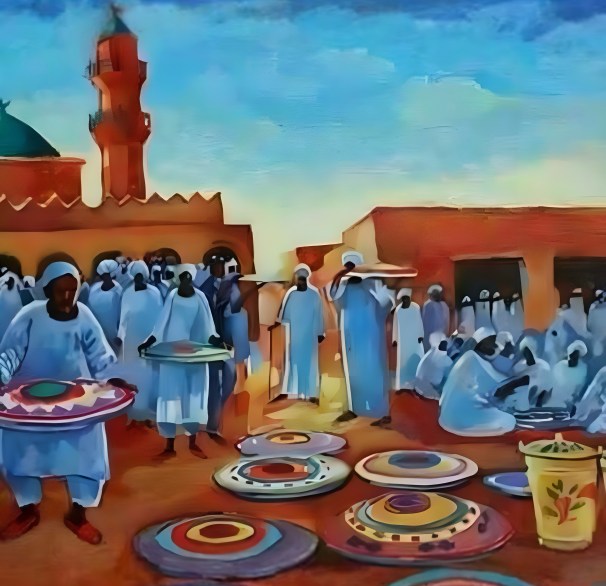
Above, a vibrant depiction of Ramadan fast breaking by Mohammad Fadul, Faculty of Fine and Applied Art, 1994.
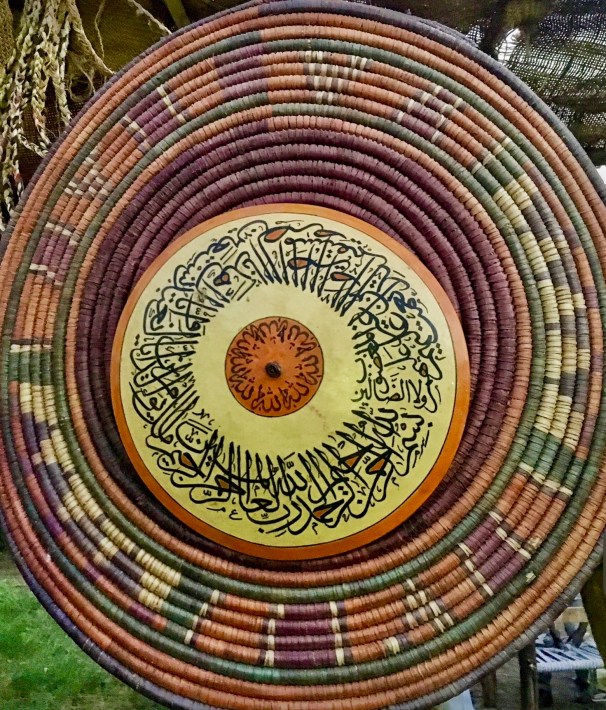
Above, Below, a beautiful example of a Darfuri tabag embellished with finely executed Quranic calligraphy, seen at the Burri Botanical Gardens Flower Festival, 2019, exemplifying the spiritual, artistic and cultural resonances of the tabag
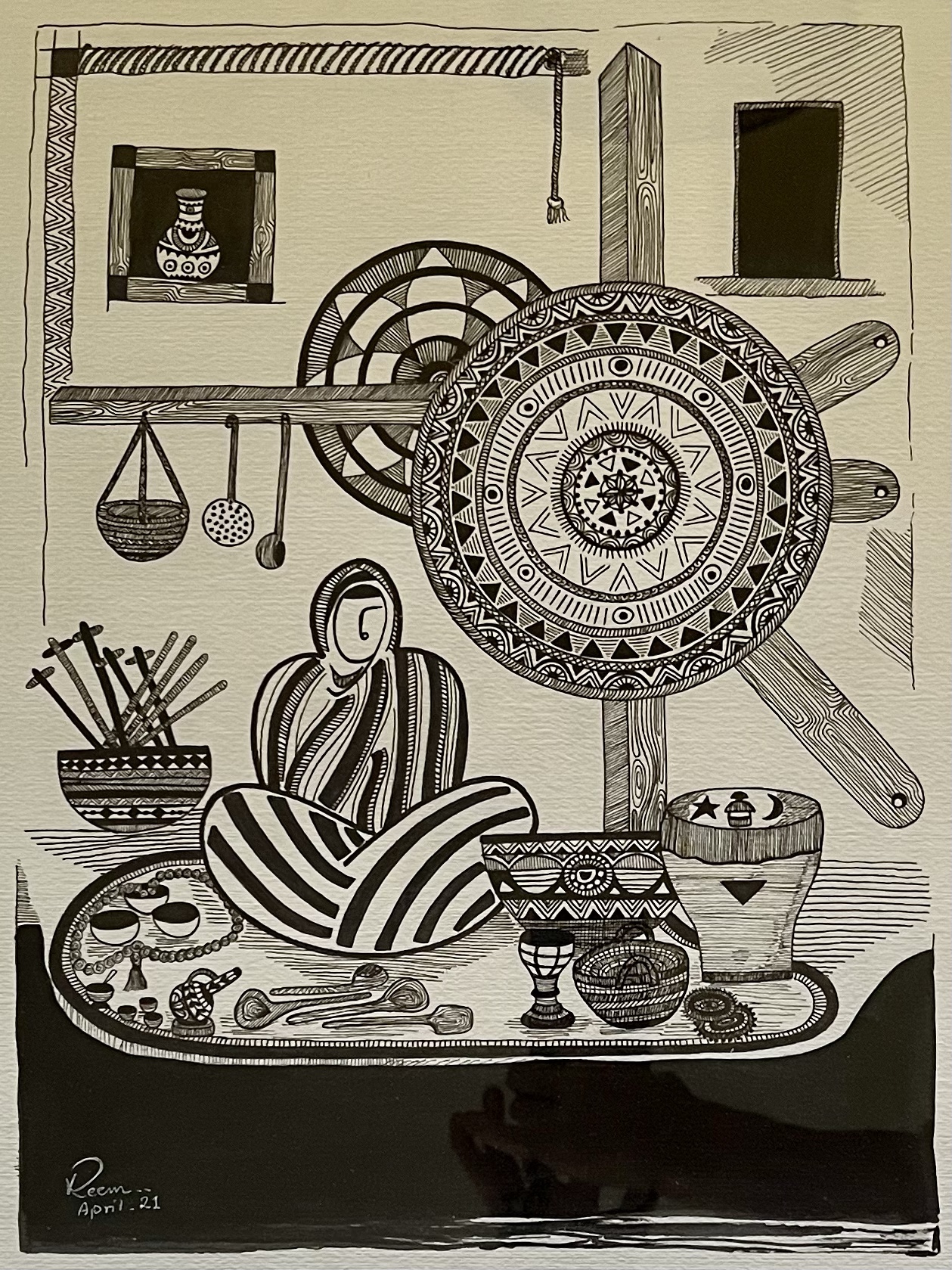
Above, the tabag as resonant centre of the Sudanese home by Reem Mutasim Bashir. See more of this talented young artist’s work in Icons of the Sudanese Home.
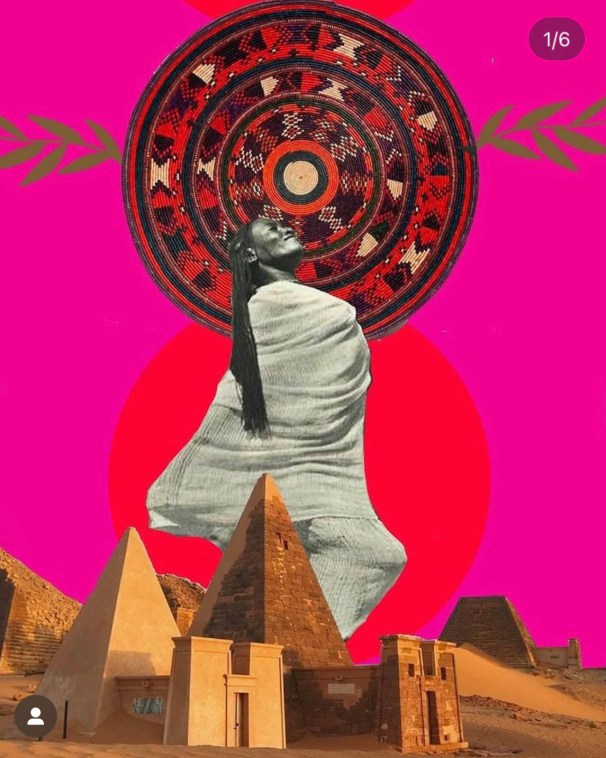
Architect and visual artist, Amanda Abdel Aziz Albirgdar has drawn on the symbolism of the tabag in many of her striking collages. See more in eyes.on.sudan.
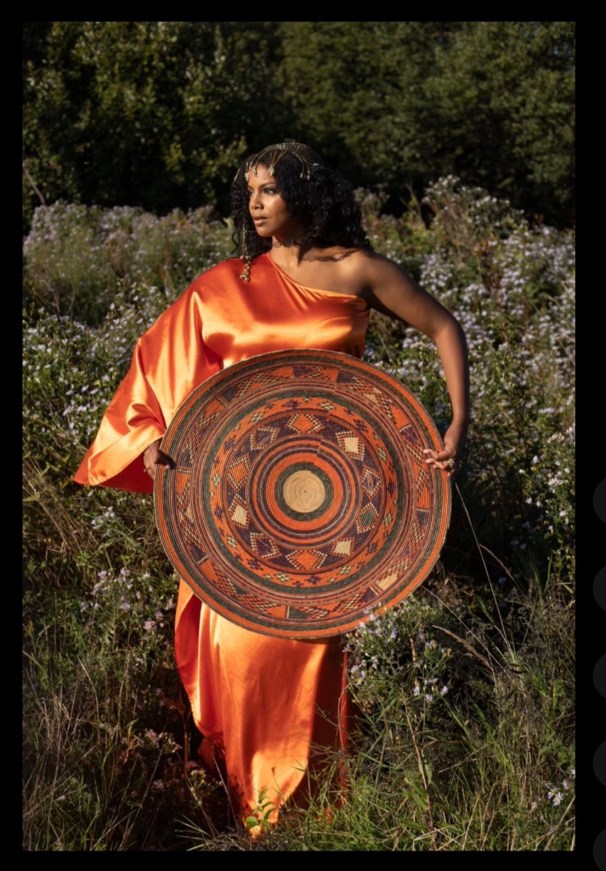
Above, combining fashion and cultural emblem; Asya Satti’s 7 ways to wear the tabag.
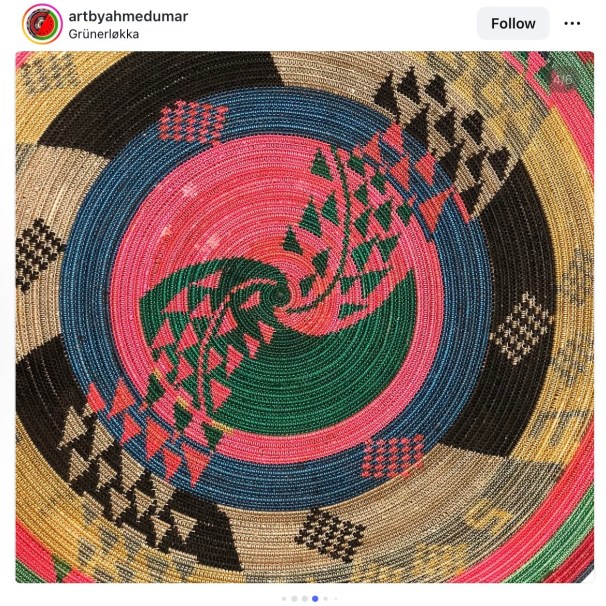
Above, another exquisite contemporary take on the tabag by artist Ahmed Umar.
 Women's literacy in Sudan