

Training the Literacy Trainer
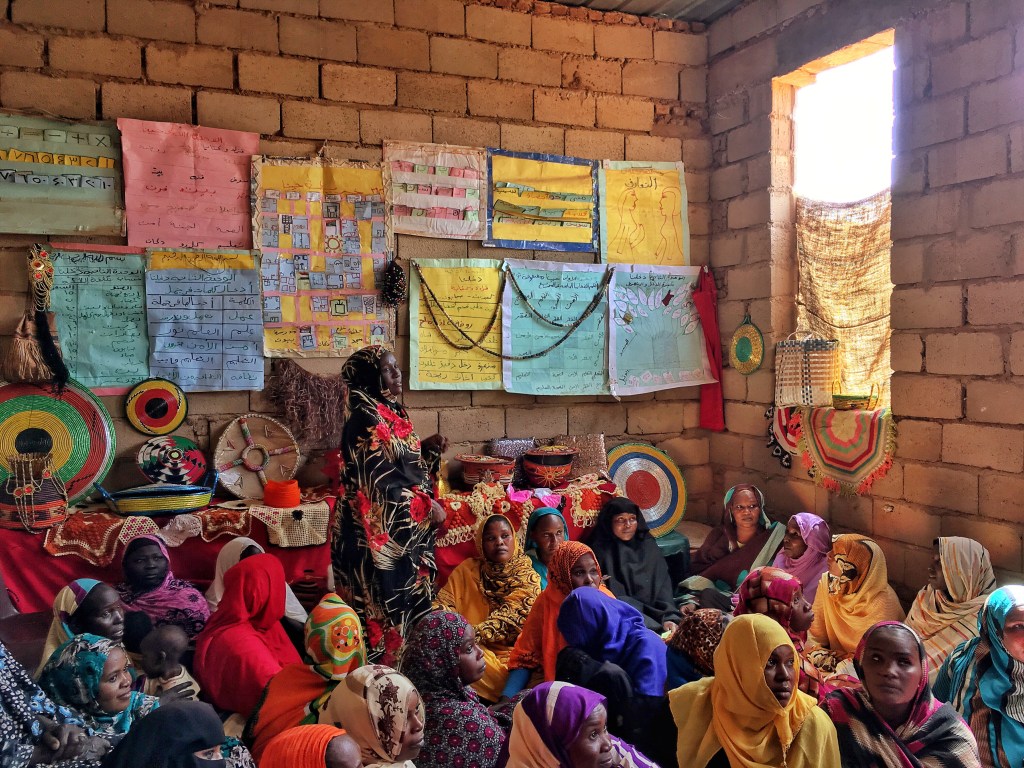
Title illustration and above, one of our REFLECT literacy sessions in the outskirts of Khartoum.
Training the Literacy Trainer
The Gingerbread Tree and Literacy Community – Change in the Making – The Literacy Trainers’ Role
Glimpses into Training; Dialogue, Role Play and Song
Setting the Scene

Above, the Doum Palm, also known as the Gingerbread Tree.

“You are illiterate if you can speak all languages but cannot speak to a tree” – a quote from Abdel Aziz Baraka Sakin, recorded in Kurmuk, April, 2011, reproduced by Eniko Nagy, in Sand in my Eyes, pp 419, 773

Above left, income and expenditure tree diagram, widely used by literacy trainers – from REFLECT Training of Trainers (TOT), Guidelines for Practitioners; right, literacy workers preparing a tree diagram poster exploring the relationship between behavior and health.
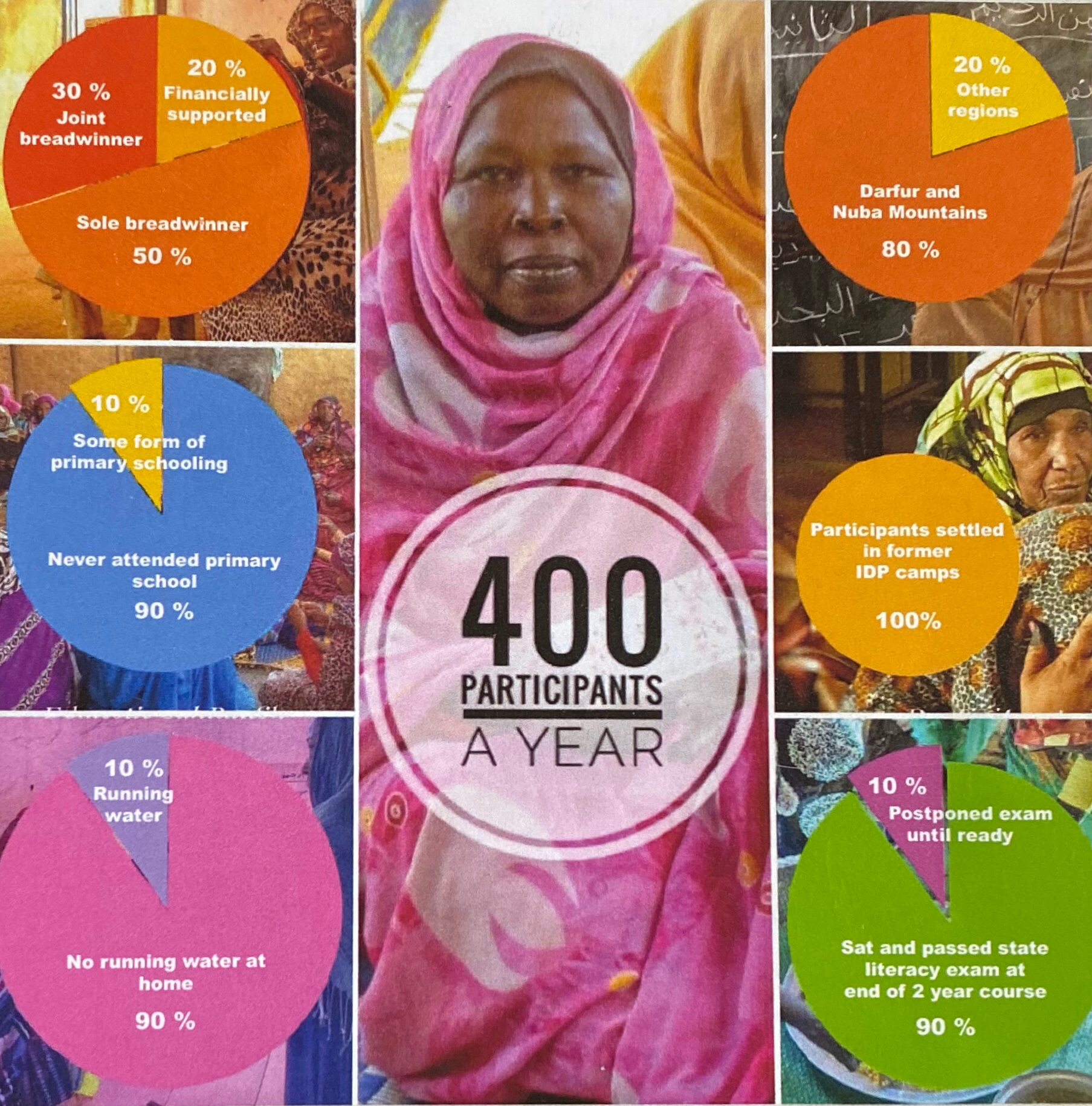
This is a post for the women’s literacy programmes undertaken by Women’s Education Partnership. See At a Glance for more on our scale and reach and Literacy Changes Lives. This post was first published in 2018. Sadly, our literacy programme remains suspended while the war continues but the post remains a tribute to the inspiring work of our literacy trainers and their participants.
All photographs of WEP’s literacy work in this blog are copyright Imogen Thurbon.


The Gingerbread Tree and Literacy
As our minibus juddered its way through the maze of low huts straddling the edges of Jebel Awlia, the driver strained to hear our coordinator as she shouted directions over the rattle and wheeze of the engine. After several wrong turns, we finally came to a diesel-belching halt in a small clearing. As we clambered out of the bus, sweating and caked in dust, I saw a young boy, barefoot and solemn under the merciless midday sky. He was clutching a small tin bowl of what appeared to be gleaning ovals of polished wood. It took me a moment to realize that what he held out to us in greeting was doum fruit. How far, I wondered, had he walked to find the fruit in this bare-boned, treeless wilderness.
The doum fruit comes from a palm famed in Sudan for its ability to withstand severe drought. But to the villagers who rest under its welcome shade or who cultivate its fruit, it is also a source of fibre for baskets and fabric, timber for homes and fires; buttons and beads made from the vegetable ivory of its kernel and even medicines derived from its pulp and rind for treating high blood pressure, bilharzia and conjunctivitis.


Tayeb Salih’s short story, The Doum Tree of Wad Hamed, is both an elegy to the spiritual solace the villagers of Wad Hamed find under its cooling shade and to the complex and tense interplay of the traditional and the modern, the pull of the urban and the challenges of post-colonial identity. Jebal Awlia might not have doum palms but this settlement with no running water, electricity or basic sanitation still has much in common with Wad Hamed:
“No doubt, my son, you read the papers daily, listen to the radio, and go to the cinema once or twice a week. should you been ill you have the right to be treated in hospital, and if you have a son, he is entitled to receive education at school. I know, my son, that you hate dark streets and like to see electric light shining out in the dark ….. the asphalted roads of the towns…. We have none of this – we are people who live on what God sees fit to give us.” (Tayeb Salih, The Doum Tree of Wad Hamed)

Above, Tayeb Salih’s The Wedding Of Zein, A Handful of Dates and The Doum Tree of Wad Hamed, first published in African Writers Series 1969.

Much of the dramatic tension of Salih’s work comes for the deep unease felt by the villagers of Wad Hamed when faced with changes they fear will mean the cutting down of the village doum tree and the removal of the sacred tomb beneath. And although the women attending the literacy circle here in Jebel Awlia actively seek to bring about change through local health, sanitation and disease control campaigns, their literacy workers face the same stresses and tensions inherent to their task of marrying traditional customs, beliefs and practices with more urban approaches to health, agriculture and education. At the end of Salih’s short story, it is suggested that –
“There will not be the least necessity for cutting down the doum tree. There is not the slightest reason for the tomb to be removed. What all these people have overlooked is that there’s plenty of room for all these things: the doom tree, the tomb, the water-pump, and the steamer’s stopping-place.” p 19
This same weaving together of the traditional and the new, the urban and rural is one of the most challenging aspects of our literacy trainers’ work.
Above right, illustration to The Doum Tree of Wad Hamed by Ibrahim Al-Salahi.
For more on this emblematic palm and its fruit, see The Doum Tree’s Blessings
Interested in supporting our work? Visit Women’s Education Partnership
Community Change in the Making – The Literacy Trainers’ Role

In one of the literacy sessions I attended in Jebel Awlia, an animated discussion was already in full swing when we arrived. While participants shouted out their suggestions, advice and experience, the young woman standing by the board struggled to keep up as she tried to get all their ideas down in writing. They were thrashing out the practicalities of starting a small communally-owned allotment to grow tomatoes and onions and other staples in an area where a walk to the nearest market took hours.

As the discussion developed, they considered sowing seasons and harvesting schedules, land-leasing, tools and equipment, irrigation, which participants’ skills could best be used, labour rotation; whether to use fertilizers, who would benefit from the project, how to share the produce and what to do if the crops failed. All the while, the literacy trainer listened intently, occasionally interrupting to ask a question or check a concept.

This is, of course, only the first stage in the gestation of a still very fragile project and one which could fall prey to any number of obstacles en route but seeing the determination and careful analytical approach of the women here, I feel confident this project will flourish. WEP will follow its course carefully, standing back while the women manage the details, stepping in to offer guidance, expert input and funding only when the women have proved its viability and creatively overcome teething problems themselves. There may not be doum fruit but the Jebal Awlia settlement might one day have fields of tomatoes and onions. See more on Jebel Awlia in Literacy Circles in Action
As the project evolves, the literacy trainer will ask her circle to generate schemata such as the ones pictured below and while doing so will focus on the key written language needed. Later, if land needs to be leased from the local authority, she will bring in official forms and other documents they may need to understand as study materials. A journal will be kept of each stage of the project and reports presented by the women in the circle.

Agricultural Calendar and Local Agricultural Resources Map, used in Literacy Workers’ Training, from Training of Trainers (TOT), Guidelines for Practitioners

Discussing local resources and facilities in Jebel Awlia literacy circle.
The Role of Dynamic Dialogue

Behind this project lie the multiple and often unsung competences of the literacy trainer who often works alone and travels great distances in extreme temperatures to reach the circles. Expected to maintain the longterm motivation of her circle, she must also monitor the progress of each of her 25+ participants and juggle the needs of differing age groups and literacy levels within her circle; visit and support them through personal and family crises and provide access to professional health and legal advice too. Often she has to struggle to maintain a sense of continuity among the circle as family, health and economic pressures take their toll on punctuality an attendance.
One of those unsung competences is her ability to generate constructive dialogue. This is no easy task, as REFLECT training experts emphasize.
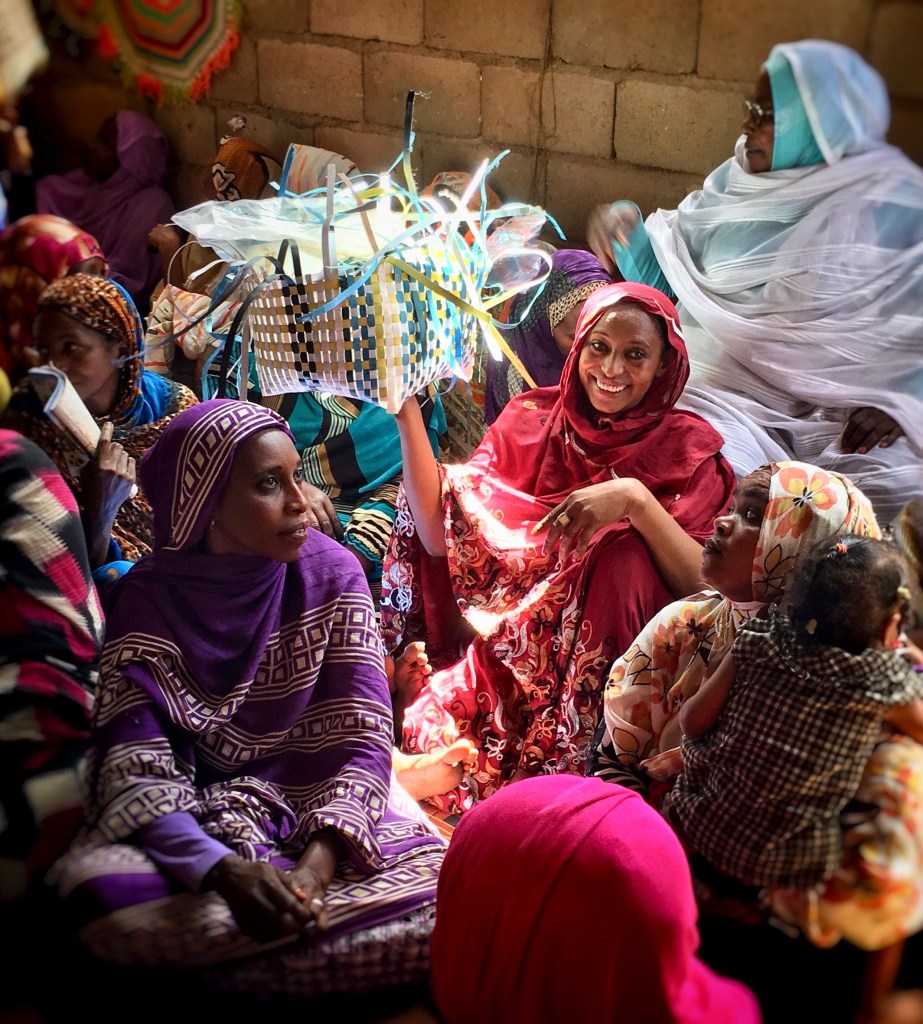
The discussion I witnessed was the result of hours of effort by the trainer, working to overcome reticence, both natural and culturally induced, lack of confidence in one’s own knowledge and life experience, often borne out of early and perhaps unhappy exposure to more disciplinarian approaches to education, shyness and fear. In many ways the ability to generate real dialogue is predicated on evolving new understanding of power and the right to women’s public voice – more on that in my next post. And dynamic dialogue also flows from the honing of intensive role playing skills.
Once the trainer has mastered the art of constructive dialogue, there are yet more roles she must come to grips with if she is to become a competent community literacy worker. Among them, being coach, guide, learning environment architect, critical analyst, role model, mentor and evaluator.
Dr Above left, Dr. Leila Bashir with literacy workers at Women’s Education Partnership offices, Khartoum. Right, basket making for income generation.

Above, some of the challenges involved in generating real dialogue; REFLECT Mother Manual.
Glimpses into Training – Songs, Dialogue and Role Play
Although time and funds are limited, Women’s Education Partnership tries to bring trainers together at least twice a year to refresh and further develop their REFLECT literacy teaching skills. Central to training the trainers is the development of dialogue and role play techniques.
The work of the training sessions is always punctuated by song. Just before starting on role plays to stimulate discussion on small income projects and waste clearance initiatives, some of our literacy workers broke into this wonderful song: I am Sudanese, I am African –
Our audio file ana-sudaani-1.m4a
See a recent video of this beloved anthem with lyrics transcribed and annotated in – I am African I am Sudanese

More on songs, dance and poetry in a later post.
The role play below was put together by our literacy workers in order to explore how a biscuit making cooperative venture suggested by one of their circles could be developed. The role play opens with a mother explaining that her son is ill with stomach pains and that she feels sad that she can’t afford to buy him the more easily digestible biscuits he asks her for. The neighbours discuss how they can pool resources to bake their own biscuits and other cakes to be shared among the community and sold for extra income in the market.
Contact me for permission to view the trainers’ role play video.
Our audio file of the role-play biscuit-cooperative-1.m4a
Role Play Transcript


Arabic transcript kindly provided by Muna Zaki. English translation available on request.
Scenes from our training program for literacy workers


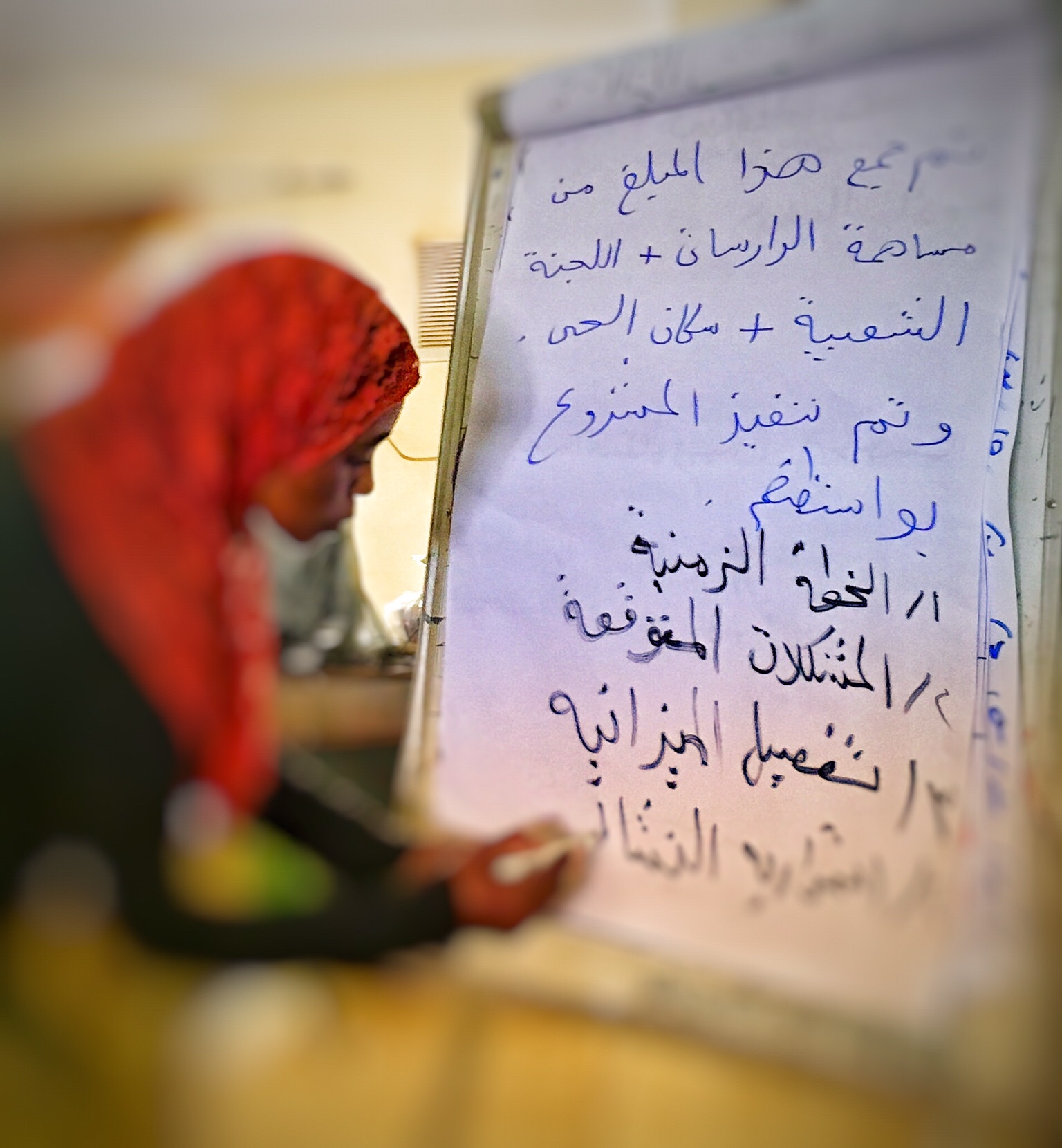


Showing trainers preparing a session on a cooperative soap sales project, breaking down costs and profits, a trainer explaining stages in a local rubbish clearing; a trainer listing the equipment and materials needed for rubbish clearing, a literacy participant practising spelling of water and diseases after a dialogue on local water quality, and trainers testing out a spelling quiz.
Interested in supporting our work? Visit Women’s Education Partnership
 Women's literacy in Sudan