

The Eternal Dance
Glimpses of the Dhikr / Zikr, Hamid Al-Nil, Omdurman
“We are as the flute, and the music in us is from thee; we are as the mountains and the echo in us is from thee.” (Rumi)
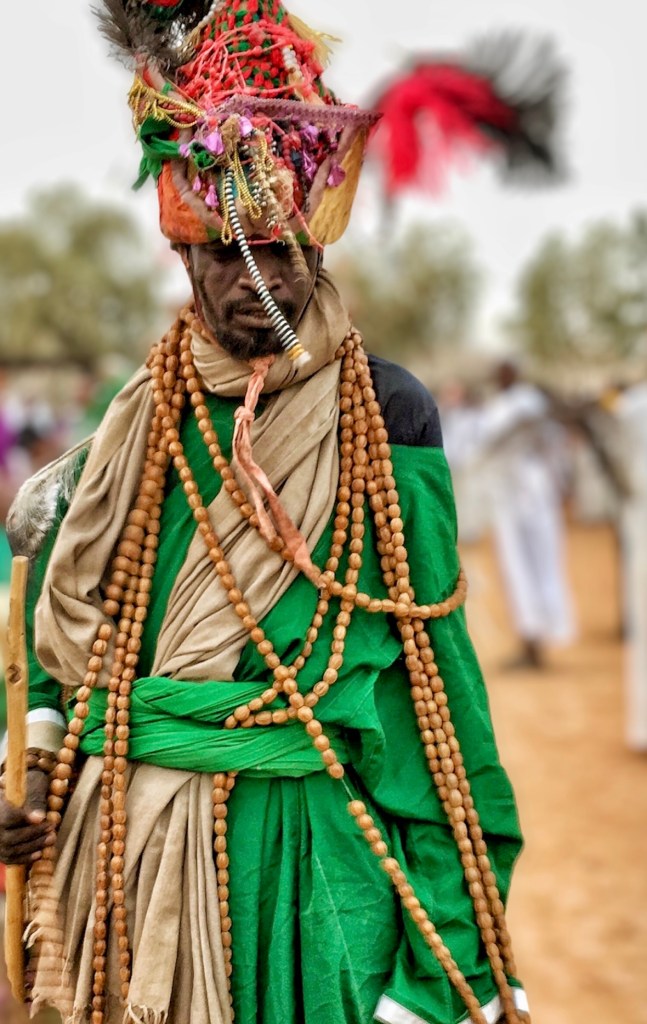
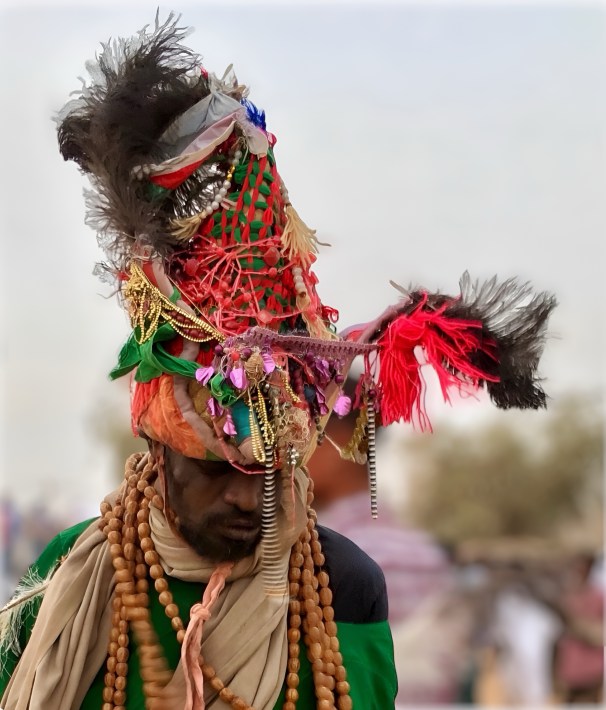
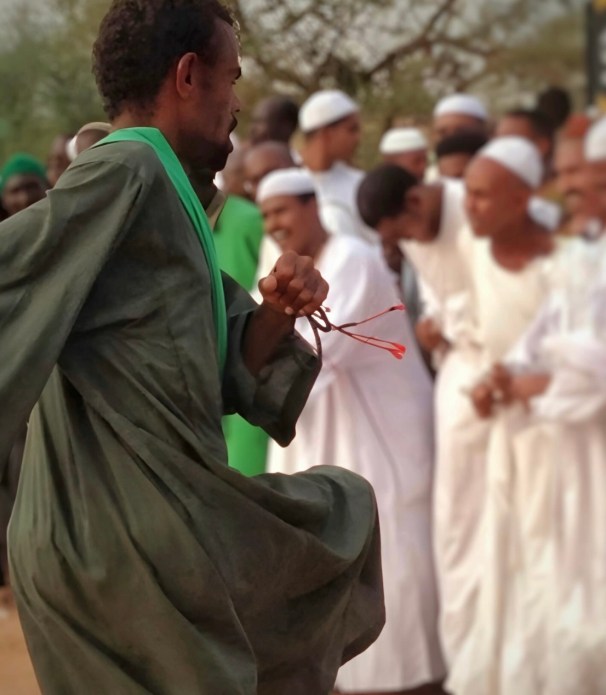
Above, a Sudanese Sufi at the dhikr / zikr celebrated every Friday evening at the shrine of Hamid El-Nil, Omdurman. Draped around his neck, row upon row of alfiyya prayer beads. Below, a worshipper or dhaakir (the rememberer) spinning in a trance-like state known as jadhb; attraction to God’s love.
Discover poetry evoking the spiritual and sensory intensity of the dhikr in Poet of Sudan’s Soul Mohammad Al-Mahdi Al-Majdhūb
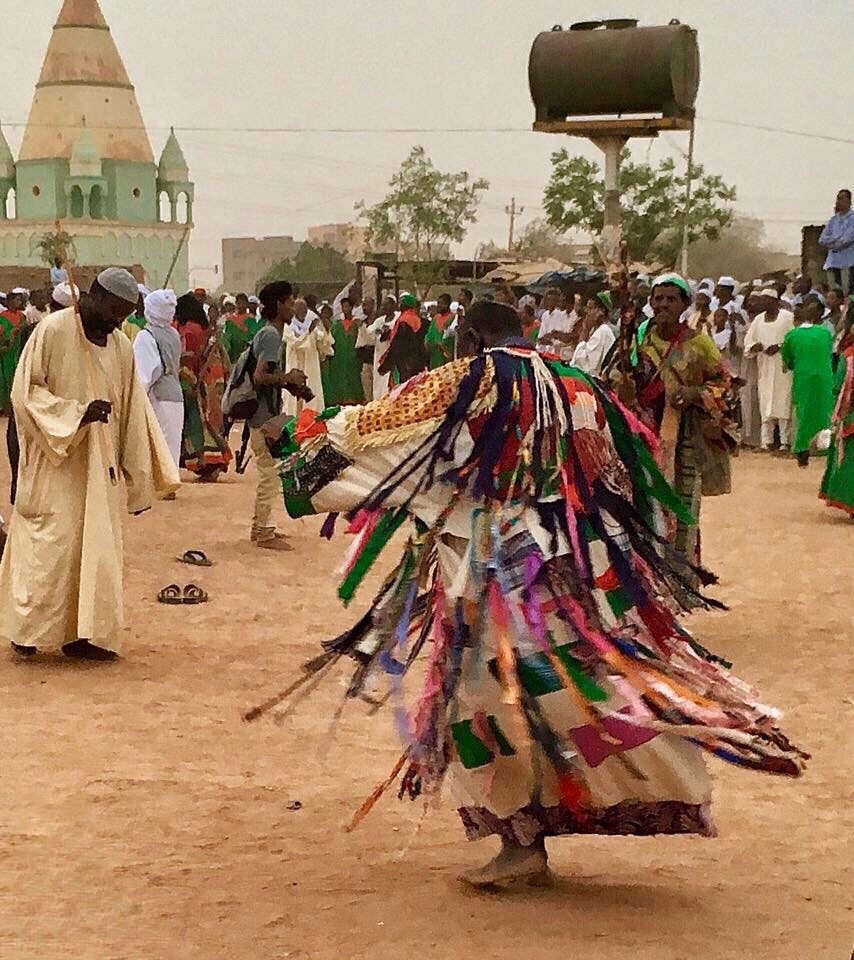
Al fanaa’ – the Sufi concept of the passing away from the self; “to die before one dies.” Awareness of the intrinsic unity (tawhid) between God and all that exists, including the individual’s mind.
taSawwuf – mysticism, literally “putting on wool”. As early Islamic asceticism moved towards mysticism, in the 11th century the woolen garments of early Sufis fell out of fashion in favor of the patched coat and strips of fabric, known as kharqa or daliq (Islam in the Sudan, J.S. Trimingham, The Religious Orders, p187-241).

El-duniya maa daayima – The World is Impermanent, a Sudanese proverb recorded by Salwa Ahmed

This post was first published in 2018. Every year since then, I have looked forward to attending the Hamid Al-Nil dhikr in Omdurman whenever I am in Khartoum. The dhikr / zikr is one of most moving and life-affirming of Sudan’s many celebrations of identity and faith. One day, people will gather to celebrate the zikr once again in a Sudan at peace.
Glimpses of the Dhikr / Zikr, Hamid Al-Nil, Omdurman
Background to the Dhikr, Hamid Al-Nil
Photographic and Video Sketches

Background to the Dhikr, Hamid Al-Nil

The Dhikr / Zikr, The Qādiriyya Order and Sacred Colours
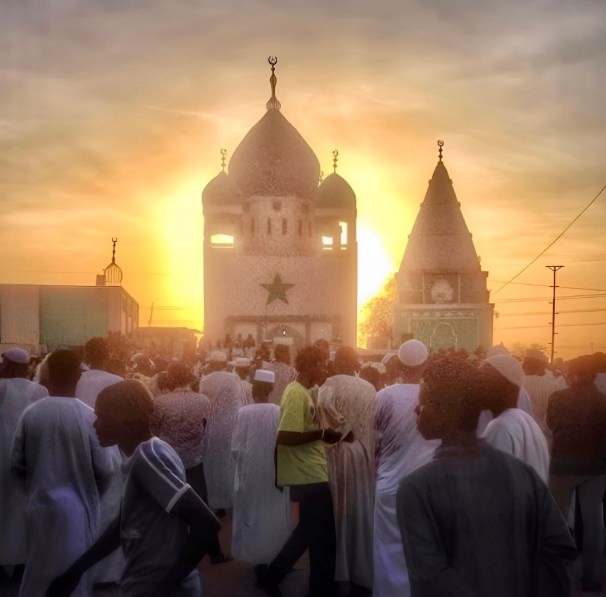
Every Friday evening just before sunset, the Sufis of Khartoum’s Qādiriyya order gather at the tomb of their 19-century founder, Sheikh Hamed al-Nil, in Omdurman. They come to celebrate what is known as Dhikr or “remembrance” – the worshipping of God through the constant repetition of His name and attributes. While dhikr in Sufism takes many forms, including the silent worship of the heart, at Hamid al-Nil, the ceremony involves a vibrant physical and emotional expression of faith which visitors are welcomed into with openness and warmth. It is an outpouring of joyful reverence even, or perhaps especially, when the dhikr coincides with the funeral of a member of the order (see below). A stone’s throw from this heady intensity, the cemetery of Hamid al-Nil waits austerely by.
See more on Sudanese Sufism in Incense (بخور bakhūr) in Sudan, Unfolding Blessings and A Thousand Prayers

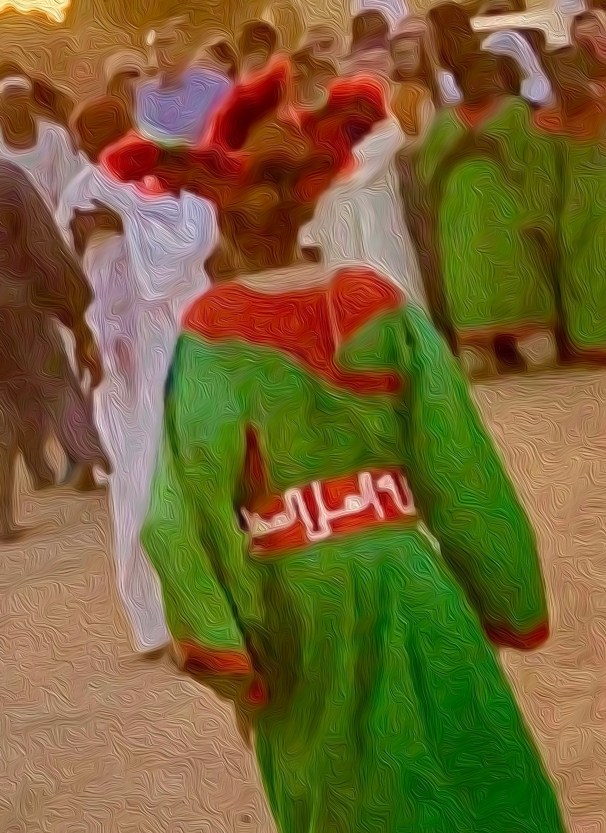
The Qādiriyya order, one of the largest of the many Sufi orders in Sudan, was founded by Abd al- Qādir al Jilāni (died AD 1166, Baghdad). Its decentralized nature, diversity of customs and ethos of tolerance allow its many schools throughout the Islamic world to adopt their own interpretations of teachings and rituals. The symbol of the order is a rose of red and green cloth upon a 6-pointed star.
Writing his Islam in Sudan in the 1940s, J.S. Trimingham noted that each Sudanese Sufi order or Tarīqa, possesses a number of taqīyyas. “These are not the great organizations associated with this word in other countries, but simply a place for the accommodation of dervishes and travellers. They all possess zāwiyas, which is the term used for any small privately-owned mosque, in which the dhikrs are performed. The main one is known as umm zāwiya where the shaikh of the order presides. These act as a kind of brotherhood centre or religious club for ordinary members; their attitude to them being much more intimate and personal than to the ordinary mosques which they enter, if at all, only for the Friday noonday prayer. The khalwa should also be mentioned; used in reference to a dervish it is equivalent to being ‘in retreat’, but any place where one can be alone can be called a khalwa”. (Trimingham, Islam in the Sudan).
Below, Trimingham’s account of the origin of the Qādiriyya order:

“It is claimed that the ‘fire of `Abd al-Qādir’ was first lit in the Sudan by Tāj ad-Dīn al- Bahārī in the second half of the tenth century A-H., ‘by leave of the Prophet of God and Shaikh `Abd al-Qādir al-Jīlānī’. The suggestion that he should visit the Sudan actually came from Dā `ūd b. `Abd al-Jālīl `Muhammad (c.1550), a wealthy slave-trader of Arbajī, who met him whilst on pilgrimage ‘at the beginning of the reign of Shaikh `Ajīb’ (d.c. 1604) and became his patron, and with whom he lived at Wādī Sha` īr. He only remained in the Sudan seven years, but during that time, like all Muslim missionaries, he married into the people, initiated many into the ‘Way’, and left behind khalifas in different areas qualified to admit others.” (Origins of the Qādiriyya Order in Sudan, Islam in the Sudan, J.S.Trimingham, p 218).
Read more about the order and its current spiritual leader in Khartoum in AlJazeera Interactive A Sufi in Sudan
Below, the tombs of Sudanese Sufi Sheikhs in Old Dongola cemetery.

See more in The Sudanese Gubba (Qubba), Darīh (DariiH) and Bayān

“The way worshippers dress is also a sign of their standing within the Sufi order. ‘This jalabiya and the misbaha [prayer beads] that I wear define my rank in the dhikr and the tariqa,’ one woman interviewed in The Guardian’s The psychedelic world of Sudan’s Sufis – in pictures explains.
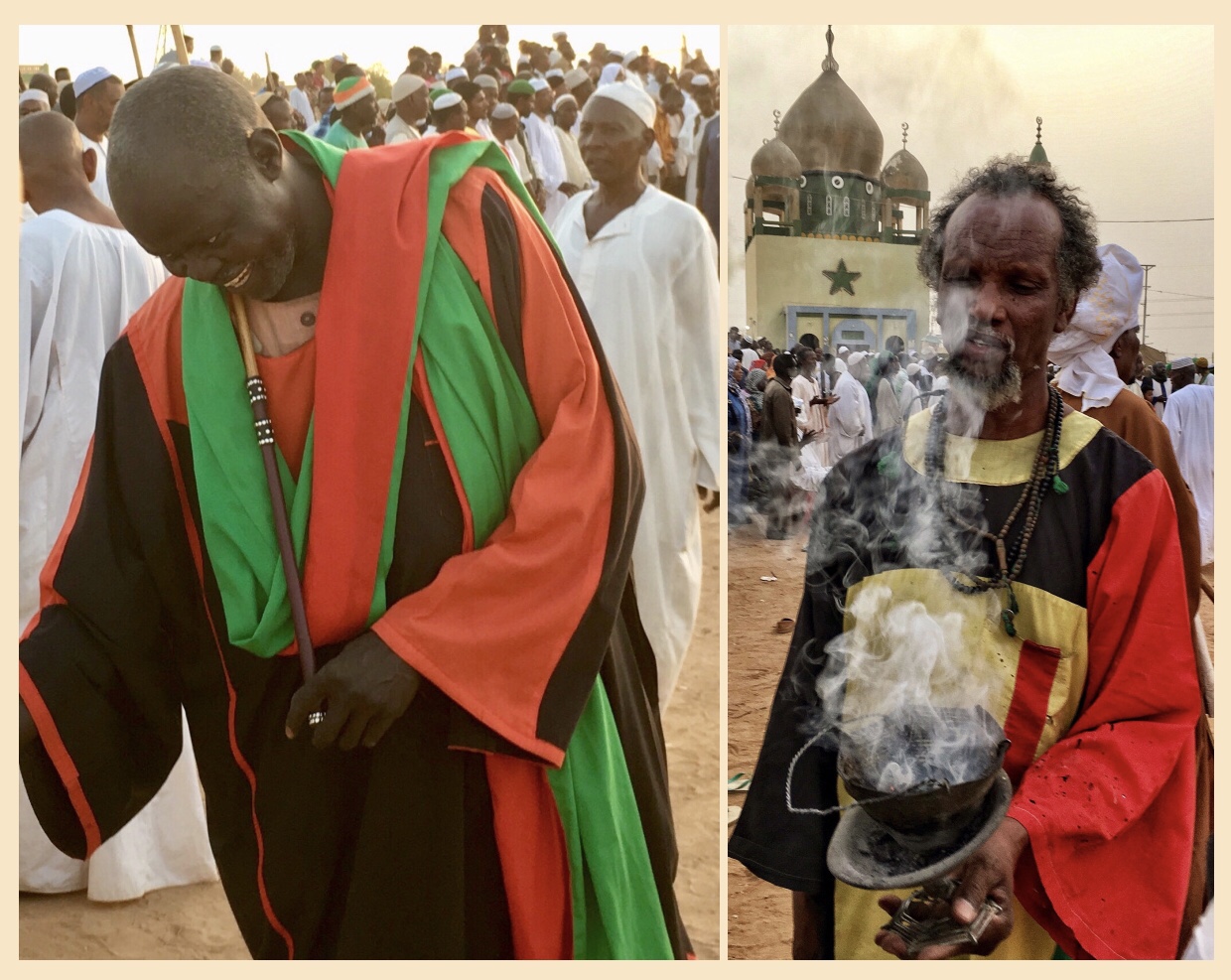
Green is often held to have religious significance in Islam as it is the colour associated with paradise. “A woman in the crowd explains why green is such a significant colour for the Sufi order. I’m wearing a beautiful green jalabiya. It was a gift from my sheikh, and looks like the typical great Sufi dresses. It symbolizes the simplicity and the calm of Sufism, and its calm and beauty.’ Most cloaks and garments, she says, are bestowed to the dervishes by the order’s sheikh during formal initiation ceremonies.” (The Guardian, as above)
Photographic and Video Sketches
Dhikr, 2016 at Hamed al-Nil, Omdurman. Worshippers chanting “There is no God but God.” These are the most frequently chanted words, together with “Al Hayy” – The Living.
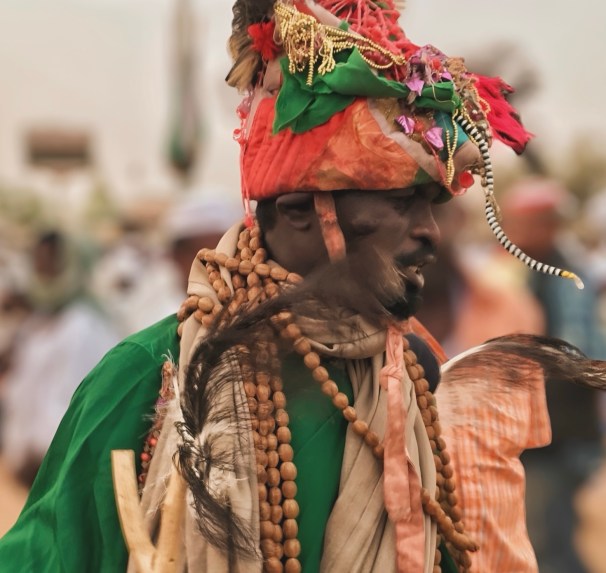
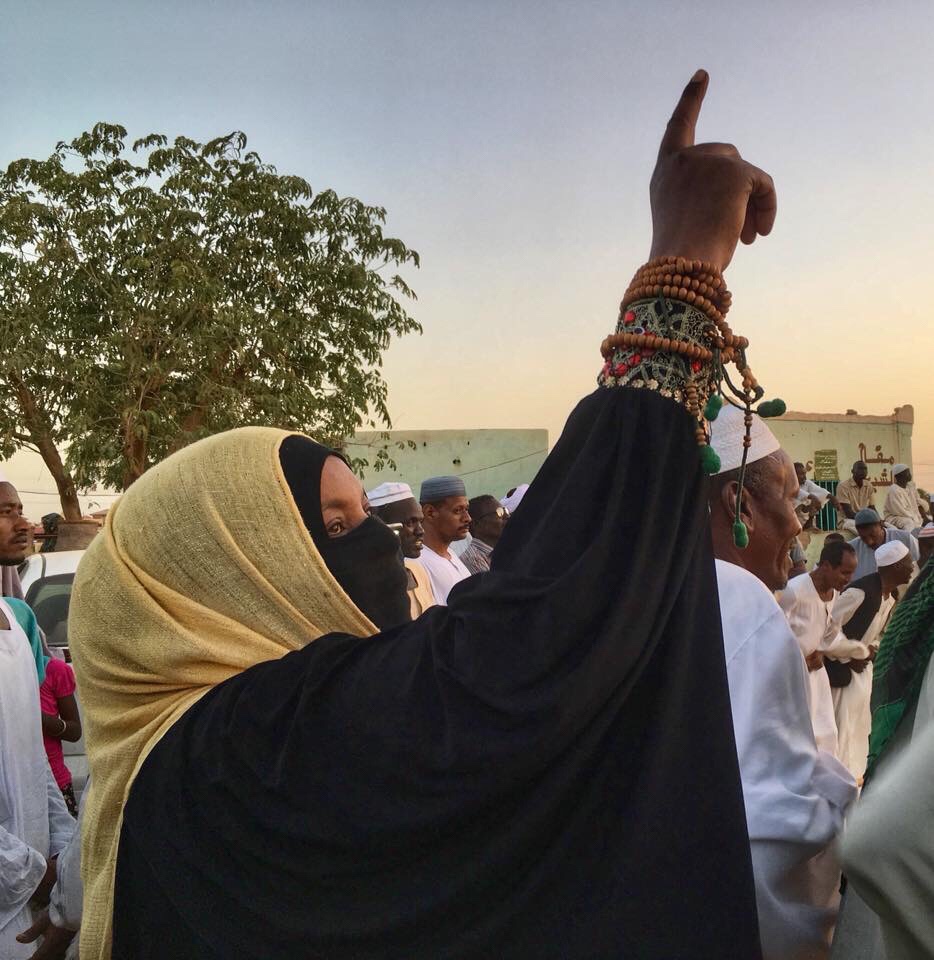
God is One
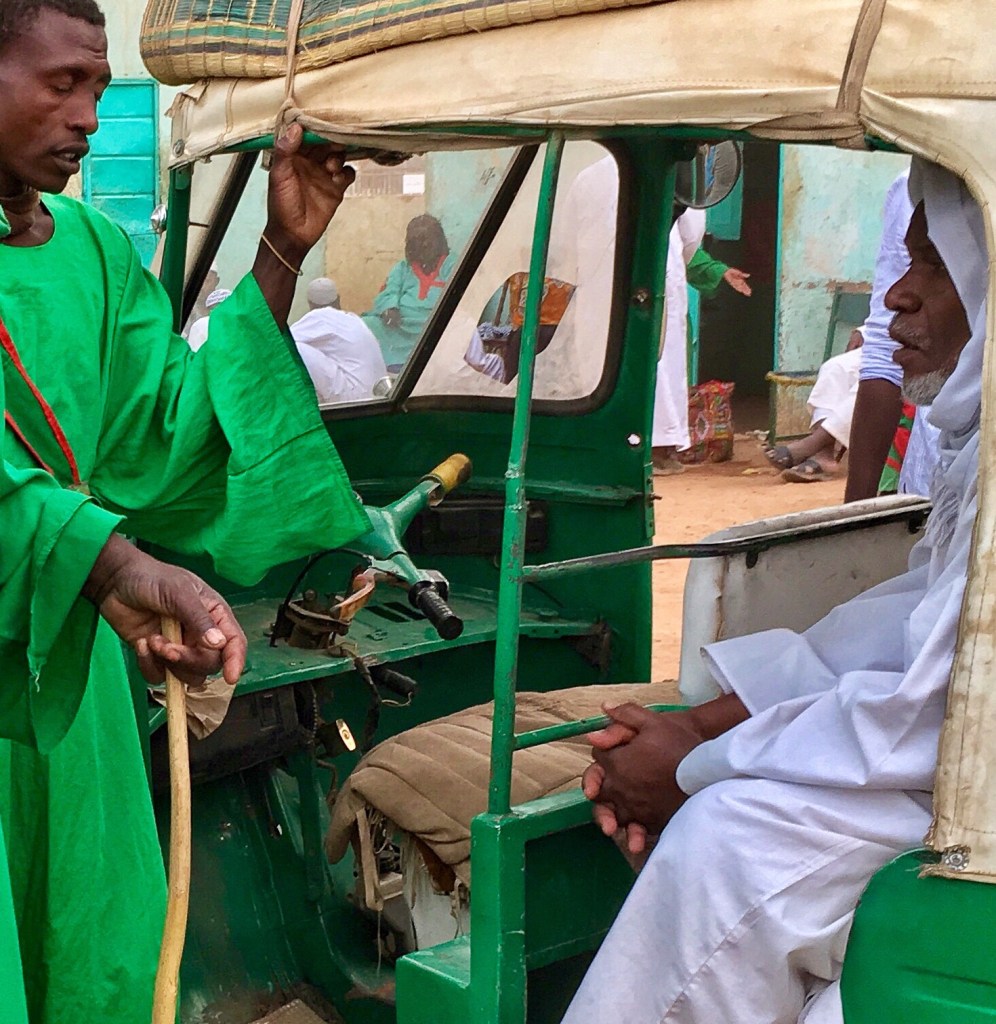
Waiting for the ceremony to begin and greeting companions.
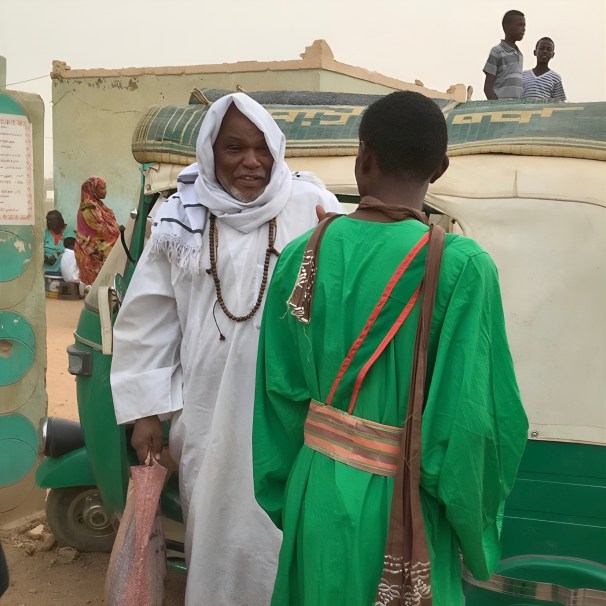
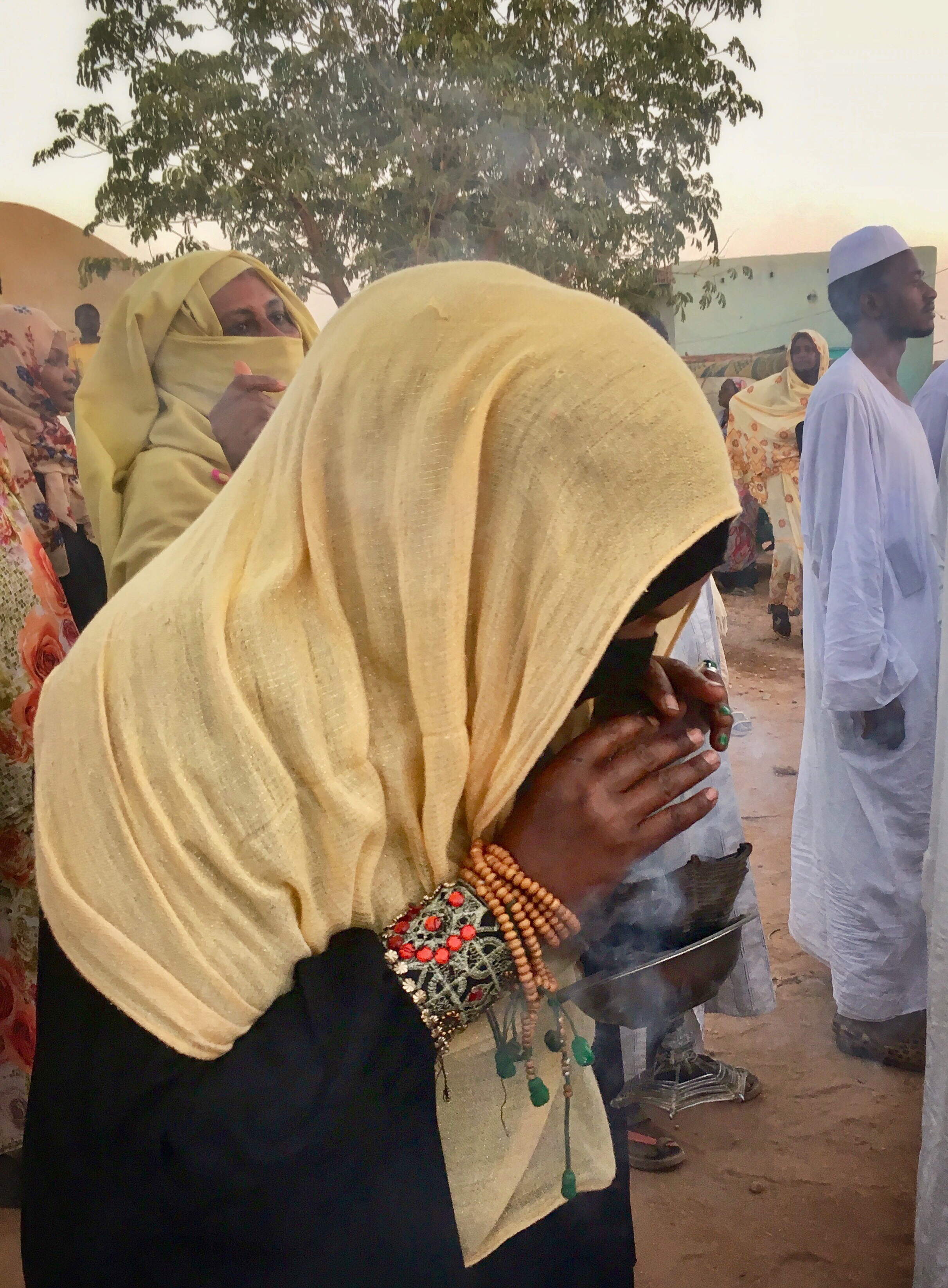
Below, hijabs (leather talismans containing sacred protective texts), patchwork robes and incense.


“Whirling dervishes” – see my Instagram Zikr Hamid Al-Nil




The deceased carried aloft amidst chanting and dancing. For more on Sudanese funerary customs,
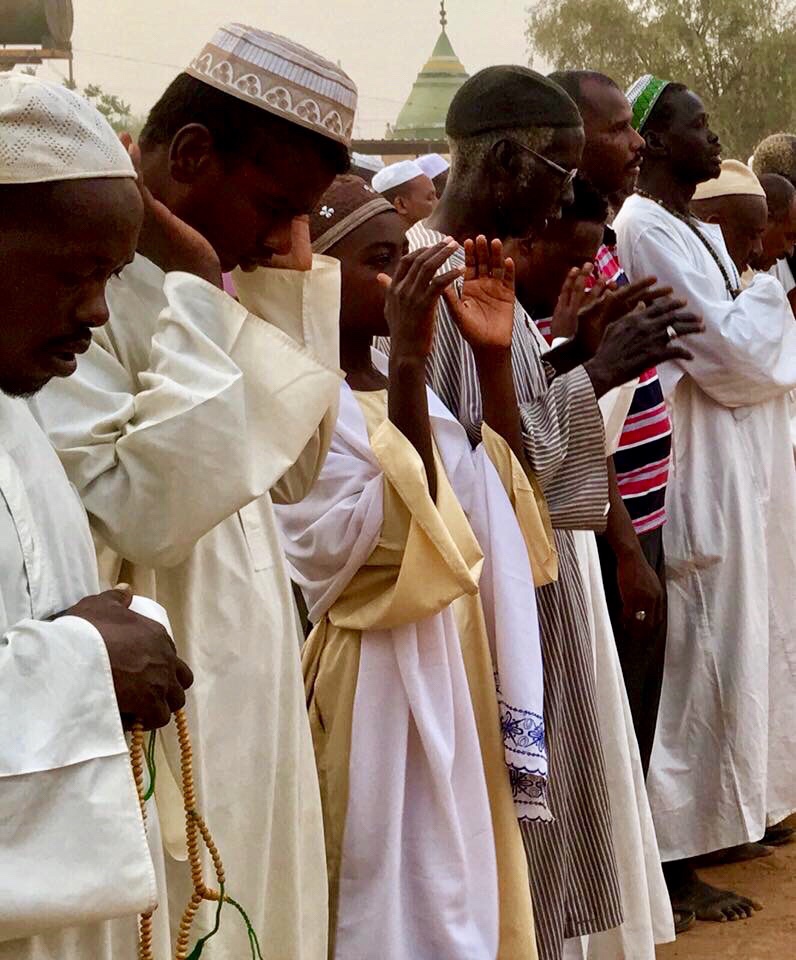
After the dhikr, solemn prayers before burial

Leaving the cemetery.
See too Sudanese Moments and Memories of Omdurman
This is a cultural post for Women’s Education Partnership.

 Women's literacy in Sudan