

This blogpost reproduces an extract from Land of the Blue Veil, (p 201-202) by Allan Worsley, Medical Officer, C.M.S. Hospital, Omdurman, published in 1940 by Cornish Brothers Ltd. .
The inclusion of this extract should not be understood in any way as support for British colonialist policies in Sudan.
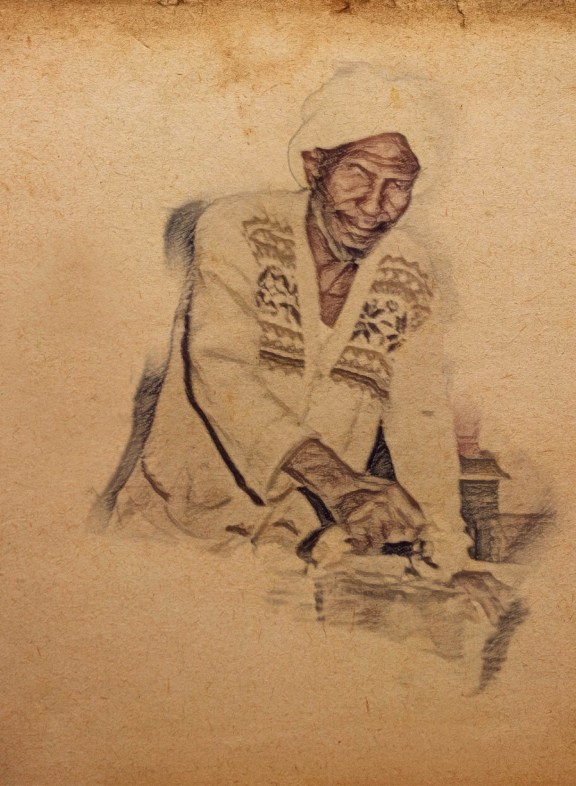
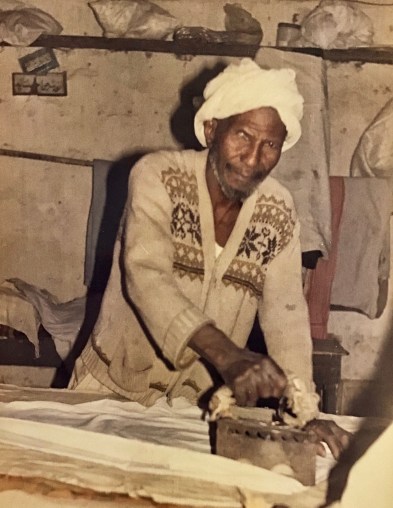
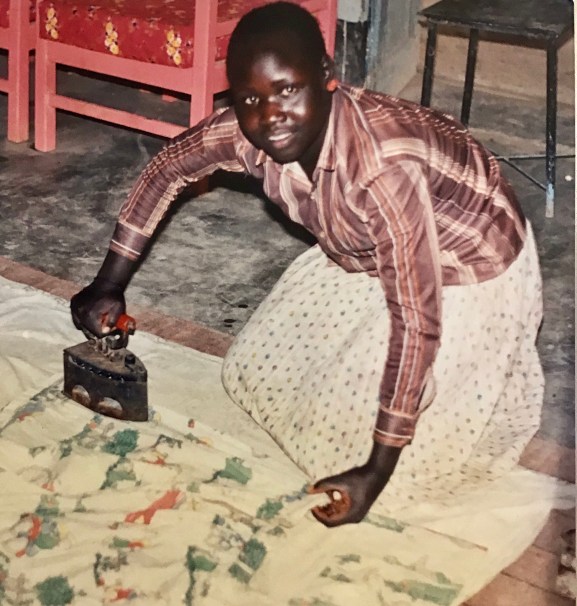
Above, sketch based on the 1980s photo below of the makwagi in Dongola. A gentle, solemn soul, he immaculately ironed the clothes of countless English teachers posted there, once we had learnt that pressing our clothes while damp by placing them under our mattresses at night yielded at best disappointing results. He would warmly shake your hand with a leather and sandpaper grip. I am ashamed to say I cannot remember his name.
The Makwagi
He works in a long, low-ceilinged narrow room, with a flat roof and whitewashed mud walls His spare cadaverous frame is lightly clad in muslin shirt and linen drawers. His white skull-cap is easier to work in than a turban.
The room is chiefly occupied by a long rickety table that is halting on three of its legs, and lame on the fourth.
As his iron glides backwards and forwards, a continuous fine spray falls from his lips. You couldn’t make that spray; nor could I – I’ve tried it! Far less could either of us keep it up for hours. With him it’s a trick of the trade, though, a point in his craftsmanship. Every Sudani is a craftsman – in something or other. Even an expert Batahi camel-stealer is a craftsman in that trade.
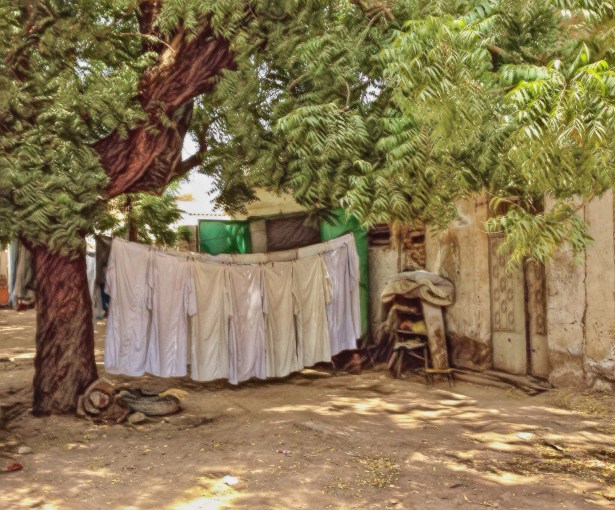
On our way home from school, we used to look in at the Makwagi’s open door. It stood just at the Murada, where the cross-river ferry discharged its passengers.
One day I asked him how long it took him to learn to make that fine, de-atomised spray, but he only gave me a contemptuous glance! When Allah created the English, He made them mad, and filled their heads with silly pointless questions. When he didn’t answer me, I wondered what he was thinking. The sweat streamed off his face in the fever-heat of a Sudan afternoon. His row of irons, heating over charcoal braziers didn’t help to cool that cooped-up sweat-box of his. I sort of understood then why he didn’t answer questions.
A friend of his was sitting cross-legged on a side table, telling his beads with vacant eyes and moving lips. There was not the bat of an eyelid when the makwagi gave one of the fowls that clucked about his legs a gentle kick that sent it fluttering a foot into the air.
And all the time, that thin, fine spray was falling …………
 Khartoum laundry, Qasr el-Nil Street.
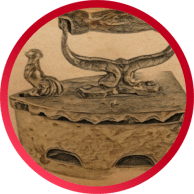
The metal rooster, forming the latch or lock often found on the prow of an old-fashioned charcoal or box clothes iron, gave rise to the Sudanese expression, “the iron rooster”, used to describe a person who is set in his ways and direction in life. My thanks to Muna Zaki, Sudanese Proverbs for this.

This is a cultural post for Women’s Education Partnership. See At a Glance and Facts and Figures to learn more about our mission and impact.

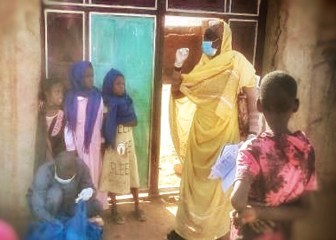
Read about our Covid-19 prevention work in On the Front Line Coronavirus Prevention and Coronavirus – Our Prevention Work
Read about the impact of Covid-19 in Coronavirus Sudan Stepping Back from the Abyss 4 The Impact on Women Coronavirus Sudan Stepping Back from the Abyss 3 – Lockdown Coronavirus in Sudan Stepping Back from the Abyss Part 2 Economic Impact Coronavirus in Sudan – Stepping Back from the Abyss The Health Context
Please consider giving to our life-changing literacy work. It is never more needed than now. Just click on the link below to donate quickly and securely:
If you are interested in Sudanese culture, you might enjoy The Clove’s Fragrance on Sudanese incense and perfume and “A Necklace of Shells from Distant Seas…” on Sudanese jewelry.

Below, ironing in Dongola in the 1980s with a charcoal filled iron. Hot, heavy and skilled work as the charcoal had to be kept at exactly the right temperate and continually refreshed to avoid scorching and produce the razor sharp creases of a freshly ironed jelabiyyah.
 Women's literacy in Sudan