

Coffee and Hibiscus Flowers
Part 1; The Art of Coffee
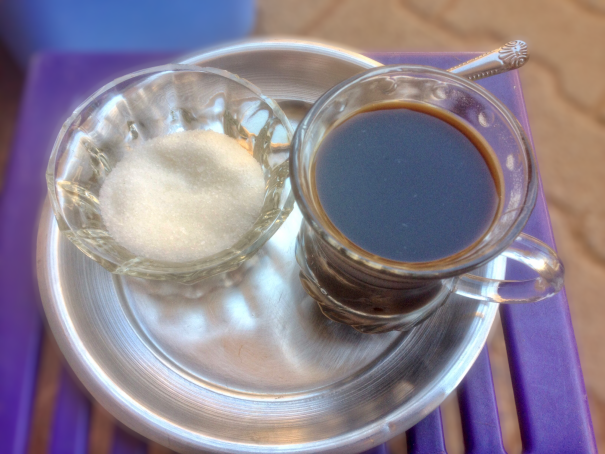
Above, aromatic Sudanese coffee with ginger and cardamom.
See more in Coffee and Conversation.
This week’s post is a brief introduction to the work of a remarkable young Nubian artist, Mutaz Mohammed Al-Fateh, now based in Tuuti island, Khartoum. I first came across his work while visiting the National Museum, where he had mounted a small exhibition in the grounds. He talked with an infectious energy and passion about painting and his hopes for the future. Just recently I discovered he had opened his own gallery on the island. His style is evolving fast and embraces traditional Nubian themes, fluid calligraphic forms and African motifs.
Mutaz has been kind enough to agree to talk to the blog and you can read the interview next week.
Below, in the 4-minute Sky Arabic interview (English commentary provided) below, Mutaz shows us his work and explains how he came to use coffee grounds in his art. The video is followed by a selection of his work in my collection.
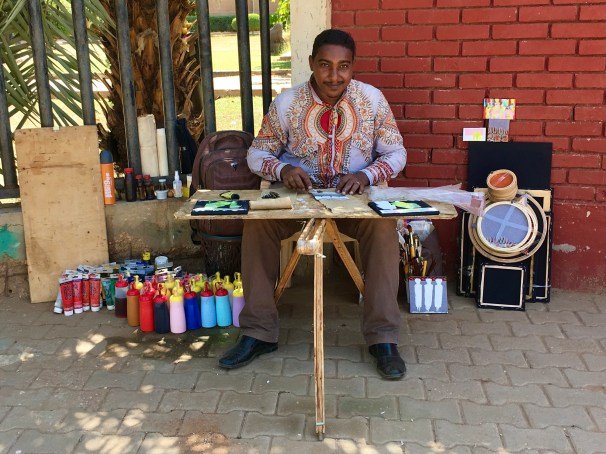
See more of his work in Mutazartist and FIneartamerica
The Art of Coffee, Part 1

Above, female forms swathed in the traditional Sudanese sari-like toub, framed against a villagescape of low mud buildings and minarets. An example of Mutaz’s coffee paintings.
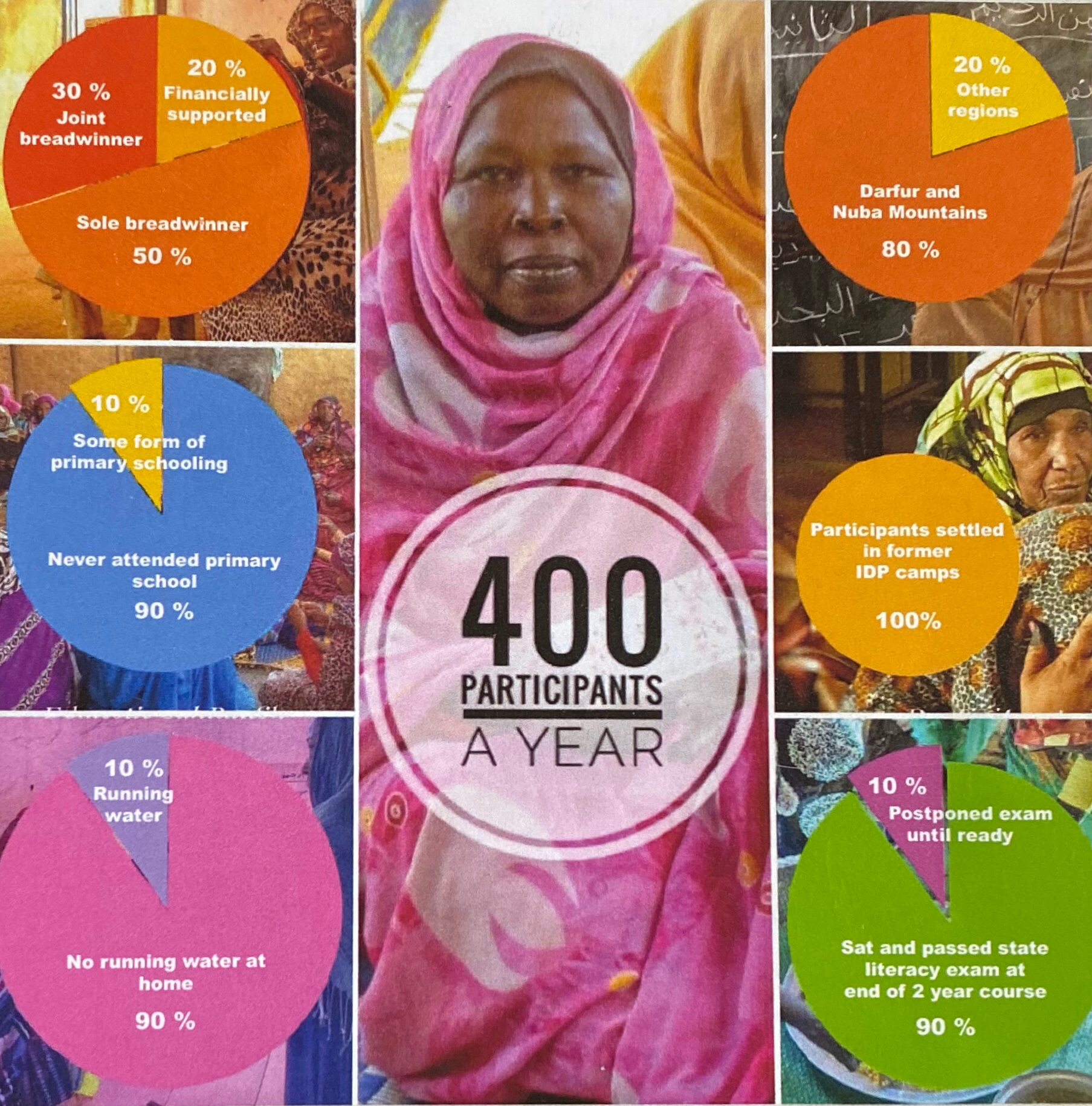
This is a cultural post for

Help us to provide educational opportunity for women and girls in deprived communities.
See Latest News and At a Glance for more about our work.
Video Interview Commentary
The interviewer explains that Mutaz not only makes the best coffee in Khartoum, but something much more remarkable – out of the coffee he makes art. Although Mutaz is already an internet sensation, the presenter wants to get behind the easel and see his work for himself, so he travels to Tuuti Island, while the Blue and White Nile meet, to talk to Mutaz and see his gallery. Mutaz says he specializes in using tints and grounds from Sudanese and other African fruit and flowers as his medium – coffee, different types of hibiscus flower, gourd, doum fruit shavings, laloob (see below), gongoleez (tabaldi tree fruit); in fact any natural, raw substances.
As a seven-year old, he was captivated by the forms he saw in the bottom of coffee cups and asked himself ” if coffee forms those shapes by itself, what could I do? So he started sketching with coffee grounds. But then he faced another challenge; how to fix the coffee? Suddenly, he says, it struck him that the students of Koranic school mixed gum arabic with the inks they used on traditional Sudanese prayer boards, to practice their writing of sacred verses. What if it worked with coffee grounds, he wondered? It did. From then on he was determined to experiment with the technique using other media.
His career took off and he has created more than seven million paintings and drawings. He isn’t just known in Sudan; he’s exhibited in galleries across Africa, and in the United Arab Emirates. And what makes him different from all the other artists in Sudan? Mutaz says it’s that fact that while there are other artists who use coffee, with a drop of water, their works vanish, dissolve – they are ephemeral, while, thanks to his fixing methods, his works endure. How to permanently capture his ideas on canvas – that’s what drives him. And he uses something so central to Sudanese life; gum arabic.

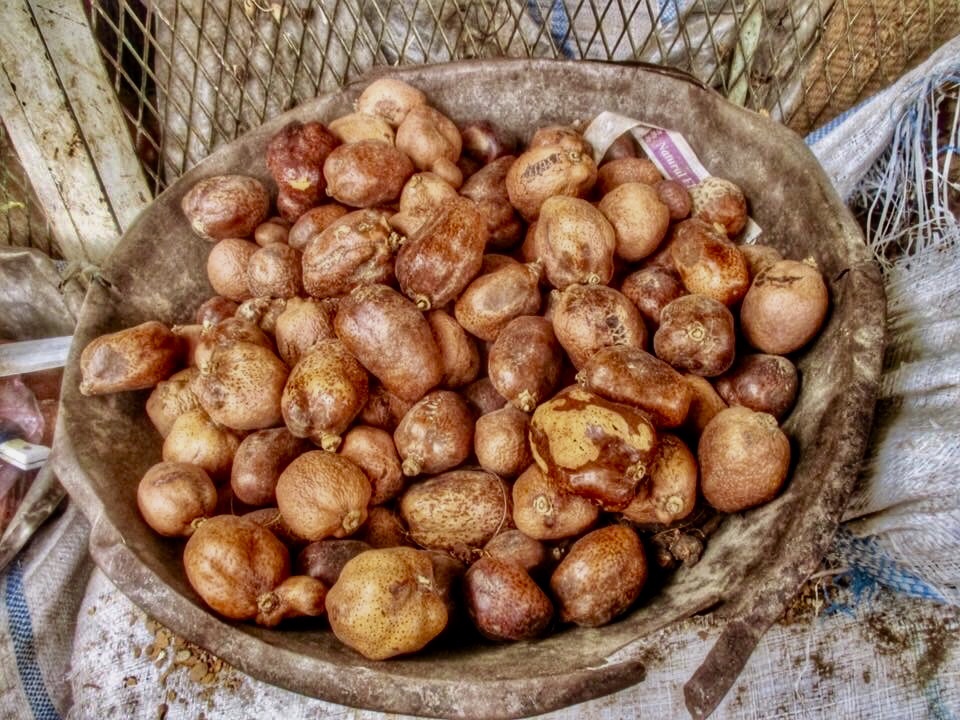
Below, Above, a laaloob fruit. The Sudanese have a saying: لالوب بلدنا ولا تمر الناس
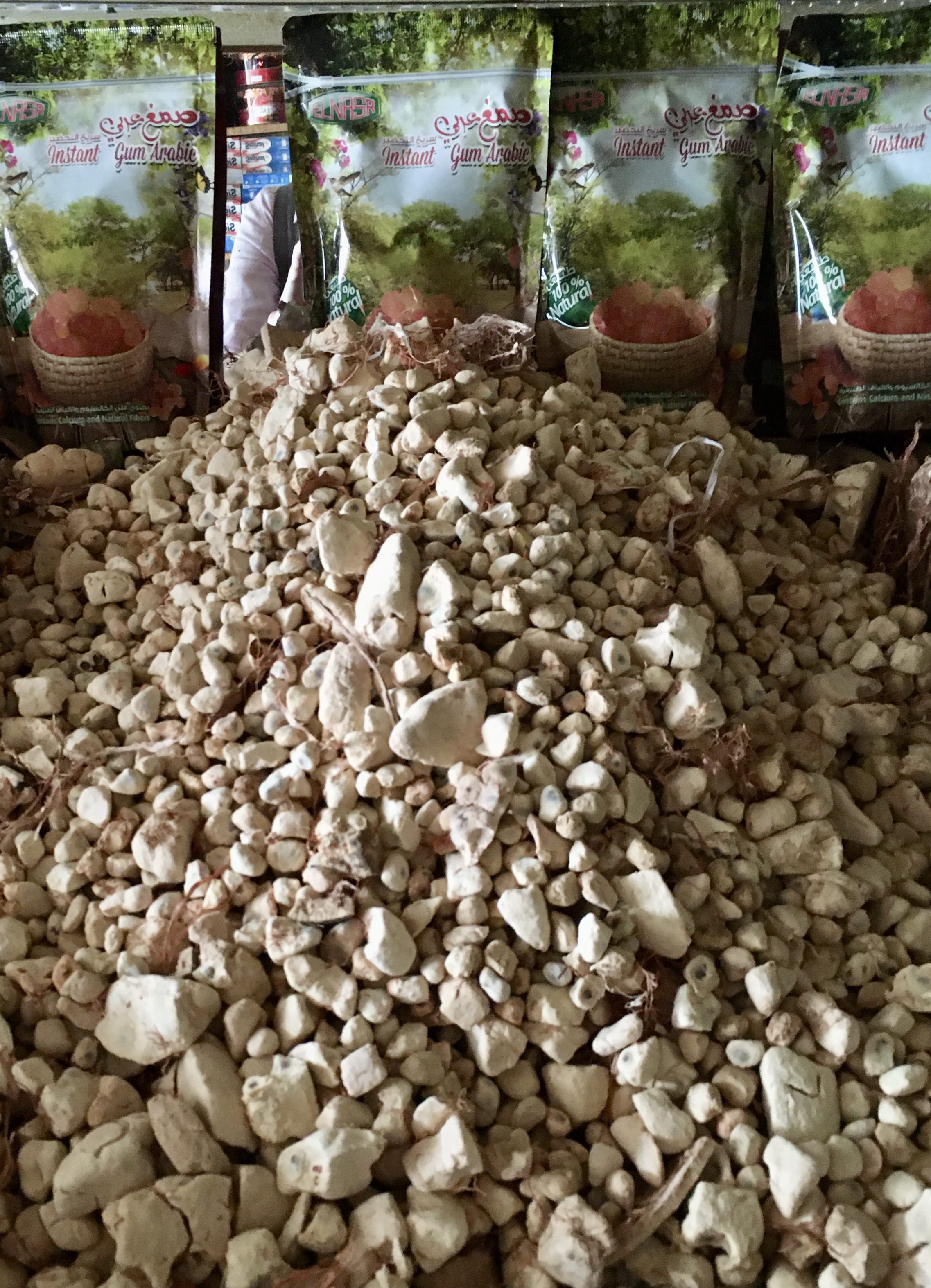
“laaloob baladna wa la tamur an-naas“; Better our laaloob than other people’s dates. The laaloob is a fruit that grows on a desert date tree called the hijliij (balanites aegyptiaca). It tends to be sucked due to its bitter-sweet taste. Since dates are considered better than laaloob, this proverb calls for contentment even when one possesses little. Below, gum arabic, tabaldi and doum fruit.
See more Sudanese proverbs in Proverbs with Muna Zaki

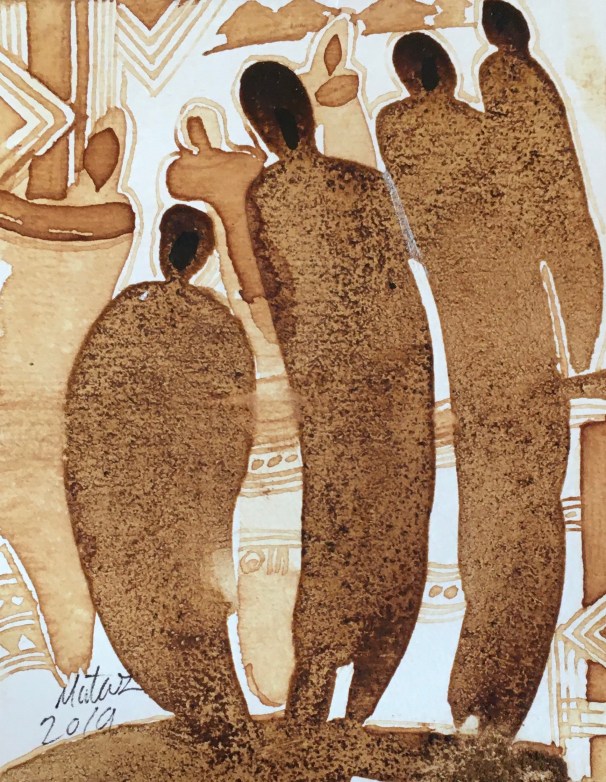
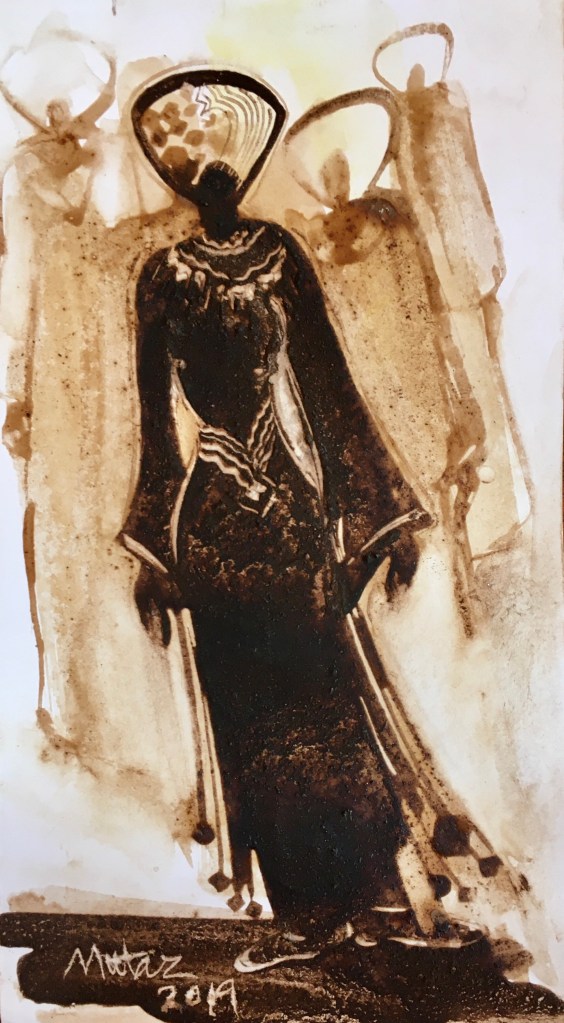
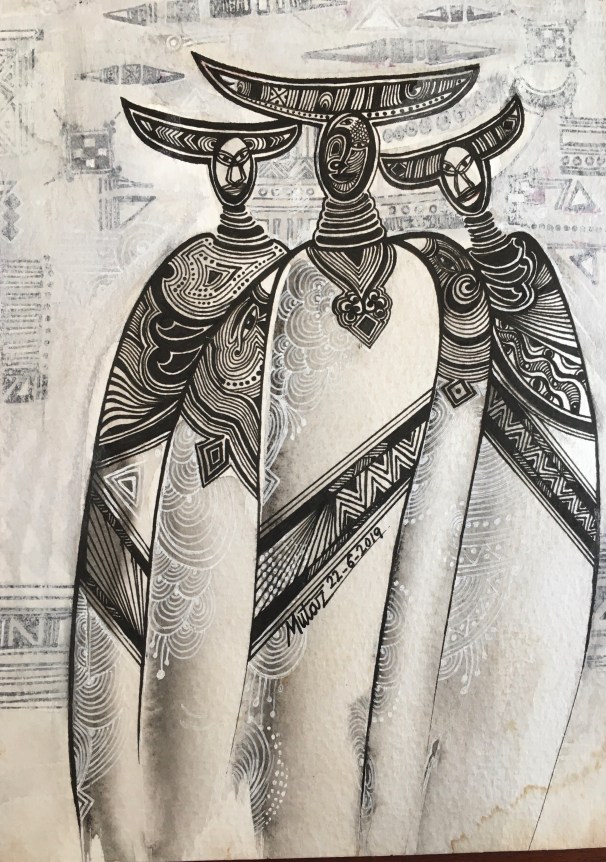
Below, more examples of his work.


If you are interested in Sudanese art, you like enjoy these blogposts;
Forests and Spirits Under the Tall Tree’s Shade
Amel Bashir Taha Delicate Defiance Unmaskings Birds of the Soul
 Women's literacy in Sudan
An excellent post
LikeLike
Hi is a gifted, bright and expert man. I admire his work. Wishing him all the best
LikeLike
Just Amazing pieces
I lLove your work Mutaz 🥰❤️
LikeLike
Mutaz Mohammed Al-Fateh is an incredibly unique artist who has managed to make beautiful high-quality art using everyday material. His paintings portray the diversity that exists in Sudan and I am excited to see more of Al-Fateh’s art in the future.
LikeLike