

In Conversation with Amanda Abdel Aziz Albirgdar; Architect and Artist
In Times of War
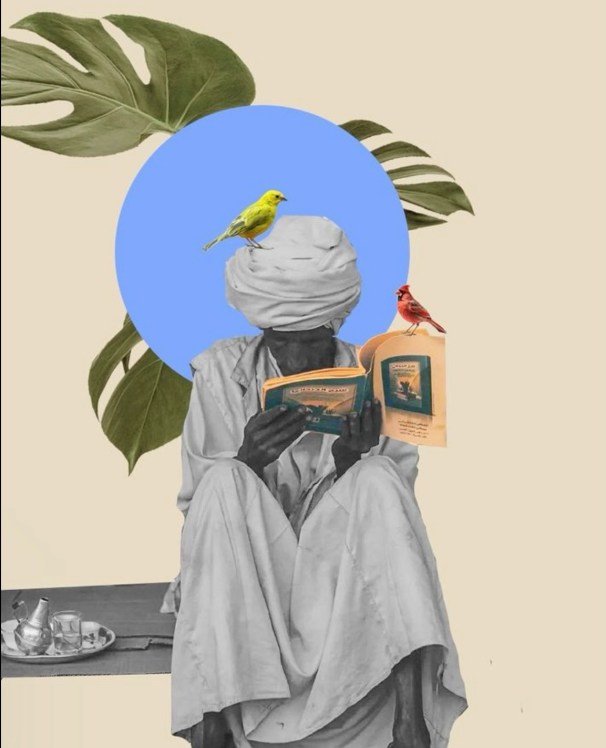
Above and title image, the clear, fresh tones of “Coffee and a Book”, collage by Amanda Abdel Aziz Albirgdar. A man in northern Sudanese dress, haloed by a blue sun, pours over a book, a tray with traditional coffee pot or jebana at his side. Bright birds perch on his book and turban; poignant, and quietly joyful in turns. For the symbolic power of the colour blue – a symbolism Amanda draws on in many of her works, evoking mourning and resistance, see Aljazeera’s Blue for Sudan.
Reproduced with the kind permission of the artist from her Instagram, eyes.on.sudan. The images in this article are copyright and may not be reproduced without the artist’s permission.
Amanda uses Sudanese archetypes, iconic colonial and post-colonial photographs in her collages as she explores the shock to a nation’s sense of self brought about by the ongoing war. See an introduction to her work in my article, eyes.on.sudan
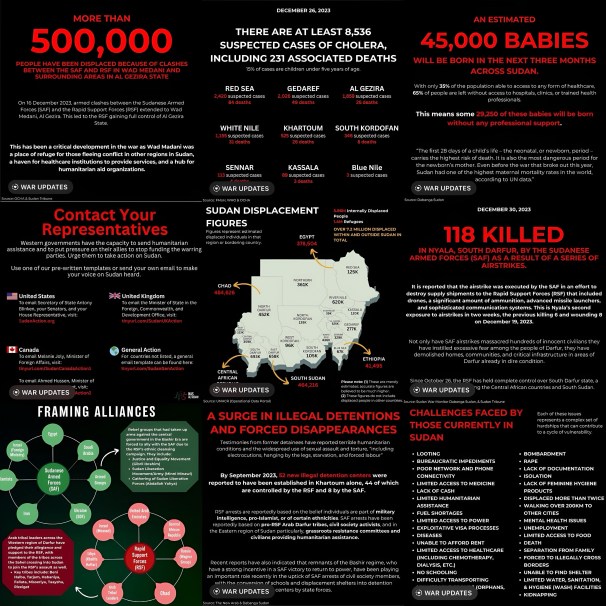
Above, nasalsudan’s most recent visual summary of the grim impact of the ongoing conflict in Sudan.
In Conversation with Amanda Abdel Aziz; Architect and Artist

Amanda was born and raised in Khartoum and later moved to the United States, where she pursues a career as an architect, specializing in commercial design.
Amanda: Meaningful and effective design is my passion. I discovered a love for art as a way of coping after enduring the profound loss of my grandmother due to the war. This experience had a tremendous impact on my work and fueled my desire to express my emotions through art, reflecting on the memories I cherish from Sudan.
Imogen: The circumstances of your grandmother’s death are heartbreaking and I know everyone reading this offers their profound condolences. Readers can hear your very moving account of her passing in your Soundcloud interview with sudanese.tokul” In it you remember Alawiya, your Habooba, as “full of life” and as “a very positive person.” Like so many vulnerable civilians caught up in the crossfire between warring factions at the outbreak of the war, Alawiya “was stranded for weeks alone with little to no electricity, water, or food” in her Khartoum home. Her death was, like that of so many Sudanese too, tragic and preventable.
Above left, What’s Happening?
Below, Amanda’s tribute to a woman of spirit and energy;
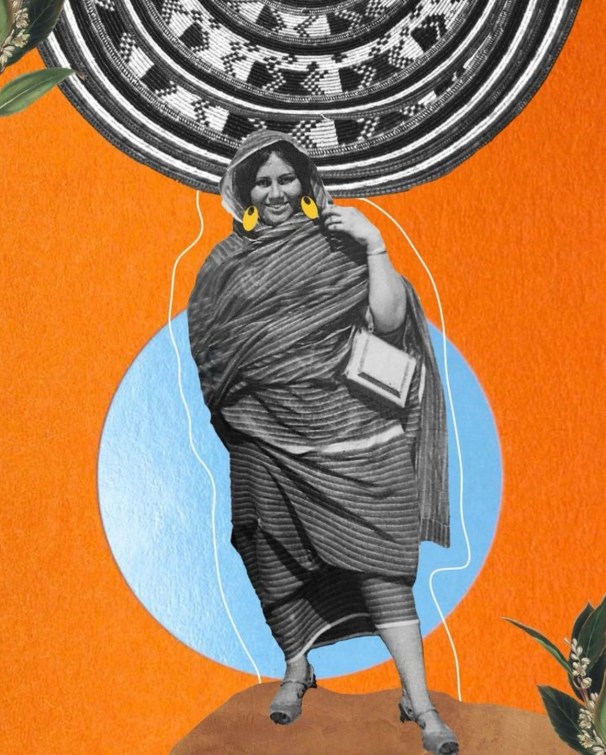
“Alawiya Abbas Rishwan, the beautiful social butterfly of the family.Taken in 1972, her smile lives on for ever.”
Imogen: Could you tell us a little about when, how and why you started your collage portfolio? Is there a work which is particularly close to your heart? What are you working on at the moment?
Amanda: I started my collage portfolio in April of 2023, approximately two weeks after the war began. Being on the other side of the world, I was uncertain about my family’s status.
Losing my grandmother shook my family and me to the core. To cope, I delved into old photos of Sudan, reminiscing about my childhood and using collage art as a means to disconnect from the situation and envision a better Sudan.
A particular piece that’s close to my heart is my “kanaka dance free” collage. It was one of my first pieces and one of my first collaborations. I have had that photograph hung in my living room for years, her expression and posture holds a lot of meaning and happiness to me.
At the moment I’m working on a few pop up events. The first, in NYC, is a charity event, raising funds for Sudanese organizations.
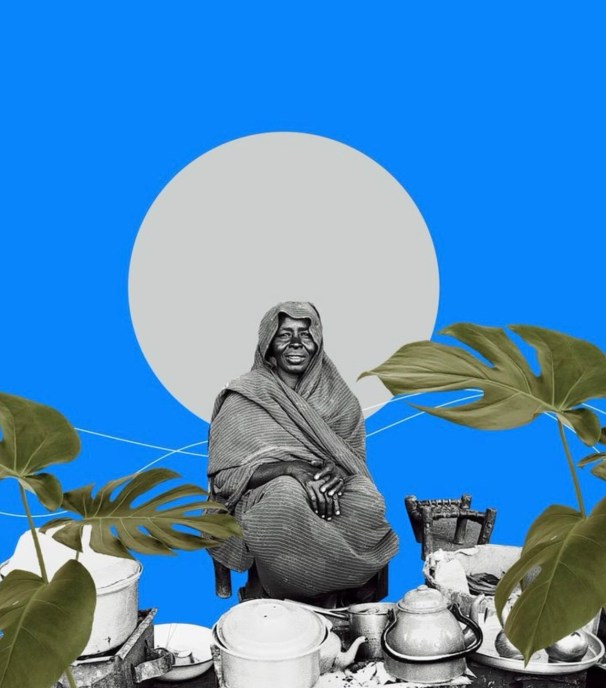
Above right, Shai Anyone?
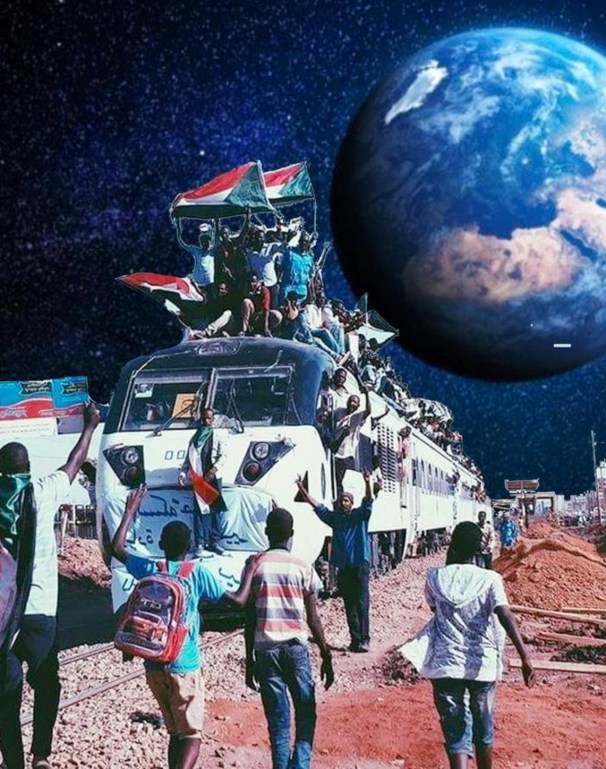
Above, a tribute to one of the many iconic images of the 2019 Revolution, entitled Road to Freedom. The train, packed with supporters of the democratic uprising arrives in Khartoum from Atbara, home to some of the first uprisings against British colonialism and the birthplace of Sudan’s labour movement.

Imogen: What would you like Sudanese and non-Sudanese to take away from your work? How can non-Sudanese support Sudanese, both inside and outside their homeland? How do you sustain your inspiration and your hope in these dark times?
Amanda: Sudan is a nation with layers of history and beauty. I aspire to depict the captivating facets of Sudan while raising awareness about current events. Art serves as a powerful medium to convey stories laden with profound meanings.

Amidst rebuilding lives, Sudanese people forge new meanings and hopes for their evolving reality. Support, be it emotional, financial, or both, holds diverse significance for each person and family. Spreading awareness, sharing stories, or simply reaching out to Sudanese friends can make a substantial impact.
Even in darkness, there is a glimpse of light. I wholeheartedly believe that Sudan will one day emerge free and stronger. The Sudanese people, with their strength, resilience, and inner light, will rebuild and reclaim their country and homes.
Imogen: Thank you so much, Amanda, for your words full of hope. Your work inspires with its freshness and optimism in tragic times and I know everyone who has seen your collages has been moved by their graceful tributes to the real Sudan and their joy. We wish you every success in all your projects.
Above left, Bint al Sudan // 1920. Read about Bint al-Sudan, the emblematic scent of Sudan, in The Clove’s Fragrance
Above right,The Cure for the Pain is in the Pain. Amanda’s work both subverts and empowers traditional images of Sudan’s Sufi mystics and their trance-like dhikr meditations. Learn more in The Eternal Dance
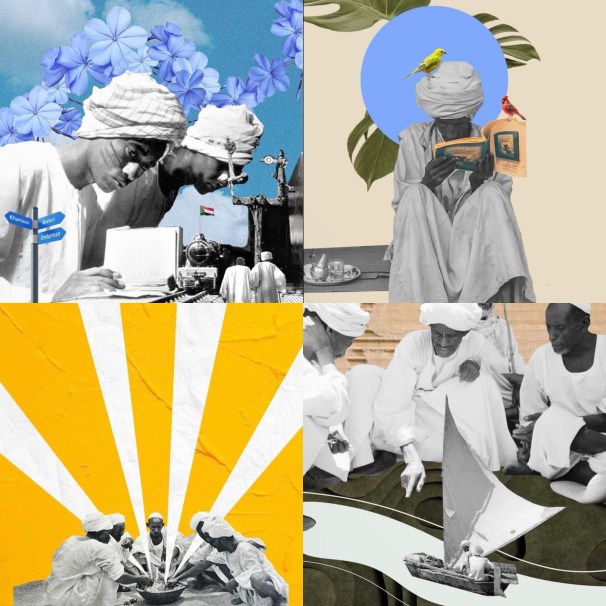
Above, top left, Train to Khartoum, lower left, Sharing Blessings and lower right, Where to and What’s Next?
 Women's literacy in Sudan