

Sing, O Khartoum, Sing – Mahjoub Sharif 1948-2014
World Poetry Day, 21st March 2025
غني يا خرطوم غني
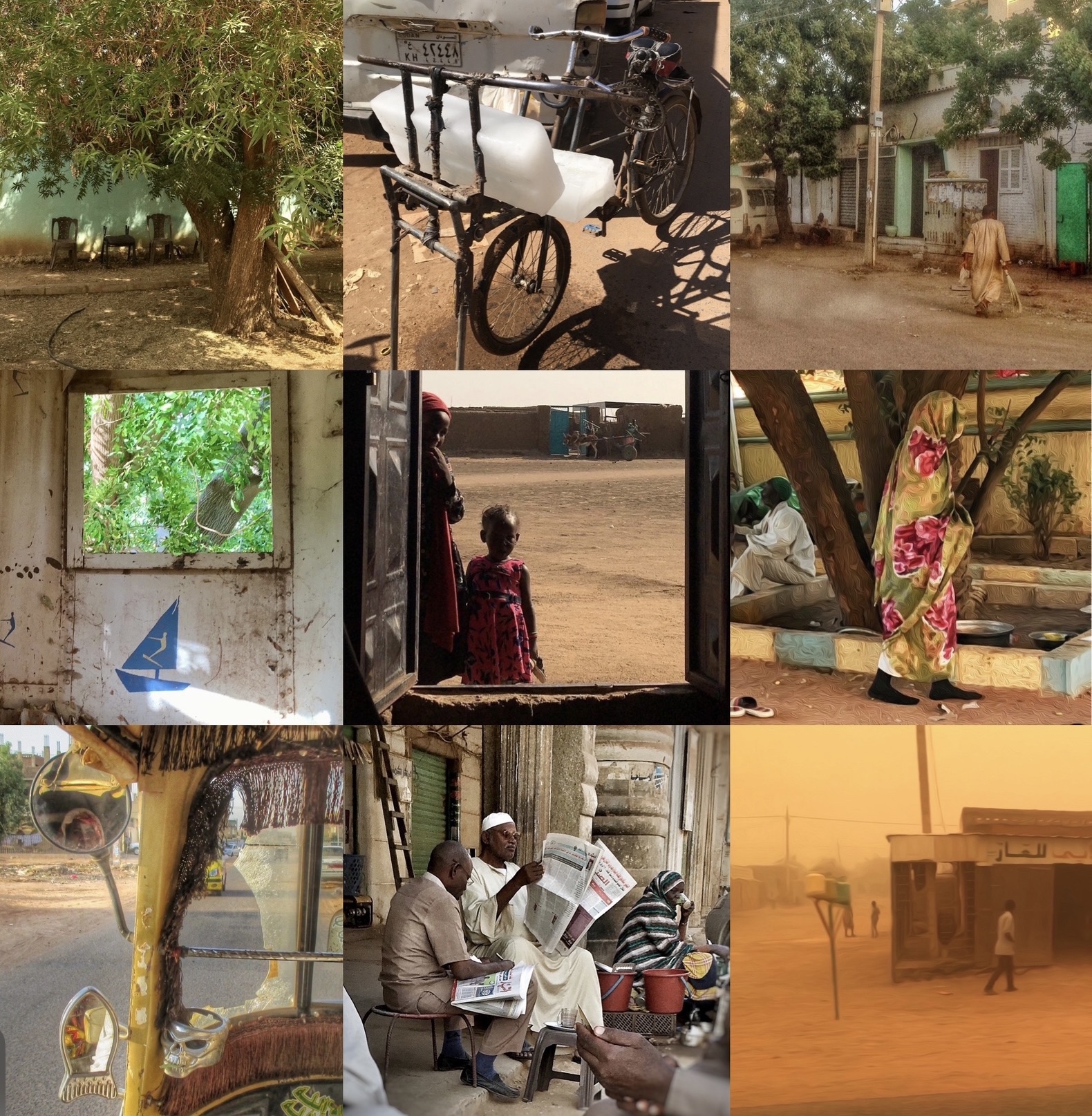
Khartoum scenes, pre-war, Another Khartoum
Setting the Scene
Writing upon the poet’s death in 2014, Magdi El Gizouli describes Mahjoub Sharif as Sudan’s poet of freedom whose verse was “crisp, pregnant with music, witty, agitating, but always didactic.” The critic goes on to say Sharif, whom he dubbed Sudan’s “secular prophet”, “proverbially breathed poems, till his very last breath at his Omdurman home…” Sudan Tribune; Mahjoub Sharif: A Secular Prophet
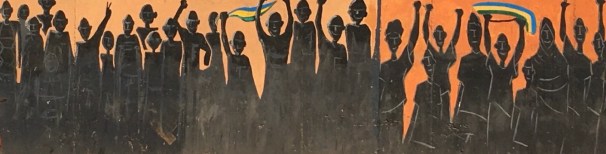
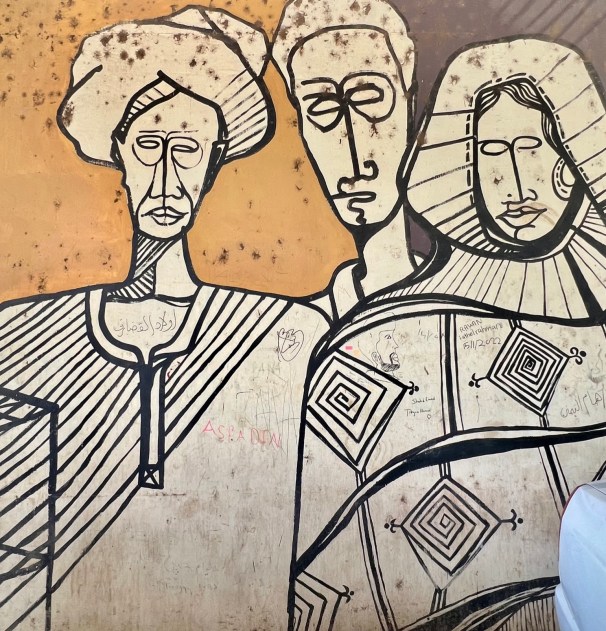
Above, a street mural, Khartoum 2019
The 2019 revolution in Sudan both nourished and was nourished by burgeoning artistic movements urging democratic change. Below, the poem and anthem, Sing, O Khartoum Sing, by Mahjoub Sharif; Youtube video also embedded below.
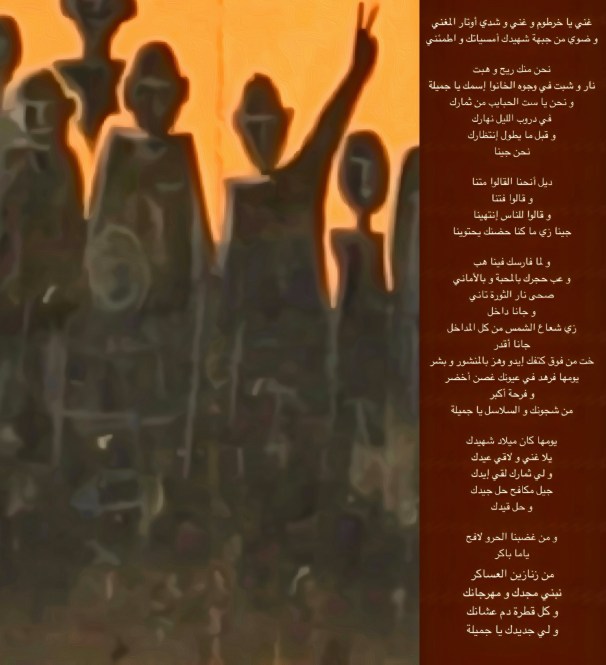
Sing, O Khartoum, Sing – Mahjoub Sharif
World Poetry Day 2025
For this World Poetry Day, I reproduce a haunting musical rendition of poem and anthem, Sing O Khartoum Sing, written by poet, author, educationalist, social and political activist and tireless humanitarian, Mahjoub Sharif. Below, I provide brief background to one of the most remarkable of Sudan’s modern poets, outline the genesis of the poem itself and offer a working translation of the piece.
See too محجوب شريف WIkipedia and numerous articles on the poet, such as محجوب شريف: قصيدته حياة .. حياته قصيدة, in Al-Raboka. For biographical background, see Songs, Poems and Left-Wing “Heroes”: The Soft Power of the Sudanese Left.

In addition to his poetry, children’s books and songs, Mahjoub Sharif is remembered for the staggering number of social, educational, creative and health programmes he set up and contributed to, serving some of the poorest communities of Khartoum. This spirit of community engagement was manifest from the poet’s youth; while a newly qualified primary school teacher in Omdurman, Sharif successfully campaigned for libraries to be made available in all the primary schools of the city.
Though composed in the wake of the failed communist-led coup against Nimeiry in 1971, the anthem Sing O Khartoum Sing resonates today, transcending political loyalties. It came to be adopted as poetic watchword for change by many of the 2019 revolution but has been used and indeed instrumentalized in many other cultural and political contexts. As with all writing of poetic force, it is multilayered in its interpretation and appeal. There will be more in-depth focus on Mahjoub Sharif, his life and work in coming posts.
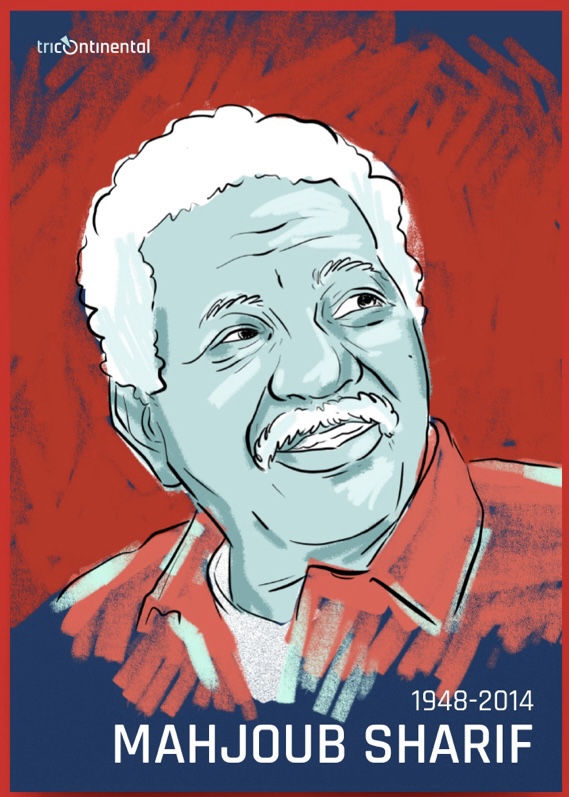
Above, left, Mahjoub Sharif, Instituto Tricontinental de Investigación Social, CC. Above right, Gaafar Nimeiry, portrait displayed in Khartoum, 2017.
See too The Homesick Sparrow
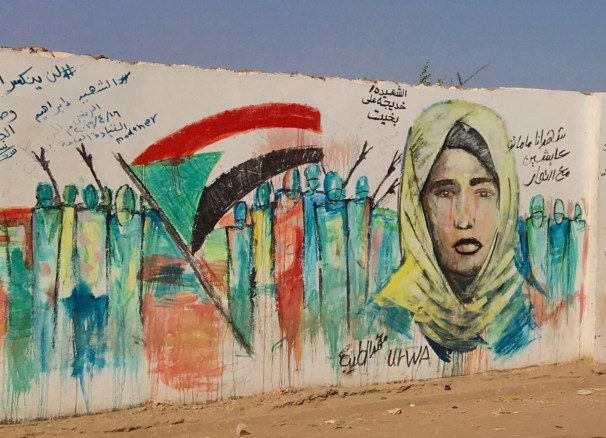
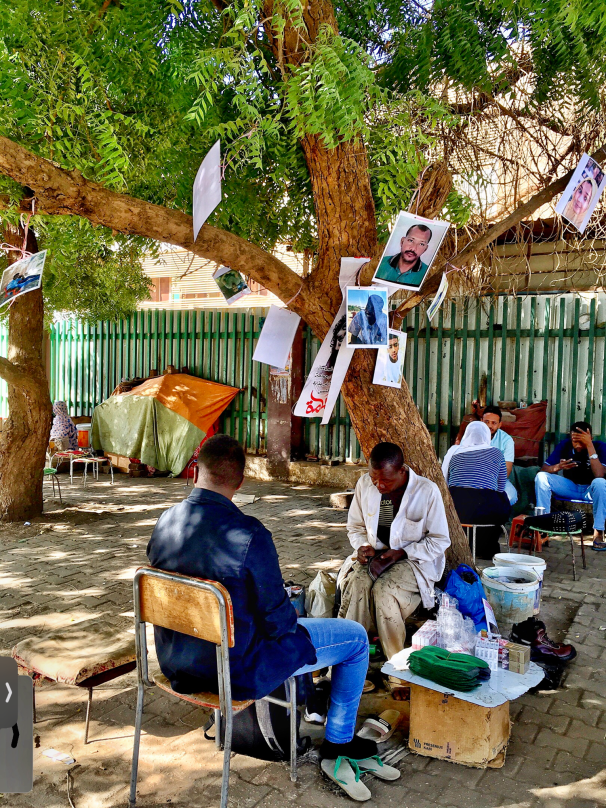
Above, another street mural, Khartoum, 2019. Khartoum, cradle of so many popular uprisings and muse for so many Sudanese writers, embodies the quest for national consciousness, the soul of the humble, the hard-working and the put upon, the young, the idealistic and the intellectual, the hub of power and the righteous thirst for change.
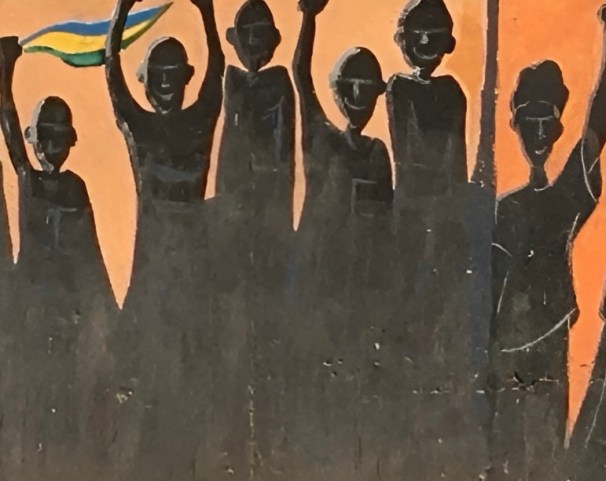
Sing, O Khartoum, Sing – Mahjoub Sharif
The People’s Poet: Why Mahjoub Sharif’s Poetry Speaks to So Many
Background to the Poem
Working Translation
The People’s Poet: Why Mahjoub Sharif’s Poetry Speaks to So Many
“Thousands accompanied the ‘poet of the people’ as he was known to his last resting place in a mass act of baraka that not even the most pious of sheikhs can claim.” El Gizouli, as above.
Sharif’s poetic work vibrates with the cadences, imagery and musicality of Sudanese speech. In his compassionate elevation of everyday life, “he would describe scenes of working mothers preparing breakfast for their children before heading off to work, of builders lining bricks for a new house, of teachers using chalk on blackboards, of friends catching up over a tea break, and of lovers beneath trees whispering their hopes for a new life” (Open Democracy). Elena Vezzadini reminds us that the poet’s repertoire was however extremely varied, encompassing everything from nursery rhymes to revolutionary hymns, (Songs, Poems and Left-Wing “Heroes”: The Soft Power of the Sudanese Left). Like Mohammad El-Hassan Salim, “Himmaid”, Sharif’s poetry distilled the “frustrations of the poor….and the power of love, sharing and mutual assistance as shields against alienation.” Leftist Leanings and the Enlivening of Revolutionary Memory

Forged in the heady days of the 1964 Revolution, Sharif’s poetry would give voice to the sense of yearning, hope and resilience of a people he believed had been betrayed by their leaders. Sharif’s career was blighted by politically motivated dismissals and he suffered ghost house detention, imprisonment and house arrest – the latter for nine years, repeatedly at the hands of successive regimes. “This level of persecution”, Vezzadini notes, “was a direct result of Mahjoub’s poetry.” Elena Vezzadini, as above.
His poems written while in prison came to inspire fellow prisoners, who often learnt them by heart, transforming “the atmosphere of despair and desolation into one of pride and resistance” (Vezzadini). “Even when he was forbidden to have pencils and paper, he managed to write using any means he could find. One of his most famous poems was smuggled out of prison on a jallabiya woven by one of the prisoners, who was a tailor.” (Vezzadini, as above). See too محجوب شريف، شاعر الصمود بلا منازع: صفحات من
His fierce denunciation of injustice and dictatorship would be taken up and amplified in English translation worldwide by bodies such as Amnesty International, Africa Watch and PEN. “Beyond exposing power’s sins, Mahjoub had the extraordinary capacity to imagine another future in feather-light lines, suitable even for the playful entertainment of children.” El Gizouli, Mahjoub Sharif: A Secular Prophet. Many of his verses were set to music in the heat of the popular uprisings of the past and became anthems, sung by giants such as Mohammad Wardi and more recently, Nancy Ajaj.
Background to the Poem
Mahjoub Sharif is loved by many for his political idealism, his uncompromising honesty and integrity, qualities embodied in Sing O Khartoum Sing. The poet who had initially written in praise of Nimeiri’s revolution, became swiftly disillusioned with what he saw as the new regime’s abuse of power. In June 1970, Sharif had written O Our Guard, O Our Knight – later to be publicly disowned, in celebration of the May 1969 Revolution. By the end of the year, the poet was openly critical of the regime, and in early 1971, composed Neither Our Guard nor Our Knight. Sing O Khartoum Sing may be seen as Sharif’s lyrical act of faith in the coming of a revolution he saw as true to the Sudanese people. As a result of his opposition to Nimeiry, the poet was imprisoned, first in Kober and later in Shalla, Darfur where he composed some of his most loved verse. It is claimed Nimeiry saw “danger in all his compositions, and even his most romantic songs were banned.” (Vezzadini, quoting Sudanese sources, as above).
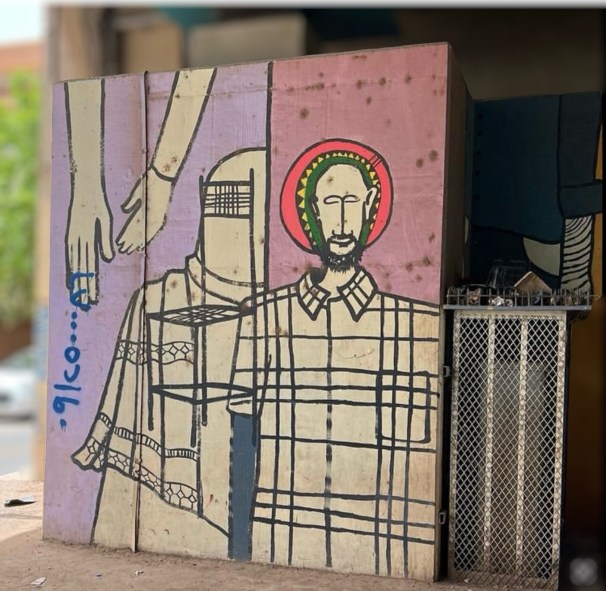
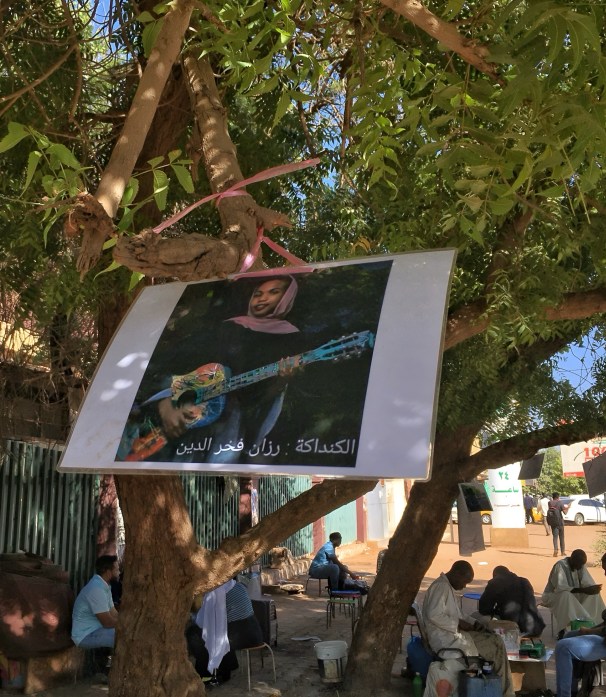
Above, upper left and bottom right, details of a mural by Galal Yousif, “for the people, by the people”, under Mek Nimr Bridge, Khartoum, photographed 2022. Lower left, a photo of a young woman shahiida, or martyr of the 2019 revolution, seen on Qasr Al Nil. Upper right, a young Mohammad Wardi and Mahjoub Sharif, Sudanow, Some Scenes from “Sudan Joy”
Below, Sing, O Khartoum, Sing”
A Working Translation
Sing, O Khartoum, sing and infuse the singer’s chords; the phrase used is literally “to tune / pull the strings of an instrument; / and from your martyr’s brow flood with light your evenings and rest assured / we are the wind that blows from you, a fire that flares up in the faces of those who betrayed your name (possibly a reference to Nimeiri and his followers whom Sharif held to have betrayed the values of the revolution), O beautiful one / and we, O Lady of the Beloved; a poetic epithet for Our Mother (from your fruits, and we are of your fruits; this is not sung in the version above) in the paths of the night we are your day / and before your so long awaiting, we come. /
Ahmed Elzobier translates sections of this opening part as:
“Sing Khartoum sing / the mother of loved ones, we are your fruits/ in the paths of nights, we are your days /before your waiting prolonged / we have arrived …/ we arrived as you embraced us.”
We are those they said had died, were dead / they said had left, were gone / they told the people were finished / we came as before, embraced in your bosom / And when your knight; see above the reference to knight; here Sharif is referring to the true guardian of the revolution) among us rises and fills your lap with love and hope / he will awaken the fire of revolution once more / and come to us deep within / like the rays of the sun pouring in through every doorway / coming to us stronger now, / he lays his hand upon your shoulder, waves (aloft) the leaflet; this may refer to the publications of the anti-Nimeiry Marxist Vanguard Party; محجوب شريف.. يكاد سنا برقه..!! (1 ـ 2) ) proclaiming the good news. That very day in your eyes will bloom the green branch / and joys far greater than your weight of sorrows and your chains, O beautiful one
/ That day is the birth of your martyr / so sing and meet your joyful celebration / and to your fruits stretch out your hand / a struggling generation has broken loose the hold upon your neck / your shackles /
From our (just) anger of scorching heat / so many on the morrow / from the dungeons of the military (freed) / we will build your glory and your festivals / and every drop of blood shed for you / and for your new beginning, O beautiful one.
My thanks to Muna Zaki for all her guidance and expertise.
See annotations on the text in Mahjoub Sharif’s Anthem: Sing O Khartoum Sing.
Another Khartoum Khartoum Streets Khartoum at Peace
Khartoum in May Khartoum Collage
 Women's literacy in Sudan