

The Gamar Boba Part 1
The Changing Symbolism of the Gamar Boba
القمر بوبا
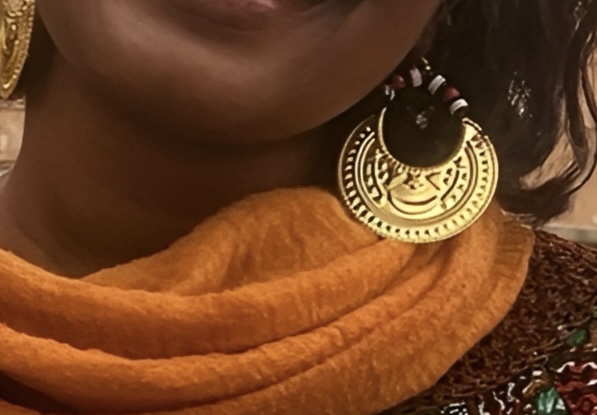
Above, and title photograph, the glowing gold crescents and beaded hoops of gamar boba earrings, joyfully worn by a young woman in 2022. In recent years the gamar boba, also known as fi/adaw, fidayat, have been donned with pride in homage to the visibility and values of pioneering Sudanese women entering post-independence public life. Worn too as a badge of nostalgia for a lost aesthetic and embodiment of femininity, for many younger Sudanese the gamar boba conjures up a host of tender associations with the wisdom and dress of their grandmothers. In the heady days of the 2019 revolution, wearing the gamar boba became a totem of faith in a renewed Sudanese identity striving for inclusivity while anchored in tradition.
The Changing Symbolism of the Gamar Boba
Historical Notes on the Gamar Boba and its Name
More Artistic Iterations on the Gamar Boba
Mohammad Wardi’s Gamar Boba
The Changing Symbolism of the Gamar Boba

This week’s post is a brief visual tribute to a remarkably versatile item of jewelry. From an essential element in traditional gold-bedecked wedding Jirtig attire to being the signature piece against the pared-back elegance of a designer black T-shirt, the gamar boba has been endlessly refashioned and re-interpreted, embodying both cultural continuity and chic. It can be found as motif on mobile phone cases, worn as brooches on tailored suits and toubs, and depicted in countless posters, echoing the halos around the profiles of white-toubed heroines. It encapsulates too a newfound pride in Nubian history and its ancient queen warriors.
For Sudanese far from their homeland, the gamar boba evokes the yearning and incomprehension of cultural exile, as in Safia Elhillo’s Ode to Sudanese Americans; “& we pierced / our noses & wore gamar boba / in our ears & everyone at the party / thought them hoop earrings…”

In the midst of war, Girton College Communication Prize Winner, Hadeal Abdelatti, speaking about “treasures and conflict“, tells us that the “Fidaw or Gamar Boba felt like a treasure” to her, tenderly recalling her grandmother singing the iconic line from Mohammad Wardi’s wistful ballad to his beloved, Gamar Boba (see below); “You are so delicate that even these earrings are too heavy for you.” Left, street mural in Atina Square, Khartoum, now in ruins.

Join us next month when I explore the origins and history of the gamar boba in greater depth, joined by expert jeweler designer and curator, NIsreen Kuku, who has very kindly offered to talk about her personal journey conserving and reviving the gamar boba.
Below, the iconic image of the revolution; Alaa Salah, clad in the white toub traditionally worn by pubic sector workers, her gamar boba earrings glinting in the sun, as she leads crowds of demonstrators in chants during the Sudanese anti-government protests of 2018 – 2019. The photograph was taken by Lana Haroun, Wikicommons.

See too “All visible rays of light” The White Toub
Historical Notes on the Gamar Boba and its Name

While many emphasize the islamic symbolism of the crescent moon, echoed in so many Sudanese adornments and protective Jirtig artifacts, others speculate that the gamar boba form itself is of pre-Islamic, Meroitic or even Byzantine origin and formed part of headdress or crown adornment. Over time it came to be particularly associated with northern Sudanese and Nubian bridal attire.

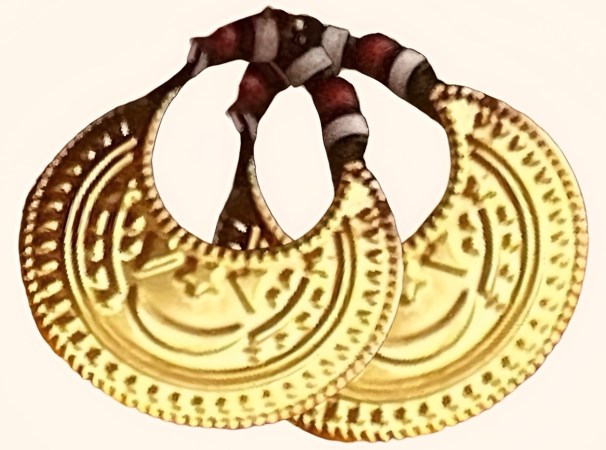
The gamar boba can be made of gold, silver or fine filigree work. Jewelry expert and designer, Nisreen Kuku dates its modern use to the early 1930s and notes that three earrings were sometimes worn in each ear. The word gamar is “moon” in Arabic and “boba” is Nubian for “glowing”, “shining” or “radiant”. The designer explains that the piece is also known as zimam, al-fadou, tamim, or the larger akash, زيمام الفدو تميم العكش – the latter from shagiya dialect. The Beja people know it as tallal and is worn high up on the earlobe because it is large and heavy – one earring weighs an ounce of gold. The crescent is embossed with symmetrical plant motif, Nisreen Kuku, Tallal. RIght, Nisreen Kuku’s tallal collection.
Griselda El Tayeb noted that the fidayat and its larger, heavier sister piece, the mutgal, associated with wedding celebrations, along with other traditional pieces, were starting to disappear in the 1960s and “women had all their gold beaten into bracelets called ghuwaishat.
Above left, profile of woman wearing gamar boba, c. 1950, Pinterest.
More Artistic Iterations on the Gamar Boba
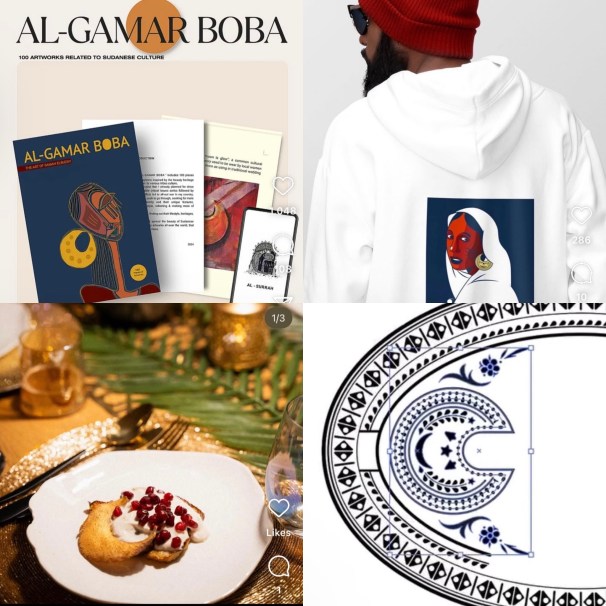
Top right, sweatshirt design by Rana Jubara, from her Habouba in Gamar Boba range, see below for Rana’s playful take on Johannes Verneer’s Girl with a Pearl Earring, depicting the traditional Sudanese grandmother of the 1960s with her tribal facial scars, inked indigo lip, white toub and elegant gamar boba earring.
Top left, sama7arts publication with its beautiful imagery based around the gamar boba. Lower left, a delicate culinary tribute to the gamar boba by Sudanese Tokal. lower right, a bag motif for Sudanese clients inspired by the gamar boba, by Meisa Brands.

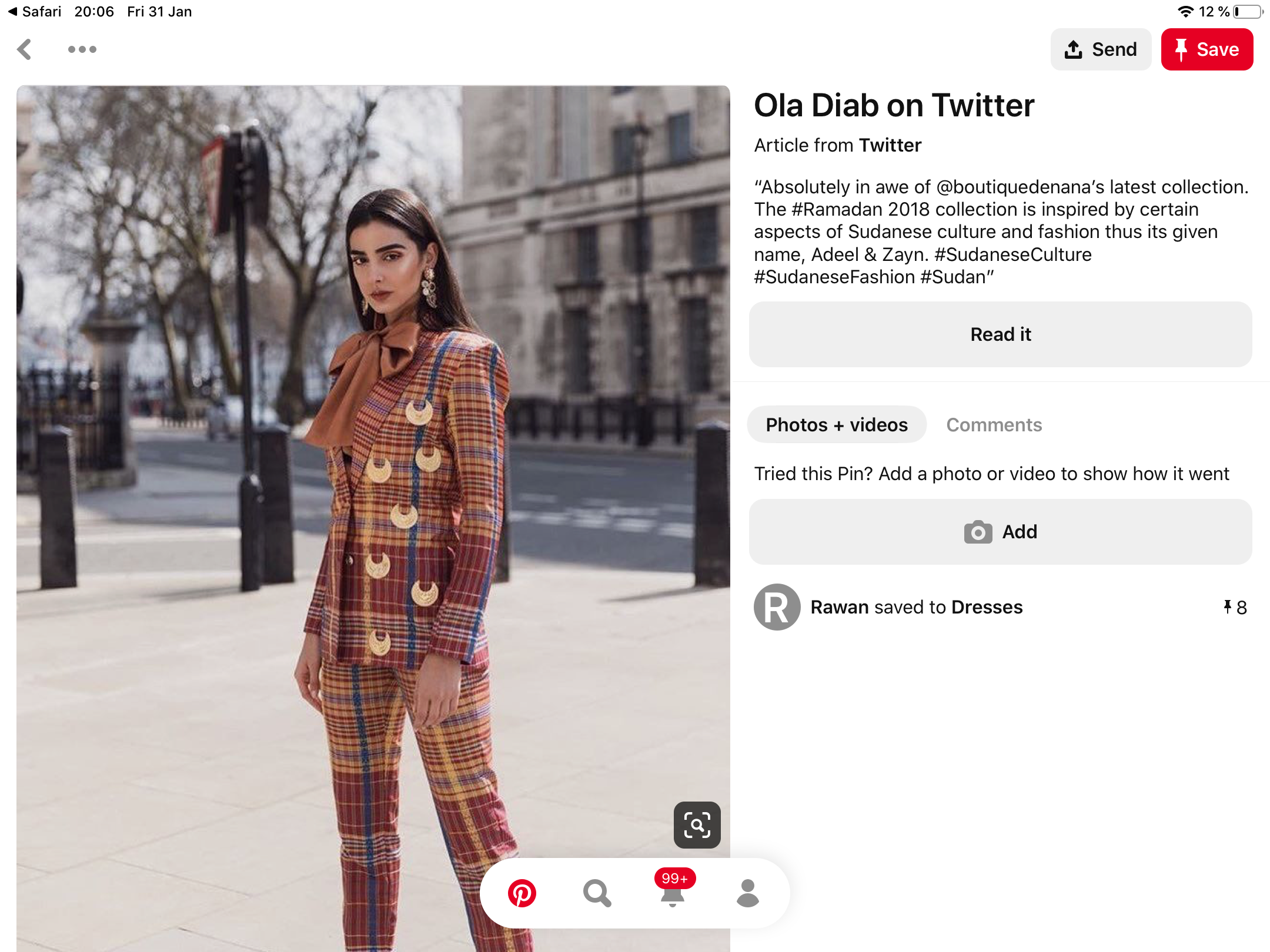
Below, from the Boutique Denana?s 2018 Ramdan Collection.
Mohammad Wardi’s Gamar Boba
Below, Mohammed Wardi’s Gamar Boba with English translation. The song is believed by many to be of Shagiya heritage and the composite work of several poets. Others attribute it to Ismail Hassan or Abdel Kareem AlKabli. The ballad has lent itself to countless tributes and cover versions.
You might also enjoy:
“A Necklace of Shells from Distant Seas…”
“All visible rays of light” The White Toub The Enduring Appeal of the Sudanese Toub
The Hagu / Hagoo “Who will trace the kohl for our eyes?”
Conserving Sudan’s Timeless Treasures Part 1
In Conversation with Nisreen Kuku
 Women's literacy in Sudan