

Sudan’s Christian Heritage Looted
Medieval Christian Frescoes from the Cathedral of Faras, Sudan National Museum
A Photographic Tribute

Setting the Scene
The internet is awash with images of the vandalism and looting of Sudan’s National Museum. Rather than reproduce heart-rending scenes of destruction, this brief post is a photographic tribute to the irreplaceable treasures from Sudan’s Christian past once housed there. This post also includes related artifacts exhibited elsewhere.
Above and title illustration, an exquisite, 11th century fresco in vibrant tones of red and gold from the Cathedral of Faras. It depicts a scene from the Book of Daniel where three Hebrews captured by Neo-Babylonian king Nebuchadnezzar face death in a furnace “so intense that the guards who brought them there were burnt”. Their courage and refusal to renounce their faith is attested by their miraculous salvation from a fiery death. The fresco, loyal to prevailing Coptic and Nubian tradition, depicts Archangel Michael descending with outspread wings of peacock feathers and flowing robes to protect the young boys. Coptic representations of sacred themes were often informed by late Roman and Byzantine imagery.
Scroll down to the end of this article to read more on this work.

Above, a 3D model of the Cathedral and monastery of Faras, founded in 707 AD and marvel of Christian-era Sudan, Faras Gallery, Warsaw Museum, CC. A team of Polish experts saved the murals from the monastery before the site was submerged by Lake Nasser after the completion of Egypt’s Aswan High Dam. The first floor of the Sudan National Museum was dedicated to artifacts from this unique period in Sudan’s history. It lies in wreckage now.
Scroll down for more information on the Cathedral of Faras. See too Faras Gallery, Warsaw
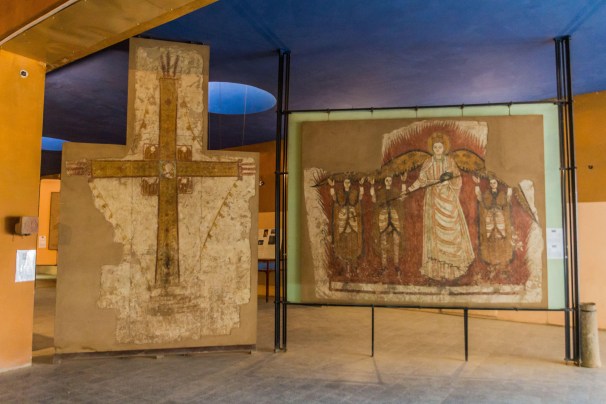
Above, the upper galleries of Sudan Nation Museum, pre-war. It is reported that the entirety of the museum’s Christian Sudan’s collection has been looted. Photo, Alamy reproduced under licence.

Above, stunning recreations of Christian Nubian dress, based on Faras frescoes, Medievalistsnet
Unless indicated otherwise, the images included in this post are published by me under licence with Alamy, and may not be reproduced.
Sudan’s Christian Heritage Looted
Medieval Christian Frescoes from the Cathedral of Faras, Sudan National Museum
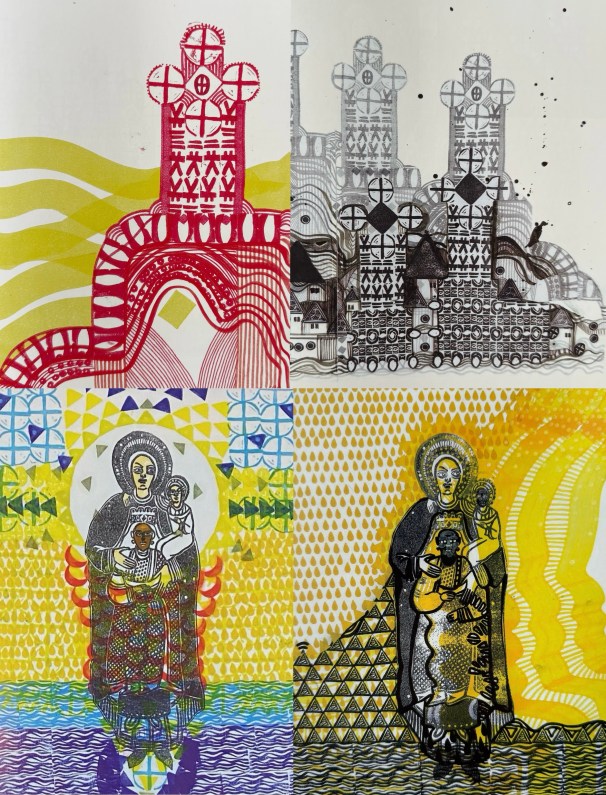
Sudan Retold defines itself as An Art Book about the History and Future of Sudan, and was published in the heady days of the 2019 revolution. It features Sudanese artist Dar Al Naim‘s series of hand-printed stamped, pen and ink collages of the city of Faras, pictured left. Drawing on published records and the personal stories of her father, renowned artist, Rashid Diab, Dar Al Naim sought in her works to give “this land another chance…..to reconstruct the city of Faras and resurrect it”. The series was one of many in the collection exploring “the spectrum of identities that being Sudanese entails beyond skin colour and religion..” (Sudan Retold). Images left from Dar Al Naim, Instagram and Sudan Retold.
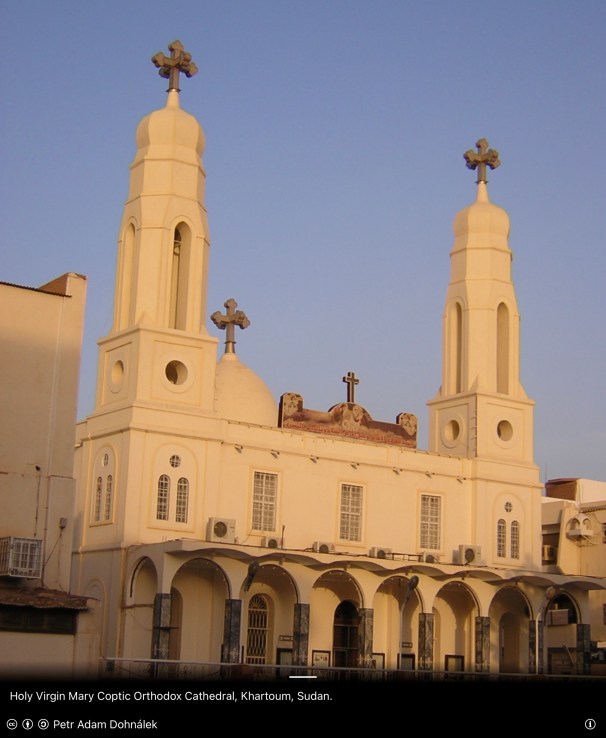
Upper right, Holy Virgin Mary Coptic Orthodox Cathedral, Khartoum, CC. Below right, from Goethe Institute’s publication dedicated to Sudan Retold.
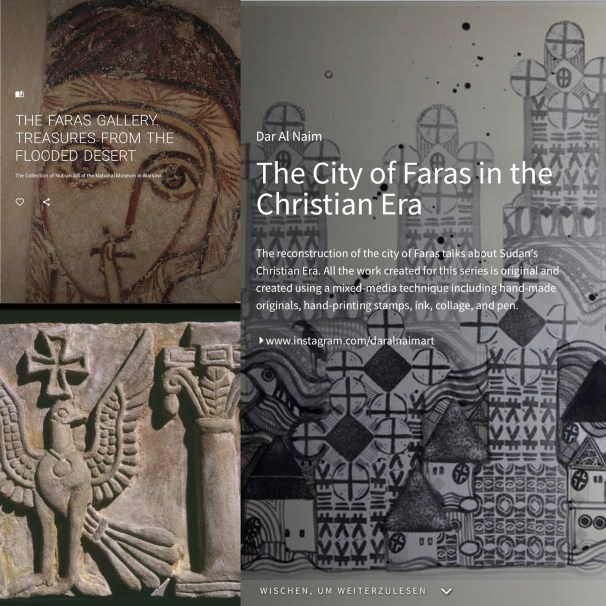
Dar Al Naim’s delicate recreations of Sudan’s Christian artistic heritage take on intense poignancy today as we learn more of the brutal destruction and looting of Sudan’s National Museum. The retaking of Khartoum by SAF forces has restored press access to some areas of the capital and the full extent of the RSF’s cultural vandalism is documented in all its senselessness. You can see the scale of the destruction in the Sudan National Museum in The Guardian’s recent report: New images reveal extent of looting at Sudan’s national museum as rooms stripped of treasures
The priceless Christian murals from the Cathedral of Faras housed in the museum are just some of the many treasures looted or damaged during the war. See too Sudan’s Cultural Treasures Looted 1 on damage to Sudan’s Ethnographic Museum, and Sudan’s Cultural Treasures Looted 2 on the looting of The Khalifa’s House, Omdurman.
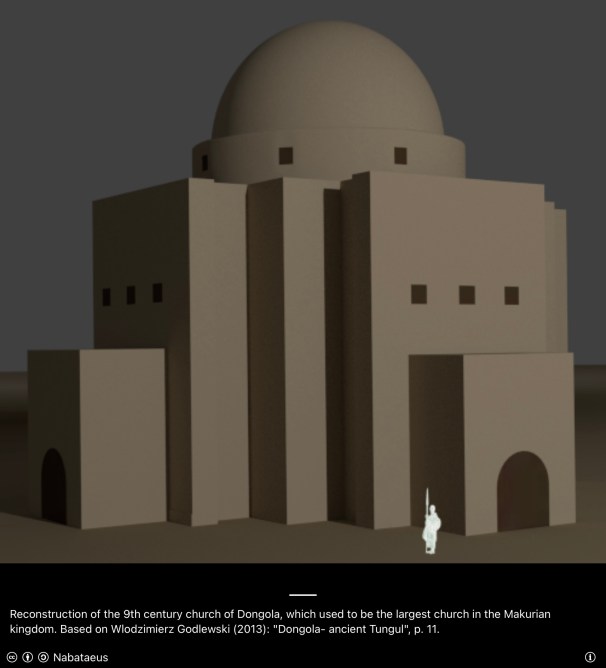
Above, reconstruction of the 9th century “Cruciform Church” of Dongola. It was the largest church in the kingdom of Makuria. It served as a source of inspiration not only for many Nubian, but even many iconic Ethiopian churches.
Below, details of Kamala Ishaq‘s murals (photo, Imogen Thurbon) which graced the entrance hall of the museum, many of which were inspired by the museum’s Christian art collection. Among the scenes depicted, were the crucifixion and the Madonna and child.

See all Ishaq’s Sudan National Museum murals in Kamala Ishaq at Sudan National Museum
Below, gallery owner and curator, Rahiem Shadad‘s moving commentary that so powerfully captures the impact of the looting of Sudan’s National Museum:
More Highlights from the Collection

Above, the nativity of Jesus Christ, 11th century fresco. photo by Isma`il Kushkush, also attributed to Wikicommons, and published in Looting of the Sudan National Museum. See more on this piece at the end of this post.
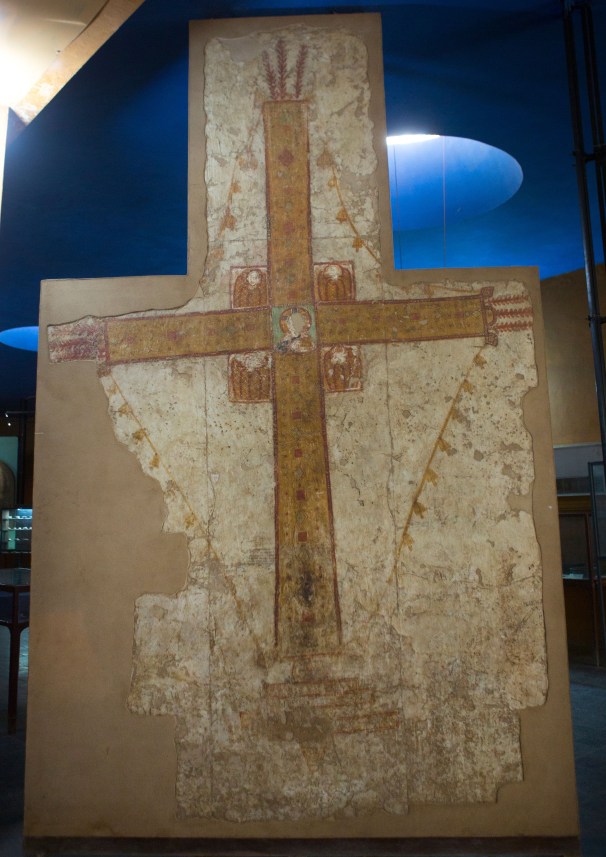
Above, 10th century cross from the Cathedral of Faras, Sudan National Museum, Alamy, under licence.

Above, A fine early Coptic wall mural depicting the Virgin Mary and Jesus, monastery of Faras. Photo and caption, Alamy, under licence.
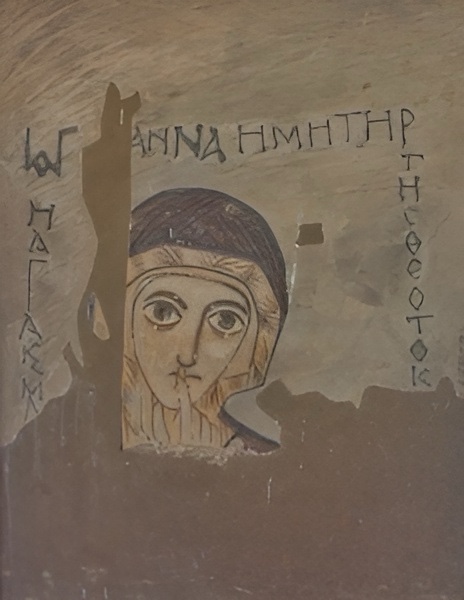
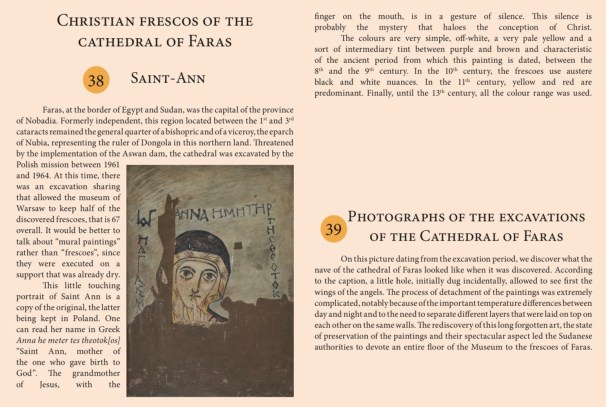
Above, delicate 8th/9th century portrait of Saint Ann, copy, Sudan National Museum. The original is held in the Warsaw collection, photo Imogen Thurbon. See more on this piece below.

Above, 13th century fresco of Archangel Raphael, from the Church of Abd El Gedir, Sudan National Museum, photo and caption Alamy, used under licence.

Above, set of tableware pottery, Soba ware, discovered in the archeological site of Soba, the capital of the medieval kingdom of Alwa. Photo, CC.
The Cathedral of Faras – The Context

“Faras, at the border of Egypt and Sudan, was the capital of the province Nobadia. Formerly independent, this region located between the 1st and 3rd cataracts remained the general headquarters of a bishopric and of a viceroy, the eparch of Nubia, representing the ruler of Dongola. Threatened by the implementation of the Aswan Dam, the cathedral was excavated by the Polish mission from 1961-4.” (Museum Illustrated Guide). Under the excavation agreement, half the 67 frescos or wall murals unearthed were sent to Poland to be exhibited there.
“Nobadian rulers controlling the Nile Valley from the first to the third cataracts converted to Christianity around 548 AD influenced by missionaries sent from Constantinople by the Empress Theodora. The first cathedral was erected in the 7th century, when the city was still known as Pachoras, and likely stood at the exact site where Polish archaeologists taking part in the Nubia Campaign discovered the subsequent 8th century cathedral.” Photo, screenshot; Faras Gallery, Warsaw
Below, excerpt from Sudan National Museum online guide, open access, providing more details on the exhibits above.


 Women's literacy in Sudan
beautiful piece. What a shame. Iconoclasts one and all.
LikeLike