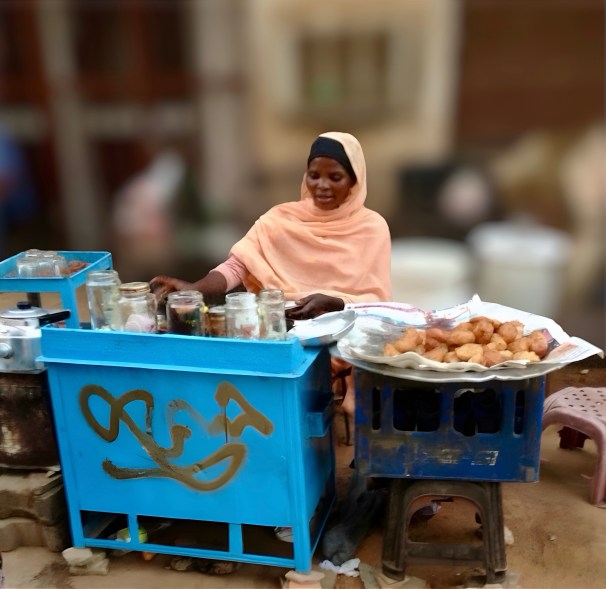
Sudanese Zalaabiya
Sudanese Drop Donuts – Symbols of Resilience
Setting the Scene
Today The United States of America celebrates National Donut Day. On 6th June,1938, Chicago Salvation Army offered donuts in a fundraising drive to help those in need during the Great Depression. The event also served to commemorate the “Donut Dollies” – Salvation Army women volunteers who travelled to France in 1918, providing baked foods, clothes and clothes mending services to American servicemen out of abandoned huts near the front line.
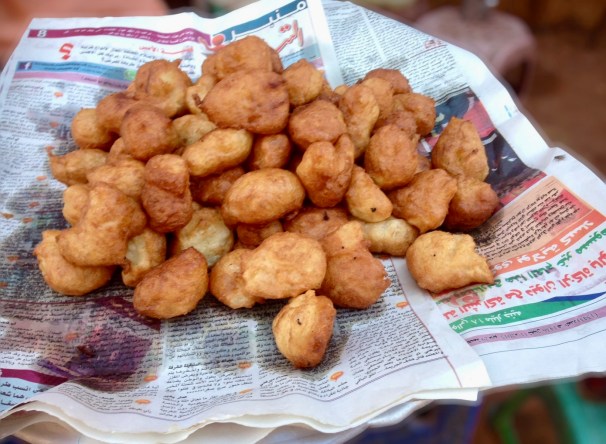
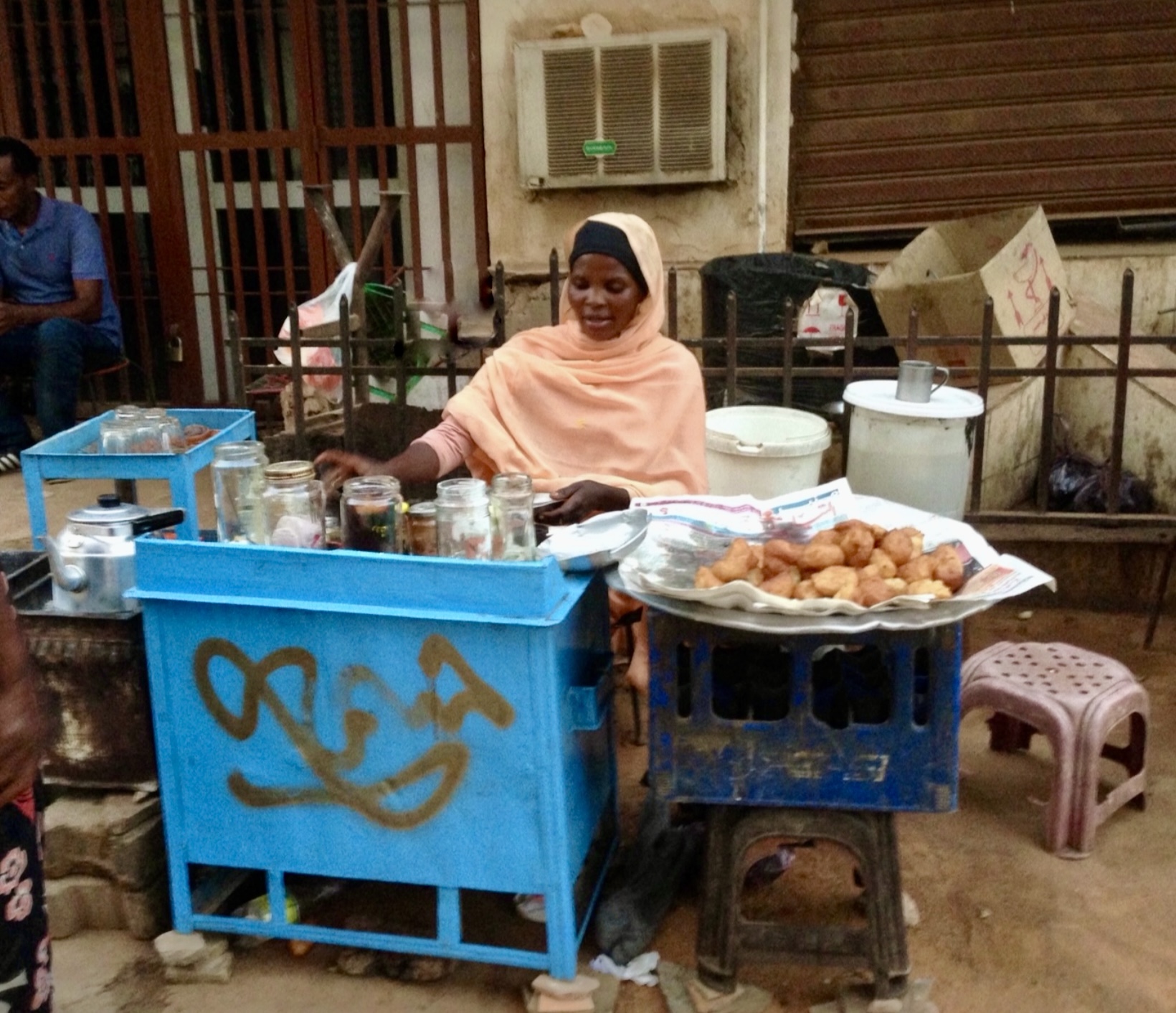
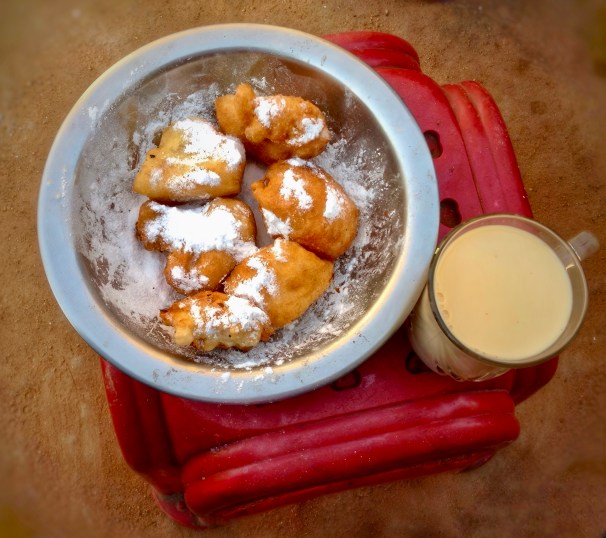
Above, Sudanese drop donuts or sweet dumplings, fresh from the pan from a tea seller in central Khartoum, pre-war. Lighter, crispier and infinitely less cloying than British or American versions, these deliciously fluffy morsels are enjoyed throughout the Middle East and East Africa. Known as luqaimat al Qadi Judge’s little morsels / bites, in Egypt, and awameh in Jordan and the Levant, for the Sudanese they are zalaabiya or ligaamaat.

For an interview with the zalaabiya maker, pictured above, still from Sudaniya 24 TV and his recipe, see Fresh from the Pan
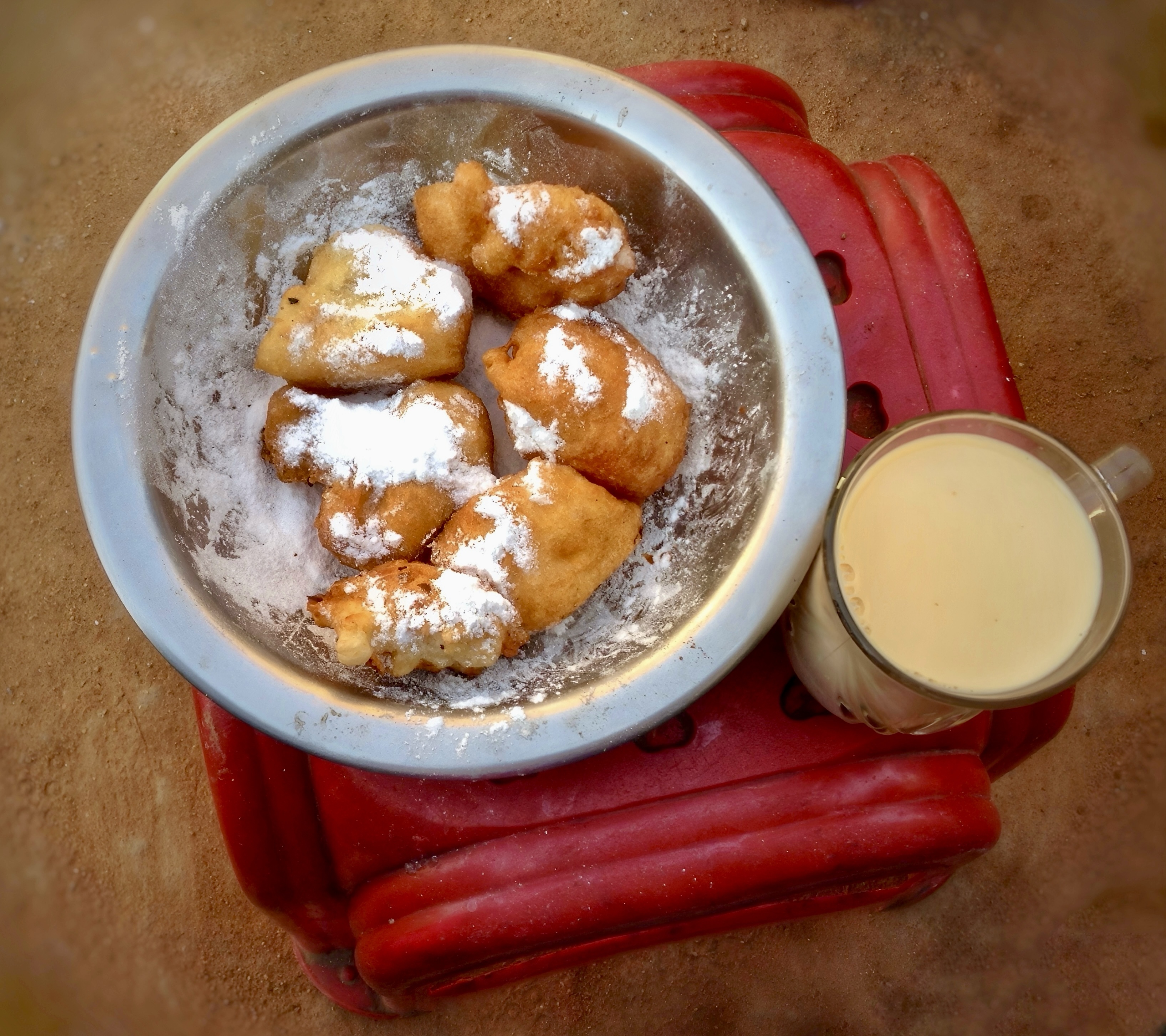
A breakfast or sunset treat, served with sweet, “burnt milk tea” or “shai mugannan”, shown below, zalaabiya are also a firm Ramadan favourite. In Sudan they are typically served warm with a sprinkling of icing sugar – though as we see below, that is changing. In other, Middle Eastern traditions, they are served drizzled with homemade sugar syrup, honey and even the delicate addition of orange blossom and rose water. See too Luqaimat.

Nearly forty years I was in Meroe, convalescing from a two-month bout of malaria. It was there I became addicted to zalaabiya, devouring piping hot bowl after bowl, convinced they did more for my recovery than all the anti-malarial drugs in the world.
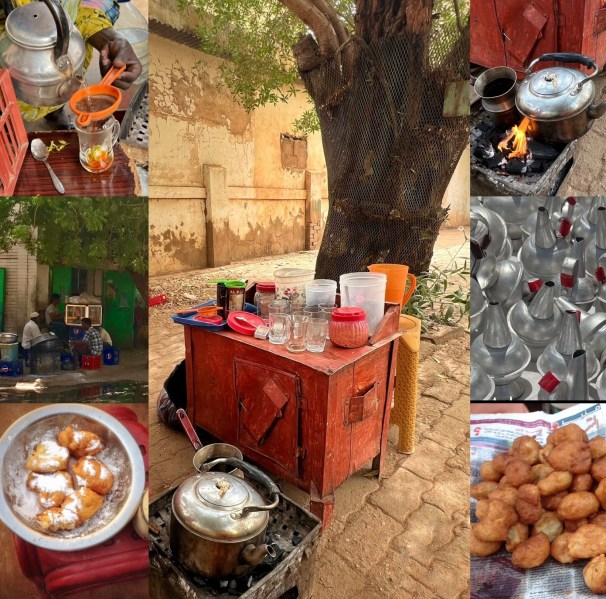
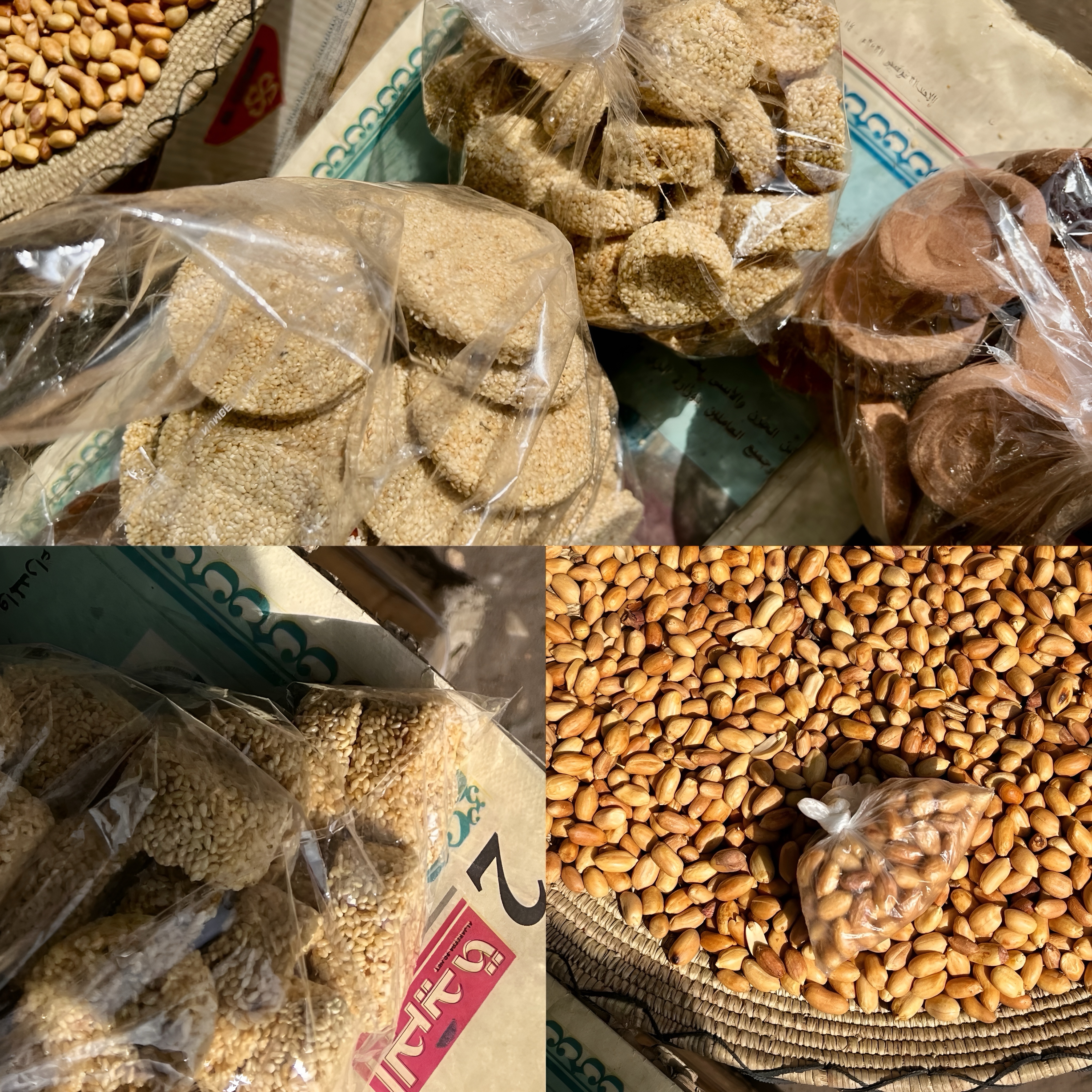
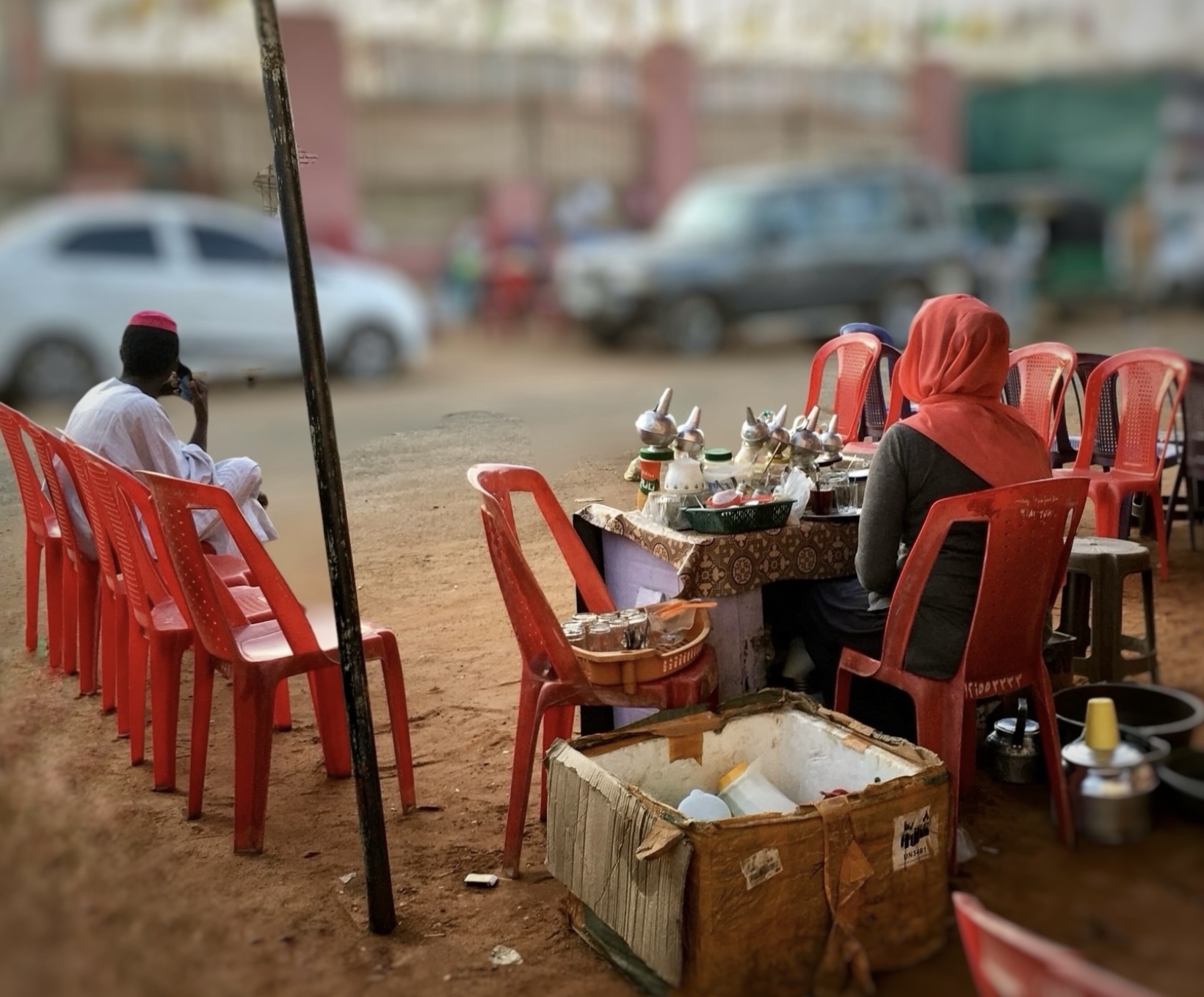
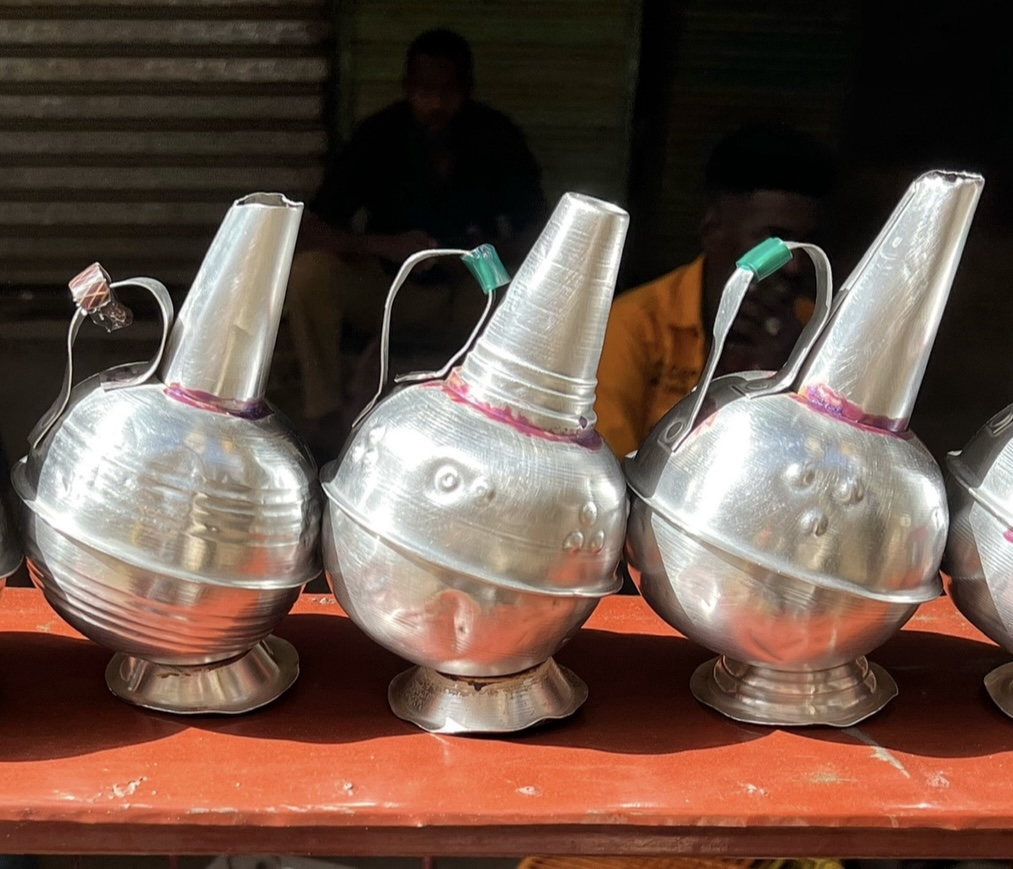
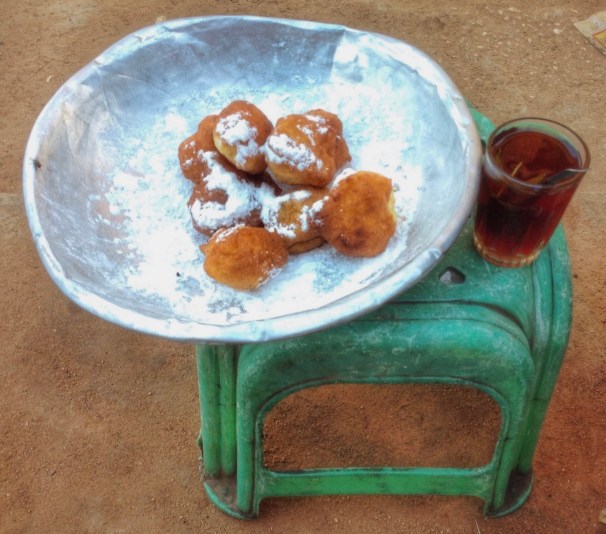
Above, tea, coffee and zalaabiya, central Khartoum, pre-war. Below, tea, coffee and zalaabiya sellers, sesame seed cakes and biscuits, peanuts and doum powder cakes. These street food staples allowed so many women before the war to earn essential extra income to support their families.
Selling Donuts in Khartoum: Vignettes
Fatima Abdel Karim, interviewed in AlNilil, has sold donuts from six in the morning to midnight, day in, day out for twenty years. Under the glare of a scorching sun and the furnace blast of her metal pans and charcoal stove, her work has made it possible for her to bring up her four children alone, send them to university and meet their wedding costs. Over the years she has survived rising fuel, cooking oil and flour costs, and constant police raids.اس (الكشة) عذبونا.. عين مع الزبون وعين معاهم الحاجة فاطمة (زلابية)
Medina Adam Abdullah, known locally as Halwa, was owner of the famous “Sitt Ash-Shai” cafe on Nek Nimr, Khartoum. Famed for the cafe’s zalaabiya with cumin, Sitt Ash-Shai was frequented by journalists, intellectuals, public sector and government workers. Following in the tradition of cafes hosting cultural salons in early 20th century Khartoum, it became a hub for both writers and the young revolutionaries of 2019; its star waning when the Sudanese intelligence forces or NISS established their offices on the street opposite. Since the outbreak of war, Medina is now in Cairo. (From Emarat Al-Youm)
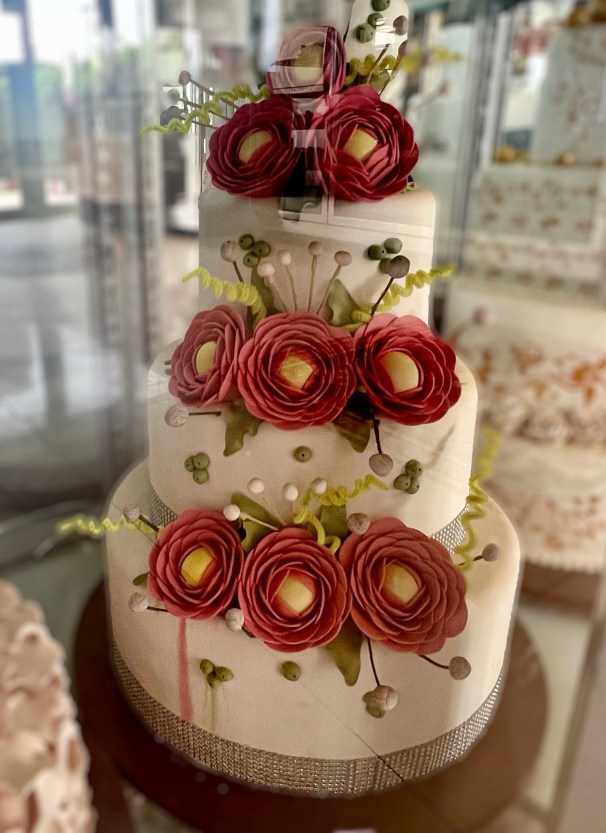
Before the war the humble zalaabiya was also becoming refined, with Sudanese pastry chefs in the elegant cafes of upscale neighbourhoods like Riyadh honing and adapting recipes, offering cream-filled and glazed, American style donuts and lower sugar versions perfect for Ramadan suhoor.
Since the war, thousands of Sudanese have fled to Cairo and while their stories are harrowing and heartbreaking in equal measure, many are forging a new life there; opening Sudanese restaurants and cafes where they offer Sudanese specialities such as agashi and other grilled meats, pastries and of course, zalaabiya with “shai mugannan”, all tailored to Egyptian tastes – toning down the shatta sauce and the salt levels in their zalaabiya dough. Famous Sudanese chains have opened up branches in the Faisal district – home to so many Sudanese cafes – and some are even offering henna-ing services for their clients. See المطاعم السودانية في القاهرة.. تجارب وليدة فرضتها الحرب and المطبخ السوداني يزدهر في القاهرة
Left, elegant cakes in Riyadh pastisserie, pre-war.
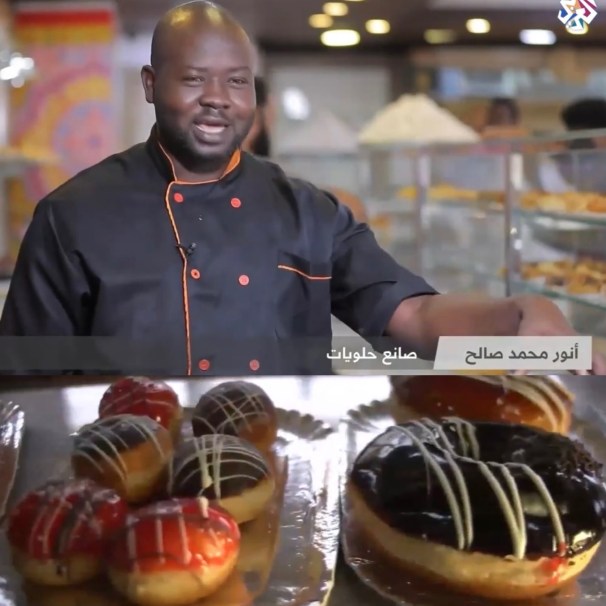
Above, chef Anwar Mohammad Saalih with some of his Ramadan donut delicacies, still from الحلويات.. سيدة المائدة الرمضانية في السود .
Sudanese Zalaabiya – Symbols of Resilience
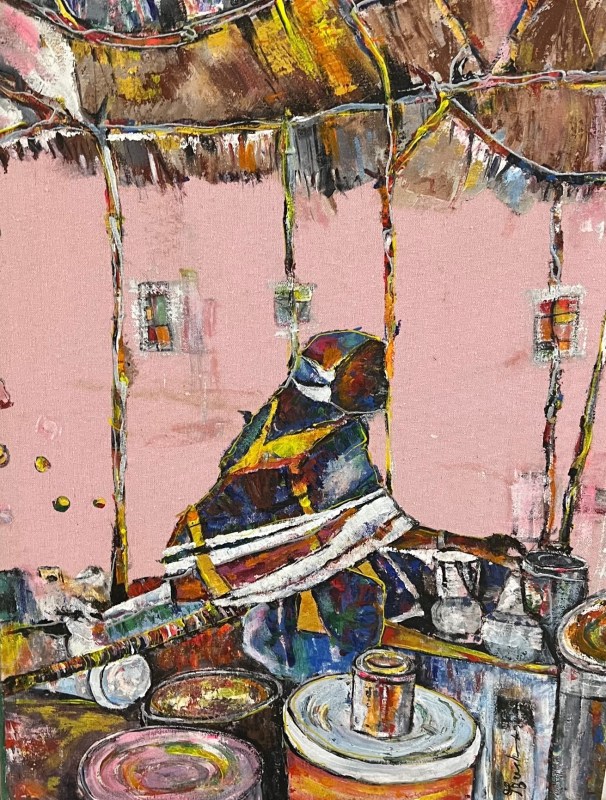
Since the outbreak of war, community initiatives to provide food, fuel and shelter to civilians have taken root throughout Sudan, offering thousands of meals a day, anonymously and with respect and dignity to the hundreds of thousands of Sudanese civilians in need. The Sudan Tribune recently reported on the Faka Riq initiative, operating in northern Omdurman, providing morning tea and zalaabiya as well, of course, as substantial meals by a team of twenty-two volunteers. See too Sudanow’s Communal Kitchens and Community Kitchens in Action
Throughout Sudan, young men and women deprived of their education or the livelihoods they were trained for are contributing to their communities by offering food. صور.. النازحون من الخرطوم لولايات السودان.. دكتور كفتة بكوستي ومهندس طعمية بأم tells the story of two young men in Umm Rawaba making taa`miya, and zalaabiya with cocoa and Nutella at a makeshift stall opposite one of the oldest primary schools in East Kordofan. These young civil engineers, dentists and accountants are re-inventing recipes for kofta and zalaabiya while they serve war-torn communities and help support their own families.