

Watch Your Step, Khawaja, A British Teacher in Sudan, 1958-1966
Peter Everington, Teacher and Advocate for Peace and Reconciliation
September 1934 – 14th May 2025
“Two morning quiet hours by the Nile, either side of sunrise. The mighty river, nearly a mile wide, on its northward flow. A flight of black geese skim the dark water, honking. The rising sun peeps round a mango grove on the other bank. A kingfisher rises from the bank this side, and hovers silhouetted against the sun before diving for its prey. Later in the morning when I return to the same spot, a young crocodile is sunning itself on a rock.”
Above, a contemplative moment from Peter Everington’s Watch Your Step, Khawaja, (p.15) capturing something of the “awesome grandeur and beauty” so resonant to the author of the Psalms of David.

This week’s very brief post is dedicated to the memory of a man of integrity, in the hope that more readers will come to know of his work and delight in his photographs of a lost Sudan; a “Paradise Lost”, as the dust jacket to the original print edition reads. Peter travelled widely while in Sudan, capturing on film life in Wadi Halfa, ancient Nubia, Port Sudan, Aba Island, Darfur, Geneina and Wau. On his many train journeys, he met and became lifelong friends with Sudanese who offered him their kindness, hospitality and wisdom. After leaving Sudan, Peter made twenty-five return visits, the last in 2018.
Upon publication, Peter wrote, “The book comes with warm wishes to the families of both Sudans, as they face today’s challenges and opportunities. If it encourages young khawajas in their desire to relate helpfully to the Arab and African world, so much the better.” At this time of bloodshed and turmoil in Sudan, Peter’s commitment to peace and reconciliation takes on a fresh and poignant relevance.
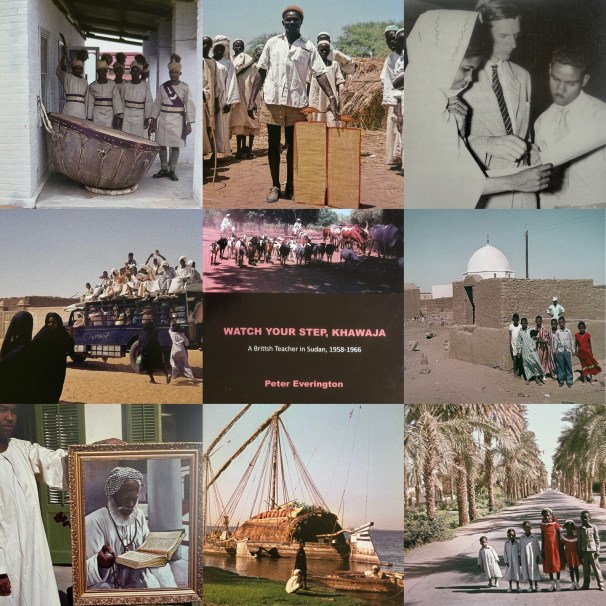
Above left, photo of my copy of Peter Everington’s evocative photographic tribute to Sudan and her peoples at a unique moment in her history, published by DAL Cultural Forum in 2017. It is available to read online and download at Watch Your Step, Khawaja, Ebook. The book also includes commentary in Arabic.
Peter was a regular contributor to The Sudan Studies Society UK and many will miss his gentle presence.

Above, Journal, Sudan Studies for South Sudan and Sudan contents, January 2024.
A Brief Profile: Teacher, Peace Advocate and Critic of Imperialism
“I arrived in Khartoum, aged 23, in September 1958, on a five-year contract to teach English in boys’ secondary schools. I stayed on for three more years as a lecturer in a mixed teacher training college.” (Higher Teacher Training Institute, Omdurman)

Peter worked in Sudan at a time of great political and social change. As Sudanese friends noted, unlike some British teaching and diplomatic staff, Peter threw himself into Sudanese life, venturing out into strikes and demonstrations to learn from those he spoke to there. Explaining the title to his book, he wrote: “In October 1964 a series of strikes and demonstrations compelled the military government of President Ibrahim Abboud to resign. In Khartoum crowds of people poured out into the streets and made their way to the large open space in front of the Republican Palace.” He goes on: “From my flat nearby I walked to observe this outpouring of Sudanese pride and joy, a lone foreigner. In my path stood a man holding a bicycle, with a young boy sitting on the crossbar. As I approached the boy called out, “Ya khawaja, a’mal hisabak – Hey you white European, watch your step!”
Peter’s anecdotes of school life – both academic and sporting, the patience and support he received from Sudanese colleagues who overlooked his cultural missteps and inexperience, as well as his students’ lively reactions to cultural differences will resonate with anyone who has taught in Sudan. He recalls, for example, his students’ bemusement at learning that flowers or indeed requests for “No flowers” were part and parcel of British funerals, noting “After a cautious look to make sure I was not offended, the whole class burst into roars of laughter”.
Peter’s service in Sudan was informed by his profound Christian faith, a faith enriched and broadened by living within the Arab-Islamic spiritual tradition. HIs involvement with the not unproblematic Moral Re-Armament movement, MRA, later renamed as Initiatives for Change, re-enforced his commitment to building a post-war world where hatreds were dissolved through personal transformation, trust and inter-faith understanding. In Watch Your Step, Khawaja, (p122) he quotes his professor and eminent Arabist, Arthur John Arberry; “The bridge of trust needs rebuilding and your generation must do it, because mine is now discredited”.

Peter went on to work with peacemakers and parliamentary fora at home and in several African and Middle Eastern countries. MRA’s message was taken up by prominent Sudanese public figures of the time, including Ahmed Al-Mahdi and Dr. Mohammad Al-Murtada, see Supporting Sudan’s Peacemakers and A Southern Politician, p 188, Watch Your Step, Khawaja.
Unlike many at the time, Peter was prepared to critically re-examine official narratives of British colonialism and empire and his encounters with Irish and African friends forced him to confront what he describes as his own “secret feeling of superiority”, publicly acknowledging that “there were many things to be ashamed of in our past”. He saw Arabs and British as “similar in virtues and failings” and embraced the hope that “we could be absolutely honest about our past, and join a brotherhood and sisterhood of change and restitution.”
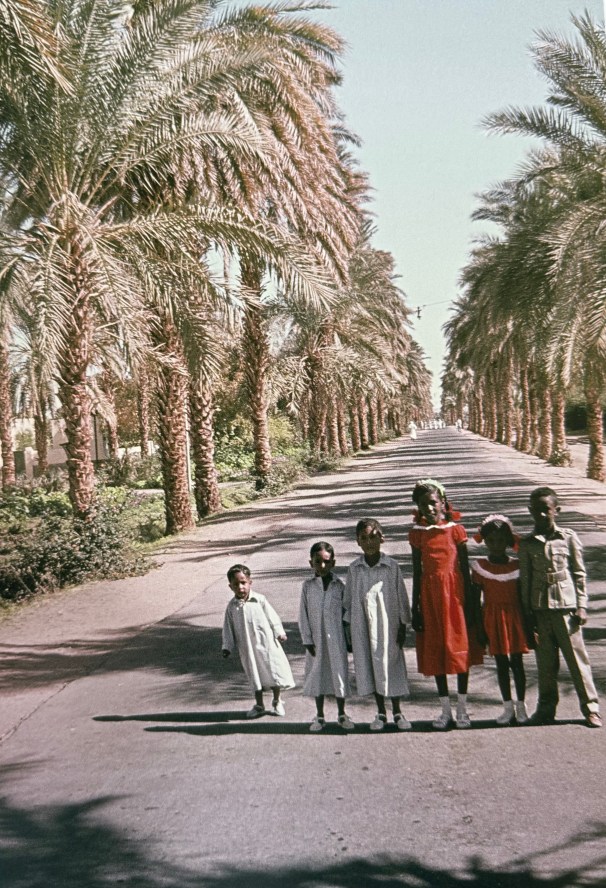
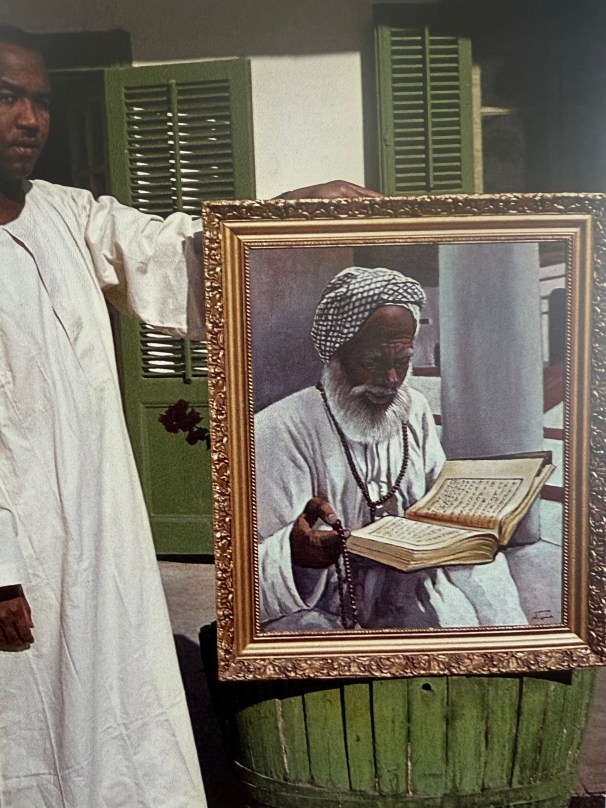
Upper right, Halfa children dressed for Eid; above left, Commissioner Hassan Dafallah with Osman DIgna portrait. Above right, Sultan Ali Dinar’s drum. All photos from Watch Your Step, Khawaja, Peter Everington, DAL Group 2017.
In Watch Your Step, Khawaja, he writes: “alongside the frequent arrogance and rigidity of an imperial policy, Britain had sent many people to Sudan with a competence, integrity and humanity which the Sudanese remembered with affection.” (Watch Your Step, Khawaja, p72). This was certainly true of Peter Everington, who was remembered with great affection by his Sudanese colleagues and friends.
I close with one of the most moving of Peter’s testimonies:
“A 14-year-old Northern Sudanese schoolboy once told me a story about his grandfather. The old man in his young day had been the rear guard of a line of South Sudanese slaves yoked together for their trek North. The slave at the end escaped, which meant that the guard would be punished. So the guard killed the next man, smeared his blood on the end of the chain, and told the slave master that a lion had killed the last two slaves. I think of that elderly grandfather, perhaps troubled in spirit by memories of his past, and confiding in his schoolboy grandson. Sometimes schoolboys confide in a teacher, even a foreign teacher, if they feel troubled. It is entirely possible that an ancestor of mine, any of us white British, carried out an equivalent act of cruelty in a slave-ship on the Atlantic or on a Jamaican sugar plantation.”
Watch Your Step, Khawaja, p185-6. See too Peter Everington Teacher and Friend of the Arab World
You can donate in memory to Peter to the Everington family’s CAFOD emergency appeal for Sudan fundraising drive at
 Women's literacy in Sudan