

Are You Sudanese / How Sudanese Are You?
“Asmarāni Sūdānī” recites his Poem, Are You Sudanese?

This week’s post offers a rough working translation of a popular poem by social media content maker “Asmarānī Sudānī“, pictured below. The poem, insert above, was kindly transcribed by Muna Zaki. It is lively, fun and packed with Sudanese colloquial expressions. It is also bursting with references to Sudanese culture, some of which are illustrated above.
Top left, a metal griddle used for cooking flatbread and other dishes, and known as a dōka, next to a donkey running at full pelt. Middle left, kicking a football with barefoot toes, next to a Mahdist-era tunic, known as a jibba. Next to the jibba is a cyclist peddling along, his chest to the breeze. Lower left, a northern Sudanese grandmother, known affectionately in Sudanese Arabic as Habooba, beside a farmer working the soil with his hoe or Tūriyya. Main image, sprinkling down the earth floor of a northern Sudanese mud courtyard to cool the air and settle dust.
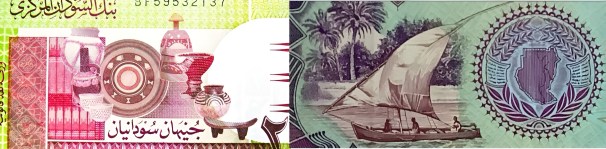
Above, emblems of Sudan, detail from Sudanese bank notes.
You can listen to the poem and enjoy the lively rhythm and rhymes by clicking on the link below.
Are You Sudanese / How Sudanese Are You?

Below, an illustrated rough working translation of the poem. I have included transcription of rhyming pairs to aid appreciation. A detailed word-for-word breakdown of the poem and glossary, the latter most kindly provided by Muna Zaki, will be available shortly in my sister blog.
A thousand thanks to Muna Zaki for all her explanations and guidance.

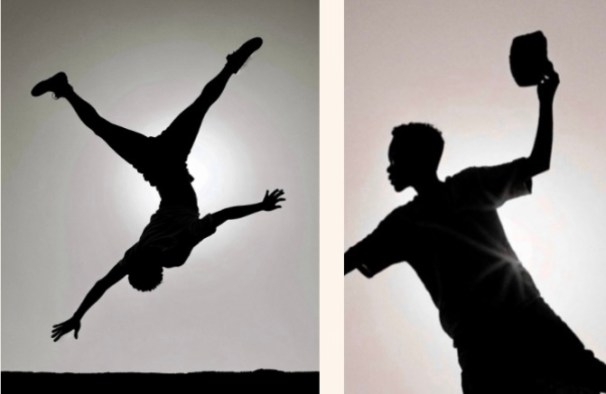
Have you eaten kisra with black-eyed beans, kisra bil-luuba? (This dish is pictured far left. Kisra is both wafer-thin flatbread used to dip into stews and sauces as here, and kisra `aSiida, a stiff porridge made from sorghum or millet flour and water, with sourdough). / Do you know how to do a somersault; taglib al-huuba? / Have you ever seen a rakuuba? (This is a wooden, palm-roofed sun shelter, pictured left). Has anyone ever pelted you with bricks, (or hurled a brick at you), literally a (mud) brick (Tuuba) /
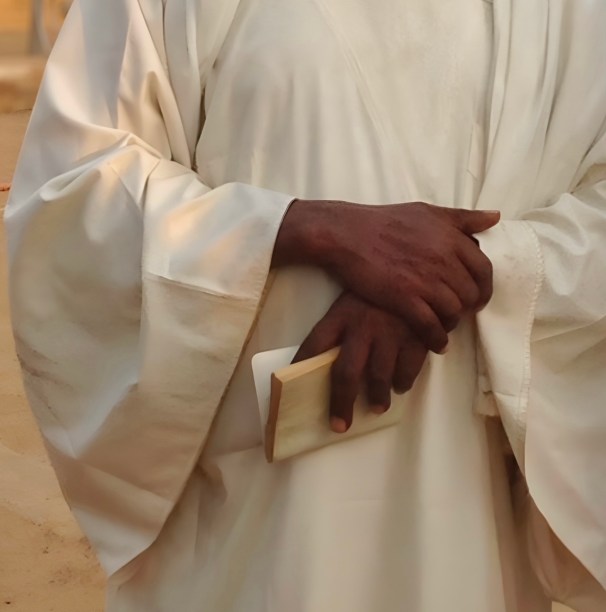
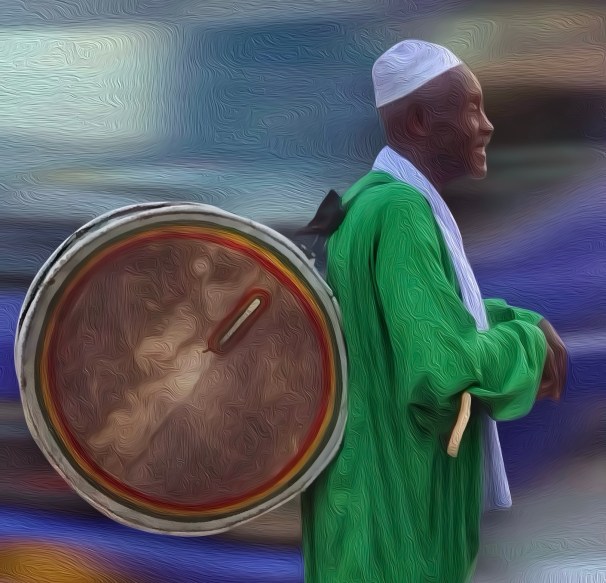
Have you ever worn a jibba back to front; magluuba? (The original Mahdist-era man’s tunic was donned in haste in the heat of battle and so was designed to be worn either way round. The word also refers to the traditional Sudanese jalabiyya worn by men today – some Sufi order wear versions sporting a pocket on the back). / Have you ever attended an `arDa (al-`arDa, a traditional Sudanese folk dance, usually performed with swords to a lively rhythm. It is an expression of male strength, chivalry and courage. See it performed here: Al-ArabiyaSudan – Al-`arDa) or Sufi zikr drumming, (an-nooba)? / Do you know the Sudanese words for mother, yumma, and grandmother, Habooba? /


Or the time you get the si`in out to churn buttermilk (or thick curdled milk, known as) our rōba (The si`in is a leather vessel similar to the Sudanese water skin or girba, and pictured left) / Have you played “shileel shileel! Where did it go?”, ween raaH, to go away or disappear. (This is a children’s game and rhyming song where youngsters search for an animal bone; more details in my sister blog). / under the moonlight (literally a bone by night) so easy to spot (waDāH: clear), / us grubby children (jahāla, a Sudanese colloquial term for children) searching and searching with all our hearts, (literally for real), / playing it every day, never taking a break, bin-ratāH /.

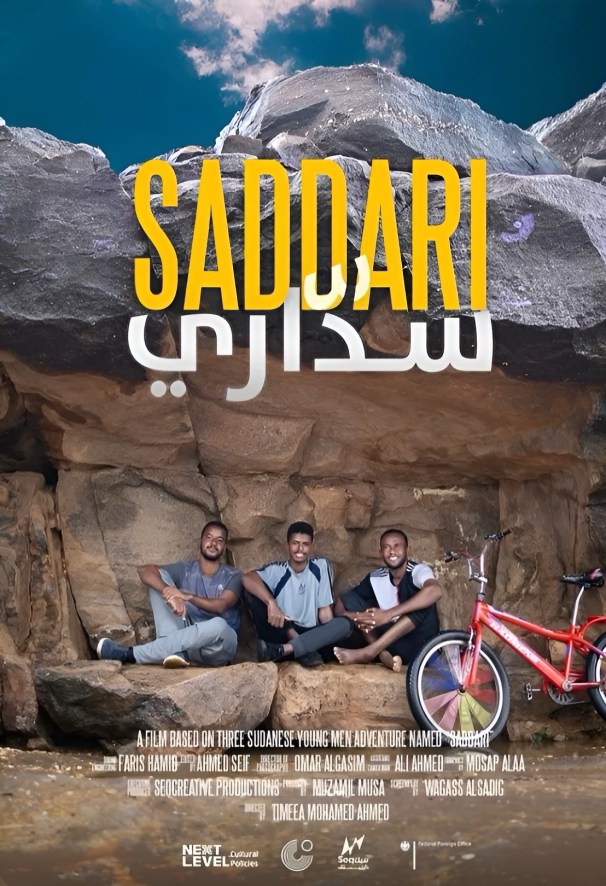
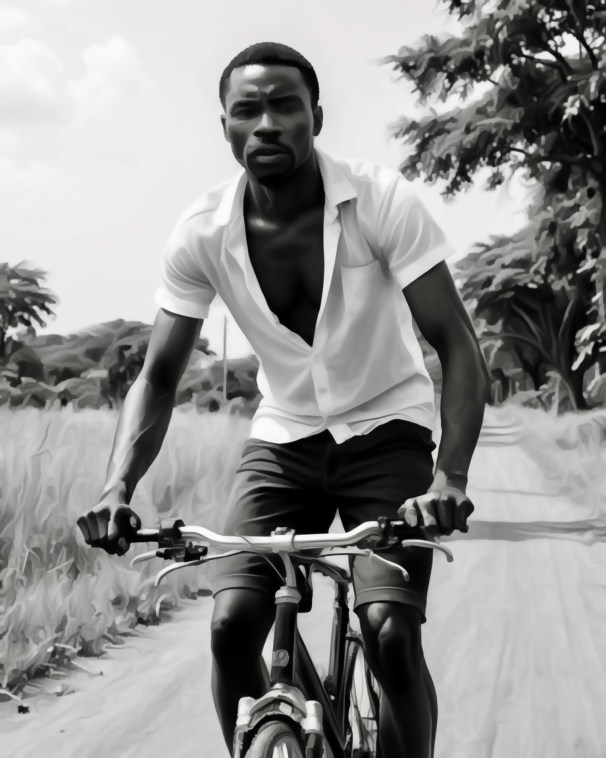
Can you get somewhere on foot (kaddārii)? / Or ride a bike standing up, chest to the wind, sometimes with the shirt open; saddārii, (from the Sudanese colloquial for chest, see too the film trailer for Saddari, shown right. Cycling dressed like this is sometimes considered risqué) / Or mount a donkey on the run? / Or kick a football with barefoot toes (and nails); Daffārii? / Hey, little girl, sweep the courtyard; al-Hoosh / and run a comb through your unruly hair (mankuush; dishevelled, tousled) / and always leave the floors freshly sprinkled (with cooling water and to settle the dust) / and spread the verandah with rush mats; biruush, (for receiving guests) / all the while Hamaad sits, Sangar, lounging back in his chair; (happily resting) after milking the cow / shooing the dog away with a “jarr”, “jarr!”
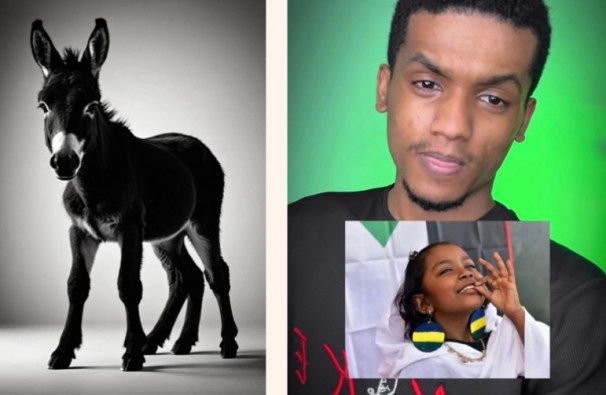
/ and do you know to say “`arr” (like we Sudanese do) to spur on a donkey, / along with dōka for our griddle; and “gangar” for a head (or cob) of corn or millet / and “gandūl for heads of green crushed wheat (or grits, bulgur) / and “firra” for our quail that startles (you and donkeys when fluttering out of the undergrowth) when startled / and have you gone down to the shoreside to harvest the vegetables (or crops)? / and your baby donkey gives you the slip (literally runs away from you) and flies off (literally, to run away fast) /

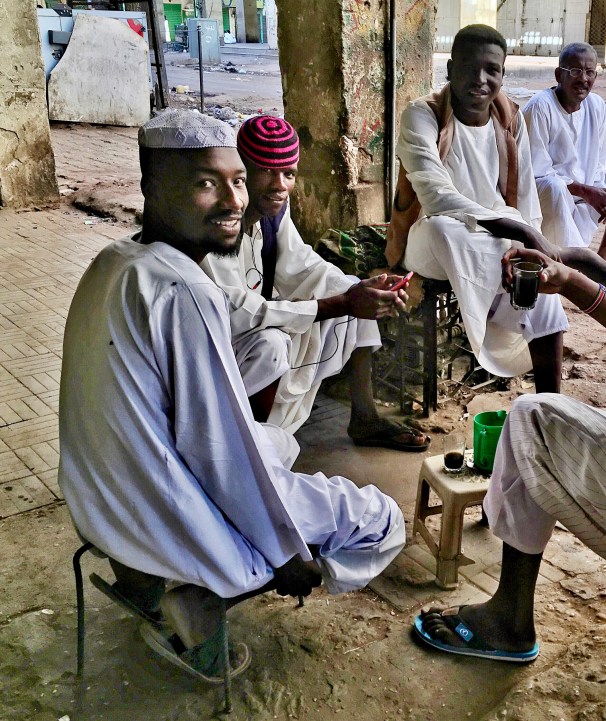
Have you sung daybreak or misdār songs (the latter are traditional Sudanese songs or poetry that often call for peace and involves rhythmic verses that address social and political issues) / I bet (sure) you don’t know our zaghruuta, (ululation, or high-pitched tongue trill, a spontaneous expression of joy or grief, often heard at weddings or funerals) / or have experienced our Darb as-sooT, (a ritual display of manhood and strength often performed at weddings, where men sustain whip blows without flinching from their companions; see the ritual here: Darb as-sooT, / and that girls, al-banuut, have never sung songs for you /

and your goats have never been pastured on Hantūt (a type of grass for grazing) / your hands are soft (because) you haven’t cut grass or weeded, / and you’ve never drunk mooya-t-ash-shann, ash-shann is pure honey, and mooya-t-ash-shann is honey carefully diluted with cold water, offered as a juice to guests / and you’ve never followed the tracks of a goat gone astray; Tashshan / and found them broken into, literally entered, khashshan, (grazing) the vegetable patch /
Do you know our word kūlīga for a sheaf of millet and at-tirbāl for a farmhand, (literally the sickle holder in Nubian) who takes up his hoe, Tūriyya, and his capital, rās al-māl, (the source of his prosperity and livelihood, his land and the work he does) / and tightens the waist cords (at-tikka) of his loose trousers, sirwaal (shown above left) / and to the land (proudly) says (now) the (real) men, rujaal, have come / a sheep slaughtered to honour the guest, aD-Dayf / The open (or kind; the opposite of frowning) face of unfeigned, mā ziyif, absolute sincerity / qualities that defy description, waSSīf /
These are my people and if I carry on (in describing them), I’ll never stop. /
For more on Sudanese dress, see
Sudanese National Dress for Men
 Women's literacy in Sudan