

The Sudanese Gubba (Qubba), Darīh (DariiH) and Bayān
Shrines, Veneration and Blessing – Part 1
Sacred Landscapes
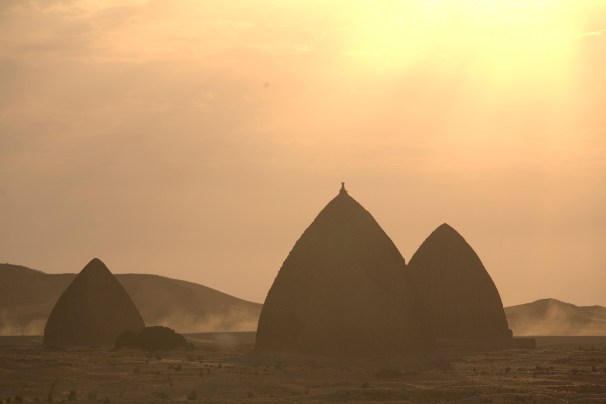
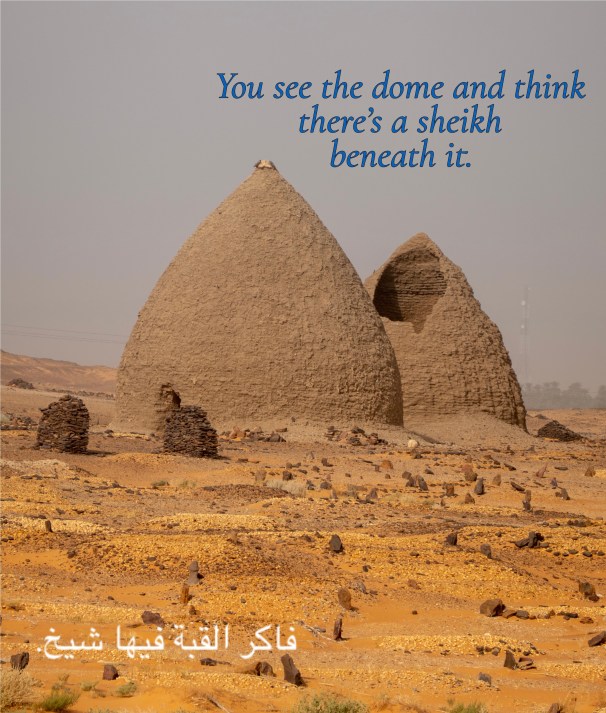
Above, hints of eternity; a clutch of “beehive” tombs of the Muslim cemetery of Old Dongola, Northern Province, stark against a dust-laden sky.These exquisite examples of medieval Muslim vernacular architecture are among 99 domed tombs or gubba (plural qibāb or gubāb) scattered across what was once the Sudanese Christian kingdom of Makuria. Believed to have been built between the 9th and 17th century, the gubāb above house or mark the graves of revered holy men and women – often referred to as sheikhs, sheikhas (feminine) or walī*, as well as those of local ancestors and elites.
Made of mud-brick, Sudanese gubāt are five to seven metres high and punctuate the vast, austere landscapes of the country’s eastern and Blue Nile regions, their domes evoking the vaults of heaven and the infiniteness of divinity in Islamic architectural tradition.
*The term walī is more strictly applied only after the death of a revered holy man, who “has proved his right to the title by the continued exercise of power from his tomb” (Trimingham, Islam in the Sudan).

The Gubba, Darīh and Bayān
The Blessing of Holy Men and Women
The Gubba
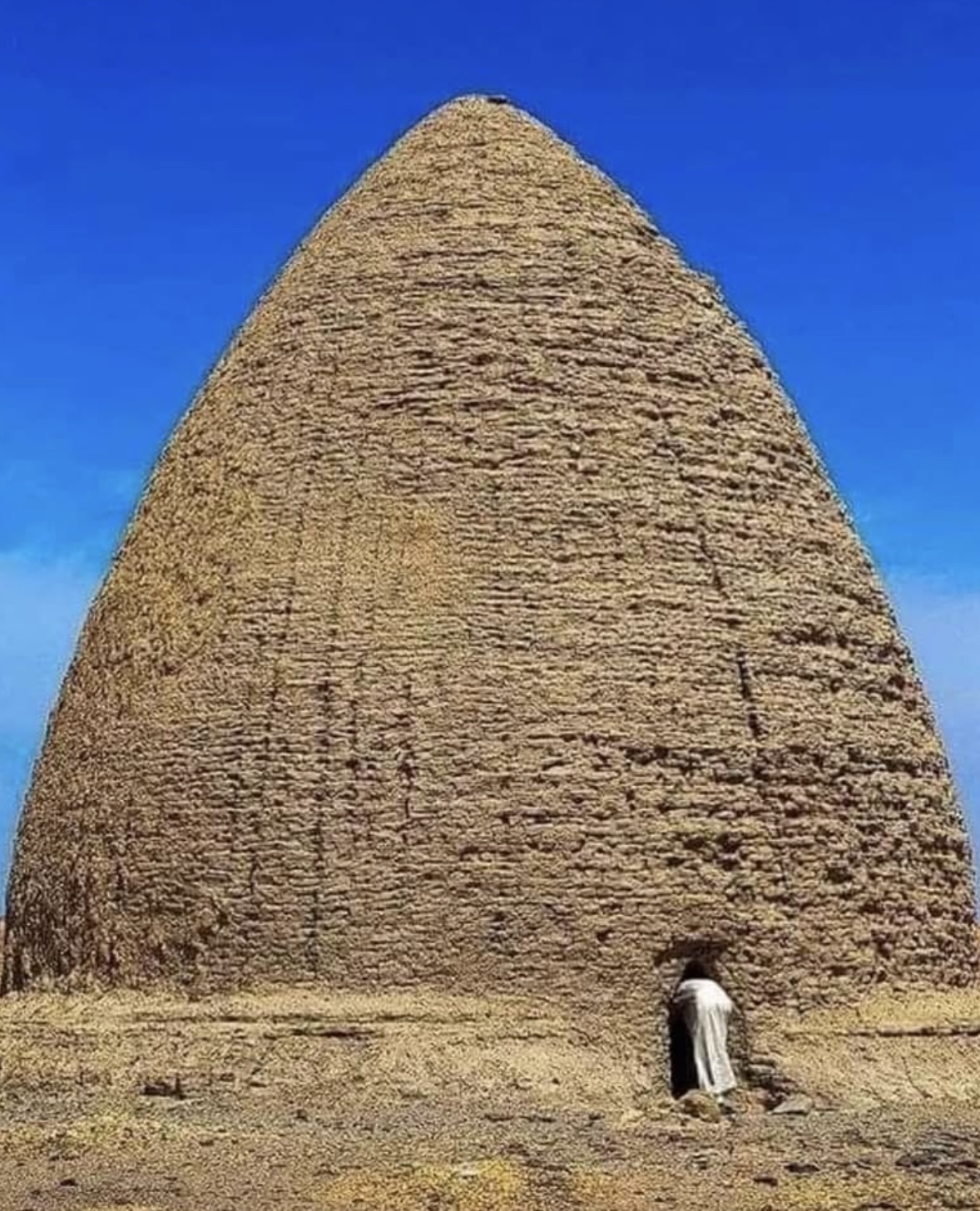
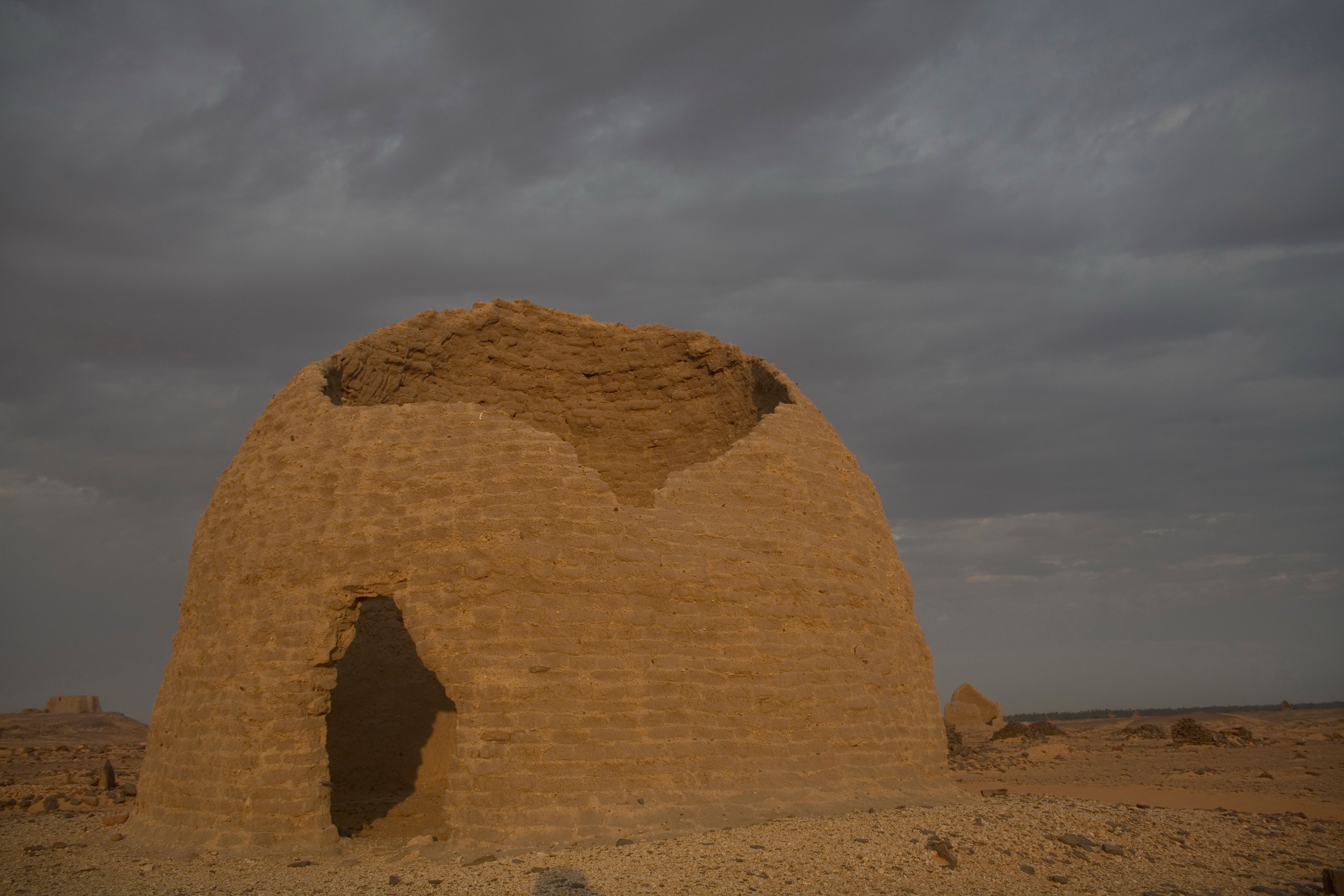
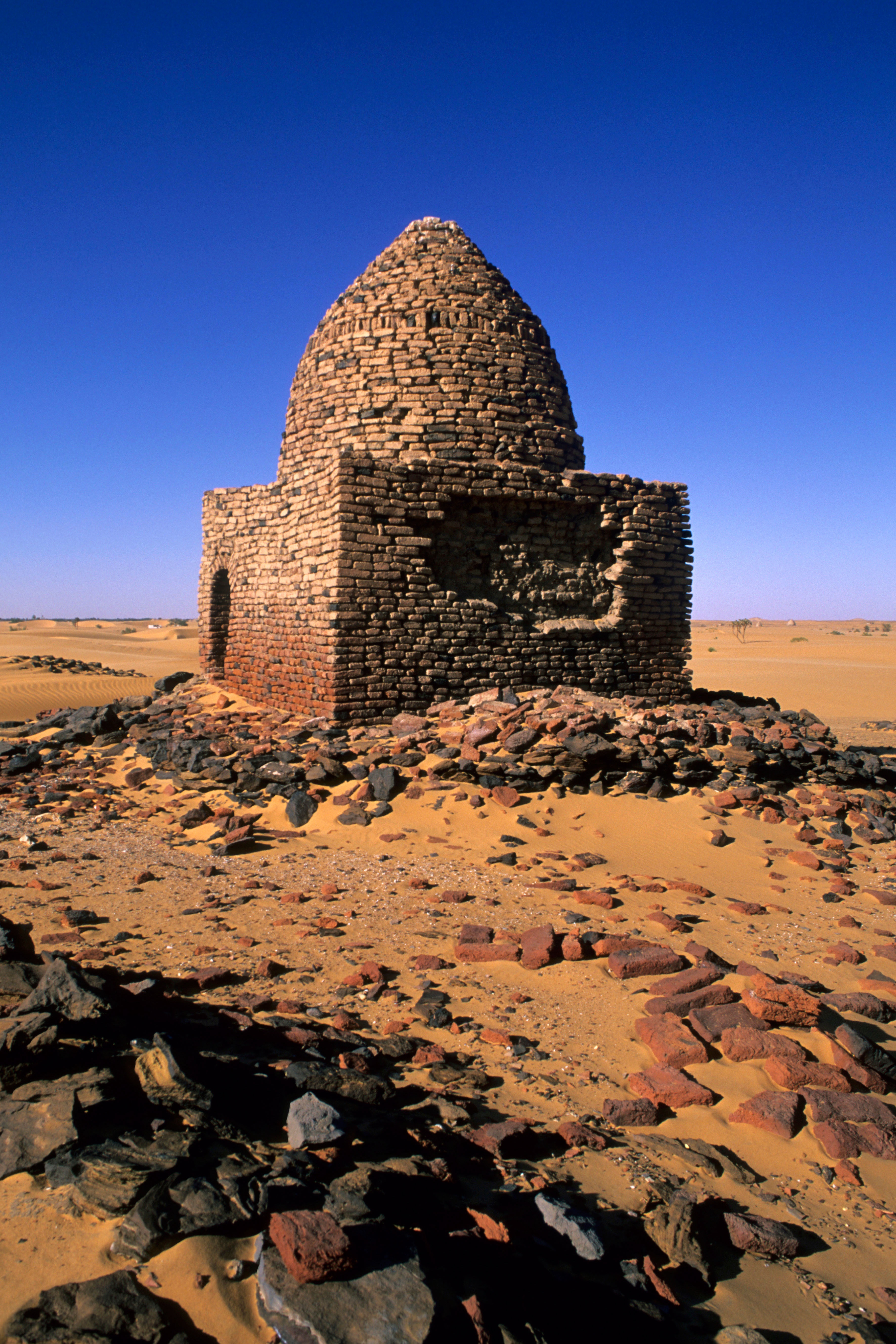
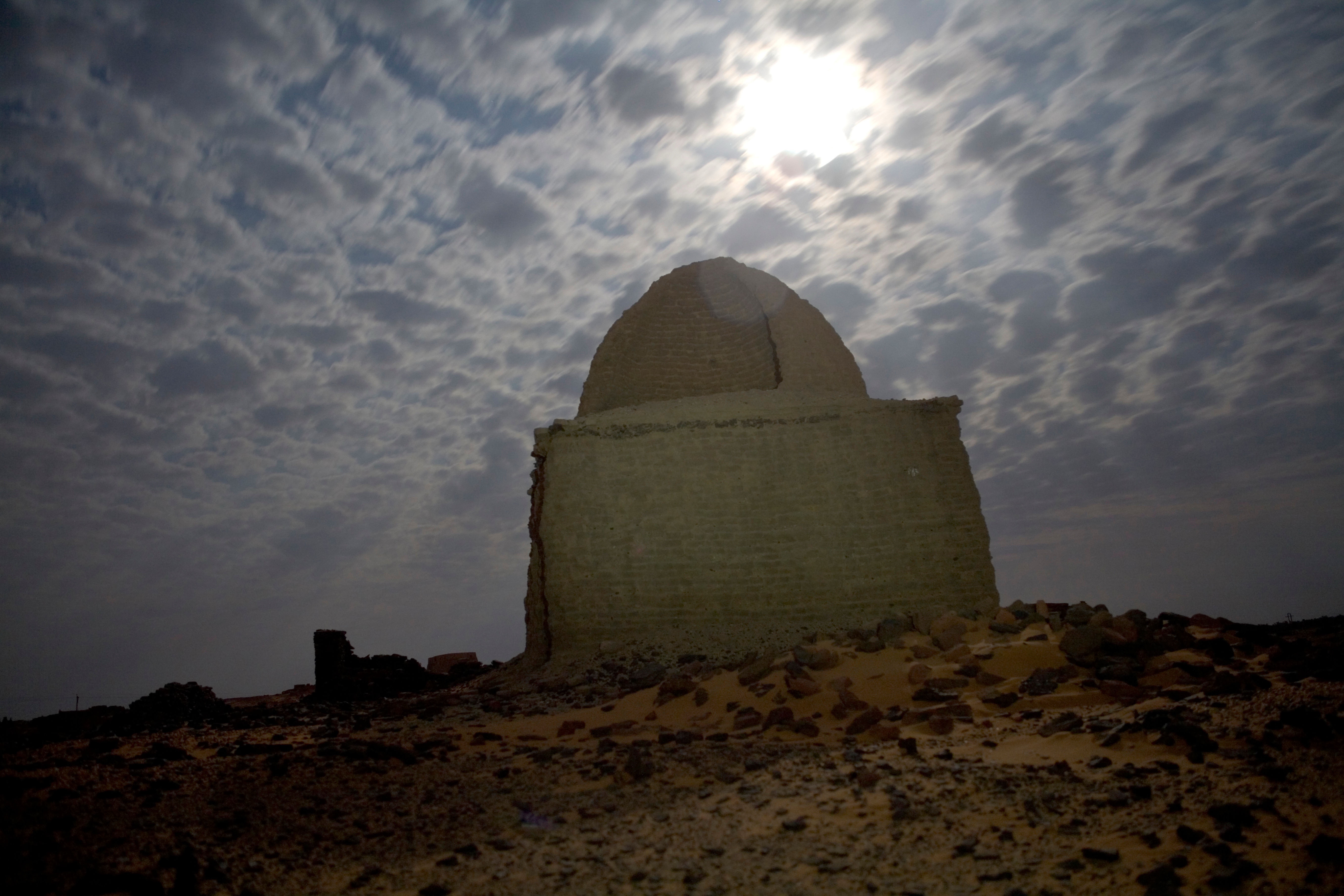
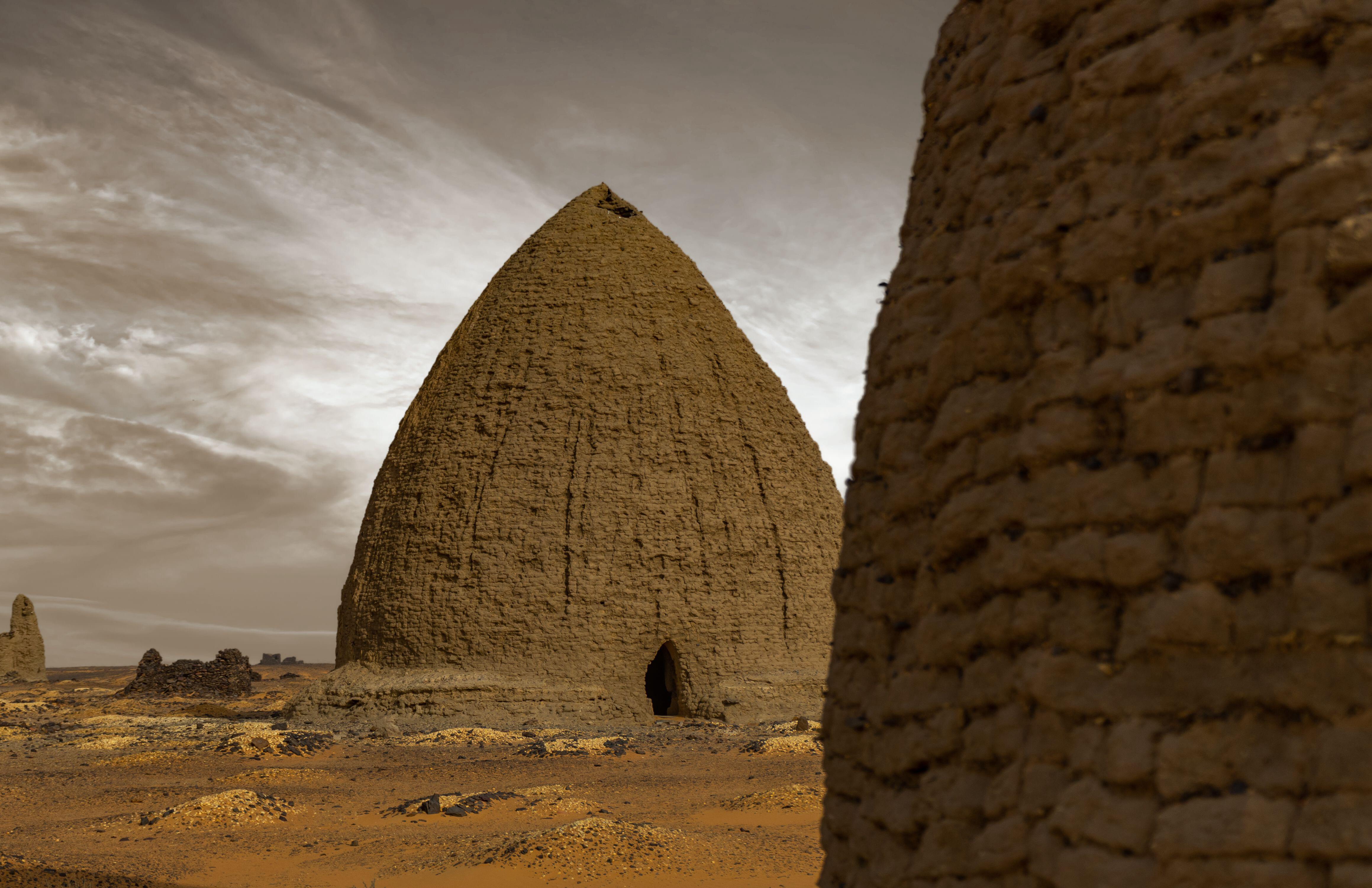
Above, more stunning “beehive” and other qibāb / gubāb from the Muslim cemetery of Old Dongola, (photographs copyright Alamy used under licence, top left image Facebook). The gubba is an egg-shaped dome, often set within a square jālūs (adobe) structure as above, or a high tukl (hut-like roof) of the same conical shape (Trimingham, Islam in the Sudan). They are often, though not always erected over the grave of a noted holy man or woman, itself often in the place where he or she died. Sometimes the gubba may be no more than a memorial shrine or mark where his placenta – considered by some believers to be the physical and spiritual double of the infant it nourished, was buried, (Trimingham, as above).
For detailed descriptions of their structure see:The Domed Tombs of Eastern Sudan, The Sudan Archaeological Research Society.
The gubba is much more than an elegant funerary monument. For believers, the shrine encloses, guards and radiates within the power of the holy man’s enduring “baraka”; that is benediction, holiness or blessing from God bestowed on “those who live in the presence of God” (Trimingham, as above). It is a force believed strongest where a holy man lived, died or spent time, drawing pilgrims from hundreds of miles away in search of blessings, safeguarding and miracles.
Dr Ahmed Al-Safi stresses that the site of the shrines alone may impart blessings and “perform healings in themselves”. For those fleeing vengeance or justice, the gubba, with its status as a “haram” or sacred enclave, offers sanctuary and solace – a blessing, according to some sources, also bestowed on the wild animals that roam into its confines, (Trimingham and Salah El-Tigani Humoudi, The Arab And Islamic Origins of the Tomb and Sacred Enclave in the Sudan).
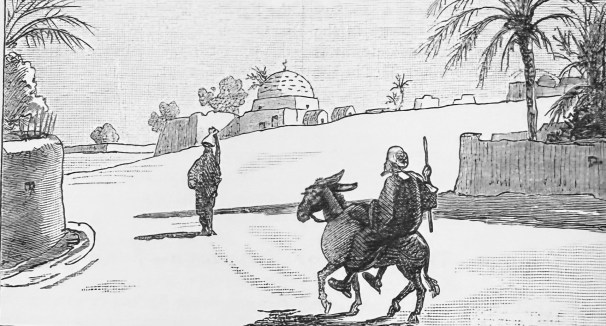
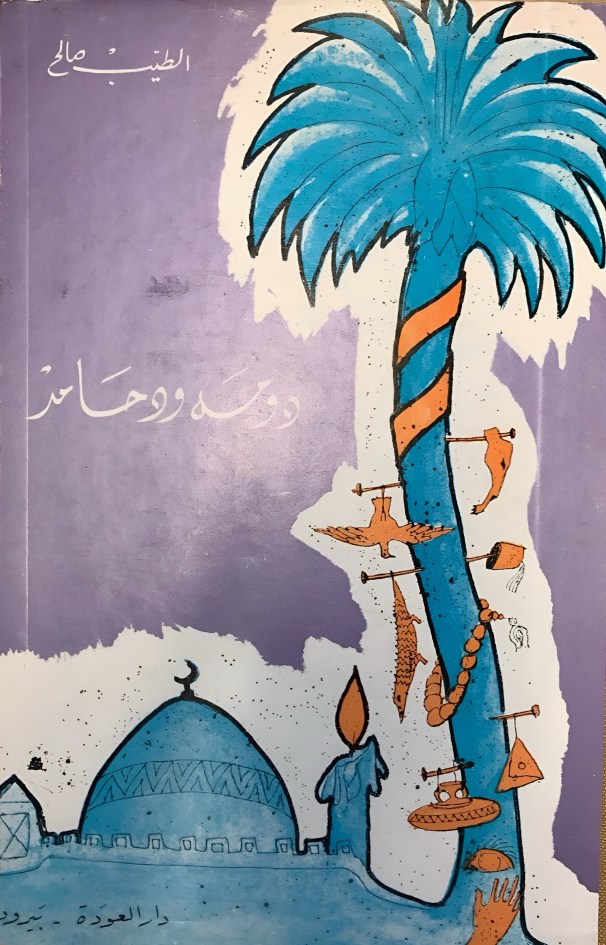
The gubba may itself seed other sites – places of learning, religious devotion and healing; centres for communal gatherings, thriving markets and the provision of food, services and festivals for its pilgrims and devotees. In the past the shrines also served as repositories for objects such as ploughs and other valuable items, vouchsafed to the sheikh’s protection. Perhaps most importantly, they often became hubs for “arbitration and peacemaking and intercession.” (Humoudi, as above) Above left, a colonial sketch of a Sudanese town with gubba. Above, right, book cover illustraation for Tayeb Salih’s The Doum Tree of Wad Hamed.
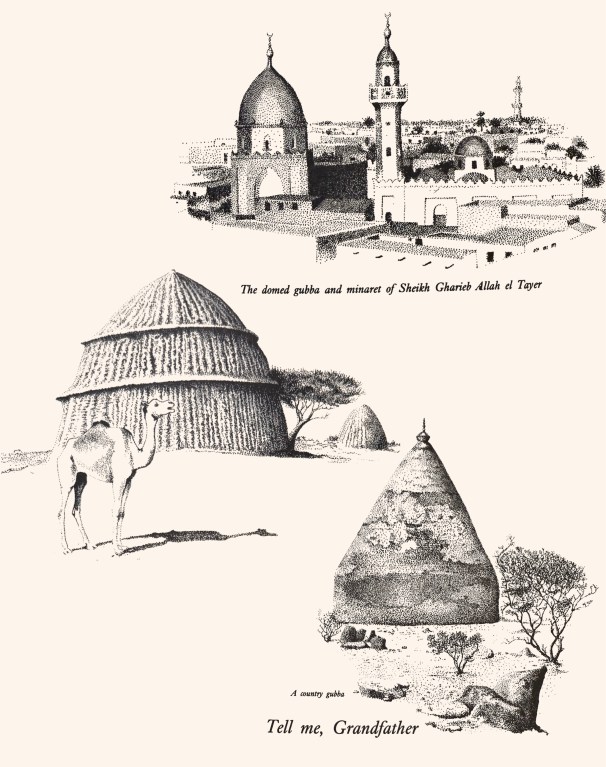
Above, illustrations by Margaret Potter from Everything is Possible, Alan Sutton, 1984, an affectionate record of her time in the newly independent Sudan of the late 1950s with her husband, Alick, then professor of architecture at Khartoum University. The central sketch is captioned a gubba of clay with ribbed roof construction.
The Darīh and Bayān
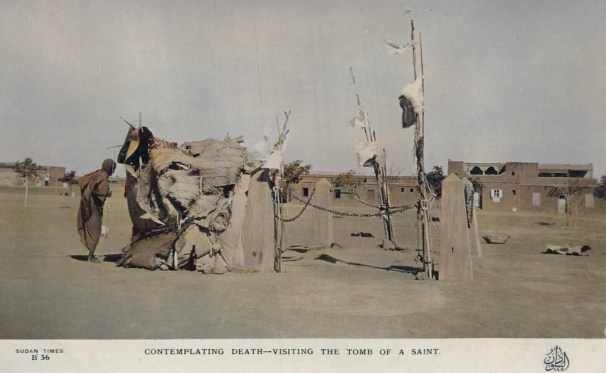
A colonial-era postcard with the caption “Contemplating Death – Visiting the Tomb of a Saint”.
The Sudanese often refer to holy men’s shrines using the word darih or DariiH (plural DaraayiH or aDriHa). Traditionally though, the darih was defined as undomed and is a simpler mud-walled shrine, usually consisting of a flat roof or tukl over the tomb, or the tomb alone, marked at head and foot.
There are also bayān, manifestation; shrines erected on the spot a holy man or woman has appeared to someone in a dream or trance, performed a miracle or conducted a retreat. These may be simpler yet; enclosures within a ring of stones, or a cairn, marked by a stick or flags. Trimingham records that the Omdurman of his time – the late 1940s – was rich in bayān: “There is one outside my house and I have been told that some devotee dreamt that he met a walī called Shaikh Mas`ud at that spot. The walī told him that his baraka would adhere there to help people and to receive honor. The man then built a mud wall and women visit it and leave their karāma in the form of small coins, coffee, etc, which are then taken by the poor or children.”
This week’s article is the first of two posts dedicated to Sudanese Sufi tombs and shrines, their symbolism and rich cultural resonances. Although echoing the structures of early Arabian pre-Islamic and later Islamic sacred spaces, researchers associate the Sudanese gubba most closely with the Sufi tariqas or orders of the Funj Dynasty.
So integral a part of the physical and spiritual landscape of Sudan are they that even stern 19th century Mahdist prohibitions on resorting to them for anything other than quiet veneration largely went unheeded. They form part of a communal spiritual language with its own rites and rituals of veneration, sharing of offerings, dedications, and thanks. For many Sudanese, such as artist Khalid Abdel Rahman, whose work is featured below, the gubba embodies something of the enduring compassionate, spiritual essence of a beloved homeland in the midst of destruction.
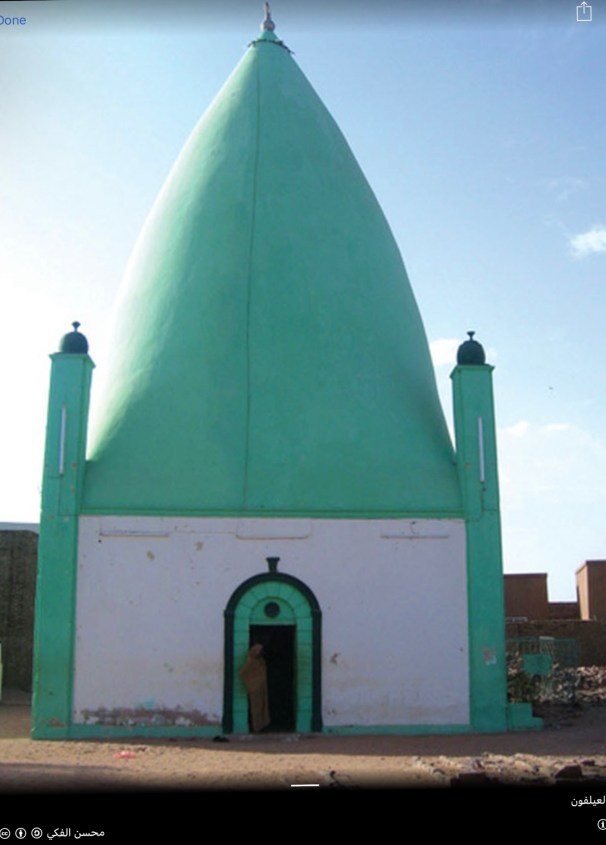

The gubba and its holy man are embedded in Sudanese folklore, everyday expressions and sayings. The proverb above – sometimes the equivalent to “all that glisters is not gold”, is said, expert on Sudanese proverbs, Muna Zaki, explains, “about someone who expects to benefit from a person that in reality has little to offer. A similar proverb is: ‘you see the dome and think that there is a sheikh underneath it.’ tashuuf al- gubba taguul tiHtaha sheekh. (تشوف القبة تقول تحتها شيخ.). Someone who is smartly dressed and has an appearance of a dignity might give you an impression that he has a discerning character, but in reality he is empty-headed and lacks understanding. Another implied meaning is that someone might be bankrupt, but from his outward appearance it would seem that he enjoys great wealth.” Muna Zaki, proverbs. You can discover more proverbs in The Dung Beetle and the Moon
Above left, Khalid Abdel Rahman‘s Shrine in a Yellow Field. Above right, the gubba of Al` Aylafun. Khalid Abdel Rahman is a descendent of its Sheikh Idris, for whom he bears a deep fondness.
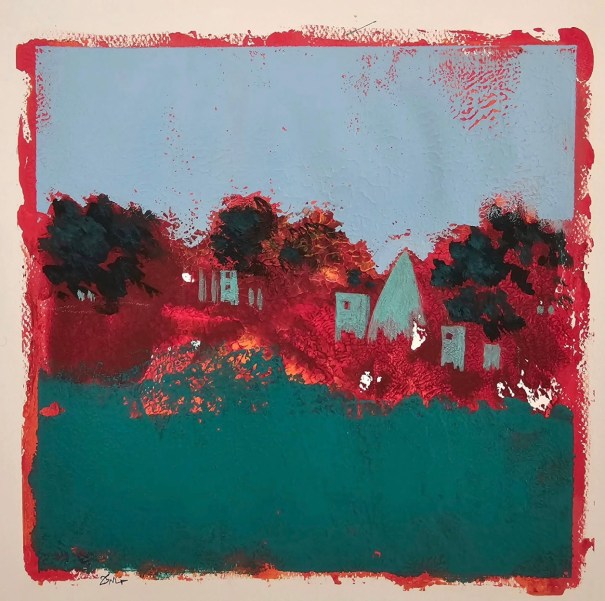
Abdel Rahman writes those who bury these sincere, virtuous souls and erect their shrines sow a seed around which a whole village grows, bearing their names and of whom stories are told.
See more of this remarkable artist’s work in Architecture and The Soul of a City
The Sudanese Gubba (Qubba) and Darih (DariiH) and Bayān
The Blessings of Holy Men and Women
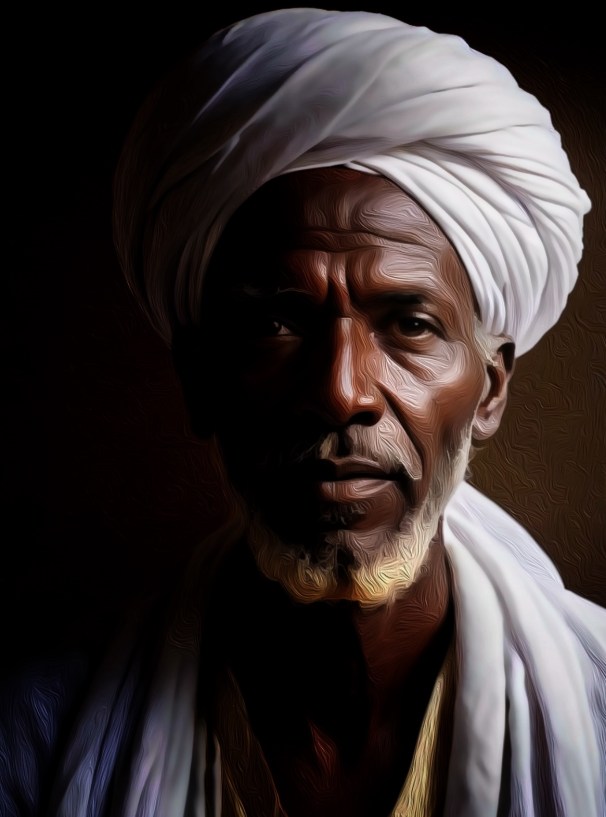
In Tayeb Salih’s short story The Doum Tree of Wad Hamid – as in so many Sudanese folktale traditions – dream and waking visions of holy men and women bring healing, admonition and sometimes even miracles. They form too a spiritual nexus among the community. The sheikhs and sheikhas play, as Frédérique Cifuentes notes, a pivotal role as regulators of daily life; mediators between the human and the divine, (Frédérique Cifuentes, Sufi sheikhs, sheikhas, and saints of the Sudan.) It is believed that the divinely bestowed blessings of the holy man or woman in their lifetime continue to be indwelling in their shrines and through visitations after their death. Below, one of the many dream visions that ripple through the consciousness of Tayeb Salih’s Wad Hamid:
“As I looked I saw a man with a radiant face and a heavy white beard flowing down his chest, dressed in spotless white and holding a string of amber prayer-beads. Placing his hands on my brow he said “Be not afraid”, and I was calmed. Then I found the shore opening up and the water flowing gently. I looked to my left and saw fields of ripe corn, waterwheels turning, and cattle grazing, and on the shore stood the doum tree of Wad Hamid. The boat came to rest under the tree and the man got out, tied up the boat, and stretched out his hand to me. He then struck me gently on the shoulder with the string of beads, picked up a doum fruit from the ground and put it in my hand. When I turned round he was no longer there.”
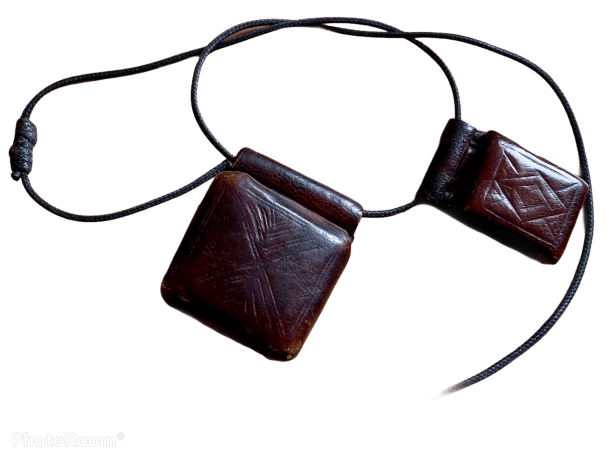
Dr Ahmed Al-Safi, expert in Traditional Sudanese Medicine, still remembers the time he was taken to the shrine of the patron saint of his clan at the tender age of five. It was half a day’s journey to pay homage to the holy man, he recalls, and there he saw mentally ill patients being treated – an experience which was to shape his life. He also had his first hair cut; itself an act imbued with spiritual significance. He recalls too being treated by a sheikh who was both a local laundry man and known healer – a friend of his father – for nose bleeds. He explains that his forehead was washed with water and on it the sheikh “wrote some Quranic verses in copying pencil. He then gave me an amulet to wear.” It was a moment “deeply engraved in my memory” and he assures us, it was the last time he suffered from nose bleeds. Illustrations left and right above, Sudanese amulets or hijab. See more in Unfolding Blessings
The baraka or blessing from God, Dr Al-Safi explains, is used to heal through prayer, charms, amulets, and incantations, and in the past through the confinement of a patient in the grounds of a mosque or shrine. Baraka permeates everything pertaining to the holy persons; their shrines, personal property, clothes, the clay of their burial place – all can convey baraka and through baraka the holy man’s reach becomes wider.”
Trimingham compiles a remarkable if questionable list of other claimed attributes of the holy man; in addition to healing powers, he may possess those of divination or mukaashafaat, metamorphosis of themselves, others or objects; levitation, power over the elements, restoring the dead to life and the punishing of evil doers; `aTTaab li-z-zalama; destroyer of tyrants. The author also cites fascinating examples of delight taken by certain “holy men” in the humiliation of those who had vexed them and what we might call mischievous or downright fraudulent claims to supernatural authority.
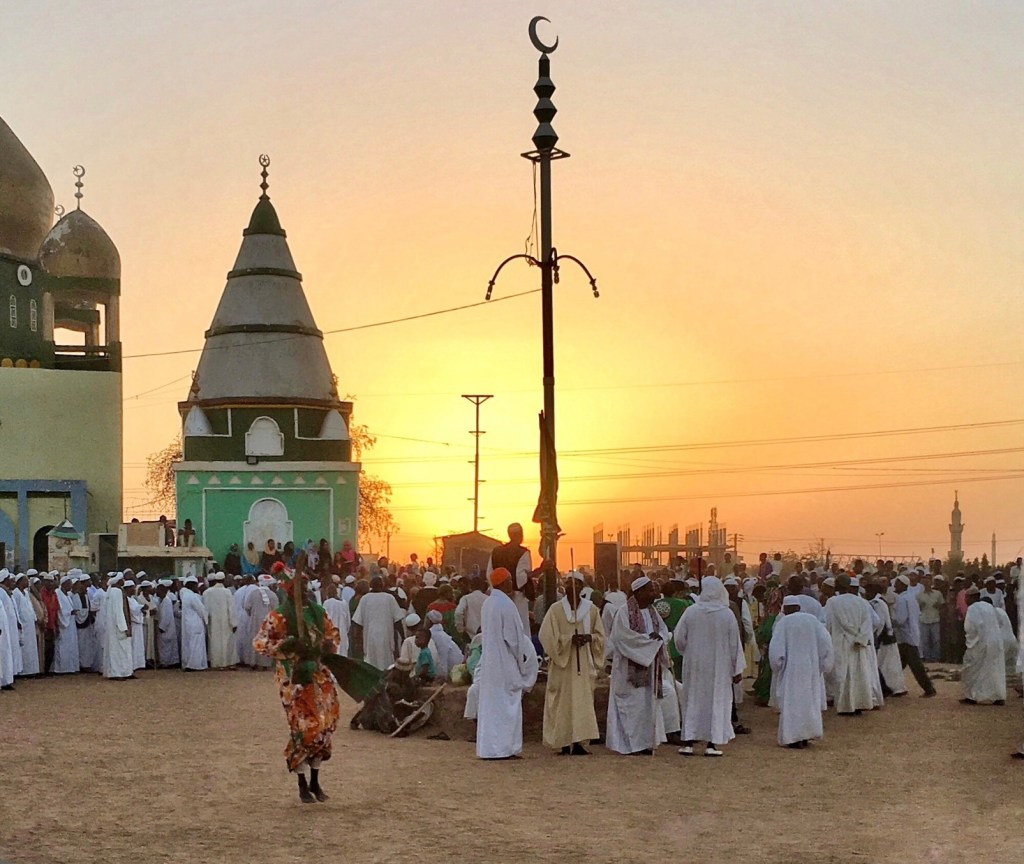
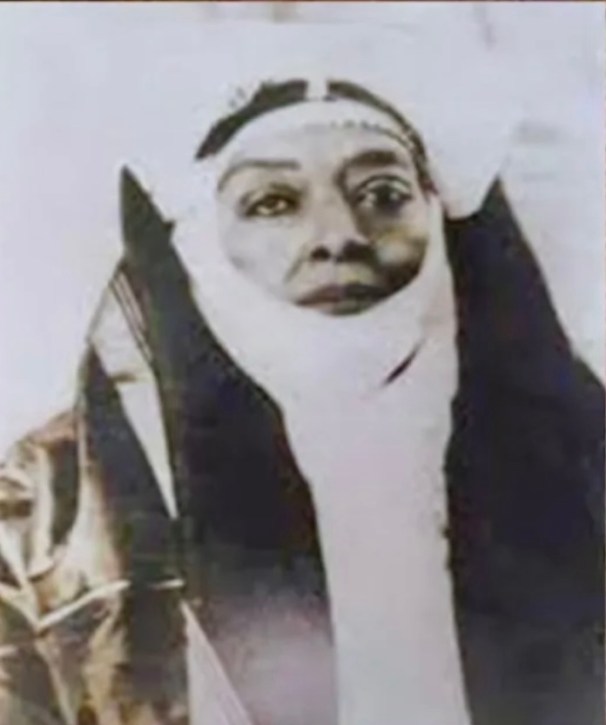
Right, the shrine of Hamed Al-Nil, Omdurman during a Friday evening dhikr celebration. Of the many beautiful shrines Khalid Abdel Rahman has painted, he says he feels perhaps a special affinity with this one because of its distinctive form, recalling walking past it as a young child on his weekly visit to his grandparents. See more in The Eternal Dance and Memories of Omdurman. Above left, Maryam Al-Mighraniyah one of several revered Sudanese holy women, an educationalist, philanthropist and community arbitrator.
Next week, I explore the early Islamic origins of the gubba and look in more detail at the fascinating rites and rituals of pilgrimage and veneration surrounding Sudanese shrines. I will also be touching on the role played by Sufi women sheikhas. See more in The Sudanese Sufi Woman: The Forgotten Legacy
 Women's literacy in Sudan