

The Sudanese Gubba (Qubba), Darīh (DariiH) and Bayān
Shrines, Veneration and Blessing Part 2
Origins – Rites and Rituals – Sheikhas: The Example of Sheikha Leila Mohammad Al-Sabonabe (b.1953)
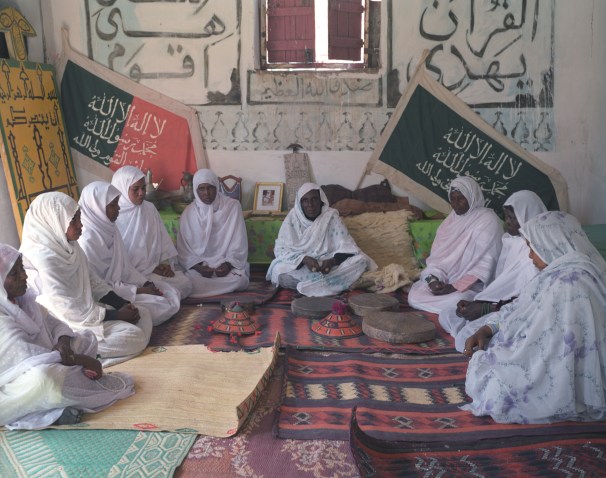
Above, Sheikha Layla / Leila of the Sammāniyya Sufi order, accompanied by women of the khalwa or Qur’an school she leads in the Sennar State village of Sabonabe on the Blue Nile. Sheikha Layla has been a tireless advocate for women’s education in this farming, cattle and camel rearing community. In his The Forgotten Legacy of the Sudanese Sufi Woman, Historical Study 1504-2022, commenting on Sheikha Layla’s establishment of a khalwa for women, Dr. Abdulgalil Abdallah Salih tells us “She was the first woman from Sudan to start the foundation of the Holy Qur’an as well as extending the blessing of Allah upon His Messenger for women.” Sheikha Layla is one of many remarkable women spiritual leaders or sheikha(s) contributing to education, community building and mediation in Sudan. Learn more about her below.
My thanks to photographer and film maker Frédérique Cifuentes for so kindly allowing me to reproduce her photo above and others in this article. These stunning photos were originally published in Frédérique Cifuentes’s 2008 article, Sufi sheikhs, sheikhas, and saints of the Sudan.
This long read post is the follow-up to Gubba, Darīh and Bayān.
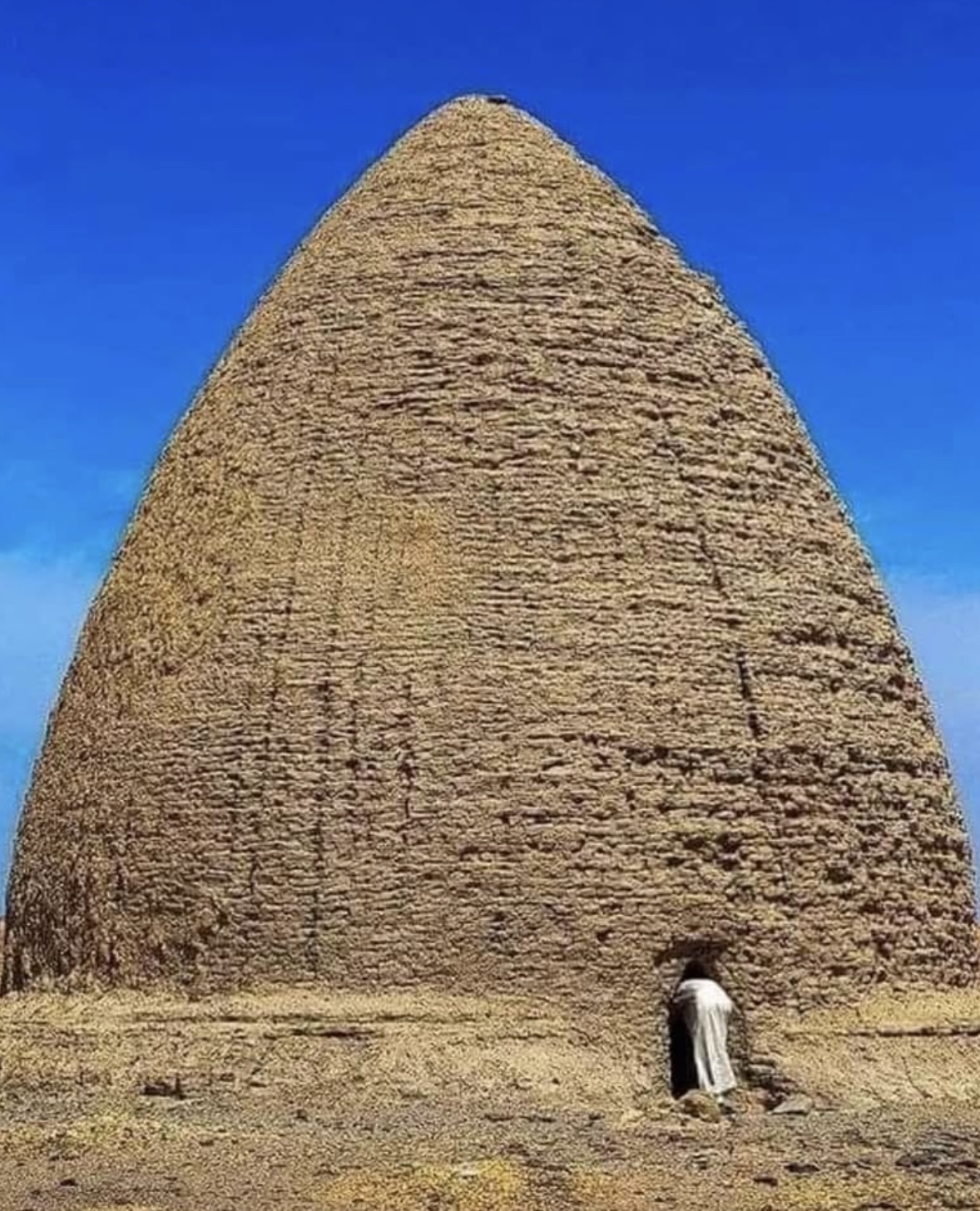
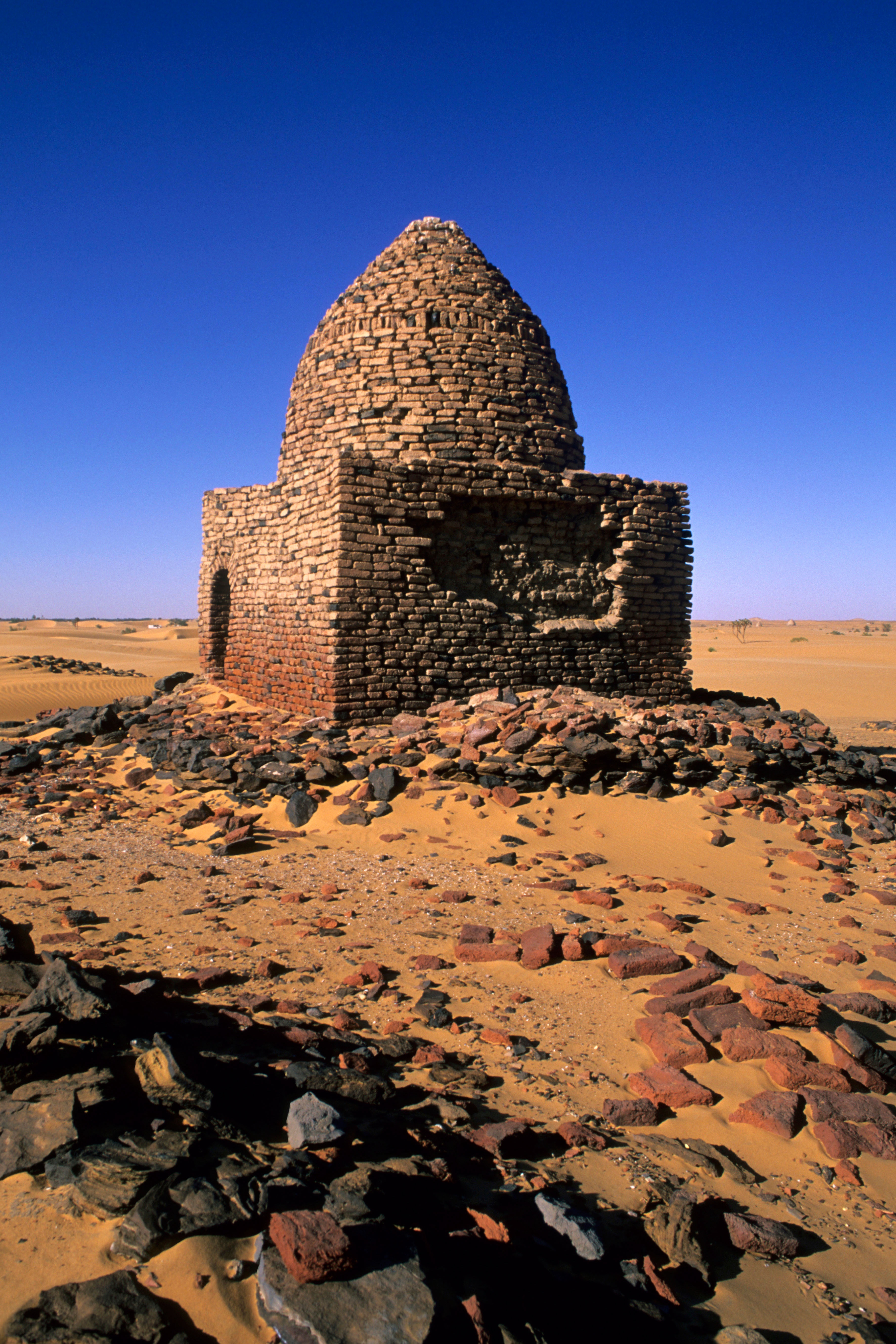
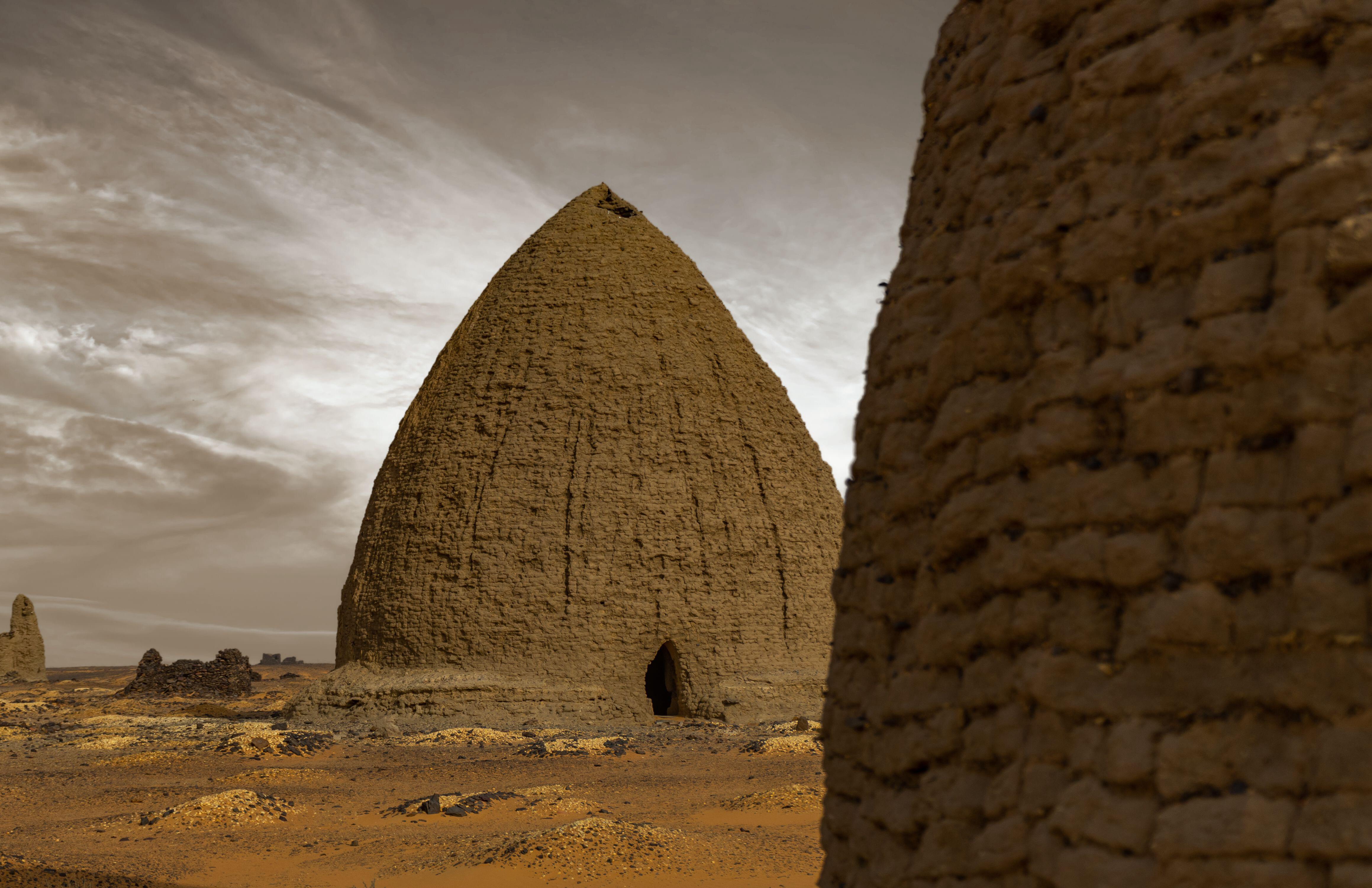
The photos above are copyright Alamy, used under licence.

The Sudanese Gubba (Qubba), Darīh (DariiH) and Bayān
Shrines, Veneration and Blessing Part 2
Origins – Rites and Rituals – Sheikhas: The Example of Sheikha Leila Mohammad Al-Sabonabe (b.1953)
Setting the Scene
How Many Remain Standing?
“Much like a palimpsest, qubbas can accumulate layers of histories and cultures that go back for centuries” …. “and have been at the center of many political shifts that have happened in Sudan, as they extend beyond being mere sites of burial to becoming places full of life, prayer, hopes, celebrations, and culture.” Memorialization within the Deathscapes of Khartoum
Of all the memorials and monuments scattered across Sudanese “deathscapes”, Mai Abusalih contends, the gubba has proved the most enduring; defying “oblivion” to remain a defining, emblematic feature of the Sudanese landscape in much of Blue Nile and Northern provinces (source, as above). Writing in the 1940s, expert in Sudanese Islam, J S Trimingham held the qubba to be more important than the mosque as a centre and symbol of faith, observing on his travels “found in greater profusion than the mosque is the white washed domed tomb of a saint” (J S Trimingham, Islam in the Sudan).
If Trimingham is correct, this may not be surprising, given the nature of Sudanese Sufism. As Frédérique Cifuentes notes in Sufi sheikhs, sheikhas, and saints of the Sudan, each Sufi order or tariqa has its own hierarchy of saints endowed with spiritual powers known as baraka or madad. A holy man or woman upon death is venerated and their tomb or maqam becomes a site for pilgrimage and annual and even weekly celebrations, (see Part 1 The Sudanese Gubba (Qubba), Darīh (DariiH) and Bayān). Communities of devotees would often go on to build maseeds (khalwas) and mosques close to the tomb, creating a vibrant, living legacy to the holy man or woman’s life, perpetuating their work – the gubba becoming “an interesting intersection between life and death” (Memorialization within the Deathscapes of Khartoum).
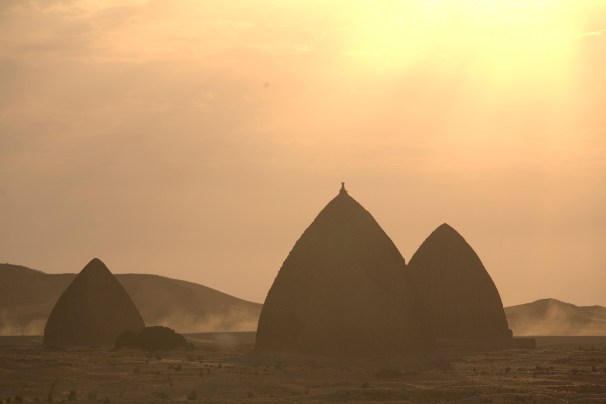
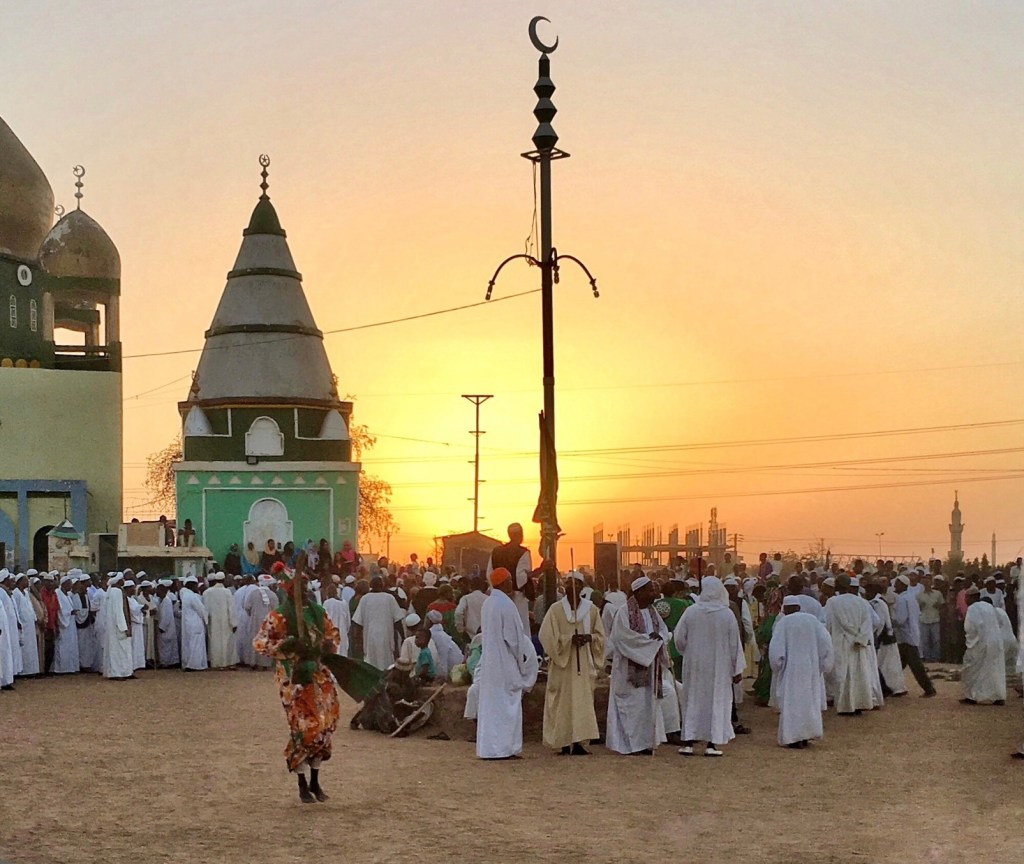
Above left, gubbas punctuate the Funj era cemetery of Old Dongola, photo copyright Alamy, used under licence. Right, the weekly dhikr / zikr celebration at the tomb of Hamid Al-Nil, Omdurman, photographed by the author. See more in Memories of Omdurman and The Eternal Dance – Updated.
Below, an example of the now rare stepped gubba; this one of Sheikh Idris Mahjub near Abri, Northern Province (Facebook).
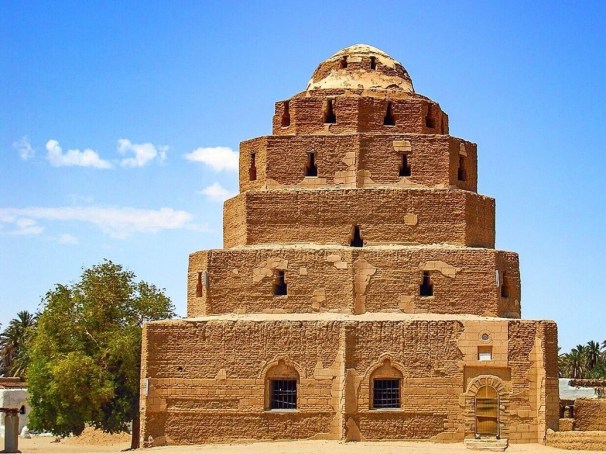
It is not known how many gubba – many already in need of repair before fighting broke out, have been lost in the present conflict and as Mai Abusalih wonders, “when the fighting stops, could destroyed or damaged gubbas be reconstructed, and in what way, and how will this add another layer of history to that which they have accumulated over the centuries?”
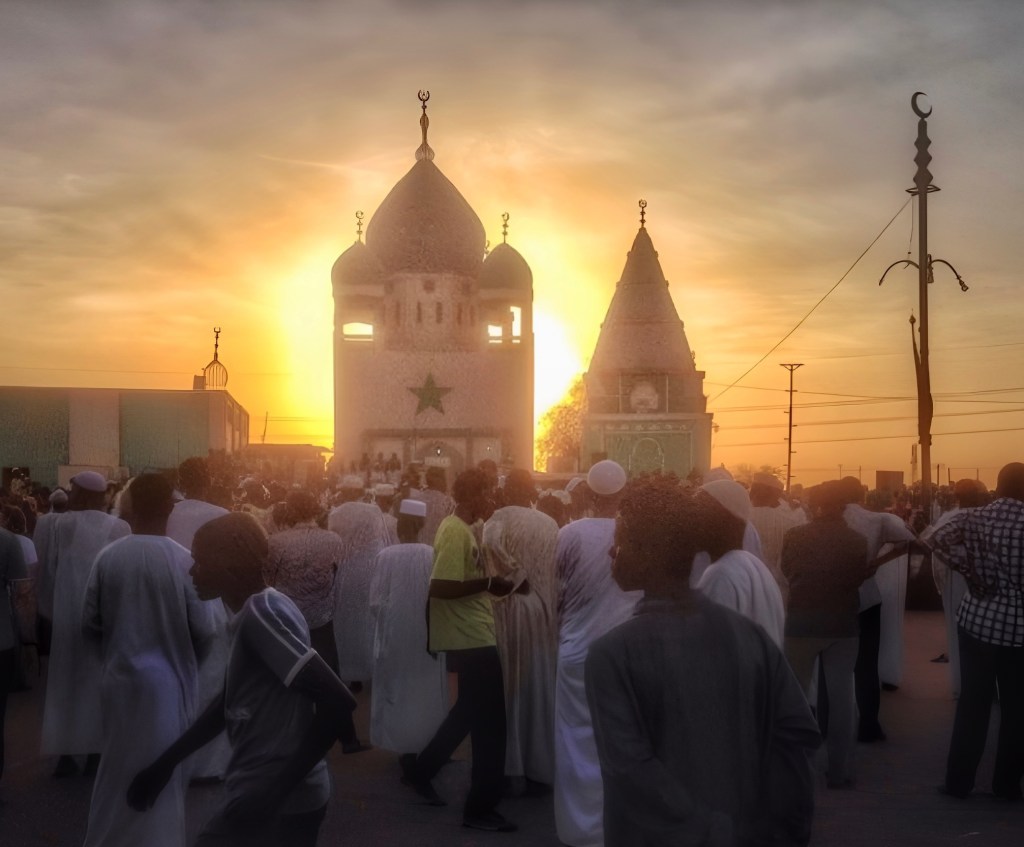
In her article for Safeguarding Sudan’s Living Heritage, Memorialization within the Deathscapes of Khartoum, Mai Abusalih outlines some of these layers of history, the palimpsest-like stylistic and political overwriting of the gubba from earliest Funj dynasty examples, now close to erasure, superseded by the influence of Ottoman and Turko-Egyptian forms to the 20th-century resurgence in the building and restoring of gubbas in Khartoum, often inspired by the Mahdi’s silver domed shrine in Omdurman. A resurgence, she explains which was particularly striking under the Nimery regime, “credited for replacing old qubbas and building new ones, a trend that continued beyond his presidency until today.” She describes these newly built qubbas as “much larger and more colorful than Funj-era qubbas as their designs featured elaborate windows, doorways, and spacious interiors.”
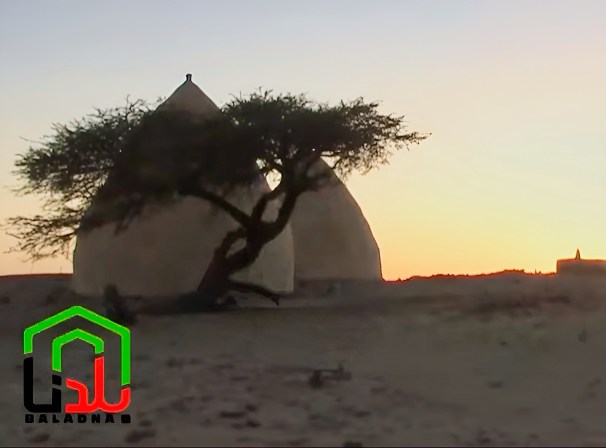
Above left, Friday evening zkir at Hamid Al-Nil, Omdurman, above right, still from هنا السودان | شاهد وتعرف على القباب في الولاية الشمالية بالسودان

Right, the present day gubba of 16th-century Sheikh, scholar and advisor to the Funj rulers, Idris Wad Al-Arbab of Al-Aylafoon. In many ways this graceful building exemplifies how the rise and fall of sultanates and empires linger on and find elegant form in Sudan’s gubbas.
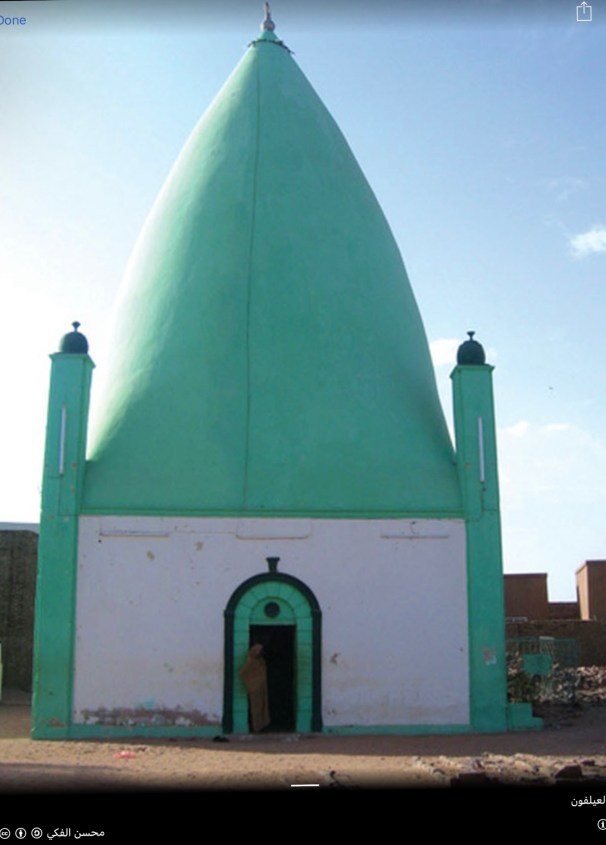
Mai Abusalih explains that the original qubba was constructed in the Funj terraced style, only to be rebuilt after collapse, in a style claimed to be inspired by Sudan’s Turkish tombs, such as the The Circassian Qubba-s of Abbas Avenue, Khartoum, shown in a colonial-era postcard left, or as archeologist Intisar Soghayroun believes, popularized through the design of Al-Mahdi’s tomb (see below). You can see more images of the original tomb of the Mahdi in Postcards from Khartoum and Omdurman. The gubba of Sheikh Idris reflects too the challenges, tensions and delicate balance that must be struck in the restoration, preservation and modern interpretations of the gubba.
The gubba, and the communities founded upon them by sheikhs, sheikhas, living and departed holy men and women have endured for centuries, witnesses to profound social and political change. They will endure long after the present conflict has ended.
You can see fascinating detailed architectural analysis and examples of Sudan’s gubbas in all their diversity in Intisar Soghayroun’s Islamic Gubbas as archeological artifacts.

Above, the original dome of the Mahdi’s tomb, The House of the Khalifa, Omdurman, photographed by the author.
See too Sudan’s Cultural Treasures Looted 2
Origins – Parallel Stories
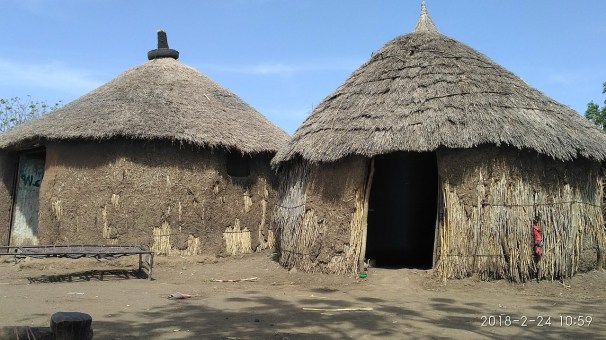
For archeologist Intisar Abusalih, the Sudanese gubba is a graceful synthesis of pagan, Christian and Islamic influences and Sudanese vernacular architecture. In its domed and pyramidal forms, she sees echoes both of pre-Islamic burials of Kushite, Nubian and Kerma civilizations, and of traditional domed structures found among the Shilluk and Nuer peoples. Using red brick from ruined churches and the domestic architecture of the Christian kingdom of Alodia, Sudan’s Muslims repurposed these structures in the Funj era with the addition of mihrabs, finials on the apex and the orientation of burials. Unlike similar buildings in the Islamic world, she explains, Sudanese gubba were not used for the burials of kings or rulers, (Memorialization within the Deathscapes of Khartoum).
Above left, examples of Sudanese homes, eastern and Southern Sudan, CC, Wikipedia.
In the structure, language and rituals surrounding the gubba, historian Salah El-Tigani Humoud is keen to emphasize the debt to Arabian pre-Islamic and Islamic inspiration and heritage. For Humoud, the figure of living holy men; the shuyuukh or fugara and that of the dead saint; the awliya or salihin, “came ready made to Sudan and found fertile reception”, possibly echoing too early Christian practice of veneration of saints, (source, Salah El-Tigani Humoud, The Arab and Islamic Origins of the Tomb and Sacred Enclave in the Sudan.)
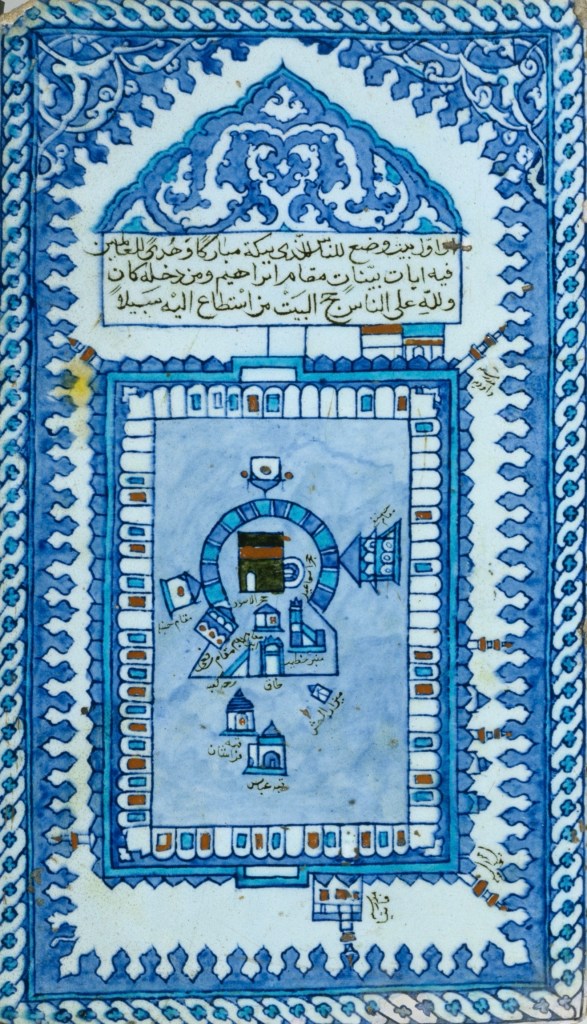
The Sudanese gubba echoes ancient pre-Islamic and early Islamic sanctuary structure, such as the sanctuaries of Medina and Mecca. Their haram or sacred area surrounding the sanctuary was usually fenced off and the cutting down of trees and the killing of animals were forbidden. The name for this area in Sudan is sometimes referred to as the baniya; a term Humoud explains was used for the Holy Ka`ba at Mecca. Gubbas for certain walis are also known as Ka`ba maHjuja; a sanctuary to which pilgrimage is made. Other terms too related to the shrine, he believes, find their origin in corruptions of Arabian Arabic. The gubba banner; raya and bayraq – a pole topped by a crescent and small bells; the latter sent by one saint to another to invite people to annual pilgrimages, also have echoes, Humoud believes, in South Arabian pre-Islamic custom.
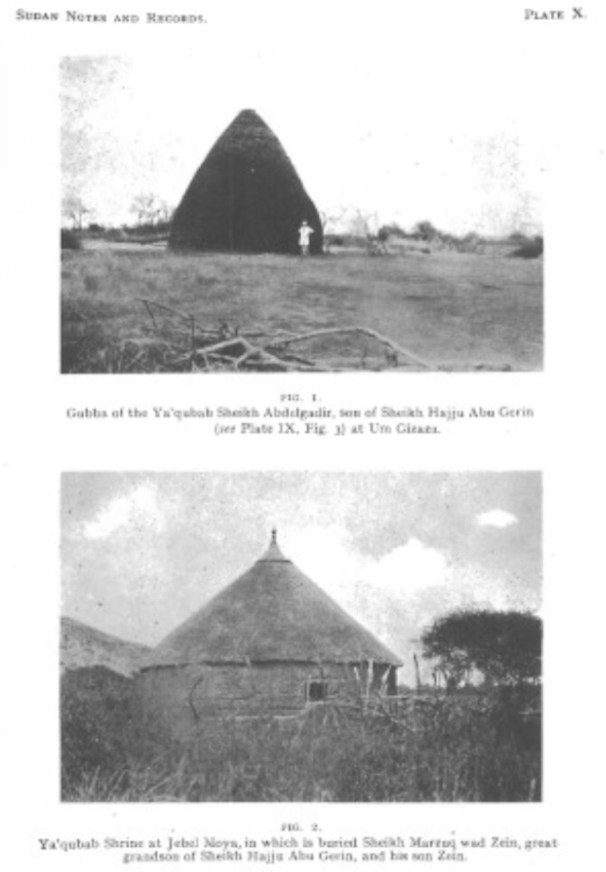
Above left, a Turkish ceramic representation of the Ka`ba and Great Mosque, Mecca, Wikipedia, CC. Above right, colonial-era photographs of Sudanese beehive and tukul-shaped gubba of Ya’qubab, Sudan Notes and Records, Sudan Open Archive.
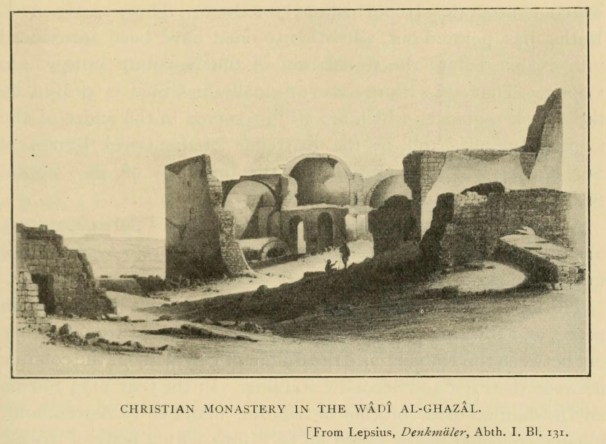
Above, Christian monastery in the Wadi Al-Ghazal, plate from Wallis Budge, The Egyptian Sudan Its History and Monuments, Volume II,1907.
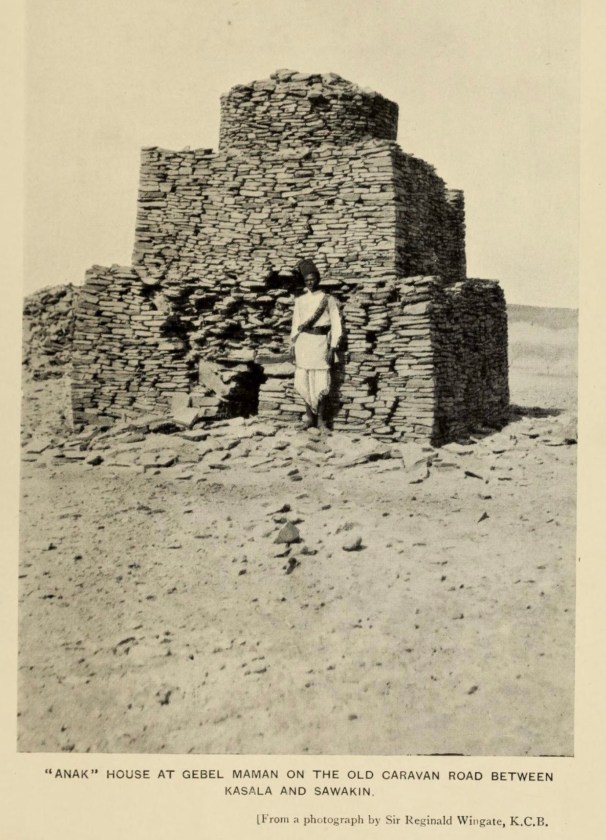
Moreover, rites such as dhikr / zikr and tawwaf or circumambulation of the tomb, the offering of hospitality, karama, to the zuwwar (singular zaair) or visitors to a sanctuary and of gifts all echo, in Humoud’s view, the practices of the early Muslims of Arabia. The Arabian system of hereditary guardianship of the holy site, often bestowed on a descendent of the holy man or woman and that of doorkeeper or custodian; sadin / sadaanah also find their parallel in the care of Sudanese gubba. Perhaps most importantly, we find parallels in the use of the Sudanese sanctuary as a space for peacemaking, Hafiz, mediation, shafaa and intercession under the auspices of its holy man or woman.
Above right, Anak house at Gebel Maman on the old caravan road between Kasala and Sawakin, Wallis Budge, The Egyptian Sudan Its History and Monuments, Volume II,1907.
See stunning examples of Sudanese gubba in all their stylistic diversity, photographed by Frédérique Cifuentes, together with other aspects of Sudanese Sufi life, reproduced in Sudan Memory:
Tomb of Sufi Saint 1 Tomb of Sufi Saint 2 Tomb of Sufi Saint 3 Sufi Traditions in Sudan
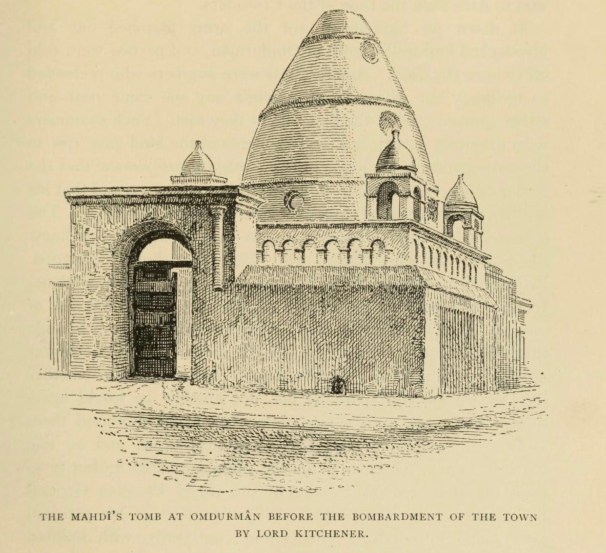
Above, the Mahdi’s tomb before colonial bombardment. Plate from Wallis Budge, The Egyptian Sudan, Its History and Monuments, 1907.
Rites and Rituals
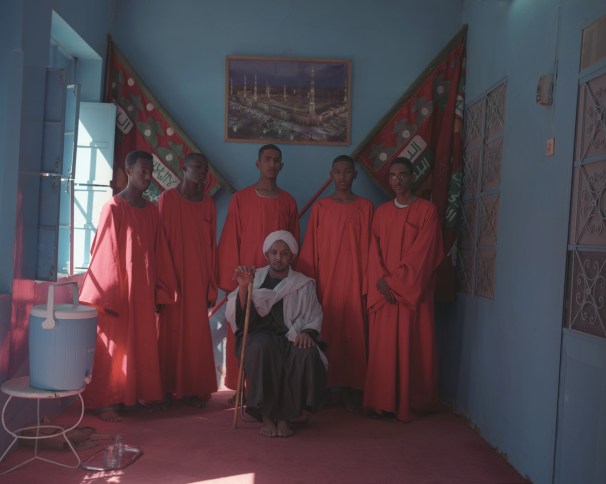
Sudanese Sufi sheikh of the Qādiriyya order, Omdurman, photograph copyright Frédérique Cifuentes, reproduced here with her kind permission.
It is important to remember that perhaps the most significant role of the Sudanese holy man or woman is that of mediation and intercession and Sudanese history is replete with examples of such figures, sought out for their wisdom, keen and sometimes wily acuity. Humoud references the historic role played by Sheikh Idris Ibn Mohammad Al-Arbab, (d.1650), whose gubba is shown above, as mediator to the Funj Sultanate, reportedly living through the reign of thirteen rulers and credited with restoring peace to the sultanate.
When a maseed or khalwa is established as part of the gubba sanctuary, the sanctuary and its grounds become a hub for education (see Inspired by the Sudanese Looh / LawH), community gatherings, charitable support, provision of food through the takiyya tradition, celebrations upon the anniversary of the death of the holy man or woman, often spectacular and known as Holiyya (to be discussed in detail in a forthcoming article) and mulids, commemoration of the saint’s birth. Devotees visiting the shrine often follow prayer and worship rituals of their Sufi order as well as praying the fatiha, reciting from the Qur’an and taking part in meditation.
Below, Trimingham relates the rites and rituals of a devotee visiting the tomb of a holy man in the early 20th century:
After ablutions, the woman prays ten times before visiting a qubba. Taking of her shoes, she enters the gubba and approaches the sheikh’s grave which is covered in a green cloth. She takes some sand from under the cloth and rubs it on her neck, (and her baby’s neck, if the child is with her). She takes more sand to share with family members at home and keep some for herself. When a wish comes true, she returns to the qubba. Thanking the sheikh, she says: “I will come to visit you and I will spread seeds for your birds” and she spreads sorghum seeds over the grave of the sheikhs and then offers sweets to people she meets around.
Frédérique Cifuentes describes below the rites and rituals often associated with the visiting of living saints or sheikhs today:
The devotee comes to maqam to honor or ask benediction by reciting the fatiha, first raising his arms to heaven, then covering his face with his hands. When the purpose is to seek intercession of a living saint or sheikh, there is also a ritual for the visit. The supplicant must first have paid homage at the tombs of his village before entering the presence of the living saint. The sheikh is generally seated in a room set apart for him to receive the faithful. He is seated on the ground, on a mat, and is surrounded by sacred objects and by the Koran. How long one waits one’s turn will depend on the popularity of the sheikh. When the moment arrives, the supplicant approaches the sheikh barefoot, with head bowed so as to avoid looking directly at him, kneels, and kisses his right hand. The sheikh then asks the purpose of the visit and questions the supplicant a little before giving him advice, and the meeting concludes with a Fatiha. The reciting of the prayer indicates that the sheikh will intercede with God on the supplicant’s behalf. (Sufi sheikhs, sheikhas, and saints of the Sudan).
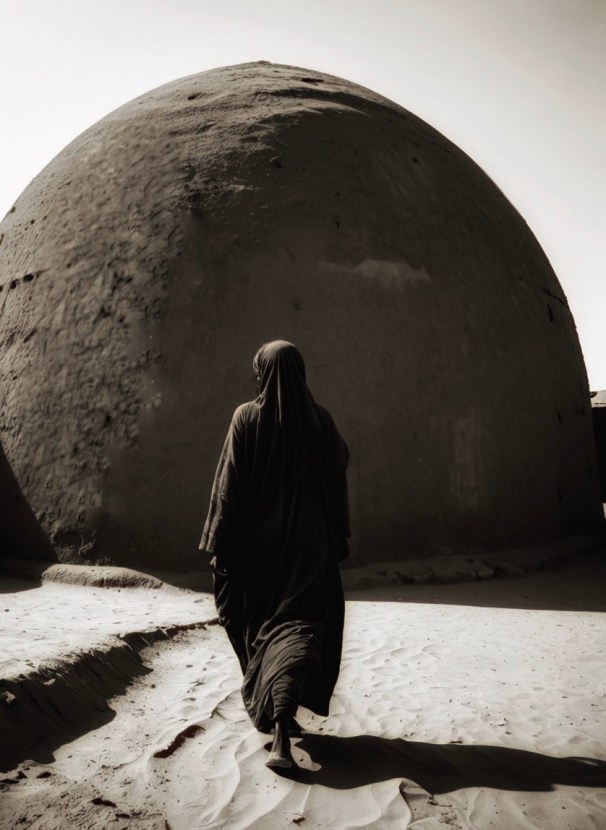
Both colonial and Sudanese observers have documented the fascinating and sometimes surprising rituals associated with the Sudanese gubba and its holy man or woman still persisting into the early 20th century. Such poignant rituals were undertaken by humble souls seeking healing, solace, safety or the fulfillment of an earnest wish and are freighted with symbolism. Often offerings or gifts would be left in propitiation; money, grain, dates, and even jewellery. The fulfilment of a wish might be repaid with sacrifices, donations to the poor or service to the site, such as whitewashing the tomb (Trimingham, Islam in the Sudan). Failure to provide such offerings in gratitude was powerfully associated with courting misfortune. As property left within sanctuary grounds was believed to enjoy sacred protection, it was rarely stolen. Colonial observers were told the colourful, cautionary tale of a stone bearing resemblance to a human being, which was held by some to be the form of a woman petrified in punishment for stealing a jar of money left next to a saint’s tomb. An escaped woman slave, it was also rumoured, had left her master’s property by a saint’s tomb and as the owner didn’t dare to retrieve his property, he ended up losing both his slave and his goods.
The colonial source, Sudan Notes and Records, documents the custom in the Sennar shrines at Ya’aqubāb of tying hair and bones to trees in the grounds of the sanctuary, “to acknowledge a blessing vouchsafed or to witness the fulfilment of a vow”. Sometimes a lock of a youth’s hair was cut off at manhood and hung up by his mother “as a proof that the saint has granted her a prayer for a son,”, SNR Vol 17, 0 1934. This appears to be one of several rituals involving hair; Dr. Ahmad Al-Safi mentions having his first haircut at the tomb of a holy man (see The Sudanese Gubba (Qubba), Darīh (DariiH) and Bayān). He also recalls the figure of sheikh Abbahar Abu Bashariya who drew people “from all over the land” for him to shave their offsprings’ heads, noting that if a child were married before being shaved, misfortune might befall him. Often shorn hair, along with nail clippings and teeth were buried in the grounds of the sanctuary to guard against witchcraft.
Dr. Al-Safi records too the use of clay from the shrine of Sheikh wad Al-Turabi being applied to bites from rabid dogs and clay from the shrine of Tinar wad Al-Misashfi used as an antidote for snake bite. Colonial accounts also reference dust from the grave of a holy man placed beside crops to ward away harm (SNR Vol 9,0 1926) and bits of stone or cloth or scrap of brick from the sanctuary attached to a doka or crossbeam of a deserted sagia wheel to prevent them being stolen, (Customs of the RubāTab – J.W. Crowfoot, SNR).
Unsurprisingly, many rituals were associated with marriage, fertility, childbirth and circumcision. Among the more touching perhaps, is that recorded by colonial observers of unmarried girls taking tassels from their rahat skirt and tying them round the flags on a wali’s grave. According to colonial observers, “whoever gets hold of the wali’s flag will see his desire fulfilled and such a flag will protect any object from theft”. A newborn child might be lifted four times towards a saint’s shrine to protect him from teething problems (Al-Safi). Al-Safi also records the custom of women sleeping within or near the sanctuary compound over several nights in hope of blessings for childbirth.
Sheikhas: The Example of Sheikha Leila Mohammad Al-Sabonabe (b.1953)
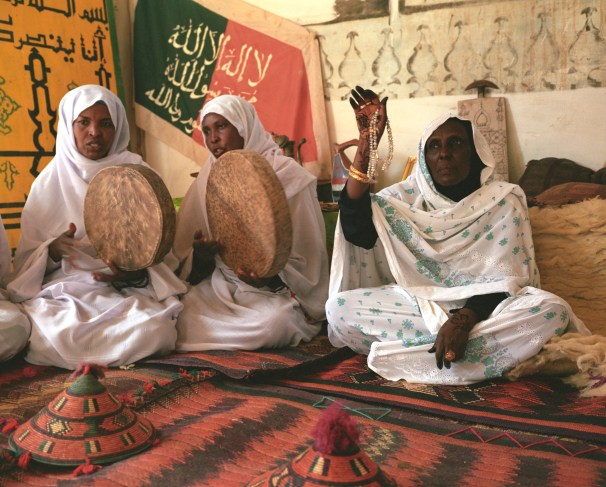
Above, a group of women in Sabonabe performing Sufi music with their spiritual master Sheikha Leila, photograph Frédérique Cifuentes, used here with her permission.
The brief profile below draws on research by Frédérique Cifuentes in Sufi sheikhs, sheikhas, and saints of the Sudan and The Forgotten Legacy of the Sudanese Sufi Woman, Historical Study 1504-2022, Dr. Abdulgalil Abdallah Salih.
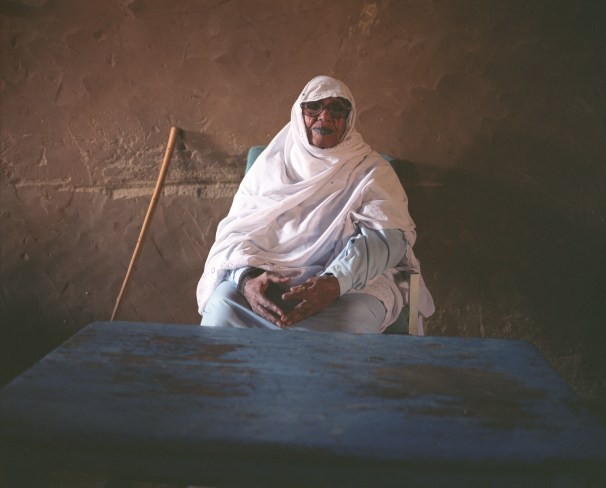
Highly respected by both men and women devotees, Sheikha Leila is one of many women sheikhas who continue to enrich and extend Sudanese Sufi spiritual, educational and community outreach in Sudan. At this time of great suffering for Sudan, their role in mediation, education and community service is ever more inspiring and necessary. Sheikha Leila and others like her are dedicated to building and supporting their communities. Following on from and perpetuating the legacy of her ancestors’ spiritual work in the dissemination of Islam through the Sammāniyya order across the Blue Nile and Inqasana region, Sheikha Leila in many ways embodies the continuity at the heart of Sudanese Sufi tradition. Women’s khalwas linked to the one she founded have been opened in villages and cities throughout the region and she would also go on to found the Holy Qur’an Society of Qatar. Central to her spiritual and educational mission is the celebration of Sufi music and song, many examples of which she composes herself and are performed by the women of her khalwa. For the sheikha, music is an integral part of Sudanese Sufi tradition (Frédérique Cifuentes).
Above left, a devotee, photograph, Frédérique Cifuentes.
Sheikha Leila’s home is given over to the women’s khalwa she established, enabling women of the community and beyond to learn the Holy Qur’an, as well as workshops for acquiring skills in cooking, sewing and other handicrafts aimed at family income generation and community solidarity. The atmosphere is warm and informal with devotees accompanied by their children. She has also been involved in educational programmes combatting FGM, raising awareness of birth control and children’s education, drawing on her Ministry of Health training and teaching background.
Perhaps one of the most inspiring aspects of the sheikha’s work is the weekly Friday women’s dhikr celebrations held in the khawla. Cifuentes describes a garden alive with beating drums and dancers, ” as their leader, Sheikha Leila moves around the circle to beat the rhythm of the songs and give the blessing with her (prayer)beads”.
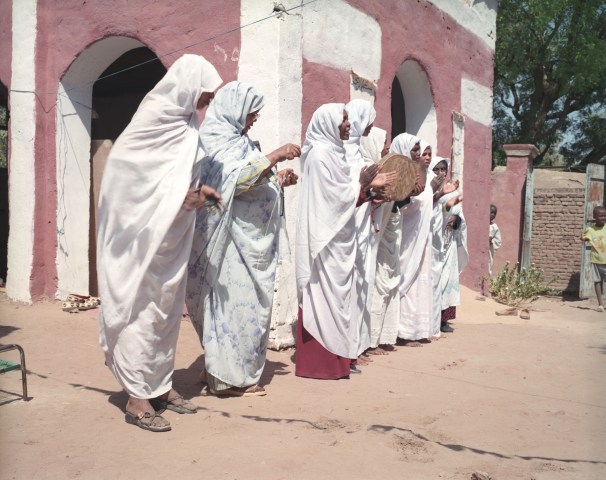
Above, dhikr celebration at the khalwa, photo copyright Frédérique Cifuentes.
Coming next, the life and work of Sayyida Mariyam Al-Maghania of Sinkat and her Holiyya.
 Women's literacy in Sudan
.jpg)