

Ya Rahman Sung by Nancy Ajaj
Mercy for a Broken Land
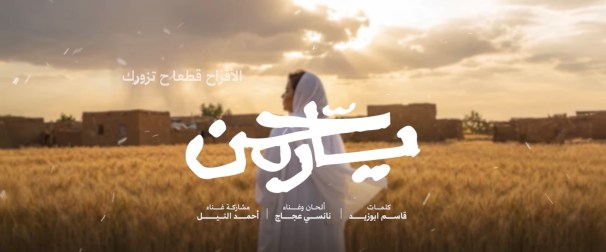
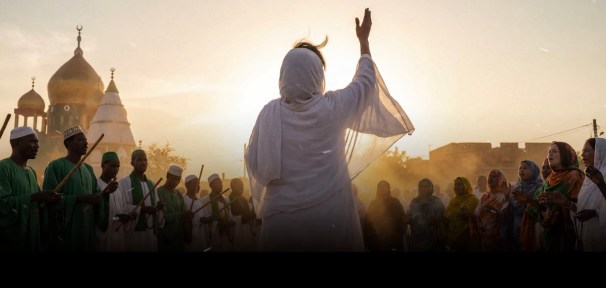
Above and below, stills from Nancy Ajaj‘s stunning musical rendition of the poem Ya Rahman, by playwright and poet Gasim Abu Zaid. This exquisite prayer for the soul of Sudan amidst the bloodshed and destruction of war is both a heartfelt supplication for divine mercy and a fierce condemnation of those responsible for Sudan’s suffering. In re-igniting the country’s deep-rooted Sufi paradigms – central to which is belief in God’s all-encompassing mercy, the poet poignantly argues, Sudan’s true spiritual path and that of the revolution’s pure principles will converge.
Setting the Scene
This week’s post provides a working translation of a song that for many Sudanese encapsulates profound yearnings for peace and spiritual renewal. The translation cannot do justice to the beauty of the original and hopes only to offer a clear reflection of the main ideas and feel of the text. Even if you are not an Arabic speaker, I guarantee you will be captivated by Nancy Ajaj and Ahmed Al-Nil’s intensely evocative musical setting of the poem, the singer’s delicate, plangent tones and the video’s visual impact. There are numerous, intricate Sufi resonances in the poem, as well as references unique to Sudanese culture.
You can read a detailed lexical analysis of the text, together with glossary in my sister blog shortly. The breakdown will also include background to the inspiration for the text and its roots in Sufi madiH or hymns of praise, together with further examination of the Sufi concepts hinted at or overtly referenced in the text. I will also include the Arabic sources this translation draws on.
The song is a prayer for healing and an acknowledgement of the intense fragility of life in wartime. It moves from scenes of verdant farmland and the symbolism behind Sudan’s agricultural wealth to the stark loss of that wealth. It explores the breakdown of family life, the impact of the death of family members, close friends and neighbours on the essence of Sudanese community. It speaks of those orphaned and those displaced and the added anguish of not knowing the fate of loved ones. It contrasts what is spiritually right against worldly oppression and the failures of human beings. It calls for a just retribution devoid of revenge. The song closes with a call for unity through righteousness and deliverance from injustice.
A thousand thanks to Muna Zaki and her colleagues and friends for all their research and essential input. I very much welcome any corrections, additions and comments. Any errors are mine alone.
Enjoy the video here:
Below, lyrics as provided on Nancy Ajaj’s official YouTube channel:
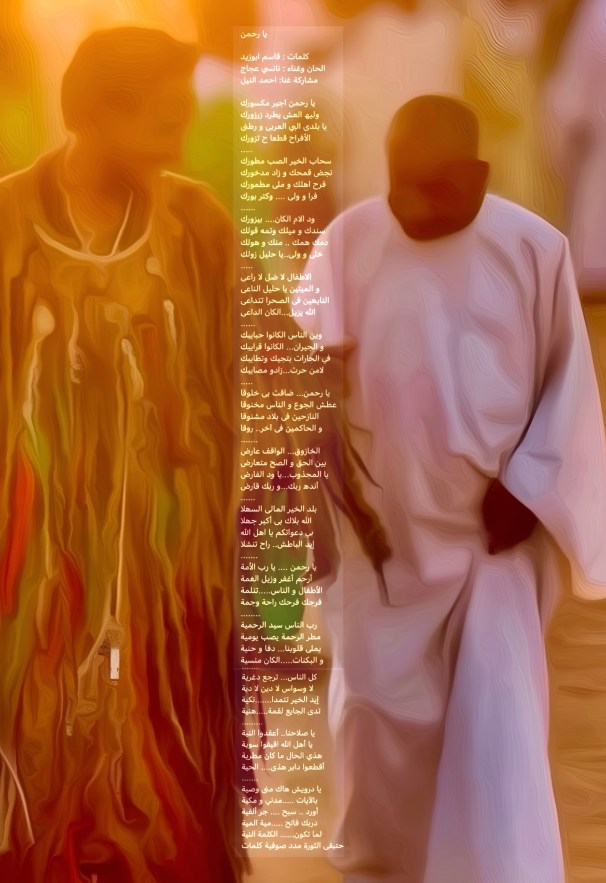
Illustrations to the text and translation below by the author. The text is profoundly Sufi in inspiration. If you would like to know more about Sudanese Sufism, then you might enjoy Memories of Omdurman A Thousand Prayers The Eternal Dance – Updated
The Sudanese Gubba (Qubba), Darīh (DariiH) and Bayān The Sudanese Gubba (Qubba), Darīh (DariiH) and Bayān 2
Ya Rahman
O All Merciful, bind up (ajbur) your (land’s or people’s) brokenness (maksuur-ak) /
The All Merciful, The Most Merciful, The All Compassionate, and The Most Benevolent are honoured names or attributes of God in Islam. Sufi teaching often centres on the divine attribute of mercy as “the mother of all divine attributes”; see for example, the work of Sufi scholar and philosopher Ibn Arabi. The name is invoked in times of suffering and affliction and is central to the message of the song.
The word ajbur in Sudanese Arabic has many meanings associated with the healing and splinting of broken bones. However, it also has deeply religious resonances, and the verb form is often translated as “console”. Here I believe we have the sense of spiritual consolation or succour. One of several epithets of Sudanese holy woman Sharifa Maryam Al-Mirghani, for example, is jaabira; Consoler or Comforter; as in of al-khawaaTir, plural of khaaTir, spirit / soul / heart / mind. This is sometimes translated as Consoler of broken hearts. Perhaps here we have the sense of homeland, peoples, institutions and individuals as fractured and broken by the war. The poem opens with a prayer for divine healing where all about man has failed.
/ Why has the nest driven out (yaTrud; to drive out, spurn, sling out) your nestlings (or little sparrows)? /
The word zurzuur actually means starling; a bird in Sudanese Arabic associated with the delicate and vulnerable; perhaps we might say sparrows or nestlings to render the same sense of vulnerability in English. The nest may here be interpreted as the protective nurturing homeland, its nestlings the Sudanese victims of war bereft of its shelter and forced to become refugees.
/ My (beloved) land of Arabic and rutaana /
The ancient indigenous languages of Sudan such as Mahas or Danagla are referred to as rutaana. The poet is emphasizing the ethnic and linguistic diversity of his homeland.
/ Joy certainly (or surely) will visit you /
We have in this first verse the rhymes of maksuur-ak, zurzuur-ak and tazuur-ak (to visit). In Sudanese Sufism the words for paying respects at a holy man or women’s tomb, making a pilgrimage or taking part in veneration of a living saint also come from the same root as the verb “to visit”.

……
/ (Where) Clouds of goodness have poured down your rains (maTuur-ak) /
/ ripening your wheat and swelling your stores (of grain / fruits / crops; madkhuur-ak) /
/ gladdening hearts (or giving joy to your people) and filling your granaries (these are underground silos; maTmuur-ak) /
/ (now) all flown and fled … (now) barrenness; buur-ak) abounds /
buur; a farming term used for fallow or barren, unsown land. The tone changes sharply here, contrasting the richness of the homeland before the outbreak of war and its current desolate state where crops wither or are not planted. Sudan’s agricultural wealth, its vibrant life is seen as a symbol for her stability and prosperity. The land is now beset by famine and poverty and sustenance both material and communal is being lost. It has been suggested that recurring references to rains in the text also symbolize the dropping down of goodness and true Sudanese values and virtues to restore the land. Rains that will extinguish the fires of war.
…..
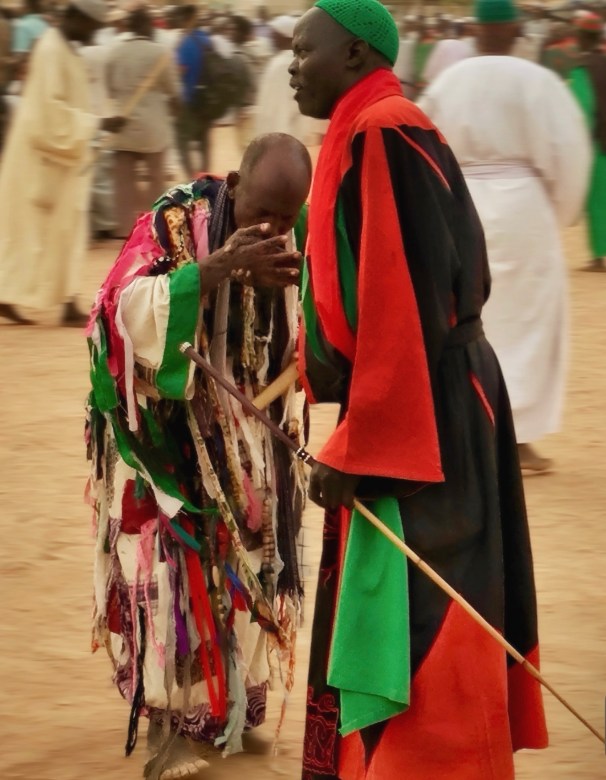
/ The brother (literally the one who shared my mother’s womb; perhaps here, my blood brother) who used to visit you /
/ your support and staff (literally your support to lean upon) to fulfil your word /
/ Your flesh (and blood) taking on your cares … he of you and you of him /
/ (now) departed, dead …. alas your kinsfolk! /
The poet is emphasizing that even familial bonds have been destroyed through the loss and death of family members. Those faithful, loving family members who stood by you in difficult times are no more. Families have been shattered and dispersed. The expression yaa Haleel is used to express deep nostalgia, yearning and regret, and also pity and compassion. The tone is one of profound sadness, that only intensifies in the next verse, as the gaze of the poet extends outwards.
……
Children bereft of shelter and shepherd (raa`aa; guardian, one to care for or watch over them) /
/ the dead – alas too many to mourn them (or gone are the days they had mourners, an-naa`aa) /
The line above may reference the tragedy of mass killings; the sheer number of corpses to be buried in mass graves and the impossibility of individual mourning or that there is none left to mourn.
/ the lost in the desert invoke the curse of God (upon those who have accursed them ) /
/ beseeching God: “Eliminate the causers of our curse!” /
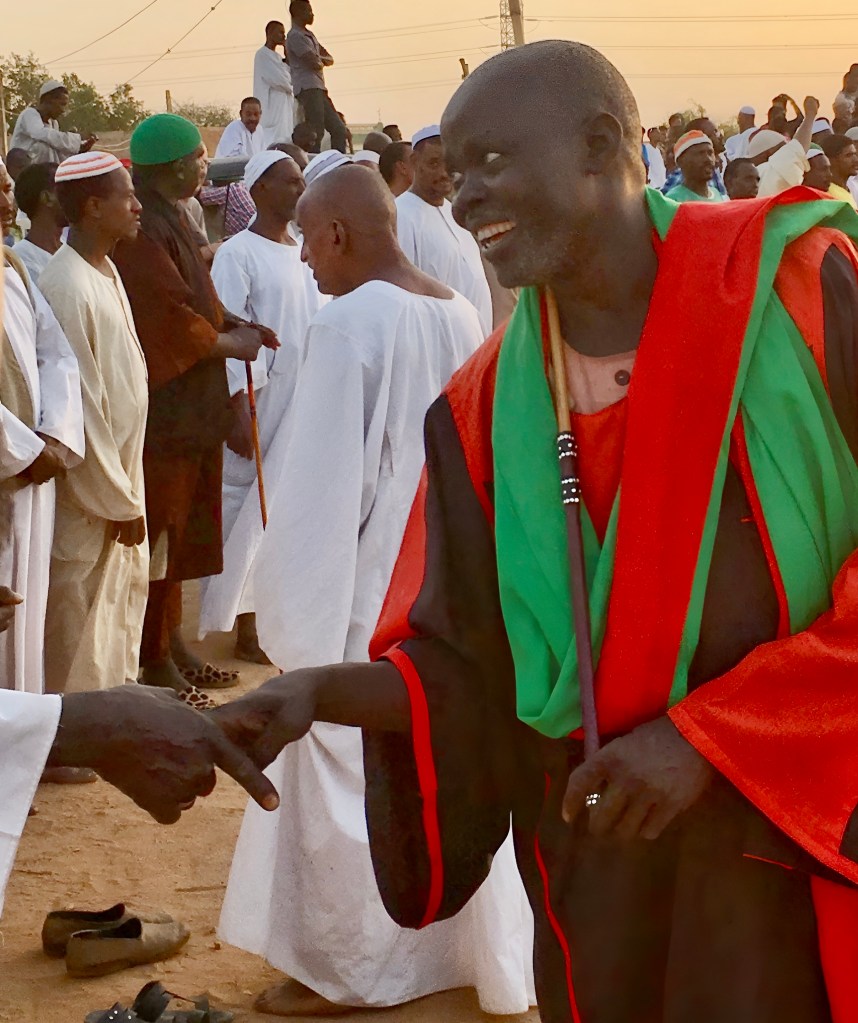
ad-daa`ii in this context might be understood as caller or summoner of a curse or source of bad prayer. This verse evokes the tragedy of those fleeing war, forced to wander the desert; those lost searching for the Egyptian and Chadian borders, for example, and left to die. The tone is one of lament and indignation and a call for retribution.
……
What has become of your loved ones (or dear ones) ? /
/ the neighbours who were as kin to you /
/ who in hard times came to you and were kind /
/ In ever-straitened times their fate laid upon you yet more calamity /
The verse evokes the double anguish of losing a friend or dear one and not knowing what has become of them. The loss so keenly felt too of their closeness and hospitality and community warmth and support. A void has been left.
…..
/ O All Merciful, my soul in a vice is pressed (or I am stifled or my soul is constricted or perhaps the world has closed in upon me /
/ hunger, thirst, our whole being seized with fear (literally strangled; makhnuug-aa)
/ the land’s displaced bereft of breath (or ensnared in a noose) (literally, hanged; mashnuug-aa) /
/ While the rulers recline in absolute ease (ruug-aa;) /
This verse evokes the suffering of those in extreme anguish and stress and so can barely breathe. They see no road open to them and are constrained, trapped, emotionally suffocated. All the while those responsible for their people remain unaffected and live lives of ease. The verse may also bear resonances of Sufi teaching on the nature of the constricted soul. This will be discussed in more detail in my sister blog.
……
/ The stake (al-khaazuug) stands athwart ( or impedes our path between) /
/ Al-Haqq (Divine truth or what is true) and AS-SaHH; what is real (or Manifest Reality), opposed, (in opposition, conflicting, clashing) /
/ O Al-Majdhuub … O Wad Al-FaariD /
/ Call upon your Lord and your Lord is a Decisive Judge /
The stake referenced here may be interpreted as a metaphor for disaster or the war itself, in particular the corruption and oppression suffered. This entrenched corruption, it has been suggested, stands as an impediment preventing the truth from emerging and conflicting with the correct logic of the real world. Perhaps the idea too is that the war and its oppressors seek to prevent our discernment of what is real and true. The verse also alludes to the complexity and conflicting interests immeshed in the present crisis.
The word al-khaazuug, literally “stake” in everyday Sudanese Arabic is often used to refer to an obstacle or stumbling block; al-waagif `aariD, standing as an obstacle. There are many Sufi readings suggested too for this. In Sudanese Sufism, the stake may refer to a force blocking enlightenment. This barrier, the stake, may be the self or ego standing between the seeker and God and spiritual realization. Al-Haqq; one of the divine names of God, signifying Divine Truth or Divine Essence; aS-SaHH; formally meaning correctness. The latter term may also refer to wakefulness or the apparent tangible world where things appear correct but lack spiritual depth. A seeker may focus so much on the formal literal correctness or SaHH of religion that they block the experience of God’s Truth or Haqq.
References to Majdhuub and Wad Al-FaariD appear to refer to specific Sufi holy men and thinkers but in Sufism, the term majdhuub evokes too the divinely attracted or ecstatic mystic who has lost interest in the material world. Wad al-FariD; this may refer to renowned Egyptian Sufi poet – or perhaps those of the same lineage; invoking and calling upon the long line of mystics.
Your Lord is QaariD; calls for spiritual intervention; God will ultimately dismantle the oppressor or obstacle. The word “qaariD implies a force that cuts through; here the emphasis is on the decisiveness of God in judgement.
…..
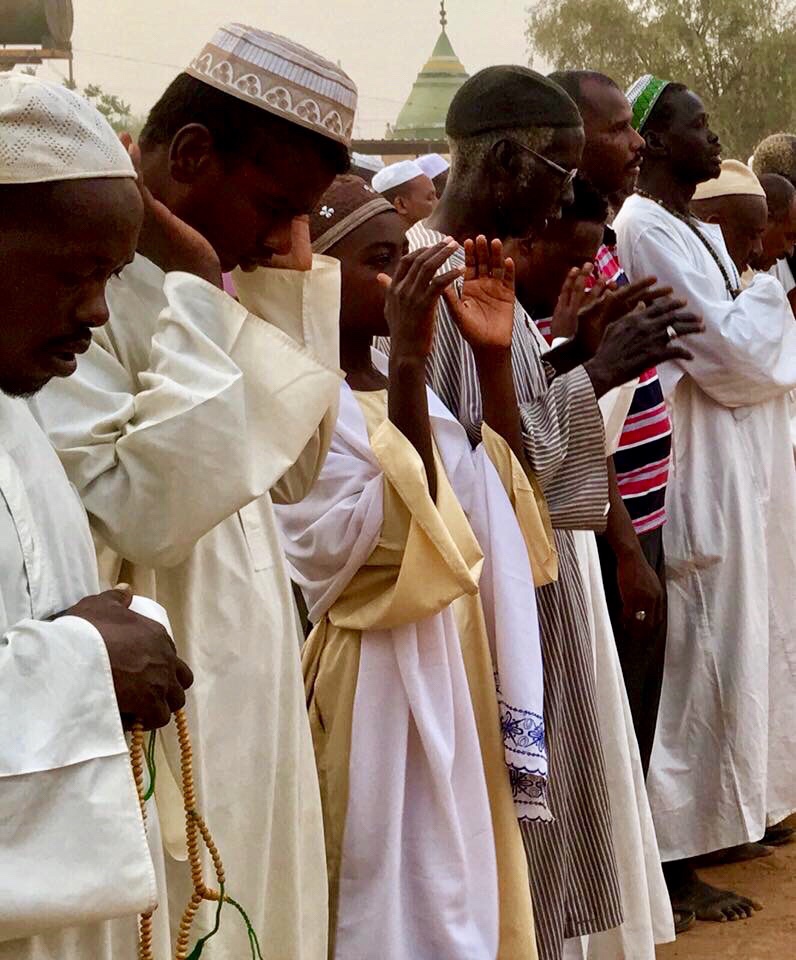
/ Land of goodness (also the idea of plenty) abounding in plains (Sudan is sometimes referred to as the land of fields and plains /
/ God has afflicted you with the greatest of ignorance /
/ Through your supplications O people of God /
/ The hand of the tyrant will wither away (literally be paralyzed) /
……
/ O Most Merciful …. O Lord of the Umma (the community of believers in Islam) /
/ Have mercy, forgive, and end our anguish (also melancholy, grief, and adversity) /
/ Children and our people all gathered /
/ Your relief (faraj-ak) is your joy (farah-ak); rest (and profound stillness; jamma) /
The line above may be seen in Sufi terms as a poetic supplication, expressing the divine relief to the seeker. Faraj-ak, your relief, referring to the divine opening or intervention that ends spiritual hardship; that is relief after deliverance; faraH-ak; not just joy but spiritual ecstasy; raaHa; perhaps may be interpreted as the spiritual tranquility of the heart. Jamma may be used to refer to a gathering of energy or a deep cooling rest, possibly with resonances of the stillness of a soul that has found its watering hole or spiritual destination.
The tone of the poem is now one of hope, energy through unity, the coming together of all Sudanese.
…..
/ Lord of humanity, Lord of all-encompassing mercy (ar-raHmiyya) /
Here the choice of the word ar-raHmiyya, rather than ar-raHma may have special significance. While raHma is universal and unconditional, relating to the Mother of All Names, the latter may be interpreted as Absolute Mercy. This will be explored more in my sister blog.
/ The rain of mercy flows down daily /
/ filling our hearts …. brimming warmth and kindness /
/ (pouring into) Upon all those places ….. that were forgotten (or abandoned) /
Once again, the rains of God’s mercy will wash away strife, restoring livelihoods, extinguishing war and reviving all those Sudanese values and virtues, the metaphorical forgotten places.

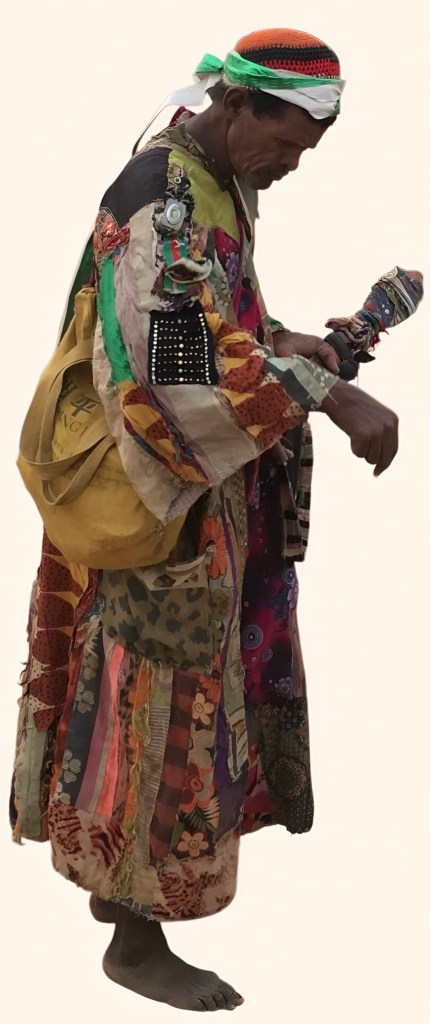
Above, the Alfiyya prayer beads referenced below.
……
All souls (at last) return to the right path (dughriyya) /
/ no Whisperer, no indebtedness, no blood price (diyya) /
/ the hand of goodness outstretched in the takiyya /
/ offering all a morsel in abundance (haniyya) /
The word “whisperer is associated with the tempting words whispered by Satan in our ear, or the flaws of the ego in Sufi terms, impeding spiritual peace. It can also suggest being assailed by obsessive doubts. The poet is urging the people not to demand blood retribution but to remember the call to charity, as in the reference to the takiyya or almshouse; the charitable provision of food and aid often run by mosques or Qur’an schools and central to Sufi tradition. At the outbreak of war, community soup kitchens and food distribution centres, also known as takiyya, were established, building on this tradition.
……
/ O Righteous Ones, with resolve forge your intention /
/ O people of God stand together /
/ This circumstance so unexpected /
/ Behead this snake (literally cut off the tail or cut out all remnant of the snake, with the idea of extirpate from the root) /
The. word salaHHiin refers to saints, elders, spiritual guardians and people of God and the poet calls upon them to remain sincere in their intentions and act accordingly; this is a spirtual call for action undertaken with sincerity and honesty. The word niyya; intention, has multiple Sufi resonances. It is a central tenet of Islam; every action of worship, for example, must be prefaced by thoughtful and good intention. These will be discussed in the lexical breakdown of the poem in my sister blog. The last line of this verse is a fierce renunciation of what is considered politically or socially poisonous.
…….
/ O Dervish take here my (solemn) counsel (or solemn command) /
/ Recite your litanies (wird), lift up your praise telling your thousand beads (Alfiyya) /
/ In sacred verse ……. Meccan and Medinan /
/ your road lies open ….. clear, uncluttered (literally a hundred percent) /
/ when the intent behind the word is pure /
/ (the paths we walk together of the) revolution and our Sufi madad will converge /
In this closing verse, the Sufi mystics or “dervishes” are called upon directly to take spiritual action for the salvation of Sudan. In Sudanese Sufism, the term “madad” refers to seeking spiritual support, blessing or empowerment from a higher source. It can be translated as “aid” or “extension”. It is also an invocation used by disciples ( murids) to ask for spiritual energy or blessing, often through the intermediary of a spiritual leader or departed holy man or woman, as in “madad yaa Rasuul Allah” or “Madad yaa shaykh”. The poem ends in an intensely rousing and optimistic call for unity as spiritual and revolutionary ideals are brought together. The Qur’an in its entirety is referenced; both the verses revealed in Mecca and Medina, as spiritual justification underlying this call.

 Women's literacy in Sudan