

Sudanese Merchant Sleeve Fans
Celebrating the British Museum’s Grace Mary Crowfoot Collection
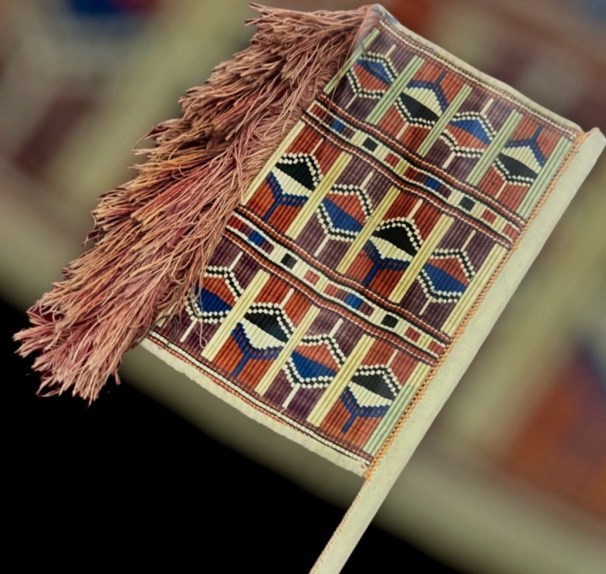
Above, a finely crafted merchant’s sleeve or flag fan from Omdurman, displayed at the Sudan Ethnographic Museum, Khartoum. These fans are believed to have originated in the Middle East or North Africa and for centuries before the advent of folding fans, were used by merchants and members of the upper classes. Often tucked into belts or sleeves, they were both elegant and discreet; serving both to cool and establish the social status of its bearer. It has been claimed that this type of fan was brought from the Orient to Venice by 12th century crusaders. Made of woven palm fibre, grass, wool or other textile over a light wooden or wire frame, the flag fan could be rotated on its handle with a deft flick of the wrist by the owner.
In Sudanese colloquial, traditional hand held fans are known as habaaba; هبابة from habba, to blow, habbaba to fan. Among the Zaghawa and other peoples, they may be known as Um Rahaba or Umrahaaba “أم رهابة” أو “أمرهابة” or Um Daafaaya / Um Daafaah; “أم دافاية” أو “أم دافاه“.

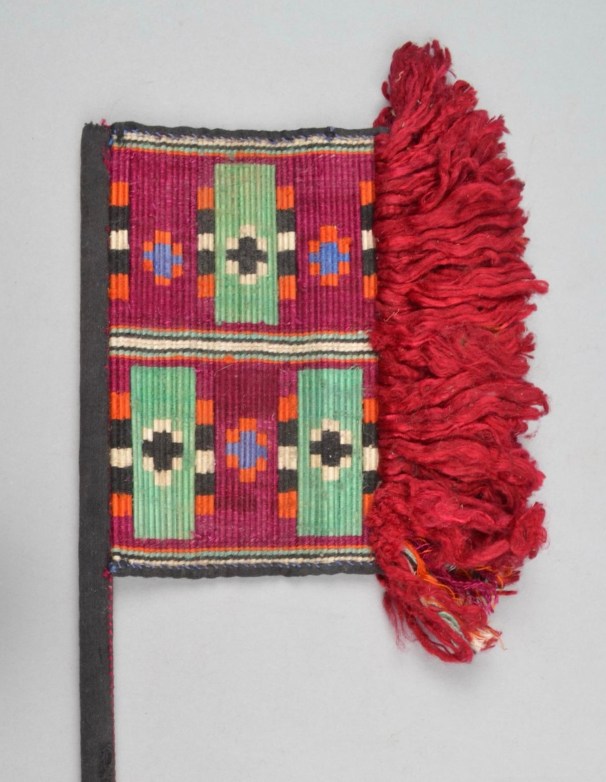
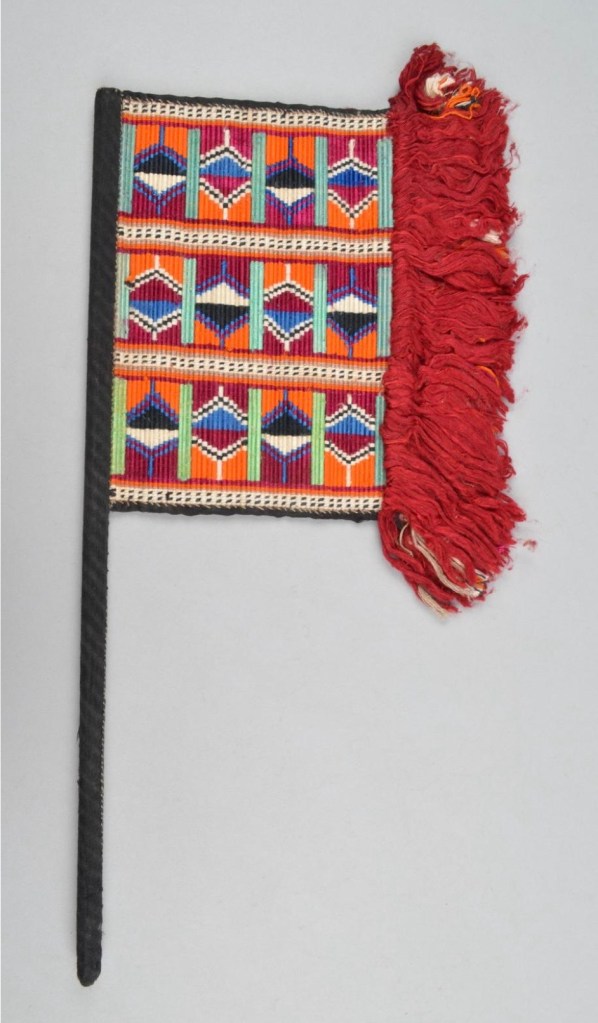
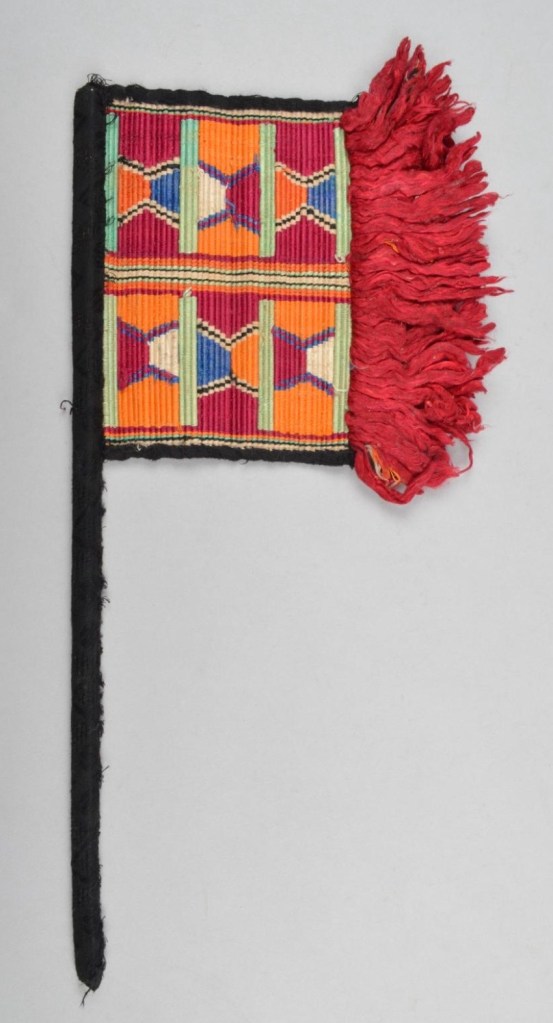
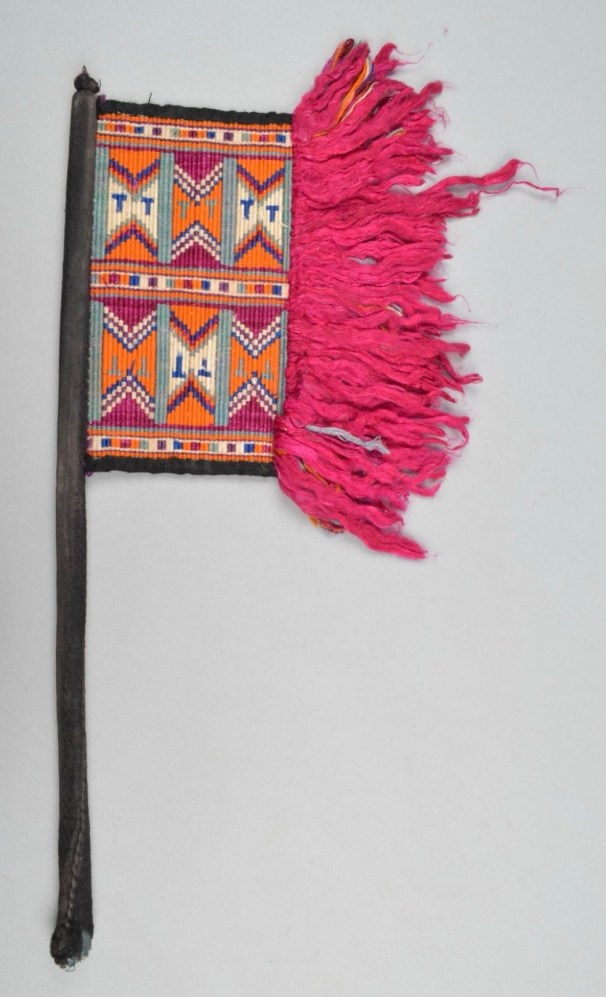
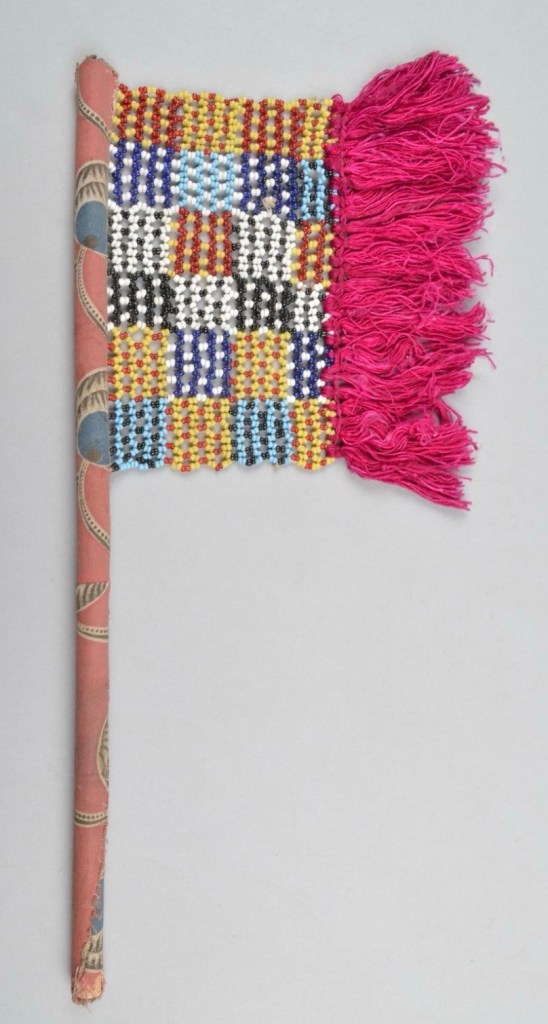
This week’s brief post features early to mid 20th-century examples of Sudanese flag or “merchant sleeve” fans from the British Museum’s Grace Mary Crowfoot Collection. Their craftsmanship and striking, colourful motifs are worthy of in-depth study and documentation and I would very much welcome any information readers can offer on their designs, manufacture and use, as well as any examples you might have of ceremonial jirtig fans. As with fine palm fibre basketry, tabag food covers and decorative matting, the flag fan exemplifies Sudanese women’s craftsmanship, skill and capacity for income generation. See more in Weaving Brighter Futures – Updated.
I first came across these striking and eminently practical objects when visiting the Sudan Ethnographic Museum in 2022. Here I reproduce British Museum Trustees images of the fans donated by British botanist, archeologist, textile historian and midwife, Grace Crowfoot. Learn more about this remarkable woman and her research into spinning, weaving and embroidery in Sudan in The Thread of Fate and Cowrie Shells. The short overview below provides a glimpse into Sudanese fans over the centuries.
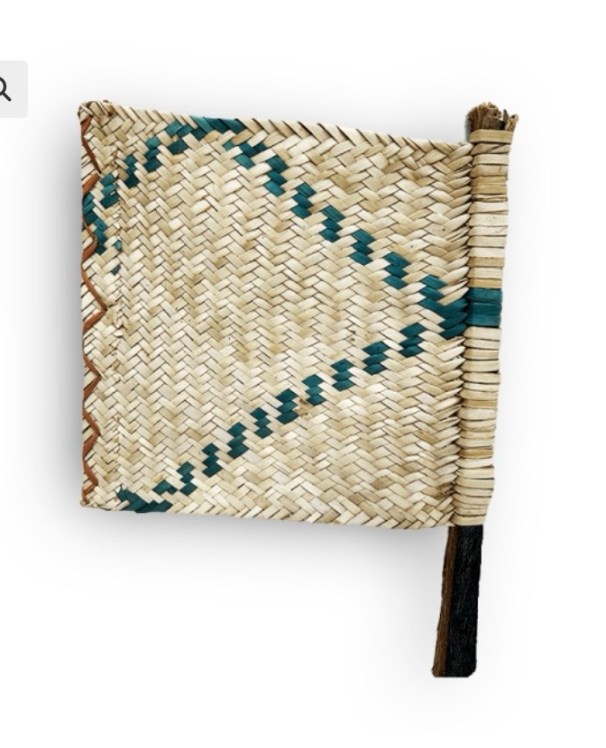
Above left, Grace Mary Crowfoot, above right, a contemporary Sudanese palm fibre flag fan, from Random Oman products. These fans can be found across the Arab Islamic world.
Fans in Sudan
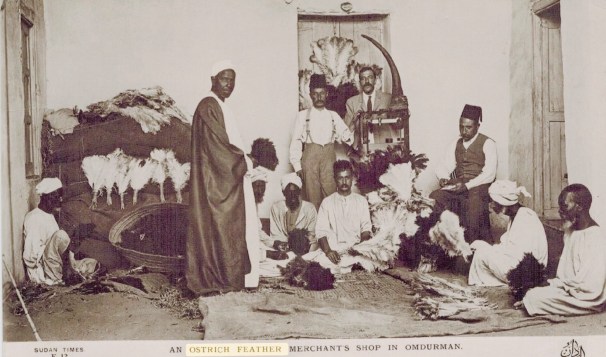
Above, a colonial-era postcard depicting ostrich feather merchants in Omdurman. In the late 19th century, ostrich feathers, predominantly sourced from Kordofan and the Red Sea Hills regions, outstripped gum arabic and ivory as Sudan’s leading export. The emergence of South African farmed ostrich and shifts in European women’s fashion tastes away from large, featured hats with the advent of the Model -T Ford motorcar, would later lead to the demise of the Sudanese market.
Researcher Karen Eva Carr believes the earliest feather fans originated in Sudan, not as previously thought, in Ancient Egypt. From there, she claims, they spread north into New Kingdom Egypt, reaching Greece by the 400s BC and Italy a century later. As ostrich and peacock feather fans spread to China and on to the West, their symbolism tied to rebirth shifted to one of wealth merged with sophistication. The earliest extant feather fans, she explains, are those found in ancient Kerma palace grounds of the early Bronze Age, 2500-1500 BC (A Short History of Feather Fans’ Spread and Cultural Connotations: From Bronze Age Africa East to China and West to Europe). Sudan Notes and Records, documenting archeological finds in ancient Nubian tombs tell us in one instance; “The Egyptian lay on an angareeb on his right side with his head east and the usual equipment of head-rest, fan, sword, sandals, stone vessels and pottery.” In another reference, a young girl lay, “clad in beaded leather skirt, with headrest, ceremonial spear and ostrich-feather fan” (Sudan Notes and Records, Volume 1, 0 1918).
Ostrich feather fans would be used across the arch of Sudanese history, playing practical, ceremonial and symbolic roles. Writing on Nuer scarification initiation rites of Upper Nile Province in 1932, Sudan Notes and Records describes boys set apart in huts during the ceremony; living on porridge and milk; “each boy has a skin of a goat, sheep, or bull to keep away the sun and a fan of feathers with which to whisk away the flies”, as they learnt to be “unafraid of the spear”(SNR Volume 6,0 1932).

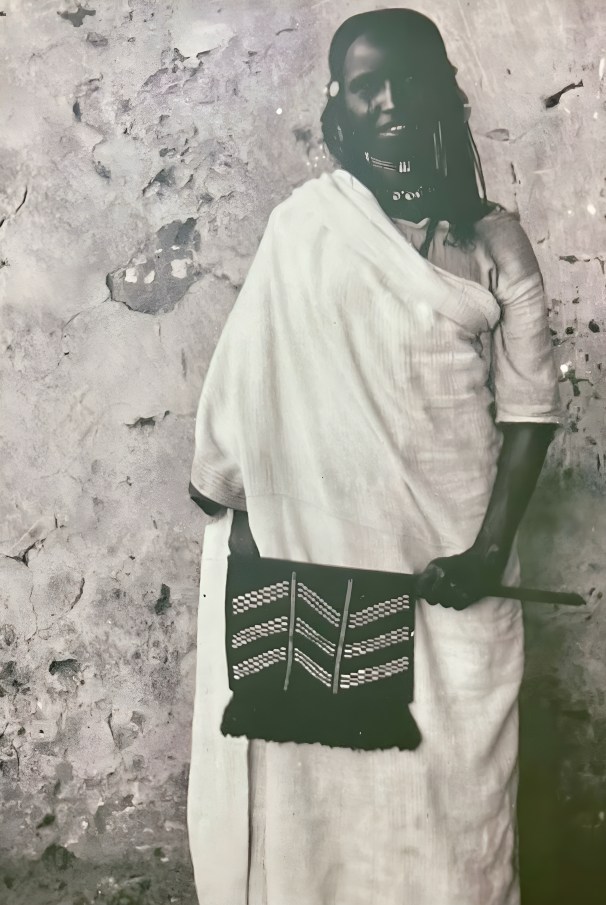
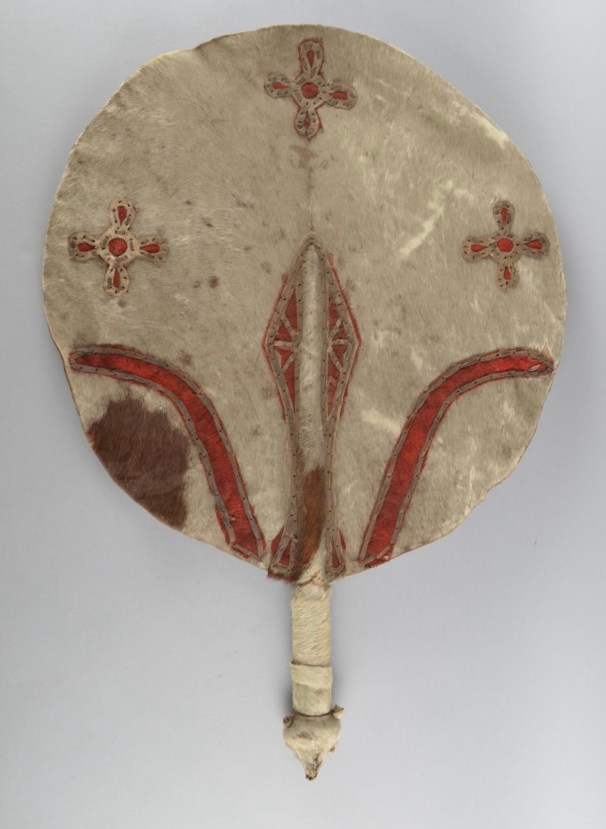
Above left, a colonial-era photograph displayed in Sudan Ethnographic Museum of a woman in white toub holding a flag fan in her hand, Had-el Zein, 1920s. Right, a composite fan of cow or antelope hide with appliqué skin and red cotton flannel ornament, from Kordofan, British Museum Trustees.
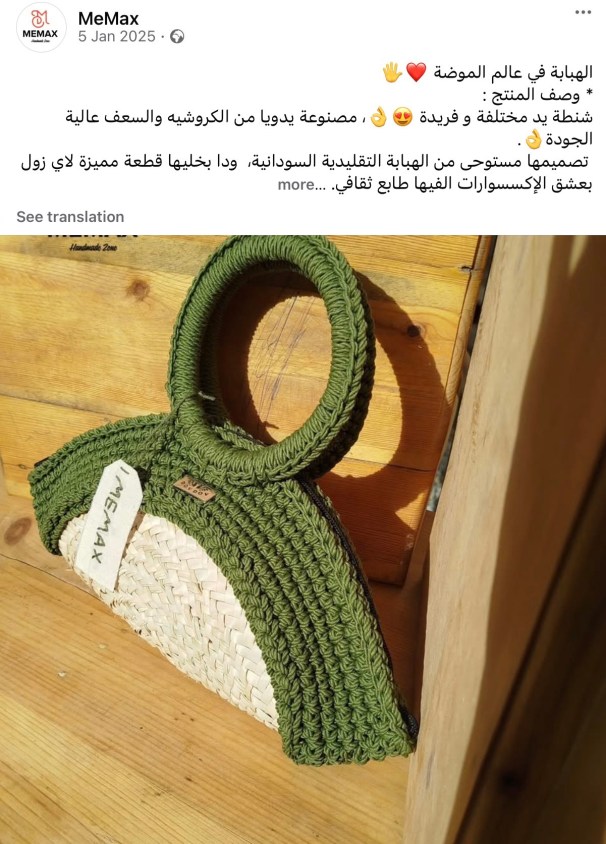
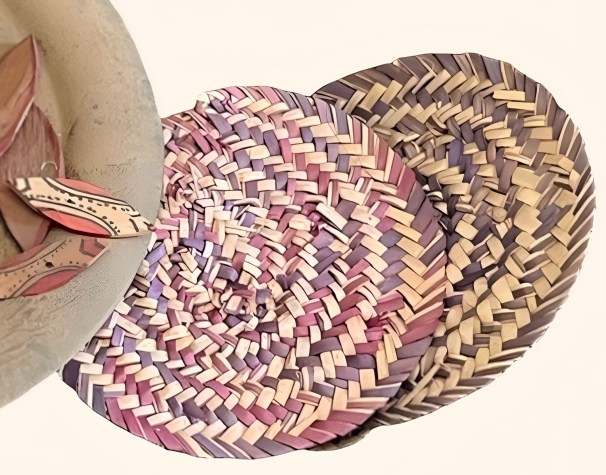
Speaking on the fan’s humble origins, Karen Eva Carr reminds us “But a large leaf, or a thin piece of wood, a bird’s wing, or a thin mat of woven reeds will serve the purpose…” (Karen Eva Carr, as above). The ubiquitous circular palm fibre fans pictured left, often decorated with red and blue threads, are possibly the most accessible, enduring and endearing of Sudanese fans. Used to fan the flames of charcoal fires and braziers while mullah and kisra bubble and crisp in the stifling heat of Sudanese kitchens, they also serve to whisk away flies from food and companions while cooling sweating brows. Right, a contemporary take on the Sudanese habaaba by MeMax.
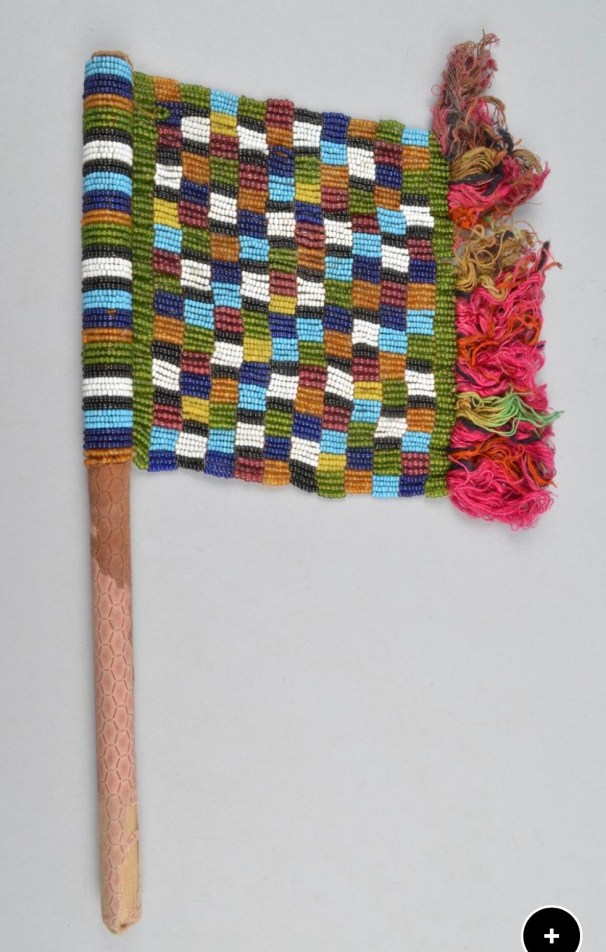
Below, Flag Fans in the Grace Mary Crowfoot Collection, the British Museum
Made of wood, wool, other textiles and ornamental glass beads.
 Women's literacy in Sudan