

Two Ramadan Dishes – Mulah Sharmut with Asiida and Um Jingir
Darfuri Favourites
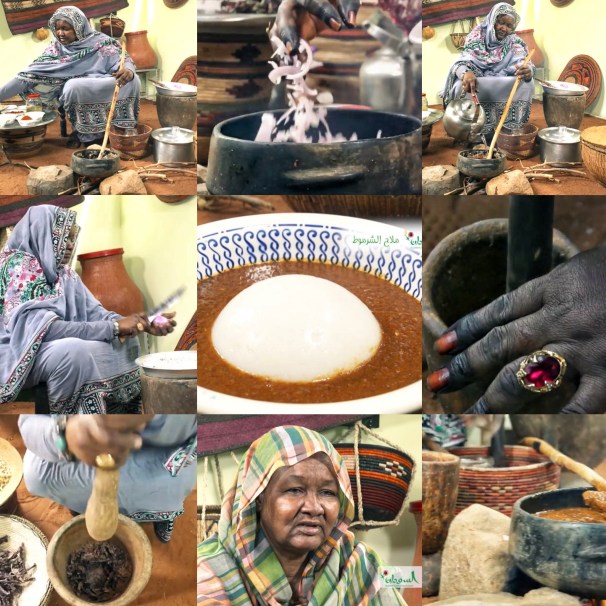
Above, stills from the brief documentary (embedded below) on traditional Darfuri cuisine توثيق الأطعمة الشعبية الدارفورية – الأستاذة فاطمة دوسة – منتدى دال الثقافي, presented by Professor Fatima Dusa, expert in the regional dishes of Sudan. In her traditional Darfuri kitchen, Fatima takes us through many of the classic stews and gravies (mulah) and other dishes associated with the region. Two dishes, mulah sharmut (with asiida) and um jingir are popular throughout Sudan during The Holy Month of Ramadan.
As Ramadan 2022 comes to an end and Sudanese Muslims everywhere prepare for the EId Al-Fitr next week, this post celebrates these two much loved dishes.
I will be providing an English transcript of this fascinating 10-minute documentary next week in Sudanese Arabic Documentary Transcripts. My thanks to Muna Zaki for her very kind transcript and expert guidance on this text.
Two Ramadan Dishes – Mulah Sharmut with Asiida and Um Jingir
Asiida Mulah Sharmut Um JIngir
Asiida
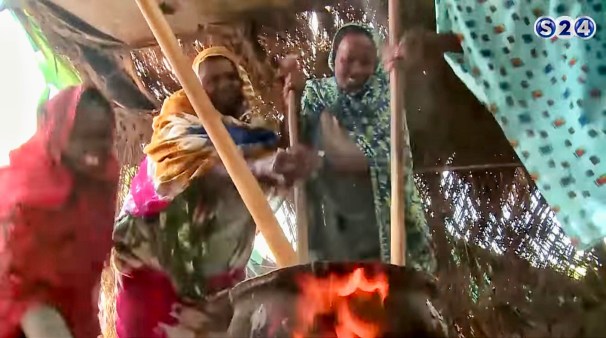
Above, still from Sudania TV 24 (link below), showing women singing as they stir and thicken the asiida porridge.
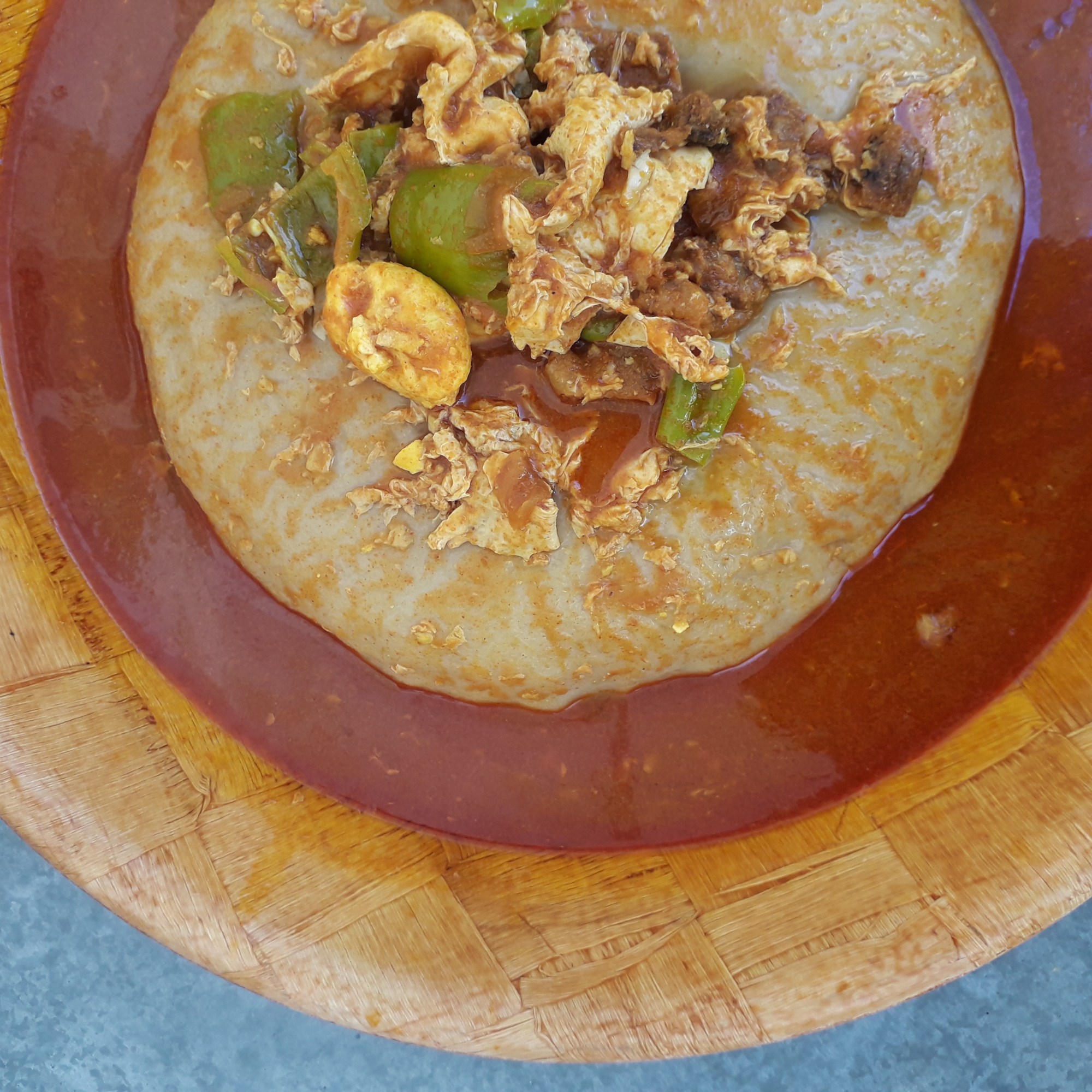
Below, different types of asiida, a sorghum / millet / wheat dumpling-like porridge which can be served set or slightly soft, as the centre piece to both savoury and sweet sauces. It is popular throughout the Islamic world, especially at Ramadan. Top, Sudanese asiida, with a meat stew (CC Wikipedia), bottom left a Tunisian version (photo Dreamsline.com) with nuts and seeds, middle, another Sudanese asiida (Dreamsline.com) and far right, a batch of asiida dumplings ready to be added to stews and sauces, photo; Sudania TV 24 (link below).



Watch Sudanese women making asiida below.
Asiida; The Recipe

Recipes vary as to the type and proportions of grain used; millet, sorghum or wheat. The brief video below takes us through a fairly typical recipe for a soft dumpling texture. A cup of fermented sorghum is added to a litre of boiling water and the mixture is stirred continuously until the dough thickens and heavy bubbles appear. The pan is then covered the mixture left for five to six minutes.
After that, half a cup of wheat flour is stirred into the mixture vigorously and the pan is covered once again for two to three minutes. After stirring the mixture again, it is poured into a mold – a small bowl for example – previously coated with water or oil to prevent sticking. The chef advises the asiida should be eaten warm while it is soft as when it cools, it sets hard.
المطبخ السوداني/العصيدة السودانية/ عصيدة الذرة الحامضة
Below, Sudanese women making large batches of asiida for a restaurant. They sing and beat their stirring sticks rhythmically while working the mixture. It is hard, energetic work.
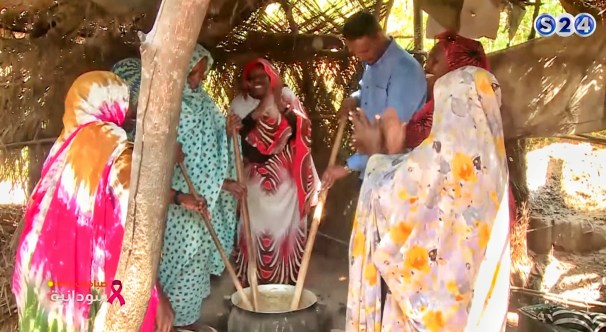
Above, a still from عمل عصيدة الدخن – ملامح مهنة – صباحات سودانية
Mulah Sharmut

Below, I reproduce Professor Fatima Dusa’s recipe for this classic Ramadan stew, pictured above. You can watch the dish being made below: (minutes 1.22 -3.25). It is fascinating to see Fatima using many traditional Sudanese kitchen implements, such as the wooden mortar or fundug and the swivel stirring stick or mufraka (below, bottom right). The excerpt also includes many fine examples of Darfuri basketry and weaving.
See more Sudanese cooking utensils in Intimate Geometry.

You can read the transcript and translation of the whole video next week in
Mulah Sharmut; The Recipe

Fatima opens by explaining that mulah sharmut is a staple dish among West Darfuris. She begins by slicing and frying onions in oil (clarified butter can also be used). While the onions are frying, she pounds into powder large quantities of sharmut, dried strips of meat, usually beef (jerky) popular as a base for stews. When the onions (roughly a third of the quantity of sharmut) are a golden brown, she adds the sharmut and continues frying.
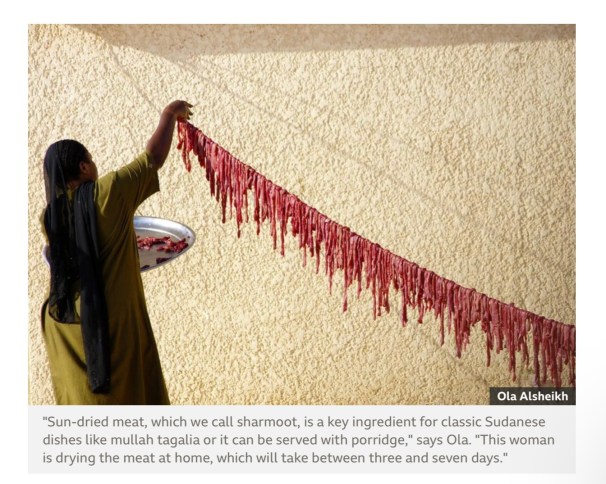
Below, strips of salted beef drying in the sun, from the BBC report, linked below, dedicated to the remarkable photography of Ola Alsheikh. “People here aren’t used to seeing a woman holding a camera in the streets,” says Sudanese photographer Ola Alsheikh, “but I just decide to get the photo whatever it takes”..
This is the Sudan I want to show

The sharmut is ready when the kitchen fills with the smell of cooked meat. Fatima then adds salsa naashifa; powdered dried tomato (around an eighth of the quantity of sharmut) and enough boiling water, while stirring constantly, for the onions to dissolve completely, leaving only the sharmut and tomato sauce. A small amount of powdered dried okra (wayka) is added – roughly a fifth of the quantity of sharmut used – to bind the stew and give it a smooth, rich texture. If you aren’t keen on hot chili pepper (shatta), then other seasonings can be used, such as pepper, coriander, ginger or cinnamon.
Um Jingir (Minutes 9.10-10.15)

Um Jingir is cheap, easy to make and goes a long way. In the past it was made for those working as volunteers in communal agricultural projects. For those fasting in Ramadan, it makes a nourishing and sustaining pre-dawn meal (suhur). Millet (either with or without husks) is washed, soaked until it swells and boiled. Yoghurt or tamarind water is added, together with sugar to taste.

We Wish Everyone a Joyful Eid Al-Fitr

Learn more about our life changing educational work in
Scenes from Our Orphans’ Schooling Programme
See too Community Literacy, Latest News and At a Glance
 Women's literacy in Sudan