

eyes.on.sudan
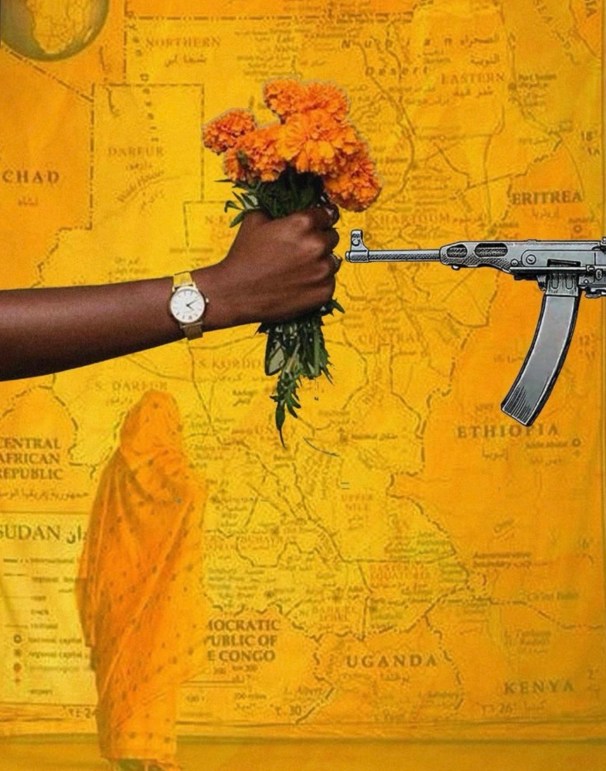
Above and title image, the vast map of Sudan that hangs in the entrance of the lower gallery of Sudan’s National Museum, Khartoum is bathed in the luminous saffron yellows of Sudanese sunlight and women’s toubs. It provides the stunning backdrop to Amanda Abdel Aziz’s defiant tribute to female resistance in the face of war, The Land of the Kind under Target.
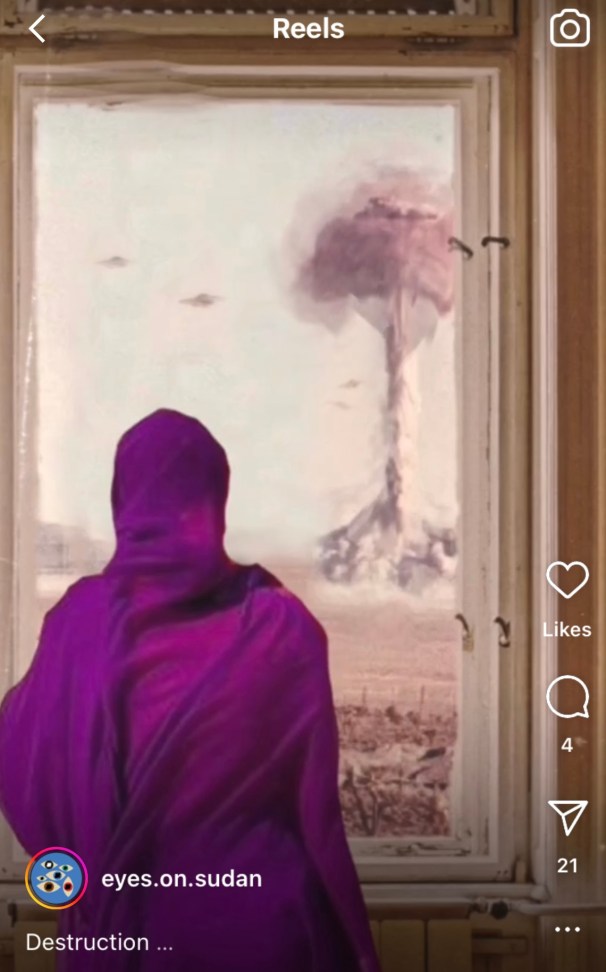
eyes.on.sudan is the creation of architect and visual artist, Amanda Abdel Aziz Albirgdar. Next month, Sudan will be entering its tenth month of a devastating war between Sudan’s Armed Forces and its former allies and partners, the paramilitary Rapid Support Force. As the world media is gripped by the escalating crisis in the Middle East, the plight of the Sudanese goes largely unreported. The few images that do reach us are of heartbreaking desolation.
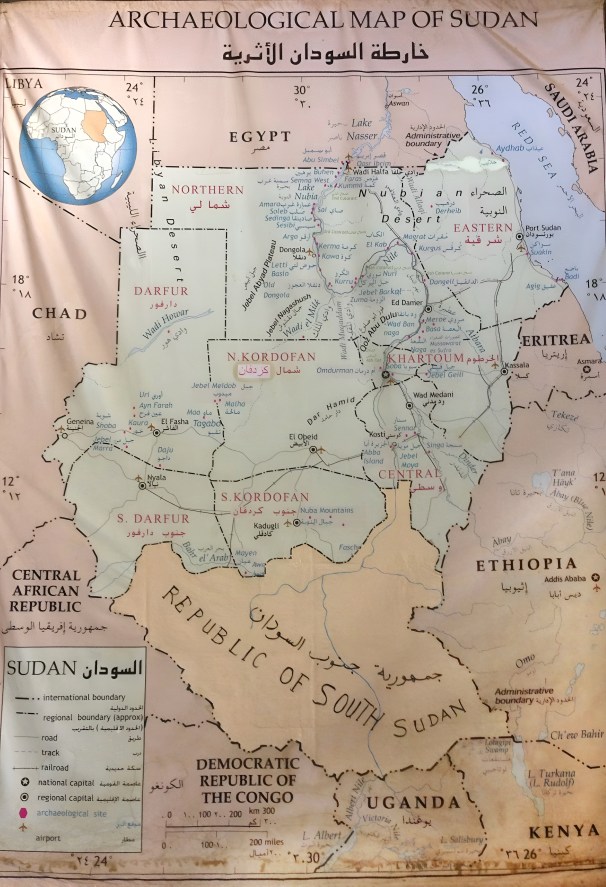
Amanda’s arresting collages featured in her eyes.on.sudan Instragram account are both a celebration of Sudanese resilience in the face of incalculable cultural loss and a testimony to that loss. They reflect Amanda’s determination to keep Sudan in the public consciousness. Her collages juxtapose iconic historical images of Sudanese colonial and post-colonial eras against vibrant backdrops and familiar totems of Sudanese culture. They resonate with the iconography of the 2019 revolutionary struggle for democratic reform. Right, any tour of The National Museum begins by gathering before the map of Sudan.
This week’s post offers just a brief taste of Amanda’s stunning work. Join us next month, when Amanda has very kindly agreed to speak with me about her art and life in her homeland in these dark times. All images featured in this article are copyright Amanda Abdel Aziz Albirgdar and are used here with her kind permission. They may not be reproduced without her permission.
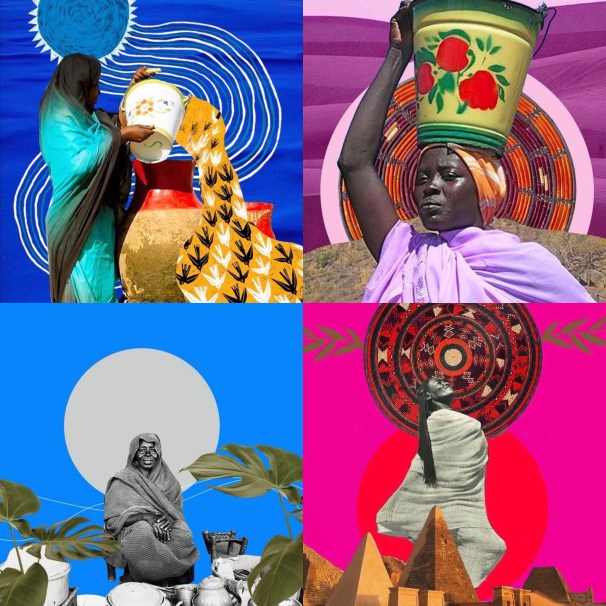
More beautiful collages in Amanda’s portfolio. Waters of peace, drawn from an earthenware zir flow from a pail. Sudanese women are haloed by Darfuri food covers or Tabaga, suspended, sun-like behind them.
In Knowledge is Power, below, Amanda evokes the first women graduates in post-independence Sudan. We see the white toubs traditionally worn by women employees of government, civil service and education sectors in early independence times. The white toub was also embraced as a symbol of the 2019 revolution. On their heads, the women delicately balance the traditional, finely woven food baskets, or mandola of western Sudan, symbols of communal generosity.

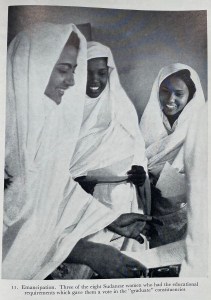
Below, plate reproduced from Where God Laughed, The Sudan Today by Anthony Mann, Museum Press Limited, 1954. Plate 11, facing page 32. Here we see “three of the eight Sudanese women who had the educational requirements which gave them the vote in the graduate constituencies”.
See too Malikah ad-Dar – Trailblazer

eyes.on.sudan
Selected Collages
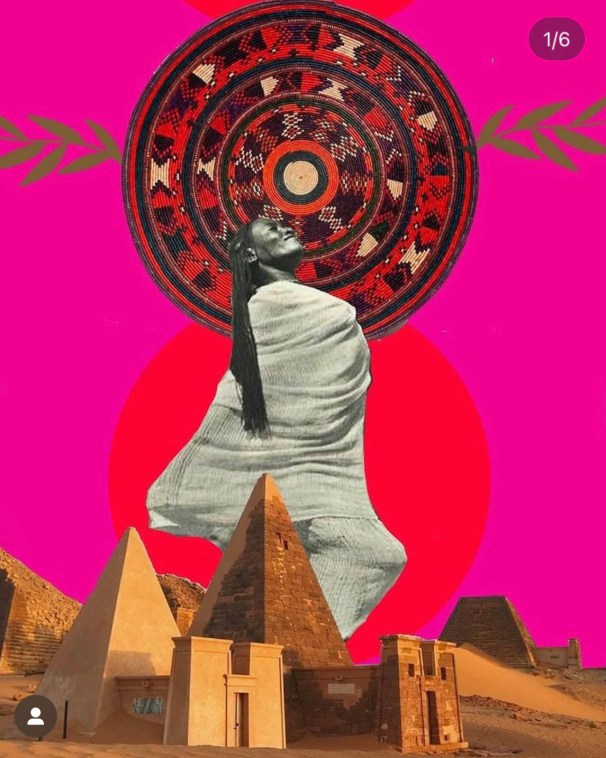
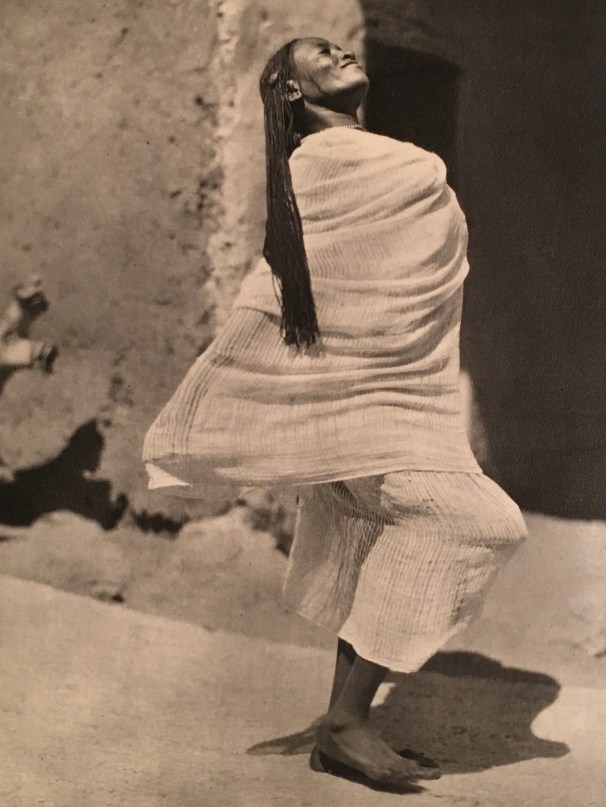
Above, the pyramids of Meroe, symbols of Sudan’s ancient civilizational forces, frame the sheer exuberance of an Omdurman woman joyfully performing the Sudanese pigeon dance. Below, the original photograph, Omdurman dancer, from Der Dunkle Erdteil, Atlantis Verlag Berlin, 1930. See more in Historical Sketches – People and Places
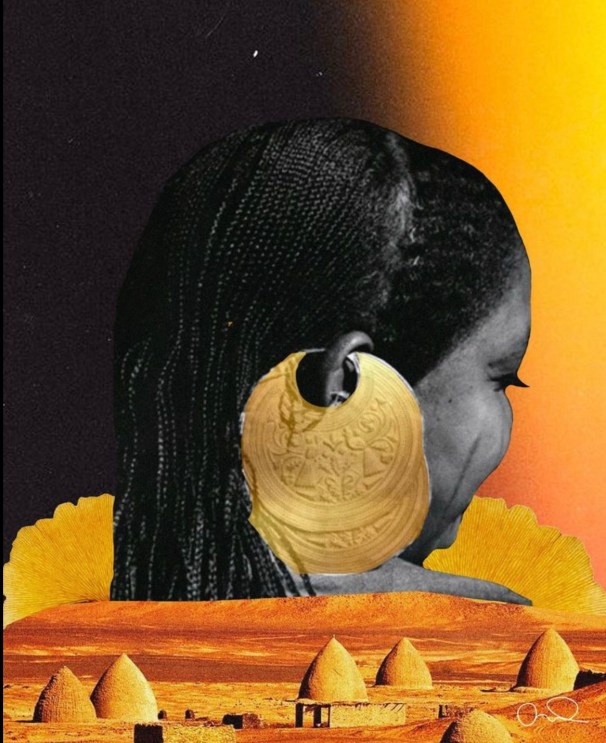
Below, the traditional fine plaiting of the mushattah, or hair plaiter, set offs the glowing gold gama boba earrings, so resonant of timeless continuity and the inspiration of female elders which have informed Sudan’s recent past. Just visible on the woman’s cheek are the traditional facial scars or ash-shuluukh, marking tribal identity and erstwhile symbols of beauty. In the foreground, we see the tombs of Old Dongola. A celebration of Sudan’s rich and complex African and Afro-Arab identities.
See more in Hair Braiding in Northern Sudan and “A Necklace of Shells from Distant Seas…”
Many of Amanda’s works explore the sadness of flight and exile as in the delicate collage below.
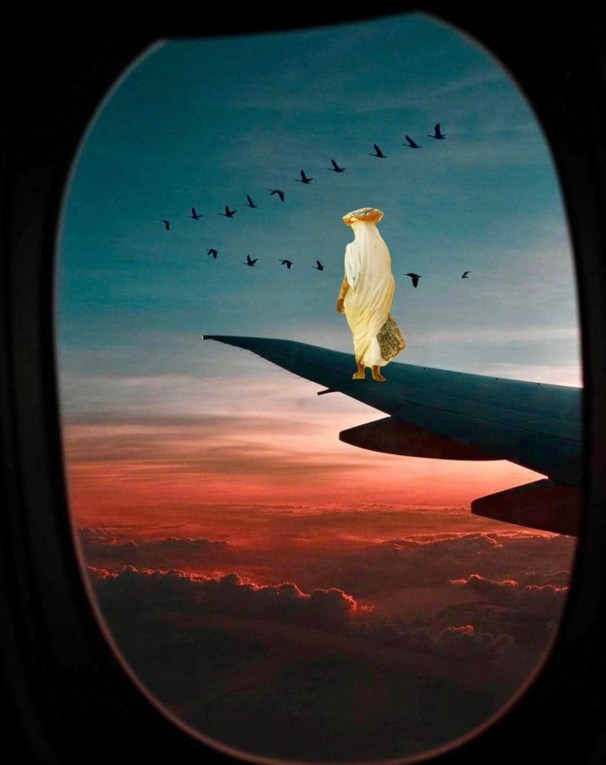
Join me next month to learn more about this gifted artist.
 Women's literacy in Sudan
What is happening in Sudan brings tears to my eyes. Such lovely people being made un-welcomed refugees in the neighbouring countries, or watch their loved one been killed by two fighting factions of the army that was made to protect them. I love that country and its people, it is shame that we are witnessing such a disruption to the life of young boys and girls particularly their education and opportunities in life.
LikeLike