

Beadwork and Silver at Sudan Ethnographic Museum, Khartoum
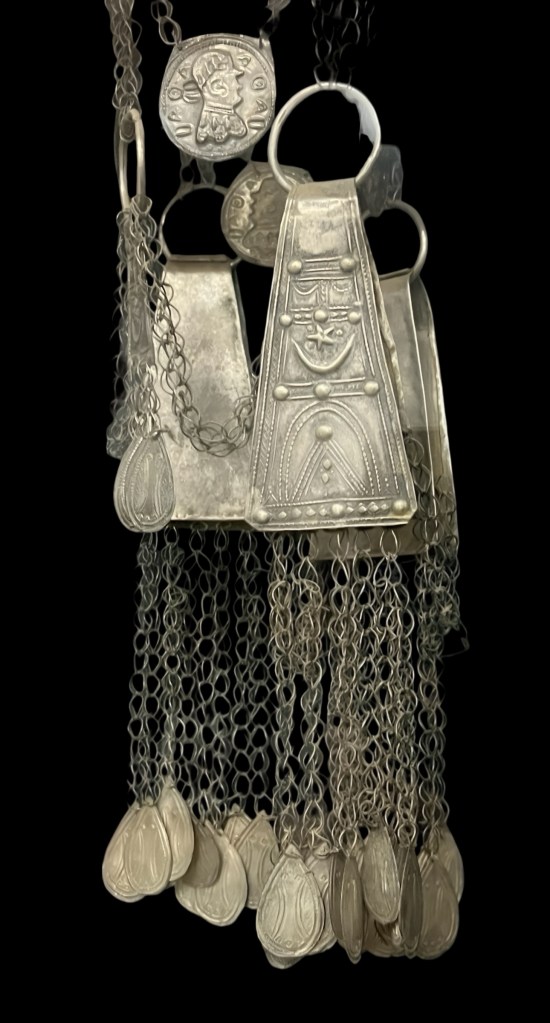
Above, bridal head ornament made by Misiriya silversmiths, Arabs of Western Sudan.
This week’s post is an introduction to coming articles exploring the history, craftsmanship and symbolism surrounding Sudanese beadwork and silverwork. Below, some of the stunning exhibits displayed at the Sudan Ethnographic Museum, Khartoum, pre-war. You can see more of the museum’s unique collection in Ethnographic Museum Khartoum and Sudan’s Cultural Treasures Looted 1.
For more on Sudanese jewelry, you might enjoy “A Necklace of Shells from Distant Seas…” and Conserving Sudan’s Timeless Treasures Part 1, the latter featuring the work of jewelry expert and creator, Nisreen Kuku.
All photographs below were taken by the author with the permission of the museum in 2022. Exhibit descriptions are taken from exhibit labels. I welcome any corrections or comments.
Beadwork – Nuba Peoples
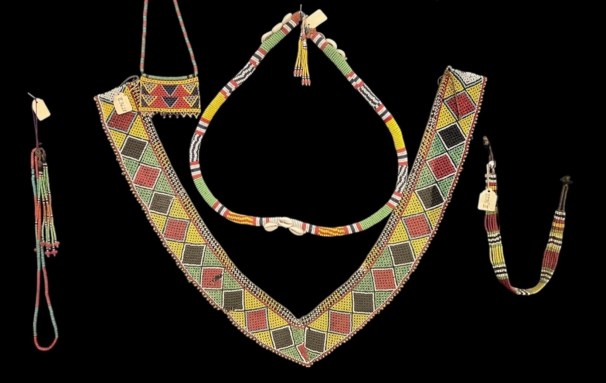
Above, beadwork from the Nuba peoples, South Kordofan, worn by both men and women. The necklace / waist band left and bracelet right were worn in ceremonial dances. The bracelet, the exhibit description explains, was made by Nuba women.
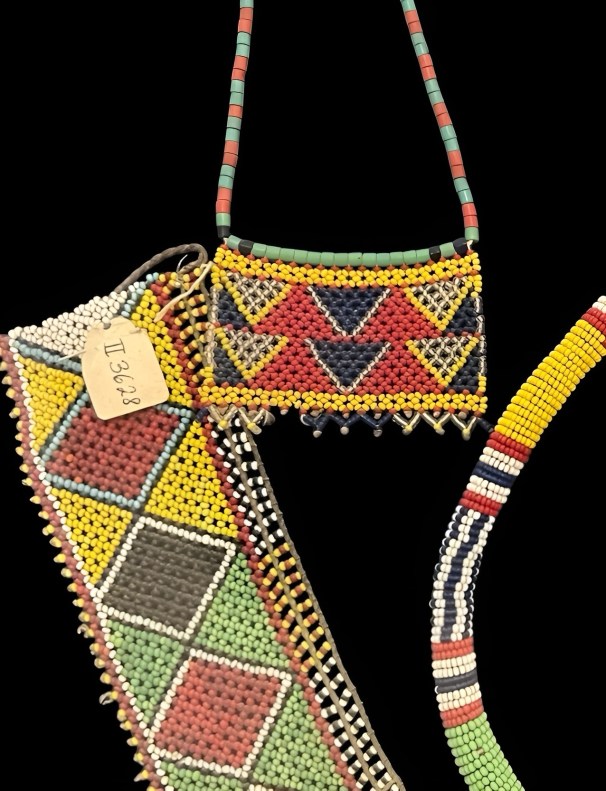
Below, centre, a panel of yellow, red and black beads worn upon the breast or around the waist by small boys and girls, South Kordofan Nuba. Left, detail of belt or collar worn by male and female dancers, Daluka Nuba, South Kordofan.
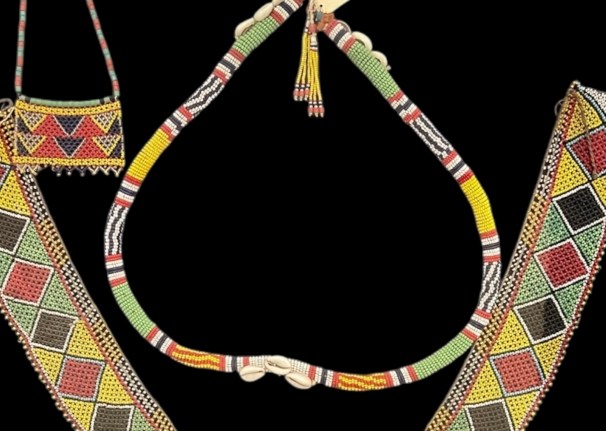
Below, elaborate belt embellished with cowrie shells, worn by men and women of the Blenga tribe South Kordofan.
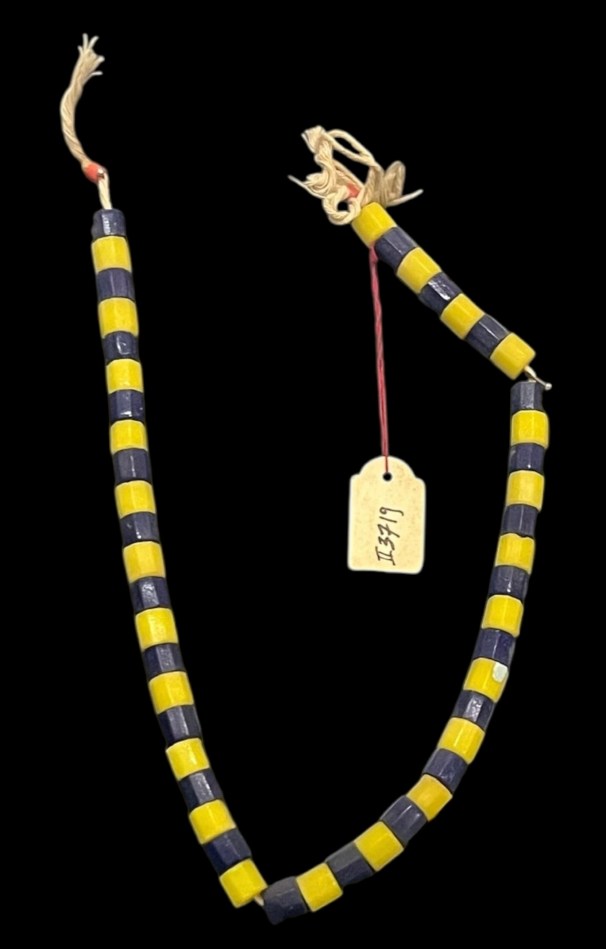
Below, necklace of yellow and blue beads made and worn by women of the Blenga tribe, South Kordofan.
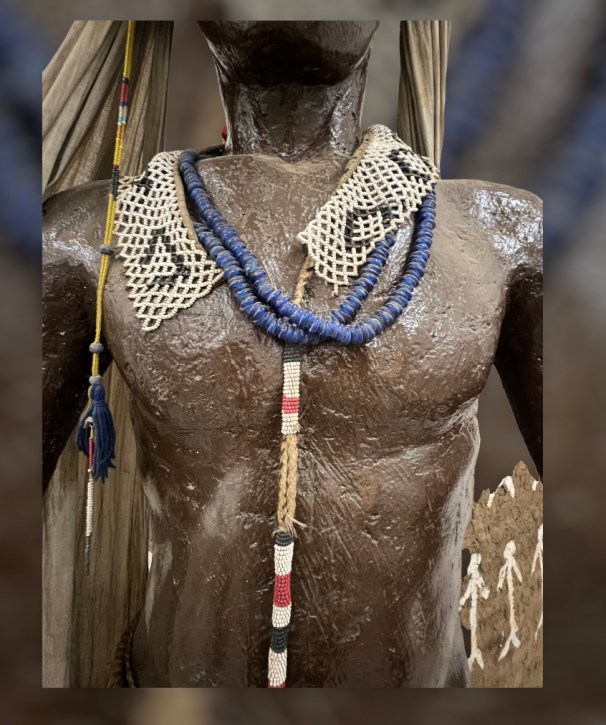
Below, delicate crochet-patterned beadwork ornamental collars for Nuba dances and blue glass kissik beads worn by Kambala dancers of the Kadugli area. Learn more about the history and symbolism of Nuba dances in Kambala – Updated.
More Examples of Sudanese Beadwork
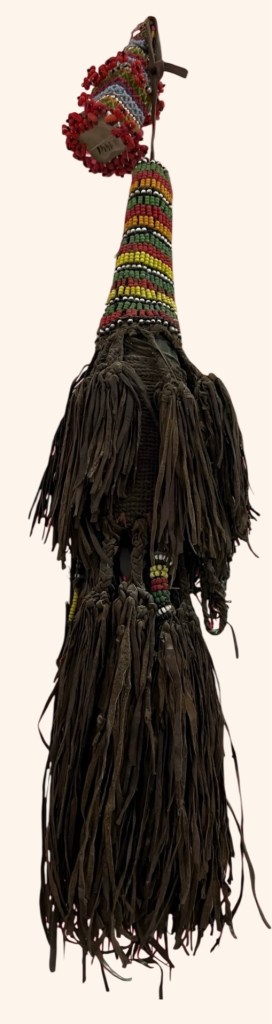
Below, an exquisite example a scent bottle with leather and bead ornamentation by the Hadendowa people, Gereit region. The small receptacle at the top may be a beaded kohl dispenser. Learn more about the making and use of kohl in Sudanese culture in “Who will trace the kohl for our eyes?”.
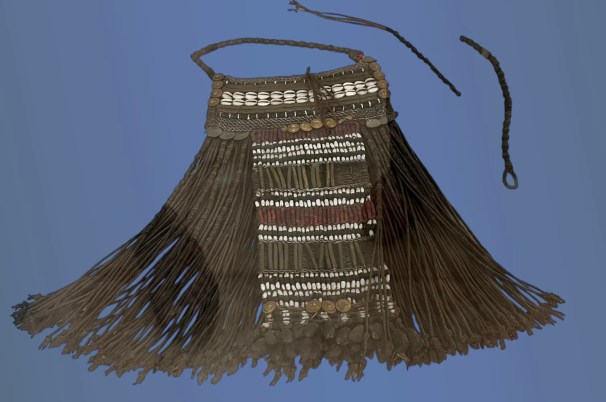
Above, fine beading adorning a leather apron or camel trapping, origin unclear. Learn about the Sudanese rahat leather skirt here.

Above, a stunning example of Dinka beadwork; a man’s bead collar or poncho of Venetian beads, from the Malwal Dinka Tribe, Bahr al Ghazal. See more on these elaborate collars and corsets in Revival of the glass beads corset and poncho of Dinka and Mundari.
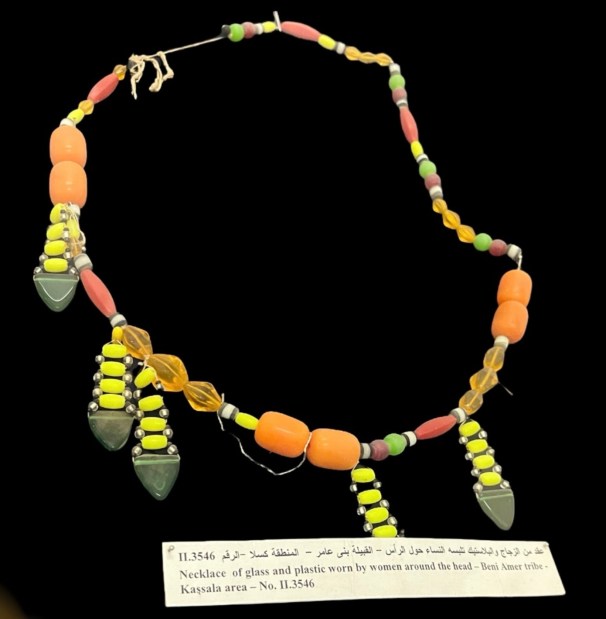
Above, as in exhibit description.
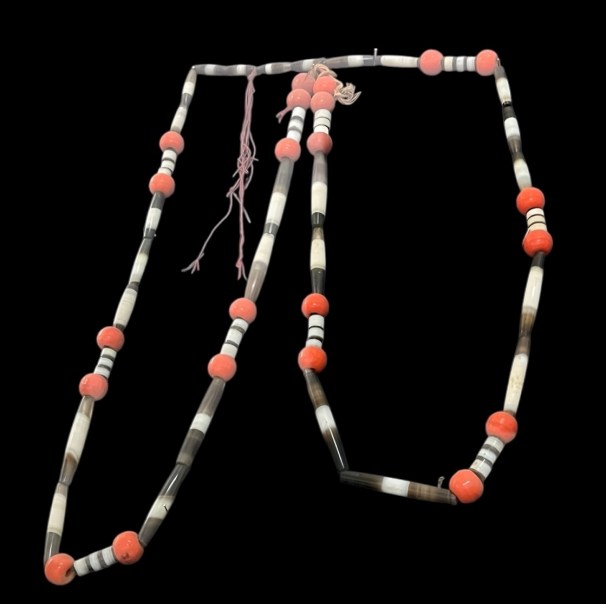
Above, women’s necklace of coloured somit beads. See more on somit in “A Necklace of Shells from Distant Seas…”Below, beads, possibly a woman’s prayer beads, origin unclear.


Above, bead and cowrie embellishments to camel litters or howdaj.
Learn more in Al-Hawdaj

Above, the hawdaj displayed at the museum and below, detail of beading.

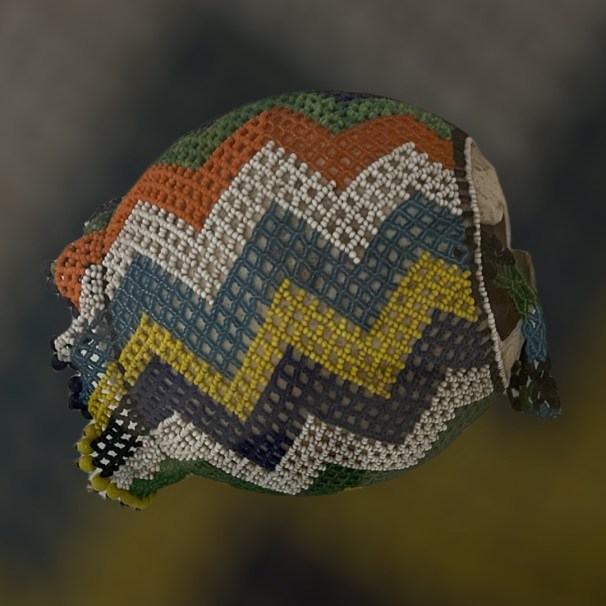
Above, an ostrich egg encased in ornamental beading, Omdurman area.
Below, examples of coffee pot stands or wagaya.
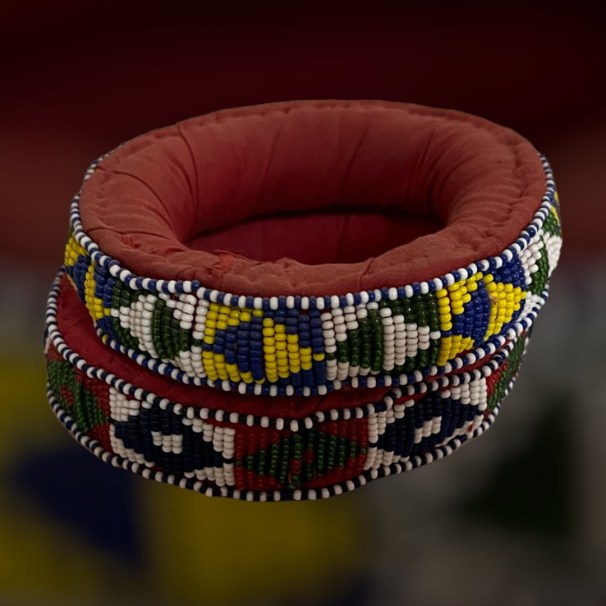
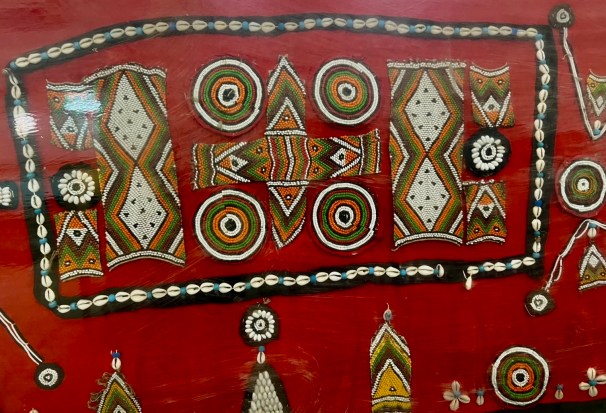
Below, a stunning “Bridal Mat of the Beni Amer of Tokar” with its rich geometric beading and cowrie-edged motifs. Such mats were often handed down from generation to generation by the women of the family. Learn more about the symbolism and aesthetics surrounding cowrie shell adornment in
Cowries in Sudan Part 1 Cowries in Sudan The Thread of Fate and Cowrie Shells
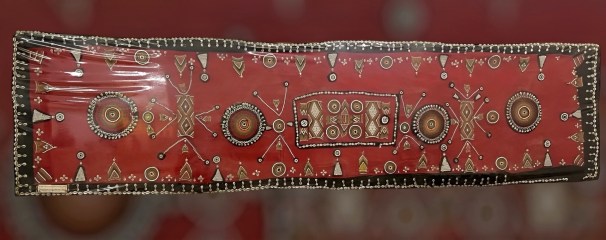
Below, detail of the bridal mat.
Sudan Ethnographic Museum, Khartoum.
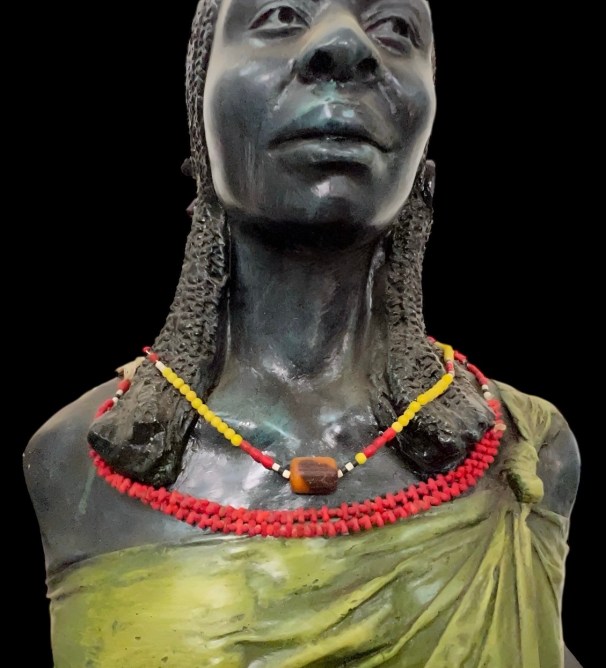
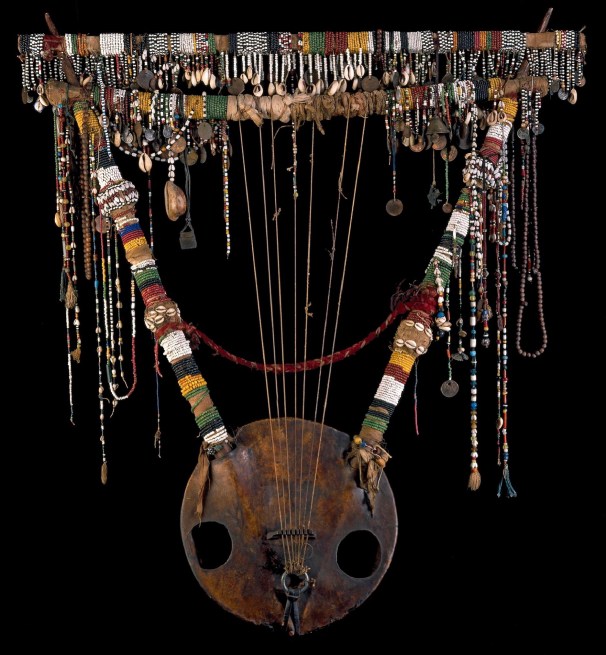
Beading is also used to adorn musical instruments such as the exquisite tambour, conserved at The British Museum, below. Learn more in The Sudanese Tambour.
See too The Hagu / Hagoo
Silverwork at Sudan Ethnographic Museum
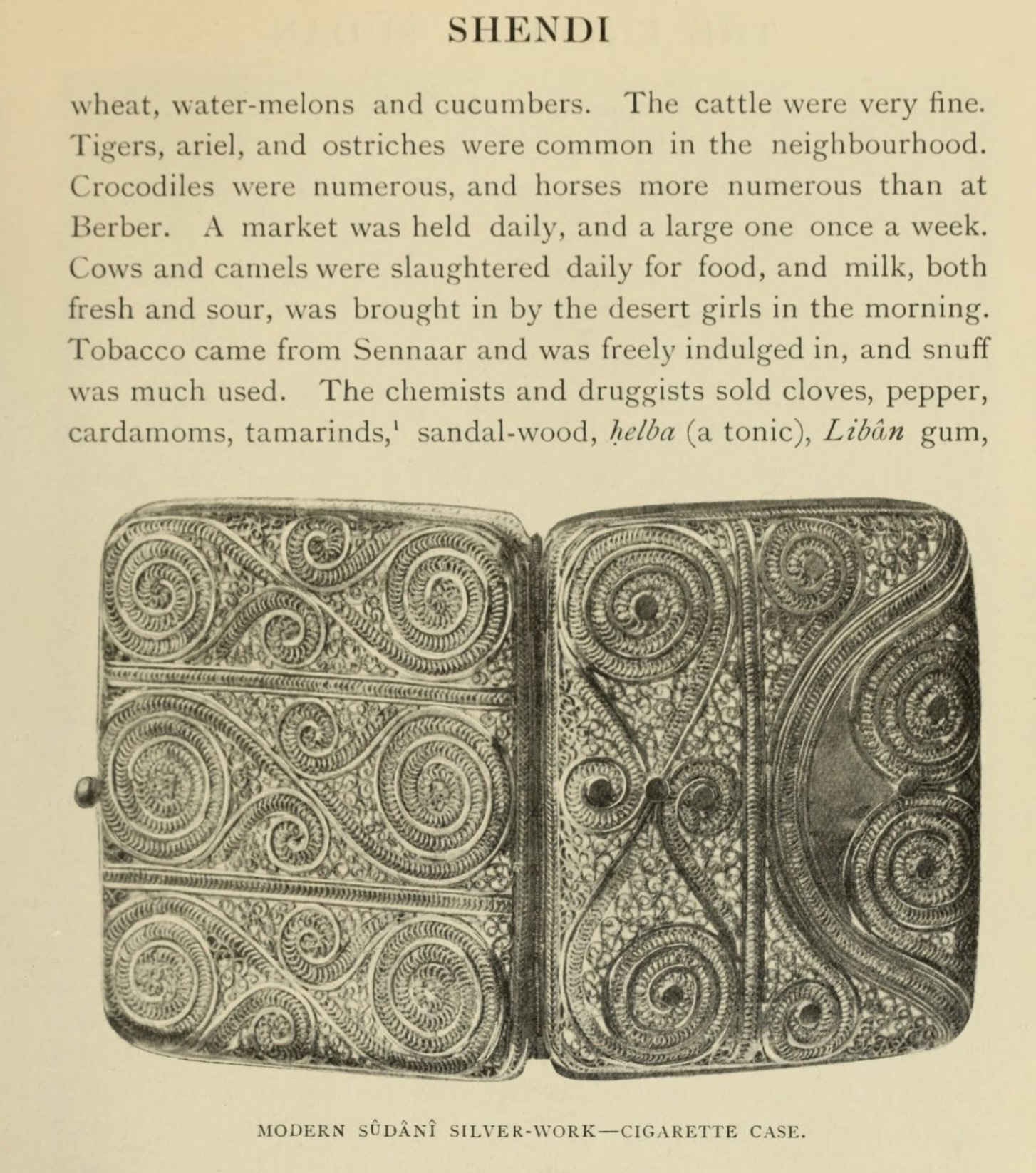
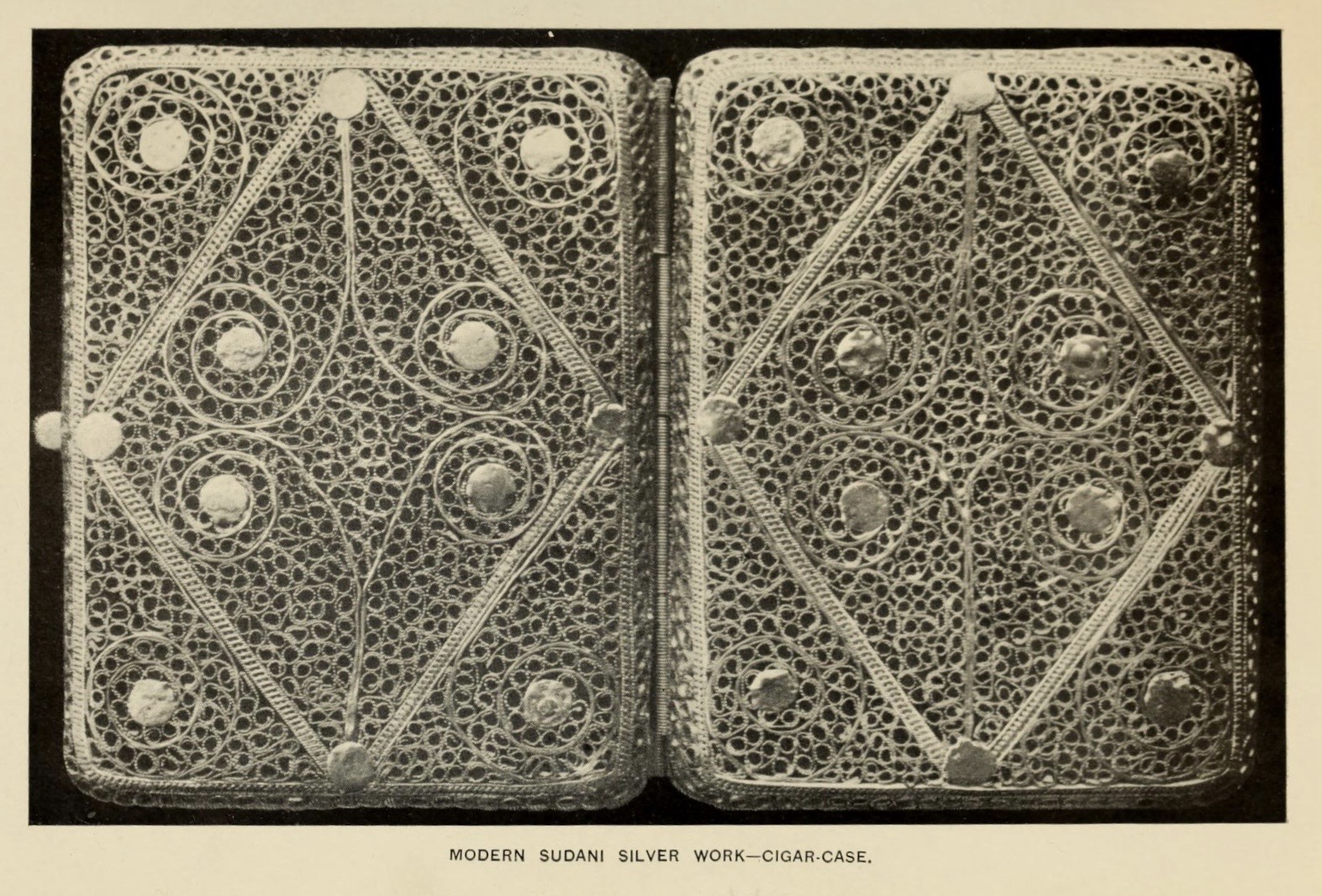
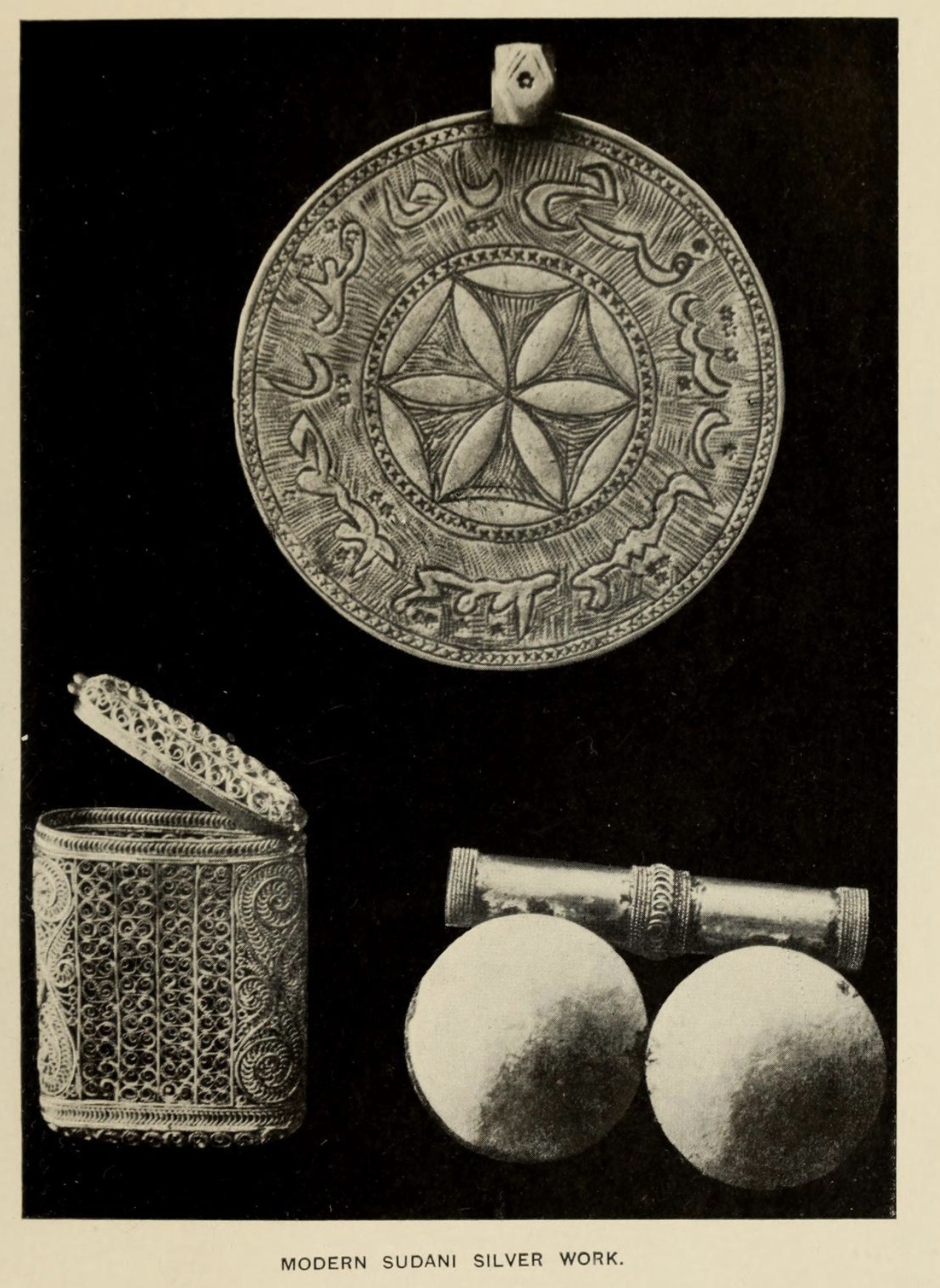
Below, examples of finely worked Sudanese silver, from The Egyptian Sudan, Volume II. by E.A.Wallis Budge, Kegan Paul, Trench, Trübner & Co, Limited, 1907. I will be exploring this exquisite craftsmanship in more detail in coming posts.
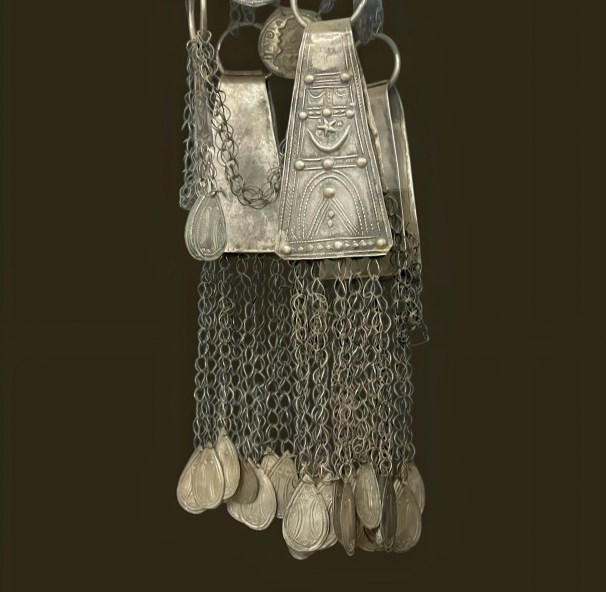
Above, bridal head ornament made by Misiriya silversmiths, Arabs of Western Sudan.

Above, Rashaida wedding jewelry. Learn more about the stunning silverwork tradition of the Rashaida in Rashaida Dress and Adornment Part 1 Rashaida Dress and Adornment Part 2 Rashaida Dress and Adornment Part 3
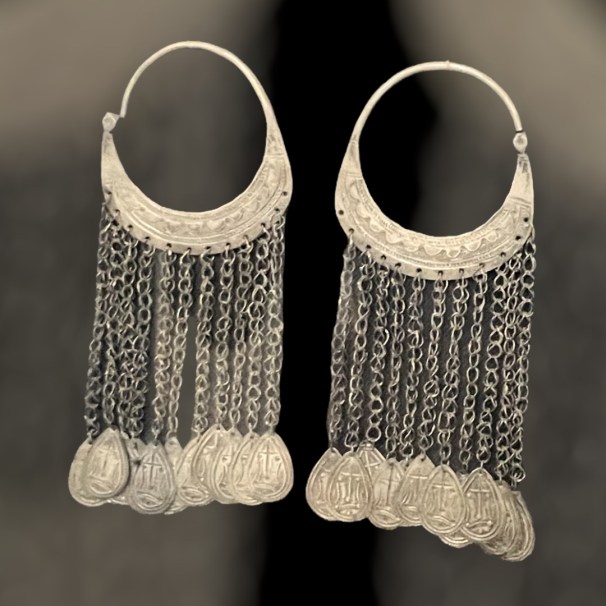
Below, pair of silver earrings from the Misiriya, Arabs of El Jeneina, Darfur.
Below, silver necklace of geometric design, Masalit of Al-Geneina.

Below, more examples of silverwork displayed at the museum, including cuff bracelets, heavy silver anklets or hijil from Nyala, and men’s silver rings. Learn more about the hijil in “A Necklace of Shells from Distant Seas…”

 Women's literacy in Sudan