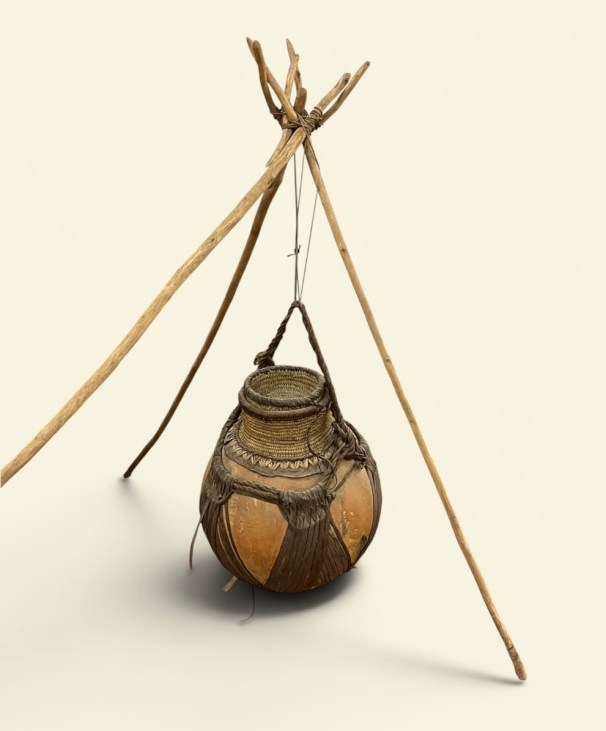
Leatherwork and Basketry at the Sudan Ethnographic Museum, Khartoum
Selected Artifacts
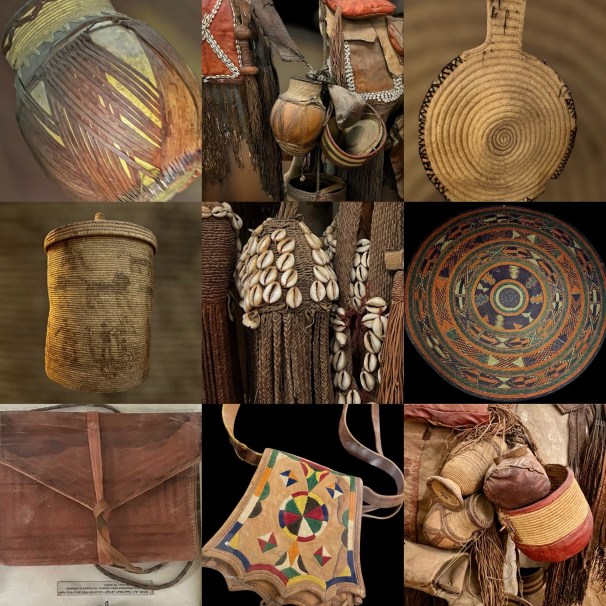
Above, just some of the many stunning examples of Sudanese craftsmanship exhibited at the Sudan Ethnographic Museum, pre-war.
See more examples of the collection in Ethnographic Museum Khartoum.
This week’s post is an introductory glimpse into Sudanese leatherwork and basketry. I will looking in detail at Sudanese leather craftsmanship and regional examples of basketry and palm fibre weaving in coming posts. See too Saving Sudan’s Living Heritage’s publications: Leather Through Thick and Thin, and Camel Saddle. This article also reproduces fascinating open access colonial drawings of saddles and leather containers documented in Sudan Notes and Records. The post is above all a tribute to the unique and irreplaceable collection of the Sudan Ethnographic Museum.
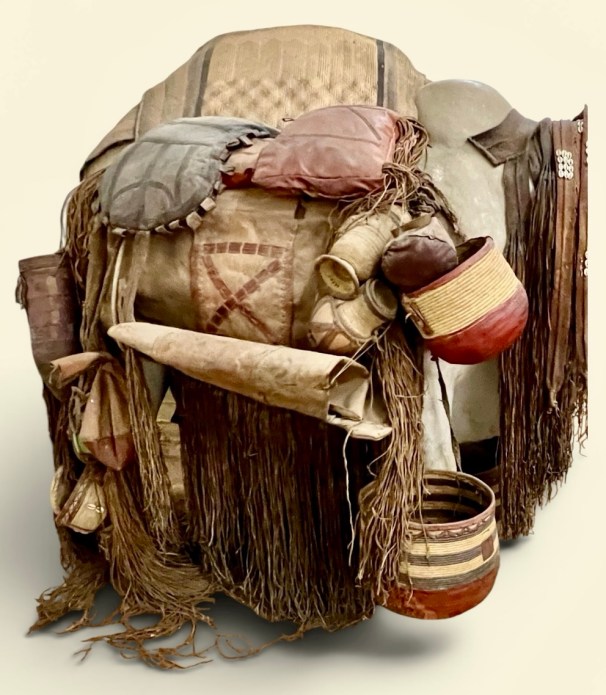
The Baggara Pack-Bull Diorama
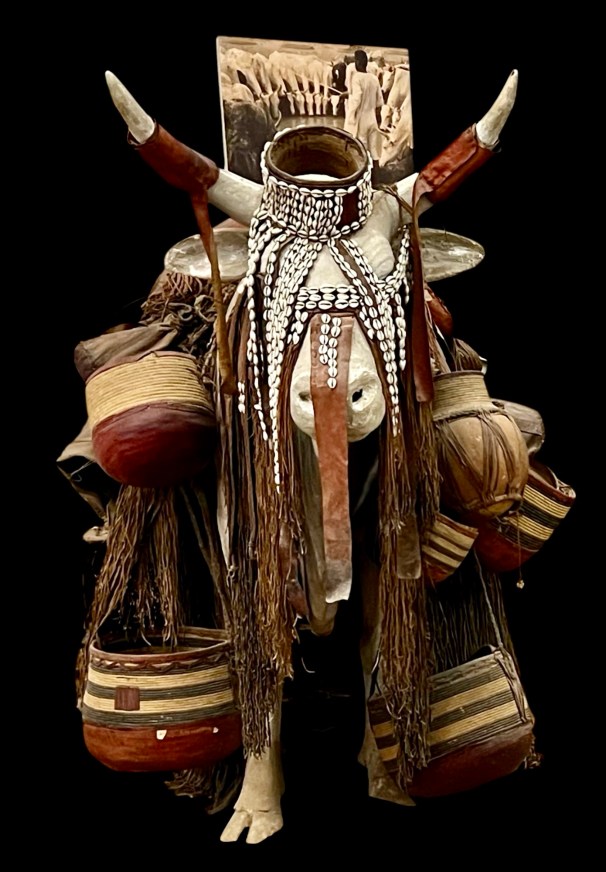
Above, pack-bull of the Baggara Arabs. Supporting text below from the Sudan Ethnographic Museum.

Below, side view of the Baggara pack-bull.
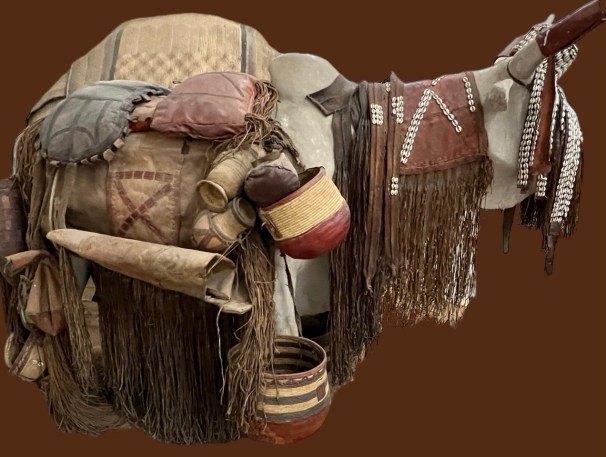
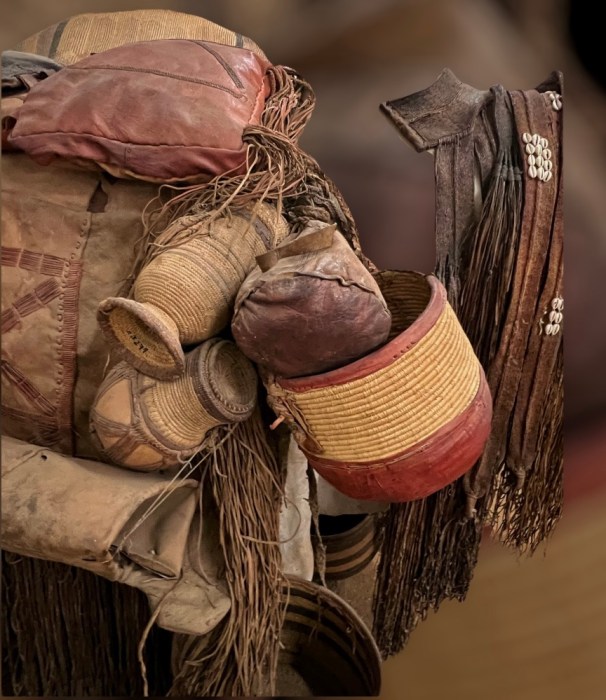
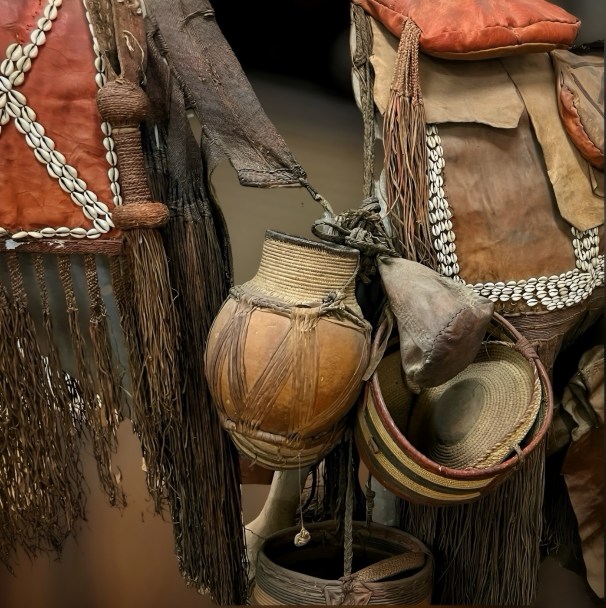
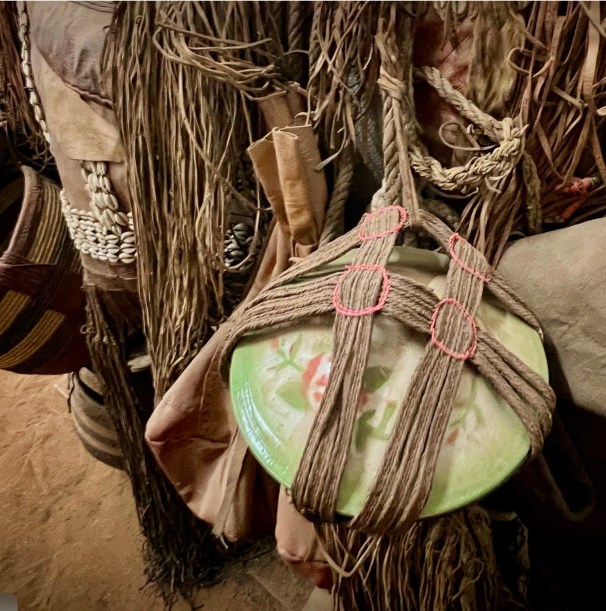
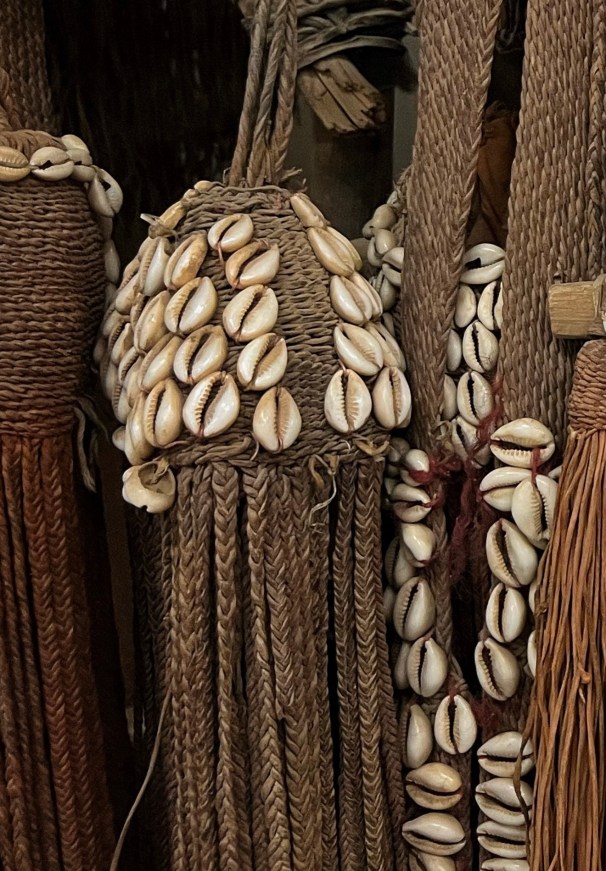
Below, more details of finely worked leather saddle cushions, leather and recipients for milk, grain and other foods, palm fibre woven tent matting and wall covers, and ornamental tasseling embellished with cowries.
These items, essential to life on the move will be explored in depth in coming posts.
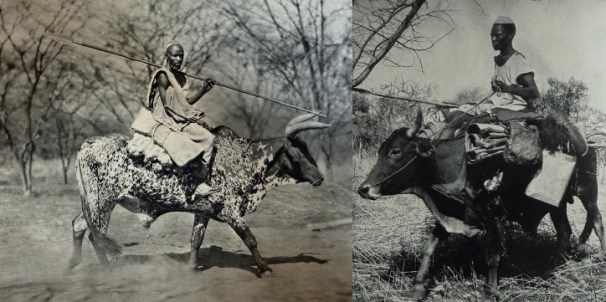
Below, colonial-era photographs of Awlad Hamid (left) and Nuba (right) oxriders.
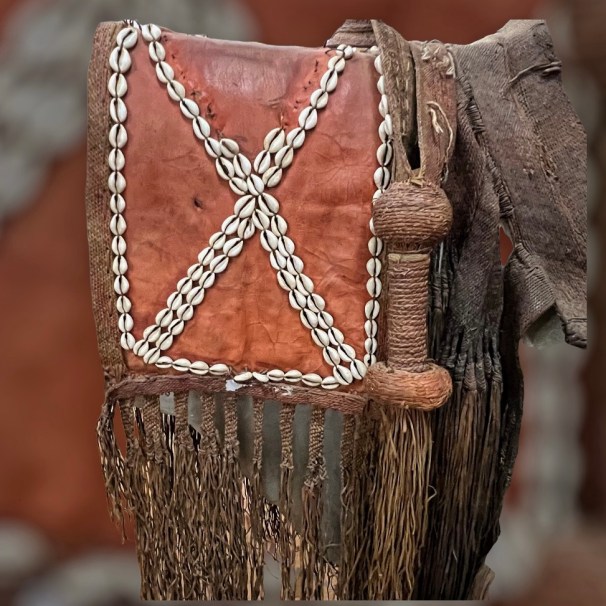
Below, more details of fine workmanship.
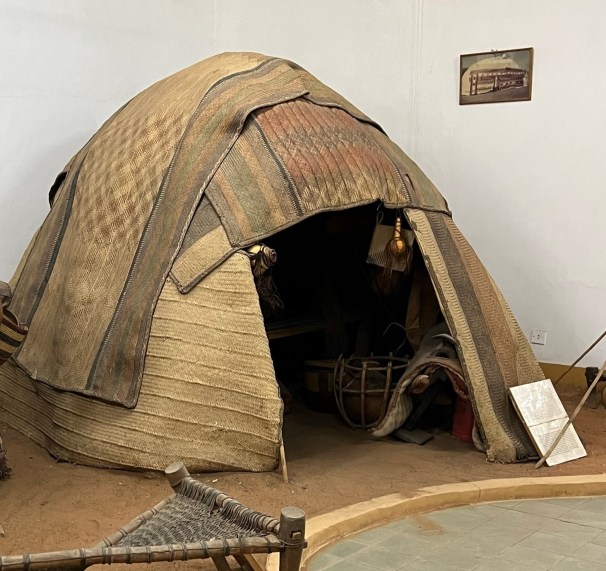
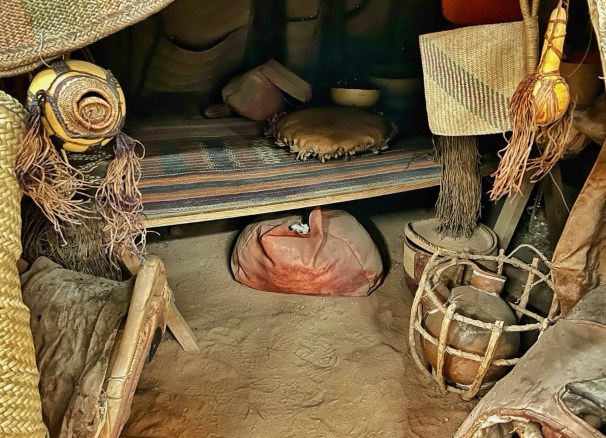
Below, the Baggara tent as part of the diorama at the museum.
Below, the exquisite workmanship of a camel litter.
Learn more in Al-Hawdaj.
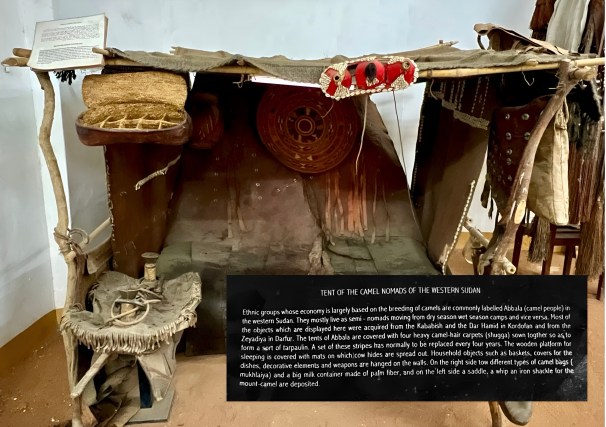
Camel Nomads of Western Sudan


Learn more about the role of cowries in Sudanese culture in Cowries in Sudan Part 1, Cowries in Sudan and The Thread of Fate and Cowrie Shells.
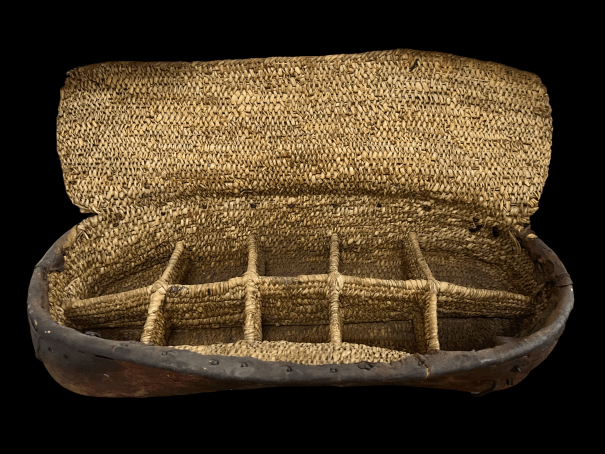
Below, leather bound woven fibre storage pouch, from the western Sudan camel herders’ tent below. Text below from Sudan Ethnographic Museum.
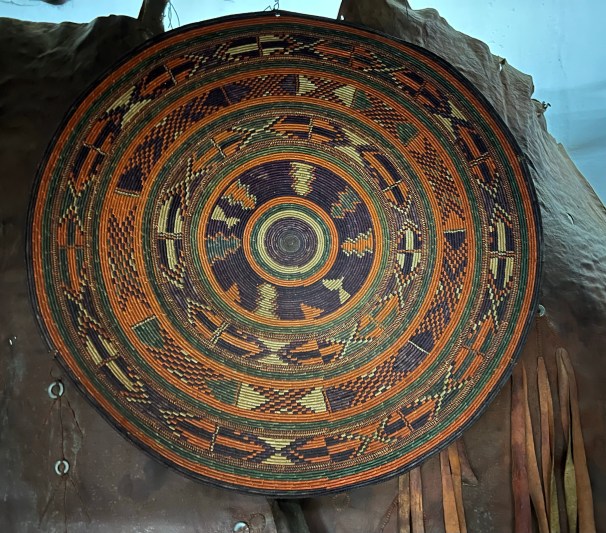
Below, a traditional food cover or tabag from western Sudan, with striking motifs.
Learn more in The Sudanese Tabag and Icons of the Sudanese Home.
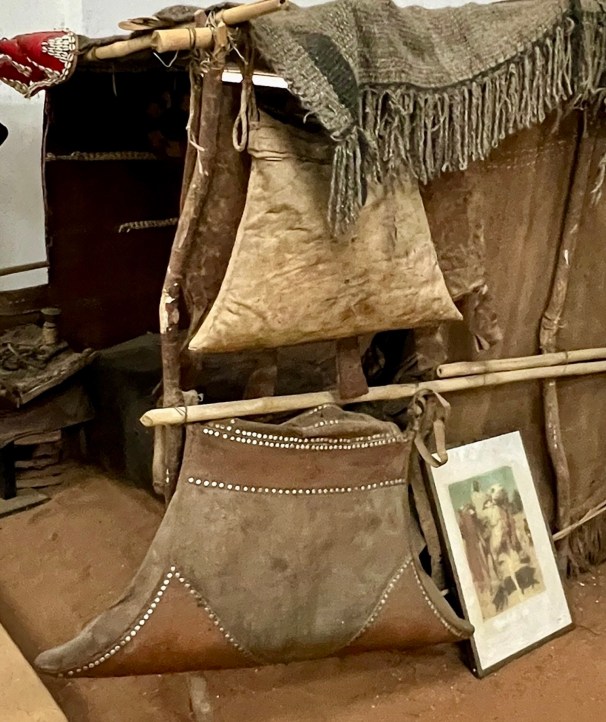
Below, camel storage bags.
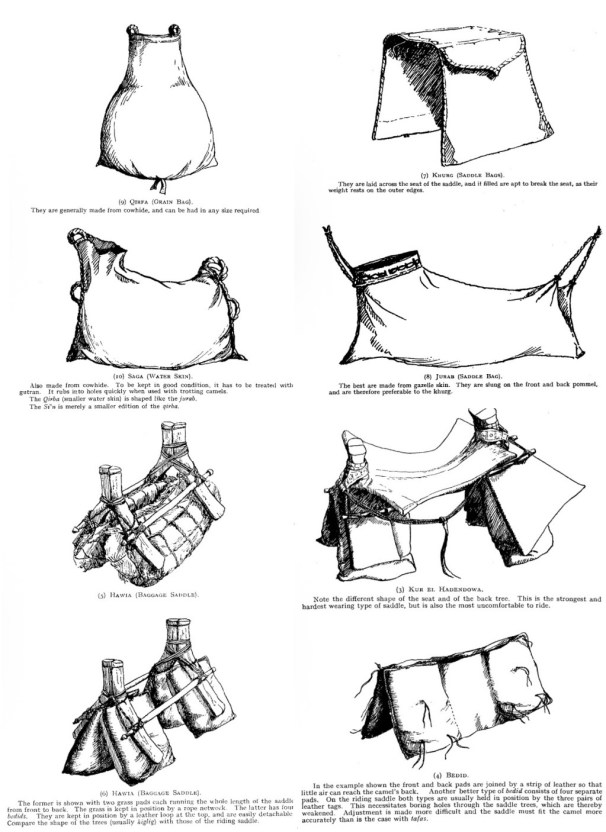
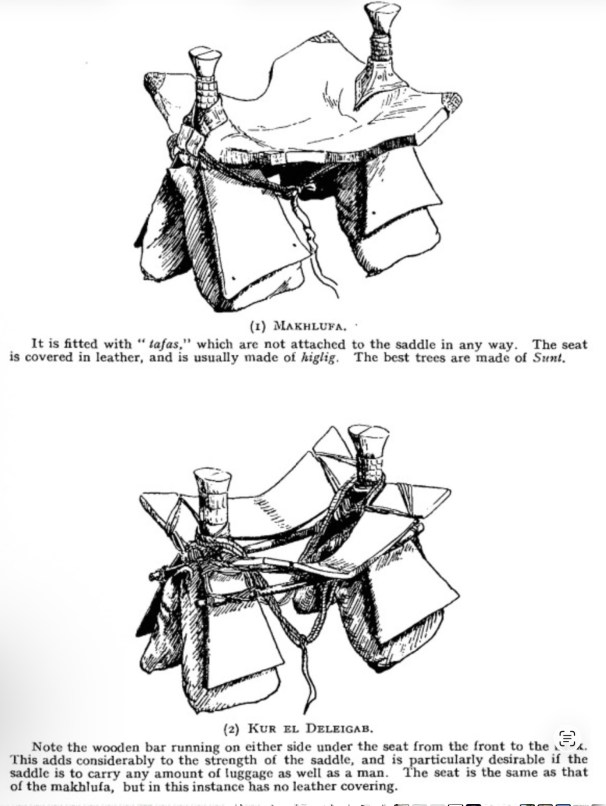
Below, illustrations from Notes on the Camel in The Eastern Sudan, by P.B.E, Acland, Sudan Notes and Records, Volume 15, 0 1932. More on this article in coming posts.
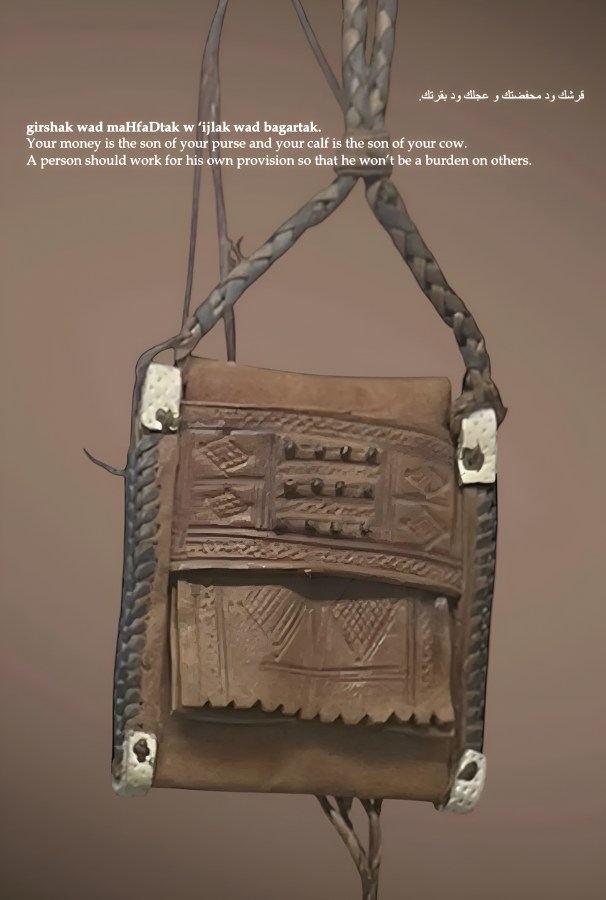
Below, a woman’s purse or mahfaza with pleated leather strap.
Learn more about this iconic object in The Mahfaza / Mahfada.
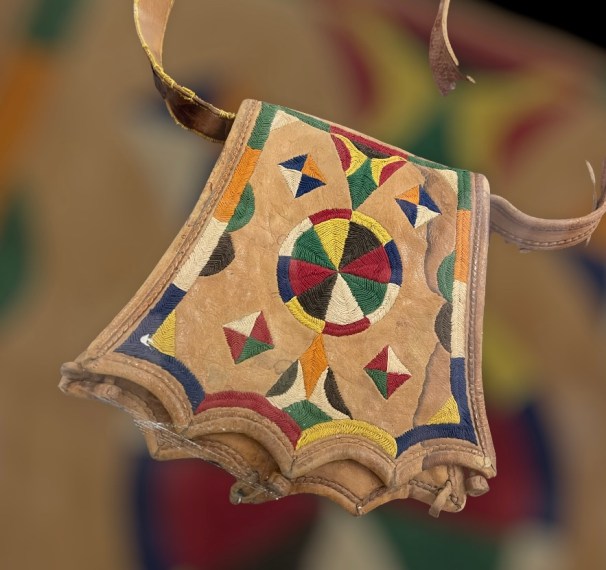
Below, embroidered leather bag.
Below, woven containers for grain and dates, as well as marissa beer strainers.
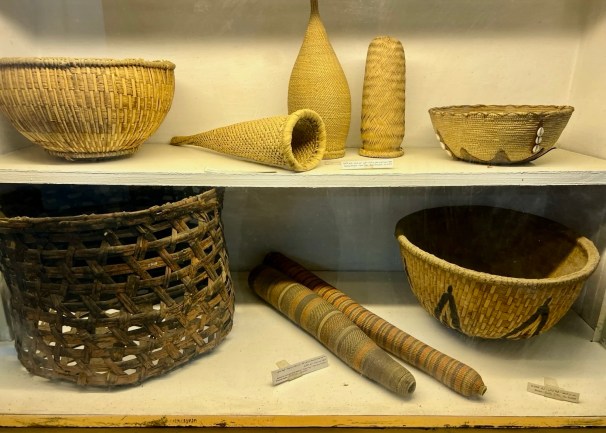
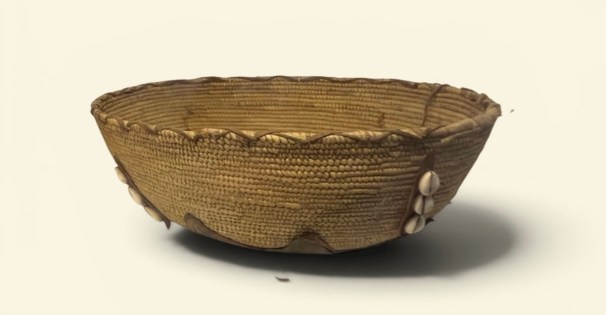
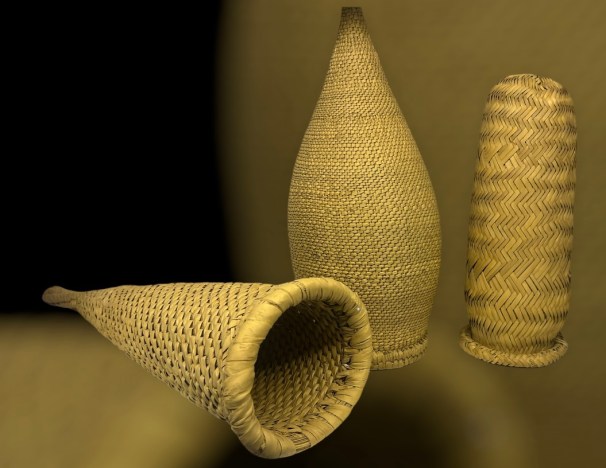
Below, left, a mallaha, a traveling container for salt and pepper, Fur tribe, centre, marissa strainer made from date palm fibre, Dongola area, right; marissa strainer, Nuer tribe, bahr Al Zaraf.
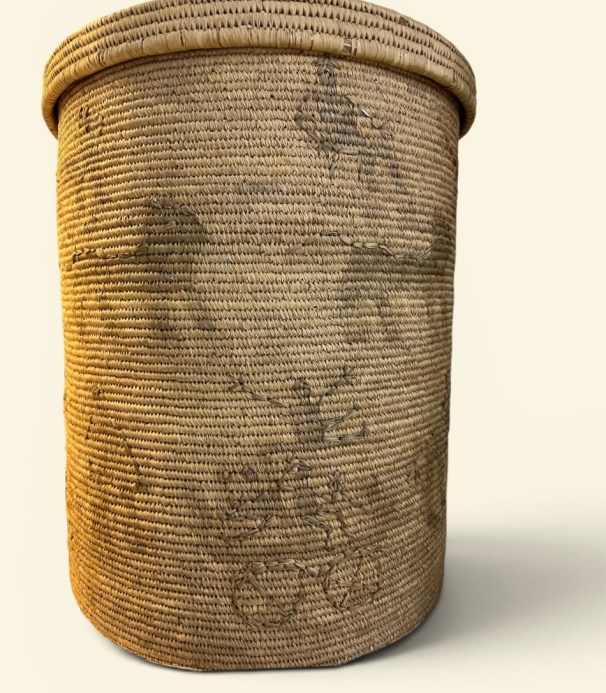
Below, tall baskets for storing dates, embellished with delicate animal, human and cart motifs.

Below, a bukhsa, from western Sudan, used for churning butter and sour milk. Made from a hollowed-out gourd or calabash, it is prized for its lidded, narrow-moth design which prevents splashing while women vigorously agitate fermented milk. More on this in coming posts.