

Letters from Isohe, Life on the Edge in a School in South Sudan
Elizabeth Hodgkin
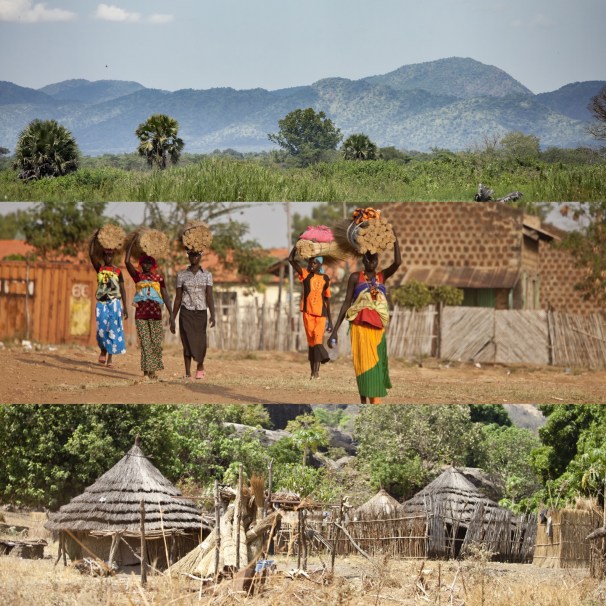
Above, scenes from the Torit region, not far from Isohe, South Sudan
“A town with no telephone network, with nothing in the market, with roads deep in mud, and a gun crime every fortnight. But with beautiful mountains, a good climate, fertile land, a strong women’s group and the only undamaged church in Equatoria. And our two wondrous, struggling schools.”
Elizabeth Hodgkin, describing Isohe in her remarkable Letters from Isohe.
Elizabeth Hodgkin’s volume of letters is luminous and succinct; distilling in barely a hundred pages the joy and terrifying contingency of life in South Sudan today and the calm agency of its peoples. The letters take us to a world where a head teacher walks twenty kilometers to pick up the teachers’ salaries due a year before, where pupils learn about the French Revolution and C.S Lewis’s Narnia under the shade of trees and sit exams on the ills of cattle raiding. Where school children eat the food they have farmed themselves – if the monkeys and wild pigs don’t get to it first, and where the local rainmaker’s spells can prove all too effective. It is also a precarious world – plagued by hunger, violence and poverty. And yet, in the shadow of growing ethnic violence, priests work “tirelessly for peace and reconciliation between communities” and despite the odds, schools and schoolgirls flourish.
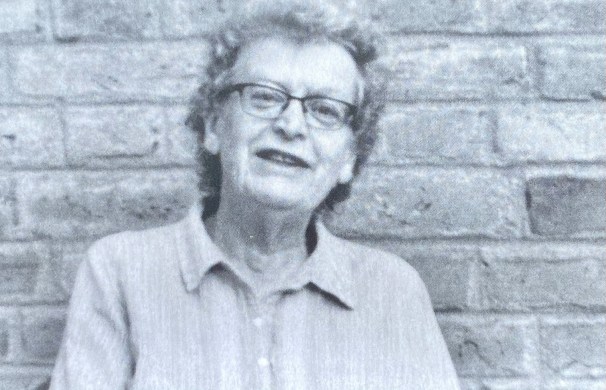
Above, Elizabeth Hodgkin. There are moments in your life when you meet somebody and you sense immediately that it is an immense privilege and blessing to know them. Elizabeth is one of those people.
Affectionately nicknamed Habooba Khawaja, or Grandma Foreigner, Elizabeth tilled the school vegetable fields with her pupils on compulsory agriculture days. After all, she says,”elderly women of my age walk four hours down to the valley in a morning carrying cabbages and onions and four hours back again in the evening carrying cassava roots on their heads.”
Scroll to the end of this post for links to interviews with her.
This post provides brief context to and illustrated excerpts from her Letters from Isohe.

Letters from Isohe – The Context

Dr Edward Thomas, of The Rift Valley Institute writes:

In her seventies, Elizabeth Hodgkin went to teach in St Augustine’s School in Isohe, a village circled by lush green mountains in the south-eastern corner of South Sudan. Letters from Isohe is a clear-sighted, compassionate, beautiful memoir of her time there. What makes it so special?
This memoir’s full of young voices, laughing, complaining, seeking affirmation and caring for an older woman with a gift for personal relationships. And an eye for detail: like the difference between guava thieves and cassava thieves; the Ugandan dance music that accompanies a sixteen-day women’s peace campaign; the teachers’ salaries and the food prices in the market; the job satisfaction survey that found that most people in the mountains were happy, and also had lots of problems.
It’s also a rich account of South Sudan’s hope- and contradiction-laden education system, told mostly by young people confiding in an outsider about the pressures they face: exams and punishments, elopements and pregnancies, gunshots and cattle raids, the tedium and contentment of farming.
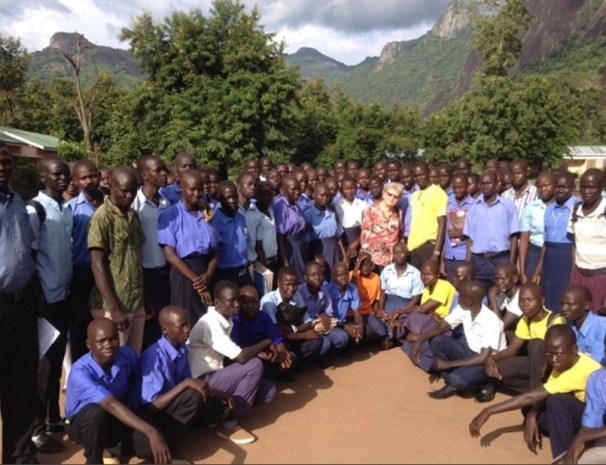
Hodgkin’s Sudan career spans six decades, she’s read everything there is to read, but she can connect things most outsiders can’t connect and sees all the good things that most outsiders don’t: this is the best intro to South Sudan you can hope for. Right, Elizabeth with some of the students supported by the schools’ sponsorship programme.
Illustrated Excerpts from Letters from Isohe:
The Place
The People
The Challenges for Girls
The Place
The People
The Challenges for Girls
The Place

“There was a beautiful, tall, Italianate Church, constructed and decorated with frescos after a fire destroyed the old mud-brick church in 1948. The buildings of the secondary school dated from the 1950s. Below them were the newer primary school buildings and St Theresa’s Hospital, surrounded by tukuls – round mud-brick huts with straw roofs. Opposite the church was a compound where the fathers’ house and guest rooms were. Here I was to live for the next two years. There was a football pitch, and a market with a couple of bars and a few shops, some selling foodstuffs, others second-hand clothes and shoes, along with pens (and, unreliably, notebooks), and creams for skin-whitening and hair-blackening. Along the road from the primary school leading north out of the village women sold cassava and beans.”
Below, lessons in Isohe.

“Everything is bearable with bread.”
The People
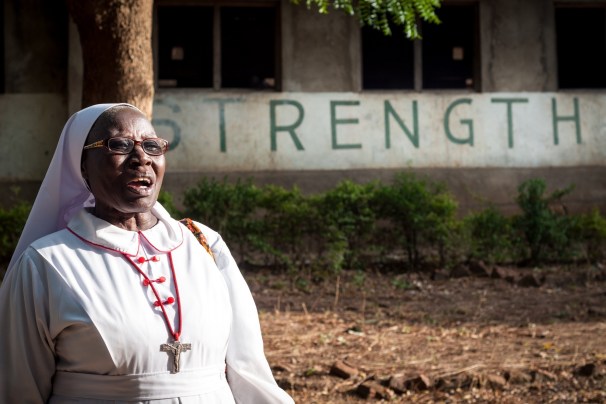
When a touring theatre came to the school, the players explained they tailored their pieces to tackle local issues.”They could perform plays on violence, cattle raiding, alcoholism, forced marriage, compensation, domestic violence, inheritance and negligence,” and Sister Paskwina, (pictured rigth) of St. Augustine’s sister primary school, responded: “We have all those things”.
The teachers at St Augustine’s deal with these challenges and many more every day – teachers who are former child soldiers, South Sudanese graduate returnees from Europe who could have had a more comfortable life staying in the West, local teachers who walk miles every day to school. Take the returnee Leeds graduate chemistry teacher, who like most prospective teachers in South Sudan, routinely carries all his many certificates and qualifications with him. He “notices everything; the golden flecks in the Iwali River might actually be gold, he says, so he’ll have the students panning.” Later he will show them “iron-rich deposits and simple smelting techniques”. Or the maths teacher who draws triangles in the sand to a cluster of intrigued pupils.
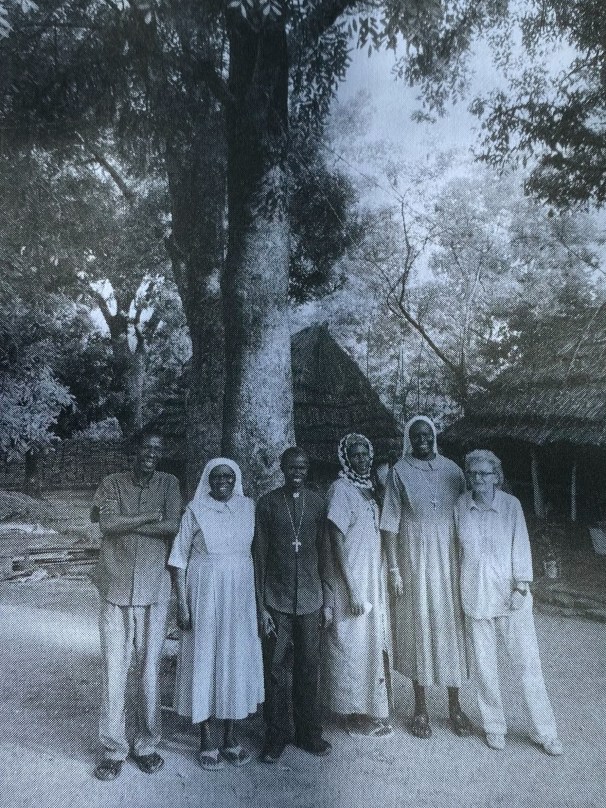
Above, Father Kalisto, Sister Paskwina, Father Ben, Mama Magdalene, Sister Theresa and Elizabeth Hodgkin, Saint Theresa’s Church compound. Letters from Isohe, p 26.
Below, Sister Rose Adiero, whose kindness led Elizabeth to St Augustine’s. Sister Rose founded her own, flourishing school, The Sacred Heart School at Aliyya, near Palotaka. Sister Rose tragically died in a road accident in 2017.

The Challenges for Girls; Marriage by Kidnapping
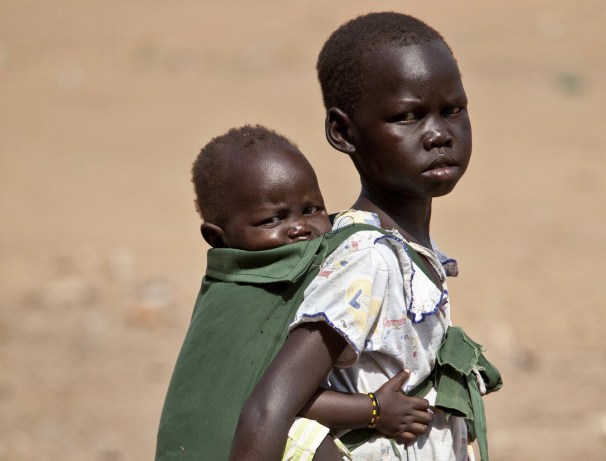
“In general when a girl is carried away, it is because she has agreed to it; a goat is left in the compound instead of the girl, who is returned after five days; the man is symbolically beaten, and then pays the bride price.”
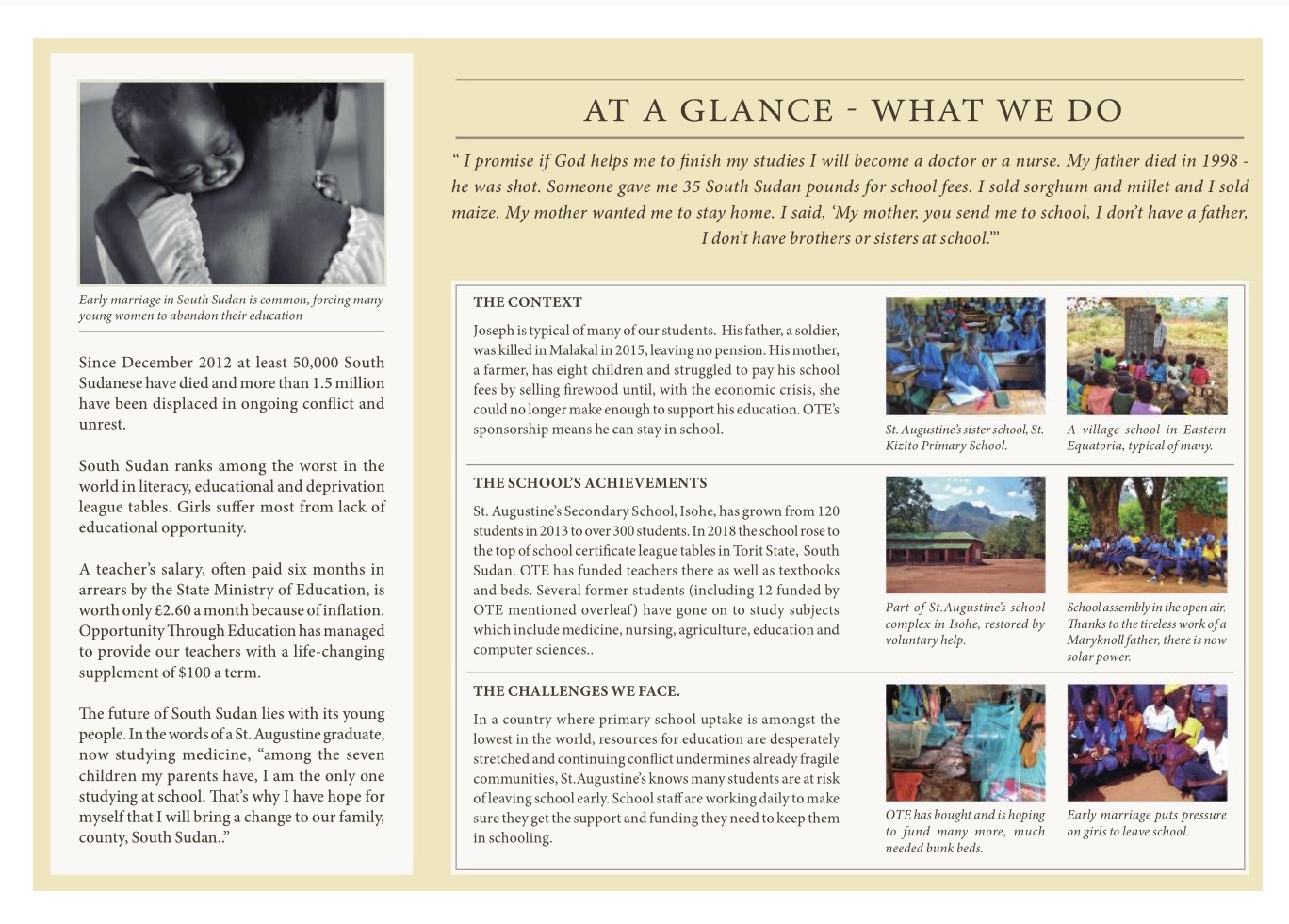
Many, however, are taken unwillingly and Elizabeth and other teachers struggle to protect and support them so they can continue their education. It is just one of many challenges. Of the thirty-six girls in the school in Elizabeth’s time, she notes, twenty have lost fathers, six by shooting.
The excerpts below, more than any others, perhaps, bring home what it mean to give girls the chance to attend school:
“And last Sunday afternoon the head teacher and I and two others walked the three kilometres to be connected (to internet). No need to take off our shoes to wade across the Iwali River. It can be jumped over or crossed with stepping stones. Below the mountains, huts were perched on rocks half way up; there were bells from goats wandering on the summits, and a dance on a dancing ground near the road. People passed us dressed up for it: one jubilant woman had made a headdress with bands and upright pages from an old exercise book. She is showing her pride because her daughter is going to school.”
“Money is not there; hunger is there.”

“I asked my mother to send me to school; I don’t have a father, I don’t have brothers, I don’t have sisters. You are crying but I must continue. Here there is not even a good hospital, the people are suffering, and no boy from our village has finished school. I will be a doctor or a nurse. The words of one St Augustine’s schoolgirl, pleading with her mother, who wished her to marry, to allow her to continue her education.”
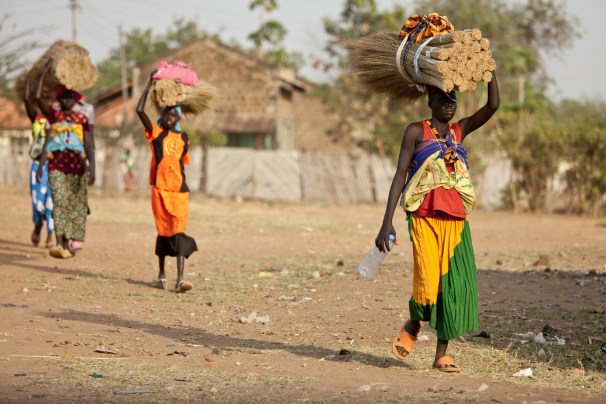
Below, South Sudanese women carrying brooms. Elizabeth recalls that when a printer needed collecting,”a tough-looking boy” was called to carry it. When he went to lift it though, he said it as too heavy and required “a lady”. ” So a smallish Senior One girl put it on her head and carried it down….”
Learn more about St Augustine’s and how you might help below:

More on and from the author below:

Driving Ms Margolyes – a hilarious road trip through Europe in Lockdown

Learn more about our life changing educational work in
Scenes from Our Orphans’ Schooling Programme
See too Community Literacy, Latest News and At a Glance
Below, a literacy and numeracy game at one of our literacy circles, held before the pandemic.

 Women's literacy in Sudan
Thank you so much for helping me in my secondary level of education ,may the almighty heavenly king bless you
LikeLike
Thank you so much for your very kind comment. I will pass this on to Liz. Wishing you every success.
LikeLike