

Everything is Possible; Evocations of 1950s Sudan
This week ‘s post presents a selection of some of the many charming illustrations by Margaret Potter to Everything is Possible, Our Sudan Years, by Margaret and Alick Potter, (Alan Sutton, 1984), personal collection. The illustrations reproduced below tenderly evoke life in the Sudan of the mid-1950s.
Below, the dust jacket to the work, designed by Margaret Potter and which includes an image of St. Anne, from an 8th-century fresco formerly in Faras Cathedral, northern Sudan, now in the National Museum, Khartoum.
The Arabic version of the title is by the famous calligrapher, Sayed Osman Waqialla. The Nubian doorway pictured was decorated in 1945 by Sayed Hassan Arabi.
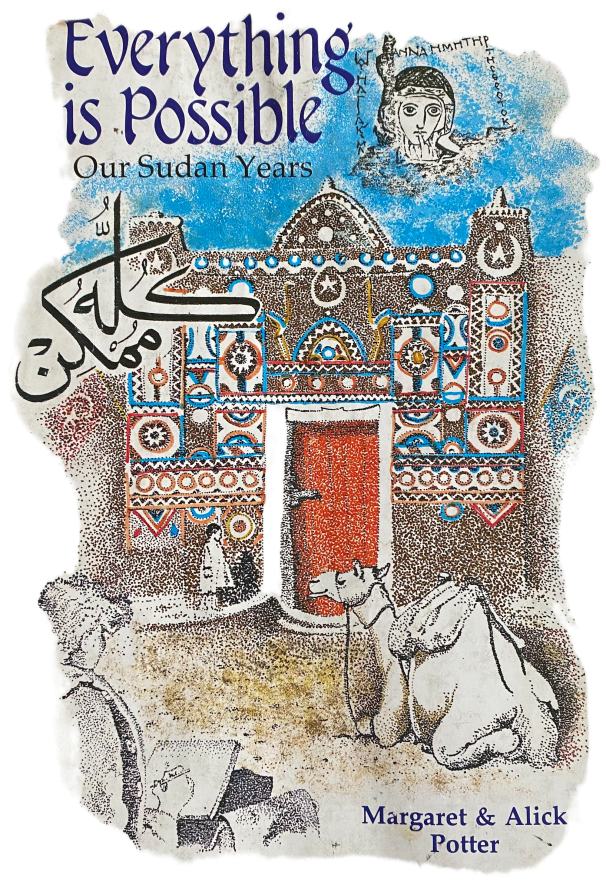
Alick Potter was Professor of Architecture in the newly independent Sudan. The department he helped to establish in Khartoum University was to become the main centre for modern Islamic architecture. “Light-hearted in the telling, these stories of an English couple growing new roots in a far country have a serious underlying theme – that essentially humankind is one.” The book in essence, is about “what Sudan taught the Potters.”
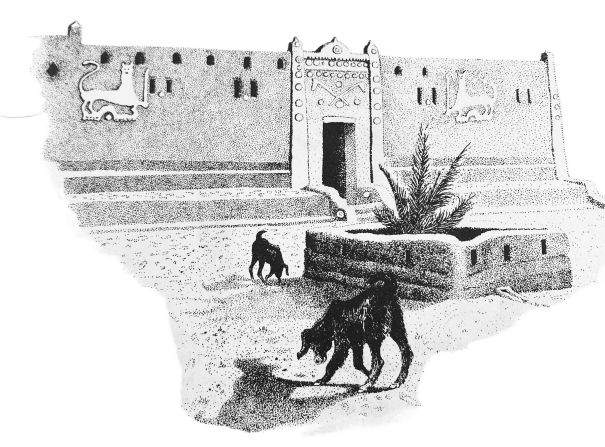
Below, Margaret Potter’s delicate illustrations of Nubian doorways and interiors.
See Inscriptions on Rosewater for background and details to this uniquely Nubian vernacular architecture and descriptive excerpts from the Potters’ and other researchers’ work.


Nubian wooden lock and key, with carvings to match wall enrichment motifs, p178.

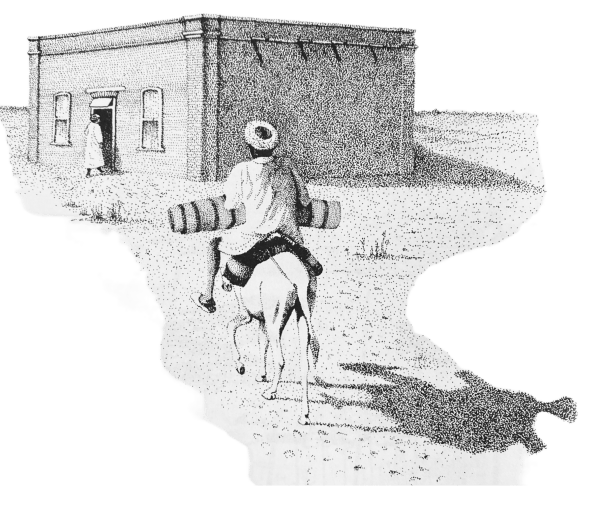
Below, more scenes from 1950s Sudan.
Below, the interior of a country mosque, p16.

Below, a country gubba, p129, followed by one of ribbed clay, p134, sketched during a university expedition to Meroe, near Old Dongola.


Above, students sketching a mud-built mosque.
Below, wooden Sudanese perfumed woods and pastes containers, known as hugg.

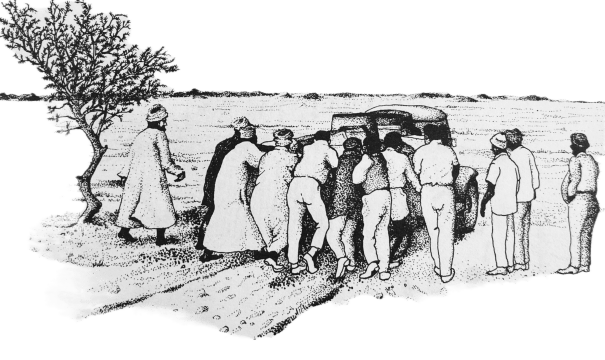
Above, travelling through the desert, northern Sudan.
Below, a scene from the chapter Suakin Besieged, p150. .

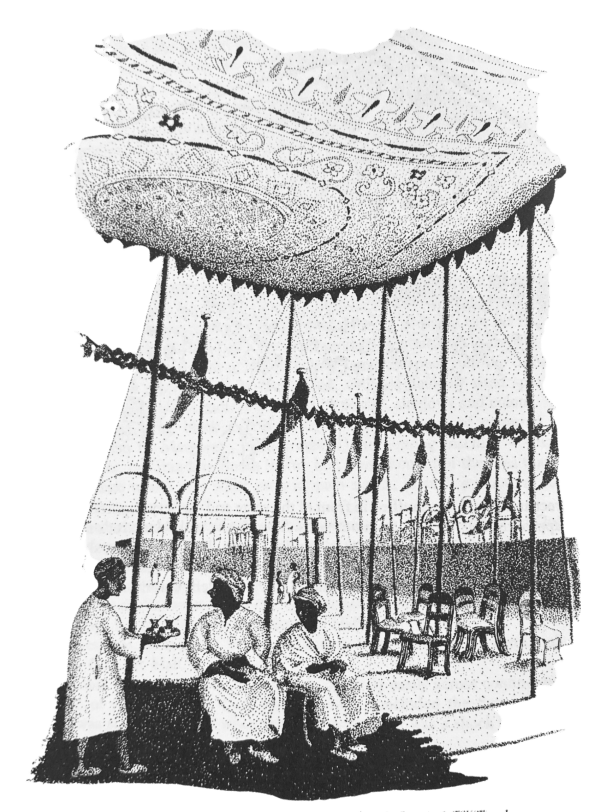
Above, flags for a birthday – The Moulid (the Prophet’s). A tent erected as part of preparations for the celebration of the occasion in Omdurman.
Below, passengers boarding White Nile steamer, p52.

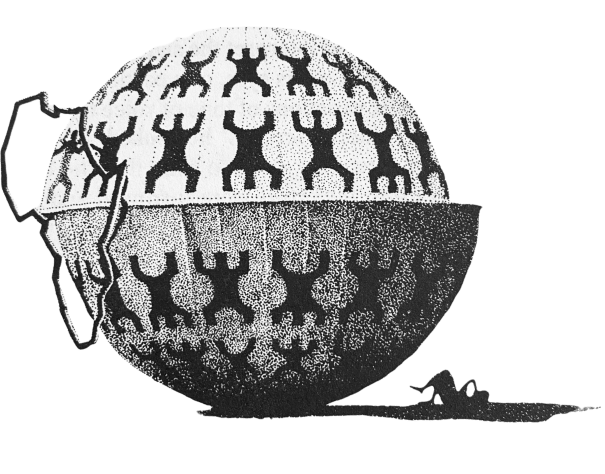
“After our time – representation, designed by a Sudanese artist, of strife-torn globe with the suggestion that Africa should seek to mediate”. Erected by the Blue Nile to mark the African Summit meeting, Khartoum, 1978.

Learn more about our life changing educational work in
Scenes from Our Orphans’ Schooling Programme
See too Community Literacy, Latest News and At a Glance
Below, scenes from our literacy circles, taken before the pandemic.

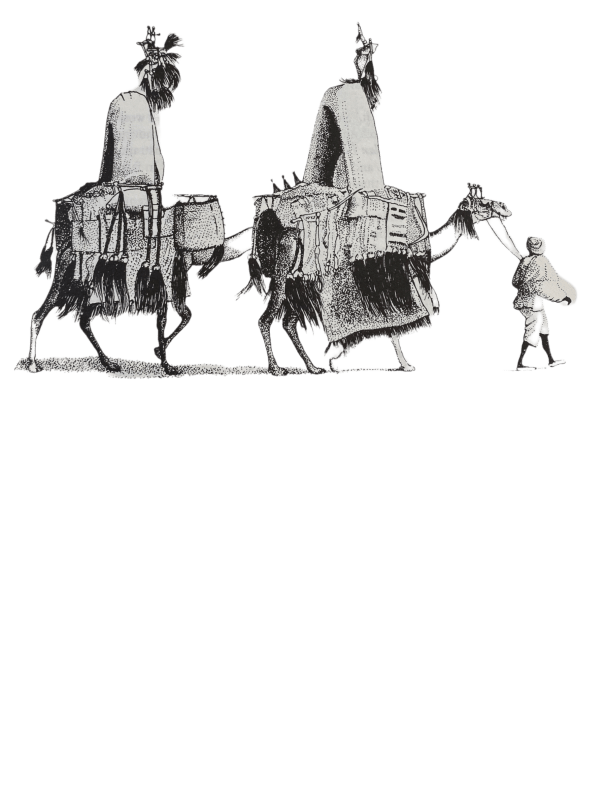
Below, “The ladies’ only section of the camel transport department.”
 Women's literacy in Sudan