

Icons of the Sudanese Home
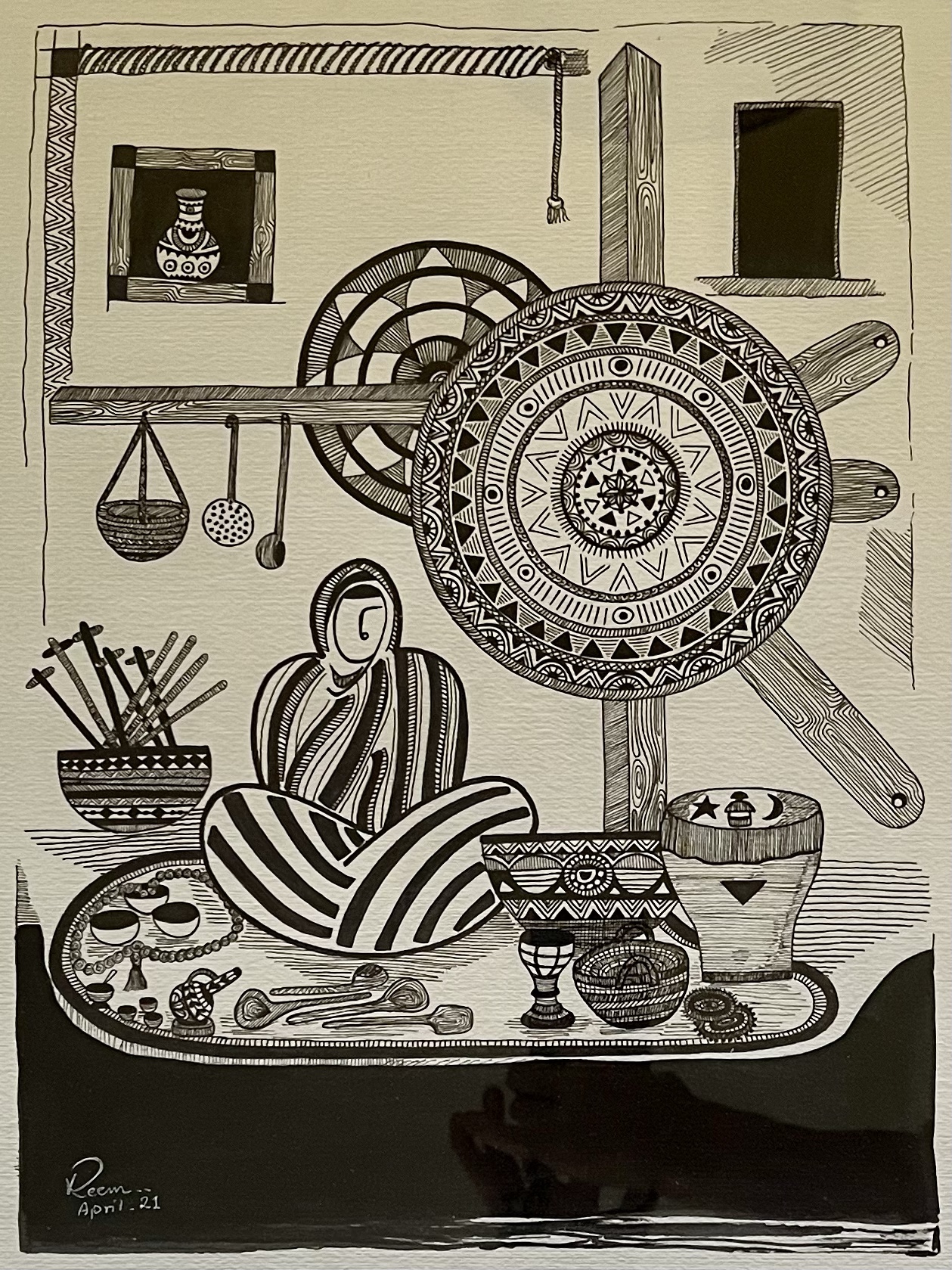
This week’s post is a tribute to a work by the young and very gifted Sudanese artist, Reem Mutasim Bashir.
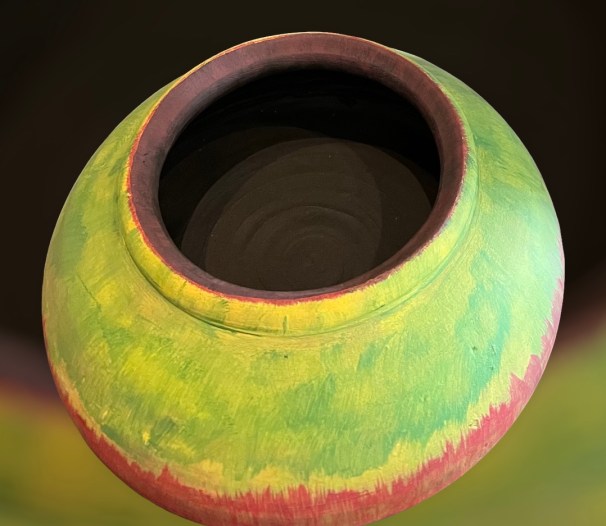
In addition to the medium of pen and ink, Reem has also recently ventured into the field of ceramics. Below, one of her ceramic pieces displayed at the Mojo Gallery, Khartoum.
More of her work is featured in the blogpost below, together with a commentary by the artist.
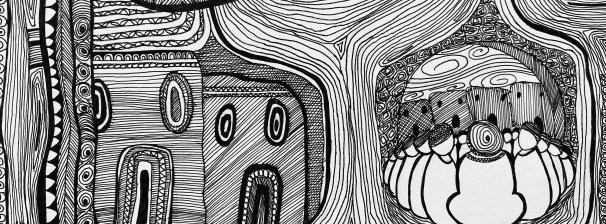
This week I reproduce Reem’s 2021 delicate homage to so many of the handicrafts and utensils emblematic of northern Sudanese domestic life. Below, Reem celebrates the double suns of finely woven palm fibre food covers or tabag, vibrant with Darfuri motifs, the mesh of wooden swivel sticks or mufraka for blending stews and sauces, the richly patterned food baskets or guffa, the wooden hugg for perfumed marriage pastes, the oval-based jebana or coffee pot on its beaded stand or wagaya; the prayer beads and incense burner.
Below, a Darfuri tabag or food cover, displayed at Khartoum’s Ethnographic Museum.

Below, our director, Mrs Neimat Issha examines a tabag made of recycled plastic by our literacy circle participants as part of income generating skills training. Learn more at our website:

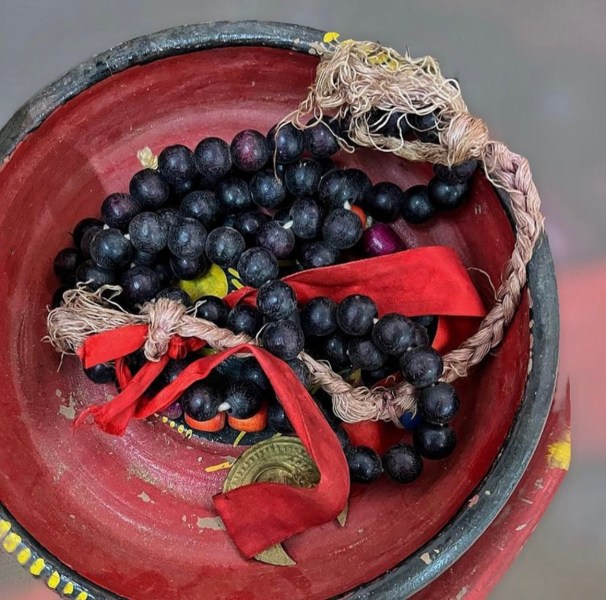
The Ethnographic Museum of Khartoum has a stunning collection of Sudanese artifacts. Below, wedding rosary beads and the hafaza crescent headband. Explore the collection in
Below, Sudanese coffee pots and earthenware cups shimmer in the midday sun, Soug al-Arabi, Khartoum. Learn more about Sudanese cooking utensils and the stunning photography of film director Frédérique Cifuentes in

Below, more examples of Reem’s ceramics, displayed at the Mojo Gallery, Khartoum:

You can learn more about Sudanese ceramics and coffee rituals in
The Scorpion and The Coffee Pot

Read more on Sudan’s rich heritage of basketry and weaving, northern and western Sudanese dishes and cooking utensils, as well as the customs surrounding the use of incense and prayer beads in the posts below:

Incense (بخور bakhūr) in Sudan
Anointing in Robes of Red and Gold

Below, tabaga or food covers, (personal collection) and some examples of traditional woven palm fibre and leather artifacts made by participants of our literacy circles.


See some stunning examples of embroidery skills in:
Celebrating a New Literacy Circle

This is a cultural post for Women’s Education Partnership
See the difference elementary and literacy education can make to the lives of Sudanese women and girls and those of their communities in:

See Community Literacy, Latest News and At a Glance for more about our work.

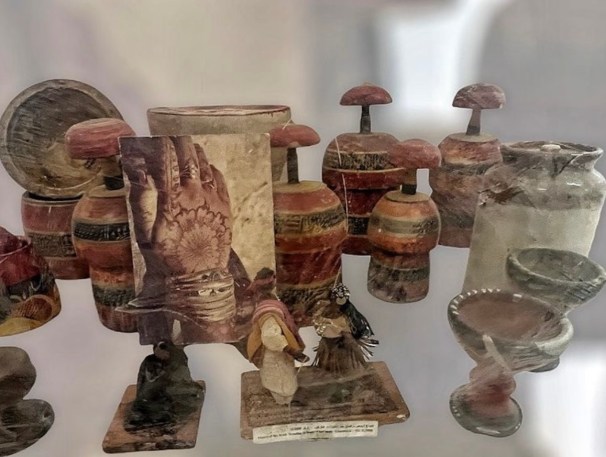
Below, examples of hugg and incense burners from the Ethnographic Museum.
 Women's literacy in Sudan