

“Sirwal wa Markub”
Traditional Sudanese Shoes for Men

Above, snake and lizard skin markub, with their soft goatskin lining and sturdy cowhide soles, Souq al-Arabi, Khartoum. The Sudanese markub is cherished by many for its durability and elegance. Together with the Sudanese jallabiyya, tagiya and turban, the markub (plural maraakeeb) is a symbol of national identity and an essential element in formal northern Sudanese male dress.

My thanks to Muna Zaki for the proverb above.
Setting the Scene
The legendary singer and composer, Mohammed Wardi immortalized the words of poet and diplomat, Sidahmed Al-Hardallou, in his exquisite love song to Sudan, Ya Baladi Ya Habbob, a verse of which is quoted in the photo montage above. At once plaintive and triumphant, the anthem is a timely homage to unity in diversity.

Title photo and above, a pair of well worn markub and their owner taking a well earned rest.
One translation of the verse above reads “Oh good and beautiful homeland / Oh my charming country / the land of the jallabiyya (Sudanese men’s robe) and toob (Sudanese women’s sari-like all-enveloping robe) / the jarjar (graceful trailing dress traditionally worn by Nubian women) – a variant on the better known phrase, sirwal (men’s loose cotton trousers) and markub / the jibba (the patched robes of the Mahdist revolutionaries) and the sideiri (waistcoat emblematic of the Beja people)…”

Above a markub craftsman with the traditional tanned leather used for al-fasheri / al-geneina markub. Prized as light, strong and long lasting, it is also used for the inner linings and soles of other types of markub. Photo, CC, MEMO, Sudan’s traditional shoe “merkub”
See more portraits of artisans at work in Snake Skin, The makings of traditional Sudanese footwear.

Above, examples of British colonial and Turco-Egyptian Sudanese footwear, including elegantly fashioned, curled toe, leather markub and embroidered women’s markub (photos; Sudan Ethnographic Museum). The markub played a role in Sudan’s struggle for self-determination; each shoe of a pair of the bright red “markub al-Jaziira Aba”, worn by Mahdist warriors, were designed so that it could be used on either foot when wounded in the heat of battle.
“A skull cap is always worn, and an ‘imma by the wealthier, with a scarf over the shoulder. The more prosperous wear markub shoes, but the majority wear a plain sandal…” The Baggara Tribes of Darfur, Sudan Notes and Records, Volume 16, 1933.

The Markub; Snapshot of a Unique Craft
Arabic sources for this article appear at the end of this post.

“I have been working in this profession for more than forty years yet have never tired of it”, recounts “Uncle” Francis,”nugulti”/ “iskaafi” or Sudanese shoemaker to a reporter struck both by the weariness etched on the old man’s face and his skill “I watched his hands moving with great skill and craftsmanship and the thread running through the suede.” The craftsman goes on to explain “I learnt the skill in Darfur, El-Geneina and in the early 70s I came to Khartoum. The customers come to me in my shop – I don’t go to the market to sell: My customers ask for a certain type of leather… A pair of markub is the result of a long, exhausting day with nothing but a tea or coffee.”
“Uncle” Francis’s story is typical of many of Sudan’s markub craftsmen. Al-Fashir, Al-Geneina, Nyala and El-Obeid, with their wealth of livestock, cattle markets and slaughterhouses enjoy an unrivaled reputation for the quality of their markub and despite pressures to the industry from synthetic skin and rubber imports, customers still seek out markub tailor made to their choice of skin, patterns and tones.
Get a feel of the markub-making process in this evocative 2-minute Sudan Layout video below:
Fuller, detailed reports in Arabic below:
صناعة احزية المراكيب في السودان
صناعة المراكيب : الجنينه – دارفور- السودان
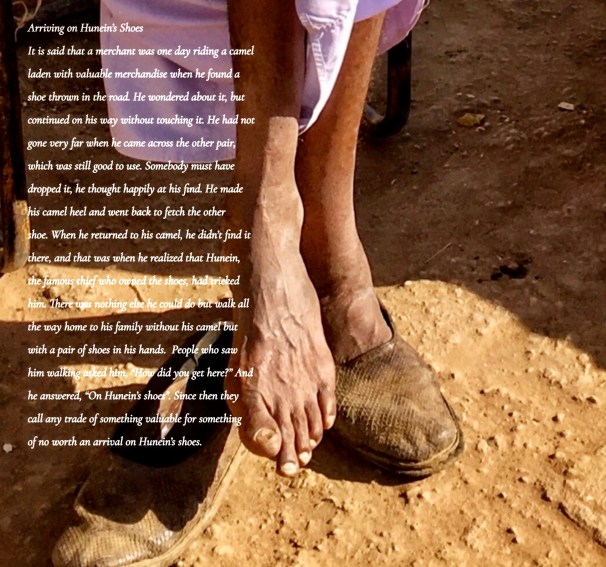
Above, the tale of Hunein’s shoes, as related in Sand in My Eyes, by Enikö Nagy.

The al-geneina, also known as al-fasheri markub, (pictured below left, centre) is often made from leather, goat skin or she-goat leather, the latter prized for its lightness and strength and also preferred for the lining. Its cowhide sole with its multiple, concealed layers of strong cotton hand stitching, known as the “tabriish” stage of the production process – machine stitching comes loose, it is claimed, affords both comfort and durability.

Goatskin, cowhide, crocodile, monitor lizard, and desert cat skins are also used, with rabbit fur and mountain goat favoured for women’s footwear. Domestic leopard skin, now banned – the leopard is gravely endangered in Sudan, is still prized as the ultimate status symbol, sported proudly by bridegrooms to set them apart from other wedding guests and those keen to cut an elegant figure at Eid prayers and other key social gatherings. Leopard skin markub are said to last up to thirty years.

Snake skin ready to be cut, shaped on wooden lasts and lined with leather. Still from لمركوب السوداني.. حذاء من جلد الثعابين
Snake skin markub (made both from python and smaller breeds) are still much sought after and Sudan is the largest importer of Nigerian farmed snake skin now that indigenous species are rare, though some are still to be found in the lakes and ponds of South Darfur. The snake skin markub is burnished, buffed, and treated with fresh lemon to bring out a shine before sale (see video in صناعة “المركوب” السوداني مهدّدة بالدخلاء)

Traditionally goat and cow hide used for markub are dyed and treated using garid; acacia seed pods (sunt), believed to absorb sweat, among its other health benefits, craftsmen stressing that salt is not used as it causes rhuematism. Small scale artisan tanning works (more than 300 currently exist) have been accompanied by the large scale development of industrial tanning centres, based in Khartoum, White Nile and Al-Jazeera. This has gone hand in hand with the growth of mass footwear manufacture in Sudan – now one of the largest producers in East Africa.
Although markub prices are rising fast (3000 Sudanese pounds a pair or more), demand is still strong and many craftsmen appear to welcome the introduction of machines that might enable them to produce more than the three or four a day they currently make by hand. Darfuri markub, in particular, enjoy growing demand among tourists and young designers are exploring creative and fresh new ways to reinterpret an ancient craft; (photos above left, new designs مركوب سوداني بشكل جديدكيف تم تطوير المركوب السوداني)
Below, from the archives of Sudan Memory:
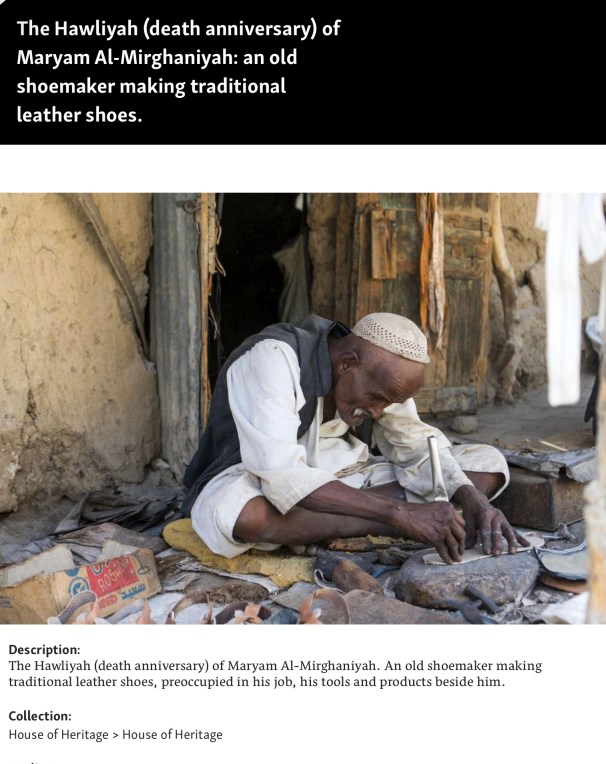
Some of the Arabic Sources Consulted
صناعة “المركوب” السوداني مهدّدة بالدخلاء والأحذية الصناعية
‘المركوب’ السوداني حذاء الوجاهة وعلاج القدمين
لمركوب الجلدي ..علامة الثراء والوجاهة في السودان
ويظل “المركوب” المصنوع محليا سيد الاحذية
(المركوب السوداني).. صناعة يدوية تقاوم الاندثار
This is a cultural post for Women’s Education Partnership.

Learn more about our women’s literacy, orphans schooling and university scholarship projects programmes below:
Opening Doors – Our Women’s Literacy Programme
Our University Scholarships – giving bright young women the chance to go to university
Scenes from Our Orphans’ Schooling Programme and From Hardship to Hope Our Orphans Schooling Programme
 Women's literacy in Sudan
A very nice article about the Sudanese Markub industryBut there is a note in the name of the maker of AmarkupIs his name really Uncle Francis or not And if it is other than that, please modify the name
LikeLike