

The Dervish’s Patches – Hani Khalil Jawdat’s Tribute
Devotion, Resistance and Art
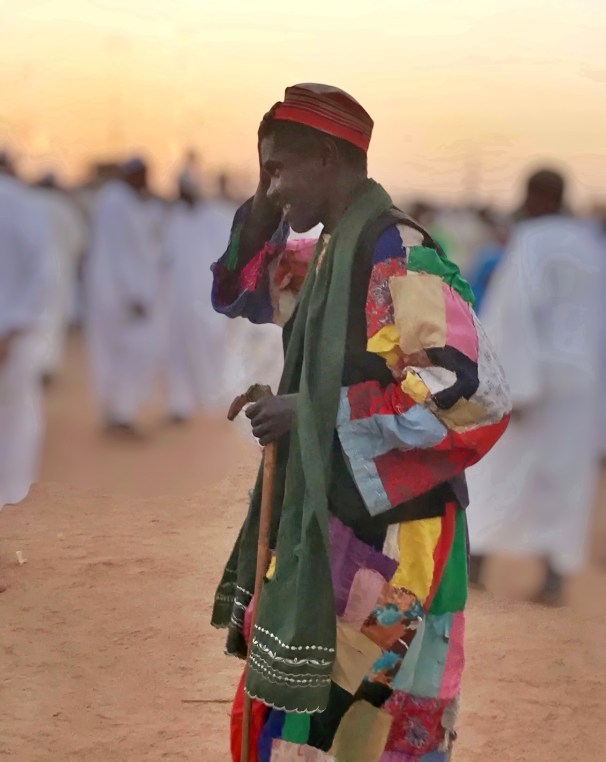
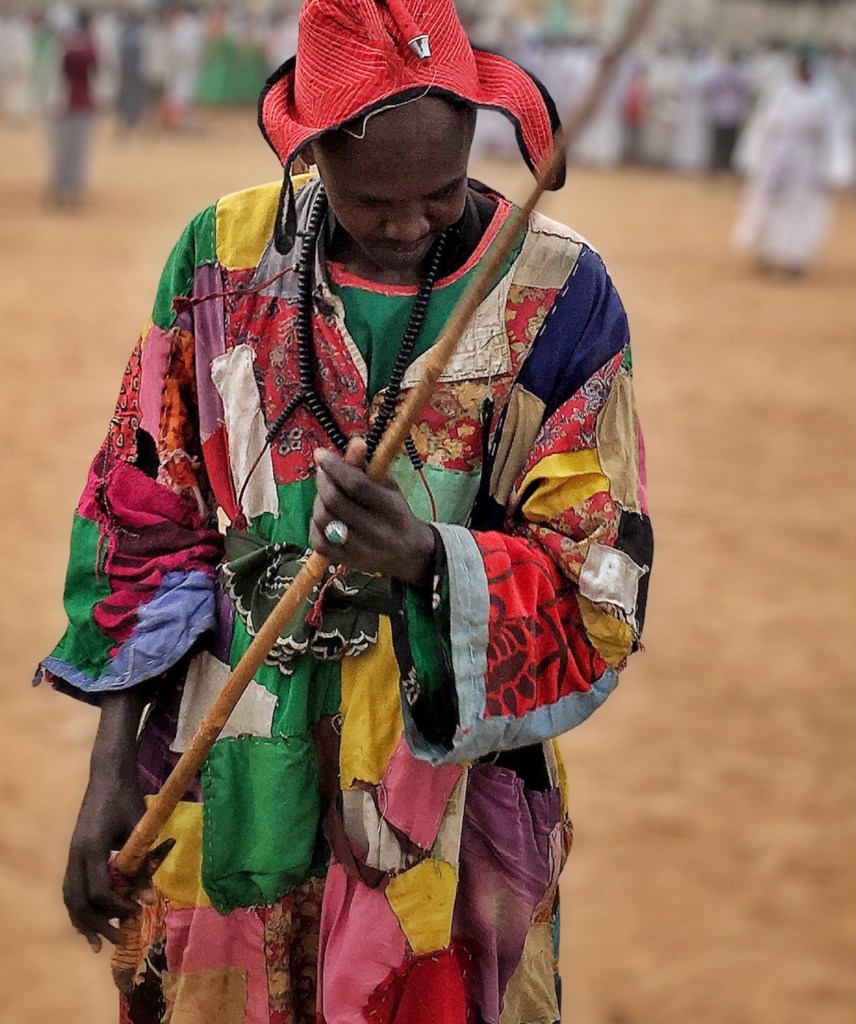
Above a young Sufi in his joyfully patched jibba and prayer cap celebrating the Friday evening dhikir / zikr at Hamid Al-Nil, Omdurman. More on Sudanese Sufi traditions in Memories of Omdurman, A Thousand Prayers and The Eternal Dance – Updated.
As the war in Sudan rages on, artist Hani Khalil Jawdat, whose work is featured below, draws comfort from the unbroken continuity of the dhikr; remembering that “Dhikr circles have not stopped for a hundred years in that city”. At the same time, he cannot but recognize the impact of the present tragedy: “Today there are circles of destruction and death covering the city, but my friend Al-Darwish is struggling with death outside the circles of remembrance.” (Hani Khalil, Instagram). This spiritually and socially committed artist often recalls dialogues he had with worshippers at Omdurman Mawlid celebrations; dialogues exploring the tensions and joys of being “sailors on the sea of faith.” The patches of the Dervish’s robes are a recurrent motif in his visual lexicon.
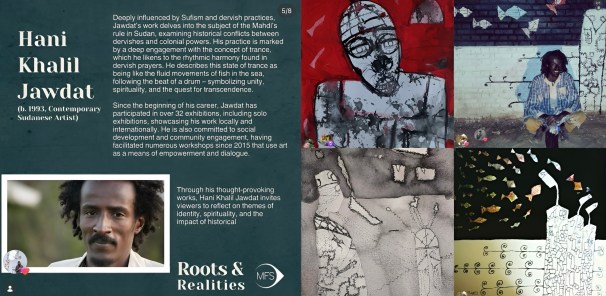
Above, profile and work by Hani Khalil Jawdat. His work and world view will be featured in depth in coming posts
The Dervish’s Patches – Devotion, Resistance and Art
Devotion – The Jibba’s Origins and Evolution
In a Sufi’s yearning zeal / My lamenting soul soars in search of your heavens / and my shackled mortal form / Will be one with the flowers / In your vast landscape of colour / rising up as genuine as dawn light /. From On the Love of the Divine Being, by Abdel Karim AlKabli. The Patriotic Sufi. For AlKabli and many Sudanese poets, ArabLit explains, the wandering dervish is “a presence as constant as the Nile”. See too The Roaming Dervish’s Stanza by Mohammad El-Muftah El-Fayturi.
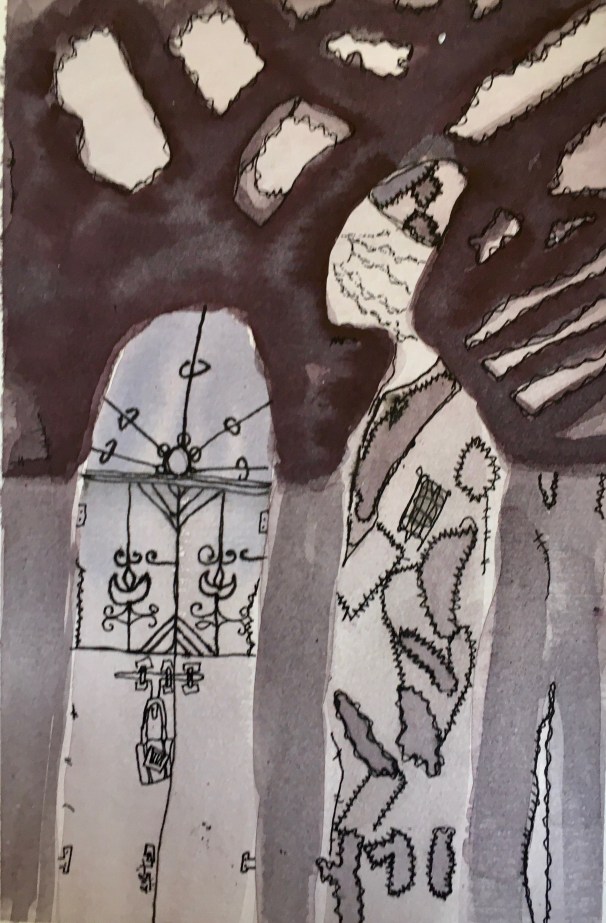
“There is nothing under the jibba but God”; attributed to the medieval Sufi mystic Al-Hallāj.

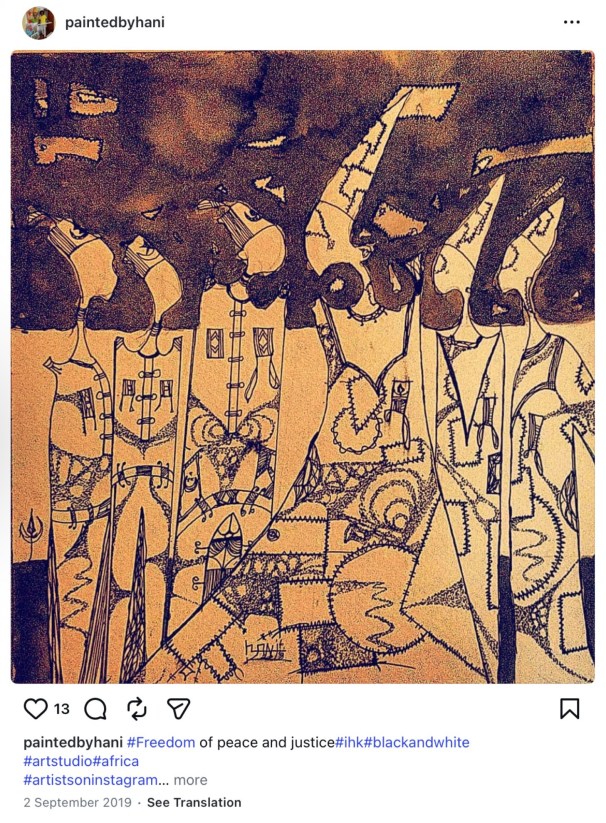
Above, one of a series of black and white works by the Kenya-based Sudanese artist, Hani Khalil Jawdat exploring the deep-rooted spiritual and cultural symbolism of the Sudanese Sufi’s* patched robes and the complex legacy of the Mahdist movement in Sudan. Originally made of wool or sūf, the robe or tunic, known as a jibba, was donned by the young Sūfi disciple (murid) once he was deemed by his master spiritually mature enough to wear it. The robe was sometimes gifted to the initiate by his master on completion of his studies. Over years of wear, the robe would be endlessly restitched and patched (muraqqa`a) by its owner; an ongoing visual testimony to a life committed to humility, simplicity and asceticism. The figure of the dervish speaks too of the wanderer or exile in search for justice and divine peace.
*The word “dervish” is often used in this context, although the Mahdi himself disapproved of the term.
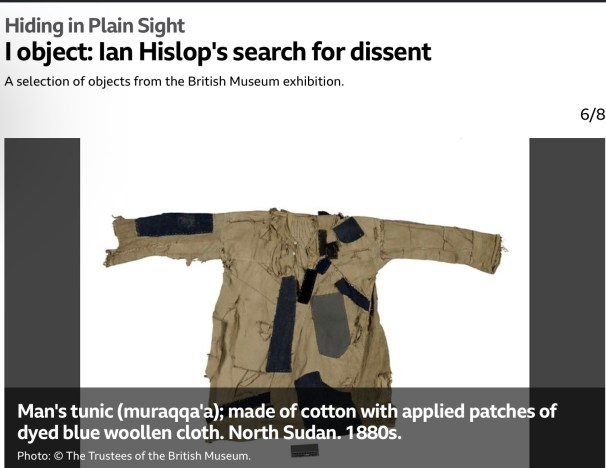
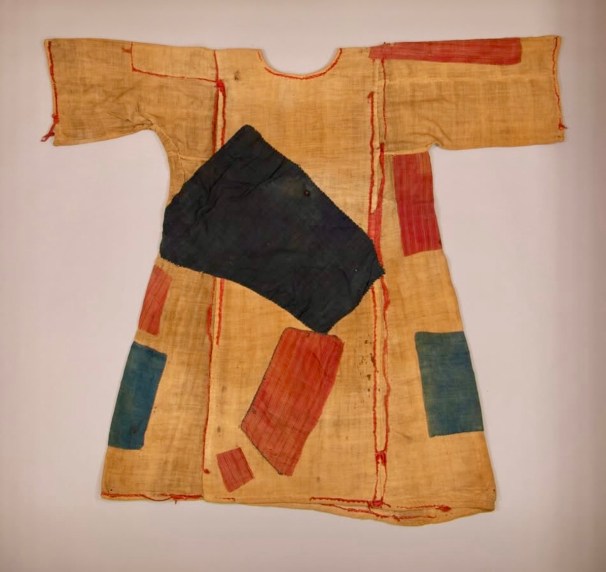
Above, a modest, irregularly and probably personally patched jibba, British Museum, cited in I, Object, BBC.
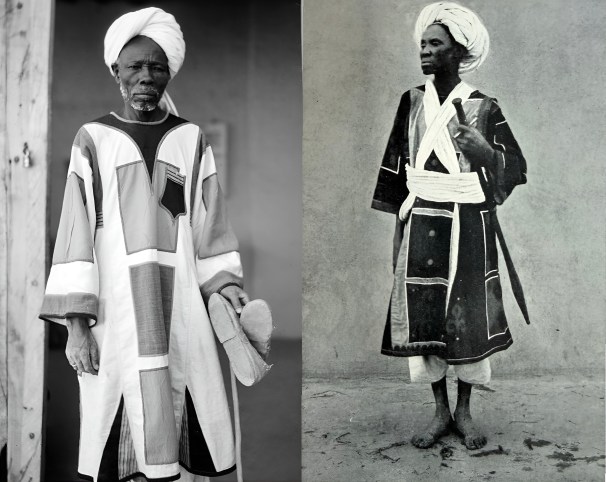
Under the Mahdi’s rule (see more below), the jibba came to be cut from strips of coarse dammur cotton rather than wool, and its patches took on a distinctive symmetry, elegance and talismanic force against their white or off-white ground. The jibba of the Mahdi’s followers (see examples below) embodied courageous resistance to the Turko-Egyptian and British colonial projects. It spoke of a Sudanese identity forged in nationalist and spiritual renewal. Numerous songs and poems of the era reference the patched robes of the Mahdi’s followers as metaphors for that resistance – see too how the Sudanese Mahdist movement inspired other nations in The Sudanese Dervish Appears.
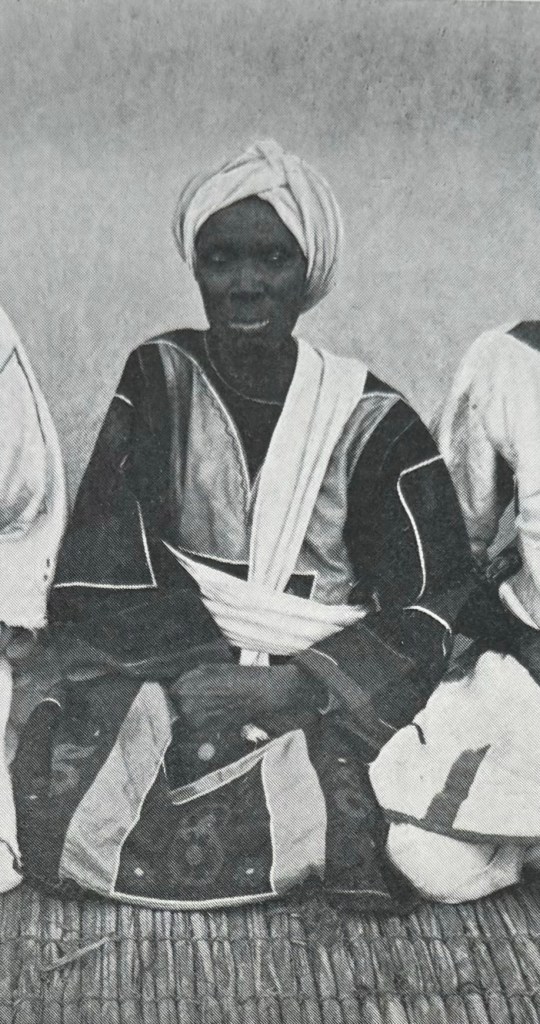
As the movement became increasingly militarized, Griselda El Tayib explains, the jibba evolved from the Mahdi’s plain dammur cotton robe into finely tailored, stylized appliqué garments, many examples of whose exquisite craftsmanship were displayed in the House of Khalifa in Omdurman (Griselda El Tayib, Regional Folk Costumes of the Sudan). As the movement accrued military victories, the robes were increasingly made from recycled fabric from Turko-Egyptian and European uniforms, sewn by prisoners, in turn being about changes in colour palettes and styles.
Women spun the cotton used – sources clash on whether women also undertook the weaving, though after the fall of Khartoum wool salvaged from the ruins of the city was also used. Safeguarding Sudan’s Living Heritage also reminds us the role of women in the Mahdist struggle was not confined to the spinning of cotton: “women donned the patchwork jibba and fought beside men”, as well as offering their nursing skills and ensuring the provision of food and other necessities. Many also played key roles as intelligence officers (Women in the Mahdya). Above right, caretaker of the Khalifa’s House in a jibba reflecting rank and prestige, 1936 (Wikicommons), next to a portrait of Sheikh Ed Din’s Eunuch in his marriage jibba, a plate from A Prisoner of the Khalifa, Charles Neufeld, 1899, personal collection). Above left, one of the Khailifa’s eunuchs, same source, in a jibba of ornate, dense, richly patterned fabric.
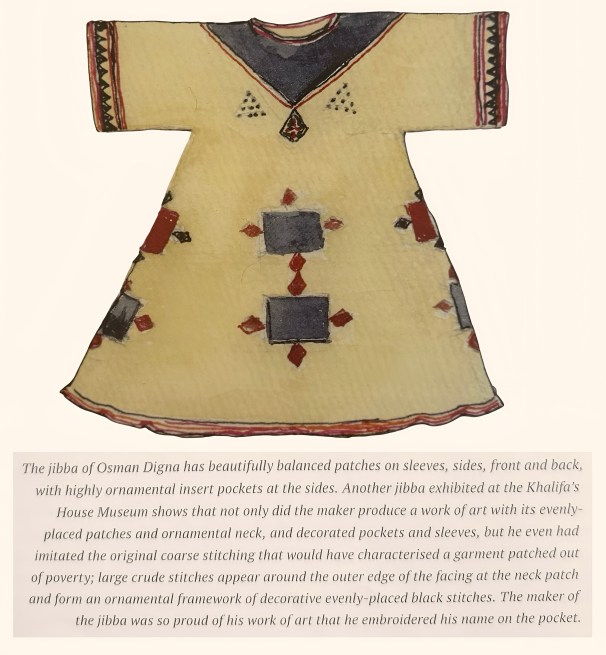
Above right, Griselda El Tayib’s sketch of the jibba of Osman Digna. She also comments on another jibba once displayed at the Khalifa’s House. She notes the maker of this striking work skillfully imitates coarse stitching techniques in homage to the original ethos of the garment. He was so proud of his art that he embroidered his name on the pocket. See a jibba very similar to the one shown above here.
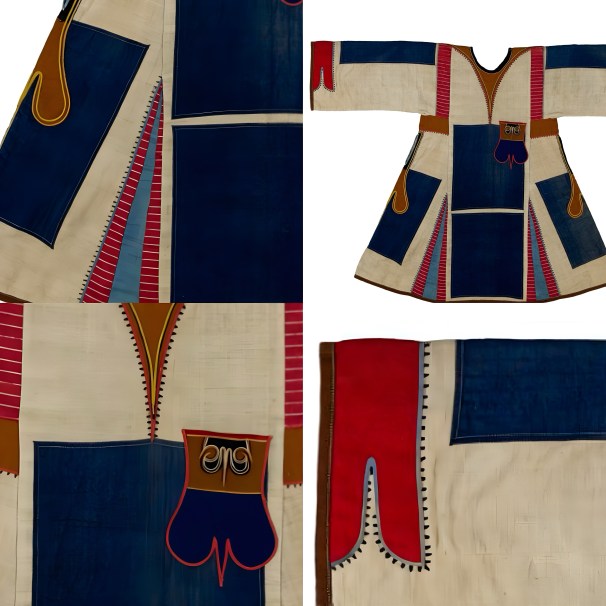
Below, details revealing the fine needlework and tailoring of a jibba, cotton cloth with appliqué panels in dyed cotton and wool on both sides, and embroidery at the neck, cuffs and pockets, British Museum (CC).
Below, for the artist Hani Khalil Jawdat, the patches of the Sufi permeate the fabric of Sudanese life; visible in the texture of the prayer board or lawh, the walls of mosques, and even the air.

The Dervish’s Patches – Resistance and Art
Below, a tribute by Jawdat to Freedom, Peace and Justice, a watchword embraced by young and old of the 2018-19 revolution. Here the enduring symbolism of the Dervish’s patches is freighted with yearning for a return to gentler, kinder, sincerely spiritual values, as in the Sufi prayer Ya Rahman Sung by Nancy Ajaj. Jawdat has dedicated murals and numerous canvases to the cause of the revolution.
Recalling the many Mahdist artifacts often looted, decontextualized and misunderstood, now residing in British museums, Jamal Mahjoub notes:”The Mahdi’s army was made up of common people, men who had nothing to lose. They had little or no military training. To begin with, they had no weapons. They did not know how to fight.” Speaking of their jibba, he reminds us “These costumes symbolized humility, a shunning of wealth. What they lacked in skill and experience the Mahdi’s followers, the Ansar, made up for in enthusiasm”, Jamal Mahjoub, A Line in the River.
When, in a diplomatic ploy designed to both flatter and appease, General Gordon sent gifts of a Turkish fez and red robes of honour to The Mahdi, the latter responded by urging the colonialist to “convert to Islam and adopt ‘the dress of ascetics and men of true happiness, who reject lustful desires, in their pursuit of high ideals – a jibba (a variation of the local jalabiyya), an under-shirt, trousers, a turban, a straw skull-cap, a belt and prayer-beads‘” (Clothing for Sufi and Soldier, Making African Connections and The Jibba). Shunning the clothes of the imperialists,”infidel Turks” and imported male styles of dress, the Mahdi would eventually impose upon all his followers a garment that bestowed “a sense of unity for a narrative of redemption”, (Khartoum at Night), a “sobering-up” of attire, (Griselda El Tayib, quoting Giuseppe Cuzzi in Regional Folk Costumes of the Sudan) that would become both emblematic of a movement and eminently practical.
Above left, a jibba from the Pitt Rivers Museum (CC); the red and blue patches and multiple repairs indicative of its wearer being of the “ordinary rank and file”. Right, the highly stylized and distinctive jibba of high ranking commanders, plate from Ten Years’ Captivity in the Mahdi’s Camp, 1882-1892, from the original manuscripts of Father Joseph Ohrwalder, Major F. R. Wingate, 1892.
At the outset, the Mahdi’s followers made their jibba themselves and sewed on their own patches. By the 1890s, factories in Omdurman and elsewhere were making standardized jibba and by the end of the Mahdia, Saving Sudan’s Living Heritage tells us, the jibba had been transformed into an elegant garment, often using English and Egyptian fabric in its production, in highly skilled, artistic and balanced designs, with decorated, embroidered or appliqué patches. Griselda El Tayib, again quoting Giuseppe Cuzzi, suggests it was the Jalliyin who added patches to their clothes when the jihad spread to Berber.
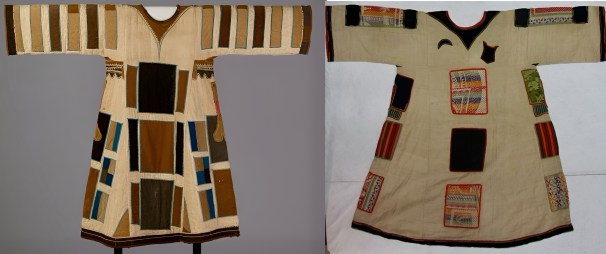
Above left, a strikingly symmetrical jibba from the Art Institute of Chicago (CC); right, a more individualistic piece with embroidered patches, The Victoria & Albert Collection, 1870-90,(CC).
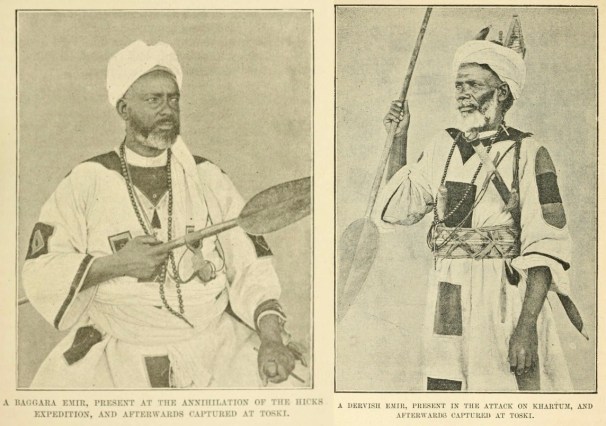
The jibba of foot soldiers is described as unassuming, with patches confined to red, blue and green scraps of fabric. The Ja`aliyn, it is reported, wore blue patches, while the Baggara wore red and black, although sources also reference the wearing of olive green, khaki and yellow, often from material salvaged from the uniforms of Egyptian and European casualties or prisoners.
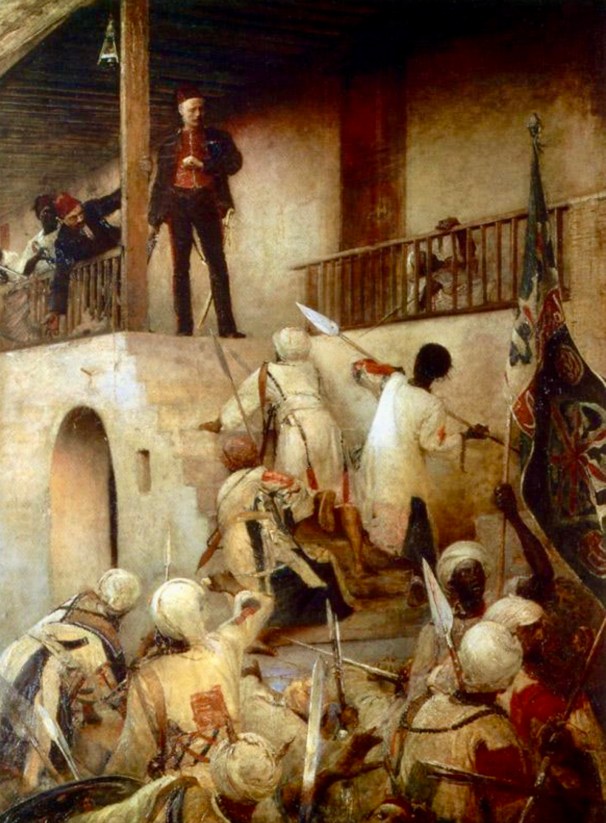
As the movement evolved into a cohesive military force, the jibba served to enhance intertribal unity by erasing tribal distinctions, ensured visibility on the battlefield through more regulated colour-coding and symmetry, and allowed for the rapid identifying of military rank. As Mahdist commanders wore no badges, the quality and design of their jibba came to reflect the wearer’s status; possibly indicated by ornately embroidered breast pockets, and edging in gold and silver thread, (forensic fashion) Left, Siege of Khartoum, General Gordon’s Last Stand, George W. Joy, (CC).
See more examples in My Pinterest Board.
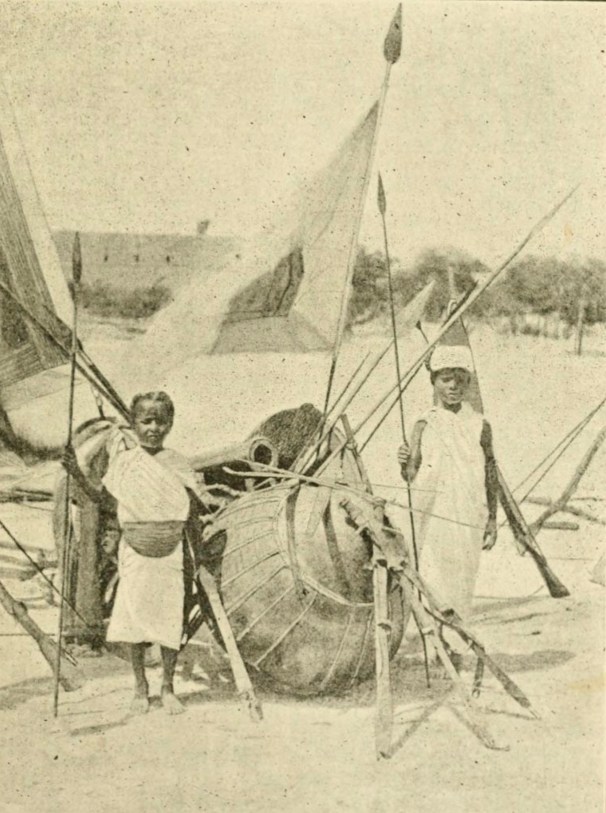
Below, plate from Ten Years’ Captivity in the Mahdi’s Camp, showing items captured or looted from the “dervish” foe. Many such items now reside in British museums, among them many fine examples of jibba. The repatriation of these cultural treasures is a complex, ongoing ethical challenge.
Art – Precious Artifacts
“This tunic should be put on with pride and wisdom”; an inscription relating to a jibba displayed by Musee du quai Branly, Paris.
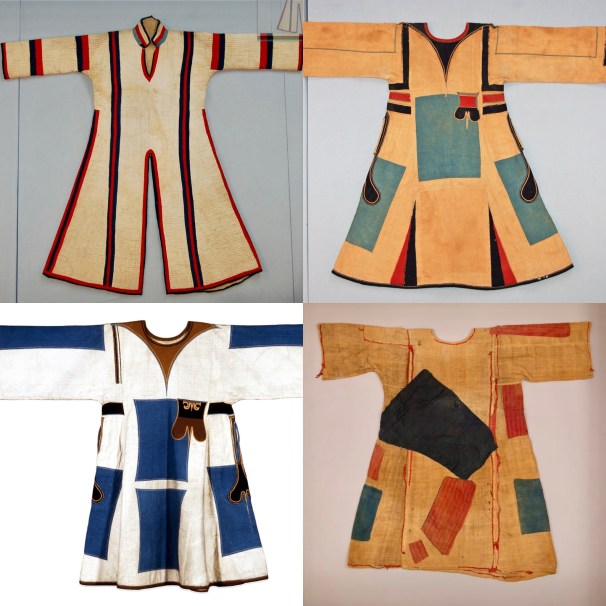
The jibba had wide sleeves, pockets and a neck scooped on both sides so that it could be worn back to front, allowing it to be donned swiftly and ensuring even wear of the garment over many years.
Above, fine examples of Mahdist-era jibba displayed in European and American museums. It is important to remember that many of these surviving jibba were plundered as war trophies by European forces from the battlegrounds of Omdurman, Atbara and Tushka and so represent the more formal, regulated design of later military Mahdist campaigns. Top left, a quilted coat jibba in indigo, light blue and red, worn as armour, possibly stuffed with cotton and kapok, c1885, British Museum. Sadly such coats, even when worn under chainmail were no match against bullets and the slaughter that characterized the Battle of Kerrari. Beside it, another British Museum exhibit. The scrolled patch on the chest and accentuated neckline suggest that the jibba was worn by an officer / leader. Lower left, another fine jibba, c1898, taken from the Battle of Atbara, British Museum. Lower right, jibba displayed at the Pitt Rivers Museum (see description above).
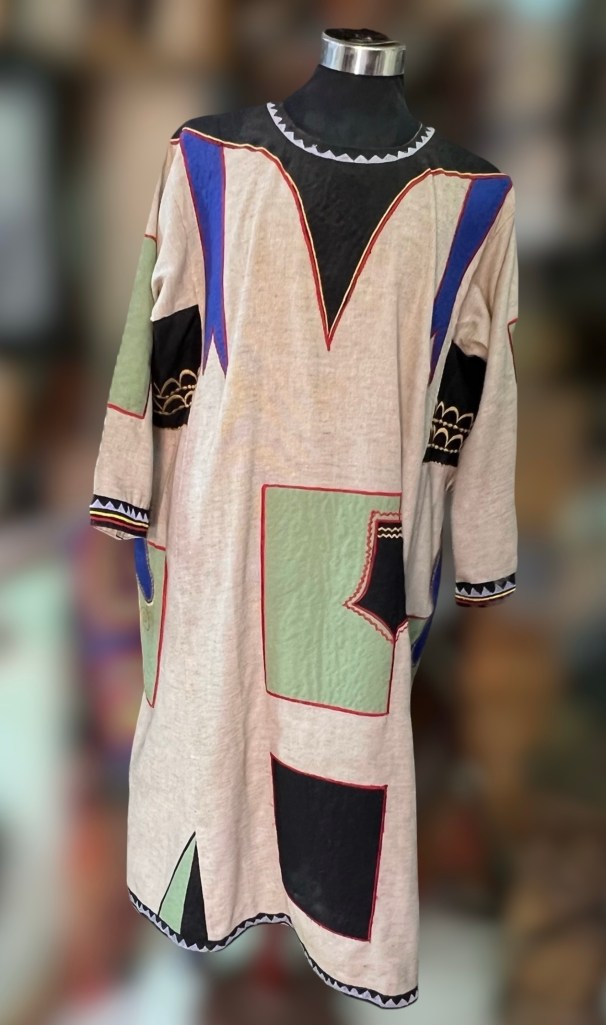
Below, a jibba displayed in an antiques and crafts shop, Atina Square, pre-war.
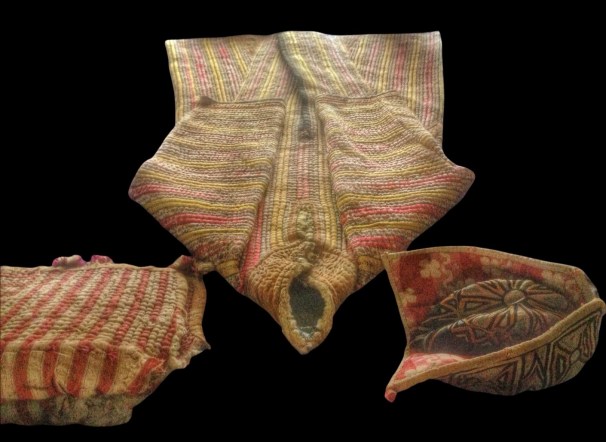
Above, formerly exhibited at the House of the Khalifa Museum; an exquisite example of a quilted jibba. See more examples in The Jibba, Saving Sudan’s Living Heritage

