

The Outlaw Poet
Tayyib Wad Dahwiyya

Setting the Scene
Above, AI-generated images inspired by accounts of Tayyib Wad Dahwiyya’s life, his poetic muses and excerpts of his verse. The poet (c1886-1943) was among the most acclaimed of Sudan’s Hambata nomad-knights, whose daring deeds and codes of chivalry embody and inform the themes and values of Sudanese dobayt / dobait verse.
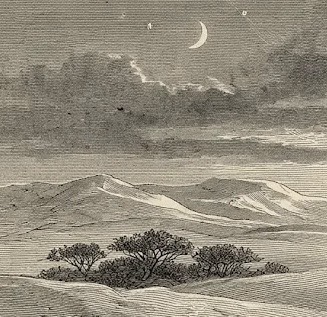
Dobayt is a form of chanted poetry (al-ghuna), which is characterized by rhythmic musicality. The genre is famous for its evocations of the shifting seasonal beauty of desert landscapes, the heritage and challenges of nomadic life, and the nomad’s arduous migrations and other journeys, both personal and spiritual. Courtly love, hospitality, chivalry, and the derring-do of noble camel raiding outlaws are also central themes. Dobayt poetry would traditionally be recited over the camp fire and, as Al Jazeera’s حكايات العابرين – 21 الطيب ود ضحوية – السودان reminds us, Sudanese still gather today to celebrate dobayt verse and its epic tales of desert life.
Usually comprising stanzas of four or five lines, dobayt poetry is rich in Sudanese dialectal forms and emphasis of long vowels in rhyming schemes.For in-depth discussion of Sudanese Bedouin poetry and its most renowned master, Al-Hardallo, see Adil Babikir’s The Beauty Hunters.
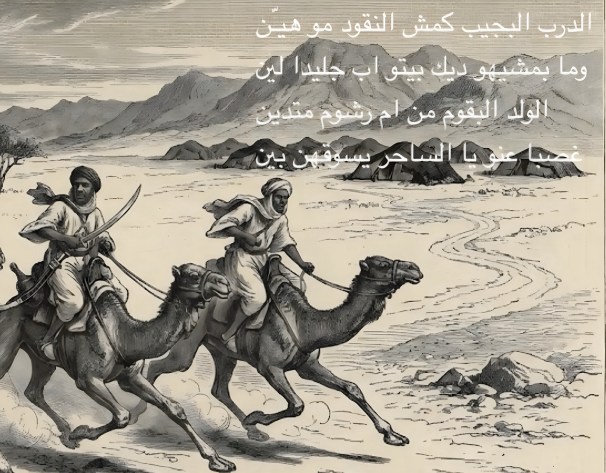
In one of the poet’s most quoted stanzas, see inset above, Dahwiyya reminds us that the path to wealth is fraught with perils. Not for the pampered stay-at-home, the soft-skinned “rooster” of a man is the life of the young warrior of courage and determination. The debt-burdened young hero, however, ventures fearlessly on, carrying with him the sacred memory of his beauty of beauties with her tribal scars, to forge his way.
This week’s post offers a brief profile of one of Sudan’s legends of heroism and verse. For a detailed lexical breakdown of some of his most quoted lines, see Al-Jazeera Tells the Tale of Poet Outlaw, in my sister translation blog. In writing this article I have drawn on publications reviewing the poet’s life and work, in particular, قصة شاعرين .. طه الضرير في ذاكرة ووجدان الطيب ود ضحوية (1-3) (Al-Rakoba), Al-Tayyib Wad Dahawiyah, the Poet of Hambata (a biographical monograph archived in Sudan Memory) and الطيب ود ضحوية. The English excerpts from his verses quoted below are paraphrases, rather than direct translations, designed to give the feel of the text and its context. Translations of his verse can differ widely.
The Legend
The Hambata Legacy Graceful Beings
A Life of Adventure Sparked by a Brother’s Death
The Legend
A man of true mettle does not spend his nights in idle slumber.
The Legend
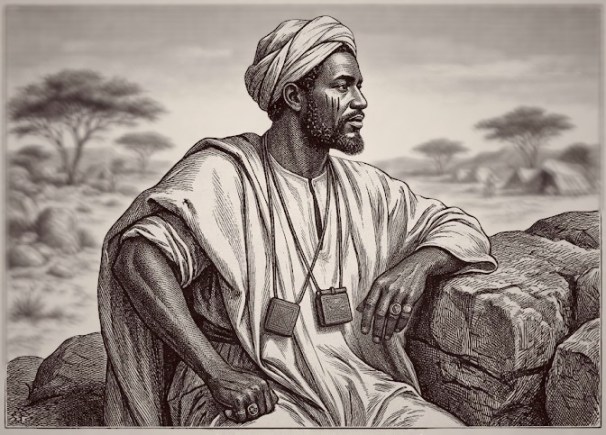
If legend is to be believed, Tayyib Wad Dahwiyya, lived a life of danger, daring and defiance of all but divine authority. His verse crackles with a deep contempt for the colonial administrator, the “Mister”, the camel-mounted troops charged with tracking him, the police forces he refers to as the “dogs of heat” because they could not withstand the searing heat of noon, as well as the locally appointed elites who fell short of their duties.
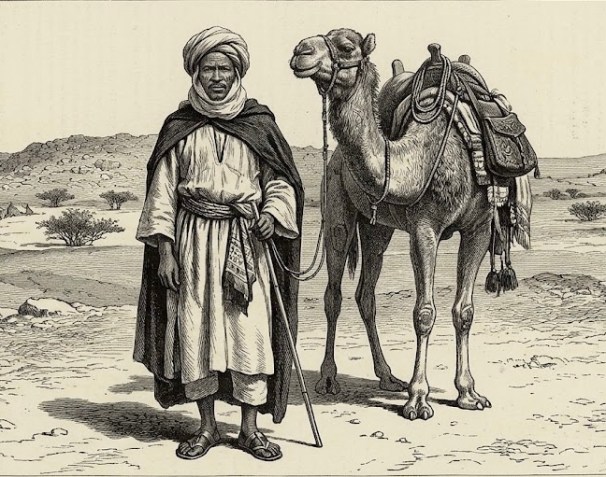
Braving swords and bullets, the story goes, the poet faced his enemies with courage and composure while remaining fiercely loyal to his companions and friends, many of whom he tenderly recalled in verse. While he openly revelled in the spoils of his camel raids, spending lavishing, Tayyib espoused a scrupulous code of honour towards women, orphans and the infirm. Central to his legend is the claim that much of the spoils were redistributed, Robin Hood-like, among the most needy and those he judged ill-used by the corrupt and excessively wealthy of the community.
It was perhaps inevitable that Tayyib would fall foul of the law and admirers claim that, except for brief spells while waiting trial, the hero artfully evaded prison. Others stress that he wryly mocked the prison procedures he underwent such as finger printing. He made light of his incarceration; the cold stone floors, stifling heat and temporary indignities, admonishing those prisoners who complained of their lot. When his dear friend and fellow poet, Taha Al-Darir endured seven years behind bars he penned verse to raise his spirits. The circumstances of his meeting with Al-Darir and fellow Hambāti poet Ali Wad Al-Faqir were to prove legendary, giving rise to a famous dialogue outlined in Al-Rakoba as above.
The Hambata Legacy
My solemn oath, to fall fighting, my camel’s halter at my side.
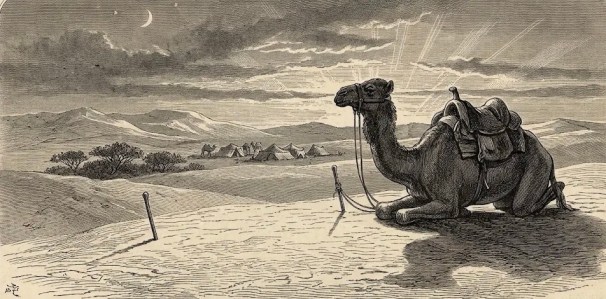
The hambāti nomads were famed for travelling under the cover of darkness, armed with sword or rifle and trusty leather water skin, the girba.
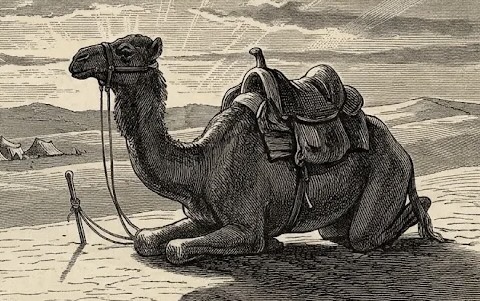
Most sources agree that Tayyib Wad Dahwiyya was in his early twenties when he embraced the life of the Hambata; nomadic camel raiders of the Butana region of eastern Sudan and Kordofan. His poetry is a vivid documenting of his many remarkable travels and adventures; travels that spanned the wastes of Kordofan, the forests of Dinder and the plains of Butana. He records his skirmishes with the Hadendowa and the Bisharin, his times with the Baggara, the Funj and the Rashaida. One account relates Tayyib and his men lying in wait to raid caravans headed for Egypt. The captured camels would then be driven to markets well away from colonial eyes to be traded. In all his journeys, the poet would immortalize in verse the companionship, nobility and often weary-footed stoicism of his camels, some known to us by name, such as Al-Sahār and Al-Ghouli.
I seek the saddle upon the backs of strong, mature she-camels.
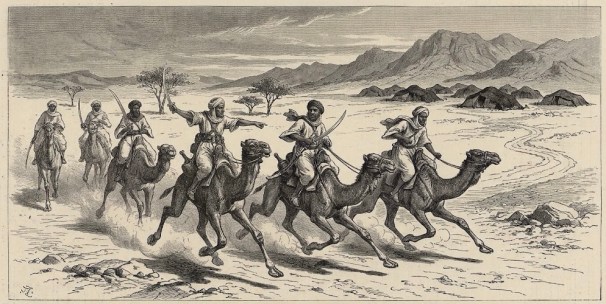
The poet’s verse is imbued with the values and contradictions of Hambata ideals. For some observers, this is a world defined by the embracing of death as inevitable and securing the honour and gratitude of the tribe through courageous action in the heat of battle – youm al-Haarra, in enemy lands. Under Hambata codes of honour, camels were the only livestock that could be respectably raided – all else was classed as demeaning petty crime. Only those camels securely guarded – never stray or abandoned, were deemed worthy of the night-time raids of stealth, cunning and expert tracking skills the reputation of the Hambāti demanded. Violence, as far as possible was to be avoided, friendly tribes were never to be attacked and their property always respected. For these “warriors” who were overwhelmingly from well-off families, there was no compromise to be had with urban, agricultural or domestic life. They would never be reduced to labouring in the fields or managing the home. One verse reads to the effect “I am no mere domestic occupied with the home, waiting for the purse strings to be loosened”. Another mocks those who engage in idle gossip while real men pursue the long, arduous road.
I am not the worthless man that boasts of what he has done … and when the stakes are high, I claim young camels, not tins of oil. These lines are said to have been inspired by the poet sharing captivity with a petty thief.
Graceful Beings
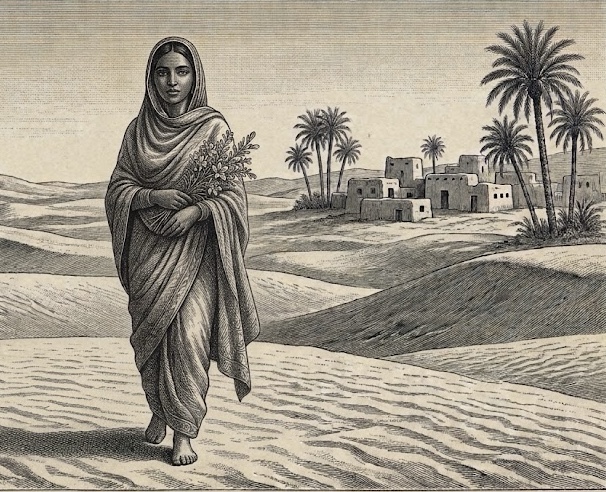
The nomad-knight is sustained on his many long journeys by the memory of his loyal and valiant love; Um rashūm, variously translated as beauty of beauties or beautiful maiden bearing the noble facial scars of her tribe. At moments of intense danger, the beloved’s image would come unbidden to her warrior, strengthening his resolve. In almost courtly love-like fashion, the maiden awaits with quiet devotion and fortitude their love’s return. The nomad’s beloved is a noble woman, confident and self-assured, who moves with the grace of a gazelle and dances with elegant allure.
Several verses by the poet lay out his chivalric virtues; never would he spy on a neighbour or violate in any way the honour of a free noble woman. Those who fail to care for widows and children are subject to the fiercest approbrium.
A Life of Adventure Sparked by a Brother’s Death
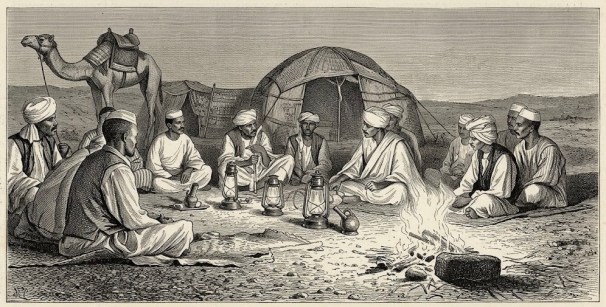
Reciting tales of derring-do by firelight.
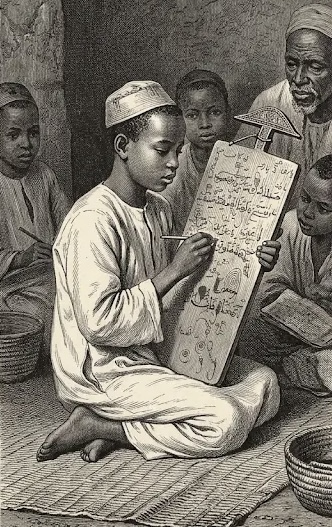
The poet, whose full name was Tayyib Abd Al-Qadr Sulayman, was born in the village of Al-Dayyiqa in the Jabal Um Ali area of River Nile State. The name Dahwiyya derives from the poet’s grandmother’s Sururab clan lineage in Kabushiyya, which came to be known as Dahwab. The clan were renowned for their ferocity in battle and earned themselves the moniker of “faces of blood”, reference to which appears in Tayyib’s verse. Like many of the hambātii, the poet came from a wealthy family and the young Tayyib was sent to his maternal relatives to attend Quran school, where he memorized sacred text, the Hadith and studied Islamic jurisprudence. It was his aptitude as a religious scholar that inspired his father to send him to Al-Azhar University and by all accounts the poet was on the point of travelling to Egypt when an older brother, Al-Karrār was killed.
It is said that the brothers enjoyed a close bond and that Tayyib admired him for his courage and generosity. Al Karrār had been a prominent hambāti raider and warrior and on one occasion had raided the Hawawir tribe, seizing a herd of camels among them a she camel belonging to the poetess Riyya. Karrār was pursued, killed and the camels and she-camel restored to their tribe. According to Dahwiyya, Karrār had set out to parley or duel with the aggrieved party but had been ignobly felled by a bullet.
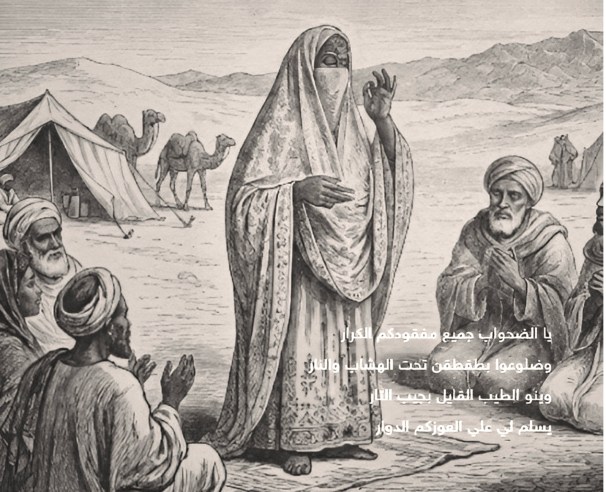
O Al-Dahwab, (referring to the descendants of the clan), what have you really lost but Karraar / Whose ribs are crackling under the acacia wood and fire / Where is the great Al-Tayyib who vowed to bring vengeance? / Blessings be upon Ali who drove you out of your camps / left you reeling and lost / Poetesses played a central role in upholding and celebrating tribal honour.
The poetess, in rousing, caustic verse, derides Tayyib and his slain brother, belittling their worth and capacity for vengeance. Al-Rakoba relates that on hearing this provocation, the poet girded on his sword and mounted his steed. Upon encountering his brother’s killer, he declared “I shall not betray you as you betrayed my brother; I shall fight and kill you in accordance with codes of chivalry.” In the ensuing sword battle, Ali is struck down and in accordance with tribal custom of the time, a lock of the adversary’s hair is cut off, wrapped in a pouch and delivered to the family’s grieving women as proof of vengeance. For many commentators, it was his brother’s death that led Tayyib to dedicate his life to the hambata; for others, the poet had already become fascinated with the life from an early age.
Tayyib Wad Dahwiyya was to return time and again to the life of the hambāti, despite numerous attempts and substantial monetary incentives by his father to lure him back to settled society. Only when he became too infirm did the poet relinquish the life of the knight-nomad. He is said to have ended his days in Kabushiyya, having turned to a life of profound piety and prayer.

