

And My Country Will Live
Setting the Scene
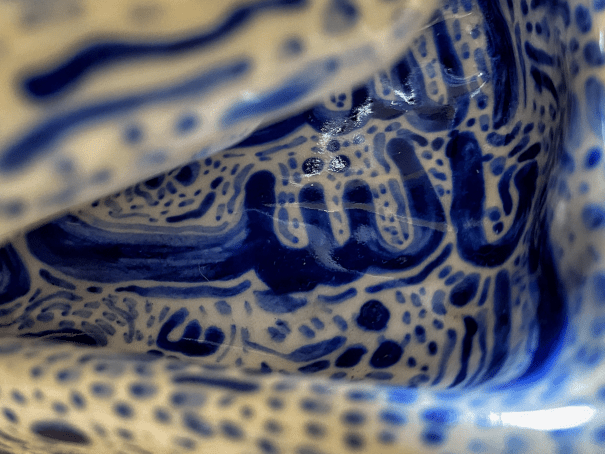
Title photo and above, details of a work by the gifted and multi-faceted Sudanese artist, Enas Satir, pictured below. This piece was created during lockdown and reflects Enas’s fascination with the illustrative power and solidity of fired words. Words which take on a physical presence, impossible to ignore. Sacred, poetic, disarmingly colloquial and sometimes provocative; words for the conversations yet to be uttered.
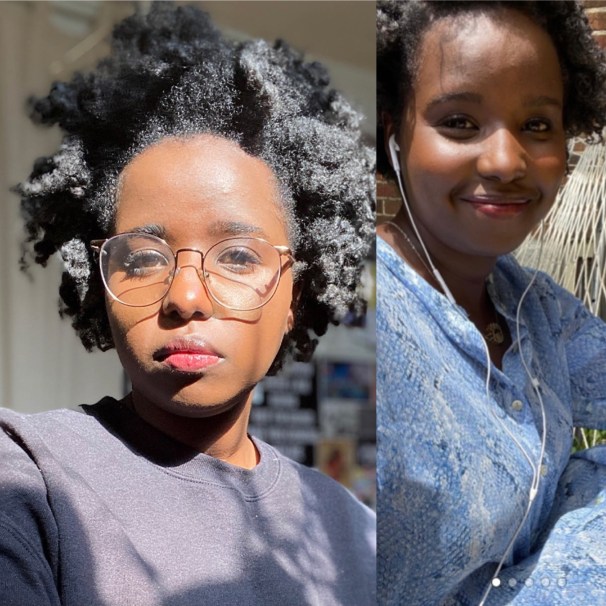
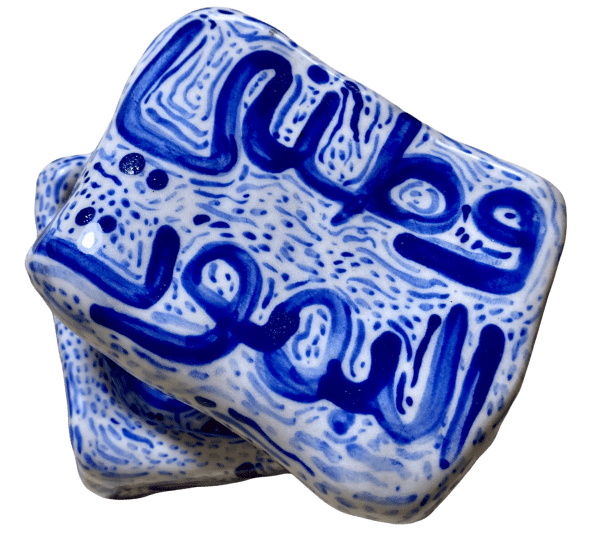
This week’s post is a tribute to the work pictured above, a present from my husband during a strange and challenging time for everyone last year. it is a piece which gives me great joy. With lucid surfaces echoing the hand-smoothed, organic contours of Nubian adobe walls, there is a reassuring density to the heaviness of the clay box as it rests in your hands. Bold brushstrokes of the Arabic text emerge from a vibrant sea of dots and lines behind.
Watch Enas making this piece below.

Above, the Arabic word for “alive / living”.
Please do join us for next month’s cultural post where Enas has very kindly agreed to talk about her remarkable and challenging body of work.
The text inscribed in this piece comes from a poem by the beloved Sudanese people’s poet, Mohammad El-Hassan Salim Himmaid (1956-2012), and is a poignant hymn to Sudan, its beauty, strength and diversity.
“My country, if I die / if I were to die, will always live /ever lives on / My country, if I die, I leave (behind) alive / I die and yet my country will ever live” – the words engraved on the lid of the piece. See more on Himmaid and his intensely compassionate vision in:
Learn more about the rich history and diversity of Sudanese pottery and women’s key role in ceramic craftsmanship in:

Giving Form to Clay Sudan’s Women Potters Giving Form to Clay Sudan’s Women Potters 2
Read about the groundbreaking work of British-Sudanese potter, Siddig El-Nigoumi in:
The Scorpion and The Coffee Pot

And My Country Will Live
Below, an extract from this epic poem, embraced afresh by the young of the Sudanese revolution of 2018-19, and invested with new resonances as so many sacrificed their lives for a plural and tolerant Sudan.
A brief working translation of this segment will be provided shortly. I would be very grateful to hear from anyone who can advise on the cultural references in this text.


Above, the words “much / many”, “something” and “little”; from the poem, recalling the poet’s conviction that the little you may have in Sudan is a multitude of blessings.
See Enas’s Facebook video below on the making of this piece, accompanied by evocative recordings of Himmaid reading verses from the poem.

Above, stills from the video.

The video opens to the lines above. Roughly translated, the lines read “How sweet / beautiful is my country / (land of) meekness / tolerance of the Messiah when all good qualities / benevolence (are present) / like the bosom of the Prophet / (full of) grace / patience and generous-heartedness / big-heartedness.
Below, some of Enas Satir’s ceramic works (photos, copyright Enas Satir, reproduced with permission from Enas’s FB Page), reflecting diverse creative projects.

Learn more about Enas’s inspiring approach to ceramic art next month.
Below, details of the work.
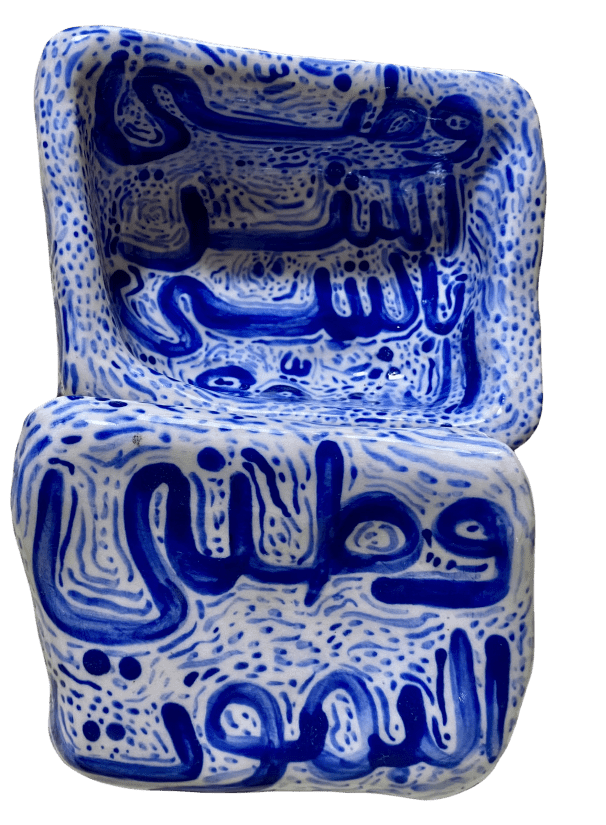


Above, the poet’s name, Himmaid, flows across the side walls.

Above and below, “and I leave (my country) alive”
This is a cultural post for

Help us to provide educational opportunity for women and girls in deprived communities.
See Latest News and At a Glance for more about our work.


Beautiful ceramics and text.
LikeLike