

The Craft of Jebana Making
With Omdurman Potter, “Uncle” Mohammad Medani Ibrahim Yusif
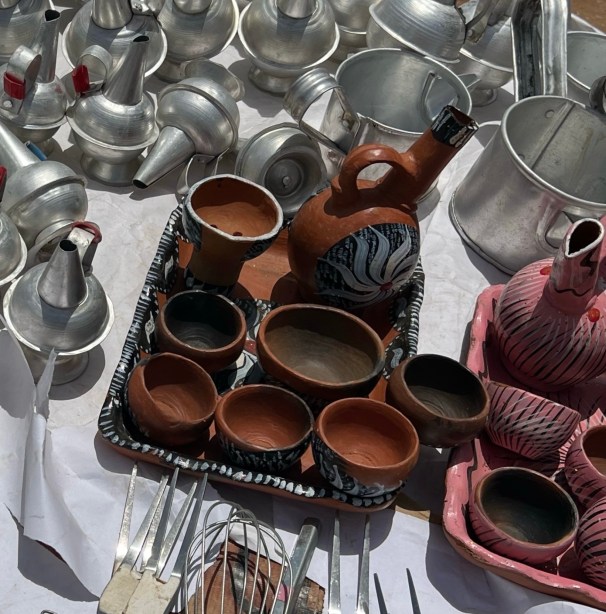
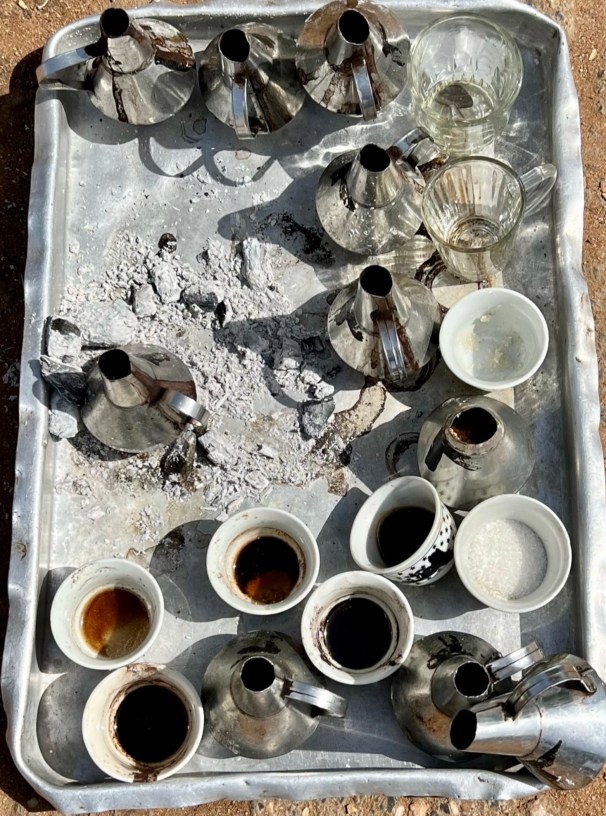
Above, sets of Sudan’s iconic earthenware coffee pots, known as jabana or jebana, their finjaan and matching incense burners rest on bright ceramic trays at a roadside stall at Soug Al-Arabi, Khartoum. Next to them, more modest aluminium jabana glint moon-silver in the mid-morning light. Large rectangular flour, cheese and cooking oil tins, known as SafīHa, are often repurposed to make these.
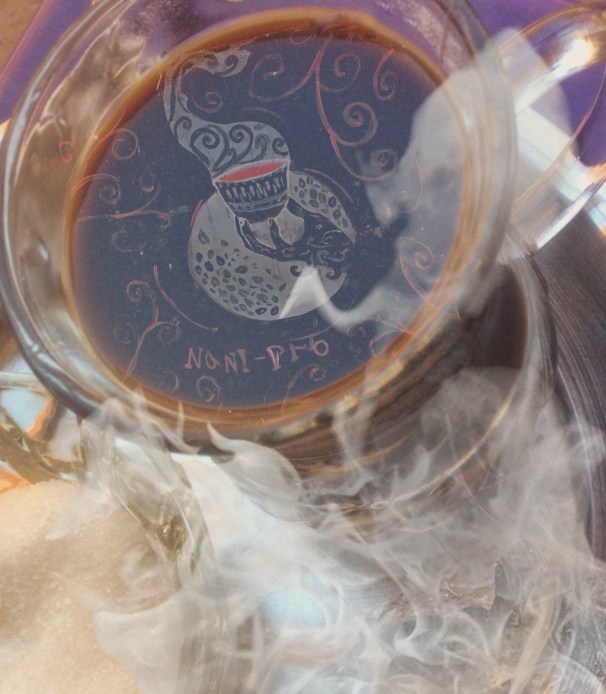
Above, detail of a street mural reflected on the surface of my morning’s coffee. The mural, one of many painted by university art students a decade ago, once adorned the bustling hub of Atina Square, Khartoum.
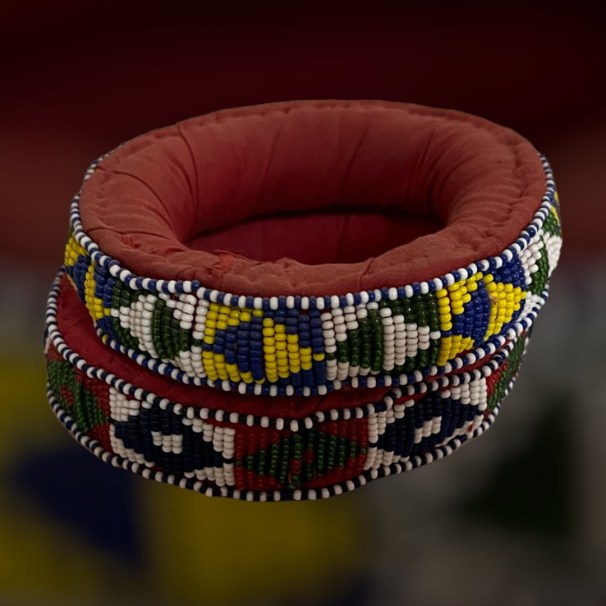
Setting the Scene

سماحة جبن الطين
samaaHat jaban aT-Tiin
“The beauty of clay coffee pots”. A cautionary proverb reminding us that sometimes the fragility of beautiful things such as the jabana, may lessen their utility, so don’t judge by appearances alone. The proverb is often applied to someone whose outer beauty is not matched by intrinsic inner beauty. The clay jabana are indeed fragile but do have advantages over their tin sisters; they retain the heat of the coffee longer when withdrawn from the fire and if seasoned before use (see Ta`tīg al-fakhār ) can last decades, giving an added depth of flavour to the brew.
Above, a jabana adorned with crescent collar and pendant tears reminiscent of Sudanese bridal jewellery, Omdurman, 1958, photograph from Smashing Pots, Feats of Clay from Africa, Nigel Barley, 1994.
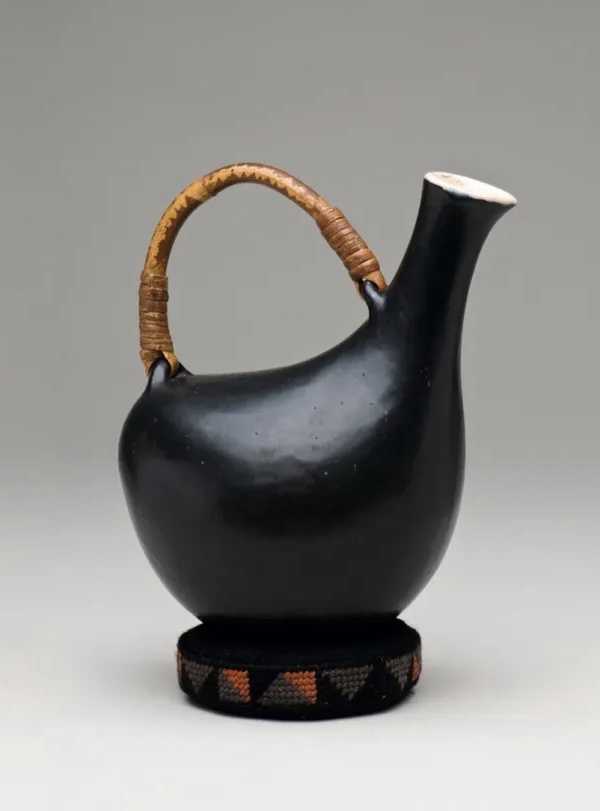
Anglo-Sudanese ceramicist, Siddig El-Nigoumi’s jabana (1959), shown left, sits like a delicate bird on its nest, seamlessly fusing the fluid forms and curved belly of the traditional vessel with elements of Japanese and English design. The Sudanese jabana came to exert a profound influence on the ceramicist’s artistic trajectory, embodying both his African and Arab cultural heritage. Photograph from the launch of Alan Windsor’s fascinating monograph, Siddig el Nigoumi, A Sudanese Potter in England, (Twitter, Lund Humphries, November 2015). Learn more about this remarkable artist’s work in The Scorpion and The Coffee Pot.
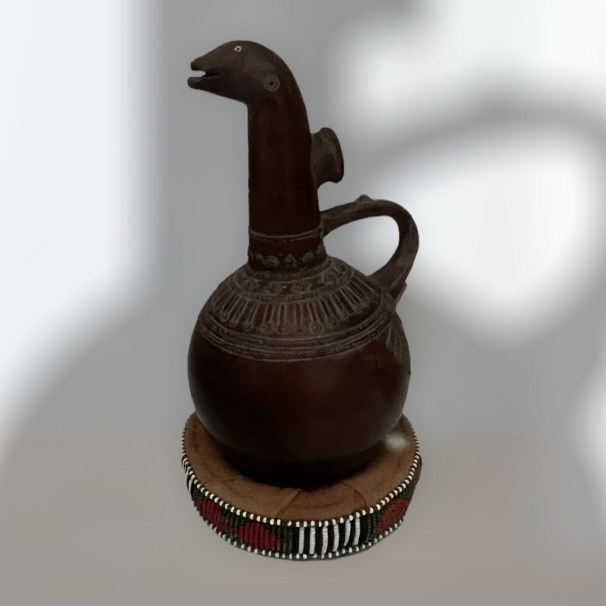
Right, another striking bird-shaped jabana, this time, an early 20th-century vessel, possibly from Kordofan, exhibited at the Sudan Ethnographic Museum, Khartoum, pre-war. This is one of several beautiful examples of jabana formally housed at the museum and which just might have also informed Nigoumi’s artistic vision. See more items featured in the museum in Ethnographic Museum Khartoum and Sudan’s Cultural Treasures Looted 1.
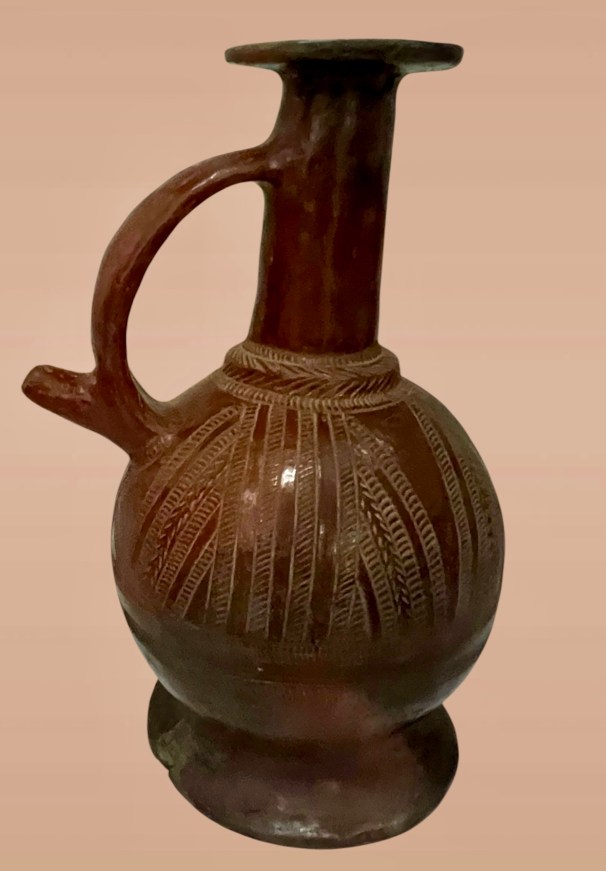
The making and partaking of coffee in Sudan has inspired countless articles exploring its rituals, language and cultural resonances. Hundreds of paintings, poems and short stories draw their inspiration from the sharing of coffee. In recent times, the visual shorthand of the jabana, so much associated with the generosity and hospitality of the Sudanese home, has come to embody a yearning for a return to the calm and kindness of life before war. Influencers and collagists such as eyes.on.sudan have taken the jebana as an emblem of all that has been lost and that yet endures. Left, another jabana from the Sudan Ethnographic Museum. Details of its motifs can be seen below.
For more on the culture of coffee in Sudan, see Andariya’s Jabana: A Sudanese Memory that Never Grows Cold. To explore fortune telling and coffee, see Cowries in Sudan Part 1-Divination and Ornament. For poetry, conversation and literacy, see Coffee and Conversation- Updated. For artists who use coffee grounds in their work, see Coffee and Hibiscus Flowers.
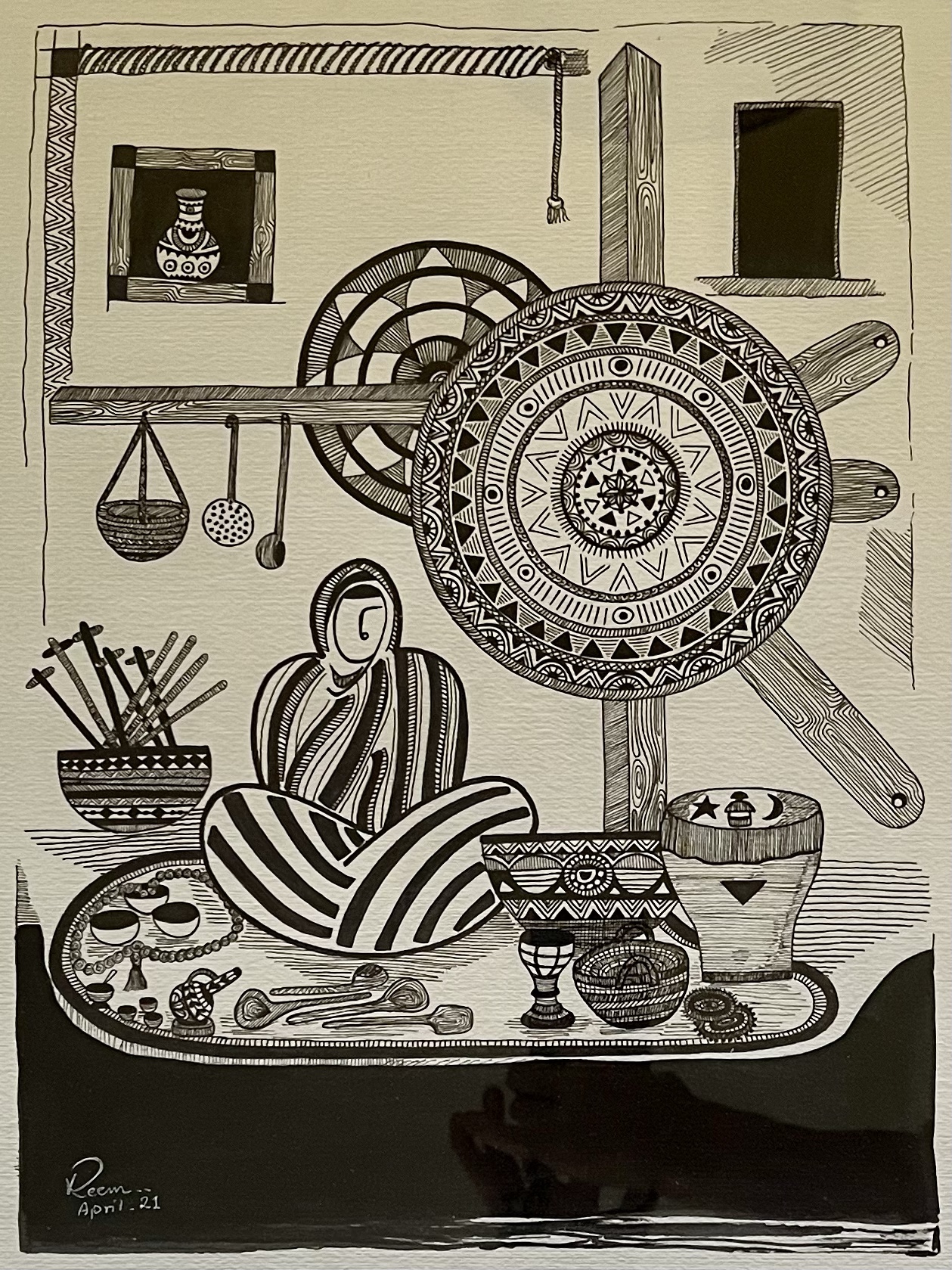
A strikingly patterned jabana perched on its beaded wagayya stand – an essential element of the Sudanese kitchen, in a work by Reem Mutasim Bashir. See Icons of the Sudanese Home
While articles abound on the making and sharing of coffee, few have explored the craftsmanship of the earthenware jabana itself. This brief post, I hope, serves as a window onto the process of jabana making and features a short video dedicated to the work of Omdurman potter Mohammad Medani Ibrahim Yusif and his sons. In it, the engaging 80-year old father of nine tells us of his life making jabana and reveals the secrets of his craft. The video is followed by an English commentary on the text. A full Arabic transcription and lexical analysis will be available shortly on my sister blog.
At a time when mass produced porcelain jabana from China threaten to sweep away the traditional Sudanese jabana, Mohammad Medani’s skills and those of all jabanātii should be celebrated.
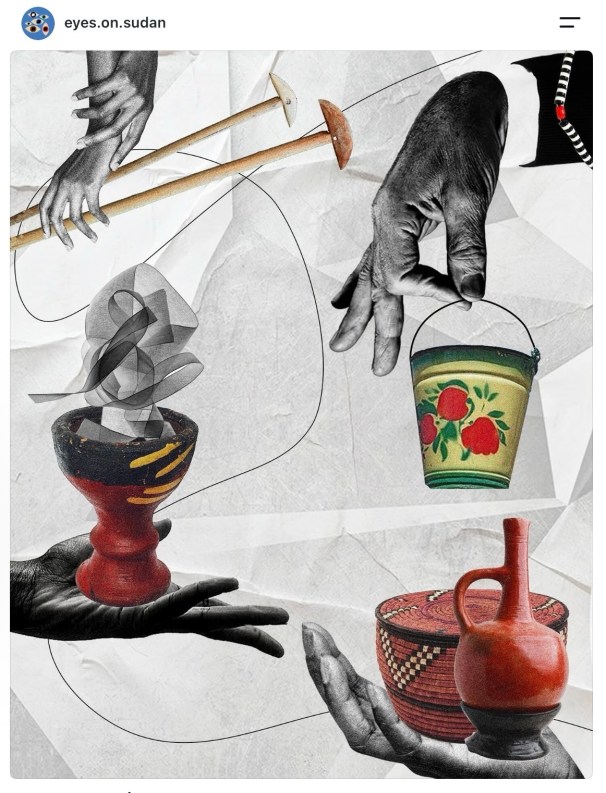
The jabana’s emblematic status celebrated by eyes.on.sudan.
“The Jabana Has Always Seen Us Right.”
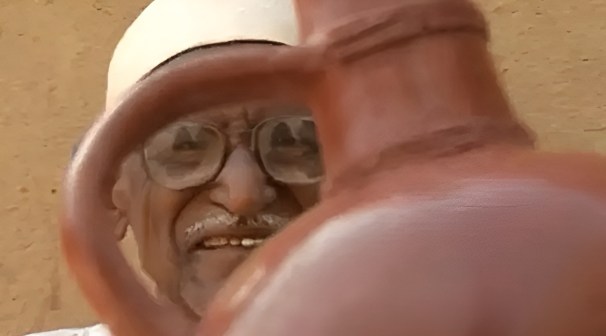
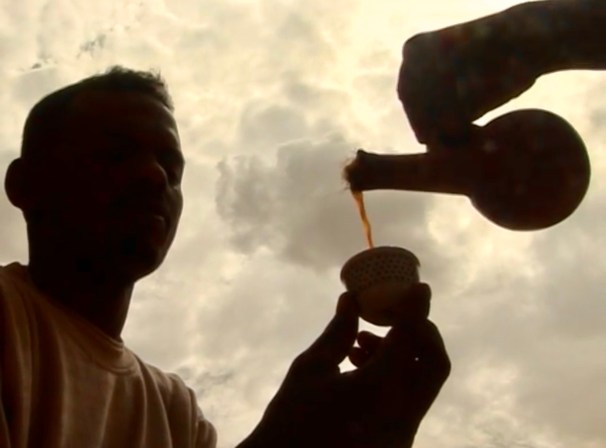
Above, “Uncle” Mohammad Medani with one of his jabana. Still from Abdo Madani’s برنامج تلفزيوني لصناعة الجبنه توثيق للصانع محمد مدني وعبده مدني ومجدي مدني
Below, more scenes from “Uncle” Mohammad Madani’s working day.
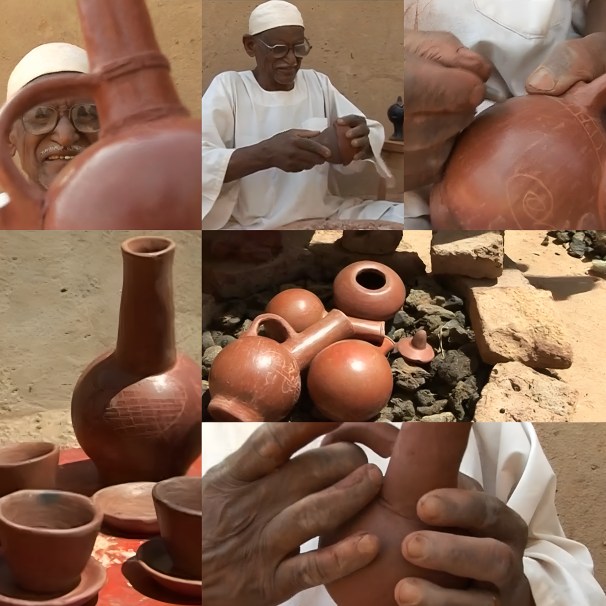
Watch the Video here:
Commentary
“The Jabana Has Always Seen Us Right
The presenter invites us to step into Mohammad Madani’s world and explore a craft that requires highly skilled hands and decades of experience. “Uncle” Mohammad Madani has been a jabanāti for the past 57 years, ever since he left school in 1941 and at eighty, he still takes immense pride and joy in his work. The video closes with the craftsman expressing gratitude for all his profession has given him over his life, saying “mā gaSar fi-nā al-jaban zātu bi-ayy Hāja”; the jebana has always been good to us / has never failed us.
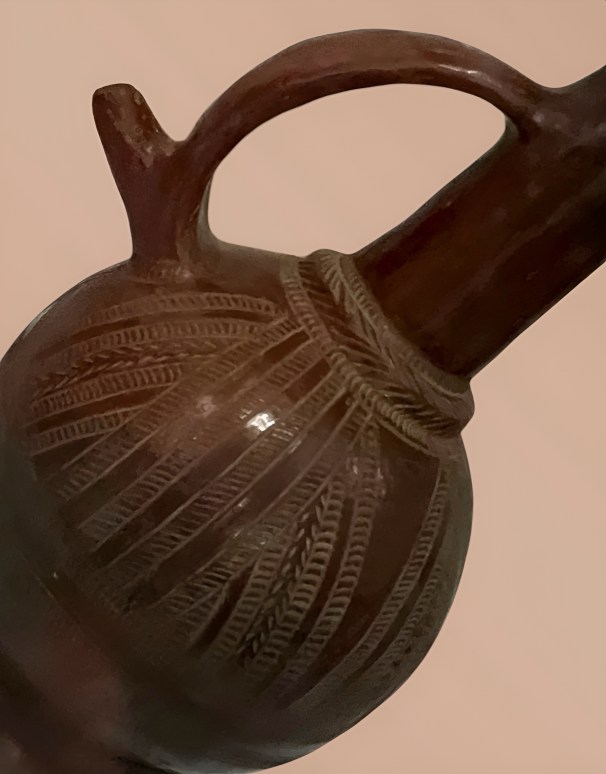
Recalling how it all started, “Uncle” Mohammad Medani explains that the jabana craft was first brought in from Kassala (famed for both its coffee and jebana making) and then reached Al-Jazeera and other areas such as Al-Musallimiyya and Al-Diyaana. People began to learn how to make them, “more as a hobby than anything else”. He says; “My father’s family – May God have mercy on their souls, started making them as a business. We went to Al-Musallimiyya and there we had my uncle and other folks who had worked in Omdurman. We were selling a pair of jabana for just one and a half pennies, while in Khartoum, they told us, a jabana fetched five piastres. I told them then and there that I was off to Omdurman straightaway. I’ll make, 20, 30, 40 in one go and make it rich!” Left, details of an etched motif in a jebana from the Sudan Ethnographic Museum.
The craftsman reminds us with a touch of pride several times throughout the report that he has never had another job and never taken a break from the craft. And he hasn’t just survived all these years. Being a jabanāti, he tells us with visible satisfaction, has allowed him to make a home, get married, even bring up nine children – six girls and three boys, provide for their education and marry them off. Thanks to the money it brings in, he has been able to put his youngest through law school and she is now practising and married. All his sons have been able to pursue their education. He has also passed on his craft to his sons and all of them, Asir, Maydi and Abdu can now work in the pottery if they wish. Asir is even bringing up his children in the same way.
Mohammad Madani sources his clay from the Al-Mawrada, near Khor (a seasonally flooded ravine) Abu Angar Bridge area of Omdurman. He explains: “We bring the clay from there in lorries, in sacks, whatever we have to hand and then soak it in barrels or any other containers. After it’s soaked, we strain it; you scoop the clay out of the tin container, sieve it of impurities and spread it out so it can dry out a bit. We then get red clay bricks – the brittle ones, crush them, pound them, sift them and knead the clay with them. Then we start molding it straightaway. After we bring the clay from Al-Mawrada, soak it, strain it and it firms up, we knead it. Then we can start building the jabana; we first make the base; the belly or bowl, the “gulla” of the jabana. We do this by joining two cup forms together. We then open up the mouth of the bowl to form the neck or spout, al-ragaba, of the jabana and the handle, al-yed. Once it dries, the next day we smooth it out by wetting it in water and burnish it, al-kharSaana, using a small stone or pebble. It’s during this stage the clay takes on its darker, red tones. Then we make the collar around the neck and spout and the rim or lip, ash-shanab* of the spout. We carve a shanab “mustache” into it – a motif we lightly scratch into the clay using a nail. We make grooves / rings** around the neck and we carve the Omar Al-Banna motif. To this day, I still carve this motif. Then it is fired and afterwards, we add a red ochre pigment (al-maghar, natural red earth or clay slip, often iron oxide, used by traditional potters) to the surface. Then we polish it, take it to the market and sell it.
* “shanab is Sudanese colloquial for “mustache” and in pottery can refer to the lip or rim of a vessel. It takes considerable skill and practice to shape the perfect lip allowing for efficient sealing, pouring, avoiding drips and spills when poured from a height. The expression “shanab Omar Al-Banna” derives from the revered pioneer of poetry and the Hagiiba music movement, Omar Al-Banna 1900-1989, famed and emulated for his perfectly styled and impeccably groomed, luxuriant handle-bar mustache. He hailed from the historic Wad Al-Banna neighbourhood of Omdurman, perhaps where Mohammad Medani is also based. The term could be used to refer to the elegantly flared rim of the spout, but here “Uncle” Mohammad Madani appears to be referring to a curly motif he is etching on the jebana, referencing Wad Al-Banna.
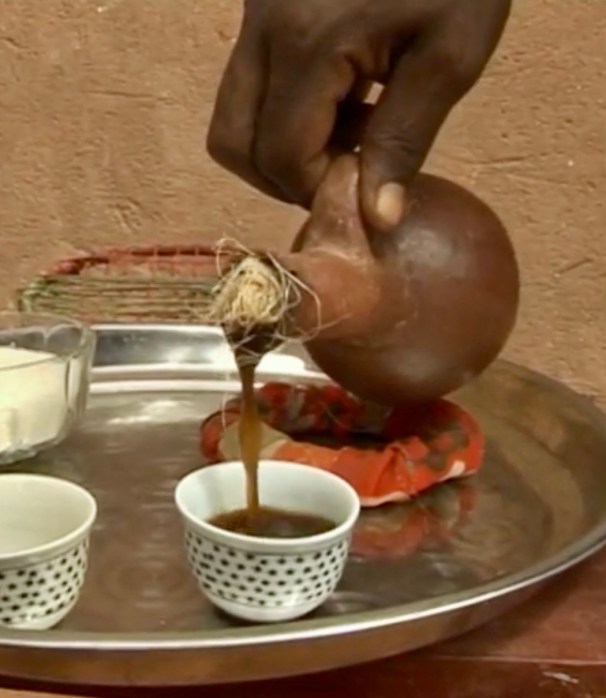
The plug or filter of natural fibres tucked inside the spout prevents spent grounds and coarse spices, such as crushed cardamon or ginger from falling into the cup as the coffee is poured. Known as lifat al-Ashamiiq, they are taken from the bark and sheaf of date palms. Packed too densely into the spout and the coffee won’t aerate; packed too loosely and impurities will pour through. When coffee aficionados gather to praise a perfectly filtered brew, they might say “This jebana has a mustache like Omar Al-Banna’s!” and here the fibre filter of the pot is being likened to the perfectly groomed mustache of the poet.
** grooves, or Tūg; rings are referenced here and sha(u)rta are incised lines lightly etched into the surface. These may allow for a textured nonslip surface that is easier to hold on to.
If you are interested in Sudanese ceramics, you might enjoy “How Earth Works” , And My Country Will Live, Giving Form to Clay Sudan’s Women Potters 2, Giving Form to Clay Sudan’s Women Potters, Kindness to the Stranger: The Ziir

